In Robert Wise’s 1961 West Side Story as well as innumerable stage versions performed over the decades, the dance scenes are never acknowledged by passersby, much less performed for them. In fact, passersby barely exist.
The basic rule is that each dance number happens in the hearts and minds of the Jets or Sharks. And one other thing: Except for the opening sequence (i.e., ballet-like daytime street fighting), the dancing happens in a restricted space of some kind (dance hall, tenement rooftop, back alley, dress shop, drug store, rumble under a highway), and always among Jets or Sharks and their immediate kin or sympathizers.
The dancing, in short, is restricted to the immediate “family.” Neighborhood civilians never notice or acknowledge that any carefully choreographed activity is going on. The dancing is rigorously intimate — members only.
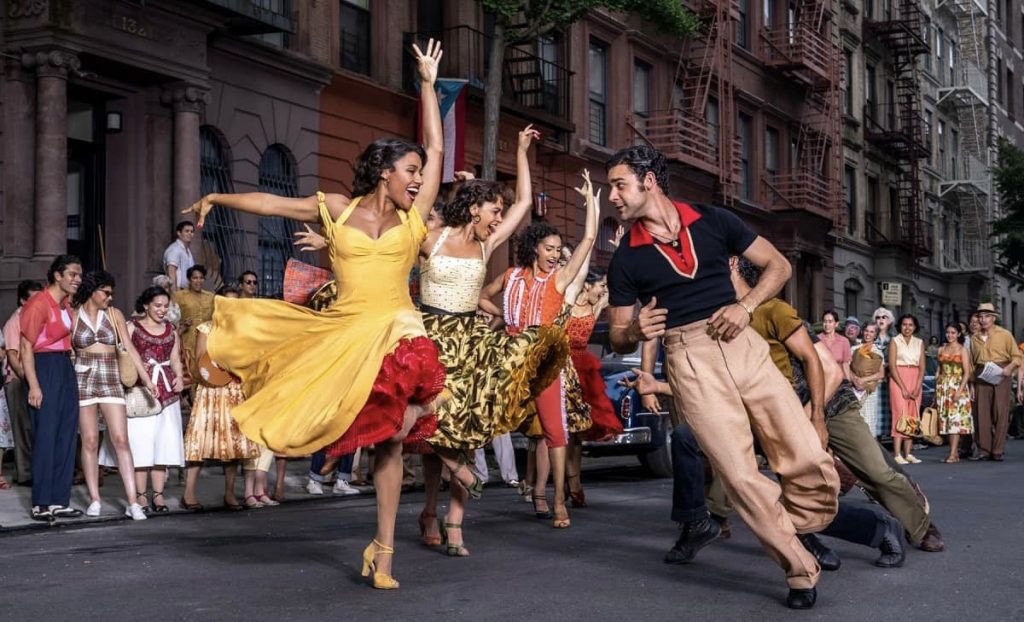
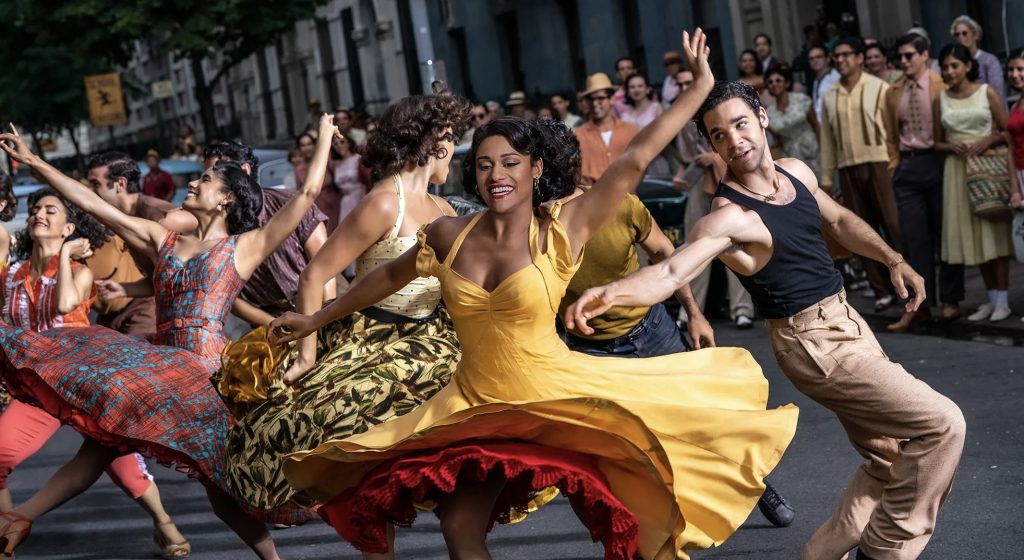
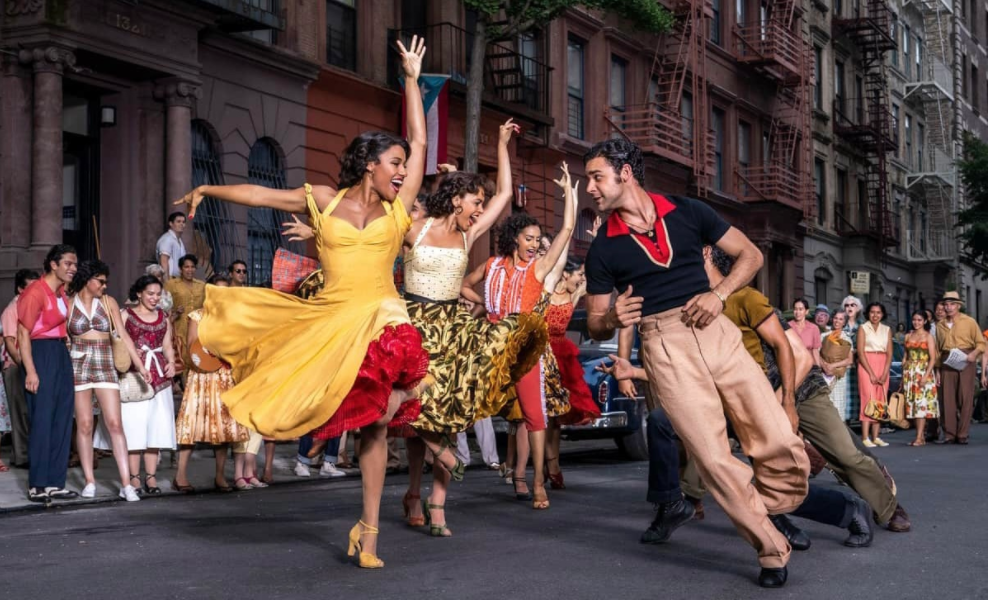
Which is why snaps of that “dancing in the street during daylight” scene with Ariana DeBose (Anita) and David Alvarez (Bernardo) in Steven Spielberg’s West Side Story have been bothering me all along. Because sidewalk neighborhood residents are clearly watching Anita and Bernardo and their friends “cut a Latin rug”, so to speak. And, one presumes, are enjoying the “show.”
That’s a violation of a basic West Side Story rule — and a red flag.