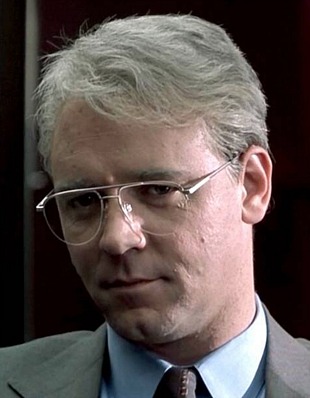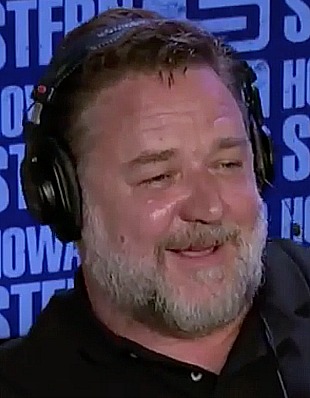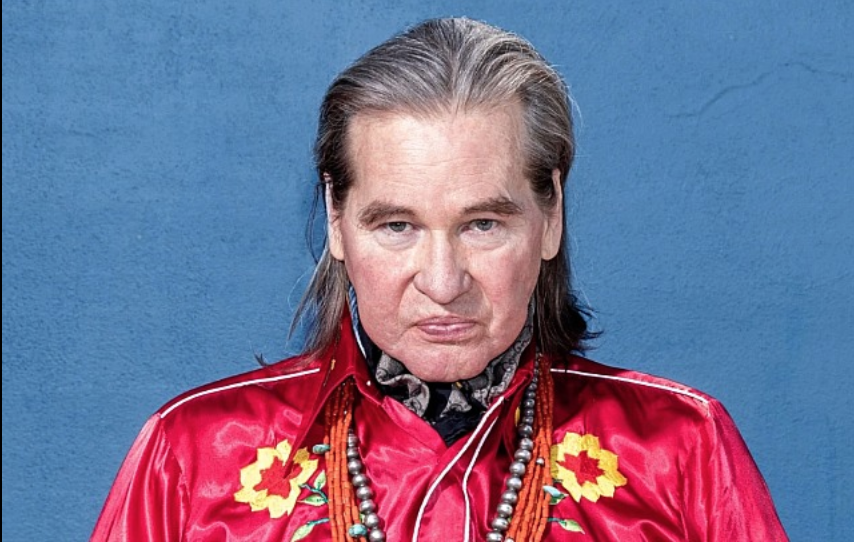
Val Kilmer as Will Sampson

Said before, saying again: I harbor no ill feelings about Val Kilmer. The opposite, in fact.

I helped report that “Psycho Kilmer” Entertainment Weekly article that ran in mid ’96, but I had a nice chat with him at a party he threw at his home back in ’04 or thereabouts. (He had just finished working on Oliver Stone‘s Alexander.) I ran into Kilmer again in the fall of ’11 while having lunch with Descendants costar Judy Greer. We waved and smiled as Kilmer sat at a nearby table. When I tried to pay the bill the waitress told me the check had been taken care of by “that man sitting over there,” except Kilmer had left by that point.

In Taffy Brodesser-Akner‘s “What Happened to Val Kilmer?” (N.Y. Times, 5.6.120), the 60 year-old Kilmer asks, “You don’t think we will be going to Cannes? How about the Olympics? The Olympics has never been canceled except in time of world war.” You can’t cancel the world, right? Bad things happen, but you still need art.
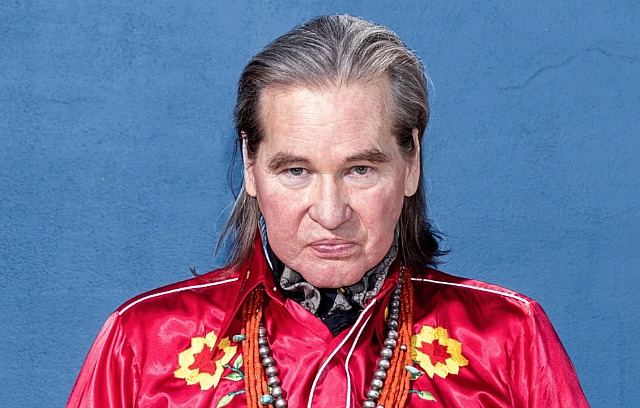

Val Kilmer as captured last month by N.Y. Times photograoher Jeff Minton.

TBA: “And I thought: Right? Right! You still need art. You still need forward momentum. You still need to believe that all your effort wasn’t for nothing, that we could — we will — survive a dark moment in history and that when that happens, we won’t be left without the things that made those moments decipherable and meaningful and therefore tolerable.

“The world outside had seemed to be getting so, so bad for so, so long, and this was the first whiff of overarching hope and positivity that I’d witnessed in I couldn’t remember how many months or years now — so much so that I almost couldn’t identify it when I saw it. The last glowing embers of hope coming from Val Kilmer? The movie hunk of my youth, who disappeared unceremoniously and now presented with an entirely different appearance and a bizarre accounting of where he’d been?

“But there was something familiar about it, like a faint knocking that came from inside me: It was the special kind of optimism that maybe only the faithful have, the enduring belief that some force will come along and save us from the centrifuge of despair we’ve found ourselves in. When is the last time you saw that up close?

Later in the piece: “Perhaps we had created the coronavirus out of our fear and wickedness — children in cages, the rich hoarding wealth; perhaps we had only the suggestion of a virus. I grew up with too many messianics in my household. I found this kind of thing too easy to believe, if only because it was more believable than the fact that in 2020, my young, healthy colleagues were in the hospital, the streets were bare, I was stuck inside my house and nobody knew how long that might go on for. It was so hard to parse all the fear that permeated society now — what was real and what had come as a result of our own hysteria. During the day I’d think that it was the fear that was hurting us most.

“But at night my husband would shake me to wake me up because I’d been crying in my sleep. More quickly than I could have imagined, the world took on the hallucinogenic quality of right before you fall asleep, when everything is outsize and nothing makes sense. The margins on my suspension of disbelief started to close in on themselves, and the borders of things began to diminish, and now the world seemed like a word you stare at so long that it becomes nonsense.”

Beg To Differ

Tatiana Siegel has posted a 5.6 Hollywood Reporter piece titled “Was Sundance a ‘First Petri Dish’ of Coronavirus in the States?” Without getting into the substance of the article, which is mostly an “okay, yeah, whatever” thing, HE takes exception to Siegel’s description of Park City as a “quaint mountain oasis.” The Sundance Film Festival host city is still a mountain oasis of sorts (in a kind of sprawling, over-developed, tropic of-corporate-cancer sort of way), and you could argue that downtown Park City felt “quaint” from late ’80s to mid ’90s, although the real quaint happened during the ’60s and ’70s, before the quarter-of-an-inch-deep elitists and expansionists began to move in and send real-estate values soaring. Trust me — this aggressively liberal upscale community, which has been condo’ed and McMansioned to death over the last couple of decades, stopped being quaint during the second term of William Jefferson Clinton. If that.

Standard Spookery

The most horrific presence in It’s Outside, a short horror flick by Tim and Madelyn Wilkime, is “Simon,” the psychic medium who feels offended when he’s addressed as a mere “psychic” as well as when anyone uses the term “ghost.” The viewer immediately wants to see Simon’s head torn off or his lungs ripped out, but instead we’re forced to tolerate his presence and particularly his mincing little dweeb-voice. It’s awful.

The second worst element is the motionless guy standing in the backyard with a bedsheet over his head.

The third worst element is the overly wide aspect ratio — it should’ve been shot within a standard 2.39:1 or 1.85 a.r. Extra triple cool points if it had been shot with HE’s own 1.66:1 aspect ratio.

It’s Outside was made for the ongoing “Shelter Shorts” initiative to help raise money for the World Central Kitchen (“make a short film using what you have in your shelter and help feed those in need”).

It’s Outside from Tim Wilkime on Vimeo.

Purple Title

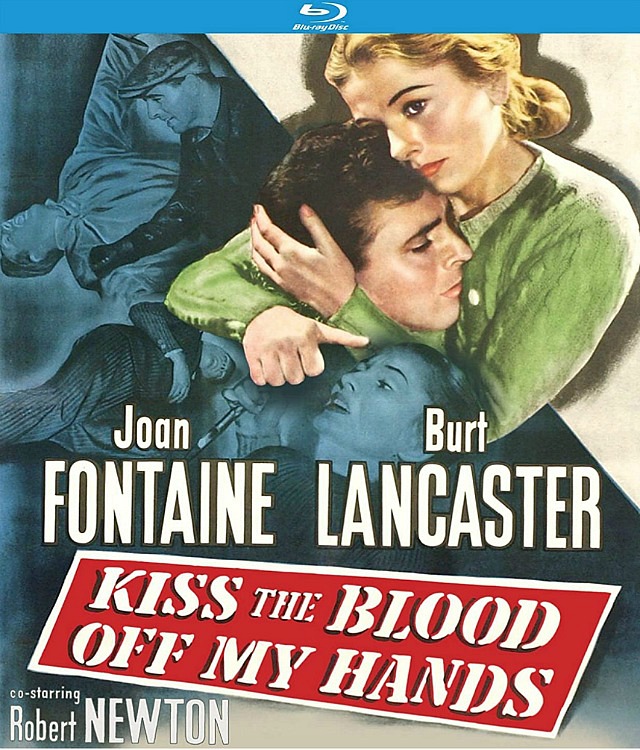
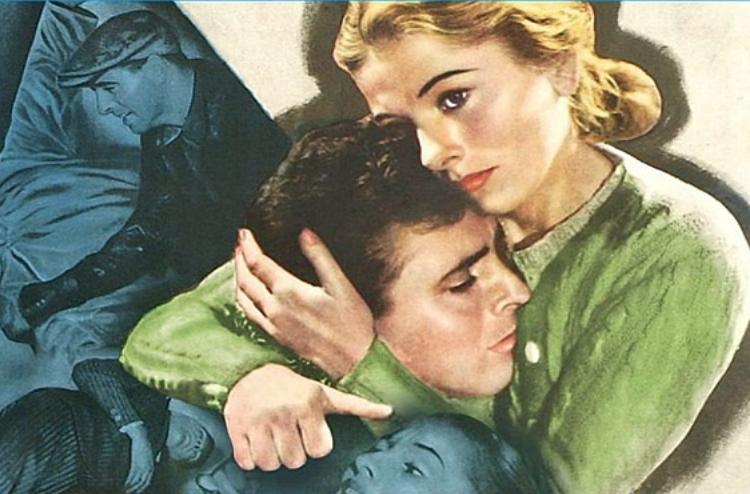
The only title that would even begin to make sense would be Lick The Blood Off My Hands, but that’s a job for a dog and not Joan Fontaine.

It apparently never occured to director Norman Foster, producer Richard Vernon, screenwriters Leonardo Bercovici and Walter Bernstein or original author Gerald Butler that nobody is ever going to kiss the blood off anyone’s hands. Even if the blood is freshly spilt kissing the bloodied area wouldn’t remove it — at best you’ll create little lip-pucker impressions in the region of the wound. Blood always dries quickly and turns a dark reddish brown, and once that happens even dogs wouldn’t be able to lick it clean.

I’ve seen most of the major ’40s noirs, but I never came close to this puppy because of Butler’s title.

In Memory of Tara Reade

In a 5.5. N.Y. Times column titled “Joe Biden Would Rather Be Talking About Something Else“, neither Bret Stephens nor Gail Collins seem to understand that the Tara Reade thing is totally over.

That aside, Stephens supplies an interesting comment about Joe Biden: “[He] needs to articulate some kind of idea about his prospective presidency that is larger than ‘I’m not insane, I’ve been around, and Barack Obama likes me.’

“We are moving into a dark world of recurring outbreaks of disease and deepening depression. We may not have a vaccine for years. Thirty million-plus Americans have just lost their jobs. We are going to be more insecure, at home and abroad, than at any time in decades. Millions of businesses, particularly small ones, may go bust. Authoritarian regimes, particularly China, may be strengthened by the pandemic because they are less scrupulous about protecting the lives and health of their citizens. People are going to be tempted, even more than they were before Covid-19, by all kinds of populist or authoritarian political programs. We’ll have more to fear than fear itself.

“In other words, I don’t think Biden can win by selling himself as the second coming of George H.W. Bush when what we really need is closer to the F.D.R. mold. Not that I’m in favor of another New Deal, but we probably need a New Think.”

Workplace Comedy

Greg Daniels and Steve Carell‘s Space Force (Netflix, 5.29) is a ten-episode comic miniseries. Starring Carell and costarring John Malkovich (who’s suddenly looking old, might need a Prague touch-up), Ben Schwartz, Tony Scarapiducci, Lisa Kudrow, Jane Lynch, Noah Emmerich, Fred Willard, Jessica St. Clair and — according to WikipediaRep. Alexandria Ocasio-Cortez.

Principal photography began in Los Angeles, California on 9.26.19 and ended on 1.10.20 (pre-pandemic). Like a blend of The Office and In The Loop? The whole thing will be binge-able on opening day.

“As a scientist, you have a loyalty to reason. Makes you a little untrustworthy.”

Trejo!

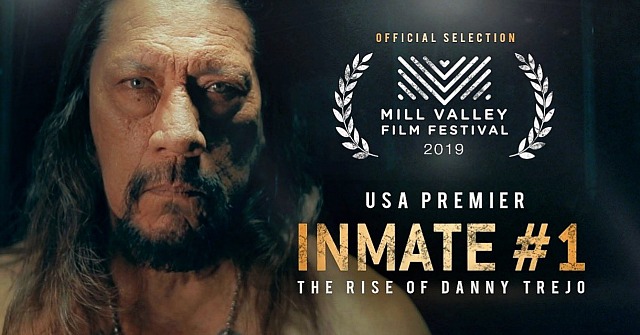
Inmate #1: The Rise of Danny Trejo will begin streaming on digital platforms on July 7th.

When I think of this legendary mutton-faced actor I think of his “Trejo” character in Heat, and how this guy was far more problematic than the demonic Waingro (Kevin Gage) because it was Trejo who brought Waingro into the gang for that first armored-truck heist, from which all the other problems resulted.

Secondly I think of the Malcom X transformation metaphor (jailbird to restoring angel). Thirdly I think of Trejo’s Tacos, Trejo’s Cantina and Trejo’s Coffee & Donuts. Lastly I think of Machete, but mainly the first three.

No offense but I don’t remember him from Runaway Train

Half Kidding

Always Look On The Bright Side of Life.” the Monty Python tune initially heard in Life of Brian (’79) and later in As Good As It Gets (’97), was written with a wink. It’s not exactly a parody of the kind of song typified by George and Felix Powell‘s “Pack Up Your Troubles In Your Old Kit Bag,” but it certainly flirts with a nudge-nudge.

And yet Art Garfunkel’s version, recorded for James L. Brooks’ 1997 film, erases any hints of irony, and in fact replaced the original “Life’s a piece of shit” lyric with the G-rqted “Life’s a counterfeit.” It’s obviously sung with sincerity. And that choir! It’s a happiness anthem.

Read more

Not A Felony

And due respect to Cameron Douglas, grandson of Kirk and son of Michael Douglas. But if I’d been advising during the recording of this AFI Movie Club announcement, I would have gently reminded Cameron that the last syllable of Spartacus rhymes with “cuss” (i.e., as in “to curse”) or the first name of former Communist Party USA chairman Gus Hall. I’m sorry but at the :53 mark Cameron pronounces it Spartakiss, as in “kiss my ass” or Gene Simmons.

Read more

For The First Time In My Life

…I’m waking up without any particular excitement about what day it is, about what’s going to happen or what I need to prepare for or anything along those lines. It’s all flatline these days. Because in this hellish, suspended-animation nothingness it’s hard to believe that anything matters. A Sunday morning is a Thursday or Tuesday morning, ad infinitum.

I do the same thing every day no matter what (and I love it!), but before the pandemic there was always stuff to explore, things to attend, places to go, a bar or a restaurant to visit, a plane or a train to catch, etc.

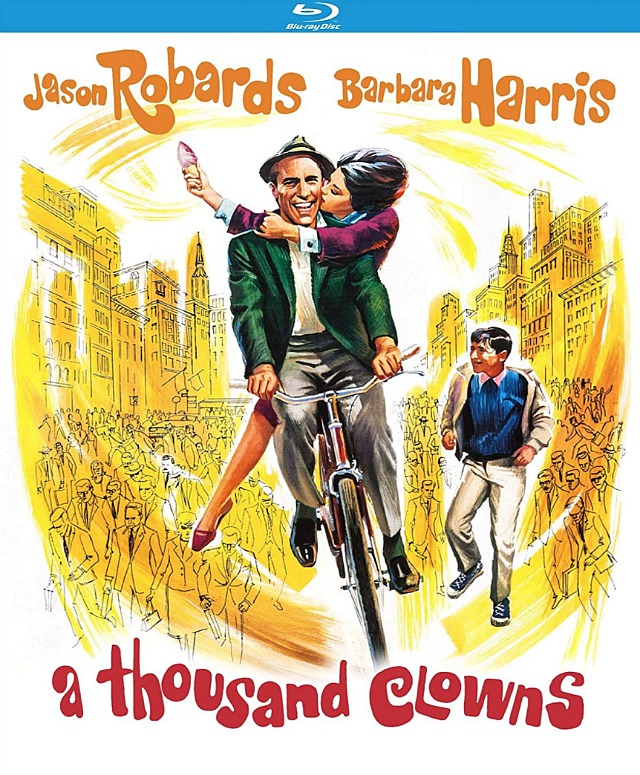
A KL Studio Classics Bluray of A Thousand Clowns pops tomorrow, and for one brief shining moment I was reminded how much I once love the late Herb Gardner‘s dialogue.

Don’t forget that Martin Balsam won a Best Supporting Actor Oscar for his portrayal of Arnold Burns, the sober, boringly responsible brother of Jason Robard‘s Murray.

Read more

His Own Words

In a 5.4 Variety piece titled “Gladiator at 20: Russell Crowe and Ridley Scott Look Back on the Groundbreaking Historical Epic,” Crowe is quoted as follows:

“I’d read the script and I thought it wasn’t a movie. But then [Walter] Parkes said, ‘It’s 184 A.D., you’re a Roman general, and you’re going to be directed by Ridley Scott.’ And that was enough for me to want to talk to Ridley. I was just coming off the shoot of The Insider. I was gigantic. I had no hair because I had been wearing a wig on that movie, so I had shaved my head to make it more comfortable and the wigs go on quicker. I didn’t look like any Roman general.”


(l.) Russell Crowe in 1999’s The Insider; (r.) during a 2019 appearance on Howard Stern’s SIRIUS show.