Men Without Substance

I found Leigh Whannell‘s The Invisible Man passable but underwhelming at times. In yesterday’s review I mentioned that it’s vaguely similar to Paul Verhoeven‘s 20-year-old The Hollow Man in that both are about rather ugly and perverse predators.

Kevin Bacon‘s Sebastian Caine and Oliver Jackson-Cohen‘s Adrian Griffin are super-brilliant scientist assholes with increasingly hostile attitudes about their ex-significant others (played respectively by Elisabeth Shue and Elisabeth Moss). The difference is that Jackson-Cohen’s character is a vicious control freak before he enters the ghost realm whereas being invisible seems to exacerbate Bacon’s basic tendencies, causing him to go from arrogant to fiendish.

Whannell’s film is a #MeToo stalker thing, told from the POV of Moss’s besieged character, whereas Verhoeven’s film is more of a neutrally observed, high-tech enterprise with a diseased attitude.

I was drawing upon moderately positive recollections of the Verhoeven but I hadn’t seen it in 20 years. So I rewatched it today on Amazon Prime, and I’m sorry but it’s a kickier ride. A bit colder and creepier than The Invisible Man, true, but with more bang for the buck. For my money it’s more visually inventive and carefully parsed. Andrew Marlowe’s screenplay is smarter and more carefully orchestrated than what Whannell put to page.

Then again the Hollow Man‘s budget was $95 million ($148,947,712 in 2020 dollars) while The Invisible Man cost only $7 million to make, so give Whannell credit for delivering with fewer resources.
Read more

Lawdy, Miss Maudy

“Around halfway through Saint Maud (A24, 4.3), writer-director Rose Glass constructs a cinematic wince moment for the ages, involving nails, bare feet and a young woman with a Christ complex far too big for her own snappable body. ‘Never waste your pain,’ she says, and this short, sharp needle-jab of a horror parable from bleakest Britain takes the same advice.

“Glass is sparing with her shocks, but knows how to make them count, like sudden voltage surges in the fritzed, volatile machinery of her narrative, each one leaving the protagonist a little more anxiously damaged than before.

“A meek, devoutly Christian palliative nurse, with an open wound of a past and what she believes is a higher calling for the future, Maud is like Carrie White and her mother Margaret rolled into one unholy holy terror; as played with brilliant, blood-freezing intensity by Morfydd Clark, she’s a genre anti-heroine to cherish, protect and recoil from, sometimes all at once.” — from Guy Lodge‘s 9.8.19 Variety review.

Question: The titular character is played by Welsh actress Morfydd Clark. To American ears the first name sounds…well, classy and storied, but also a bit somber. Like the name, perhaps, of the sister of Mordred, the villainous Arthurian figure.

Bizarre As This May Sound

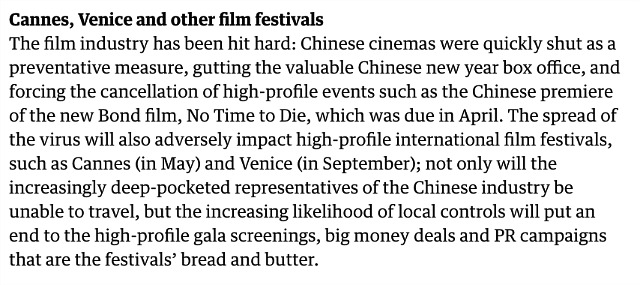
Sent from Berlinale-attending journalist to U.S.-based journalist friend: “From what I’ve been hearing around the Berlinale, and I hate to be the first person to bring this up, but with the current outbreak of the coronavirus in Italy I think there’s a possibility that the Cannes Film Festival [could be] cancelled if this thing further spreads. Remember that there’s usually a large contingent of Chinese industry people that go to Cannes. Will the entire country be quarantined?”

From “Six Nations to Stormzy: which events could be cancelled by coronavirus?,” a Guardian piece by Lucy Campbell, Sachin Nakrani, Andrew Pulver, Ben Beaumont-Thomas and Oliver Wainwright, and posted today (2.26).

Who Cares?

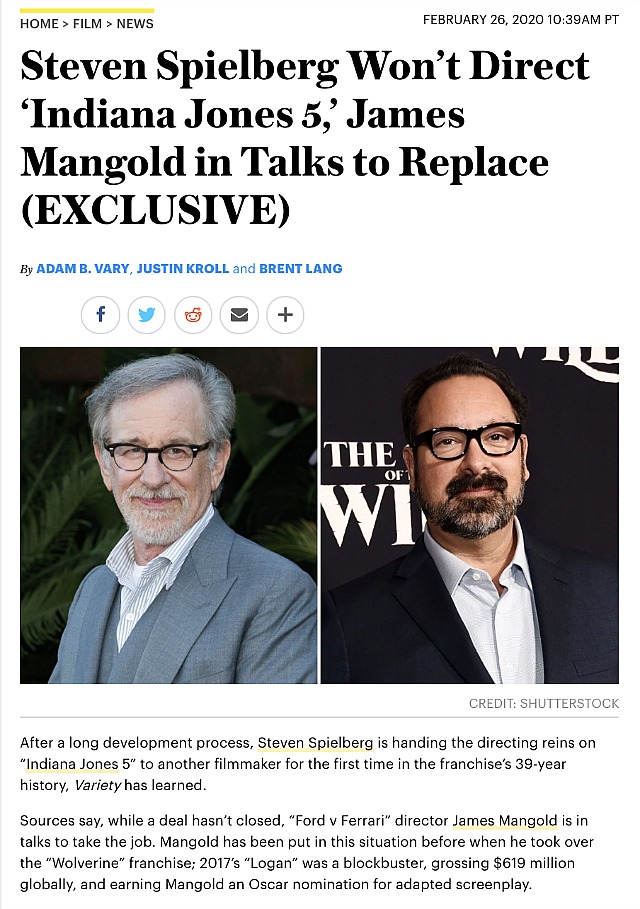
News flash: There is no Indiana Jones franchise. It was a thing in the ’80s — three films over an eight-year period. The last half-decent Indy film opened 31 years ago. 12 years ago I embarassed myself by giving a thumbs-up in Cannes to Indiana Jones and the Kingdom of the Crystal Skull. I don’t know what I was thinking, but a day hasn’t passed in which I haven’t regretted that review. I’m presuming James Mangold will do a decent job with Indy 5, but the brand value is no more.

Dear David

Question: Have you ever had a dream in which you’re a mouse scampering around and maybe eating bits of cheese, and suddenly a Siamese cat with the head of Scott Feinberg walks into the kitchen and spots you, but instead of chasing you down and eating you the cat corners you and asks, “Can you explain to me what harmony is? A lot of people in their 20s and 30s don’t know what it is and I thought I’d ask you that.”

Crosby vs. Feinberg,” posted on 7.20.19.

Read more

Most Of Us Look Away

Joaquin Phoenix did something good a day after his big Oscar win, and this video (which is nicely shot) is affecting. It made me feel good that a place like Farm Sanctuary (5200 Escondido Canyon Rd, Acton, CA 93510) is operating. All bovines end up being killed sooner or later, but these people at least have a heart.

At Long Last “Robbery”

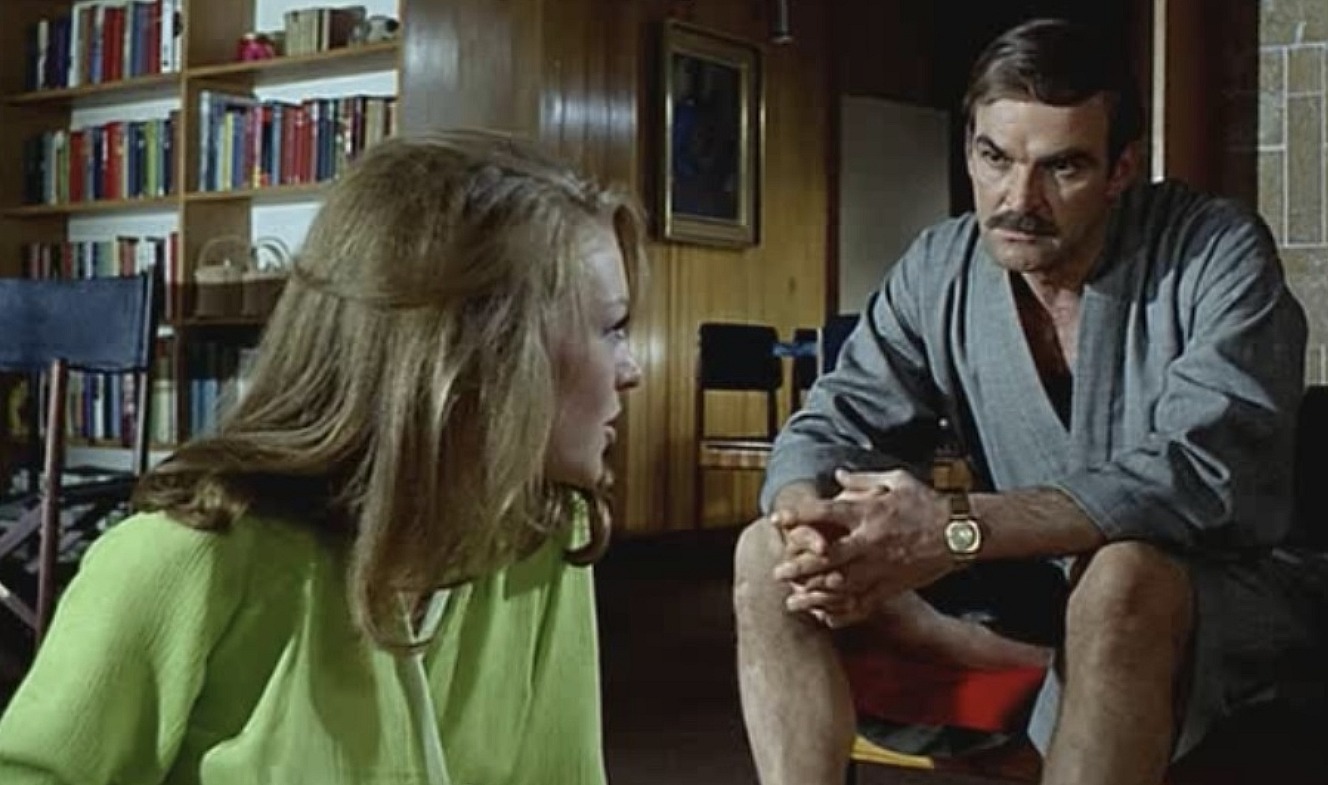
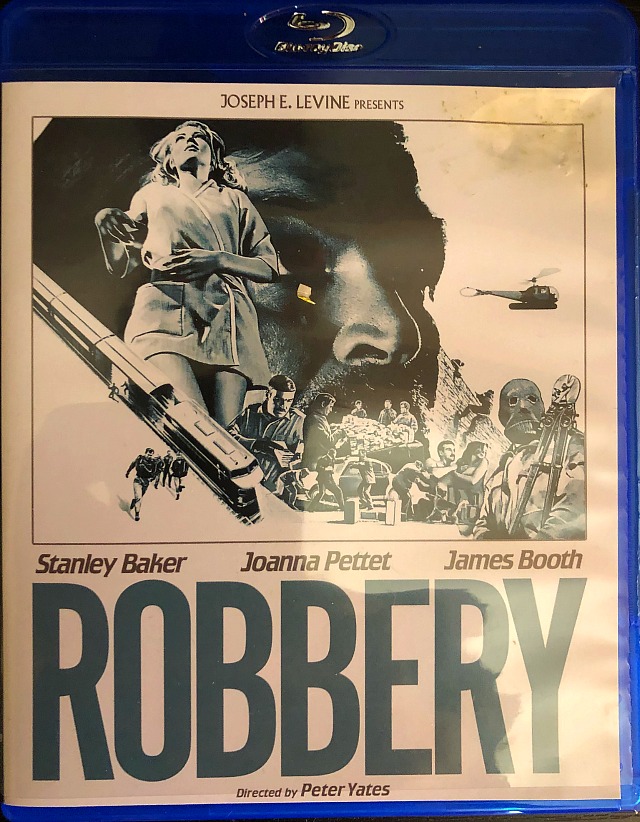
I actually saw two films last night, The Invisible Man and then a Kino Bluray of Peter YatesRobbery (’67). The latter struck me as as a far better film than the Blumhouse newbie. Not to be mentioned in the same breath.

A lot of tense urban actioners have been called “taut”, “bracing” and “engrossing” over the years, but Robbery is one of the daddies of this sort of thing. At least in the British realm.

As much of a seminal influence upon crime films as Jules Dassin‘s Rififi, it feels real and un-performed and stripped of all pretentious bullshit. I was completely riveted from the get-go. As in “hold on, wait…this is good.”

Until last night (2.25) I had never seen Yates’ 53 year-old British heist film, which is largely based on the actual Great Train Robbery of 1963.

I’ve been aware of it for decades, and I’ve no explanation for having been derelict all this time.

But I’m also glad I waited as the Kino Bluray looks magnificent, at least in my humble view. Distinct colors (at times a little loud), whistle clean, no grain to speak of

Robbery opens with a wild-ass, high-speed car chase through the streets of London, and of course this was the first major sequence of its type — a year before Yates’ San Francisco car chase in Bullitt and five years before William Friedkin‘s under-the-subway-track car chase in The French Connection.

It stars Stanley Baker, who produced along with Joseph E. Levine, and costars Joanna Pettet (as Baker’s wife) and James Booth as a canny British detective. The supporting players include Frank Finlay, Barry Foster (the necktie murderer in Frenzy), William Marlowe, Clinton Greyn, George Sewell and Glynn Edwards (the Albert” character in Get Carter whom Michael Caine stabs to death).

Until last night I had never gotten the Joanna Pettet thing. But her late-night marital dispute scene with Baker is one of the film’s strongest, at least in terms of intimate currents and whatnot.

A friend of Sharon Tate‘s from the mid ’60s, Pettet is portrayed by Rumer Willis in Once Upon A Time in Hollywood. She’s now 77 and living (I’ve heard) somewhere in the vicinity of Palm Springs

My Invisible Stalker

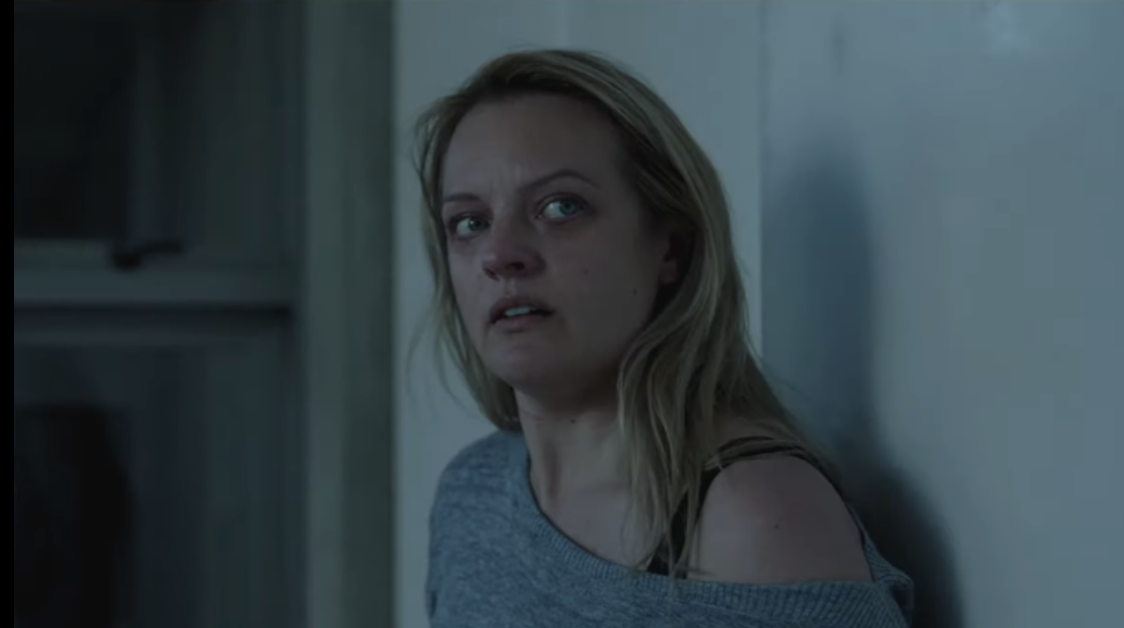
Leigh Whannell‘s The Invisible Man (Universal, 2.28) is a reasonably well-made if somewhat rote and occasionally boring horror-thriller with a feminist slant. It’s basically a serving of calculated exploitation aimed at the #MeToo peanut gallery. That’s all it is, and all it will ever be.

It’s okay to shrug and call this piece of Blumhouse sausage a half-decent if uninspired genre exercise, but any critic who gives it an enthusiastic hug is being a political whore, trust me.

Nobody wants to dismiss a B-grade thriller that takes the side of a terrified if resourceful ex-wife (in this instance the sweaty, stressed-out, baggy-eyed Elizabeth Moss) trying to survive a campaign of terror by an invisible ex-husband. The deal is this: If you don’t like it you’re somehow unsympathetic to the cause so everyone “likes” it. Safer that way.

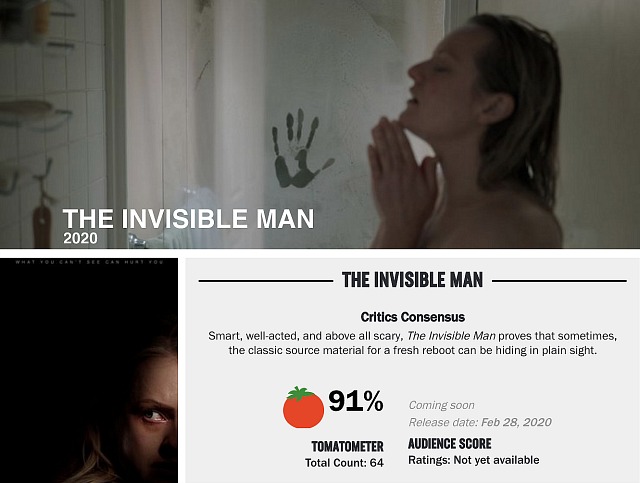
I shouldn’t have to repeat that we’re all living in a climate of revolutionary terror, but I guess I have to. Most critics simply can’t be trusted in such an environment. This is why The Invisible Man currently has a 90% approval rating on Rotten Tomatoes. This is a relatively okay film, granted, but calm down.

I sat in the front row during last night’s Arclight screening and went “uh-huh…uh-huh…uh-huh.” After a while I gave up and went “okay, whatever.” And then I started checking my watch every 15 minutes.

The Invisible Man is basically (a) a “terrified ex-wife is stalked by a brilliant, deranged, control freak ex-husband” flick (closely related to 1990’s Sleeping With The Enemy) mixed with (b) Paul Verhoeven‘s Hollow Man (’00).

The latter, of course, was a high-tech riff on James Whale‘s original The Invisible Man (’33) with Claude Rains.

In both the Verhoeven and the newbie the invisible bad guy is a brilliant arrogant scientist (played in The Invisible Man by Oliver Jackson-Cohen and by Kevin Bacon in The Hollow Man). Moss is basically playing an antsier, more wild-eyed version of Elizabeth Shue‘s role in The Hollow Man — the panicking ex-girlfriend whose invisible boyfriend has gone bonkers. The difference this time is that Jackson-Cohen’s character was deranged to begin with. Or he was before he “died.”

Question to Whannell: Why did Moss’s Cecilia Kass, whom we’re told to sympathize and identify with…why did she marry this super-rich psycho to begin with? Because…what, she couldn’t resist the idea of being wealthy? Or because he was completely sane and level-headed when she was first falling in love with him, and he only turned into a looney-tune when he became rich? HE calls bullshit on that.

Read more

Circular Firing Squad Aesthetic Is Spent

The primary question is “will Bernie Sanders’ seemingly possibly insurmountable lead result in a McGovernesque debacle for the Democrats next November, as well as the loss of the Dems’ House majority?”

Question 2: “Can anything, anyone or any hail-Mary strategy save us from wrack and ruin?” Only Buttigieg seemed to address this head-on.

All I knew last night was that the jabbing and bickering felt repetitve and irksome.

Klobuchar has to withdraw after the South Carolina primary. Ditto Steyer. And Warren, whom I fell for after the Las Vegas debate, has to sit down and think things over.

An Actual Solution To Current Horror

In a 2.25 column titled “Dems, You Can Defeat Trump in a Landslide,” Thomas Friedman urges the Democratic contenders to join together and announce that they are henceforth a team and no longer a circular firing squad — a cabinet consisting of Biden, Sanders, Buttigieg, Warren, Bloomberg, Klobuchar, Steyer, et. al.

“If this election turns out to be just between a self-proclaimed socialist and an undiagnosed sociopath, we will be in a terrible, terrible place as a country,” Friedman writes. “How do we prevent that? My short answer is that the Democrats have to do something extraordinary — forge a national unity ticket the likes of which they have never forged before. And that’s true even if Democrats nominate someone other than Bernie Sanders.

“If they don’t join together,” Friedman warns, “you can kiss the America you grew up in goodbye.”

“Sort Of A Wounded Animal…”

Asymmetric warfare is “war between belligerents whose relative military power differs significantly, or whose strategy or tactics differ significantly. This is typically a war between a standing, professional army and an insurgency or resistance movement militias who often have the status of [renegade] combatants.”

Credit-block-wise, top creatives should limit their name to six syllables. Because more than six sounds labored and pretentious. When Francis Coppola called himself Francis Ford Coppola, that was as far as it should have gone. I’m willing to offer a compassionate pass to Destin Daniel Cretton, director of Just Mercy, even though he’s over the mark by a syllable. But Cary Joji Fukanaga is two syllables over. Plain old Cary Fukanaga is simpler, cleaner.

No Time To Die will premiere on 3.31.20 at Royal Albert Hall. Two days later it will open commercially in Englands on Thursday, 4.2.20. It will open in the U.S. on 4.10.20.