“Placate The Complainer”

Posted this morning (9.22) on Facebook by veteran film journalist Lewis Beale. The Times staffer who didn’t approve of his War of the Worlds location piece getting prominent, above-the-fold placement sounds an awful lot like a certain someone associated with TheWrap, but I wasn’t directly involved so I wouldn’t know.

On the other hand Matt Zoller Seitz is saying that if a secular elite critic who worships James Gray…if this person is underpaid and has to constantly “chase checks” and doesn’t have health insurance, he/she can’t be a secular elitist. Trust me — Seitz knows the truth of it. He knows that the James Gray cabal (strong in New York, dominant in Paris) lives on its own aesthetic planet and has almost no sense of what it’s like to be Joe and Jane Popcorn, and no understanding or interest in what Joe or Jane care about and/or are looking for when they go to see a film.

I might despise people who laugh too loud in bars, but I’ve always understood the Joe Popcorn realm. I come from New Jersey, I ride around on a rumble-hog, and I eat hot dogs from time to time. I get it.

Again — Why “Sorcerer” Failed

[Originally posted on 4.13.14] I’ve never completely bought William Friedkin‘s theory that Sorcerer died because the hugely popular Star Wars, which opened on 5.25.77 (or a month before Friedkin’s film), had ushered in a sudden sea-change in mainstream cinematic appetites.

He meant that a new comic-book, popcorn-high attitude had taken over, and had brought about a consequential lessening of interest in gritty, noirish, character-driven adult dramas.

Sorcerer, of course, was never going to be a hugely commercial thing. It’s a fairly downbeat, men-against-the-elements adventure flick made for guys. Women don’t go for sweaty, atmospheric, end-of-the-road Latin American fatalism. But I suspect that Sorcerer would have been at least a modest success if it had delivered a sense of justice in the case of Roy Scheider‘s character, a wise guy on the run from the New Jersey mob.

Sorcerer is about four desperate men hired to deliver nitroglycerin in trucks to a burning oil well in the middle of the South American jungle. Scheider is the only one who makes it in the end. He’s gone through hell, and despite his previous criminal inclinations, the audience has been taught to respect him for getting through this terrible ordeal. They may not love him, but he’s done a really tough thing and earned, in movie-story terms, a kind of redemption. A little peace and gratification.

But then Friedkin and screenwriter Walon Green turn around and stab Scheider with an icepick. Mob assassins (accompanied by a friend who had helped him escape the country and who has now obviously betrayed him) arrive at the very end to rub him out, and there’s no escape.

Yeah, yeah, I know — that’s what “noir” is. Life is hard and cruel and then you die. But that’s not how audiences see it.

I felt this way when I first saw Sorcerer, and I felt it again last night. Scheider doesn’t deserve death — he’s earned a chance to live again and maybe do things right for the first time in his life. But Sorcerer rejects this notion, and that’s why audiences rejected it. It left a sour taste by (a) making it clear that Scheider’s scummy, low-life character is possessed by fierce determination and concentration and courage, and then (b) zotzing him anyway. That’s a kind of “fuck you” to the audience, a kind of a burn.

This, trust me, is a major reason why Sorcerer screwed the pooch. A movie doesn’t have to end happily or sadly, but it does have to end on a note of justice.

Two Pokers In One

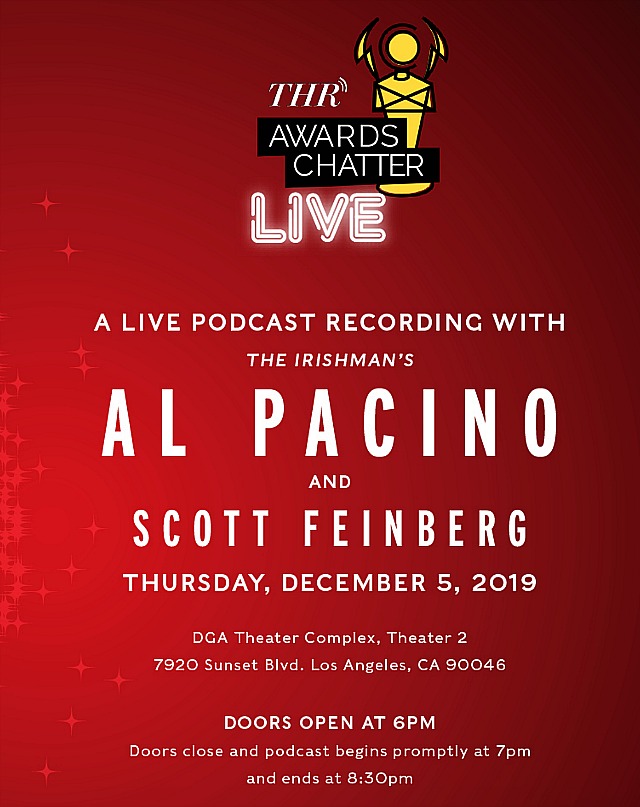
Whenever I do the Oscar Poker shingaling with World of Reel‘s Jordan Ruimy, discipline flies out the window. We can’t seem to restrict ourselves to a half-hour discussion; it always goes long. This morning we went 90 minutes, so I’ve cut the discussion in half — part 1 and part 2, each about 45 minutes.

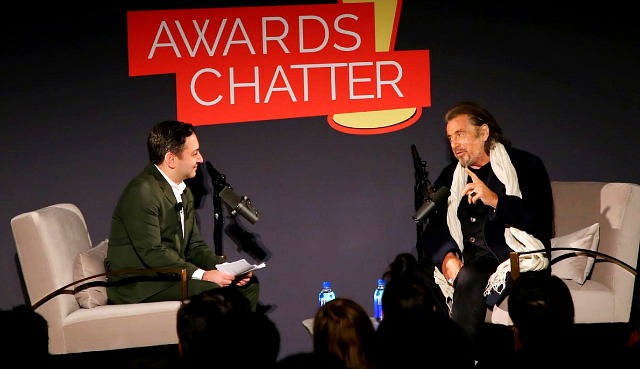
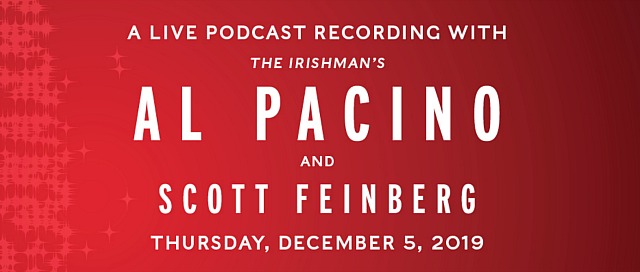
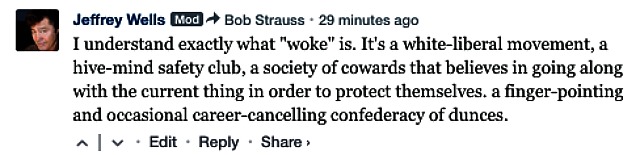
We talked about everything — William Friedkin (Sorcerer and To Live and Die in L.A.), the Safdies and Uncut Gems, The Irishman (“Goodfellas by way of Silence”), Jojo Rabbit, Stanley Kramer and Judgment at Nuremberg, Renee Zellweger and Judy Garland, wokester critics vs. movies about white male milieus (The Irishman, 1917) and a general reluctance to settle into whiteness…wokesters prefer POCs and multicultural environs as a rule.

Once again, part 1 and part 2.

You Cheated, You Lied…

Tonight I happened upon a semi-famous episode on Boris Karloff‘s Thriller called “The Cheaters.” A creepy tale about hidden faces and agendas — about magic glasses that show what people are really thinking and feeling inside. It ends with an egotistic writer putting them on and seeing a monster in a mirror, and then howling and clawing his face.

Directed by John Braham, written by Donald Sanford and based on a story of the same name by Robert Bloch (author of the original “Psycho” novel), it first aired on 12.27.60.

Life is a constant series of games — fibs, feints, dodges, mild deceptions. Is anyone ever 100% honest about anything? Yes, your pets are. And, if you’re fortunate, a close friends or two. (At least sometimes.) Otherwise you’re on your own. People are always putting a gloss on what they think and really feel. Allusions, not declarations. Maybe that’s how it should be. If you can’t say anything nice, go on Twitter.

Critics, Joe Popcorn Disagree

Yesterday’s box-office tallies for Rambo: Last Blood and Ad Astra aren’t far apart. Playing on 3618 screens, Rambo earned $7,170,000 while Ad Astra, on 3460 situations, brought in $7,161,000. But on CinemaScore, Ad Astra earned a lousy B-minus vs. Rambo‘s slightly better B. Which film is better in the eyes of the Movie Godz? You have to ask?

But the most telling measure is the contrast between critic and readers reviews on Rotten Tomatoes. Rambo is doing great with the hoi polloi (84% positive) but not great with critics (30%); Ad Astra is supported by four out of five critics (82%) while the public has given it a failing grade (47%).

Here are links to actual RT reader comments for Rambo vs. Ad Astra.

Soul Communion

I’ve had my differences with a few Twitter jackals (and I’m talking about people who deserve to be chained in medieval dungeons on bread-and-water diets), but they don’t understand who I am in the eyes of Anya. I am her lover, parent and care-giver, and she’s my brilliant daughter — as smart as any Jack Russell, fickle, curious, emotionally demanding and 24/7 affectionate.

Outside of family and my marriage to Tatyana, I’ve never been in a more emotionally open, nurturing and trustworthy relationship than the one I’ve had with Anya for the last two and a half years. I’m sure Tatyana feels the same way. The three of us.

Anya was born in a Playa del Rey home in May 2017, and may she remain with us until…well, sometime in the mid 2030s. Siamese cats are extra in all kinds of ways.

Read more

Demonic “Dharma”

American Dharma is certainly a story about a man who lives in a strange fantasy world. Early Christianity, John Ford movies, nationalist ideologies…an incoherent mess, in my opinion.” — — Errol Morris, director of American Dharma, an exploration of the mind and ideology of Steve Bannon, during a 2018 Toronto Film Festival q & a.

In other words, Morris is no admirer of former Trump administration svengali Steve Bannon, and so American Dharma casts significant doubt upon Bannon’s overthrow-the-deep-state, hooray-for-the-red-hats bullshit. But at the same time it does a curious thing — it presents Bannon as a half-mythical figure, a man of steel and conviction, tough-minded but thoughtful.

If you have a semi-developed brain and at least some analytical abilities, you’re going to recoil in quiet horror at what Bannon is advocating here, but at the same time you’re going to be half-impressed by the way he comes off as a cinematic figure, as a fellow who’s part of a fraternity of strong, square-jawed honey badgers (including Gregory Peck in Twelve O’Clock High, Alec Guinness in The Bridge on the River Kwai) who don’t give a shit but are determined to get the job done.

Right-wingers may feel conflicted about American Dharma (as I do) but they’re not going to flat-out hate it. Because there’s something faintly (emphasis on the “f” word) attractive about the way Bannon is portrayed.

I agree almost entirely with Michael Moore‘s Fahrenheit 11/9, but American Dharma, troubling as it is, is a more transporting film, certainly in a visual sense.

Read more

Bad Words

I’m sorry but I get a chalk-on-the-blackboard feeling whenever someone uses the word “amazing”. It used to be a semi-legit, non-abrasive term, but over the last decade or so it’s been used and abused and over-used by too many showbiz phonies and wannabes. Especially by actors, producers and directors when they appear on talk shows and podcasts. Especially actors. “Such an amazing experience”…an amazing performer…an amazing film.”

I’m hating “amazing” so much that I’m starting to irrationally flash hostile vibes at people who say it. I don’t hate it as much as people who throw their heads back and laugh loudly in restaurants and bars, but it’s getting up there.

I also hate hearing the words “awesome”, “incredible”, “unbelievable” and “marvelous” (the latter being an elderly person’s word for the most part).

I guess what I’m really saying is that I happen to be at a place in my life in which sycophants who routinely drop to their knees and breathlessly gush over the ecstatic wonder, drop-dead genius and rapturous super-glow of certain people they know and movies and plays they’ve seen and books they’ve read and exotic places they’ve visited…my tolerance for this kind of exuberance is getting lower and lower.

The pornography of praise is something we’re stuck with, of course, especially if you’re hanging with teens and 20somethings, but people need to use alternatives. Next time you feel the urge, go with “startling”, “crazy-good”, “meltdownish”, “throttling”, “mesmerizing”, “totally outside the box”, “bracingly different”, “a singular talent”, “fiercely original”, “exceptional”, “next-level good”, “transportational”, “levitational,” “brilliant”, “expert”, “stunning”, “genius brushstrokes”, etc. But don’t use the word “genius” alone. That’s another baddie.

Just avoid the Terrible Five for starters — amazing, awesome, incredible, unbelievable and, even on an ironic Billy Crystal basis, marvelous.

Satisfaction

Along with everyone else, Hollywood Elsewhere attended last night’s Judy premiere at the Academy. Renee Zellweger, Rupert Goold, Jessie Buckley, Rufus Sewell and the gang. Full house, unmistakable emotional reactions, cheers and applause, great after-party.

For what it’s worth both the film and particularly Zellweger’s performance, all but locked for a Best Actress nomination, sank in a bit deeper than during my first viewing in Telluride. Not just the sadness and humor but the vigor of it. I was studying her more closely, and enjoying the flicky facial tics and raised eyebrows and hair-trigger grins all the more. RZ slams a homer!

But in all fairness and as much as Zellweger channels Garland in the final year of her life with remarkable conveyance, we all need to take a moment to remember the great Jim Bailey (1938-2015). His Garland voice, look and mannerisms were more accurate than Garland’s own. Consider the below video. The ’70s and ’80s were Bailey’s peak decades.

Roadside will open Judy on 9.27.

Read more

Whistleblower What?

I want to revel in the ongoing whistleblower story (Ukraine, Donald Trump, alleged dirt of Joe Biden, Rudy Guiliani, withholding of foreign aid). I want to jump into it like a swimming pool and go “wheee!” I want to splash around in this story like a toddler in a mud puddle. But it’s a little vague.

Trump was apparently just doing his usual ruthless gangster miasma whatever. No rules, no ethics, shoot from the hip, muscle whomever he feels like muscling. He wanted dirt on Joe Biden, which apparently had something to do with Joe Biden, Jr. Which he could use in the 2020 campaign. But the story hasn’t been phrased in a clear, concise, “talk to me like I’m an idiot” sort of way.

Trump is an animal and a criminal, but we knew that going in. And he wanted something he could use against Biden, fine. But he does this kind of dirty finagling all the time.

Summary from a friend: “Trump has been withholding $250 million in aid to the Ukraine. He told the new PM on a phone call that PM couldn’t have the money until he delivered some dirt on Biden’s son Hunter, who’s had some business there.”

Read more

Phoenix Heeds His Own Currents

A group of lonely, self-loathing, women-hating incel wackos have committed mass murders (or pledged to do so) over the last five years. A relatively new phenomenon — began with late Obama, has moved big-time into late Trump.

In 2014 Elliot Rodger, 22, stabbed three people near his Isla Vista apartment, and then shot 11 people near the UCSB campus, sending three to God, before killing himself.

From Jennifer Mascia’s Trace article, 5.23.19: “The Isla Vista gunman has been hailed as a “saint” and a hero by other incels, and several American mass shooters have cited him as inspiration.

“The 40-year-old self-proclaimed misogynist who shot six women, two of them fatally, at a Tallahassee yoga studio last year name-checked the Isla Vista gunman in one of his final online posts. The 21-year-old who fatally shot two students and himself at his former high school in Aztec, New Mexico, in 2017 used the Isla Vista shooter’s name as an online pseudonym and called him a “supreme gentleman.” The man who carried out the 2015 Umpqua Community College shooting in Oregon, which left nine people dead and eight others wounded, wrote in an online manifesto that he was a virgin with “no friends, no job, no girlfriend,” and said that he and others like him — including the Isla Vista gunman — ‘stand with the gods.'”

This is not new, much less startling, news to anyone who’s been paying the least amount of attention. And it was surely on the minds of all those Venice Film Festival-attending critics who suggested that Joker might be received as some kind of incel anthem flick.

Cut to Robbie Collin’s 9.20 Telegraph article in which he describes a hotel room interview with Joker star Joaquin Phoenix that went briefly wrong:

“Unlike Heath Ledger’s inscrutable take on the character in 2008’s The Dark Knight, Phoenix’s Arthur Fleck, a failed comedian who still lives with his elderly mother, is the horribly familiar enemy within. If the film hadn’t been set in the ’80s he could easily be the latest online message-board extremist to take his grievances murderously viral.

“[And] yet Phoenix doesn’t seem to have considered this kind of question at all. So when I put it to him — ‘Aren’t you worried that this film might perversely end up inspiring exactly the kind of people it’s about, with potentially tragic results?’ — a fight-or-flight response kicked in.

“‘Why?’ Phoenix eventually muttered, his lip curling up at one side. ‘Why would you…? No…no.’ Then he stood up, shuffled towards me, clasped my hands between his, and walked out the door.”

This provides a peek into Phoenix’s mind. The man obviously lives in his own isolation tank. He was right smack in the middle of the Venice and Toronto Joker hoopla with everyone saying “incel wacko weirdo” blah blah…possible echoes and stirring of portents of real-life malice. And yet the whole conversation flew right around Phoenix’s head and into the ether.

Collin has described the Phoenix incident as “my most hair-raising interview yet.”