Relentless Disney Greed, Re-Boots, Re-Branding

I bailed on the Toy Story franchise after the second installment (’99), which I saw because the kids weren’t quite tweenish enough to be snide about family fare. It was okay, engaging for what it was, good enough…zzzzz.

But I completely ignored Toy Story 3 (’10), and proudly at that. Yeah! It goes without saying that I wouldn’t watch Toy Story 4 on a long flight to Seoul in which I had no wifi, nothing to read, no Percocets and absolutely nothing else to do. Which is why I politely bypassed last night’s all-media screening at the El Capitan…no offense.

I’m not sorry about missing either one. But if I had seen Toy Story 3 I would at least be able to appreciate Peter Bradshaw‘s lament. He’s basically saying that the third installment “had that staggering and triumphant sense of what we all yearn for in the cinema — a sense of an ending. The glorious finality [of Toy Story 3] is what made it such a triumph in many ways, and so I have to say, if this doesn’t sound too absurd, that Toy Story 4 kind of loses the integrity of the existing Toy Story trilogy.”

On the other hand thank God I don’t have to even consider such concepts.
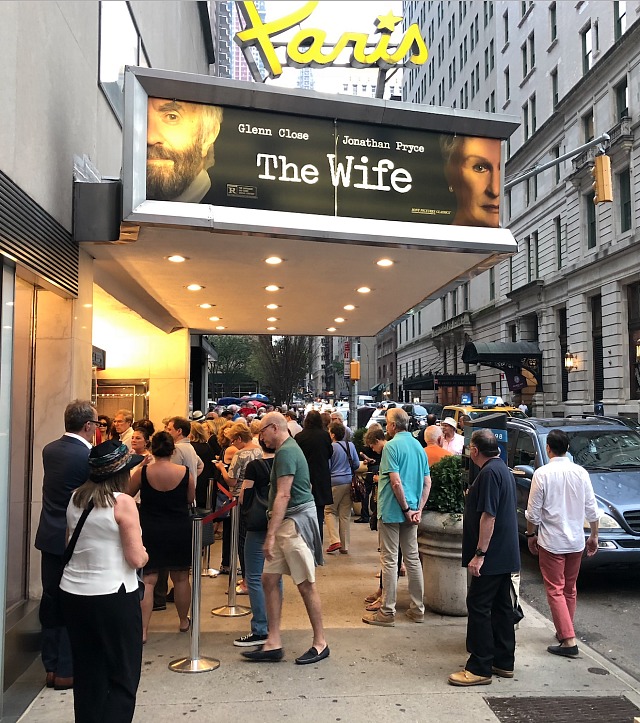
Another Stake In The Heart

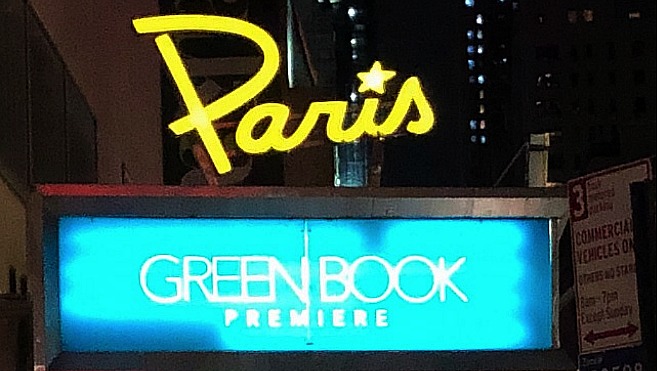
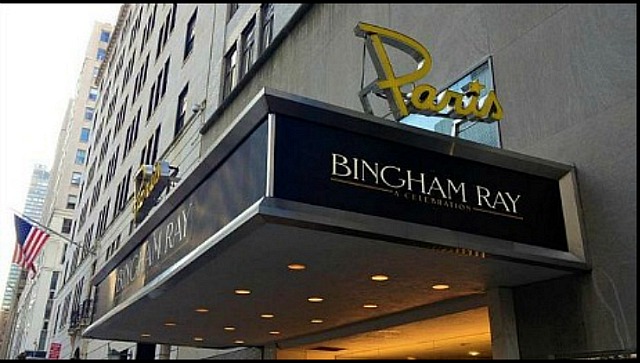
Three and a half years ago the catastrophic demise of the legendary Ziegfeld theatre was announced, and now comes Michael Fleming’s Deadline report that the uptown Paris theatre (58th Street near Fifth, right next to Bergdorf Goodman) will shutter in late July or August.

Obviously depressing, deflating, food for despair. The closing of another hallowed theatrical landmark — a move that will further diminish the character, personality and soul of midtown Manhattan.

Since opening in 1948 the mere existence of the Paris, a comfortable, well-maintained, mid-sized arthouse smack dab in the heart of one of the most flush, culture-rich areas of NYC and directly in the shadow of the historic Plaza hotel, was a statement by Manhattan itself — “This theatre never shows crap, and we’re immensely proud of this as well as thankful…only the best or at least the most interesting films of the moment…and so we, the Manhattan coolios, are delighted and honored that the Paris has such a great location, because it reminds passersby what a great and necessary thing it is to support and celebrate first-rate cinema.”

I’m really sick about this. I’ve been attending occasional premieres at the Paris since ’79 or thereabouts. My mother and I went to see Alain ResnaisMon Oncle d’Amerique there in ’80. I attended a Green Book premiere there last November, and a very cool premiere for Lone Scherfig‘s An Education in the fall of ’09.

As surely as Julius Caesar was knifed to death by political rivals, the Paris has been suffocated by HD streaming. This is the way the world ends, this is the way the world ends, this is the way the world ends…not with a bang but with another theatre closing.

Dress Sense vs. Directorial Expertise

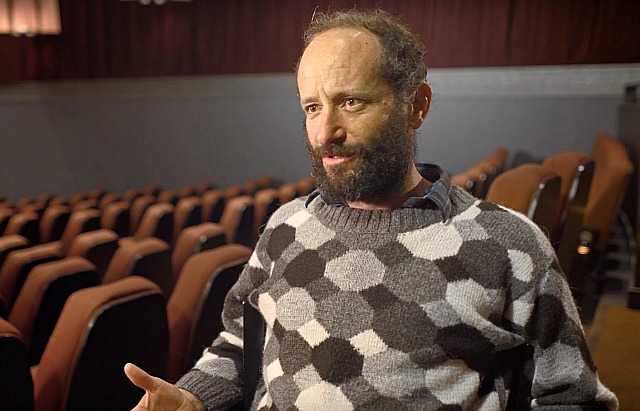
I can’t say I adore the films of Carlos Reygadas, but I’ve always found them bracing and serioso with subcurrents and shit. (And occasionally horrific.) I won’t be seeing Our Time until next Monday, but Silent Light, This Is My Kingdom and especially Post Tenebras Lux established Reygadas as a respected first-ranker.

But this sweater, man…c’mon. Not quite Cosby-level but fairly grotesque. How can a first-rate visual artist wear a garment like this?

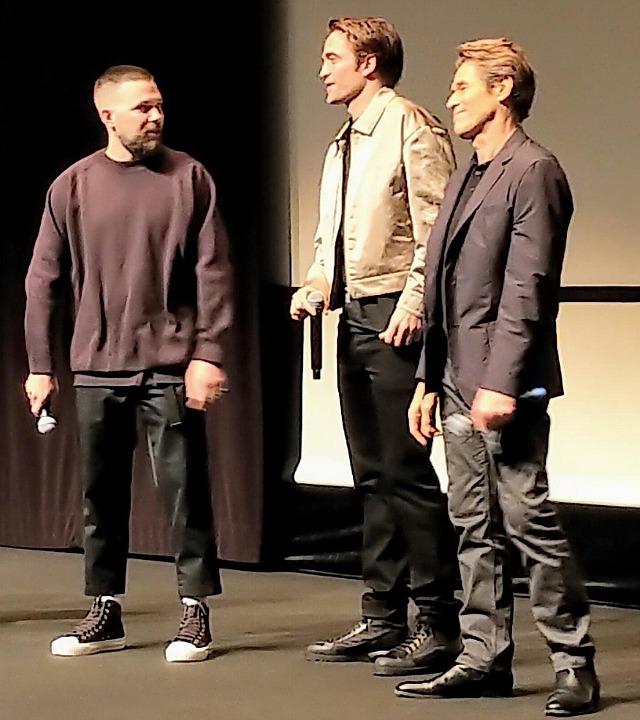
I had a similar thought when Robert Eggers took the stage following the first Cannes screening of The Lighthouse. Eggers is a brilliant filmmaker and obviously standing on the mountaintop right now, but God, look at him…jerkwad sneakers, white socks, black chinos with cuffs above the ankle, an oversized Target sweatshirt and a dorkmeister whitewall haircut. Look at Rbatz and Willem Dafoe — they obviously know what decent-looking threads are about but Eggers is a geek-squad guy.

Remember that pathetic light green Army-Navy winter jacket with the orange lining that Stanley Kubrick wore during the shooting of Eyes Wide Shut? Why does Steven Spielberg always seems to dress like some older suburban home-owner on his way to the hardware store? Where are the directors who wear tight jeans, expensive leather jackets, Italian lace-up shoes, nice scarves and whatnot?

Is being a terrible dresser more the rule than the exception when it comes to gifted directors? The only helmers who seem to have an interesting sense of film-set style are Steven Soderbergh, Jim Jarmusch, Alejandro G. Inarritu and…you tell me.

Eric Von Stroheim was a serious clothes horse in the ’20s; ditto D.W. Griffith, Victor Fleming, Howard Hawks, Cecil B. DeMille, etc.


Carlos Reygadas

(l. to r.) Robert Eggers, Robert Pattinson, Willem Dafoe following first Cannes screening of The Lighthouse.

Tales of Palm Beaming

20 years ago I owned a Palm5 or Palm vx…one of those. There was no email on phones back then, but I remember how cool it felt to beam info (address, email, phone #) to other Palm users. No more asking for business cards or phone #s or writing anything down…love it!

If you were on the receiving end you had to set your device to “receive beam” mode…right?

The Palm started to die three or four years later, especially after the first iPhone was introduced in ’07. Alas, the Apple guys ignored the beaming option. Android phones offer a beaming capability but Apple refuses to. I’ve never understood why.

Read more

“Midsommar” Reckoning

If you sit down and actually read the reviews of Ari Aster‘s Midsommar (A24, 7.3), you’ll quickly understand that a Rotten Tomatoes score of 93% is a less-than-fully-comprehensive assessment.

Randomly: (a) “More unsettling than frightening”; (b) “A gnarly horror movie…some of the kills are admirably nasty”; (c) “An intermittently impressive and frustrating film, but worth watching for every single one of its flaws“; (d) “As opposed to Hereditary‘s hushed, focused terror, Midsommar explodes with blood and gore”; (e) “Though viewers may be shocked by the occasional bit of self-conscious gore, any tendency toward slow-building dread is leavened by the script’s frequent ‘WTF?’ asides.”

I could catch a screening tomorrow night, but I’ve decided to attend another on Monday evening. There’s plenty of time.

Critic friend: “It was…okay? The entire time I was wishing it could be a better movie. Aster uses so many familiar tropes of the pagan cult genre, many of which were practically invented by The Wicker Man more than 45 years ago. The last hour or so is fairly entertaining, a lot of batshit stuff happens, but it’s no Hereditary.”

Uncle Norm

Time seems to move more quickly these days because I’m always trying to jam in as much activity as possible on a daily basis.

In my early 20s I had to strive and struggle as much as anyone else, but I spent most of my time daydreaming. Over and over I was saying to myself (a) “This situation vaguely sucks” and (b) “I’d rather be doing something else.” I spent my time watching movies or TV, taking road trips, chasing women, working as a tree surgeon and getting high or drinking in bars.

It was only when the writing bug kicked in that things began to take shape.

Physical Dominance vs. Psychological Security

“I was in love with Alan Ladd and I went to a party at Romanoff’s. I’m 5’7” but in heels I’m 5’9” or 5’10”. They said, “Shirley, your favorite actor is here. Come and meet him.’ I turned around. He was there and I went, ‘Oh hi, Mr. Ladd.’ He was about 4’9” and all my admiration disappeared literally in the dust.” — attributed to Shirley MacLaine but who knows?

Ladd was notoriously insecure about his height, which (to go by most accounts) was somewhere between 5’5″ and 5’6″. For his entire professional life this psychological albatross was draped around the poor guy’s neck. On the other hand James Cagney was roughly the same size (5’6″ or thereabouts) and he never squawked about it. He spent his whole adult life playing tough urban guys who slapped, punched or psychologically dominated other fellows, and nobody ever said “Jeez, he’s kinda short.” They said, “Shit, here comes Cagney…watch out.”

In short (pun), a good part of life is about owning the right kind of psychology — about feeling secure and confident about who you are and what you look like. It’s about planting your feet, looking the other guy in the eye and saying “take or or leave it but this is me…got a problem with that? Because I don’t.”

On the other hand I understand the Shirley MacLaine mindset. I’ve been a tall, slender, broad-shouldered guy with fairly good hair (augmented by Prague-installed follicles when I got older) all my life. I’ve been that guy since I was 11 or 12, and by the time I hit my early 20s I was feeling pretty cool about it. I know my looks helped in my hound-dog days in the ’70s and early ’80s.

But I’ve always had this unfair or prejudiced attitude about short guys, and I mean going back to when I was nine or ten. I’ve always had this belief that guys need to be 5’8″ or taller, and if they’re not…well, not a problem for me personally but they will have a certain gauntlet to contend with on a daily basis. Life is unfair and often cruel.

Alfred Hitchcock was only 5’7″ — only an inch or so taller than Ladd. By any fair standard he was short. Plus he was rotund and a half-baldie. Stanley Kubrick was also 5’7″, but I strongly doubt that anyone on a movie set ever said about him, “Look at that little guy.” Martin Scorsese is only 5’4″, for Chrissake — the same height as Tatyana. (And to me she doesn’t seem all that short.) If Ladd hadn’t accidentally overdosed in ’64 he would have been delighted to work with Scorsese in the ’70s — they would’ve gotten along famously.

Read more

Bella vs. Whoopi

The Bella Thorne nude-pic thing happened last weekend. Some hacker threatened to release some photos, and so Thorne released them herself in order to “reclaim her power.” Got it — good move.

But then The View‘s Whoopi Goldberg said Thorne was being reckless by sending nude photos to a boyfriend or even putting them on her phone in the first place. (Which is true — if you’re hot and famous the odds of your phone being hacked are high.) Thorne freaked and posted a “shame on you and fuck you, Whoopi” video.

This is basically a generational divide thing. Thorne’s contemporaries regard the posting of nude pics and sex tapes as totally routine and no biggie; women Whoopi’s age and older regard it (i.e., the sharing of intimate details) askance.

Villains Askew

All screen villains are perverse or flamboyant in one way or another, but it’s fairly rare to run into one with a truly twisted or offbeat attitude. In an off-handed, no-big-deal, between-the-lines sort of way, I mean. Muddy-souled, less-than-admirable fellows who are both neurotic and a bit moronic. Not “comedic” figures, but dour, compromised souls whose bizarre manner, obsessions and quirks makes them a bit laughable or at least amusing to some extent.

[Click through to full story on HE-plus]

Nobody Will Buy This

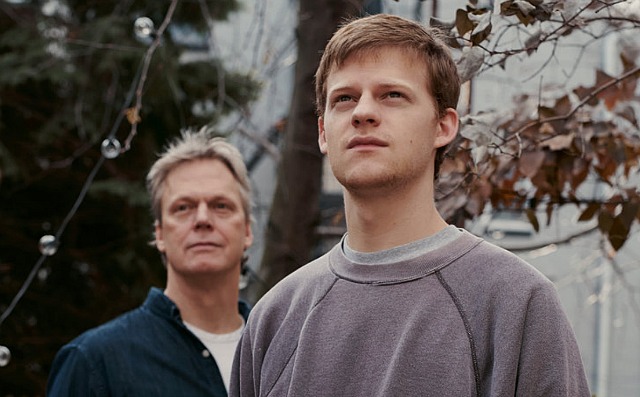
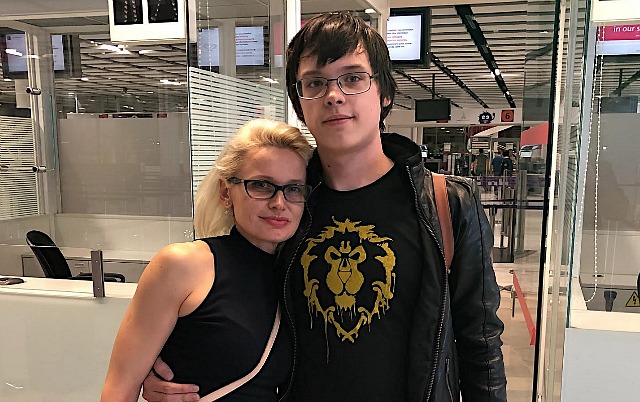
Notice a certain resemblance between Lucas Hedges and director-writer dad Peter? And between Tatyana Antropova and her son Gleb? Outside of Hollywood movies and casting circles this kind of thing is fairly common. Parents actually resemble their kids and vice versa.

In the case of red-haired kids at least one parent will be a red-head also. (Not always but 95% of the time.) If a mother has big, beautiful, roundish eyes, there’s a decent likelihood that her son or daughter will have the same. I know that’s not the way things happen in Hollywood, but in the real world they do. Really.

I don’t know the last time I saw a more unlikely family pairing than Michelle Pfeiffer and Lucas Hedges, who will play mother and son in French Exit, a dark comedy that Azazel Jacobs will direct from a script by Patrick deWitt (The Sisters Brothers). Look at how absurdly different they are; they don’t even look like cousins.

Did anyone think that Hedges even vaguely resembled Julia Roberts in Ben Is Back? She was supposed to be his mom…please.

Fresh Zombies

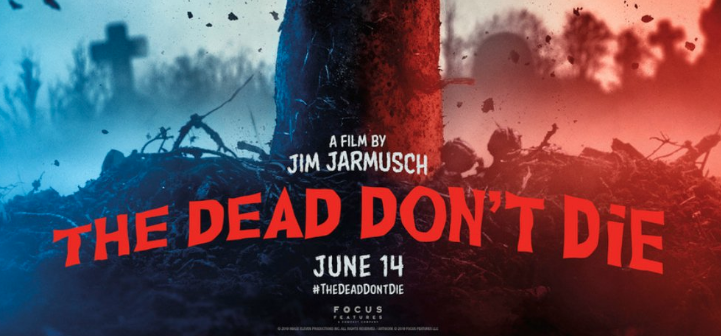
Jim Jarmusch‘s The Dead Don’t Die opened last Friday. More than a few HE regulars have presumably seen it. Reactions would be greatly appreciated. Here’s a re-post of my 5.14 Cannes review:

Dry, droll and deadpan are what you always get with Jim Jarmusch (and that’s fine with me), but The Dead Don’t Die, a small-town zombie comedy, is too slow, passive, resigned, lethargic and self-referential. It kind of works during the first half, but gradually spaces itself out.

Die‘s central problem is that it’s about watching a zombie apocalypse rather than somehow dealing with it.

Strange as this sounds, none of the characters actually try to survive. Well, they do but half-heartedly. It’s a laid-back hipster riff, but if you want to get serious and divine a social-political message, the film is basically saying “we’re going so wrong now and are more or less fucked at this point so why even fight it?”

Jarmusch occasionally flirts with the thematic thrust of George Romero‘s Dawn of the Dead (passive, brain-dead consumers are real-life zombies) and takes shots at the spreading Trump cancer, but he doesn’t really engage. Well, he does but in the manner of an aging, despairing, heavy-lidded type.

The Dead Don’t Die is baroquely amusing here and there, but the mood of laid-back nihilism and a general “submission to the plague” mentality is too persistent. Around the two-thirds mark the lack of any semblance of narrative energy starts to work against itself.

Horror fans are going to stay away in droves, Joe Popcorn is going to say “where’s the movie?” and Jarmusch devotees are going to feel under-nourished.

Bill Murray, Adam Driver and Chloe Sevigny play cops in an upper New York State town called Centerville, and all they really do is watch and comment, watch and comment, watch and comment.

Read more