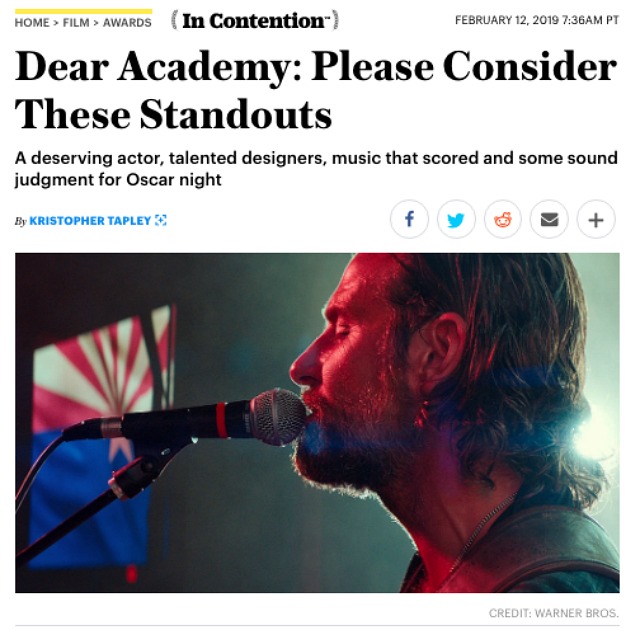
Best Film: Green Book Best Director: Pawel Pawlikowski, Cold War Best Actor: Rami Malek, Bohemian Rhapsody Best Actress: Glenn Close, The Wife Best Supporting Actor: Mahershala Ali, Green Book Best Supporting Actress: Regina King, If Beale Street Could Talk Best Cinematography: Lukasz Zal, Cold War Best Foreign Language Feature: Cold War.
The rest (in Academy member’s shorthand):
Original script: The Favorite
Editor and Adapted Script: Black Klansman
Costume: Ruth Carter
Doc: Free Solo.
PD [production design] and Song: Black Panther
Score: Black Panther
VFX: Message garbled
Hair and makeup: Vice
My heart goes out to Variety‘s Kris Tapley. He was part of the overhype that helped kill AStarIsBorn‘s Oscar hopes (along with Sean Penn, Robert DeNiro and Warner Bros. publicity chiefs), and he naturally feels badly about that. I feel Tapley’s pain, and to some extent I even share in Bradley Cooper‘s “embarassed” reaction to not being nominated for Best Director. Actually, I don’t — fuck that noise — I just said that to try and be nice.
“Look, if the directors branch so desperately wanted to put the 44-year-old writer-director-producer-actor-songwriter in his place, fine. But, thankfully, his work in front of the camera was remembered, because here’s the thing: It’s the finest lead actor performance of the year. Go back and look at it.”
HE to Tapley: Malek will win, Cooper blew it, end of narrative.
Back to Tapley: “I know it’s sometimes difficult for you to take a performance seriously in the race unless it’s in some prestige biopic (due respect to Christian Bale and Rami Malek, both fine competitors), but Cooper built a character from the ground up and infused it with life. He took an ages-old role that has long been ineffective, because the character was just so damn petty and unlikable in previous versions — and gave it real warmth and dimension.”
HE to Academy: Cooper has learned his lesson. He’s learned how to handle N.Y. Times Sunday Magazine interviews. He’s learned not to sound pompous and self-inflating during Hollywood Reporter round-table videos. He’s learned how to behave in a less dickish way at industry functions. He’s learned to discourage guys like Sean Penn from doubling down on their support with Deadline essays. He’s learned how to take it like a man and not talk about how “embarassed” he is at not being nominated.
So when he comes back with his Leonard Bernstein biopic, give him another shot. As Best Director and Best Actor.
A few days ago I watched Rayka Zehtabchi‘s Period. End if Sentence. — a 26-minute short about women in a small Indian village learning to make and sell sanitary pads to other women in their region. Which is a big deal because for centuries India’s patriarchal culture has enforced a belief that women’s menstrual cycles are shameful and must be kept “out of sight, out of mind.” Especially in the rural regions.
Yes, Virginia — India is a grotesque medieval country in some respects. And local women have paid the price for this ignorance for generations.
Roughly 19 years ago Arunachalam Muruganantham (aka “India’s menstruation man’) invented a low-cost machine that allows locals to manufacture first-rate sanitary pads. Muruganantham’s device is priced at only $950 while imported machines cost over $500,000. Zehtabchi’s doc is about rural women using this invention to take charge of their natural lives.
Essentially Period. End of Sentence. is about a quiet revolution in the minds of women who reside in Indian backwaters. (The village in question is a suburb of Delhi.) High school girls in California (led by exec producer Helen Yenser) raised the initial money for the machine and began a non-profit called “The Pad Project.”
For weeks I’ve been referring to this doc as “Lisa Taback’s Indian film” because she’s one of the producers (her daughter Claire Sliney is an exec producer), and because Lisa and Claire went to India last year to assist in the filming. Many others were involved, but I’ve known Lisa for years as the Queen of Oscar strategists (currently exclusive to Netflix) and so she’s my reference point.
Here’s a current New Yorker piece, titled The Oscar-Nominated Doc About a Pad Machine,” by Dana Goodyear.
Incidentally: Tatyana informs that many Russian women who belong to the Russian Orthodox church culture are urged not to attend church services while they are menstruating. Liberal Orthodox churches allow menstruating women to attend services, but they can’t touch anything or talk with the priest or receive Holy Communion. Astonishing!
Has any human being, male or female, ever worn an uglier tuxedo than the one worn by Godfather producer Al Ruddy during the 45th Academy Award ceremony, which was held on Tuesday, 3.27.73?
The show’s producer was Howard W. Koch. There were four co-hosts that night — Carol Burnett, Michael Caine, Charlton Heston and Rock Hudson. The show aired on NBC, and the duration — hold on to your hats — was two hours and 38 minutes. Amazingly, they managed to keep it to this length while at the same time handing out Oscars for Best Cinematography, Film Editing, Live-Action Short, etc. (A friend reminds that the Makeup/Hairstyling category hadn’t been created at that point.)
Ruddy represented the heavy-hitter non-creatives behind The Godfather — himself, Robert Evans, Peter Bart, Charles Bluhdorn, Frank Yablans — but in various ways these guys made things hugely difficult for director Francis Coppola. Okay, maybe not Bart but certainly Evans and Bluhdorn, and to some extent Ruddy.
Five years ago a YouTube commenter wrote, “The Godfather producers were a bunch of assholes. They were against casting Brando and Pacino. They were against Nino Rota‘s score. They were against Gordon Willis‘ dark photography. They tried to have Coppola fired several times. If The Godfather is one of the best movies ever made, it is in spite of its producers, not thanks to them.”
There was more to it than just that, but the commenter is not wholly wrong.
According to Mark Seals‘ “The Godfather Wars” (Vanity Fair, March 2009), when Coppola announced that The Godfather “should not be a film about organized crime but a family chronicle, a metaphor for capitalism in America,” Evans’ reaction was “Is he nuts?”
On the other hand one of Evans’ earliest demands was that The Godfather would have to feel east-coast authentic, that audiences would be able to “smell the spaghetti.” And he did, according to some accounts, upbraid Coppola for initially submitting a shorter cut that lacked that spaghetti aroma, that de-emphasized the family stuff.
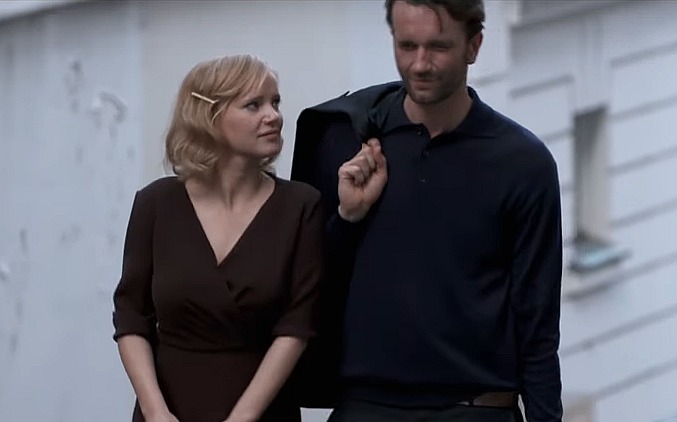
You can’t watch Cold War and not fall in love with how it looks. If you have the slightest respect for what goes into exquisite composition, you can’t help but succumb. Those gleaming, whistle-clean silvery tones, Łukasz Żal‘s somewhat unusual bottom-heavy framings, that feeling of being in a repressive but exotic realm. It’s easily one of the most beautifully crafted films of the 21st Century, and yet it never feels ponderous or self-inflating or anything less than perfectly centered.
And now, 12 days before Oscar night, the winds seem to be favoring Cold War. Apparently. Seemingly.
The fact that Żal’s lensing took the top prize at last weekend’s ASC (American Society of Cinematographers) awards is highly significant. Think of it…a Polish-made, black-and-white, boxy-shaped smarthouse film beat the commanding palettes of Roma, A Star is Born, First Man and The Favourite.
Call it a late-inning surge, and I’m starting to think Cold War‘s momentum may spill over into the foreign language realm. Maybe.
Glenn Close has toldDeadline‘s Antonia Blyth that she’d like to produce an alternate version of Fatal Attraction (’87) — one in which her character, Alex the “bunny boiler,” is presented as a “tragic figure” rather than an evil one. And is therefore more sad than scary.
In other words, a smart but neurotic woman who’s desperately lonely and believes that her life is downswirling and that she’ll never find anything close to the domestic serenity that Michael Douglas (with whom she’s had a weekend’s worth of mad, passionate sex) and Anne Archer and their daughter apparently have.
But here’s the thing: Fatal Attraction was set in the mid ’80s, less than a decade from the sexually experimental and even revolutionary ’70s, when all kinds of appetites and passions were regarded as commonplace. In fact haven’t fair-minded adults always seen brief flings as normal, everyday occurences — i.e., “just one of those things”? If I’m not mistaken this comme ci comme ca attitude has been with us for decades if not centuries. Everyone over the age of 22 understands this.
No woman of 2019 or 1987 would regard a weekend of intense sex with a married man as anything more than a weekend of intense sex with a married man. Only a nutcase would say to the husband, “Now that we’ve fucked four or five times we’re bonded like cement, and you owe me big-time. You now have to somehow disengage yourself from your unsuspecting wife and daughter and come live with me, and then we can share delicious pasta and listen to Madame Butterfly forever.”
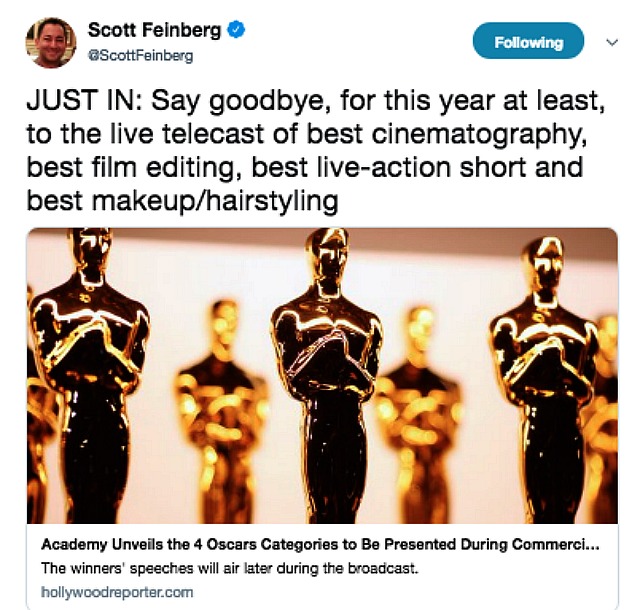
Will someone who either presents or accepts an Oscar on the evening of Sunday, 2.24…will somebody in this small fraternity please go off script for 20 seconds and say that no one who cares about movies agrees with giving the bum’s rush to winners of the 2019 Oscars for best cinematography, film editing, live-action short and makeup/hairstyling? And that this is completely insulting to the people who’ve earned their moment of recognition in these realms. And that the ABC Disney execs who pushed for this exclusion need to apologize and then leave the room. Someone has to stand up and say this.
Earlier today I caught up with World of Reel‘s Jordan Ruimy and we talked about this and that — the continuing Best Picture puzzlement, the fact that only two out of 25 Gold Derby know-it-alls are picking Green Book to win at this stage, the mysterious disappearance of Vox Lux, the coming importance of Lulu Wang‘s The Farewell (which made Jordan cry), the inescapable impact of the forthcoming Leaving Neverland when it plays on HBO in early March, the fact that Nicole Kidman‘s raspy-voiced Destroyer performance never made it into the Oscar conversation and other pressing matters.
[Note: This conversation has no musical intro, no bells and whistles….just straight talk.
Director friend: “You really need to write your memoirs. Have you ever tried? You’d sell them and they’d likely become a film or TV series.”
HE: “I am writing my memoirs, after a fashion.”
Director friend: “Good for you! I think you could make a fortune. Your life has been interesting, very interesting. And, honestly, nobody in journalism writes better than you.”
HE: “By ‘after a fashion’ I meant that I’m writing them in daily column form.”
Director friend: “Increase your ambition…Jesus!You will end up making seven figures in the end. Fucking Glieberman wrote a memoir. So can you.”
HE: What was it that Terry Malloy said about ambition? ‘I always figured I’d live a little bit longer without it.'”
Hollywood Elsewhere agrees that Nichols’ 122-minute film is less than perfect — it’s not especially “funny” (especially when Orson Welles and Bob Newhart are around) and feels a bit stiff and all wrapped up in itself, but (a) a lot of it works (like the opening sunrise credit sequence), (b) David Watkins‘ cinematography is fairly wonderful, and (c) it contains some perfectly choreographed sequences that are still delicious, 50 years on.
Clooney’s miniseries will pop on 5.17.19. I can’t seem to discover how many hours it will run.
A slimmed-down Christopher Abbott (he was on the rotund side four years ago) will play Cpt. John Yossarian (Alan Arkin). Kyle Chandler is Colonel Cathcart (Martin Balsam). Hugh Laurie is Major de Coverley (skipped over in the 1970 film). Clooney is playing Scheisskopf, whoever the hell that is. Daniel David Stewart is Milo (Jon Voight). Austin Stowell plays Nately (Art Garfunkel). Rafi Gavron as Aarfy (Charles Grodin). Graham Patrick Martin portrays Orr (Bob Balaban). Lewis Pullman is Major Major (Newhart). Tessa Ferrer as Nurse Duckett (Paula Prentiss). Jay Paulson as Chaplain Tappman (Anthony Perkins).
There’s a visually engaging Vanity Fair piece called “The 25 Most Influential Movie Scenes of the Past 25 Years.” Except it’s not so much about scenes that were influential as much as highly memorable — scenes that dominated conversations for years to come.
We all have our favorites in this regard, but I would definitely omit (a) the opening scenes in Toy Story and Scream, (b) an allegedly comic axe-murder scene in American Psycho, (c) the flashlight close-up horror moment in The Blair Witch Project, (d) “King Kong ain’t got shit on me” in Training Day, (e) Gollum vs. Smeagal in The Lord of the Rings: The Two Towers, (f) Diane Keaton cries while writing a play in Something’s Gotta Give, (g) the “chosen one” scene in Star Wars: Episode III — Revenge of the Sith, (h) the chest-waxing scene in The 40 Year-Old Virgin, (i) the favela chase scene in Fast Five, and (j) the sunken place scene in Get Out
But I agree with highlighting (a) the “king of the world” scene in Titanic, (b) the gutterballs dream sequence in The Big Lebowski, (c) the Omaha Beach landing in Saving Private Ryan, (d) the bullet-time action scene in The Matrix, (e) the flying-ballet combat scenes in Crouching Tiger, Hidden Dragon, (f) the Gwyneth Paltrow-Nico-“These days” sequence in The Royal Tenenbaums, (g) Bill Murray whispering to Scarlet Johansson at the end of Lost In Translation, (h) the Edward-meets-Bella scene in Twilight, (i) “I wish I knew how to quit you” in Brokeback Mountain and (j) the “I drink your milkshake” finale in There Will Be Blood.
I’m neutral on Michael Moore‘s ambushing of Charlton Heston in Bowling for Columbine. Memorable, okay, but less than profound.
My all-time earthmover and brain–shaker of the last quarter-century — the scene that knocked me for a total loop and gave me a cinematic endorphin rush like nothing else — was the mob-attack-upon-the-van sequence in Alfonso Cuaron‘s Children of Men (’06).
The Vanity Fair piece celebrates this also, but co-author K. Austin Collins belittles it. He doesn’t say that it set a new standard for brilliant action cinematography, which is most certainly did. He says that it “set a standard for showing off.” He also calls COM‘s trio of edit-free, long-take scenes “its loudest accomplishment.”
The high-water mark of both Cuaron and cinematographer Emmanuel “Chivo” Lubezki‘s careers was about loudness and “showing off”? This has to be one of the most asinine assessments of an unquestionably great film that I’ve ever read.
If this is the case, the question that follows is “what talent?”
Millennium Films CEO Avi Lerner called the Atlantic article “agenda-driven fake news.” Lerner later disavowed that statement, claiming that publicist Howard Bragman had authored it and that Lerner had approved the statement without reading it. Who does this?
“I don’t want to apologize [but I] want to clarify [the statement],” Lerner told The Hollywood Reporter last month. “I think victims should be heard and this allegation should be taken very, very seriously. I just don’t agree to judge by the Twitter. I want [the accused] to be judged by the court.”
What person on the planet earth other than Lerner has used the term “the Twitter”?
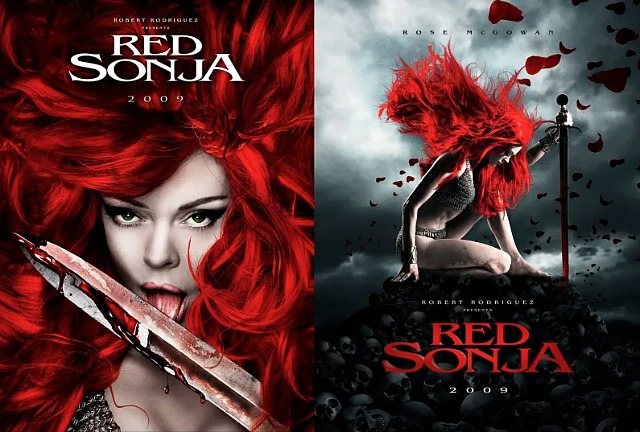
What about re-booting Red Sonja as a shaved-head sexual avenger who has time-shifted into 2020, angrily charging around and perhaps slicing off the genitalia of older rich guys who’ve tried to have their way with vulnerable younger women? A perfect fit for Rose McGowan, who almost played a traditional version of the character with then-boyfriend Robert Rodriguez at the helm.