Re-Saluting Reitman’s “Front Runner”

Less than ten minutes into my first viewing of Jason Reitman‘s The Front Runner, I knew it was at least a B-plus. By the time it ended I was convinced it was a solid A. It’s not a typical Reitman film — it doesn’t deliver emotionally moving moments a la Juno and Up In The Air. It is, however, a sharp and lucid account of a real-life political tragedy — the destruction of former Colorado Senator Gary Hart‘s presidential campaign due to press reports of extra-marital womanizing with campaign volunteer Donna Rice.

The Front Runner is an exacting, brilliantly captured account of a sea-change in press coverage of presidential campaigns — about a moment when everything in the media landscape suddenly turned tabloid. Plus it feels recognizable as shit. I immediately compared The Front Runner to Michael Ritchie’s The Candidate, Mike NicholsPrimary Colors and James Vanderbilt‘s Truth. It is absolutely on the same wavelength and of the same calibre. Hugh Jackman delivers a steady, measured, well-honed portrayal of Hart, but the whole cast is pretty close to perfect — every detail, every note, every wisecrack is spot-on.

Why, then, are some critics giving Reitman’s film, which is absolutely his best since Up In The Air, the back of their hands? The Front Runner easily warrants scores in the high 80s or low 90s, and yet Rotten Tomatoes and Metacritic aggregate tallies are currently in the high 60s — over 20 points lower than they should be.

I’ll tell you what’s going on. Critics can be cool to films that portray journalists in a less than admirable light, which is what The Front Runner certainly does. The Miami Herald reporters who followed Hart around and broke the Rice story are depicted as sleazy fellows, and the relationship between the Miami Herald and Hart is depicted as deeply antagonistic, especially on the Herald’s part. Hart screwed himself with his own carelessness, but the Herald is depicted as being more or less on the same level as the National Enquirer.

You can bet that on some level this analogy is not going down well with certain critics. Remember how Vanderbilt’s Truth (’15), a whipsmart journalism drama, was tarnished in the press for portraying the collapse of Mary Mapes‘ faulty 60 Minutes investigation into George Bush‘s National Guard history and alleged cocaine use? A somewhat similar dynamic is happening right how.
Read more

Brando vs. South African Apartheid

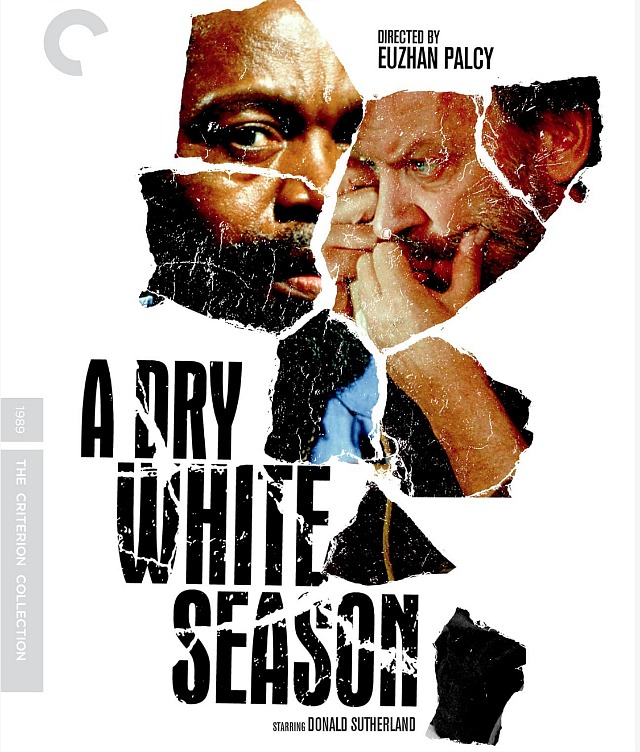
On 12.11, Criterion will release a 4K-scanned Bluray of Euzhan Palcy‘s A Dry White Season (’89), an anti-apartheid drama. I remember Marlon Brando‘s brief but lively performance as South African barrister Ian McKenzie (which resulted in a Best Supporting Actor Oscar nomination), but that’s all. Donald Sutherland played the lead, and the costars were Janet Suzman, Susan Sarandon, Jurgen Prochnow and Michael Gambon. The film was generally well-reviewed, but I honestly don’t recall anything about the plot.

Wikipage excerpt: “Brando was so moved by Palcy’s commitment to social change that he came out of a self-imposed retirement to play the role of the human rights lawyer; he also agreed to work for union scale ($4,000), far below his usual fee. The salaries of Sutherland and Sarandon were also reduced. The film was budgeted at only $9 million.”

Tell Your Life Story in 7 Words

If you consider “a” to be a word, my seven-word summary is “Took a while, but I got there.” If “a” doesn’t count, I prefer “It took a while, but I got there.”

1st HE alternate: “If you trust yourself when others don’t.” 2nd HE alternate (14-word cheating version): “Long and hard is the way that out of hell leads up to light.”

Sidenote: I’ve never liked the idea of “a” being a word. It’s just a letter — it’s not, you know, an actual word. Conflicted, measured, loquacious, randy, uncertain, impudent…those are words that you can really shake hands with. What is “a” really? A neutral, non-judgmental single-digit thingie that you put before a noun. You can call it a word if you want, but I’ve had doubts for decades. If you ask me the jury is still out.

Possibly Not Half Bad

Reminder: Sony Pictures Classics will distribute Jon Baird and Jeff Pope‘s Stan & Ollie, but I’m not finding a date. Will it open this year or not? The film is about the comedy duo in their early to late ’30s heyday (Pardon Us, Bonnie Scotland, Our Relations) but about a last hurrah tour of England and Ireland in 1953, when Laurel and Hardy (Steve Coogan, John C. Reilly) were in their early 60s. The London Film Festival’s Stan & Ollie premiere will happen on 10.21.

Kavanaugh Needs To Go Down

Earlier today a friend asked if I thought it was fair to go after Supreme Court nominee Brett Kavanaugh over an alleged case of drunken sexual assault when he was 17. This is your standard “he was just a dopey, full-of-beans hooligan who’d had too much to drink” defense.

My first answer was yes, it’s fair because whether drunk or sober sexual assault is an ugly, bestial thing for Kavanaugh to have attempted. As boozed up as I often got when I caroused with my high-school friends on weekends, I never forcibly groped or overpowered a woman, and if I’d heard about a friend having done so I would’ve been appalled.

My second answer was that anything that can hurt Kavanaugh’s chances of being confirmed is worth pursuing and pushing. Kavanaugh is a partisan, pig-eyed Trump loyalist who would eventually help terminate Roe v. Wade if confirmed.

My third answer was that as troubling as Kavanaugh’s alleged 1982 sexual assault against Christine Blasey Ford is, the primary issue is Kavanaugh’s reported declaration that it flat-out never happened. He’ll presumably testify to this effect when he goes before the committee. But if the alleged incident could somehow be factually supported to a near certainty as well as corraborated by testimony from others, that would make Kavanaugh seem like an apparent liar and possible perjurer.

Calm Down About “Mandy”

Yesterday I caught a 3:20 pm show of Panos Cosmatos’ Mandy at the IFC Center. Not bad but overhyped. Yes, it’s somewhat imaginative, atmospherically immersive, psychologically intense and impressively flourishy in portions — it’s definitely no run-of-the-mill revenge flick. But it’s been way over-rated by fanboys. Too slow and therefore too long — it would be a whole different equation if Cosmatos could have kept it down to 85 or 90 minutes.

I get and appreciate the raw cheeseball ghoul aesthetic. Mandy is not only set in ’83 — it feels like the early ’80s up, down, over and sideways, and could have been a Cannon flick. And it certainly delivers the hellish backwoods surrealism (deep shadows mixed with intense red lighting, the occasional animated insert). And I appreciate Linus Roache having the bravery to allow Cosmatos to use the less-than-impressive size of Roache’s package as a plot point. And I respect and admire the whole meta-Nic Cage-on-a-rampage thing…anger, savagery, screaming, swilling vodka in his underwear and white socks, creating his own axe weaponry in a forge, etc.

And while the televized voice of Ronald Reagan is heard at one point, there’s no discernible social metaphor in the battle between earthy, working-class Cage and the Children of the New Dawn (Mansonesque hippie freaks, satanists, perversity unbound). Or nothing, at least, that came together in my head. It’s basically just another reworking of the “don’t go into the woods or the fiends will get you” formula.

Mandy isn’t bad but the first hour is way too slow and gradual, and by lasting 121 minutes it dissipates itself. Pacing is everything. And why is it called Mandy? Its not as if Andrea Riseborough is playing some kind of dominant central figure. She’s just the arts-and-crafty girlfriend who gets kidnapped and then murdered by the sickos. They could have just as easily called it Caruthers, the character played by Bill Duke.

Great Pink

It’s been decades since I listened to this track from The Band’s “Music From Big Pink.” Sometimes an old musty song can sound great again, especially if you haven’t sampled it for a long while. And if you re-listen on expensive earphones, loud. This and “Chest Fever,” now that I’m thinking about it.

“We Can Talk” was written by Richard Manuel, and sung by Manuel, Levon Helm and Rick Danko. There’s a new remastered “Big Pink” album (being called a 50th anniversary box set) that some music critics are unhappy with. Has anyone listened to it?

Read more

Mom, Dad, Kids

Ahhh, that Rob Marshall touch! Broadly acted (poor Ben Whishaw), FX- and animation-driven whenever possible, musical interludes, on the nose, same as the ’64 version, made for little kids, Puerto Rican chimney sweep in 1930s London, etc. The first teaser hinted at a certain subtlety; apparently that’s out the window.

Life and Limb

Remember the opening of Lawrence of Arabia with Peter O’Toole rumbling along that winding country road without a helmet? That was me yesterday afternoon. God bless Connecticut’s optional helmet law. I cruised all over Wilton, Ridgefield, Norwalk and Westport. Never in my life have I driven a two-wheeled vehicle without a helmet, not even in Europe. Do I think it’s a good idea to forsake one as a rule? No, but the wind whipping through your hair feels wonderful, and that wild and free sensation seemed to intensify the road aromas. It was symphonic.

Read more

Old Saw But Nonetheless…

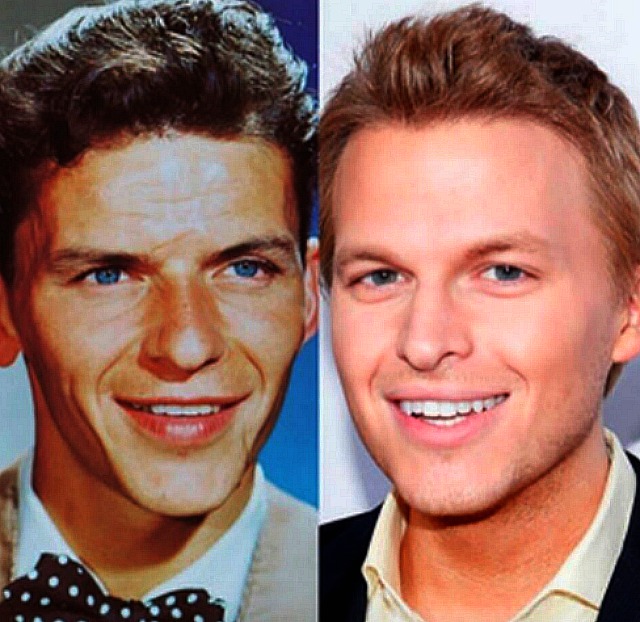
A few minutes ago a friend wrote me an email titled “don’t piss on my leg and tell me it’s raining.” It reads “obviously Woody had a low sperm count (per Hannah and Her Sisters) so Mia asked ex-husband Frank Sinatra to do her a solid. No one would ever know, except that Ronan Farrow looks like a Frankie. Look at the upper lip. The chin. The hairline. The eye shape.” Bottom line: Ronan doesn’t resemble Woody Allen in the slightest.

“Her Smell,” My Hell

Alex Ross Perry‘s Her Smell is an audience-test movie — a kind of experiment to see how much in the way of undisciplined, pull-out-the-stops abuse viewers are willing to sit through.

The tools of this abuse are wielded by Perry and star Elizabeth Moss, who gets to snarl and smile demonically and be all manic-crazy obnoxious as Becky Something, an edgy, drug-fueled grunge rocker (pic is set in the ’90s) who wears too much eye makeup and suggestively flicks her tongue and could stand to lose a few pounds. Five minutes with crazy Becky and you’re immediately plotting your escape. She’s Medusa-woman, lemme outta here, can’t do this…aagghh!

Escaping wasn’t an actual option, of course, as I sitting in a New York Film Festival press screening at the Walter Reade theatre, surrounded by dozens of critics. If I’d bolted I would have never heard the end of it so I stuck it out like a man, but good God almighty.

There’s one tolerable moment in the last third. I’m reluctant to use the term “third act” as there’s no story in Her Smell, much less anything resembling story tension, although there are five chapters or sections, each announced by snippets of 1.37:1 footage. The moment I’m speaking of shows a sober Becky sitting down at the piano and gently singing Bryan Adam‘s “Heaven” to her toddler daughter. Hollywood Elsewhere is very grateful to Perry for at least offering this small slice of comfort pie. Peons like myself (i.e., viewers who are unable to enjoy a film teeming with jabbering, wall-to-wall, motor-mouthed anxiety) need this kind of thing from time to time.

85% to 90% of Her Smell is about enduring Becky’s rash, needling, abrasive behavior toward her bandmates (Agyness Deyn, Gayle Rankin), a trio of up-and-coming Seattle chick musicians (Cara Delevigne, Dylan Gelula, Ashley Benson), her ex-husband (dull-as-dishwater Dan Stevens), the record-label owner (Eric Stoltz, 56 during filming and eyeballing the big six-oh) and some kind of manager-agent character (Virginia Madsen, who was born only 20 days before Stoltz). They all regard Becky with the same expression, a non-verbal channelling of “oh, God…she’s gone over the edge…what can be done?” and so on.

To sum up, Her Smell is Perry punishment. And an indulgent, highly undisciplined, 135-minute exercise in flamboyant behavior-acting for Moss. I will never, ever see it again.

Read more