Imminent Death of Motion Smoothing

I’ve never watched a single film on my Sony 65″ HDR 4K TV with the “aid” of motion-smoothing, which makes everything look overly fluid and video-tapey and generally removes the scrim-texture of film. But as appalling and repellent as motion-smoothing is, I’m strangely attracted to using it when watching old black-and-white films.

There’s something hypnotic about watching, say, William Wellman‘s The Public Enemy, which I’ve seen several times since I was a kid, with the motion-smoothing effect. Shot 87 years ago, this rickety-feeling James Cagney gangster flick is a formally framed, somewhat squawky-sounding film for the most part, but with motion smoothing it feels (and I know I’m not supposed to say this) cleaner, fresher, less antiquated.

In any event, the motion-smoothing option may eventually be removed by TV manufacturers. Or at least removed as an easy default option. If Christopher Nolan and Paul Thomas Anderson have anything to say about it, that is. The directors are reportedly talking to TV manufacturers in the UHD Alliance about implementing a universal “reference mode” that would kill motion smoothing and thereby make films look like they do in theatres, which is what their creators have always intended.

From a letter reportedly sent by the DGA to members: “Many of you have seen your work appear on television screens looking different from the way you actually finished it. Modern televisions have extraordinary technical capabilities, and it is important that we harness these new technologies to ensure that the home viewer sees our work presented as closely as possible to our original creative intentions.”

“TV manufacturers are reportedly open to the idea, but want to know specifics on what would be important to directors. The survey includes questions like ‘How important is it to you to have a simple way to get consumers’ home TV setup similar to monitors in the color-grading suites for viewing film and television content that YOU created?’ and ‘Would you expect this ‘reference mode’ to be called the same thing on different manufacturers of TVs?'”

Character & Charisma Make The Difference

Handsomely lighted by Loyal Griggs but otherwise a typical Cecil B. DeMille scene with an emphasis on old-fashioned “acting”, which is pretty much inevitable given the theatrical-sounding dialogue (written by Aeneas MacKenzie, Jesse L. Lasky Jr., Jack Gariss and Fredric M. Frank), which is steeped in stiff, faux-Biblical pretentiousness. But the youngish Yul Brynner (who was somewhere around 35 when he acted in The Ten Commandments) and Edward G. Robinson (62 at the time) make this scene work regardless. Because their acting skills and naturally grounded presence overcome the DeMille bullshit. This is what you want when you cast a film — actors who are good and gifted enough to make your crappy dialogue sound better than it is, and to make your film not seem as if it’s been shot on a sound-stage set.

Fussies & Pissies Mulling “Green Book” Pushback

Be mindful and take heed of the Guy Lodge brigade, already grousing and muttering about Green Book overpraise and loading their weapons as they ready a pushback movement as soon as possible. Have they actually pushed back yet? No, but they will — I can smell their thinking from thousands of miles away. For 12 hours the Green Book reception was a Toronto rainshower of love. Now it’s a coming war, skirmish, street fight, fisticuffs.

Read more

C’mon, Gold Derby…Hubba-Hubba

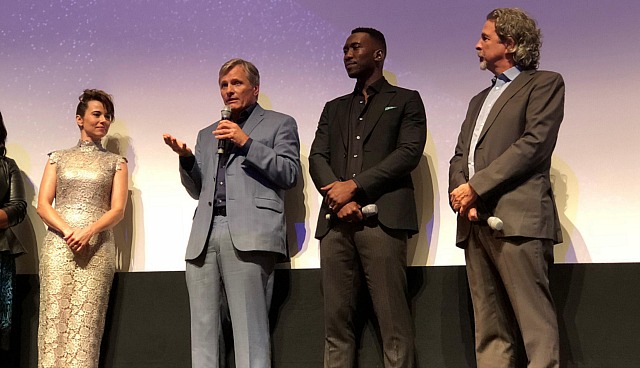
The Gold Derby team needs to understand the Viggo Mortensen-Mahershala Ali Green Book award-season strategies. I’ve been told that Team Viggo is going for Best Actor while Mahershala’s people want to run him in supporting, the thinking being that Viggo gives a showier performance and that his mildly racist goombah character undergoes a bigger growth arc over the course of the film. So Gold Derby programmers need to insert Mahershala as a Best Supporting Actor option. Right now he’s missing in this context, which is why my Best Supporting Actor spitballs don’t include him. If Mahershala was part of the Gold Derby tray he’d be right at the top.

I’m otherwise slightly confused or dithering about current Best Supporting Actor picks. I’m 100% firm on Mahershala as well as Sam Elliott in A Star Is Born, but beyond these two I’m not feeling a great deal of passion.

Read more

Setting Things Straight

HE commenters have responded to my Green Book rave. Last night “The Cinemaholic” claimed that “post-TIFF, the following films are (almost) confirmed” to receive a Best Picture nom — Roma, First Man, A Star Is Born, Green Book and If Beale Street Could Talk. He further asserted that The Favourite and Can You Ever Forgive Me? are “likely but not guaranteed.”

This prompted “RossoVeneziano” to comment that “The Favourite is much ahead of Green Book LOL,” whatever the hell that means.

My response: If Beale Street snags a Best Picture nom, fine, but my gut suspicion is that it’ll be a miracle if that happens. Don’t buy into the Toronto hype-and-denial hymnbook. It’s a “good”, handsomely composed film with a palpable love current, but it’s definitely an endurance test. It made my petals wilt.

The Barry Jenkins brigade was out in force during that first Princess of Wales screening, and 90% of the critics (pre-cooked admirers of Barry’s gentle, meditative, Wong Kar Wai aesthetic) followed suit in order to play it safe. No downside if they praise it, but if they don’t finger-pointers might begin to question their loyalty to progressive identity politics.

The Favourite is a witty, visually distinctive, Barry Lyndon-like, political-conflict comedy between a pair of shrewd schemers (Rachel Weisz, Emma Stone), but it’s not an audience-pleaser with the button-pushing potency of Green Book.

Yorgos Lanthiimos’ film is therefore not, as of this morning, “much ahead” of Green Book in the Best Picture competish. I think they’re side by side right now, with the Peter Farrelly film currently enjoying a euphoric bounce off of last night’s TIFF screening.

And then “Mark VH” asked if Green Book is “better” than Hidden Figures, which he thought “was one of the most satisfying movies of its kind I’d ever seen (didn’t much care for The Help). Sounds like this is gonna be right up my wife’s alley, as she loves this kind of thing.”

My response: As a well-crafted period piece about pride, smarts and diligence pushing back against racial barriers, Hidden Figures was somewhere between a double and a triple. Set in the same era (early ‘60s) and mining a somewhat similar theme, Green Book is somewhere between a triple and a homer. It’s also, in my book, occasonally funny as shit (Hidden Figures used humor here and there) and generally more entertaining with a better, more deep-down third act. Farrelly’s film, no offense, is a LOT better than “my wife will like it.”

Read more

Fuhgedaboudit — “Green Book” Is A Huge Hit + Awards Contender

The Elgin theatre audience exploded in cheers and whoo-whoo applause when a showing of Peter Farrelly’s Green Book (Universal, 11.21) ended late Tuesday night. I’m not talking about expressions of warmth and respect — I’m talking about instant kapow, instant “yes!” No other Toronto Film Festival screening I’ve attended has generated this kind of love, alpha vibes and excitement.

A racially stamped, early ’60s version of Planes, Trains & Automobiles blended with a little Driving Miss Daisy and fortified by a shrewd, plain-spoken, nicely-honed screenplay (by Farrelly, Brian Hayes Currie and Nick Vallelonga) that touches solid bottom in a few ways, Green Book is a huge hit waiting to happen and a definite Best Picture nominee…hands down, don’t even think about it, Tom O’Neil is going to have kittens.

A heartwarmer about the various shades and permutations of American racism coursing through the body politic back in the Kennedy era, Green Book is not the contradiction it sounds like but the most satisfying feel-good movie I’ve seen in a long, long time.

Is it anywhere close to daring or nervy? Nope — it’s a nice, safe, entertaining middle-class dramedy, tidy and affecting and right out of the big-studio handbook, but man, it really hits the spot. I’m talking about a moviegoing experience that goes down like a nice creamy milk shake.

You can call me a square or a sap for succumbing to a film of this sort, a liberal-minded social-issue dramedy that could’ve easily been made 20 or 30 years ago, but you should’ve heard that audience go nuts when the closing credits began. I mean, it was like thunderbolt and lightning.

Universal has a real problem on its hands with Mahershala Ali and Viggo Mortenson equally deserving Best Actor nominations; I really can’t decide who has a better shot. Okay, maybe Viggo because his character undergoes a greater amount of character growth and self-realization, but Mahershala delivers such a magnificent combination of dignity, buried pain, musical spirit and uptight rectitude.

At least there’ll be no hemming or hawing about Linda Cardellini, who’s a near shoo-in for a Best Supporting Actress nom as Viggo’s stay-at-home Italian wife. Plus you’d have to nominate the screenplay in the Best Original category, and Farrelly for Best Director along with Best Picture.

I’m not saying Green Book is a better film than Roma or First Man or Can You Ever Forgive Me? or Widows or First Reformed, but it makes you feel better than all of these films combined. I’m sorry but it does.

I’m going to bed but I’ll elaborate tomorrow morning sometime.

“Roma” Mama

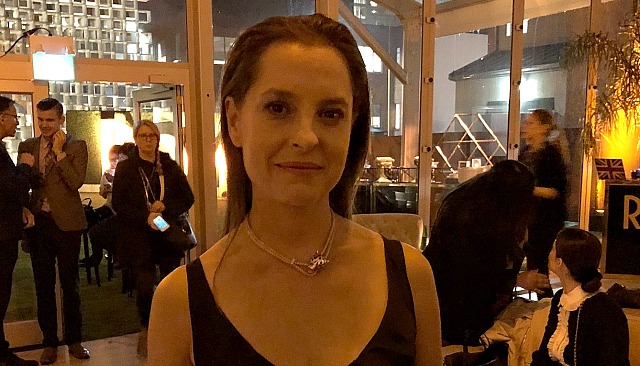
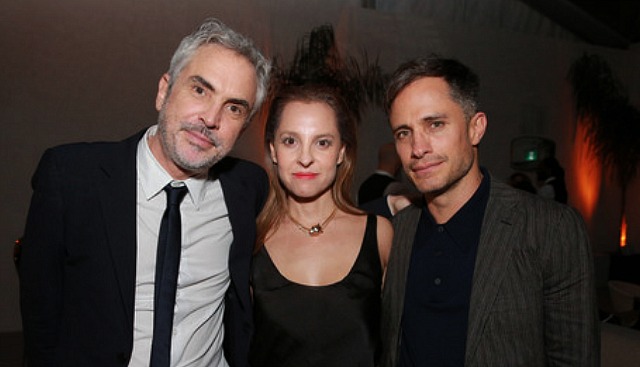
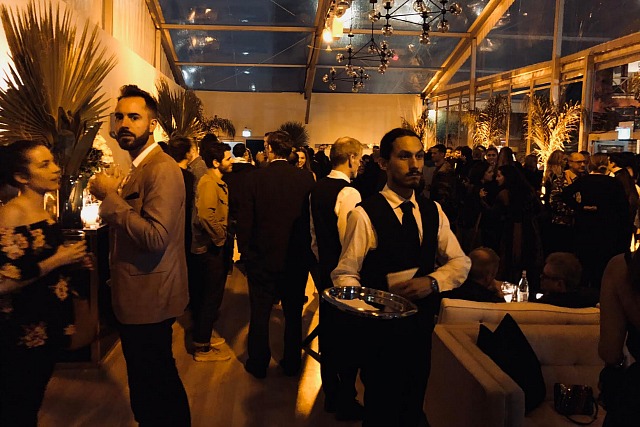
During last night’s post-premiere Roma party I spoke to Marina de Tavira, the prominent Mexico City-based stage and screen actress who plays Sofia, the spirited if frustrated mother of the family that that Alfonso Cuaron‘s ’70s-era drama is focused upon.

Marina has played the female lead in a Mexico City stage production of Harold Pinter‘s Betrayal, she told me, and is currently preparing to star in a local stage production of David Hare‘s Skylight, which I saw performed in Manhattan three years ago with Carey Mulligan.

Marina is the beating, persistent, never-say-die heart of Roma. I’m about to attend my second viewing of Cuaron’s film at the Scotiabank plex, and I can’t wait to re-savor her performance.


Marina de Tavira during last night’s Roma party on King Street.

Alfonso Cuaron, Marina de Tavira, Gael Garcia Bernal.

Read more

HE Classic: Turn That Noise Down

One of my favorite HE rants, posted on 8.1.14 and titled “Please Stop Being Overly Impressed By Smiles, Kindness and Consideration…Please“:

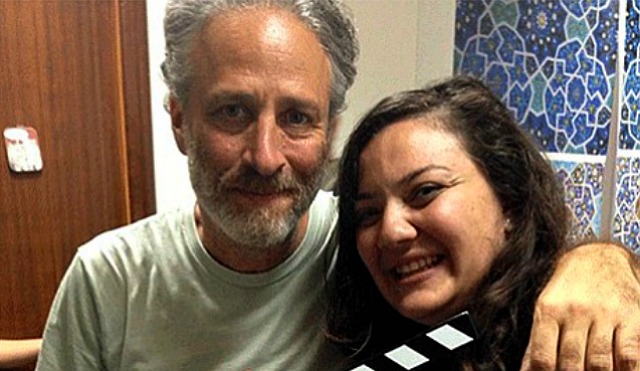
During August or September of 2013 Jon Stewart‘s Rosewater shot footage in Jordan, and in preparation for this costumer Phaedra Dadaleh, a well-established professional in that region, was hired. On 9.11.13 Dadaleh told a Rosewater promotional site that she was “nervous” meeting Stewart, but her concerns quickly evaporated. “He’s just the most amazing, friendly, down-to-earth kind of guy,” she said. “He just got up, gave me a big hug and immediately made me feel at ease.”


Rosewater director-writer Jon Stewart, costumer Phaedra Dahdelah during 2013 filming in Jordan.

That’s cool, Phaedra, and good for you, Jon. But people on movie sets have been saying the exact same thing about major above-the-line types for at least a century if not longer, and they never get tired of saying it. Time marches on and they just won’t stop wetting their pants when name-brand people are as kind and gracious and friendly to them as regular Joes are to each other in the outside world. It’s always “I was afraid this famous hotshot might be brusque or snide or otherwise a dick or a bitch, but he/she was totally the opposite…and he/she made me feel so good.”

I know the feeling, and I’m not saying that many above-the-liners — Jon Stewart among them, I’m sure — aren’t really nice to begin with. But one of the main reasons that bigtime showbiz types have made it to the top is that they’re really good — practiced — at putting on that warm, kind and affectionate face when the situation calls for it.

And one atmosphere in which you’re almost guaranteed to receive warmth and love and hugs is one in which people are always alpha-vibing each other to death from the early morning into the wee hours until it’s coming out of their ears — i.e., a fucking movie set.

People loving and kissing and hugging each other like mad. Hugs, backrubs, bon ami…and every fucking joke and one-liner is either hilarious or very funny or at least somewhat funny. A lot of people do the monkey submission thing by slapping their thighs and bending over and staggering backwards when they laugh at other people’s jokes on movie sets. I’ve been visiting sets all my life, and sometimes I wind up smiling so much that my facial muscles are aching after four or five hours.

Read more

Political Science

Posted two years ago: “Basic compassion requires an acknowledgement of today’s anniversary of the 9/11 massacre. The memories are seared deep and we’ll never stop recalling them. In a strange way I’ve always regretted not being in Manhattan that day. I’ll never forget how it felt with the film fraternity up in Toronto, and everyone huddling together in a kind of daze. I recall standing on the corner of Bay and Bloor Street and telling myself over and over, ‘This is the new Pearl Harbor.’

“My strongest recollection is everyone (including Brian De Palma) staring at the video footage from the lobby of the Cineplex Odeon, and some of us (myself included) still going to TIFF films after the news broke.

Posted on 9.9.11: “I’ll be appalled for the rest of my life that my Reel.com editor (whose name I’m not going to mention) chose to summarize the column that I wrote from the Toronto Film Festival on the evening of 9.11.01 as follows: ‘Jeffrey Wells reports on the toll that current events have had on the Toronto Film Festival, and tries to muster enthusiasm for films that have screened, including Lantana, Monsoon Wedding, and Last Orders.’

“This was back in the day when entertainment websites wrote about and/or acknowledged only entertainment subjects…even if the horrible death of nearly 3000 people from jumping or flames or being crushed had led to a major film festival deciding to halt its various programs to show respect and take a breather. Even then, Reel.com felt that it was better to not be too specific (don’t want to encourage people to not think about movies!) and to refer to this appalling slaughter as ‘current events.’ Thank God that mentality has been entirely rubbed out on the web.

“On the one-year anniversary I posted a disturbing shot of a 9/11 jumper guy in mid-fall. Later that day a big-name critic wrote and said I’d crossed a line. I’ve always been of two minds regarding the 9/11 horrors. On one hand I understand the feelings of people who don’t want to remember things too vividly; on the other I think it’s fundamentally wrong to heavily edit or smother the reality of what happened, at least for those who might want to go there.

Read more

When Reynolds Was Flying High

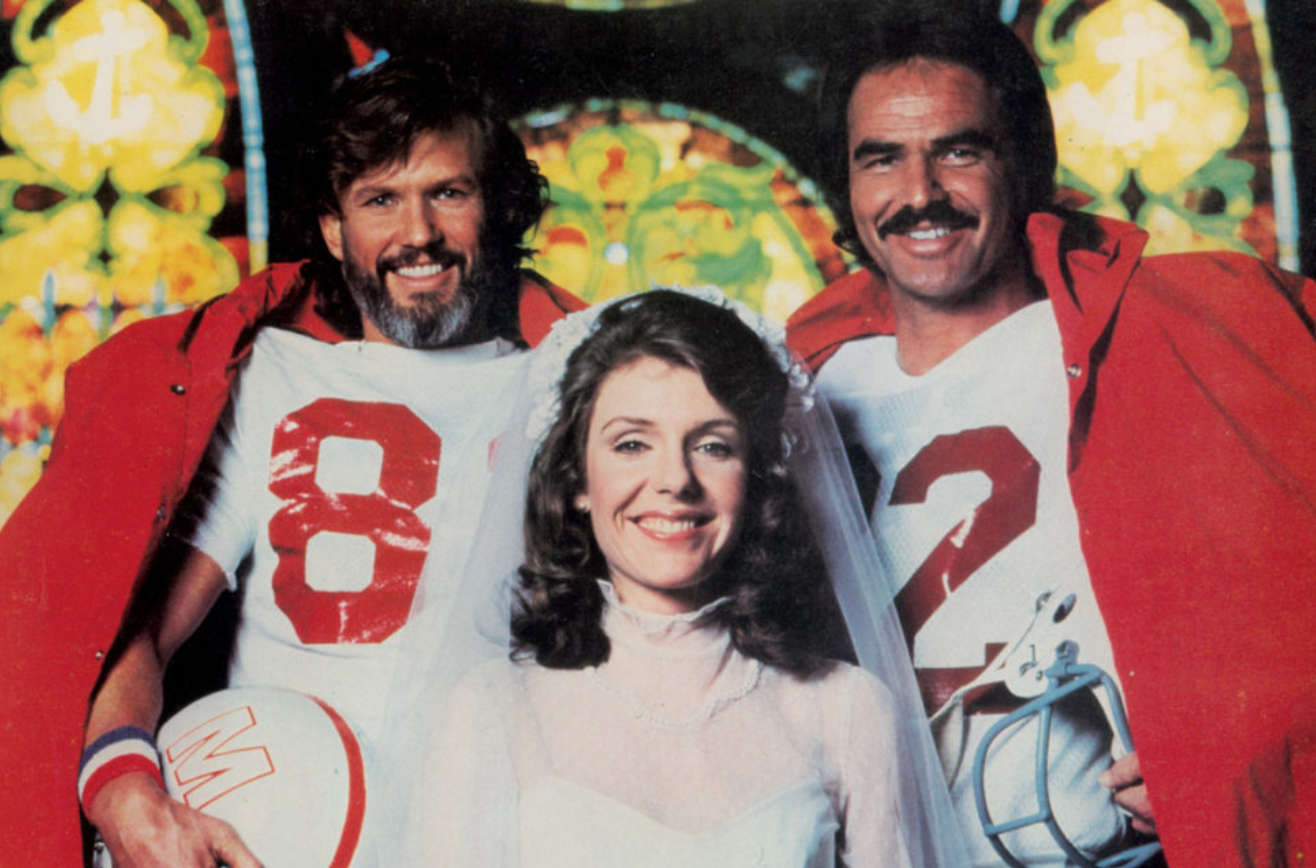
Almost exactly 40 years ago, when Burt Reynolds could do no wrong. His last half-decent film, The Longest Yard, was four years old at the time. His best-ever film, Deliverance, had opened six years earlier. He would star in three more pretty good movies — Starting Over (’79), Sharky’s Machine (’81) and Best Friends (’82) — before his superstar career would begin to unravel and dissipate. If Reynolds had chosen to play Garrett Breedlove in Terms of Endearment instead of Stroker Ace, things would’ve lasted a bit longer.

Read more

2 Terrorist Slaughter Films — One Works, Another Is Okay

If you’re making a film about a terrorist attack upon innocent civilians, you’ll want to emulate the excellence of Paul Greengrass‘s United 93. As it turns out Greengrass has matched his own criteria with 22 July (Netflix, 10.10), which deals with the 2011 Norway attacks and their legalistic aftermath. Certainly during the first 35 or 40 minutes, which focuses on the attacks themselves (an Oslo government bombing followed by a mass machine-gun slaughter of teenagers on the island of Utoya) by right-wing anti-immigrant terrorist Anders Breivik.

Greengrass is a total pro who wrote the manual on how to shoot this kind of film. 22 July is proof of that.

A day before seeing the Greengrass I caught the “other” terrorist-attack-upon-innocent-civilians film, Anthony MarasHotel Mumbai (Bleecker Street, date unknown). It’s a decent enough re-capturing of the 2008 Mumbai attacks, which were carried out by Islamic Pakistani terrorists. It feels fairly realistic and well-ordered as far as it goes, but tonally it feels a little bit like a ’70s disaster film, like Irwin Allen and Ronald Neame‘s The Poseidon Adventure or Jack Smight‘s Airport 1975.

You know the type of film I’m describing — an unsettling if somewhat superficial exercise about wealthy people and devoted staffers trying to escape death but with no underlying attitude or undercurrent on the part of the director. The ’70s disaster film that Hotel Mumbai should have tried to measure up to is Richard Lester‘s Juggernaut, but that wasn’t in the cards.

There are two interesting (and possibly problematic) things about Greengrass’s film. One is that it portrays Breivik as relatively rational with a sense of discipline and self-control. Cold, paranoid and sociopathic, okay, but not a raving nutter. During the investigation and trial Beivik explained that he carried out the attacks to call attention to his opposition to Islamic immigration and his view that feminism has created a European “cultural suicide”. I’ve heard that there are some journos and industry types who feel that Greengrass did Breivik too much of a favor by allowing his character to explain his extreme right-wing views in a measured and somewhat neutral fashion.

The other problem is that most of 22 July is about the slow recovery of one of Breivik’s victims, a young good-looking guy who was shot on Utoya two or three times and lost an eye but lived and gradually learned to walk and speak again. Greengrass’s focus on his emotional states during his long, slow path to semi-recovery (not mention his ultimate face-to-face confrontation with Breivik) is not uninteresting or uninvolving, but there’s a feeling that Greengrass should have dwelled upon some other aspect of the Norway attacks. There’s something about what this young guy went through that doesn’t quite do it for those of us in the seats. This is going to sound a bit callous, but most of us want edgy thrills from Greengrass, not emotional difficulty or working through physical trauma.

OMG and Bill Murray Don’t Get Along

When informed of either the nearby presence or imminent arrival of a well-known performer-celebrity, the one thing I will never, ever say is “oh my God.” You’re allowed to say “oh my God” if you’re watching something breathtaking or horrific, but you’re not allowed to say it if someone tells you that Bill Murray has just arrived at a party you happen to be attending. Murray is one of the greatest guys in the world when it comes to mocking or otherwise shutting down inane questions from lightweight journalists, so I’m presuming he would be the last guy in the world to nod approvingly at some doofus saying “oh my God…it’s Bill Murray.”

Read more