Definitive Saga of The Destruction of Theatrical Experience Still Required

Last fall I wrote that the next great Hollywood expose or tell-all could or should be called “Super-Vomit: How Hollywood Infantiles (i.e., Devotees of Comic Books and Video Games) Degraded Theatrical and All But Ruined The Greatest Modern Art Form.”

Not filmed dramas per se but the stand-alone, non-sequelized, franchise-resistant form of dramatic endeavor that used to be Hollywood’s bread-and-butter when theatres showed movies of substance (1920 to 2015). This kind of thing hasn’t completely disappeared from theatres, but it nearly has. Streaming and cable are where the goods are now, and half the time you’re talking long-form serials.

Otherwise a form of dramatic story-telling that has existed since the time of the Greeks — a tale told in one sitting, three acts delivered within 100 to 160 minutes and that’s all she wrote — is showing signs of serious theatrical erosion and may even be extinguished down the road. What does Kenneth Lonergan have to say about all this? Oh, Manchester By The Sea, how we loved ya, how we loved ya…your brevity, discipline, dramatic choices, shape.

Ben Fritz‘s “The Big Picture” is said to be the best intelligent summary of this evolutionary process, but I also understand it’s more of a historical analysis thing. I’d like to read a you-are-there, episode-by-episode, movie-by-movie, beat-for-beat saga of how it actually happened over the last 15 years or less. As I wrote yesterday, how the apes (“suits” and ticket buyers alike) decided that theatres are CG funhouses and that smarthouse, soul-stirring flicks are for streaming, and how the twain would never again meet.

What I’m imagining is something written in the tradition of David McClintick‘s “Indecent Exposure: A True Story of Hollywood and Wall Street,” Stephen Bach‘s “Final Cut: Dreams and Disasters in the Making of Heaven’s Gate,” or Mark Harris‘s “Pictures at a Revolution.”

Read more

I Really Remember The Guy

The great Kris Kristofferson — poet, troubador, actor, soul man — has passed at age 88.

Film acting-wise, Kris enjoyed a truly great peak period between the early ‘70s and early ‘80s. I think his finest all-time role and performance was in Paul Mazursky‘s Blume in Love (‘73).

His decade-long run: Cisco Pike (‘72), Pat Garrett and Billy The Kid (‘73), Blume in Love, Alice Doesn’t Live Here Anymore (‘74), Bring Me The Head of Alfredo Garcia (‘74), The Sailor Who Fell From Grace With The Sea (‘76), A Star Is Born (‘76), SemiTough (‘78), Heaven’s Gate (‘80), Rollover (‘81).

It’s been 43 years, but I seem to recall Rollover being a relatively decent effort. Second-tier Alan Pakula but passable. It more or less predicted the 2009 worldwide crash, and the legitimized-with-empty-bullshit reasons why it would happen. And it was made right as the Reagan administration was deregulating the crap out of everything.

David Shaber (The Warriors, Last Embrace, Hunt for Red October) wrote it. Key line: “Of course it’s a game…that’s ALL it is.”

But Rollover was largely sold as a hot-sex-in-high-places thing**. Wall Street hotshot Kris Kristofferson, looking buff and well-coiffed in one perfectly-tailored three-piece suit after another, giving Jane Fonda‘s chemical-company chairperson the old invitational eye-twinkle.

Hume Cronyn, as First New York Bank chairman Maxwell Emery, delivered the reality-check assessments, and very effectively.

Fonda and Kristofferson were allegedly involved during filming (i.e., one of those “what happens during filming stays there and goes no further” affairs), but I only heard this once from a second-hand source.

I checked Amazon and Vudu to see if it’s streaming in high-def…nope. I can’t roll with 480p any more.

Death of Mini-Me

Nobody seems to want to say why poor Verne Troyer (a.k.a. “Mini Me” in two Austin Powers films, The Spy Who Shagged Me and Goldmember) is gone at age 49, but apparently it had something to do with alcohol and depression and possibly even suicide…who knows? Troyer’s reps aren’t disclosing but a statement says that the actor “was a fighter when it came to his own battles…over the years he’s struggled and won, struggled and won, struggled and fought some more, but unfortunately this time was too much. Depression and suicide are very serious issues. You never know what kind of battle someone is going through inside.”

Hugs and condolences to Troyer’s friends, fans, colleagues and family.

Everyone’s Shilling For Cooper’s “Star Is Born”

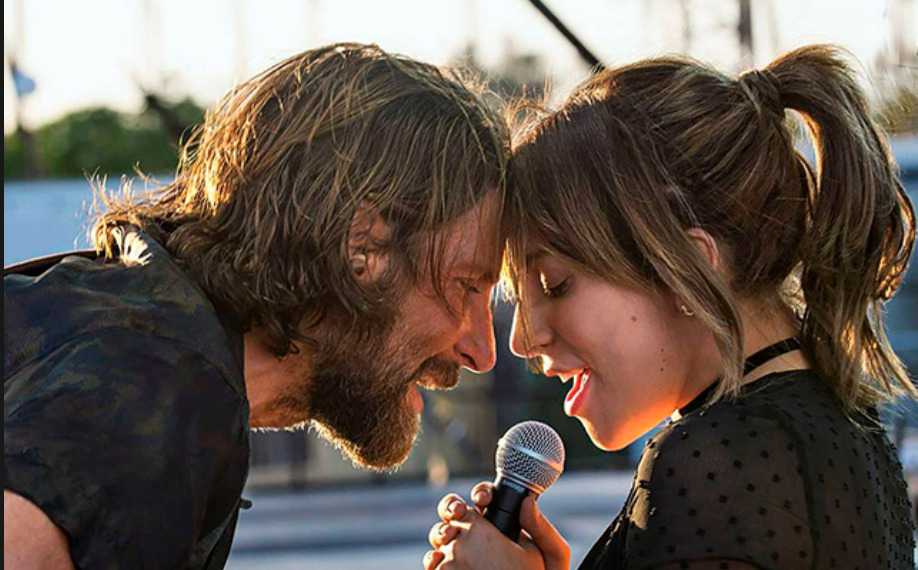
Not sure when Warner Bros. decided to hold special celebrity screenings of Bradley Cooper‘s A Star Is Born (Warner Bros., 10.5), but I’m guessing sometime in early to mid March. All I know is that three big names — Barbra Streisand, Sean Penn and Robert De Niro — have spoken highly of it.

First it was Streisand (“Oh, I can’t say too much…I haven’t seen too much, but it’s good…it’s very, very good.”). Then Penn (“One of the most beautiful, fantastic, it’s the best, and most importantly commercial film I have seen in so many years”). And now De Niro, speaking during a Tribeca Film Festival discussion with Cooper (“It’s terrific and Bradley is excellent in it…the movie is wonderful…I hope it gets the attention I feel it should when it opens…Bradley learned to sing…he really worked hard and it paid off…you see all the hard work he did, it’s special”).

Hollywood Elsewhere to other celebrities who’ve seen it: We get it. You liked the film and you’re happy that Cooper’s debut effort turned out well — great. But that’ll do for now.

We Are, We Are Morons

In a 4.9 New Republic piece called “Will Hollywood Ever Make Another Children of Men?,” the answer is a simple “no.” Why? Because the apes have decided that theatres are CG funhouses, and that smarthouse, soul-stirring flicks are for streaming, and never the twain small meet.

The article is actually a chat between Alex Shepard and Wall Street Journal reporter Ben Fritz, author of “The Big Picture.” The book basically explains how it’s all turning to CG shit in theatres, but we’re actually in a golden age if you focus on non-theatrical.

Shepard: “2017 was an outstanding year for movies but it does seem like Oscar-bait movies are working on a smaller scale, for a smaller audience, in part because Hollywood has stopped investing in big budget Oscar-bait movies that aspire to a mass audience. In The Big Picture, you argue that three of my favorite recent movies — Michael Clayton, Captain Phillips and Children of Men — would have a much hard time getting made right now.”

Fritz: “That specialty market will certainly survive. If you live in a big enough city you’ll be able to see the next Ladybird in a few years. But most people won’t. They’ll see it on streaming or whatever. And that will be fine. But Children of Men, that’s a great example. I don’t know what it’s budget was — $80 million maybe. It’s not cheap to make that film. You’re making a film that’s really worth seeing on a big screen.

“But there’s no Children of Men cinematic universe. There’s no franchising. There are no tie-ins. There are no sequel possibilities. That’s a one-off film and that’s the type of thing that won’t get made anymore. It’s also the kind of thing that’s tough to replicate for a streaming service. It’s the kind of movie we’re losing and that’s a bummer.”

Bummer? For those of us who’ve been watching aspirational, high-craft, spiritual-deliverance movies in theatres for the last 30 or 40 years, this is a major cultural tragedy. It’s enough to make you think about getting into opioids, brah.

In an 11.20.06 HE piece called “Children = Guernica,” I wrote the following:

“Many critics were impressed by Children of Men‘s virtuosity and bravado,” writes Hollywood Reporter/Risky Biz blogger columnist Anne Thompson, “while industry types were seeing a downer film that’s going to lose money.

“The movie is a brilliant exercise in style, but it’s another grim dystopian look at our future — like Blade Runner or Fahrenheit 451 — that simply cost too much money.”

Read more

Criterion’s Teal-Tint Insanity

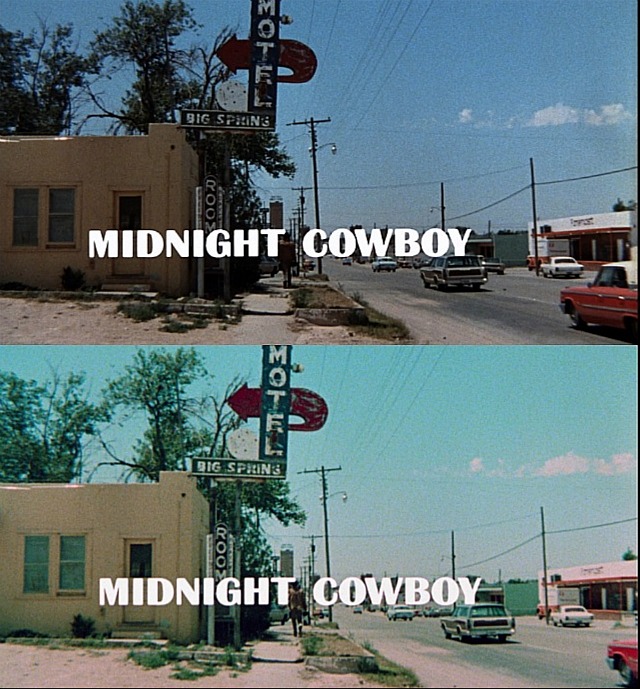
Last night I read some Bluray.com comments along with a review that made me gasp. Actually they made me fall out of my chair. The thread was about Criterion’s curiously re-colored, teal-tinted Midnight Cowboy Bluray (5.29), which I wrote about a couple of days ago.

The Criterion jacket says that the Midnight Cowboy Bluray is a “new 4K digital restoration, approved by cinematographer Adam Holender.”

To go by recently posted comparison shots, this is easily Criterion’s biggest Bluray boondoggle** since the Dressed To Kill calamity of 2016, when Criterion went along with Brian DePalma‘s request that the images be narrowed (i.e., horizontally compressed) and the colors tinted yellow-green without much of a black layer. Criterion gradually admitted to error and released a corrected disc.


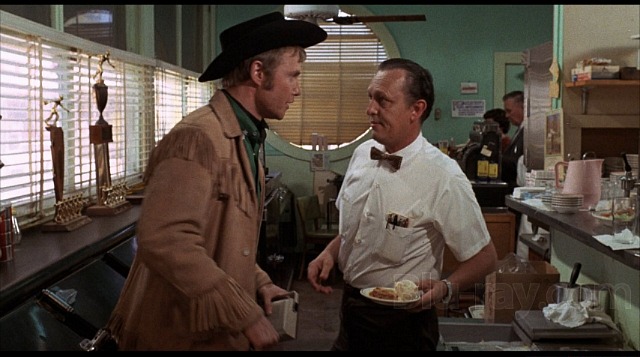
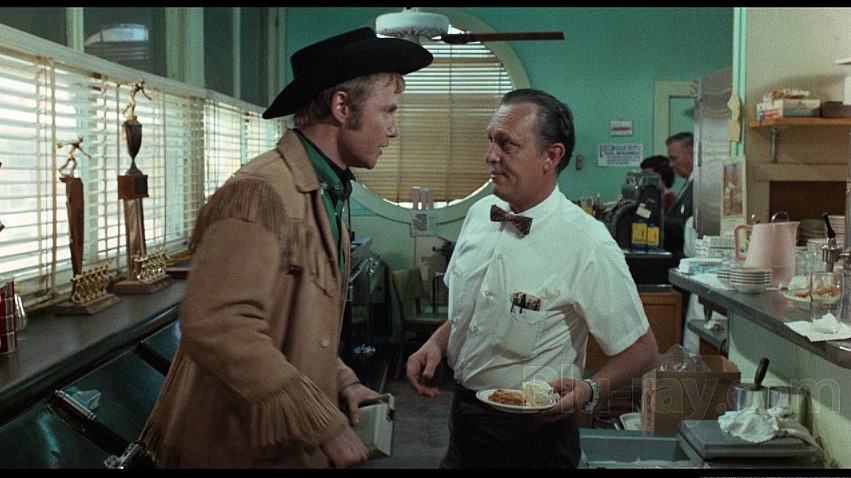
Natural-looking capture from 2012 MGM Bluray.

Same shot rendered by Criterion’s “teal team.”

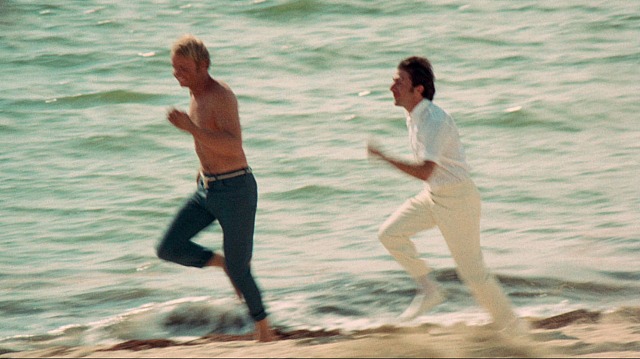
Many times I’ve gazed upon the green Atlantic Ocean while basking in the hot-sand warmth of Miami Beach.

In a 4.15 review, Bluray.com’s Dr. Svet Atanasov refuses to even acknowledge the teal-tint issue, which automatically makes you wonder what he’s up to. “The color palette [of Criterion’s Midnight Cowboy Bluray] is a lot more convincing,” he writes. “On the old release [the 2012 MGM Bluray] some of the primaries were not as stable and well saturated as they should have been and now the new 4K restoration makes this painfully obvious.”

What the hell is Atanasov talking about, “not as well saturated”? I own the six-year-old MGM Bluray and it’s totally fine, and it doesn’t have any space-alien tinting.

Please read this thread. It includes a few fair-minded, sensible-sounding remarks, but also comments from some real lunatics.

One of the latter is a guy who calls himself “RCRochester.” In a remarks about contrasting shots (Criterion vs. MGM) of a small-town Texas motel [see above], he claims that “the sky looks blue in both…it’s just that the Criterion cap looks brighter. The movie’s title in the same shot looks bright white, if the image was ‘tealed’ I would expect that to have a bluish tint to it as well.” The man has gone over the waterfall in a barrel — he actually maintains that the sky in the Criterion image is blue when it’s obviously an eerily bright blue-green.

A looney-tune named “The Green Owl” exclaims that “the screenshots look great to my eyes,” and that he’s ordering the Criterion as a result.

A guy named “Markgway” doesn’t like what he sees, but says he might go along regardless. “Unless someone can say for sure that the film was meant to look teal, I’m going to assume something is awry,” he says. “It happens too many times that older films are remastered to a modern grading standard and wind up looking suspiciously different to the way they had before.”

Read more

Took ‘Em Long Enough

A trailer for Tony Zierra‘s Filmworker, a brilliant doc about the life and times of Leon Vitali, has finally surfaced. It’s been kicking around in my head for a full year, this film, and now the crescendo. Easily the juiciest and dishiest capturing of Stanley Kubrick‘s backstage life and career ever assembled. It’s about Vitali’s life, of course, but by way of Kubrick’s. (Or is it the other way around?) 21 or 22 years of deep focus, late hours, nose to the grindstone, passion, obsession, total commitment and almost no days off, ever.

Vitali began working for The Great Stanley K. in various capacities a year before The Shining began shooting, and then stayed with him to the end (i.e., 3.7.99). Researcher, gopher, go-between, driver, casting assistant, print cataloguer and (after Kubrick’s death) restoration consultant. The film is a completely satisfying record and assessment of that servitude, that era, that history, that ongoing task. And that Vitali voice! A bassy creation made resonant by decades of cigarette-smoking, and really something to sink into.

The photos and behind-the-scenes film clips alone are worth the price, I can tell you. Great stuff. On top of which I was reminded that Vitali played not one but two roles in Kubrick films — Lord Bullington in Barry Lyndon (’75) and “Red Cloak” in Eyes Wide Shut (’99).

Vitali said to himself early on that he’d like to work for Kubrick. What he didn’t expect was that once that work began Kubrick would want Vitali at all hours, all the time…focus and submission without end. If the early sentiment was “I’d give my right arm to work for Stanley Kubrick.” Kubrick’s reply would be “why are you lowballing me? I want both arms, both legs, your trunk, your lungs, your spleen, your ass and of course your head, which includes your brain.”

Yes, Virginia — Stanley Kubrick was no day at the beach. Then again what highly driven, genius-level artist is?

Read more

All-Time Irritation

Posted on 1.19.18: “In the ambitious but mediocre Blindspotting, the sympathetic, Oakland-residing Colin (Daveed Diggs) is trying to stay out of trouble over the final three days of his parole status. Unfortunately, his longtime best friend is a violent, hair-trigger, gun-wielding asshole named Miles (Rafael Casal) so right away you’re wondering “is Colin as stupid as he seems, or is he just temporarily stupid?”

Even more unfortunately for the audience, Casal, a 32 year-old playwright and performance poet, relies on a broad caricature of Oakland street blackitude — machismo shit talk, constant strut, a mouthful of gold fillings, flashing pistols, drop-of-a-hat hostility, etc.

In the view of Hollywood Reporter critic Todd McCarthy “the volcanically emotive Miles” is “a character so brainlessly compulsive and violent that he becomes pretty hard to take after a while.”

White guys adopting the posture of angry, ready-to-rumble street brahs is an old bit. Hip white kids have been pretending to be urban desperados since at least the early ’90s. Gary Oldman as Dretzel in True Romance (’93). Josh Peck in Jonathan Levine‘s The Wackness (’08). The best comic reversal of this was Richard Pryor‘s imitation of dipshit white guys in Richard Pryor — Live in Concert (’78).

Casal’s Miles is easily the most irritating variation I’ve ever seen. I was hating on him 15 minutes into the film.

Arkansas Hick

I love Sarah Huckabee Sanders‘ pronunciation of Iran, which in cultivated circles sounds like “Ihrahn.” At 1:42, Sanders pronounces it “Eye-rayuhnn.” She also pronounces France as “Frayunce” (33-second mark). She probably pronounces Paris like a friend from Connecticut does — “Pairiss.” A deft sidestepper and frequent liar, Sanders is only 35 years old. If there is a hell, Sanders will definitely be taking the down elevator when her time comes.

Who Dies At 28?

Tim Bergling (a.k.a. Aviici or “Aveechee”), the Swedish D.J. and electronic dance music producer whose worldwide fame completely eluded my attention, was found dead today in Muscat, the capital of Oman. He was 28 years old, or the age of my younger son Dylan. He apparently drank himself to death. The Sun‘s Jacob Dirnhuber reports that Aviici “stopped touring and live performances in 2017 after being diagnosed with pancreatitis from excessive drinking. He was forced to have an emergency appendectomy and have his gallbladder removed.”

Pounding of Heels

If only we could get rid of people who walk heavy…boom! boom! boom! The kind of slam-heel walking that can make an older home vibrate and shudder. People who pound their heels like a weapon. My younger sister used to walk like this. When she used the stairway in our pre-war home you could hear those jackhammer heels ramming and thumping and giving pause to the main beams.

If you’re an elegant person (and by that I mean someone who also takes relatively short showers) you’ll walk around like you’re wearing hush-puppies. Like Swing Time Fred Astaire or Cary Grant over the Cannes rooftops in To Catch A Thief, or Marlon Brando shuffling across a sound stage in Guys and Dolls.

Remember Paul Newman describing Jackie Gleason as he was “shooting the eyes right off them balls” in The Hustler? “Look how he moves, he’s like a dancer!” It doesn’t matter if you’re big-boned or a Jabba; if you know how to walk you’ll always step softly.