What defines a spiritual film? In my dictionary it’s any movie in which the main character is constantly communing with (i.e., pondering, meditating, wondering about) his/her inner life or more particularly that voice that seems to be talking to him/her in such a way that the main character is haunted, bothered, unsettled, off-balance and searching for the right thing to do or the right way to be.
In this sense Paul Schrader‘s First Reformed (A24, 6.22) — an absolute must-see — is a spiritual film in spades. But then so is Taxi Driver, which Schrader wrote some 43 or 44 years ago. And so are a bunch of others.
I don’t want to sound like an easy lay, but I regard Field of Dreams as a spiritual film. I think The Exorcist is a spiritual film, at least as far as Damian Karras‘s character is concerned. Days of Heaven is a spiritual film; ditto The Tree of Life. Obviously Martin Scorsese‘s The Last Temptation of Christ (the screenplay for which was written by Schrader) and Pier Paolo Pasolini‘s The Gospel According to St. Matthew, but not — I repeat, not — Scorsese’s Kundun. (Too suffocating.) It would piss me off to hear someone call Batman Begins a spiritual film, but I suppose the argument could be made.

Is Bernardo Bertolucci‘s Little Buddha a spiritual film? I haven’t decided. Is Moby Dick a spiritual film as far as Gregory Peck‘s Captain Ahab is concerned? I’m still mulling that one over.
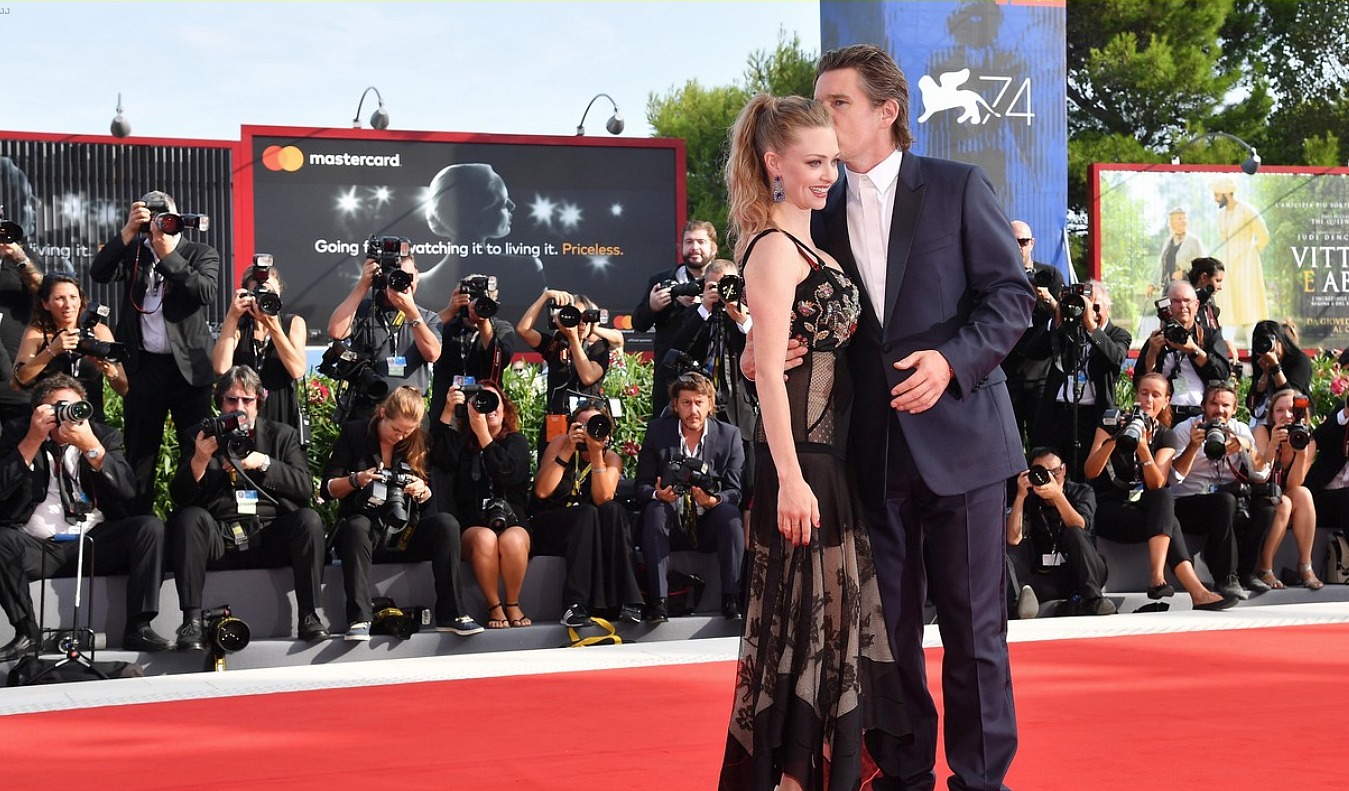
I got into this after reading a 3.15 Den of Geek interview with Schrader, the director-writer of First Reformed, and star Ethan Hawke. The sit-down happened last week in Austin during South by Southwest, where First Reformed (A24, 6.22) screened once or twice. It was showered with hosannahs last fall when it played the Venice and Telluride festival; it also played Toronto.
Make no mistake — First Reformed is Schrader’s best film in ages.
From my 9.1.17 rave: “I can’t over-emphasize how amazing it feels to watch a fully felt, disciplined, well–ordered film by a brilliant guy who had seemingly lost his way or gone into eclipse, only to be startled when he leaps out from behind the curtain and says ‘Hah…I never left!'”