Wait…What?

Five or six days ago a Vanity Fair piece discussed the 152-minute length of Star Wars: The Last Jedi (Disney, 12.15), and particularly Mark Hamill‘s reaction to the length and the film as whole. Hamill says “it’s like The Godfather [and therefore] doesn’t feel that long.”

What he meant, I gather, is that Jedi is sufficiently engaging so that you’re not looking at your watch every 15 minutes. But I was also upset to read a declaration near the end of the piece that “the story has a happy ending.” Hamill’s “story” of the movie’s? I’m afraid to ask.

If it’s the latter, thanks to Hamill and Vanity Fair for stabbing me in the heart. So much for any hopes I might have had about The Last Jedi being some kind of Empire Strikes Back-like cliffhanger installment, which is usually what a middle chapter does. The plot thickens or darkens, the odds get tougher, the outcome is in doubt. Nope — “a happy ending” is assured.

When Screwball Was In Bloom

I’ve just watched a relatively recent essay on screwball comedies, assembled for the “One Hundred Years of Cinema” series.

Farcical, fast-paced stories about class conflicts or posturings, filled with nervy, eccentric characters and usually involving a romance of one kind or another…right?

Most of us associate screwball comedies with the ’30s and early ’40s — It Happened One Night, Twentieth Century, My Man Godfrey, The Awful Truth, Nothing Sacred, Bringing Up Baby, His Girl Friday, The Lady Eve, Sullivan’s Travels.

And yet the British narrator says screwball comedies actually lasted until the mid ’50s (i.e., 1952’s Monkey Business, 1953’s How to Marry a Millionaire, 1955’s The Seven Year Itch). When did screwball comedies end and spunky, slapstickish comedies begin? Were No Time for Sergeants and Operation Mad Ball screwball or just comedies with broad, outrageous material?

Billy Wilder‘s Some Like It Hot sure felt screwballish in ’59, and that went double for One, Two, Three two years later. By the time Peter Bogdanovich‘s What’s Up, Doc came along in ’72 it was regarded solely as a genre tribute, a throwback.

I think it’s better to define the screwball era as (a) primarily inspired by the Great Depression, and (b) starting in ’34 and ending nine or ten years later. Screwballish comedies that came later…well, just call them comedies with bounce and attitude.

Wolf-Eyes Hallyday

Johnny Hallyday, the French rock star who now and then portrayed laid-back, chain-smoking cool cats in French films from the early ’60s until this year (his last role was in Claude Lelouch‘s Chacun sa vie et son intime conviction), has died at age 74.

If you ask me Hallyday’s most interesting film was Patrice Leconte‘s The Man on the Train (’02), in which he costarred with Jean Rochefort.

I first heard of Hallyday in ’76, during my first trip to Paris. In the late ’90s I almost attended one of his concerts at the Stade de France stadium outside Paris.

Hallyday had intense wolf eyes. He looked like a wolf, howled like a wolf, prowled like a wolf. When he got older he had facial “work” done, and this made him look more wolf-like than some actual wolves in the forest.

Hallyday always seemed to be smoking unfiltered Gauloises cigarettes. If I had to spitball I would guess that he inhaled a bare minimum of 25,000 packs of Gauloises over a 60-year period, or a grand total of 1,500,000 cigarettes from his mid teens onward. At least.

Great Unconsummated Love Affairs

When it comes to passionate love stories, there are two laws or conditions that make them seem especially memorable or magnetic. One, the best love stories are those which don’t end happily. (The late Sydney Pollack pointed this out time and again.) And two, love stories seem more passionate if the lovers never get around to actually doing it.

I’m not about to invest hours of research, but I’ll guess that a majority of anyone’s favorite love stories, from Wuthering Heights to Brief Encounter to Once, have been unconsummated. I would further guess that a list of popular love affair movies that have included actual sex would probably be fairly short.

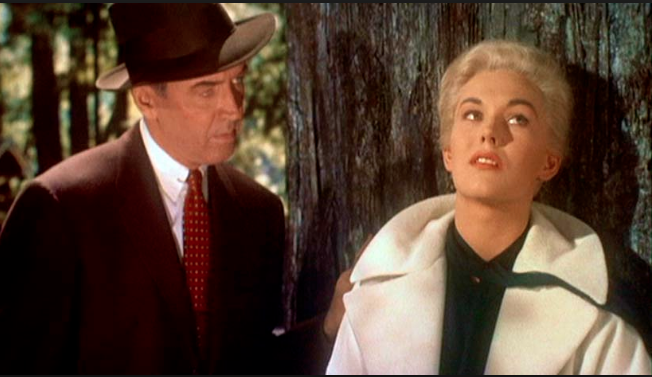
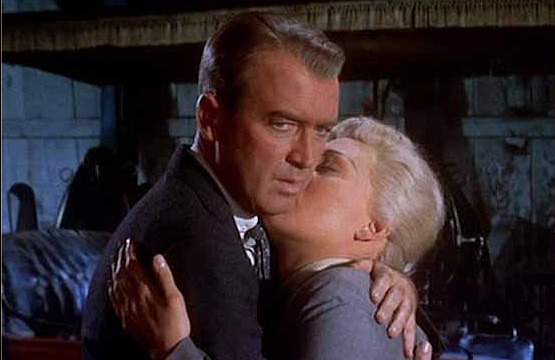
I dove into this because it hit me this afternoon that one of the craziest and most erotically charged on-screen love affairs, the one between James Stewart‘s Scotty Ferguson and Kim Novak‘s Judy Barton (a.k.a. Madeleine Elster) in Alfred Hitchcock‘s Vertigo, never included the nasty. They made out under the Muir redwoods and along the Pacific coast and yes, Scotty did undress Judy/Madelyn after she passed out following a drowning attempt, but they never got down.

Who else abstained? Trevor Howard and Celia Johnson, of course in Brief Encounter, as well as Robert De Niro and Meryl Streep in that 1984 remake, Falling In Love. Robert Mitchum and Deborah Kerr in Heaven Knows, Mr. Allison (’57). Bill Murray and Scarlet Johansson in Lost in Translation. Humphrey Bogart‘s Phillip Marlowe and Lauren Bacall‘s Vivian Rutledge in The Big Sleep. Burt Lancaster and Katharine Hepburn in The Rainmaker (’56). Robert Forster and Pam Grier in Jackie Brown. Michael Caine and Julie Waters in Educating Rita.

Others? Does it matter? I could go on and on.

No Stopping Get Out Cabal

When I say “the Get Out cabal” I’m not talking about the critics who are crazy for Jordan Peele’s horror-thriller. If they want to call this modestly clever allegory about racial relations one of the year’s best, fine. Earlier today a Sight & Sound poll of 2017’s finest films had Get Out in the #1 slot…terrific.


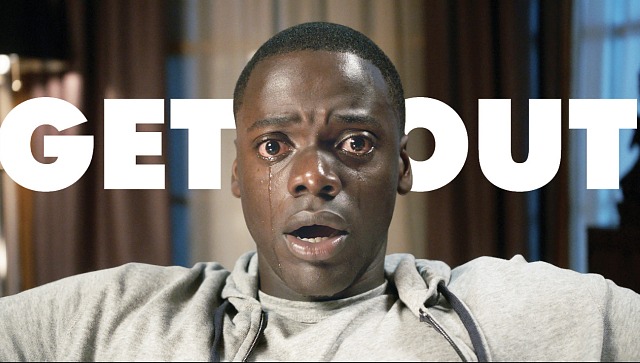
Daniel Kaluha in Jordan Peele’s Get Out.

No, I’m talking about the editors of God-knows-how-many online film sites who’ve been using that same infuriating still of Get Out star Daniel Kaluya. You know the one I mean, doing his shocked-and-horrified thing. I’ve been looking at this photo since last February, and they won’t quit using it.

Kaluya is a handsome smoothie with eyes that are sly and sleepy-sexy (he almost has a Robert Mitchum thing going on) and, as Chris Washington, a look of settled confidence. But this photo couldn’t argue more strenuously with that vibe. And why is Kaluya crying? Who tears up when suburban demons are looking to turn you into a zombie? Would Steve McQueen cry if bad guys were trying to vacuum his mind?

I knew the Sight & Sound dweebs would give Ben and Josh Safdie‘s Good Time a high rating (#7 on a list of 25). HE nonethless approves of Call Me By Your Name occupying slot #3, Andrey Zvagintsev‘s Loveless in slot #8, and several other inclusions — Dunkirk (#9), The Florida Project (#10), A Ghost Story (#11), BPM (#12), Olivier AssayasPersonal Shopper (#13), Lady Bird (#19) and Darren Aronofsky‘s mother!, etc.

Good One

This refers, obviously, to the sexual abuse allegations that have been directed at Alabama Senatorial candidate Roy Moore. Earlier today Doug Jones, Moore’s Democratic opponent, said that “he did his part as a prosecutor to ensure that men who hurt little girls should go to jail and not the United States Senate.” Posted today by Washington Post editorial cartoonist Ann Telnaes. “Telnaes won the Pulitzer Prize in 2001 for her print cartoons and the National Cartoonists Society’s Reuben for Outstanding Cartoonist of the Year for 2016. Her first book, ‘Humor’s Edge’, was published by Pomegranate Press and the Library of Congress in 2004. A collection of Vice President Cheney cartoons, ‘Dick’, was self-published by Telnaes and Sara Thaves in 2006.”

Read more

Illness and Urgency

Last night director Bryan Singeraccused 20th Century Fox of callously refusing to give him time off to “deal with health issues of one of his parents.” This is the health issue that promoted Singer to leave the London set of Bohemian Rhapsody, the Queen biopic. Yesterday, after a reported three-day absence following the Thanksgiving holiday (not to mention reports of heated arguments with Freddie Mercury portrayer Rami Malek and others), Fox fired Singer off the film. Rhapsody was three weeks from completion when this happened. Singer had been shooting since last September.

I’m not an authority on force majeure clauses in talent contracts, but when a parent or loved one has died (or is on his/her deathbed) I know that basic decency has led to arrangements to permit a filmmaker to take a brief hiatus from a film being shot. At the same time a director or actor has to appreciate that the a movie can’t suspend filming indefinitely because of a personal tragedy or severe illness. It might be painful, but you have to get the job done.

If I were running 20th Century Fox and Singer had said to me, “I want to suspend filming for a week or two so I can attend to a sick parent,” I would probably say “Uhm, no…make it two or three days, max. I’m very sorry for your loss, Bryan, but a movie in production is a shark — it has to keep moving or it dies. And you are the owner of that shark. And I doubt if Napoleon Bonaparte would have taken a week or two off from a major military campaign if his mother or father had fallen ill. A motion picture production has to keep filming, has to keep moving. It can’t stop until it ends.”

Fast Footwork

Sony Pictures Classics assembled this Call My By Your Name trade ad overnight, composing it hours after Sunday’s Los Angeles Film Critics Association triple victory (trophies for Best Film and Best Actor, a shared Best Director prize). The accolades have been so voluminous the ad designers had to omit last week’s Gotham Award win for Best Feature Film. Golden Globe nominations will be announced on Monday, 12.11, with the awards themselves happening on 1.7.18. The National Society of Film Critics will vote on Saturday, 1.6. Oscar nom announcements are set for Tuesday, 1.23.

Oliver Grills Irate Hoffman at 92Y Event

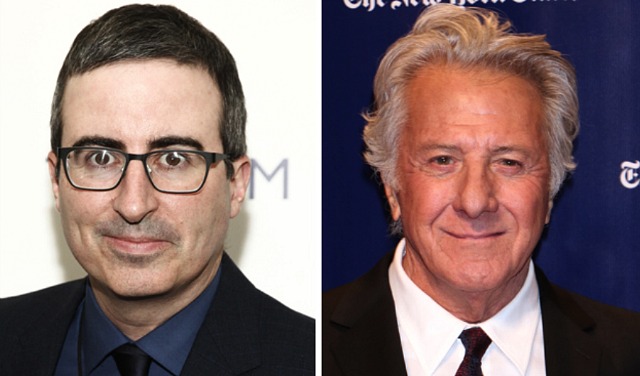
Read Dade Hayes12.4 Deadline story about an “agonizing” confrontation last night between HBO’s John Oliver and Dustin Hoffman. The topic was allegedly inappropriate sexual behavior on Hoffman’s part back in the ’80s and ’90s, or at least what Oliver regarded as legitimate reports about same. Oliver grilled Hoffman like Perry Mason for roughly 30 minutes on this topic. According to Hayes Hoffman arched his back, disputed and took offense. Hayes’ account is fascinating. The Washington Post‘s Steven Zeitchik posted the below video clip.

Charismatic, Raspy-Voiced, No Bullshit

If you’ve seen The Post and thereby enjoyed Tom Hanks‘ performance as Washington Post editor Ben Bradlee (as I have twice), you won’t want to miss the new HBO doc about the legendary newsman, premiering tonight at 8 pm.

It’s called The Newspaperman: The Life and Times of Ben Bradlee. The director is John Maggio. 10:59 pm update: Just finished watching it. A masterful job of explaining a fascinating life, the narration written and spoken by Bradlee himself. Drills right in, no beating around the bush, emotionally affecting to boot, especially during the last five minutes.

CNN’s Brian Lowry: “The Trump administration’s campaign against mainstream journalism provides a timely backdrop to [this] deeply personal, utterly fascinating portrait of the late Washington Post editor’s above-the-fold life.

“Bradlee and the newsroom that he led embodied the romance of journalism, during a pre-digital era when a celebrity editor wielded power in a manner that seemingly stood considerably taller than what’s possible in today’s whittled-down and diffused media landscape.

“At the risk of burying the lead, anyone who cares about journalism — then and now — won’t have any regrets about watching The Newspaperman either.”

What Kind of A Loose Cannon Behaves This Way?

What kind of an irresponsible, fly-off-the-handle director gets into fierce fights with cast members on a major motion picture, abandons the set in the middle of shooting, and in so doing goads the powers-that-be to fire his ass? What name-brand director is this fiercely devoted to self-destruction?

The answer, apparently, is Bryan Singer, who’s been officially canned as the director of Bohemian Rhapsody, the Freddy Mercury + Queen biopic that’s been filming since last September.

The trades have announced that 20th Century Fox has whacked Singer, three days after halting production due to the the 52-year-old helmer’s “unexpected unavailability.” The studio’s statement was terse: “Bryan Singer is no longer the director of Bohemian Rhapsody.”
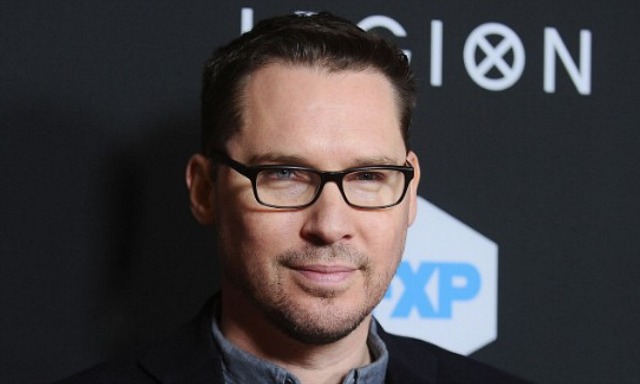

Bryan Singer, former director of Behomian Rhapsode.
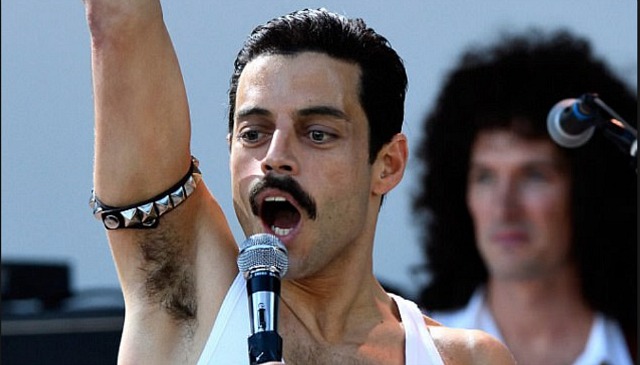
Rami Malek as Freddy Mercury.

Earlier this evening Singer released a statement through his attorney: “Bohemian Rhapsody is a passion project of mine. With fewer than three weeks to shoot remaining, I asked Fox for some time off so I could return to the U.S. to deal with pressing health matters concerning one of my parents. This was a very taxing experience, which ultimately took a serious toll on my own health.

“Unfortunately, the studio was unwilling to accommodate me and terminated my services,” Singer claims. “This was not my decision and it was beyond my control.”

According to a 12.4 Hollywood Reporter story by BorysKit and Kim Masters, the decision to fire Singer “reflected a growing clash between Singer and actor Rami Malek and was caused by Singer’s being missing from the set.

“Trouble began when Singer went absent during production on several occasions. His no-shows resulted in cinematographer Thomas Newton Sigel having to step in to helm some of the days while Singer was missing. Tom Hollander, who plays Queen manager Jim Beach, also is said to have briefly quit the film because of Singer’s behavior, but was persuaded to return, according to one source.

“Malek complained to the studio, charging Singer with not being present on set, unreliability and unprofessionalism.

“Singer had been warned before production began by both Fox Film chairman and CEO Stacey Snider and Fox Film vice chairman and president of production Emma Watts that they wouldn’t tolerate any unprofessional behavior on his part.

Read more

“This Terrible Hole…”

From Xan Brooks’ Guardian review, dated 9.2.17: “America’s love affair with LSD did not begin in Haight-Ashbury or during the summer of love, with tie-dyed flower children frolicking in city parks. Instead it was seeded in less airy surroundings; in Midwestern laboratories and government offices, where it comprised one strand of an extensive germ warfare programme. At the rustic log club-house, underneath the mounted elk’s head, revellers drank spiked punch poured by CIA factotums. Inevitably some of these victims went clean off the rails.

Wormwood, Errol Morris’s splendidly clammy, mysterious docudrama, reopens the file on Frank Olson, a jobbing biochemist who fell to his death from a New York hotel. At the time (December 1953) Olson’s death was ruled to be suicide. But 20 years later evidence emerged that complicated the official verdict and prompted Olson’s family to sue the federal government. Even today elderly Eric Olson is in search of a definitive answer. He casts himself in the role of a Cold War Hamlet, haunted and harried by his father’s ghost.

Read more