Every Documentary Tells A Story

I’ve seen Arthur Miller — Writer, an intimate, not-uninteresting, years-in-the-making portrait of the late playwright. Scheduled to air on HBO next spring, the doc is a highly personal project by respected director Rebecca Miller, the playwright’s daughter by his third wife. I’ve admired Miller and his plays all my life, but the doc acquainted me with a semi-intimate, unguarded version of him, which was new. Miller was a crusty, somewhat brusque fellow when it come to being interviewed — you could use the word “blunt” or even “craggy” — but he never seemed less than wise or perceptive.

Born in 1915, Arthur Miller led an interesting life as a fledgling writer from the mid ’30s to mid ’40s, but led a ferociously fascinating life when he began to produce important, critically respected plays. His big creative period began in ’47 (All My Sons), peaked in ’49 (Death of a Salesman), rumbled into the ’50s (The Crucible, A View From The Bridge) and concluded with his last two big-league plays (’64’s After The Fall and ’68’s The Price) — a little more than 20 years.

Miller’s Marilyn Monroe period (’56 to ’61) made him into a paparazzi figure, and also seemed to bring on the beginning of his creative decline. Miller and Monroe divorced in ’61, and of course she died in August ’62, an apparent suicide. Miller still “had it” for a few years after this period. After The Fall, a thinly disguised drama about his turbulent relationship with Monroe, opened in ’64. Then came the less ambitious, more emotionally engaging The Price in ’68.

It sounds unkind to note this, but from ’68 until his death in ’05 Miller was more or less treading water (trying but never getting there, working on his Roxbury farm, the great man who once was, writing less-than-great plays, writing travel books with his wife) and never managing the comeback that we all wanted to see.

A little more than half (maybe 60%) of Miller’s doc covers her father’s life from his birth to ’68, or roughly 53 years. A little less than half covers the 37 years between The Price and his death in ’05. I’m sorry to note this, but the film runs out of gas around the 60% mark just as Miller himself ran out of creative high-test gasoline in the late ’60s. Arthur Miller — Writer is therefore half of an interesting documentary. I’m sorry if this sounds cruel, but the doc actually becomes a semi-downer once his life and work start to downshift. Your heart starts to slowly crack and break, watching the poor man go through this long, drawn-out, soul-draining, relatively infertile period.
Read more

Keep Your Distance

You’re not allowed to talk about famous people looking different because of “work” they’ve had done. Well, you can, I suppose, but you might get knifed, punched and bitten by the same Twitter militants who pounced on Variety‘s Owen Gleiberman when he mentioned Renee Zellweger in June 2016, etc. But I’m allowed to talk about “work”, you see, because I’ve undergone a Prague procedure or two. I’m therefore allowed to say whatever I want about this subject, and too bad if you don’t like it. Here’s my viewpoint: You can pay for a little physical refinement, but you really have to at least resemble the person you were when it’s all over. That’s all I’m going to say.

Read more

Great Openers

I haven’t read Annette Insdorf‘s “Cinematic Overtures: How to Read Opening Scenes,” but I can guess what’s in it. I’ve always been more affected by great closing scenes, to be honest, but give me an hour or so and I can come up with several great opening scenes. Or great opening shots, for that matter. Like that baroque steambath shot in the beginning of Arthur Penn‘s Mickey One, for example.

What’s my favorite opening scene or montage? The longish opener of Apocalypse Now is near the top of the list, followed by the dialogue-free beginning of Alfred Hitchcock‘s Rear Window, and then the eight-minute opening of Robert Altman‘s The Player. Right now I’m having trouble thinking beyond these three. No, I don’t have a big sentimental thing about the beginning of John Ford‘s The Searchers.

Read more

How Oscar-Locked Is Gary Oldman?

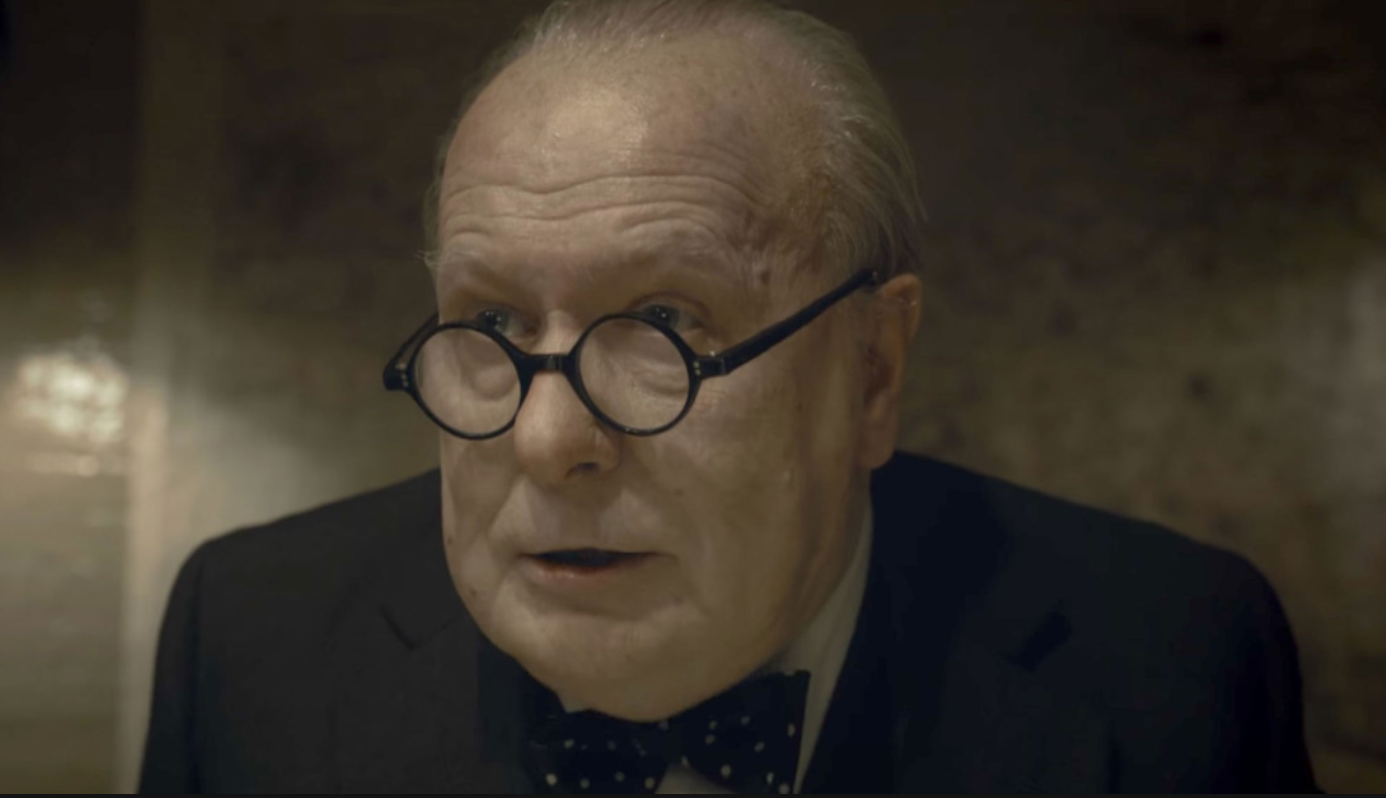
A big swanky Academy screening of Joe Wright‘s Darkest Hour happens tonight, followed by a lobby party with the usual press and Academy types munching and schmoozing. But you know what the real occasion is, the real agenda? An official, communal acknowledgment that Gary Oldman is the most likely winner of the 2017 Best Actor Oscar.

Ever since Darkest Hour debuted in Telluride nine weeks ago conventional wisdom (i.e., the Gold Derby gang, those groovy Gurus) has been stating that Oldman’s flamboyantly twitchy, broadly conceived performance as Winston Churchill — heavy latex, cigar, cane, bowler hat — is the one to beat.

Daniel Day-Lewis‘ late-arriving performance in Phantom Thread could result in a winning surge, especially given that Reynolds Woodcock is supposed to be DDL’s swan-song performance. Some feel that Denzel Washington‘s brilliant-but-quirky-attorney performance in Dan Gilroy‘s Roman J. Israel is tied with Jake Gyllenhaal‘s Boston bombing victim in David Gordon Green‘s Stronger. Tom Hanks‘ turn as Washington Post editor Ben Bradlee in Steven Spielberg‘s The Post looks like a keeper, but Hanks has won twice before (Philadelphia, Forrest Gump). Considering his 21 years on the planet, Timothee Chalamet‘s expected Best Actor nomination for his Call Me By Your Name performance will be a triumph in itself.

I just can’t see Oldman not winning. His Winston Churchill performance is broadly, at times hammily effective. There’s the “we’re sorry you lost the last time” factor with Oldman having nearly won six years ago for playing George Smiley in Tinker Tailor Solder Spy. And finally there’s the “he’s paid his dues and done great work for 30-plus years so it’s time to finally give him the gold” thinking. It doesn’t feel as if Oldman’s breakout debut in Alex Cox‘s Sid and Nancy happened 31 years ago, agreed, but it’s definitely been that long. Ronald Reagan was president then.

Read more

Should’ve Mentioned This Last Night…

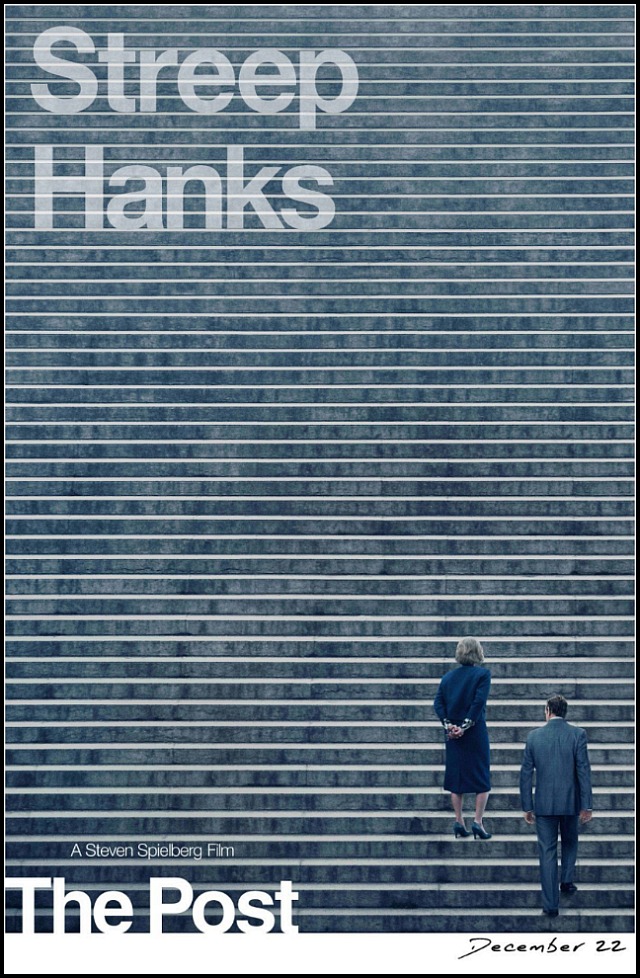
A truly impressive one-sheet. The steps, one presumes, are an impressionistic rendition of the steps outside the U.S. Supreme Court building, where the New York Times & Washington Post vs. Nixon administration dispute over the Pentagon Papers was decided on 6.30.71. The size and steepness of the steps appear to have been exaggerated for dramatic effect.

The most exciting comment in yesterday’s thread about the Post trailer was “Reverent and free” expressing relief that it appears to be “more [of] an ensemble thing than the Meryl Streep Show…they actually underplayed her in the trailer, giving her no big lines.” A trailer rarely represents the film it’s selling, but here’s hoping that an “emphasis on ensemble’ dynamic manifests in the film itself.

Read more

“What Are You Going To Do, Mrs. Graham?”

Trailer are always about simplification, broad strokes and lowest common denominator appeal. But even knowing this, I’m favorably impressed by this trailer for Steven Spielberg‘s The Post (20th Century Fox, 12.22). Right away you sense the pressure and complexity of the do-or-die decision facing the Washington Post. For what it’s worth I’m sensing a stronger dramatic current than I got out of reading an early draft of Liz Hannah‘s script. But of course, that’s what trailers do; they present the basic ingredients in a neat, easy-to-process way. Reactions? As TheWrap‘s Steve Pond would say, could this be “the one”?

Kenneth Branagh’s The Train

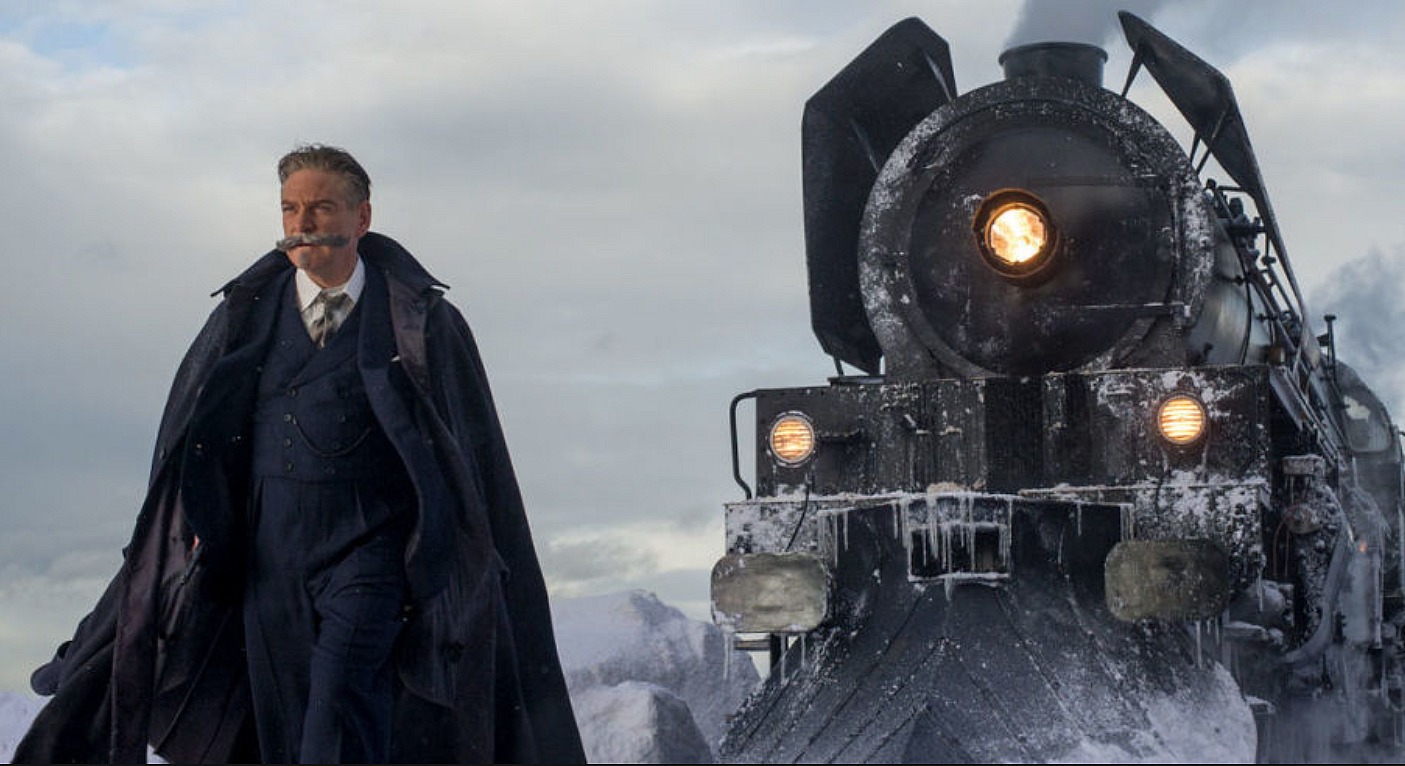
The only thing I really loved about Kenneth Branagh‘s Murder on the Orient Express (20th Century Fox, 11.10) was the train itself. It’s an exquisitely designed and decorated pre-war thing — beautiful carpets and drapes, nicely upholstered dining-car seats, lamps of softly glowing amber, that wonderful dark-wood paneling and old-world bathroom fixtures and all the other trimmings, and that soft clackety sound of wheels meeting rails. So very comforting.

What I saw in the film was partly an actual moving train, partly a stationary outdoor set and partly (just guessing here) a sound-stage set constructed with real-world refinement. I’ve been queer all my life for classic European trains and that cocoon-y feeling of bygone luxury, and so hanging with Branagh’s Hercule Poirot and the dozen or so stiff-necked suspects was…well, pleasant enough.

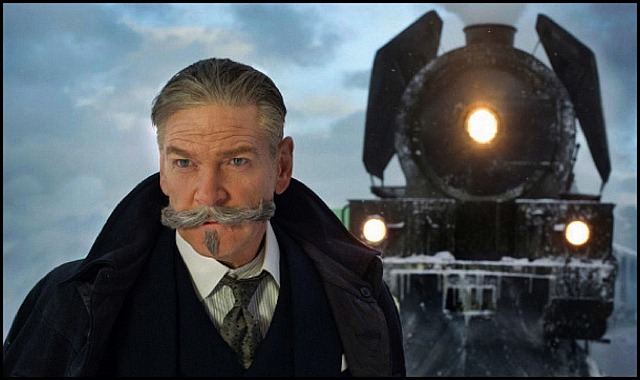
The rest of it felt…what, rote and pre-programed? I didn’t mind it. Well, I did but I tried to brush those feelings away. We all know where it’s heading and who did it so what kind of real satisfaction can be derived? It’s basically about drinking in the sets, the Middle Eastern and European scenery and thinking hard about Branagh’s ludicrous paste-on moustache, all curly and silvery and waxed to a fare-thee-well.

The only folks who will go this weekend will be the over-50 Joe and Jane Popcorn set, but that’s okay…right?

I don’t recall liking the 1974 Sidney Lumet version any better, but…wow, it was nominated for six Oscars?

Seriously, why did Branagh wear such an elaborate Poirot ‘stache when it’s obviously intended only to portray this celebrated fellow as an egoistic, self-inflating, dandified showoff? You look at it and start to imagine Poirot trimming and brushing and fixing it just so every morning, and being extra-careful to make it not look like some kind of doofusy silver handlebar. What does he do, devote an hour each morning and then re-wax and re-comb just before dinner?

The big opening scene in Jerusalem shows the charismatic Poirot announcing his conclusions about who killed a certain party to a crowd of 300 or 400 onlookers, like some kind of upscale circus barker. Why would a meticulous, world-renowned detective, a worldly man of refinement, want to simultaneously resolve a crime and put on a show for a mob? It’s a silly notion, but Branagh is determined to deliver a big visual wow effect for the ADD crowd. The scene happens only four or five minutes in, and I was already rolling my eyes.

Read more

Elton John’s “280 Character Freedom”

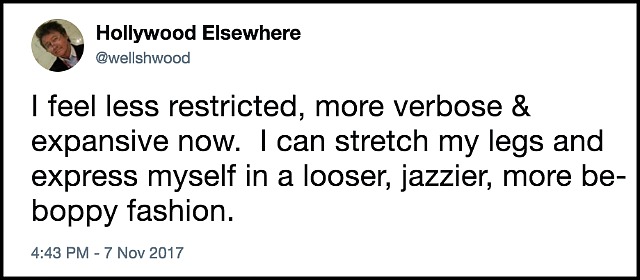
Twitter announced today that nearly all of its 330 million users will henceforth now be able to tweet with 280 characters. Only Twitter users who post in Japanese, Korean or Chinese are still restricted to 140 characters. Tatyana says she always enjoyed and admired the discipline of keeping things to 140 characters, and fears that 280 characters will result in too many people going “blah blah blah blah.”

“I Saluted”

Every three or four years I’ll mention this scene from Ted Post‘s Go Tell The Spartans (’78). Easily one of the best monologues Burt Lancaster ever delivered in his 43-year career, and certainly the most memorable scene in this low-budget Vietnam drama, which was one of the Vietnam wave of films that came out that year (Coming Home, Rolling Thunder, The Boys From Company C). Lancaster’s tale echoes back to this story from screenwriter Ernest Lehman, a recollection of his work on Sweet Smell of Success.

Read more

Wow…That Didn’t Take Long

The backlash to Disney’s recent decision to ban the Los Angeles Times from press screenings of its movies has had a stunningly quick effect. Disney’s Bob Iger has ended his company’s anti-L.A. Times policy — critics and writers from that publication will now be invited to attend press screenings and lah-dee-lah-lah, and so it’s basically olly olly in come free and back to business as usual.

The Last Jedi will now be seen and talked and buzzed about, Rian Johnson is officially back on the list of potential Best Director nominees, and Coco is now back in play as a Best Animated Feature contender.

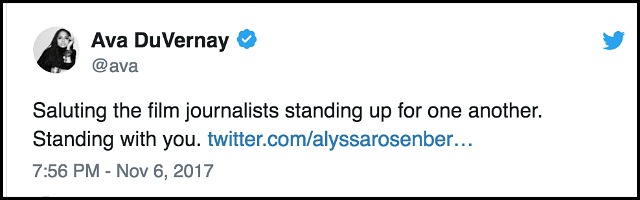
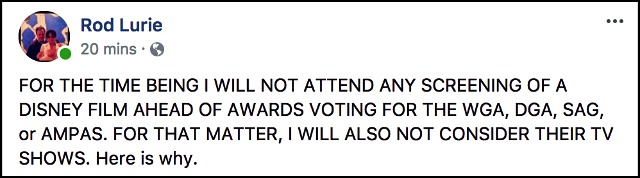
Posted at 11:35 pm: So far the N.Y. Times, two film-focused websites, two filmmakers and three critic-journalists have reportedly declared an intention to avoid screenings of Disney films and/or not write about same in any context or capacityThe A.V. Club and Flavorwire, and Washington Post pop-culture blogger Alyssa Rosenberg, Boston Globe critic Ty Burr and yours truly. Two directors, Ava Duvernay and Rod Lurie, have also pledged on social media to avoid Disney films. This is in response to Disney having locked out the L.A. Times from screenings of Disney films, including Star Wars: The Last Jedi.

Those four critics groups threatening to boycott Disney in terms of year-end critics awards isn’t a tough enough gesture to influence Disney decisively, especially considering that Star Wars: The Last Jedi is a critic-proof franchise installment aimed at Joe and Jane Popcorn. The only threat that has real teeth is critics declaring en masse that they won’t attend critics screenings or write about Disney films, period. Without the threat of that en masse response, Disney’s Bob Iger will just shrug this off.

Okay, Coco (Disney/Pixar, 11.22) might suffer in terms of Best Animated feature consideration if the critics blackball it award-wise, and maybe Beauty and the Beast could suffer also. But the only real pressure will come from critics declining to write about The Last Jedi.

11:57 am: N.Y. Times statement, released a few minutes ago: “The New York Times will not attend preview screenings of Disney films until access is restored to The Los Angeles Times. A powerful company punishing a news organization for a story they do not like is meant to have a chilling effect. This is a dangerous precedent and not at all in the public interest.”

Could Lady Bird “Go All The Way”?

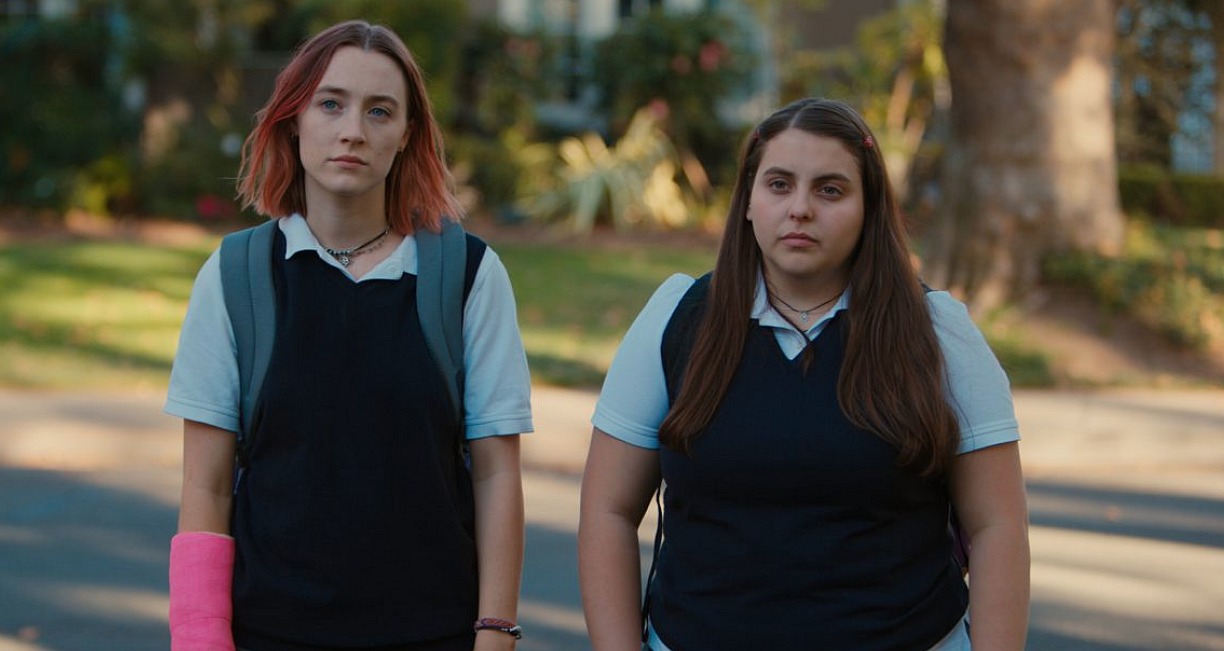
For whatever reason Awards Daily‘s Sasha Stone has been less than full-hearted in her more-or-less positive postings about Greta Gerwig‘s Lady Bird. She likes and admires it but on a “yes but” basis. Something about Saoirse Ronan‘s precocious lead character seeming less than fully charming, at least in Sasha’s eyes. So it’s significant, I feel, that she wrote the following a couple of days ago:

“If anything, it seems likely that Greta Gerwig will make the [Best Director] cut because Lady Bird is the type of movie old white dudes really really like. It’s a very good film and deserving of awards, but if we’re talking about a 70% white, male, middle-aged Academy we have to think about what movies directed by women those voters respond to, and they are responding to this one.”

For what it’s worth, I was feeling this old-white-dude ardor following an Academy screening of Lady Bird at the London West Hollywood last weekend.


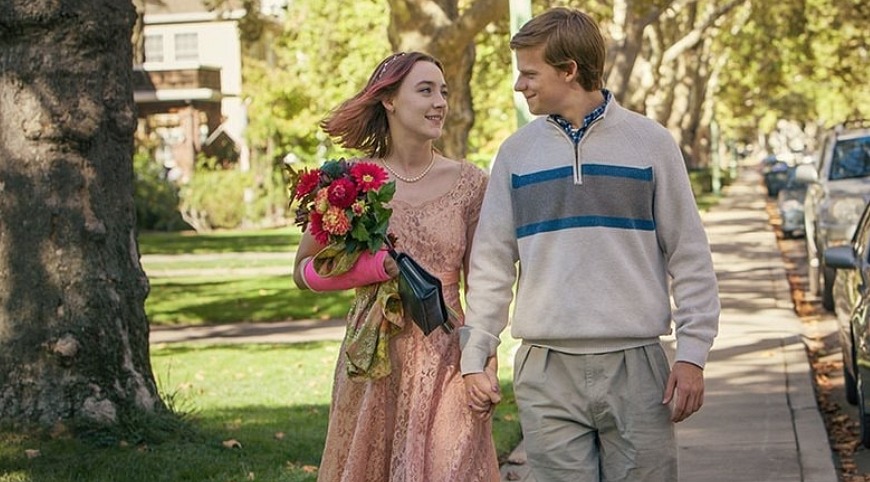
Saoirse Ronan, Lucas Hedges in Greta Gerwig’s Lady Bird.

“Women directors this year made Mudbound, Detroit, Battle of the Sexes and The Beguiled, but none of those seem to have captured the same sort of energy and buzz as Lady Bird,” Stone continues. “They are all pretty heavy movies with heavy themes. Some have been deemed too controversial to go for, and the others, at least so far, haven’t found any sort of major momentum. So if you’re going to pick a woman out of the crowded field of women this year for a Best Director nomination — only the 5th in their 90 year history — the best bet is to go with Gerwig.

“For a film like Lady Bird, buzz and hype are really great things since it would ordinarily be difficult for this kind of film to break through. Right now, it looks like a green light. Whatever my own personal feelings about any movie, I must shove them aside and look at how everyone else feels about it.

“At this moment, believe it or not, I’m starting to wonder if Lady Bird might just win the whole thing. I know it seems improbable, but you have to wonder if a film like that can capture the momentum in a year where women have taken it on the chin everywhere — from politics to harassment to outright assault — and the nagging notion that they can’t catch up to men in the industry.

Read more