What, Another One?

I’ve been hearing good things about Martin McDonaugh‘s Three Billboards Outside Ebbing, Missouri (Fox Searchlight, 11.10) since a West Los Angeles research screening 11 months ago. I’ll finally be seeing it tomorrow morning at 11 am at the Scotiabank plex. Today’s rundown: Film Stars Don’t Die in Liverpool at 2:15 pm, followed by The Mountain Between Us at 4:45 pm, and then some filing. Then a Sony Classics sit-down dinner at 7:30 pm, followed by a 9:30 pm screening of The Current War at the Princess of Wales.

Sloppy Melts

I’m a lifelong sucker for grilled cheese sandwiches, but they have to be slim and tidy. A thin slice of mozzarrella and cheese on buttered toasted rye…yes! So it doesn’t make sense that I would order a sloppy, overstuffed grilled cheese sandwich with all kinds of sauce and chopped tomato and melted gag-all spilling all over the place when you bite into it, but that’s what happened yesterday when I popped into the Meltwich on Richmond.

A woman sitting nearby was staring at me as I struggled with all the gooey crap spilling out of the sandwich as I took my first couple of bites. I could tell from her expression that she despised my lack of couth and table manners. “Hey, lady…you try eating one of these damn things and see how well you do…you can’t, trust me, without looking like some kind of greasy drooling pig.”

I will never again order an overstuffed grilled cheese sandwich. Yo, Meltwich? We’re done. Why would you make sandwiches that bring disrepute upon your customers? That compromise their dignity in front of strangers? Do you think it’s cool or sexy to have gooey globs of cheese and chopped tomatoes and whatnot falling onto your paper plate and your shirtfront and even the floor? I don’t want to even think about your grotesque concoctions from this point on.

Read more

Blades of Steel

Craig Gillespie‘s I, Tonya, a drama about the notorious figure-skating sociopath Tonya Harding (played by Margot Robbie), was press-screened this morning at 8:45 am. A friend reports as follows: “A fairly straightforward re-dramatization of the Tonya Harding/Nancy Kerrigan figure-skating fiasco. It portrays Harding as typical white trash surrounded by more white trash. Doesn’t necessarily paint her as crooked or mean — just naive, indifferent and completely aloof about the whole situation. Robbie’s performance great, Gillespie’s direction solid but [this is nonetheless] conventional filmmaking.”

Scotty’s Truths Are Self-Evident

Three weeks ago I was invited to see Matt Tyrnauer‘s Scotty and the Secret History of Hollywood, a 98-minute doc about Scotty Bowers, the amiable, formerly unsung go-between who wrote about servicing Hollywood’s gay and bisexual community during the ’40s, ’50s and beyond in a five-year-old memoir called “Full Service: My Adventures in Hollywood and the Secret Sex Lives of the Stars.”

Tyrnauer’s film will screen tonight at the Toronto Film Festival, which means I can finally…hold on…the embargo notice says I can’t review it until 11:59 pm this evening. Okay, so I won’t. But I will share what I came to believe during the watching of it, which is that Bowers, whose tell-all book has been challenged and mocked and who’s been described here and there as an unreliable bullshitter, isn’t lying about anything.

For most of Tyrnauer’s surprisingly intimate, low-key, non-gossipy film is about old Scotty — a 90something, white-haired pack rat who owns two or three homes in the Hollywood hills and lives with a good-natured, seen-and-heard-it-all wife who loves him — and only intermittently about the mostly gay and bi movie stars and celebrities (Cary Grant, Spencer Tracy, Walter Pidgeon, Vivien Leigh, Charles Laughton, Vincent Price, Katharine Hepburn, Noël Coward, James Dean) who regarded Scotty as a trusted pimp and pleasure-giver who could and did set them up with same-sex lovers.

After studying Bowers for 98 minutes and listening to him talk about how terrifying things were for gay and bi actors in the intensely homophobic ’40s, ’50s and ’60s, and considering the affection he has for his old gay friends and the strong feelings and immense respect they have for him…after the film is over you’ll probably be convinced, as I was, that Scotty is no bullshitter.

It follows that a high percentage of his recollections about the private sexual lives of movie stars are most likely true. I found this an inescapable conclusion. Just as your gut tells you that Donald Trump is one of the worst bullshitters in the history of western civilization, you can just sense that old Scotty is a straight-shooter. Okay, maybe he’s hazy on a few historical details but the man is 94, for God’s sake. Cut him a little slack.

I have not reviewed Scotty and the Secret History of Hollywood, but I’m telling you that Scotty Bowers is a man of apparent honor. Read this 3.19.12 profile of Bowers by L.A. Weekly‘s Paul Teetor, and then see Tyrnauer’s film, and then read “Full Service” and tell me I’m wrong. I don’t think I am. I really don’t.

I’ve posted four previous pieces about Scott, the book and Tyrnauer’s film — here they are.

Molly’s Game: Sharp, Vigorous, Draining

Tweeted Friday evening at 9:30 pm, give or take: “Aaron Sorkin’s Molly’s Game is an edgy, brutally complex, hard-driving motormouth thing with some excellent scenes, but the only people I cared about were Idris Elba‘s attorney (i.e., defending Jessica Chastain‘s Molly Bloom on illegal gambling charges), Elba’s pretty daughter and Kevin Costner’s dad character during a third-act park-bench scene wth Chastain.

“I didn’t care about anyone else, and I basically found the whole thing, despite the very brainy writing, extremely fleet editing, the scrupulous attention paid to character shading plus that little sapling sticking out of the snow (a metaphor for unfair or random fate)…I found this whipsmart film demanding, not very nourishing and finally exhausting and soul-draining.”

Morning after #1:  Remember that high-velocity, rat-a-tat breakup scene beteeen Jesse Eisenberg and Rooney Mara in The Social Network, which Sorkin also wrote? Molly’s Game is like that all the way through.  You can feel yourself start to wilt.

Morning after #2:  Chastain is so arch, clipped and super-brittle (this is more or less Miss Sloane 2), you just give up after a while.  Elba has a great rhetorical sum-up scene with prosecutors near the end, but is otherwise trapped in a game of verbal ping-pong.  And the various high-rollers who populate the gambling scenes (movie stars, heirs, hedge-fund guys, Russian mobsters) inspire one emotion — loathing.  I hate guys like this, and I have to spend two hours with a whole string of them?

Morning after #3:  Yes, I felt sated and satisfied during the final judgment-and-verdict from the judge in Molly’s case, but by that time I was near death and dying for the film to end.

Back to tweet:  “I feel so worked over and emptied out by Molly’s Game that I need a neck massage, and I don’t even want to know about the after-party.”

Bloody White Apology

I saw George Clooney‘s Suburbicon earlier today…wow. Fargo-ish, it’s not. But it should have resembled Joel and Ethan Coen‘s 1996 classic at least somewhat, I was telling myself, because the original Suburbicon script, written by the Coens in ’86 and set in the mid ’50s, was their first stab at a Fargo-like middle class crime noir. Nine or ten years later the Coens went back to the same James M.Cain well and created Fargo, and the rest is history.

In Suburbicon, Clooney and producer and co-screenwriter Grant Heslov have reworked things, keeping the Fargo noir stuff but also, it seems, diluting or ignoring that sardonic deadpan wit that we all associate with the Coens, and deciding to paint the whole thing with a broad, bloody brush.

When it comes to tales about greed, murder and doomed deception, there’s nothing duller than watching a series of unsympathetic, unwitting characters (including the two leads, played by Matt Damon and Julianne Moore) play their cards like boobs and then die for their trouble. There’s just no caring for any of them.

Most significantly, Clooney and Heslov have added a side-plot about how Eisenhower-era white suburbanites were racist and venal to the core, and how things really aren’t much different today.

The Suburbicon victims are the just-arrived Meyer clan (Karimah Westbrook, Leith M. Burke, Tony Espinosa), and from the moment they move into their new, ranch-style home in a same-titled fictitious hamlet (i.e., an idyllic real-estate development right out of Martin Ritt‘s No Down Payment) their cappuccino skin shade incites ugly pushback from just about everyone. But the situation doesn’t develop or progress in any way. The Meyers keep absorbing the ugly, and that’s pretty much it.

Remember how those small-town citizens greeted the arrival of Cleavon Little in Blazing Saddles? Nearly the same broad-as-fuck tone prevails here. There isn’t a single non-racist white adult in Suburbicon. With the exception of Noah Jupe‘s Danny, who’s about ten, and the Meyers clan everyone in Clooney’s film has horns, hooved feet and a tail.

Clooney and Heslov to progressive industry hipsters and Twitter banshees: “We get it…whiteys carry the demon seed…a pox upon humanity…they totally sucked in the Eisenhower era and are probably no better right now…down with the curse of Anglo Saxon gene pools except, you know, for a certain small sliver of enlightened humanity that includes Glenn Kenny, Ellen DeGeneres, Greta Gerwig, Phillip Noyce and a few thousand others.”

Suburbicon is about a married middle-management milquetoast (Damon’s Gardner Lodge), obviously a close relative of William H. Macy‘s Jerry Lundegaard, scheming with his wife’s sister (Julianne Moore plays both roles) to scam a pile of dough by hiring a couple of thugs to kidnap and “accidentally” kill his wife. All kinds of hell breaks loose when the plan goes wrong.

Read more

Brutal Competition

Everyone’s catching Suburbicon at 11 am this morning, but after that it’s anyone’s game. Albert Tello is forcing me hike down to the Intercontinental on Front Street to pick up Molly’s Game tickets (screening + after-party), but should I wedge this in between Suburbicon and Stephen FrearsVictoria & Abdul or post-Abdul at 3:30 or 4 pm? Yes, I’ll regret missing the 5 pm The Death of Stalin screening but tomorrow’s another day. I don’t need to see Lady Bird again so soon after Telluride, but I’d like to drop by the after-event. 90% of this racket is about politely asking and then saying “thank you.”

Standing Ovation

Hollywood Elsewhere attended a party this evening for Luca Guadagnino‘s Call Me By Your Name (Sony Pictures Classics, 11.24) at STK Toronto (153 Yorkville near Avenue Road) following a TIFF screening at the Ryerson. The film was rapturously received with a long standing ovation. The congenial Timothee Chalamet called me “Mr. Wells” (please!) and said he’s read all the stuff I’ve written about the film. He said he’ll begin shooting the new Woody Allen film (also starring Elle Fanning and Selena Gomez) on Monday in New York City. I chatted with Roger Friedman, Baz Bamigboye, Wilson Morales, et. al. Nice party, great food…thanks, Sony Pictures Classics.

Call My By Your Name star and likely Best Actor nominee Timothee Chalamet.


The guy standing to Timothee Chalamet’s left Giullian Gioiello.  CMBYN costar Armie Hammer at far right, next to yours truly. Director Luca Guadagnino to my immediate right.

Read more

Lady Bird Cat Fight

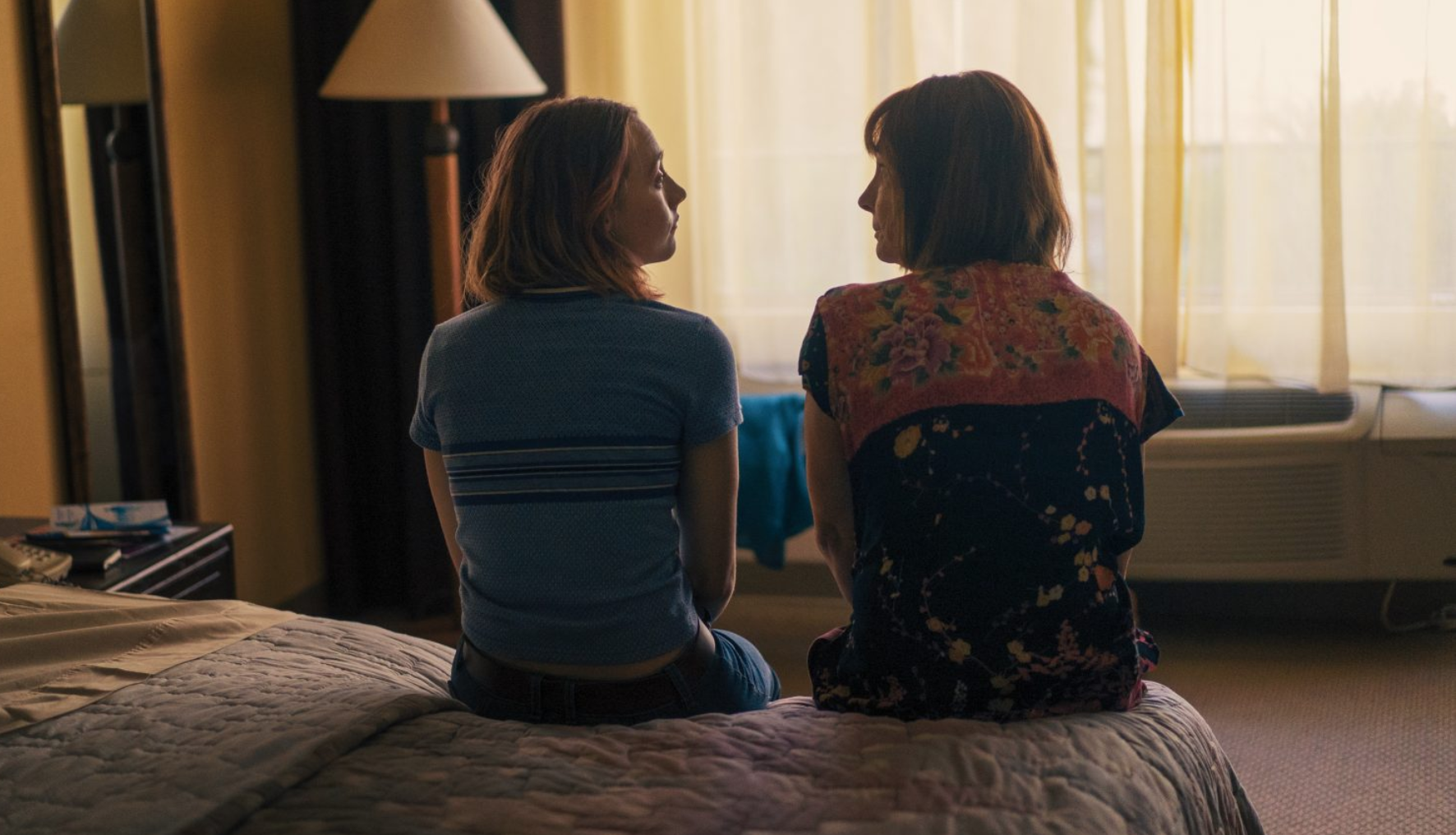
Yesterday the winners of a Telluride Film Festival Indiewire critics poll were announced, and the news was very good for Greta Gerwig‘s Lady Bird. Tied for first place were Gerwig’s semi-autobiographical dramedy and Guillermo del Toro‘s The Shape of Water, and the most admired performance “by a long shot” was given by Lady Bird star Saoirse Ronan. So we know where the Best Picture conversation is headed right now, at least in part.

And yet, believe it or not, there’s a fierce pushback narrative being mounted against Lady Bird by a certain nitpick contingent. It’s mainly about how they don’t care for Ronan’s lead character, whom director-writer Gerwig largely based upon her own teenaged self back in ’02. Not likable enough, they’re saying. Too bratty, too argumentative with her mom (Laurie Metcalf), disloyal to her fat best friend, too much of a social striver, etc.

I find this argument appalling as I believe Lady Bird to be an excitingly honest and beautifully assembled film that tells the often humorous, sometimes abrasive truth about what it’s like to be a bright, passionate 18 year-old with unformed ideas and serious hunger.  But you can’t order people to ditch their objections.

I was arguing with one of the nitpickers this morning. I reminded that Ronan’s character goes back to her best friend at the very end, and that kids say and do unattractive things to each other all the time in high school, and that mothers and daughters are often if not always at loggerheads during the teen years, and that Ronan says “I love you” to her mom at the finale. It’s honest, it’s real, it’s Greta’s life…c’mon. Some people are just dug in and unreachable.

Barber Blocking Coppola’s New Cotton Club

Francis Coppola‘s The Cotton Club Encore, an expanded and allegedly improved 139-minute version of the original 1984 film, played twice at last weekend’s Telluride Film Festival. I couldn’t fit it into my schedule, and I can’t find any reviews from any reputable or tough-minded critics whom I respect. Nor can I trust Jim Hemphill’s enthusiastic 9.6 review, which claims that the new cut is a “masterpiece”. But I’m certainly intrigued.

I didn’t care much for the original version, which I saw only once about 33 years ago. But Coppola’s new cut is said to feature more music and dancing, and to be less white, and less focused upon the romantic relationship between the two lead characters, played by Richard Gere and Diane Lane. It may do the trick and it may not, but who wouldn’t want to see it?

Coppola spent $500,000 out of his own pocket to create this new version. The restoration effort took four years, I’ve been told, and was completed about six months ago. Coppola was inspired after seeing an old Betamax version of an original cut that he liked better than the ’84 theatrical version.

Coppola archivist James Mockoski explained this morning that Coppola removed about 13 minutes of footage for the original 127-minute version, which took it down to 114 minutes or thereabouts. Roughly 25 minutes of new footage was added for a grand total of 139 minutes.

So why isn’t The Cotton Club Encore playing at the Toronto Film Festival or the forthcoming New York Film Festival? You’re not going to believe this, but the reason is MGM CEO Gary Barber, the same obstinate asshole who has blocked Robert Harris‘s long-hoped-for restoration of John Wayne‘s The Alamo.

MGM is the Cotton Club rights-holder, you see, and Barber, true to form, has not only objected to the film being shown in any kind of commercial venue (such as TIFF or NYFF) but is also uninterested in distributing or streaming Coppola’s expanded version, even though Coppola has paid for the whole thing.

Barber could theoretically (a) allow for a brief theatrical re-release of The Cotton Club Encore or (b) issue it on Bluray or via Amazon/iTunes streaming or (c) at least sub-license the home video rights to Criterion or some other dedicated, film-loving outfit. But the South African-born executive reportedly has no interest, just as he’s refused to even discuss the Alamo situation with Harris.

Read more