Strelnikov

I watched Dr. Zhivago last night for the sake of the SRO, who had only vague memories of it. It had been a few years since my last viewing. Released in late ’65 but seen by most audiences the following year, it will never be more than an eye-filling, handsomely composed soap opera, but it works because of Maurice Jarre‘s haunting score along with David Lean‘s incisive editing style.

My favorite character is Klaus Kinski‘s anarchist on the train, but the most interesting developed character is Tom Courtenay‘s Pasha Antipov (aka “Strelnikov”) and he has…what, five or six scenes? This chat with Yuri Zhivago (Omar Sharif) is his best moment:

In the film Rod Steiger‘s Komarovsky tells Yuri that Strelnikov, on the run from the Bolsheviks, was captured five miles from Yuriatin while apparently trying to find Lara, his abandoned wife. He refused to answer to any name but Pasha, and then committed suicide en route to his own execution.

In Boris Pasternak’s 1957 book, Pasha finds only Yuri when he arrives in Yuriatin. From a Wikidot summary: “Yuri and Pasha are both walking dead men, having lost what was most vital to them somewhere along the way. They are Russians though, so they drink and talk hours into the night. Then Yuri goes to bed. Pasha takes a walk, and shoots himself in the head. Yuri finds his corpse in the morning.”
Read more

Hungarian Genius

We’re two weeks away from the 100th anniversary of the birth of Hungarian-born composer Miklos Rosza, who is currently my favorite classical-styled movie-score composer. I change my allegiance all the time — Bernard Herrmann, Maurice Jarre, Max Steiner, Franz Waxman — but I always come back to Rosza.

A short list of Rozsa’s classic scores — Double Indemnity, Spellbound, The Killers (one of the best noir scores ever), Brute Force, The Naked City, Madame Bovary, Quo Vadis, Ivanhoe, Knights of the Round Table, Lust for Life, Ben-Hur, King of Kings, El Cid. Rosza’s scores performed the required duties (augmenting the moods and themes, intensifying the emotion) but they work on their own terms.

I posted the following about Rosza’s King of Kings score on 12.21.10: “Rosza sometimes let his costume-epic scores become slightly over-heated, but when orgiastic, big-screen, reach-for-the-heavens emotion was called for, no one did it better. He may have been first and foremost a craftsman, but Rosza really had soul.

“Listen to the overture and main title music of King of Kings, and all kinds of haunting associations and recollections about the life of Yeshua and his New Testament teachings (or at the least, grandiose Hollywood movies about same) start swirling around in your head. And then watch that Nicholas Ray’s stiff, strangely constipated film (which Rosza described in his autobiography as ‘nonsensical Biblical ghoulash’) and it’s obvious that Rosza came closer to capturing the spiritual essence of Christ’s story better than anyone else on the team (Ray, screenwriter Phillip Yordan, producer Samuel Bronston).”

Read more

Ghost In The Shell Goes Down, General Spring Grimness, etc.

It’s not just my loathing of almost all Asian machismo action spectacle (martial arts, sword and wire ballet) that floats my boat. I’m also indifferent to Japanese anime and manga and regret whatever influence they may have upon modes of 21st Century filmmaking. It therefore goes without saying I never intended to acknowledge, much less see or write about, Rupert SandersGhost In The Shell

The Paramount release not only opened this weekend to sucky reviews but also underperformed — a lousy $19 million from 3,440 theaters. Yes!

The audience was 61% male vs. 39% female. Johansson’s skin-tight outfit plus the sexual aroma of Japanese manga indicated that Ghost In The Shell was basically about giving guys boners, which would explain the less ardent female response. Box Office Mojo‘s Brad Brevet notes that Scarlett Johansson‘s Lucy opened with $43.8 million, due in part to a larger (50%) female following.

I’ve been mainlining movies my entire life, and I don’t even want to know about this weekend’s box-office biggies, much less sit through them. The dismally reviewed Boss Baby (50% Metacritic, 48% Rotten Tomatoes) narrowly edged Beauty and the Beast to win the weekend. Lionsgate’s Power Rangers came in fourth with an estimated $14.5 million. Who watches this shit? It’s April 2nd, and there’s almost nothing I want to see between now and May 1st. Well, two or three.

The only film opening next Friday that I believe to be 100% worthy is Cristian Mungiu‘s Graduation.

Who cares about Going in Style, The Case for Christ and Smurfs: The Lost Village (all opening on 4.7)?

Read more

Vanished

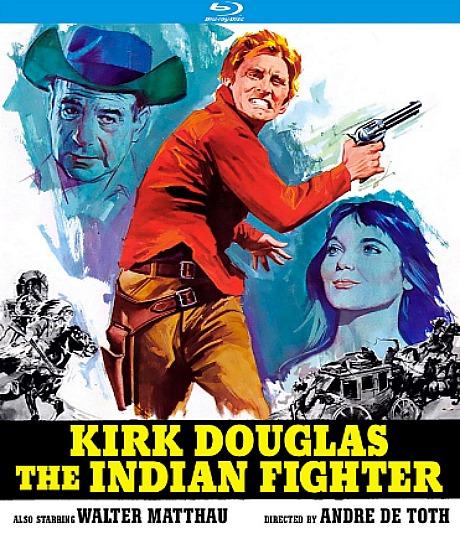
Kino Lorber is releasing a Bluray of Andre de Toth‘s The Indian Fighter on 5.9.17. Excerpt from from “Dust to Dust,” posted on 5.30.14. “Have you ever seen The Indian Fighter? I didn’t think so. Have you ever heard of it? There’s no reason you should have. A 1955 Kirk Douglas mediocrity, co-written by Ben Hecht, opened at the Mayfair (later the DeMille) on 12.21.55. Not awful but generic. Why should succeeding generations pay the slightest attention to a film made on auto-pilot? By people who wanted only a commercial success and not much else? Don’t kid yourself — the fate of The Indian Fighter awaits 80% to 90% of the films that have opened in the 21st Century. Deep down producers and directors know it’s not just a matter of dollars and cents, which is why some occasionally try to make films that sink into people’s souls on some level. Because they want future generations (including their own descendants) to speak about them with affection or at least respect. It’s about legacy.”

Middle Americans May Not Like What They See in Downsizing

Last Tuesday all the Cinemacon journos went apeshit after seeing ten minutes of footage from Alexander Payne‘s Downsizing (Paramount, 12.22), myself especially. Yes, it’s “comedic” but a long way from lighthearted. For all the humor and cleverness and first-rate CG it feels kind of Twilight Zone-y…a kind of Rod Serling tale that will have an uh-oh finale or more likely an uh-oh feeling all through it.

Last Tuesday I wrote that the undercurrent felt a teeny bit spooky, like a futuristic social melodrama in the vein of Fritz Lang’s Metropolis.

In its matter-of-fact portrait of middle-class Americans willing to shrink themselves down to the size of a pinkie finger in order to reap economic advantages, Downsizing doesn’t appear to be the sort of film that will instill euphoric feelings among Average Joes. It struck me as a reimagining of mass man as mass mice — a portrait of little people buying into a scheme that’s intended to make their lives better but in fact only makes them…smaller. A bit like Trump voters suddenly realizing that their lot isn’t going to improve and may even get worse.

A day after the Downsizing presentation I was chatting with a bespectacled heavy-set female who works, she said, for an Arizona exhibitor (or some exhibition-related business) in some executive capacity. She struck me as a conservative, perhaps one who processes things in simplistic “like/no like” terms, definitely not a Susan Sontag brainiac. 

I told her that I thought Downsizing was brilliant and asked what she thought of it. Her response: “I don’t know what I think of it.”

HE translation: “No offense but I don’t want to spill my mixed feelings with some Los Angeles journalist I’ve just met. I didn’t like the chilly feeling underneath it. It didn’t make me feel good. My heart wasn’t warmed by the idea of working people shrinking themselves down so they can live a more lavish lifestyle. I have to work really hard at my job and watch my spending and build up my IRA, and I didn’t appreciate the notion that I’m just a little struggling hamster on a spinning wheel.”

Again — my initial reaction to the footage.

Amazon in Vegas

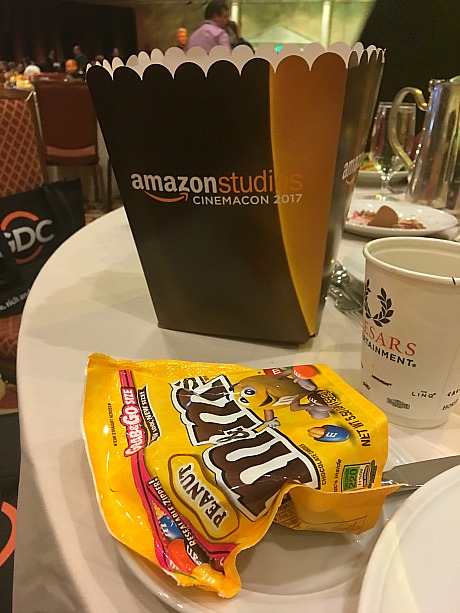
I never reported on Amazon Studio’s Cinemacon presentation, which happened at a Thursday (3.30) luncheon. It still seems as if their biggest attraction and potentially hottest award-season title (maybe) is Michael Showalter, Kumail Nanjiani and Emily Gordon‘s The Big Sick (6.23), which opened to big acclaim at last January’s Sundance Film Festival and will probably do well commercially, at least in hip urban markets.

But if Sick comes up short during award-season (a fate that often befalls relationship comedies), it’s possible that Todd Haynes and Brian Selznick‘s Wonderstuck will carry the weight. A time-flipping drama (two scenarios separated by 50 years) with a strong emotional current, pic stars Julianne Moore, Michelle Williams, Amy Hargreaves, Millicent Simmonds, Oakes Fegley and James Urbaniak. The trailer (which has a kind of swirling, flirting-with-euphoria quality) got me going.  Haynes doesnt fool around.

Tied for third place among Amazon’s most appealing ’17 films:  (a) Richard Linklater‘s Last Flag Flying, a decades-later sequel to The Last Detail with Bryan Cranston, Steve Carell and Laurence Fishburne (the kind of film that could really benefit from a Cannes debut), and (b) Mike White‘s Brad’s Status, about a 50ish dad (Ben Stiller) dealing with vague frustrations about his accomplishments plus the seeming fact that his college-age son (Austin Abrams, who doesn’t resemble Stiller in the least) is likely to do better. Both were trailered, both look great.

Stiller’s dad reminds you of similar characters he played in Greenberg and especially While We’re Young.

Read more

One More Time: Harris vs. McBride re John Ford’s Five Came Back Depiction

Laurent Bouzereau and Mark Harris‘s Five Came Back, a brilliant three-hour doc about the transformative experiences of five name-brand Hollywood directors (John Ford, Frank Capra, William Wyler, George Stevens and John Huston) during World War II, premiered last night on Netflix. Please see it, and if at all possible in a single sitting. Here’s my 3.22 review.

That said, I’m obliged to re-irrigate a dispute between Harris, author of the same-titled 2014 book, and Ford biographer Joseph McBride about the doc’s claim that Ford’s service as a WWII documentarian-propagandist basically ended after he went on a three-day bender following the D-Day invasion.

In a 3.23 HE piece called “Ford’s Bravery, Drinking, Sentimentality,” McBride articulated his dispute with Harris based on Harris’ book vs. what McBride had reported in “Searching for John Ford,” a respected 2001 biography.

But yesterday McBride doubled down and then some after seeing the Netflix series [see below] and taking it all in. I naturally passed his complaint along to Harris. Harris came back this morning with a stern and specific reply [also below].

Read more

Another Musical Best Pic Contender?

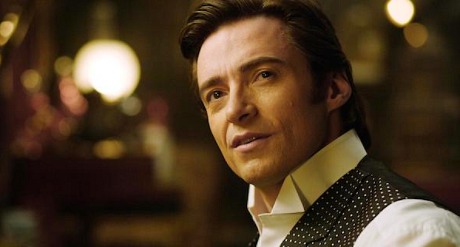
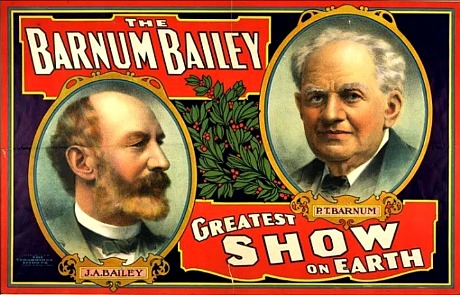
If nothing else, Cinemacon 2017 persuaded me that three previewed films may well become finalists in the 2017/18 Best Picture race — Alexander Payne‘s Downsizing, Steven Chbosky and Steven Conrad‘s Wonder (this year’s Lion-like contender) and The Greatest Showman, an apparently sumptuous musical biopic about the legendary P.T. Barnum with Hugh Jackman in the title role.

Pic costars Zac Efron, Rebecca Ferguson, Michelle Williams, Yahya Abdul-Mateen II, Natasha Liu Bordizzo and Zendaya. It’s been directed by Australian commercial director and (uh-oh) “visual effects artist” Michael Gracey and written by Michael Arndt, Jenny Bicks and Bill Condon. A handsome, spirited trailer (pic’s dp is Seamus McGarvey) was screened.

Showman‘s musical numbers were composed by Benj Pasek and Justin Paul, the lyricists for Justin Hurwitz‘s La La Land tunes.

The Greatest Showman has been in the planning stages for several years. Gracey was hired to direct in August 2011. Principal photography began on 11.22.16.

Jackman’s presentation of the forthcoming 12.25 release was the highlight of the 20th Century Fox Cinemacon show, which was easily the finest and grandest of all.

Read more

More Like It

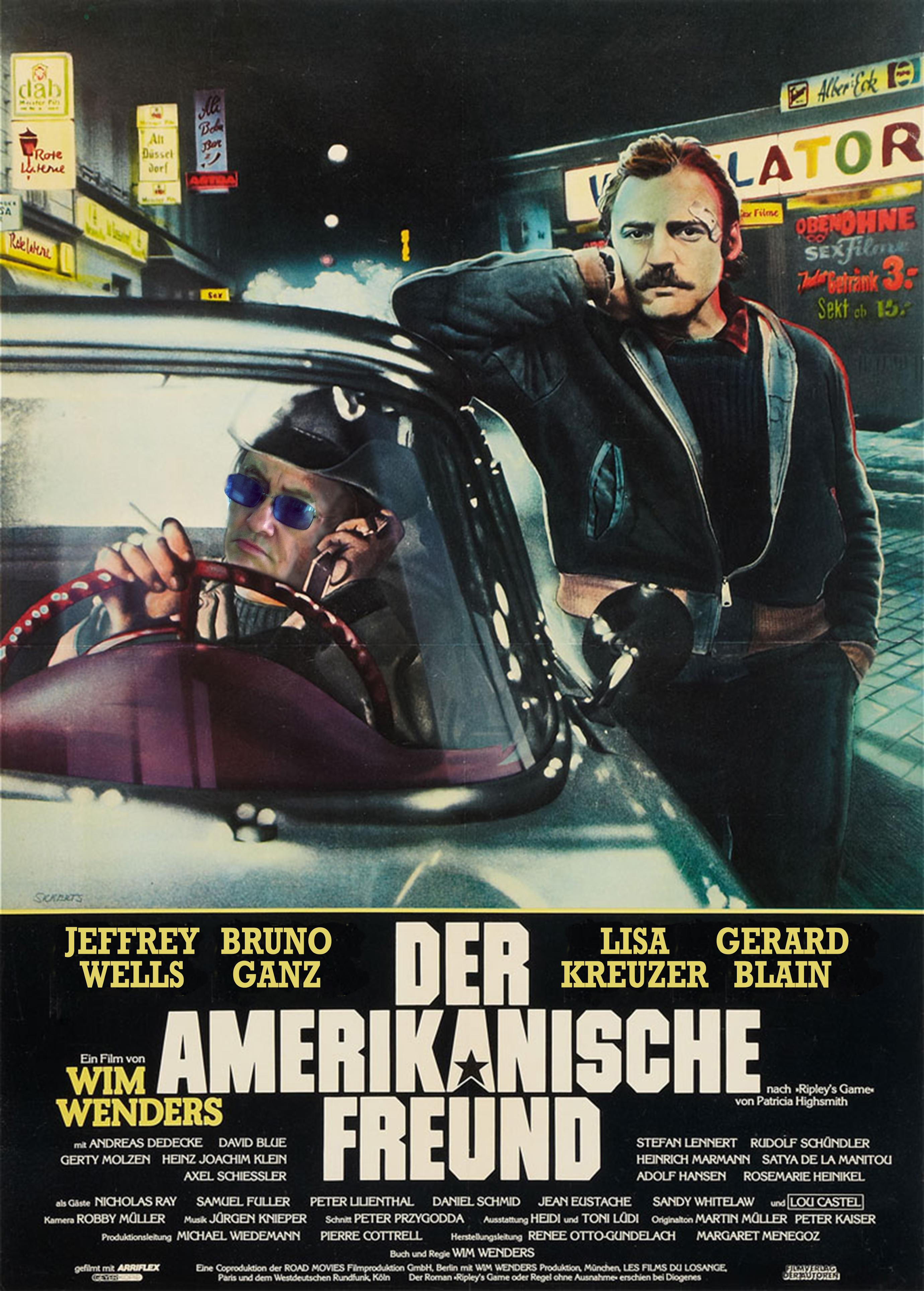
Yesterday Sasha Stone rode to the rescue and singlehandledly saved the Hollywood Elsewhere redesign, which wasn’t on a good footing earlier this week. She threw together some Armory-based roughs in two or three hours, and right away I knew she was on the right track. I’m feeling enormous relief that a friend whose taste I trust is handling things now. I’ve also asked Chicago-based designer Mark Frenden (the guy who inserted yours truly into an awesome American Friend poster) to contribute whatever ideas he may have.

Sloppy Chops That Somehow Slid Into Sweet Spots

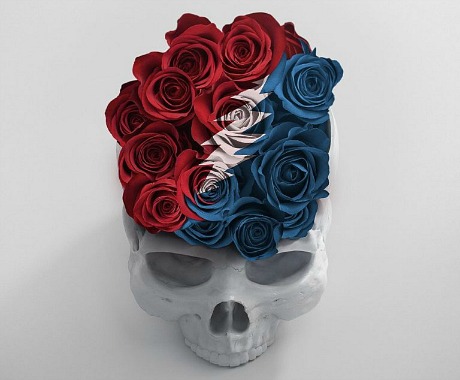
I decided against seeing Amir Bar Lev‘s Long Strange Trip (theatrical 5.26, Amazon Prime 6.2), his four-hour Grateful Dead doc, at Sundance, but I’ll be catching it on 4.12 at a Los Angeles press screening — 5 pm to 9:30 pm with a half-hour refreshment break.

A Variety review by Owen Gleiberman plus the film’s Wikipedia page state that the running time is 235 minutes, but p.r. releases have reported slightly longer lengths — 238 and 242 minutes. Update: Obscured Pictures’ R.J. Millard, a recent addition to the team, clarifies that “the final running time will be 241 minutes (4 hours, 1 minute).”

The only Grateful Dead album I’ve ever really liked is Live Dead. Recorded at San Fransico’s Avalon Ballroom and Fillmore West in early ’69 and released later that year, it was the first live album to use 16-track recording. Village Voice critic Robert Christgau wrote that side two of the double album “contains the finest rock improvisation ever recorded” — agreed.

I presumed from the get-go that Long Strange Trip would be an above-average thing because of Bar-Lev‘s esteemed track record — My Kid Could Paint That (’07), The Tillman Story (’10) and Happy Valley (’14).

From Gleiberman’s review: “[Pic] has the sprawl and generosity of a good Dead show, yet there’s nothing indulgent about it — it’s an ardent piece of documentary classicism. I’m one of those people who can’t stand the Grateful Dead…yet I found Long Strange Trip enthralling. For the first time, it made me see, and feel, and understand the slovenly glory of what they were up to, even if my ears still process their music as monotonous roots-rock wallpaper.”