Posthumously Cancel Cormac McCarthy?

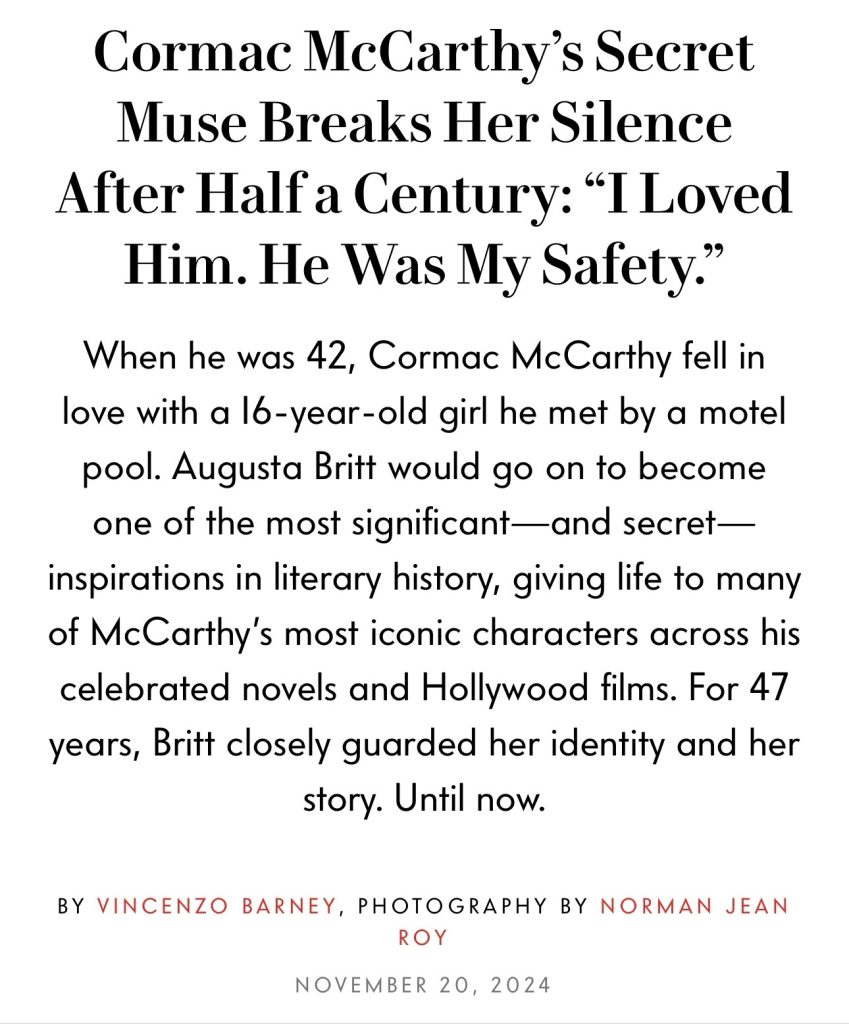
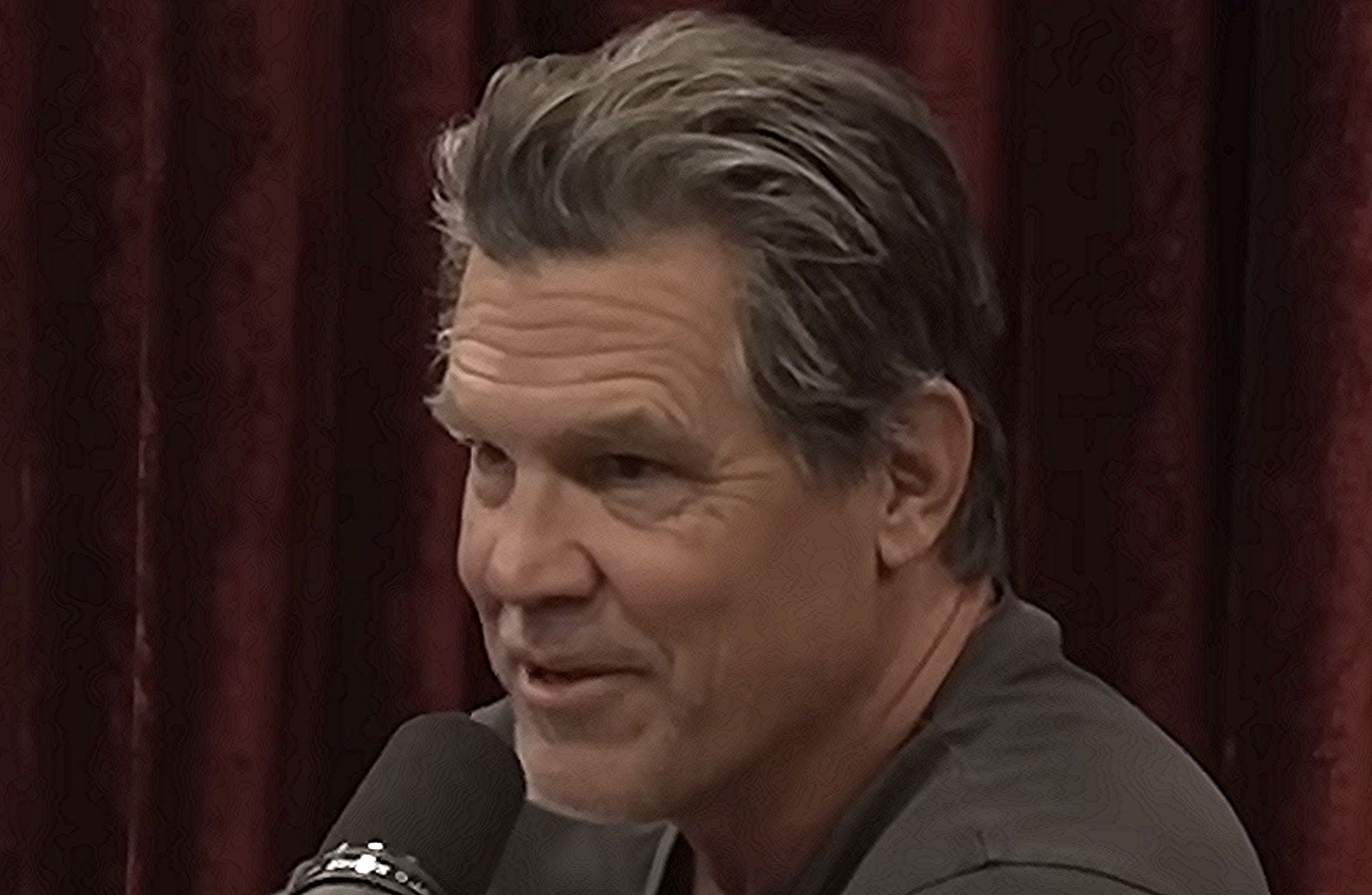
Last week writer Vincenzo Barney revealed in a Vanity Fair article that Cormac McCarthy, the late author of Blood Meridien and No Country for Old Men, indulged in a years-long affair with a teenaged be-bop baby.

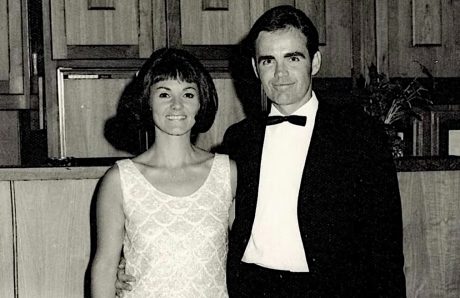
The woman in question is the now 64-year-old Augusta Britt, whom the celebrated author first met in ’76 or thereabouts, when she was 16 and he was 42.

McCarthy and Britt consummated the deal a year later. She was his “single secret muse”, etc. McCarthy died last year at age 89.

Conventional wokeism naturally asserts McCarthy groomed and exploited a presumably naive young woman, but Britt has insisted otherwise.

McCarthy from heaven: “Condemn all you want but as America was celebrating its Centennial and beyond, it was a be-bop baby for me-hee…a be-bop baby for me.”

“Zero Day” Around the Corner

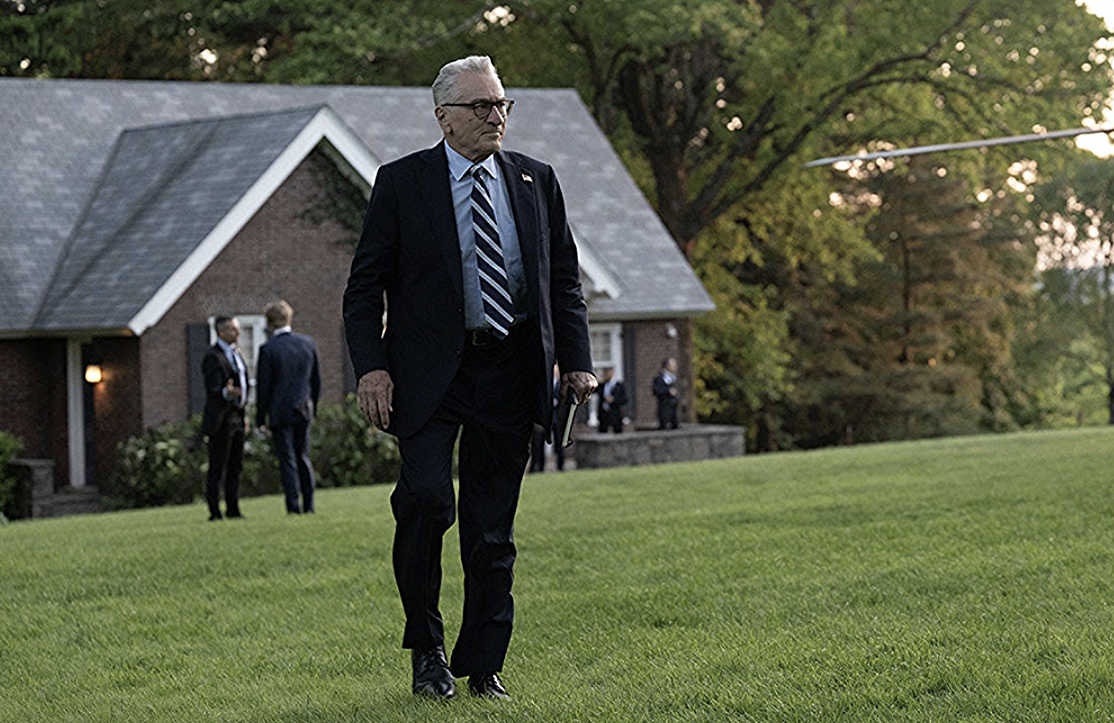
Zero Day (Netflix, 2.20.25) is an upcoming American political thriller television series created by Eric Newman, Noah Oppenheim and Michael Schmidt. “A political conspiracy thriller centering on a devastating global cyberattack”, etc. Directed by Lesli Linka Glatter, it costars Robert De Niro and Lizzy Caplan.

Vanity Fair: “Zero Day was conceived, written, and filmed before Donald Trump won reelection as president; he’ll return to the White House for his second term a few weeks before the show’s premiere.

“In other words, Zero Day will launch in an unnervingly appropriate political context, fresh after an election cycle that highlighted Oppenheim’s notion of competing realities. “I’m obviously disappointed as a Democrat that we didn’t win. But as a filmmaker, and as someone who is considering the best window of release for this show, we definitely wanted to get far enough away from the inauguration so that we didn’t get lost in the jet wash of political reportage that’s going to come out,” Newman says. “There are honest people in government who make hard choices and do the right thing—and my hope is that this will be an aspirational component of our show.”
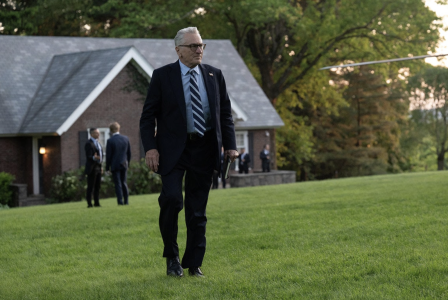
“A vocal (and colorful) Trump critic, Robert De Niro demurs when asked how the show will — or should — be viewed in light of this month’s election.

“By the time you get to the end of Zero Day’s first episode, you’d be forgiven for assuming the show was written very recently, with a clear intention to model itself on the American political scene’s current main characters. De Niro’s Mullen is tapped to lead a Patriot Act–style commission in response to the terrorist attack, resisting pressure to pin it on Russia given current relations and the nature of the cyberwarfare. His perspective gets muddied as he starts showing signs of cognitive decline, recalling the fierce debate surrounding Joe Biden’s candidacy for reelection before he took himself off the ballot.

“From there, more parallels emerge. Mullen’s daughter, Alexandra (Lizzy Caplan), is a relatively progressive member of Congress whose popularity and forthrightness on Instagram signals her as a rising, AOC-esque star. His chief adversary, meanwhile, is Evan Green (Dan Stevens), an inflammatory basement-dwelling commentator clearly inspired by the likes of Tucker Carlson and Ben Shapiro.

“The sitting US president Mitchell is portrayed by Angela Bassett, notable in the wake of Americans again rejecting the chance to elect the first female president in Kamala Harris.”

“We did not expect Biden’s cognitive issues to become a campaign issue. We did not expect a Black woman to become the candidate,” Newman says. “If anything, in my mind, [President Mitchell] was more based on Michelle Obama or something.”

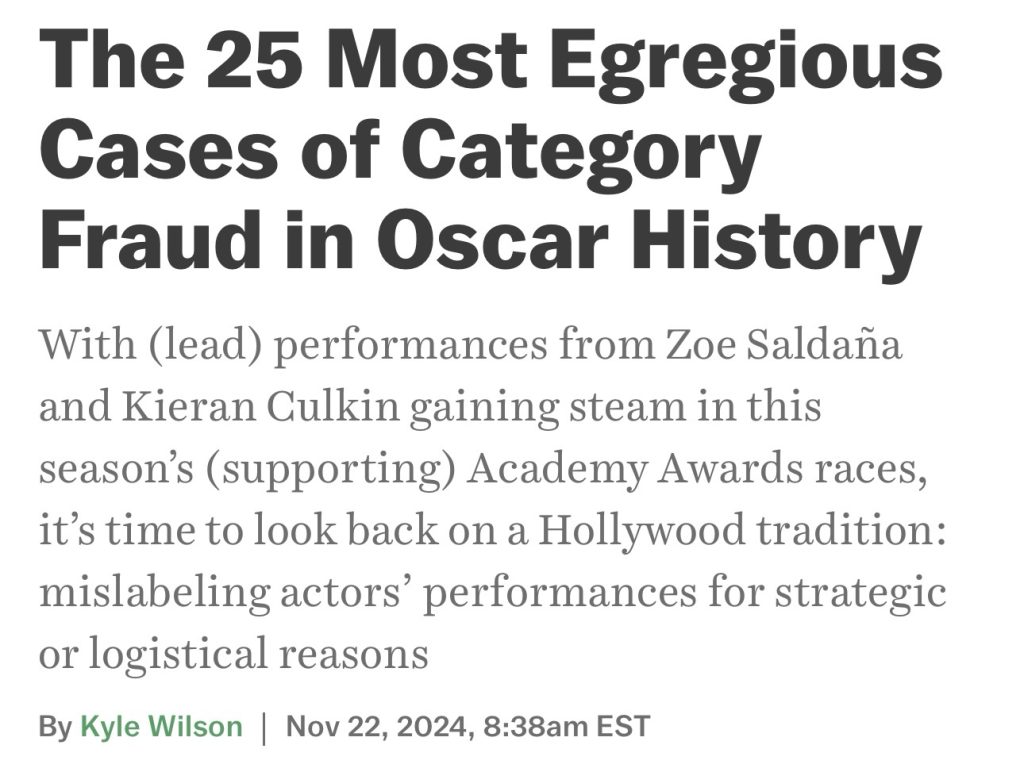
Kyle Wilson Has The Audacity To Write About Oscar Category Fraud

…and he doesn’t even mention the twin identity campaigns of Lily Gladstone, who ran as a lead after clearly playing a supporting role in Killers of the Flower Moon, and Emilia Perez’s Karla Sofia Gascon, whose titular character is a strong presence but not a lead — Zoe Saldana has that honor.

Why did Wilson omit even a mention of these two? I’ll tell you why. Because he’s chicken, or because his editors are.

Not To Sound Insensitive

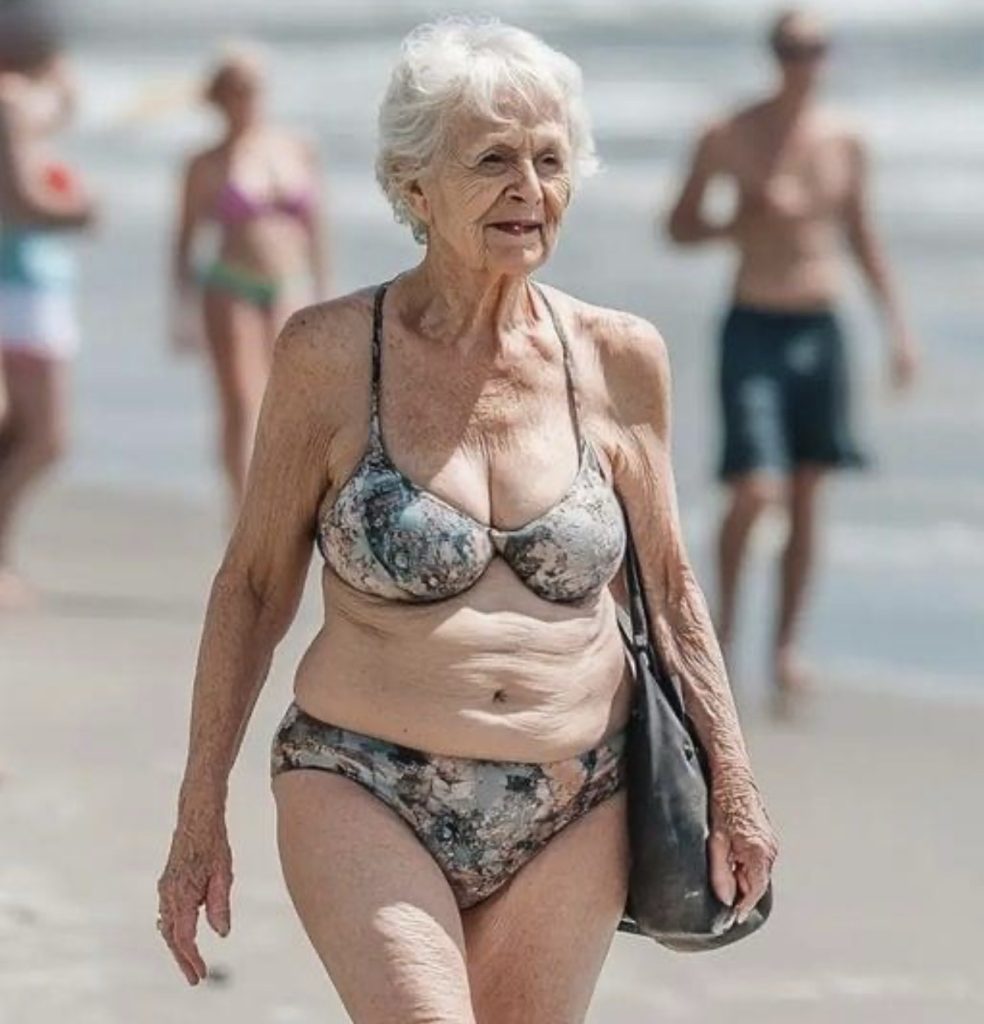
But as this photo was Facebook-posted yesterday (The Far Side) and then commented on by over 400 persons, my honest response is as follows:

I’m down with immodest beach garb as a rule, but there comes a time when nature doesn’t encourage modesty — it demands it. Not only should this headstrong, free-spirited woman not wear a bikini on a beach, but she shouldn’t even glance in the bathroom mirror when she’s toweling off from a shower.

Sorry, no offense.

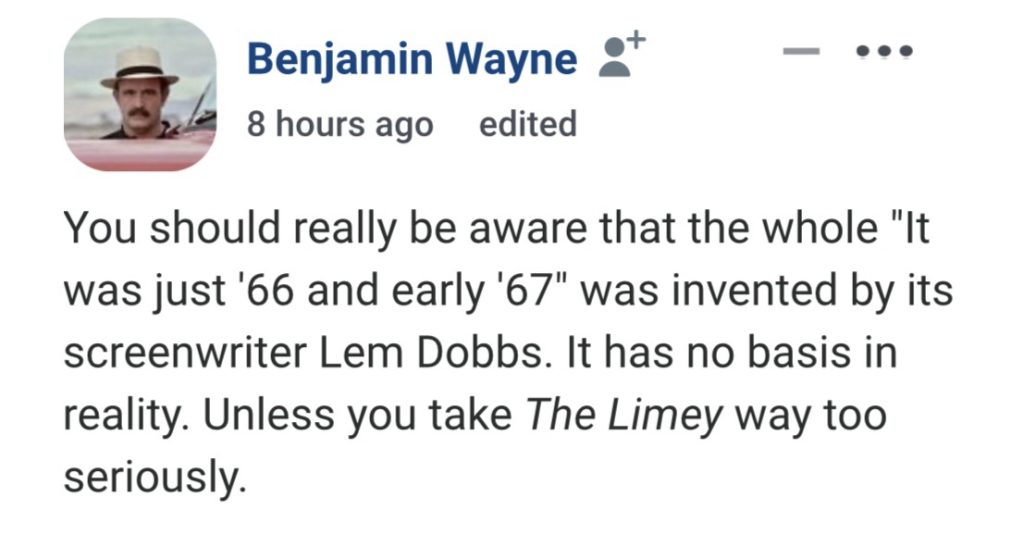
Benjamin Wayne Needed Schooling

Posted last night (Saturday, 11.23) in response to the famous Terry Valentine / Peter Fonda / Lem Dobbs line from The Limey…a revelatory line that said the proverbial ‘60s thing was “‘66 and early ‘67…that’s all it was.”

HE response, tapped out early this morning…

The most radiant or abundant part of any social-spiritual-musical movement is right before it catches on en masse with the avant garde bourgeois (i.e., plugged-in middle class)…when the spirit electrons and protons have built and buzzed and reached mass combustion levels just before the big explosion.

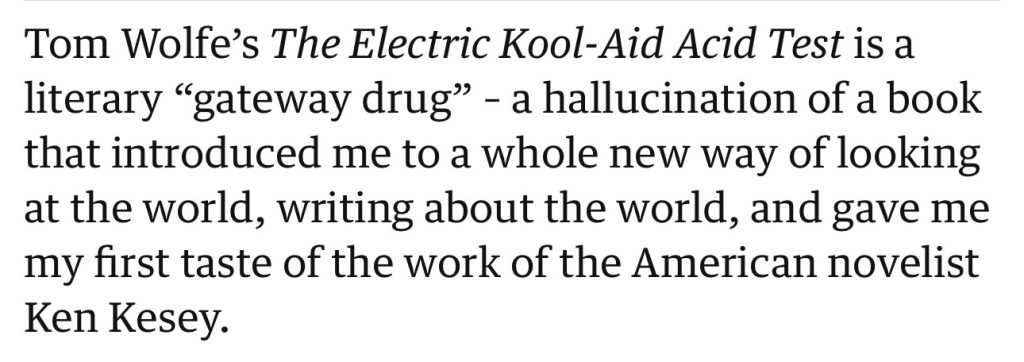
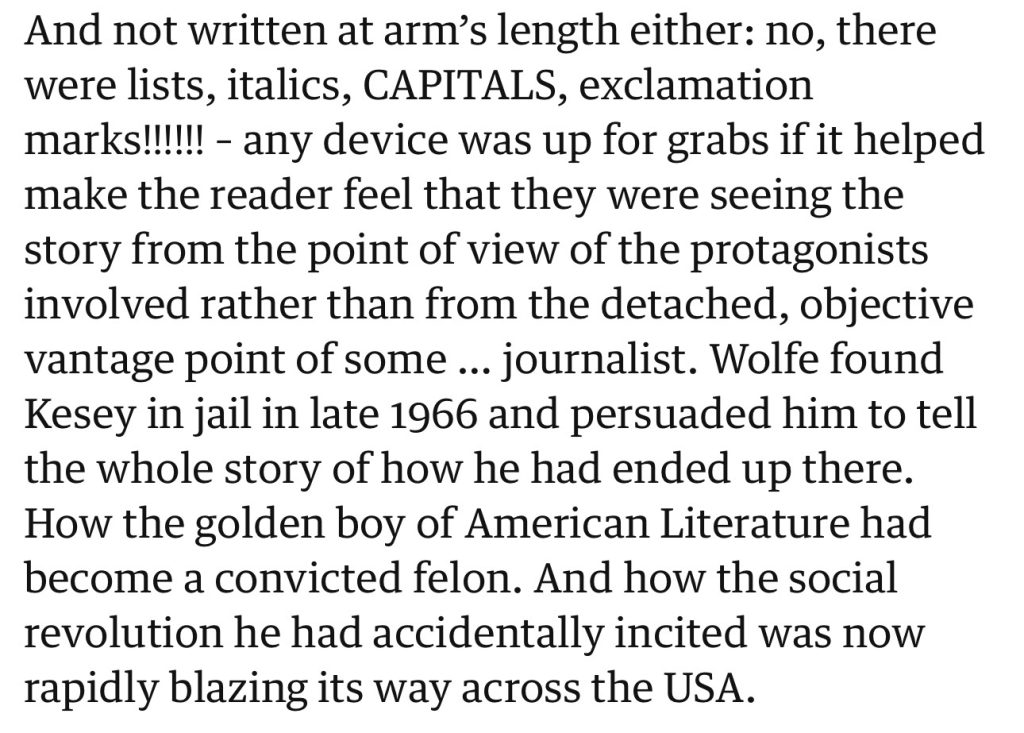
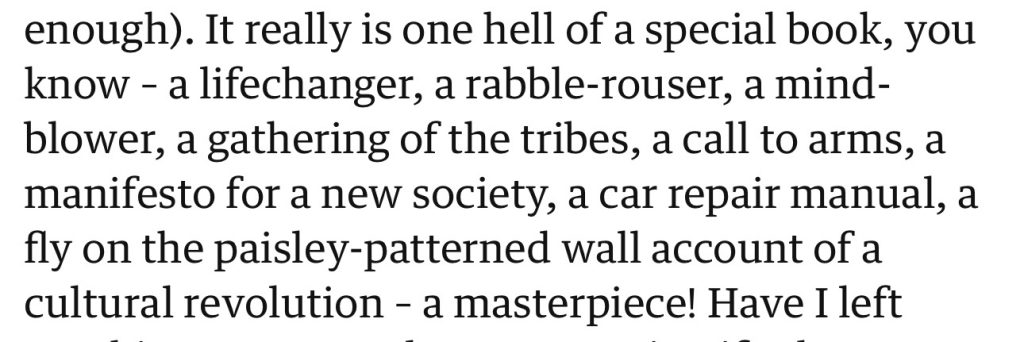
The ‘60s wave curled and crested and white-foam exploded all over the country with the Summer of Love, which was principally heralded by the June ‘67 release of “Sgt. Pepper” and particularly by that mad marijuana-mescaline glissando rush…that building, crashing, over-lapping orchestra rumble + crescendo in “A Day in the Life” (both of them) along with “Are You Experienced?” (May ‘67) and “Surrealistic Pillow” (released in February ‘67 but fed by ‘66 currents) and “For What It’s Worth” (released in December ‘66) and Michelangelo Antonioni’s BlowUp (fed by late ‘65 and ‘66 percolations and released in December ‘66) and Country Joe’s “Electric Music For The Mind and Body” (released in May ‘67) and the ‘67 Monterey Pop Festival (June 16, 17 and 18) plus all the amazing activities and inward ruminations and explosions described by Tom Wolfe in “The Electric KoolAid Acid Test” (published in August ‘68 but informed by the Ken KeseyNeal CasadyMerry Pranksters adventures of ‘64, ‘65, ‘66 and early ‘67)…

Way too much to get into here but what Terry Valentine / Lem Dobbs meant is that the huge quaking social orgasm that was felt across the culture in the summer of ‘67 was cooler and more exciting for those who were “there” and had their ears to the railroad tracks in ‘66 and early ‘67 …it felt so much vibe-ier when the spiritual foreplay was happening and building and starting to ignite and come into being and amassing a certain subliminal power — that was when the most exciting and tingly stuff was being felt…”do you feel it? do you sense it? There’s something happening here,” etc.

Pulp frontman Jarvis Cocker, posted in the Guardian on 5.17.18:

“In My Tribe”’s Arnold Kling, posted on 8.16.21:

Settling Into This

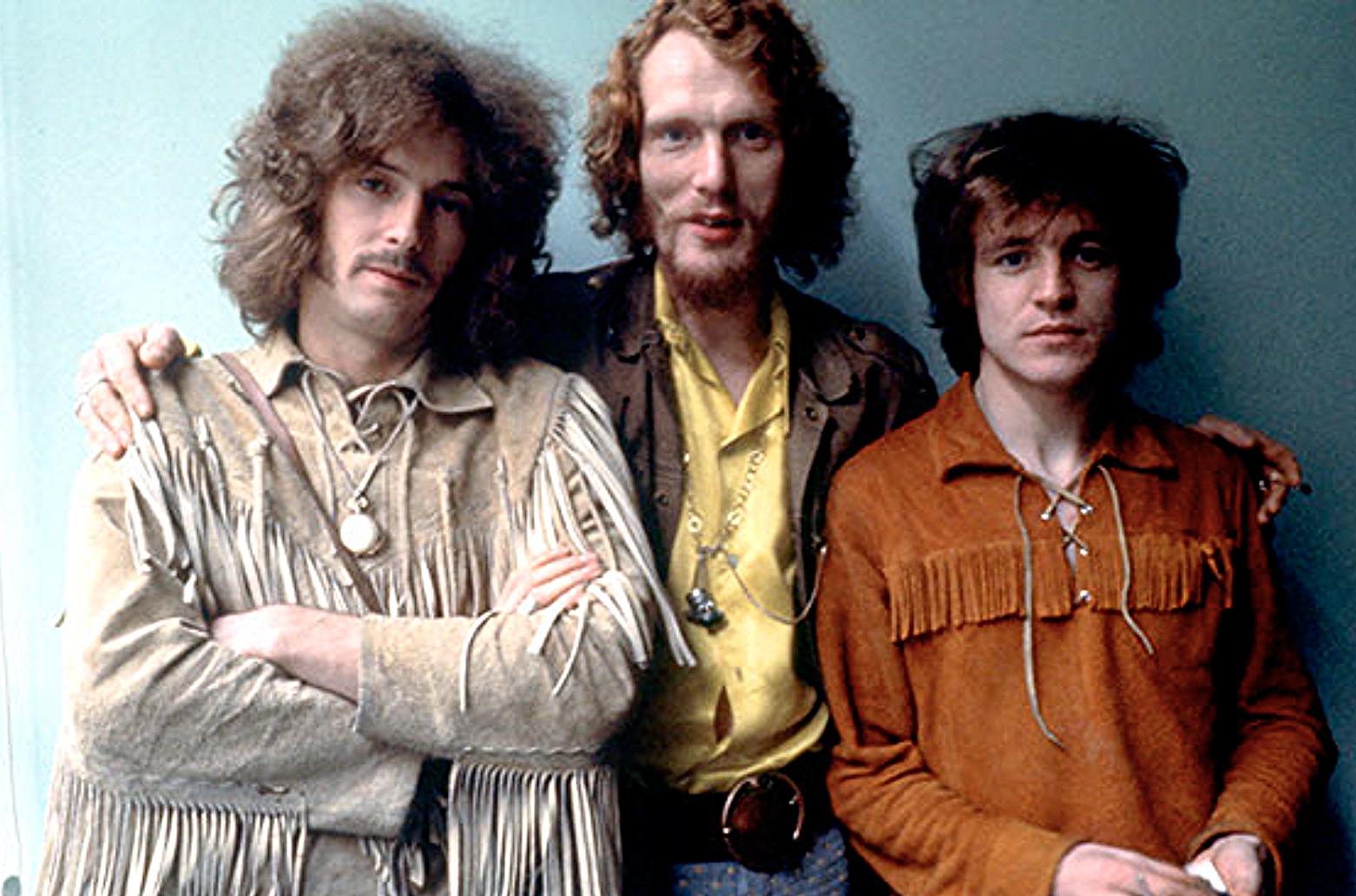
I’d forgotten that Fresh Cream was recorded in August ’66, and released four months later (December). If you accept Terry Valentine‘s definition of the ’60s (“It was just ’66 and early’67…that’s all it was”), Fresh Cream was right in the sweet spot. If you ask me N.S.U., Dreaming and Toad are as good as that group ever got. I realize this is a minority opinion, hut there it is.

Read more

Let Me Explain As Concisely As I Can

One, the middle section of Anora never, ever drags…not once, not even briefly. It doesn’t really take off, in fact, until roughly the 50- or 55-minute mark. The first act is all set-up. It pays off in Act Two — farcically, comically — and then it goes to Vegas (“Your son hates you so much that he married me, and by the way he’s a fucking pussy”) and returns to Brooklyn, and then reaches inside at the very end and transcends itself.

Two, the fact that “it doesn’t really seem to have anything larger to say about the world today,” as Scott Feinberg has put it, is precisely, profoundly and deliciously why it’s such a standout. It’s not preaching or messaging or offering any “this is how life sometimes is”, food-for-thought material. It’s just Brighton Beach, man. It’s not La Strada, although it does deliver a certain catharsis if you let it in. Anora is specific rather than general or universal. Either you get that or you don’t.

Respectable Rediscovery

Joseph Kosinski‘s F1, the Brad Pitt Formula One thrill drama, will open seven months hence (6.27.25).

Three thoughts occured as I contemplated F1‘s arrival. Thought #1 was that it’ll almost certainly be good. Thought #2 was that if anyone dies, it won’t be the second-billed Damson Idris because black dudes aren’t allowed to die these days. Thought #3 was that I need to re-watch John Frankenheimer‘s Grand Prix (’66) and Steve McQueen‘s Le Mans (’71) as preparation.

Guess what? Grand Prix, which I hadn’t seen in ages, is dramatically better than decent and technically excellent…make that wonderful. I had such a great time that I streamed it twice. Magnificent, super-sharp 70mm cinematography, at times multi-panelled, beautifully cut, always breathtaking. A nearly three-hour film with an intermission and a delicate, genuinely affecting Maurice Jarre score.

All in all a classy, well engineered, nicely honed immersion…a flush European vibe to die for.

You can sense right off the top that Frankenheimer is, like, ten times more invested in the race cars than in the romantic-sexual intrigues (the mid 40ish Yves Montand and Eva Marie Saint occupy center stage in this regard) and yes, the emotional renderings in Robert Alan Aurthur‘s script are on the subdued, subtle side. But the couplings and uncouplings feel believable, at least, and certainly don’t get in the way.

Grand Prix won three tech Oscars — Best Sound Effects (Gordon Daniel), Best Film Editing (Fredric Steinkamp, Henry Berman, Stewart Linder, Frank Santilloa) Best Sound (Franklin Milton). Frankenheimer (whom I got to know a little bit in the late ’80s) was nominated for a DGA directing award.

Grand Prix made $20.8 million in the U.S. and Canada (serious money back then) and returned almost $10 million to MGM.

Every action frame of Grand Prix feels genuine and unsimulated. The tragic ending is foretold and foreshadowed.

.