“Emilia Perez” Gets A Few Things Right

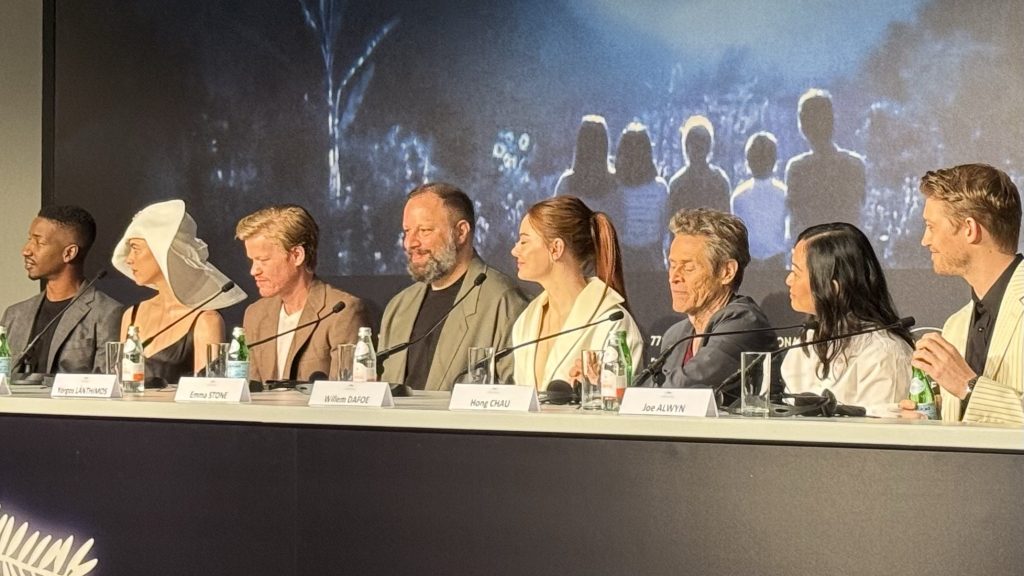
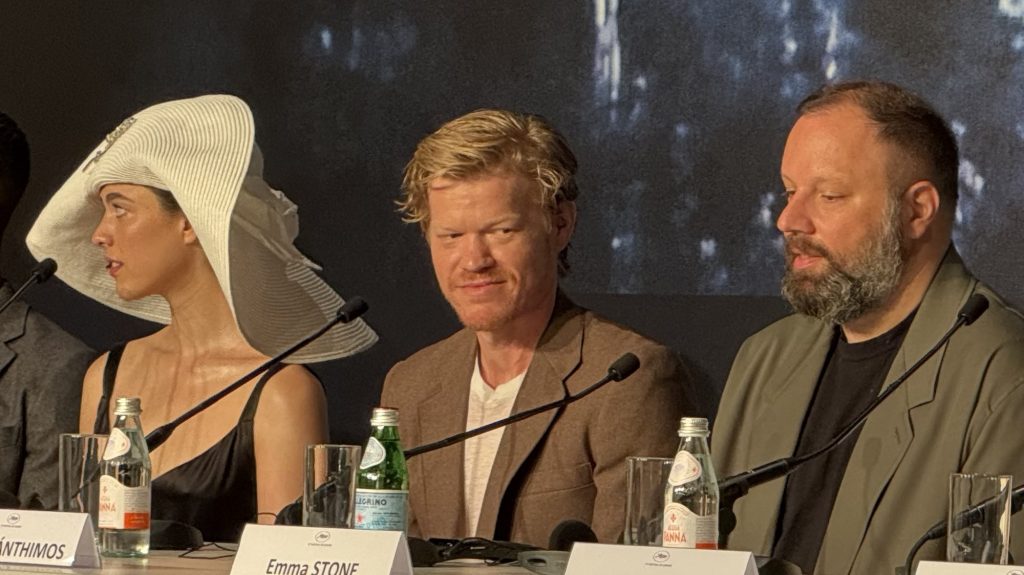
Please try to process today’s Emilia Perez buzz about how mindblowing it is and what a wild and wonderful genre ghoulash it is and so on…regard all that gush-gush blather with a grain of salt because the huge raves are coming from your Cannes Film Festival cultists, which is to say a secular critical mob composed of two co-existing social-focus groups — the woke whoo-whoo gay brigade along with straight critics who are terrified of not sounding like honorary members of said organization.

Emilia Perez is certainly a nervy big-swing movie, and I’m certainly giving it points for this…it’s not an altogether fascinating film but is certainly one that fascinates from time to time…it’s up to something fairly novel in a wackazoid sort of way, and in my book there aren’t enough films of this sort so I’m definitely giving portions a solid pass.

To make things extra clear this is not a pan but a “yes, a good and sometimes applause-worthy film but y’all need to calm down” review.

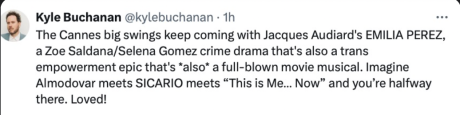
I was turned on and rather lit up during the first…oh, 35 or 40 minutes, which is when you’re initially realizing that Jacques Audiard‘s film is a few things mashed together…(a) an “all hail the emotional glory of becoming trans and forsaking coarse male attitudes and behavior” soap opera, (b) a tasty Pedro Almodovar-styled musical by way of Dancer in the Dark, (c) a Mexican cartel crime drama (but not a “crime comedy”) that actually only glances at the world of the cartels and particularly the cartel psychology, and (d) one of those crazy stories that’s impossible to believe in but you’re stuck there and watching it so what the hell…go with it.

But after Audiard decides to jettison that feeling that all grade-A films impart, that feeling that says what you’re watching is reflecting a primal, no-bullshit understanding of human behavior that most of us have picked up along the way…once Emilia Perez detaches itself from the world that many of us know and understand, it becomes more and more off-the-planet, which is to say unhinged and wackazoid. But in a way that fleetingly reminds you at times of the mood of ’80s and ’90s Pedro films.

The musical aspects are quite delightful at first…confident, well-choreographed and snazzily delivered until it all goes around the bend at the 40-minute mark, give or take.

Zoe Saldaña, now in her mid 40s, is frustrated and despairing Mexico City attorney Rita Moro Castro. She’s hired by a major cartel monster called Manitas Del Monte (played by transitioned biomale Karla Sofia Gascon) to help him facilitate a final transition into womanhood.

Which right away feels like bullshit. No Mexican drug lord would think “yeah, I need to become a woman and commune with my gentler, more tender and nurturing side”…no way in hell. The macho crust on those psychos is permanent and corroded and damn near terminal. The concept is just absurd.

So it was actually early when I stopped feeling delighted and started to become Don Logan in an emotional or mental-capacity sense….”all right, what’s this?…oh, here come the honorary gay brigade by way of a cooler-than-shit French director with an idea that will inspire druglord fantasies of shooting up mutiplexes when Emilia Perez opens commercially…the idea of a richer-than-Cresus druglord who figures that hiring an Israeli surgeon to chop his dick off and give him bouncy boobs is a viable plan when it comes to scenarios about disappearing from the Mexican drug scene….yeah, that works!”

It’s really crazy, Audiard’s film…”instantly divisive”, as Variety‘s Peter Debruge has admitted…long and nutso and all over the map in an emotionally supportive, left-progressive, let’s-put-an-end-to-coarse-Mexican-machismo fashion.

The good part is that it renounces and condemns ugly male machismo, but it also rejoices in the rebirth of a drug lord after he transitions to female realm…c’mon! It’s feisty and flourishy at first but once the transition occurs it stops being a believable story and you’re left saying “good heavens, bruh…this is turning wacko and I’m pulling back for safety’s sake because I don’t trust this shit.”

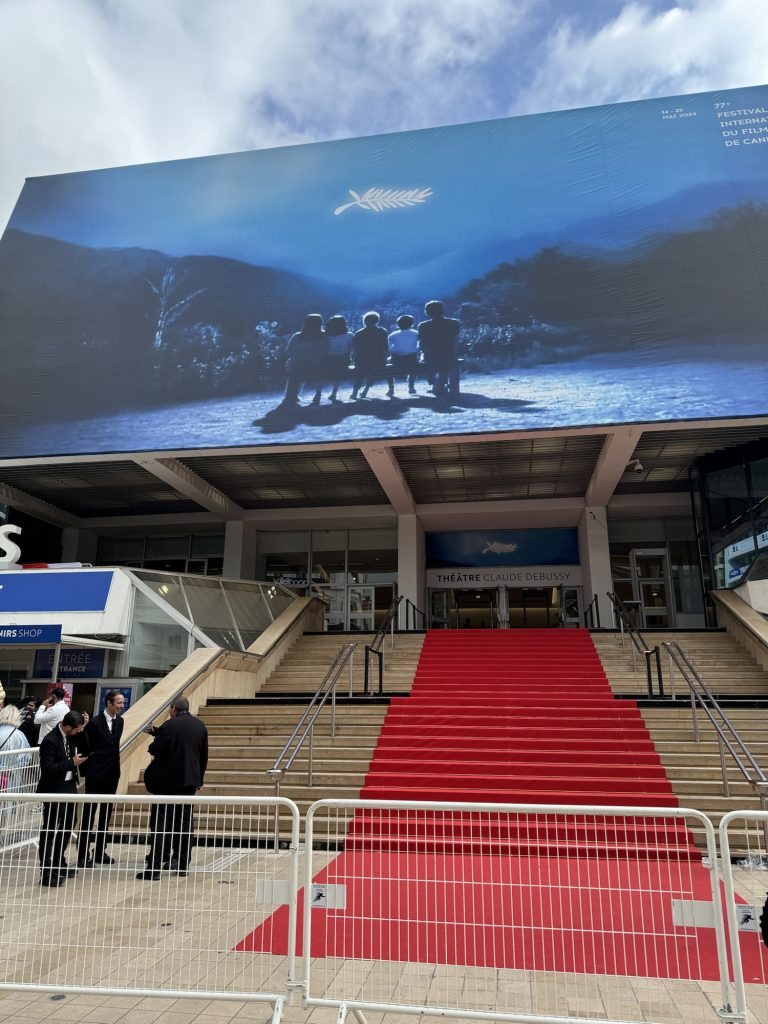
But the Salle Debussy crowd whooped and cheered when it ended. It’s right up the trans woke pro-women, anti-brutalist alley….let’s all link arms, girls, and get rid of these toxic ayeholes! An idea, by the way, that HE completely supports in a gay-brigade-meets-Don Logan sort of way.

From David Rooney’s Hollywood Reporter review: “It’s highly probable that some will find the film too changeable to feel cohesive.”

HE to Rooney while channeling Steve Martin‘s “Neal Page” in Trains, Planes and Automobiles: “Do ya think so???

By the way: Selena Gomez plays Jessi, wife of Del Monte and mother of their two kids. She’s devastated when the news media falsely reports that he’s been killed, but we’ve also been informed early on that Juan has been undergoing standard pre-transition hormone therapy for two years. Are you telling me Gomez hasn’t noticed any changes in her husband over the last 24 months? Hard to believe.

Debruge explains;
Bitter Resignation, Respectful Approval

Paul Schrader‘s Oh, Canada isn’t as good as First Reformed, but it’s definitely better than the last two (The Card Counter, Master Gardener), and it surprises a bit by reaching inward and letting go.

It’s basically about the last dying days of cancer-afflicted radical left documentarian Leonard Fife (Richard Gere), and an Errol Morris-type interview he submits to in order to shake it all off and confess (or maybe imagine) as much as possible.

It’s basically a cut-the-crap, take-it-or-leave it, taking-stock-of-the-boomer-legacy film, and kind of an an old-school thing in a good way…very earnest and solemn, carefully and cleanly written, and it gets sadder as it goes along.

Gere’s white-haired, worn-down appearance and performance are riveting and a little startling, especially if you think back to his sexy-cat beauty and swagger in Schrader’s American Gigolo (’80).

Full respect and 90% satisfaction are felt from this corner. Pic hopscotches all over the place but always feel somber, reflective, sincere…a respectable clean-out-the-cobwebs, stop-lying-to-yourself movie for grown-ups.

Excellent supporting performances are given by Jacob Elordi, Uma Thurman and Michael Imperioli.

Start the press conference at the 20-minute mark

Yorgos Lanthimos’ “Kinds of Kindness” Was Booed

…at the end of yesterday afternoon’s Salle Debussy screening.

It’s a kind of darkly humorous, oddly grotesque, Bunuelian satire of middle-class misery…an attempt to capture the cold, deathly emptiness of things…the self-loathing, the horrifying banality. It’s basically a surreal elevated horror film…dead-eyed zombies and slithering serpents and empty robots eating food, talking about their fears, manipulating each other, indulging in wife-swapping, diving into empty pools, a husband asking a wife to cut off a finger and serve it as a snack, and then deciding to give it to the cat instead…you get the idea.

There’s a point to all this cold repellent antiseptic shit, and I respect that the humanity-hating Lanthimos had a deeply perverse vision in his head as he put it all together, but unlike Bunuel he hasn’t much chuckle in him, and when a film gets booed, even if only by two or three malcontents, it usually means something.

Barred From Seeing Parvu’s Hate-Crime Drama

Early this morning I was late to my 8:30 screening of Emanuel Parvu‘s Three Kilometres to the End of the World, a small-town Romanian drama about homophobia and a hate crime. But I had 15 minutes to make it to the Salle Agnes Varda, a relatively short distance from the pad, and figured I had a fighting chance. I had my laminated pass, my bar-code ticket…this could work.

But I didn’t have a fighting chance…not really…as the Cannes Film Festival security guys have set up too many blocking gates, lines and security checks.

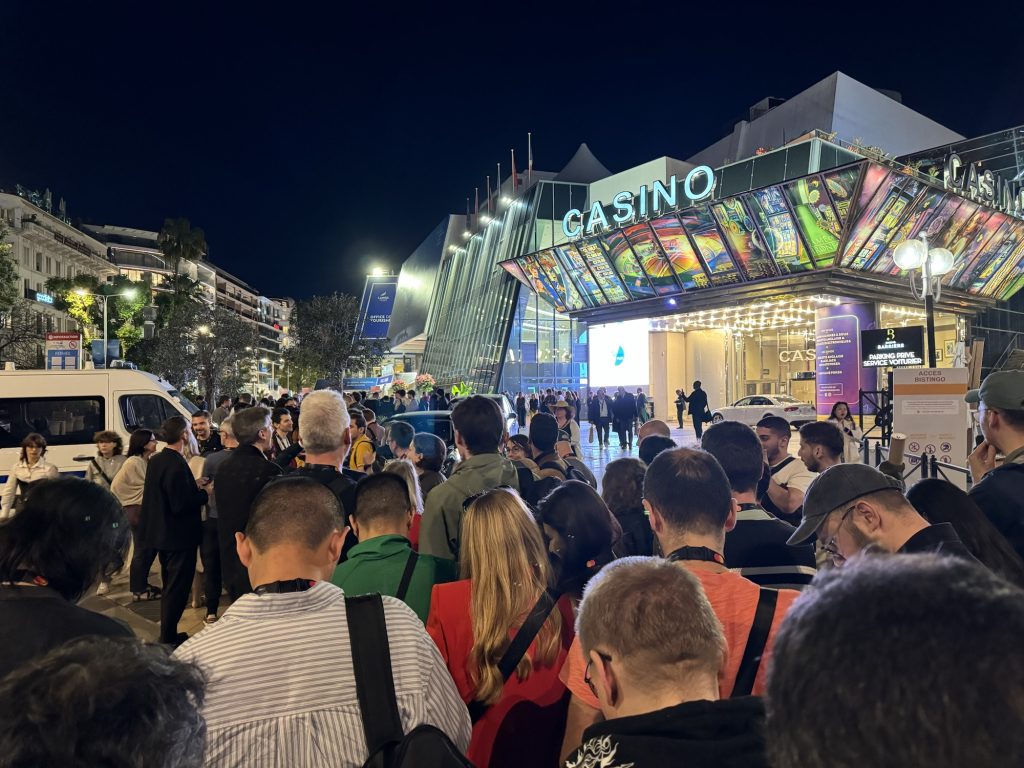
I tried to walk directly to the A.V. from the Place Maritime entry gate, which I’ve done dozens of times in the past. Nope — your press pass isn’t sufficient, go around the Grand Palais, enter from the other side. But after doing that I was confronted by a long, terribly slow, shuffling-nightmare line. After getting through that soul-suffocating gauntlet and climbing the A.V. stairs I was blocked yet again by security staff. After being allowed to pass I was blocked a fourth time from entering the theatre.

And this wasn’t just me — a sizable crowd of credentialed journos had the same beef and were trying to beg, argue and cajole their way in. They all failed.

It was that beefy Place Maritime guard and that long behind-the-Palais line…the one-two punch that killed my spirit and sent me plunging into the pit.

I’m Having Trouble Believing

…that women as attractive as Sienna Miller, Abbey Lee, Jena Malone and Ella Hunt were part of the common community of westward-travelling settlers during the Civil War era.

I’m glad they were cast in Kevin Costner‘s Horizon, but I don’t believe that hotties were even dreamt about until much later in the 19th Century and more likely into the 20th.

Nor do I believe that women as attractive as Red River costars Joanne Dru and Coleen Gray were wagon-trainers during the same era. I’m glad Howard Hawks cast them but, etc.

Does anyone have faint memories of Westward Ho The Wagons (’56), a Disney-produced, wildly unrealistic western about covered-wagon settlers heading for Oregon? A family-friendly saga, settlers vs. Native Americans, etc. Fess Parker, Kathleen Crowley, Cubby O’Brien, Jeff York, Sebastian Cabot, David Stollery and George Reeves (Superman’s final feature film).

Dabney Coleman’s Identity

Most of us have a basic impression about the late Dabney Coleman, who passed yesterday at age 92. Aside from being a dependable, professional-grade character actor, he mostly played sexist jerks, stubborn asshats and comic foils.

But by my scorecard Coleman lucked into at least two interesting characters and did very well by them — (1) “Mayo”, the assistant Olympic ski team coach (subordinate to Gene Hackman) in Michael Ritchie‘s Downhill Racer (’69), and (2) “Dr. Bill Ray”, Jane Fonda‘s sensible, good-natured boyfriend in On Golden Pond (’81).

Mostly, however, he played dicks, and his best-known in this regard were “Ron Carlisle,” the sexist soap opera director in Tootsie (’82) who antagonized Dustin Hoffman‘s “Dorothy” and vice versa and the sexist, jerkwad boss in 9 to 5 (’80). Both were broad, boilerplate performances.

Between 96% and 97%

…of ticket buyers don’t regard “insane” (as in unstable, directionless, subject to whim, blown by the wind) as a cinematic virtue.

Most viewers want filmmakers to show a sense of control, discipline, assurance and command.

One of the most unappetizing “crazy” films ever made was and is Philip Kaufman’s Quills (‘00). I hated Geoffrey Rush’s Marquis de Sade, especially when he began using fecal matter with which to paint on prison walls.

As Long as Coppola Is Front and Center

I’ll post the official festival video of the just-concluded Megalopolis press confererence when it pops through…sometimes it takes a few hours.

Admirable Coppola,” posted 2 and 1/3 years ago:

We’re always adapting — all of us, but especially Type-A creative types. Maturing, cranking up, calming down, adjusting, shape-shifting — always in response to a changing world. It follows that no 40 year-old director is exactly the same in terms of craft, choices and sensibility as he/she was at age 30.

I think Francis Coppola (whom I had the pleasure of doing a two-hour phone interview with 41 years ago) was one guy when he made The Godfather, The Conversation and The Godfather, Part II. He was a slightly different guy when he made Apocalypse Now, and a faintly altered version of the Apocalypse Now guy when he made One From The Heart. He was a whole different dude when he made Jack — that’s for damn sure. And a much different guy when he made Tetro, Youth Without Youth and Twixt.

Coppola has said he’s planing to invest over $100 million of his own dough in Megalopolis, which he’s called “a love story that’s also a philosophical investigation of the nature of man.”

It is my prediction that however good or bad it turns out to be, Megalopolis won’t connect with Joe Popcorn. Some will see it (I certainly will) but most won’t, and it’ll just end up as a streaming selection. That said, Coppola is living righteously for an artist who’s nearly 83 — still striving, still dreaming. Here’s hoping he makes Megalopolis and that it satisfies those who are willing to take the journey.

Read more

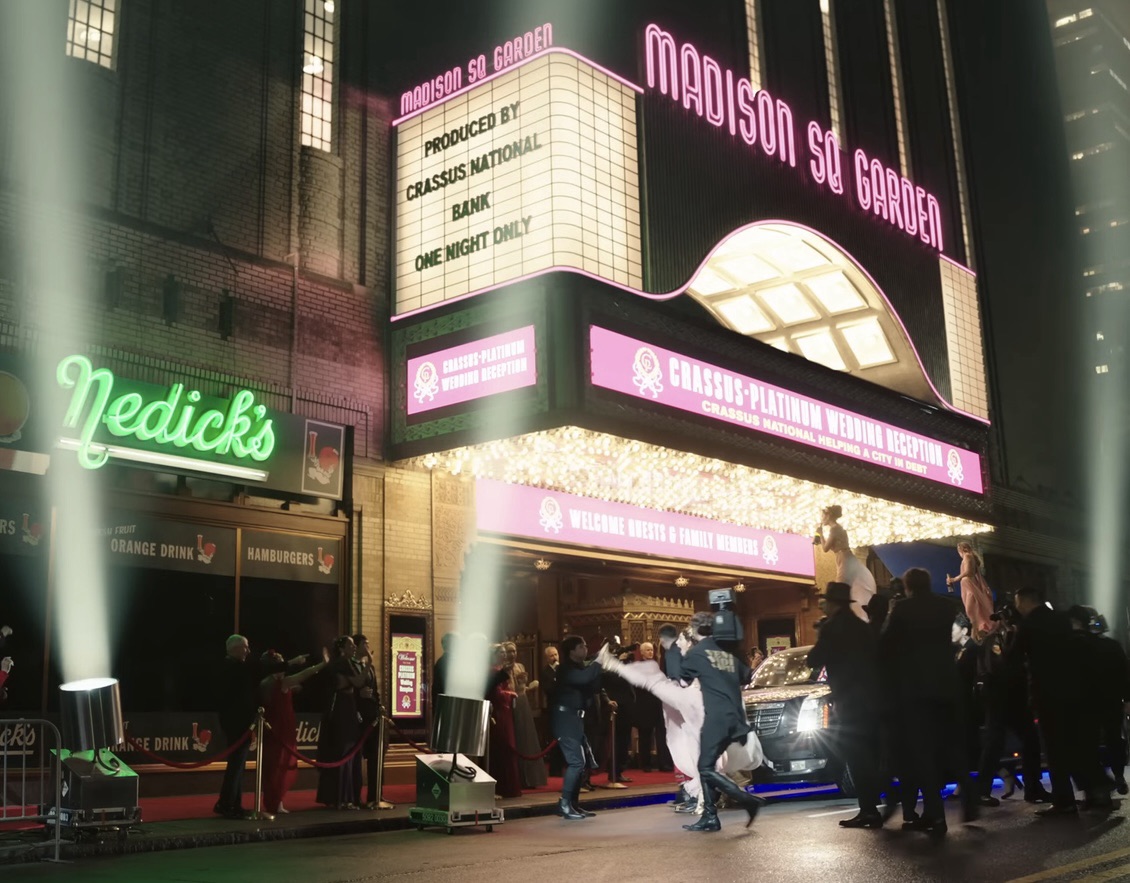
Coppola’s Madison Square Garden vs. Present Version

From David Ehrlich’s 5.16 IndieWire review of Francis Coppola’s Megalopolis: “Madison Square Garden has naturally been reimagined as a sandy colosseum. The exterior shots don’t look anything like the world-famous arena they’re meant to represent, but the interior ones get MSG’s iconic ceiling exactly right.”

Ehrlich was thinking of Manhattan’s current Madison Square Garden, which opened in ’68 and stands on Eighth Ave. between 31st and 33rd, above Penn Station.

Coppola’s version, of course, is based on the funky, gunky older version of the garden, the one that stood on the west side of Eighth Ave.between 49th and 50th streets with the neon Nedick’s sign…the one in which Laurence Harvey shot Angela Lansbury through the head in John Frankenheimer‘s The Manchurian Candidate (’62)…the one in which Terry Malloy took “a dive for the short-end money”…the one in which Marilyn Monroe sang “happy birthday, Mr. President” to JFK in May ’62.

Coppola’s version:

Actual late50s version:

Can’t Deny That Beaded Headpiece

Anya Taylor-Joy‘s Theda Bara-meets-Clara Bow look (i.e., beaded headpiece, heavy eye shadow) plus the cropped jacket and naughtily sticking her tongue out duuring the photo call…great old Hollywood vibes. I didn’t attend the Furiosa press conference — catching up on filing plus an hour-long nap seemed more important at the time.

Coppola’s “Megalopolis” Made My Eyes Moisten

So far the Cannes reviews of Francis Coppola‘s Megalopolis, which screened this morning for elite crickets and late this afternoon for schlubs like myself, have been a mass exercise in “c’mon, give Coppola a break…he’s a visionary who spent $120 million of his own dough…be creative and find ways to offer charitable impressions…this film may be a surreal exercise in whatever, but you do not want to pan it…c’mon, it’s Francis.”

I mean, IndieWire‘s David Ehrlich has given Megalopolis a B-plus grade, for Chrissake. Talk about the delusion of too much compassion. Remember A Clockwork Orange‘s “Cat Lady” sneering at Malcolm McDowell and saying “cut the shit, sonny“?

It’s 12:10 am and I’m really too whipped to tap out a review — I intend to expand and polish tomorrow morning but for the time being allow me to share a few post-screening notes and texts, written in a rather crude fashion.

(a) “Coppola has seemingly lost his mind. Watching Megalopolis just now and listening to random moo-cow boos as the closing credits began to roll was a very sad and sobering experience. It’s not just an embarassment and a calamity — I almost feel like weeping for the poor guy — but a film that hasn’t a prayer of attracting any Average Joes or Janes whatsoever, and you can totally forget any sort of fall awards campaign or any distributor even flirting with paying for same…no way, man!”

(b) “On the other hand…Jesus, I don’t know what to say or think as I don’t want to dump on a film that is so nervy and creatively ludicrous and out-there bonkers. I’m not surprised by how Megalopolis played with the Salle Debussy crowd, and I’m certainly not angry about having sat through it, but holy fucking moley.”

(c) “It’s such a head-in-the-clouds goofball thing with such an overload of pompous-sounding, smarty-pants dialogue that it’s almost like a 1965 philosophical psychedelic fantasy flick by the Merry Pranksters, shot in 16mm and edited by a guy who’d been chewing peyote buttons.”

(d) A friend has compared portions of the dialogue as well as the narration (voiced by Larry Fishburne) to Ed Emshwiller‘s “Unveiling The Mystery Planet.” HE is hereby advising the readership to see Megalopolis while tripping. (Not acid necessarily but maybe some soft mescaline?)

(e) Jon Voight‘s Crassus character, adorned in black silk pajamas, during a third-act comic-detour scene: ““Whadaya think of this boner I’ve got here?”

(f) “All this said, I feel MUCH better about having seen Megalopolis than having seen Fast X or any of the shitty, soul-draining, post-Iron Man franchise movies because at least it’s about something other than the usual corporate bullshit and is at least alive with quirky indivduality, and that ain’t hay.”

(g) Journalist friend to HE five minutes after Megalopolis ended: “What the fuck was that?”