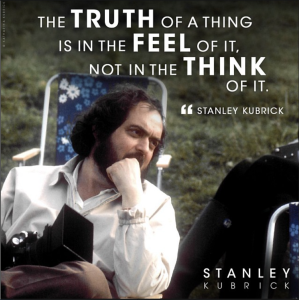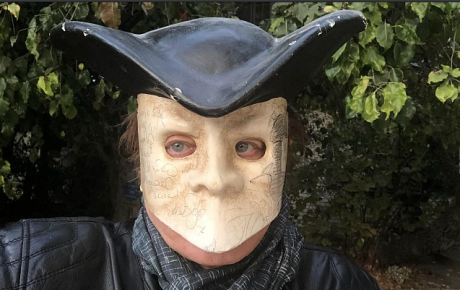

About to sit through this, but not happy about it. Grim up. Another deranged, mostly non-human predator…a symbol of today’s socially and psychologically adrift incel misogynists…another hostile demon-dude out to psychologically torture and murder a young terrified lass…the umpteenth variation upon Stanley K.’s “Jack Torrance out to chop up Wendy and Danny”, etc.
If the following 17 films are screened at Telluride 2024, I’ll be a mostly pleased attendee. It all starts six days hence. I’ll be arriving in town by early Wednesday evening.
Highest Anticipation Levels: Anora (D. Sean Baker). Conclave (d: Edward Berger). Emilia Perez (d: Jacques Audiard). The End (d: Joshua Oppenheimer). All We Imagine as Light (d: Payal Kapadia). The Piano Lesson (d: Malcolm Washington). Nickel Boys (d: RaMell Ross). Saturday Night (d: Jason Reitman). Misrecordia (d: Alain Guiraudie). Piece by Piece (d: Morgan Neville). Don’t Let’s Go to the Dogs Tonight (d: Embeth Davidtz). Disclaimer (d: Alfonso Cuaron). Better Man (d: Michael Gracey). Maria (d: Pablo Larrain). The Friend (d: Scott McGehee, David Siegel). No Other Land (d: Basel Adra). The Apprentice (d: Ali Abbasi).


This is the first in a series of special Hollywood Elsewhere pre-Telluride Angelina Jolie hit pieces. No originals, all re-posted.
They will appear between today and Tuesday evening, or just before I wake up at 3:30 am on Wednesday, 8.28, in order to catch a 7:30 am LGA flight to Dallas, followed by a short hop to Alberquerque and then a rental-car drive to Telluride.
Posted on 2.11.15, the title was “Gone For Four Months“:
There’s this imaginary guy I’ve been visiting at Cedars Sinai. He went into a coma early last October and just came out of it yesterday. I wasn’t there when he awoke but he called today to say thanks for stopping by all those times. His mother told him about my four or five visits.
Then he said he’d gone online this morning and visited the latest Gold Derby and Gurus of Gold charts, and he wanted to know what the hell had happened to Angelina Jolie‘s Unbroken, which was the Best Picture front-runner for weeks on end. “Where’d it go?” he said. “What happened? It was the leading Best Picture contender…it was all over but the shouting and the formalities. Every last default-minded, deferring-to-Dave Karger Oscar expert had it at the top of their lists. What’s the most likely film to win Best Picture? Why…Unbroken! What else? And now it’s vanished.”
I tried to break it to him gently. “What happened,” I explained, “is that Universal finally screened it, and a few days later the air had seeped out of the balloon. And then it just disappeared.”
He asked me why. “It was the Christian torture-porn thing,” I said. What’s that? “There was something in the movie that said that the more a guy has been beaten and tortured, the braver and more beautiful and closer to God he is.” Oh, the guy said, suddenly sounding weaker and less curious.
“Right now the only chance Unbroken has at the Oscars is Roger Deakins‘ nomination for Best Cinematography,” I said. “But it would be surprising to a lot of people I know if Birdman‘s Emmanuel Lubezki loses out.”
…because it’s only peripherally about the wedding ceremony and the exchanging of vows, and mostly about unspoken, deeply felt currents between couple #2.
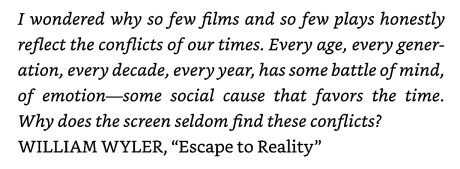
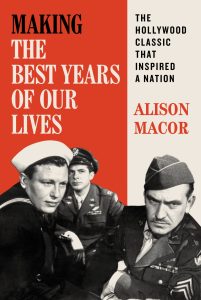
William Wyler‘s ensemble master shot is perfectly composed (nine or ten people posed within a tight box). Not to mention Teresa Wright‘s watery eyes. Awesome cinematography by Gregg Toland. Just-right editing by Daniel Mandell
Kamala Harris delivered a good, frank, well-sculpted speech last night — no question. She made me feel proud and stirred and revved up. But we all know that the general narrative of wokeism since the mid teens has been about “straight white guys bad” — about the diminishment and to some extent the demonization of straight white males, as they are generally regarded by wokesters as odious symbols of the institutional racism that has permeated this country for a long, long time.
Last night I was muttering to myself “there’s something happening here.” For the well-produced Chicago DNC show was a four-day extravaganza that served to mostly emphasize (be honest) the energy and promise of well-heeled. emotionally confident and highly articulate women of color. Along with their seemingly obedient husbands.
I feel zero allegiance with white male Trumpies, but this is a huge country with tens of millions of polite, well-mannered, relatively well educated fellows of European descent. Just under 60% of the population is white and African Americans total around 14%, but you’d never know that from watching the DNC show over the last four nights.
We all know from Scott Galloway that younger, not-as-well-educated white males who might be incels…these shlumpy, poorly dressed, porn-site-frequenting guys have been largely told by progressive urban women that they are not all that sexy or valued or even respected as urban women are better educated with far more positive outlooks and engaged attitudes.
We all know from having watched Twisters that traditional white-male energy and initiative is fine in limited doses but that Glen Powell-ish guys cannot bring their traditional macho strength and servings of old-school honor and saving-the-day heroism, and they certainly don’t warrant a kiss inside the airport terminal at the finale.
It’s all tied together, all part of the same unified urban-blue message — white guys are okay for corporate gigs and construction jobs and being actors and film critics and auto mechanics and legislators and running hardware stores and managing CVS outlets but they need to more or less stand off to the side as America gradually evolves into a woke 21st Century matriarchy, and fortified by a new kind of power structure — a new country led by well-educated women, people of diverse backgrounds, LGBTQs and a slice of the Ru Paul community for flavor.
Have I become Dylan’s Mr. Jones? I don’t think I am (last time I checked I was a cosmic, well-travelled Bhagavad Gita soul man and hepcat) and I certainly don’t want to be but…
Wealthy, independent minded whiteys like Galloway, Joe Rogan, Bill Maher and Adam Carolla have their own deals and fiefdoms and that’s fine, but white guys are somehow not seen as vital to the country’s cultural & political future as they once were. They seem to represent the recent past and/or a way of thinking that no longer quite fits or applies, certainly not like it did in the ‘90s and early aughts.
The new progressive social deal seems to be more about women who look and sound like Ella Emhoff (what was up with those godawful glasses and ugly arm tats and zero makeup and granny-bun hair and that generally de-sexualized appearance?) and even poor 17 year-old Gus Walz, who has a disability or two. Where are all the cool, regular, well-built, nicely-dressed dudes who own baseball mitts and know how to throw a football and can handle themselves at poolside cocktail parties? What are we? Who are we? Where are all the X-factor, well-read samurai jazz cats who wear Italian lace-ups?
All this aside, Kamala’s speech last night made me feel good and energized and hopeful for the most part. But at the same time I understand why many straight white males, especially the hinterland variety, have allied themselves with the right. It’s because they’ve been repeatedly told by progressive lefties that they arent rated all that highly.
Until this evening I’d never responded with great admiration or excitement to a Kamala Harris speech. But tonight’s acceptance speech was the best she’s ever delivered…no question. No “vote for my gender and my ethnicity” stuff, and tightly focused — only 37 minutes. And much shorter that Trump’s rambling acceptance speech in Milwaukee; shorter even than wheezy Joe’s speech three nights ago.
A few hours ago Sasha Stone and I did a podcast chat. I was speaking through my limo-driver headset while driving north on Connecticut 95; Sasha was at home in the baking Southern California heat.
We thought it might be of some interest to discuss Rebecca Keegan’s 8.14 THR hit piece — an article that basically said Sasha should be regarded askance for the crime of abandoning her formerly liberal viewpoints (Sasha was a big Hillary Clinton supporter in ’16) and embracing MAGA assessments of this and that. She should therefore be excluded, Keegan implied, from the award-season Oscar blogging community — a nascent business proposition that Sasha helped launch over 20 years ago as a single mom.
Our discussion was a little loose-shoe, a little sloppy here and there, but generally civil and open-hearted. And here’s a Sasha Stone pull-quote — a quote that Keegan heard when she interviewed Sasha but chose not to include it in her piece — “I am still a social liberal…Obamacare, pro-environment, sensible gun control, and ‘safe, legal and rare’ abortions. What I have changed is my tribe, not my beliefs.”
In a new episode of “Screen Talk,” IndieWire‘s Anne Thompson and Ryan Lattanzio discuss the Sasha Stone situation. Go to the 12-minute mark. Do they get into the intrigues and undercurrents? The whys and wherefores? Nope. Do they talk about how people like Sasha aren’t pro-Trumpers as much as deeply anti-woke and anti-Robespierre? Naah. They just review the basic narrative and go “yeah, this happened, and that happened aso but we’ve known Sasha for years,” etc.
Vulture‘s Bilge Ebiri reported something wowser earlier today. And then Variety‘s Katcy Stephan verified and added her two cents.
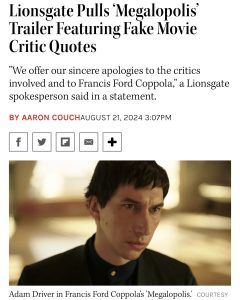
Having done due research, both stated that in order to demonstrate that critics can’t be trusted when it comes to audacious films by Megalopolis helmer Francis Coppola, Lionsgate’s new Megalopolis trailer uses invented pan quotes from an array of 20th Century critics, citing review excerpts that trash The Godfather, Apocalypse Now and Bram Stoker’s Dracula.
Stephan: “In quotes attributed to their reviews of The Godfather, the trailer cites The New Yorker’s Pauline Kael as calling it “diminished by its artsiness,” and The Village Voice’s Andrew Sarris calling it a “sloppy, self-indulgent movie.”
“Other quotes from critics such as Roger Ebert, John Simon, Stanley Kauffmann, Vincent Canby and Rex Reed similarly flash across the screen, offering harsh critiques of Coppola’s work on masterpieces such as Apocalypse Now.”
A purported review of Coppola’s Dracula by Entertainment Weekly‘s Owen Gleiberman is also fake-quoted (“A beautiful mess”).
My only quibble is that both stories rest upon sober, straight-fact reporting, and so Stephan’s attempt to end her story with sardonic humor doesn’t work. Her final paragraph states that “Lionsgate did not immediately respond to Variety‘s request for comment,” and that “Reed, who still reviews for the Observer, also did not respond to a request for comment.” She concludes by writing that “Kael, Simon, Ebert, Canby, Kauffmann and Sarris are dead, which makes it hard to get their reaction.” Hard but not altogether impossible?
The final line should have read “no reactions, of course, from the departed-for-heavenly-pastures Kael, Simon, Ebert, Canby, Kauffmann and Sarris, none of whom were ever at a loss for words while living.”
Lionsgate has zotzed the inaccurate Megalopolis trailer in question…yanked, gone.
Actual excerpt of real-deal, highly positive Kael review of The Godfather, dated 3.10.72: “If ever there was a great example of how the best popular movies come out of a merger of commerce and art, The Godfather is it.
“The movie starts from a trash novel that is generally considered gripping and compulsively readable, though (maybe because movies more than satisfy my appetite for trash) I found it unreadable. You’re told who and what the characters are in a few pungent, punchy sentences, and that’s all they are. You’re briefed on their backgrounds and sex lives in a flashy anecdote or two, and the author moves on, from nugget to nugget.
“Mario Puzo has a reputation as a good writer, so his potboiler was treated as if it were special, and not in the Irving Wallace-Harold Robbins class, to which, by its itch and hype and juicy roman-a-clef treatment, it plainly belongs. The novel ‘The Godfather,’ financed by Paramount during its writing, features a Sinatra stereotype, and sex and slaughter, and little gobbets of trouble and heartbreak. It’s gripping, maybe, in the same sense that Spiro Agnew’s speeches were a few years back.
“Francis Ford Coppola, who directed the film, and wrote the script with Puzo, has stayed very close to the book’s greased-lightning sensationalism and and yet has made a movie with the spaciousness and strength that popular novels such as Dickens’ used to have. With the slop and sex reduced and the whoremongering guess-who material minimized, the movie bears little relationship to other adaptations of books of this kind, such as The Carpetbaggers and ]The Adventurers.
“Puzo provided what Coppola needed: a storyteller’s outpouring of incidents and details to choose from, the folklore behind the headlines, heat and immediacy, the richly familiar. And Puzo’s shameless turn-on probably left Coppola looser than if he had been dealing with a better book; he could not have been cramped by worries about how best to convey its style.
“Puzo, who admits he was out to make money, wrote ‘below my gifts,’ as he puts it, and one must agree. Coppola uses his gifts to reverse the process—to give the public the best a moviemaker can do with this very raw material. Coppola, a young director who has never had a big hit, may have done the movie for money, as he claims—in order to make the pictures he really wants to make, he says—but this picture was made at peak capacity. He has salvaged Puzo’s energy and lent the narrative dignity.
“Given the circumstances and the rush to complete the film and bring it to market, Coppola has not only done his best but pushed himself farther than he may realize. The movie is on the heroic scale of earlier pictures on broad themes, such as On the Waterfront, From Here to Eternity and The Nun’s Story. It offers a wide, startlingly vivid view of a Mafia dynasty. The abundance is from the book; the quality of feeling is Coppola’s.”