Fetes, Don’t Fail Me Now!

It suddenly hit me this morning that I’m getting a little bit tired of Martin Scorsese being tributed all the time. The guy spends one-third of his life accepting awards and tributes, one-third doing what he can to raise consciousness about classic films and film preservation (and hail to him for that), and one third making docs and features. I love Marty as much as anyone in the dweeb fraternity, but something snapped when I saw this headline. I said to myself, “Jesus Christ…again?”

Scorsese accepted an award at the Marrakech Film Festival last year, which I happened to attend courtesy of Jessica Uzzan. I remember sitting there and scowling and muttering to myself, “Another fucking Scorsese tribute?”

This is part of my general feeling that he needs to put away the tuxedoes and give all the tributes a rest and “go guerilla” and find his narrative moviemaking soul again. The best Scorsese film since The Departed was Letter to Elia — so much more direct and moving and personal than Hugo, which was technically very impressive with a very affecting finale, but was basically a paycheck movie — let’s face it.

Please, God — spare us from Scorcese’s Silence!

Son of “The Material Isn’t There”

Today’s news about Hugh Jackman signing to star in an Aaron Sorkin-scripted Broadway Houdini musical is an opportunity to re-run last year’s piece about the dramatic weakness of the life of Harry Houdini. The only way to make any Houdini piece work is to abandon his actual history and make something up.

In the late ’80s and early ’90s the late Stuart Byron and I had a small business called re:visions that sold analyses of stalled or otherwise troubled film projects. 23 years ago we co-researched and co-wrote an exhaustive 36-page analysis about why Rastar Prods. (the Columbia-based filmmaking company run by the legendary Ray Stark) had repeatedly tried and failed to get its own Houdini movie before the cameras in the ’70s and ’80s, despite having commissioned scripts from the highly skilled James Bridges, Carol Sobieski and William Goodhart.

Our opinion, in a nutshell, was basically “forget it.” We delivered our opinion on page 4, as follows:

“We began our immersion into the Houdini material under the hope that we’d strike oil, some structural flaw or hidden theme that everyone had missed, and thus resurrect the [Houdini] project as it was originally conceived. But after slogging through three Houdini biographies, two-and-a-half stage treatments done for Ray Stark, all of the scripts (some Rastar-owned, some not) and treatments, and various research materials assembled in the Rastar riles through the years, we came to a conclusion which surprised us — certainly one for which we were unprepared.

“The material isn’t there.

“It is not the fault of James Bridges, Carol Sobieski or William Goodhart that none could write a producible script. Harry Houdini may have had a fascinating career. His stage act may have been the biggest knockout of his day. And he may have had, on some deeply repressed level, strong inner conflicts that render him a subject for psychological discourse.

“But he did not lead an interesting life. Indeed, of all the major celebrities of the 20th Century, it could be argued that Harry Houdini led the dullest and most uneventful off-stage existence. Houdini may have led a life that, to him, was incandescent, but reading about requires great amounts of coffee and fortitude. The dramatic dullness is unrelenting. We wished that once, just once, Harry Houdini had failed in some performance and been publicly humiliated. Or that he suffered some crisis of confidence. But it never happened.

“Houdini’s is an example, in fact, of the sort of life in which, dramatically speaking, nothing happens.

“He never fell in love with a woman other than his wife (this no adulterous conflicts or guilt, leading to some cinematic flashpoint). He did not have to leave his country and become an exile. He had no serious rivals or feuds (except for the wars of rhetoric between himself and the spiritualists, fought with terminology and metaphor of an obscure, hard-to-grasp nature). His career never stalled due to some interruptus, like having to fight in World War I, or suffering injury or serous illness, or becoming an alcoholic or dope addict.”

The whole reason for focusing on Harry Houdini is the metaphor of escape, and the fact many of his escapes were done in “real” environments and not as a showbiz presentation.

Romney vs. Irish Setter

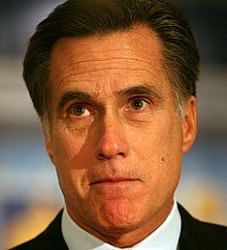
A Vanity Fair excerpt from “The Real Romney“, a forthcoming book by Michael Kranish and Scott Helman, contains an intriguing story about likely Republican presidential nominee Mitt Romney. It happened during a family road trip 28 and 1/2 years ago, when Romney was 36.

“The destination of this journey, in the summer of 1983, was [Romney’s] parents’ cottage, on the Canadian shores of Lake Huron. The white Chevy station wagon with the wood paneling was overstuffed with suitcases, supplies, and sons when Mitt climbed behind the wheel to begin the 12-hour family trek from Boston to Ontario.

“As with most ventures in his life, he had left little to chance, mapping out the route and planning each stop. Before beginning the drive, Mitt put Seamus, the family’s hulking Irish setter, in a dog carrier and attached it to the station wagon’s roof rack. He had improvised a windshield for the carrier to make the ride more comfortable for the dog.

“Then Mitt put his sons on notice: there would be pre-determined stops for gas, and that was it. Tagg was commandeering the way-back of the wagon, keeping his eyes fixed out the rear window, when he glimpsed the first sign of trouble. ‘Dad!’ he yelled. ‘Gross!’ A brown liquid was dripping down the rear window, payback from an Irish setter who’d been riding on the roof in the wind for hours.

“As the rest of the boys joined in the howls of disgust, Mitt coolly pulled off the highway and into a service station. There he borrowed a hose, washed down Seamus and the car, then hopped back onto the road with the dog still on the roof.

“It was a preview of a trait he would grow famous for in business: emotion-free crisis management. But the story would trail him years later on the national political stage, where the name Seamus would become shorthand for Romney’s coldly clinical approach to problem solving.”

Anyone who would put a dog inside a carrier strapped to the roof of a car moving 70 mph for hours and hours is one cold fuck of a human being. I would never do that to a dog, even to some stray I’d just found on the side of a road. Seamus is a social-political metaphor, all right. I trust I don’t have to explain it.

Over Is Over

Most of us understand what the terms “suspended animation” and “suspended sentence” mean, but a Presidential candidate announcing that he/she is “suspending” their campaign implies they’re putting it on hold as opposed to shutting it down. They’re not turning off the DVD player and heading out for a bike ride — they’re hitting freeze-frame and keeping the TV on in case an unforeseen opportunity presents itself down the road.

Which in the case of Michelle Bachmann‘s over-and-done-with campaign is a chickenshit dodge.

If you’re having relationship problems, your girlfriend might say “so you wanna break up or what?” And you might say “well, not exactly…what I had in mind is that we should suspend our relationship as opposed to throwing it into the wastebasket. Let’s freeze it in the space-time continuum in case we want to return to it next month or next year…okay?” To which she would say, “You know, this is one of the reasons why we don’t get along. You are so SO full of shit sometimes.”

Oscar Poker #62

Awards Daily‘s Sasha Stone, Boxoffice.com’s Phil Contrino and I pondered the imponderables this afternoon. Actually, we didn’t. We talked about box-office tallies for The Girl With The Dragon Tattoo and especially The Artist, and then (after Sasha insisted) the Producer’s Guild nominations, and thent I went into one of my laments about the direction of action films. Here’s a stand-alone mp3.

Sans Dialogue

This reminds me of the opening scene in Planes, Trains and Automobiles with the client (William Windom) staring at ad concepts while Steve Martin and Lyman Ward wait wordlessly for some hint. Margin Call director-writer J.C. Chandor is accepting the Best First Film award from the NYFCC on Monday, and on Tuesday will pick up the NBR’s award for Best Debut Director. Margin Call has also been named of the NBR’s top 10 Independent Films.

Stalled Jacket Art

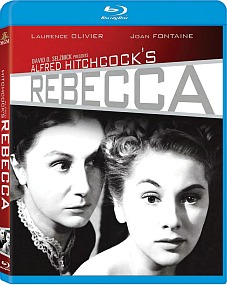
Bluray jacket art is routinely viewable weeks and sometimes even months ahead of street dates. For whatever reason these MGM Home Video titles, streeting on 1.24 and released through 20th Century Fox, haven’t been viewable on Amazon and other major Bluray sites. A Fox Home Video publicist provided them today.

Read more

Not So Fast

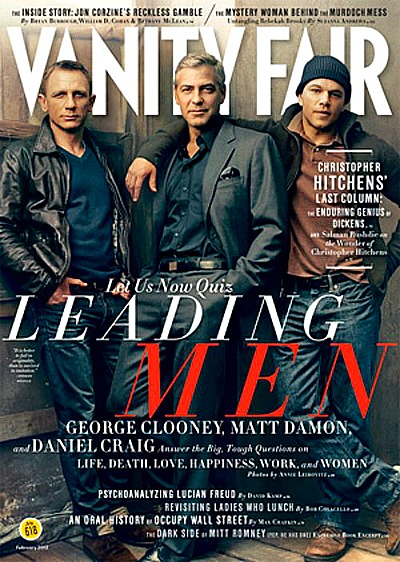
Right now obviously isn’t Matt Damon‘s time with a realization of the insignificance of We Bought A Zoo ricocheting everywhere, and Daniel Craig isn’t exactly the revving engine behind the success of The Girl With The Dragon TattooRooney Mara and David Fincher are. The DescendantsGeorge Clooney, one of the two most likely Best Actor winners (along with Moneyball‘s Brad Pitt), is the only guy on top as we speak.

Be Honest

Whether or not Chris Nolan has decided to remix Tom Hardy‘s Dark Knight Rises dialogue, was anyone honestly able to understand what Bane was saying in the DKR IMAX prologue?