Eisenberg’s Zen vs. Firth’s “Acting”

I’ve always had a sight problem with actors who “act” — i.e., performers who are clearly using acquired skills to inject varying degrees of feeling into a given scene. The rule of thumb is that a performance that is driven by “acting” is very admirable and enjoyable, but not necessarily one you can believe in 100% because you’re too aware of the gears moving and various tricks and devices being applied.


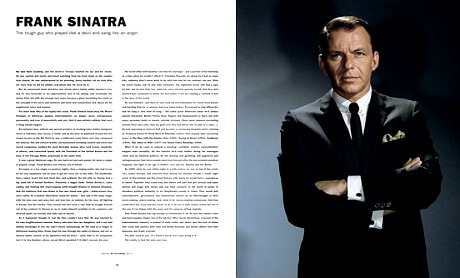
(l.) Jesse Eisenberg in The Social Network; (r.) Colin Firth in The King’s Speech.

As good as Colin Firth‘s King George performance is in The King’s Speech, and without disputing the conventional wisdom that he’s probably going to win the 2010 Best Actor Oscar, I sense “acting” going on in his performance. Not to any problematical degree, mind — he’s inhabiting a member of the British royal family in a late 1930s mode, and there are only a few ways to skin a cat in this respect. By any measure it’s a quietly penetrating and fitting portrayal.

But I still felt less “acting” from Firth when he played a dignified gay college professor contemplating committing suicide in A Single Man. I detected very few gears and devices in that performance (Tom Ford‘s muted high-fashion directing style seemed to filter Firth’s emoting), and yet, as noted, they slip through here and there in The King’s Speech. And yet it’s a touchingly written character and Firth knows exactly how to play him, so it works overall. So I’m really not putting it down.

And yet the almost mystifying absence of noticable “acting” in Jesse Eisenberg‘s performance (if you want to call it that) as Mark Zuckerberg in The Social Network is, for me, spellbinding. He’s playing one of the smartest guys who ever sat in any room in any realm, certainly in internet visionary terms, and not once does Eisenberg indicate to the audience that he’s even slightly interested in showing that he’s got a hidden-soft-underbelly thing going on. He’s just that fucking guy, and he doesn’t back off for an instant. The notion that he’s performing doesn’t surface. At all.

And yet — this is the astonishing part — you can feel the guy he could be (and wouldn’t mind being if it didn’t get in the way of his Facebook dreams) and perhaps one day will be if he ever gets some therapy and really works through his issues. I’m delighted by the fact that Eisenberg/Zuckerberg’s emotional currents never break through, blocked as they are by his massive ego and intellect and hunger for power and affection from Rooney Mara‘s character (i.e., the girl who breaks up with him in the opening scene). And yet you can feel them trying to be heard in each and every scene. They leak through like tiny droplets of moisture (which in reality would be nitroglycerine but let’s not get technical) seeping out of a stick of dynamite.

Here’s a portion of Mark Harris‘s New York interview with David Fincher that discusses Eisenberg:

Harris: It was kind of shocking to hear Jesse Eisenberg doing Aaron Sorkin’s dialogue, because you suddenly realize this is what he was born to do.

Fincher: We looked and looked and looked. We read every young actor in Hollywood. And it had been rumored on blogs and stuff that we were talking to Jesse Eisenberg. And you know, I hate to be told what to do by blogs, so I was like, “Yeah, we should probably see him but I don’t know if this is his thing … ” And he put himself on tape reading the first scene, and I remember getting this thing on my computer and opening this little QuickTime, and here’s this kid doing Sorkin: the first person that we’d heard who could do Sorkin better than Sorkin.

“Oftentimes, you’ll say to an actor that, you know, the notion of being present is not to be thinking of the next thing you’re going to say but to actually be listening. You know, a lot of people are trained to give you the ‘thoughtful’ thing, but at the same time, they’re trying to process their next line. And Jesse can be half a page ahead, and in the now. I remember turning to Aaron and saying, ‘Okay, have we ever seen anything this good?’ He just said, ‘That’s the guy.’ We brought him out to LA and he came into my office and I said, ‘Hey, it’s a pleasure to meet you.’ And he said, ‘Great, what do you want me to read? I’ve prepared three scenes.’ And I said, ‘No, no, no. You got the job. We’re just having you here because we wanted to meet you and say hello, but you’re in the movie.'”

Do it Already

Okay, it’s finally time for Awards Daily‘s Sasha Stone and I to record our first Oscar Poker podcast. We’ll be starting approximately 90 minutes later than our initial timeframe, but that’s the racket for you — issues arise, edits need to happen, you need to figure something out about the weekend’s boxoffice. 3:29 pm update: Okay, it’s done — and we went over an hour. We’re going to post a longish version and a short version for optional sampling.

In the space of 10 or 12 minutes (yeah, right) we’ll be discussing (a) Wall Street 2 and what the box-office numbers mean, (b) The Social Network topics — the film itself, Friday night’s big Harvard Club after-party, the presence of “acting” in Colin Firth‘s King’s Speech performance vs. the absence of same in Jesse Eisenberg‘s performance, award-season prospects, box-office projections, (c) the alleged Best Picture split between The King’s Speech & The Social Network, (d) why The Town is not a Best Picture contender, (e) the basis for projecting among a certain African-American critic I spoke to that Tyler Perry‘s For Colored Girls might actually make the Best Picture nomination cut, (f) What is the highest calling and/or the wisest use of a Hollywood soapbox regarding awards season? (g) the grotesque idea of yet another Superman movie, with Chris Nolan producing (h) the Release-The Beaver movement and why Mel Gibson should at least be afforded the appropriate respect if his performance turns out to be as interesting as some are saying it is, and (i) why poor sad little Never Let Me Go has grossed very little in platform exposure so far and why it may in fact be going away.

I guess we’ll be putting it up sometime tonight or tomorrow morning, initially as a plain old mp3 page that will allow you to just listen, and later as an iTunes thing.

Not So Fast

I don’t want to be a killjoy about the Wall Street 2 boxoffice performance this weekend, but I’m not entirely sure about the use of the words “solid” and “bullish” to describe the $19 million take. It reps the best opening for an Oliver Stone film ever, but the fact is that the boxoffice.com crunchers (i.e., Phil Contrino and the gang) were projecting $21 million yesterday. They presumably didn’t just pull that $21 million figure out of their collective posterior, so what happened?

On Friday Wall Street 2, playing on 3565 situations, did $6,900,000 for a per-situation average of $1935. The perceived complication is that on Saturday WS2 only upticked about 10%, earning $7,600,000. The thinking, I gather, is that a movie like this is skewing somewhat older so you have to figure a bigger Saturday increase because over-30s tend to wait until Saturday or Sunday to see the hot film. This persuaded Contrino & friends to project today’s earnings to come to $4,500,000, hence the $19 million figure and a three-day per-screen average of $5329. It might end up with $19.5 million. That’s good but tit’s not gangbusters — let’s face it.

“The hold was not tremendously healthy,” Contrino says. “Indications are that Wall Street 2‘s word-of-mouth is okay but not glowing. Plus, it won’t help that The Social Network is going to scoop up a lot of its audience next weekend.”

Contrino is forecasting a give-or-take Social Network haul of about $26 million next weekend — maybe $27 million — with a modest initial opening on only about 2700 situations. They’re also forecasting a $90 million cume at the end of the run. It’ll be plenty big — almost at Salt -level business, but not quite matching it. The Social Network will play better and bigger in better-educated metropolitan areas, of course.

I’m constantly amused that the old cliches about folks in rural areas being less educated and less hip and less interested in whipsmart scenarios are always disputed by HE talkbackers, but the hard-number box-office handicappers are always repeating this — super-smart movies play better in the urban areas than among the overweight Croc-wearing Walmart crowd in Bumblefuck. “No, no…not true!” the responses always say. “That’s an elitist cliche. Rural areas are teeming with well-educated, book-reading, enlightened types. Stop perpetuating an inaccurate stereotype.”

Okay, I say, but then each weekend the box-office figures show that uncomplicated, slightly more primitive, emotionally-driven movies always do better in rural areas than films that exude a slight aura of sophistication in one way or another. Please explain how I’ve got this wrong.

In The Flesh

On 4.24.10 I ran my initial euphoric review of Alex Gibney‘s Client 9: The Rise and Fall of Eliot Spitzer. “I knew it would focus on the sudden and scandalous fall of Eliot Spitzer, the former New York Governor, due to his involvement with prostitutes,” I began. “What I didn’t anticipate, and what in fact surprised the hell out of me, is that the doc unfolds and holds like a masterful political suspense drama.

“I was expecting a smart and comprehensive recap of the Spitzer saga — a kind of PBS Frontline-type deal. What I got instead was a totally gripping nest-of-vipers thing with a complex and self-destructive anti-hero and a great supporting cast including an assemblage of powerful, politically connected bad guys worthy of Sidney Lumet or Scott Turow or John LeCarre even, and all of them real as hell.

“Gibney has always been a first-rate documentarian. But in Spitzer and his psychology and the forces that conspired against him he’s found a great political melodrama that not only matches but enhances his abilities, resulting in a beautiful synchronicity. This movie is going right into my list as one of the best films of 2010.

“What a dirty, stinking story this is — a balding oddball hero with the right ideals and goals brought down by a fatal flaw, but whose public exposure and ruin is orchestrated by his powerful enemies, and not just any enemies but some of the same financially speculating, double-dealing Wall Street scumbags whose actions brought this country to the brink of financial ruin. Goodness falls, evil triumphs — great movie material!

“It is always the mark of a top-notch film when you think you know what it’s going to do plot-wise, and it more or less does that in terms of what it ‘tells’ but with so much more punch and pizazz and intrigue than you expected. And you come out of it going ‘wow, damn good!’

“One analogy is Fred Zinneman‘s The Day of the Jackal (1973), a thriller about a man hired to assassinate former French president Charles DeGaulle. You know going in that he won’t succeed, but the film holds you regardless. Another similar work is Lumet’s Prince of the City (1981) — a movie packed to the gills with cops, attorneys and prosecutors but which finally delivers a moralistic tale about dark urges, choices, alliances and a New York City demimonde.

“One of Spitzer’s enemies, Home Depot co-founder Kenneth Langone, talks to Gibney for the film, and is quite the fascinating character. Sptzer’s other foes included former NYSE chairman Richard Grasso, former Citibank/Salomon Smith Barney analyst Jack Grubman, former Merrill Lynch analyst Henry Blodget, former AIG honcho Hank Greenberg and Canary Capital Partners’ Edward Stern, to name but a very few.

“It’s too early to say, of course, but this looks to me at the very least like a prime contender for the 2010 Best Feature Documentary Oscar, whatever the competition. Because it’s sharp and true and riveting as hell, and that’s what gets the gold.”

Ripple

Armond White‘s contrarian rep will obviously be compromised if he approves of The Social Network. I’m guessing he’ll write a pan and thereby wreck the current 100% Rotten Tomatoes rating, based on 14 reviews thus far. That’s not counting another rave from Newark Star Ledger critic Stephen J. Whitty, and an especially well-written one by Some Came Running‘s Glenn Kenny.

The Social Network “does throw you into the insular but seminal Ivy League world of its characters pretty much head-first,” Kenny notes, “and then zooms along, and if you don’t get into the swim of it right away, you may get lost. You may think that the film is asking you to know what a ‘final club’ is. It isn’t. It’s just asking you on for the ride. Once you’re in and you stop worrying, it doesn’t matter.

“And then, once you understand what screenwriter Aaron Sorkin and director David Fincher are doing with the structure — it’s not as straightforward as it initially seems, chronology-wise — you’re ready for it, and it’s a pleasure to get it. And to switch metaphors, and worse yet, to resort to a really hoary one, it’s like being in a supercharged Lamborghini on a clear road with an expert driver who just opens the thing up, and the shift to the high gear is the smoothest rush ever. Nice.”

Familiar

I often have the tube on as a white-noise companion, and over the last couple of weeks I must have heard (and sometimes watched) this iPad spot at least 30 times — no exaggeration. It’s the first nine notes of Cole Porter‘s “Anything Goes,” repeated over and over.

Dark Fate

Mark Romanek‘s Never Let Me Go has been limping along in limited release. It doesn’t seem fated to break out — let’s face it. 20 days I ago I mentioned the possibility that it might have been cursed by a certain hard-working fellow whose unbridled enthusiasm for films in the early stages has tended to spell doom. I’m sorry this has happened, but if I’d been calling the shots at Fox Searchlight I would have said ixnay to any film about young people meekly submitting to a cruel early death.

At last night’s Social Network party a British journalist who absolutely loves NLMG was reminding me that the donors (Carey Mulligan, Keira Knightley, Andrew Garfield) don’t rebel or try to escape because they’ve been conditioned from birth to never think along those lines. Those born into slavery under the Roman empire were conditioned the same way, I replied, but Spartacus and several other men broke out of gladiator school regardless and formed an army and defied Rome.

I’m sorry for preferring Spartacus to Never Let Me Go, but hot dog-eating peons like myself are always responding along these lines. NLMG is obviously a more subtle and “tasteful” and restrained film than Spartacus, but Dalton Trumbo‘s screenplay, based on Howard Fast‘s novel, is much more compelling. Why? Because unlike the donors, the gladiators refuse to just sit there and take it.

The New Sydney Pollack?

I won’t go along with the idea of Ben Affleck‘s The Town deserving a Best Picture nomination, and neither, I suspect, will a certain percentage of Academy members. (I spoke to a top-tier director-screenwriter at last night’s Social Network party who said The Town is “really not very good.”) But Anne Thompson‘s idea (voiced during yesterday’s Oscar Talk podcast with In Contention‘s Kris Tapley) about Affleck being the new Sydney Pollack is perfect.

What she meant, I think, is that Affeck has shown he has the chops to be the industry’s leading dispenser of smart, upscale, money-making MOR films that aren’t too twitchy or problematical. The kind of movie that has name actors and feisty dialogue and a highly professional sheen but with a earnest romantic element. Not one that necessarily ends with a kiss (Pollack’s romances mostly ended with the relationship in question not working out) but which has a straight, deeply felt quality.

I knew Pollack slightly (a few interviews, several social occasions) and he would have been the first to tell you he was in the business of making movies that people wanted to see. But his films always had a classy veneer, and were always adult-minded and about a theme or arc that Pollack had worked out in his head before shooting. Pollack knew his stuff and then some. He wasn’t Jean-Luc Godard (and he would have been the first to tell you he didn’t have that kind of DNA), but he was one of the best MOR behind-the-camera guys for the better part of four decades.

If Affleck can live up to Pollack’s standards and level of caring and concentration over the next two or three decades, he’ll have reason to be proud.

Shepherd’s Life

I say this every year so here we go again. I recognize that some blogger-columnists feel that sitting on the sidelines during awards season and gauging the industry’s political and emotional sentiments regarding this or that nominee is what they do and should do, and that this is both important and expected of them and so on. I’ve never gone along with this. In fact, my reaction to this philosophy has always been “what?”

I believe that the proper role of a good Hollywood columnist is not just to report on the conversation (which passes the time and is occasionally interesting), but to lead it — to stand tall at the lecturn and be an advocate and to put wood into the fire and keep the passion going for the right films and the right filmmakers. To celebrate art before politics. And to argue against awarding mediocre films, which is what most people are always inclined to do — i.e., be supportive of their friends and colleagues because it’s a friendly, neighborly thing to do.

The highest calling of a Hollywood columnist during awards season is to be a strong and impassioned shepherd and show the sheep where the good grass is. This doesn’t imply that sheep don’t have a nose for good grass on their own. Of course they do. But there is crabgrass, grass, decent grass, better grass, higher-quality grass and world-class gourmet grass. I would humbly submit that shepherds have an eye and a nose for grass, and that life is short so why eat regular grass when all you have to do is trudge up the hill a bit and sample the really good stuff?

In this light I feel that a statement to the effect that “it doesn’t matter how good an actor is in a given movie….there’s no way he/she will be awarded for this work” — a statement made yesterday by Indiewire‘s Anne Thompson — is, from my vantage point, wrong-headed. No matter how accurate this assessment may be in a political sense (and I’m not saying for a second that Thompson is incorrect), it is wrong to dismiss good creative work or to suggest that it’s not even worth considering in an award-season sense, even if it doesn’t have a political prayer.

I’m not stupid. I know that the chances of The Beaver‘s Mel Gibson ever winning praise from the Hollywood community are all but nil. But there’s something in me that can’t help but recoil when I hear a statement like Thompson’s. If an actor (even a racist-minded actor) has delivered an exceptional performance then he/she has delivered an exceptional performance — period. You have to always consider the long-term view and not get too parochial in your thinking. Because there’s the judgment of history — a judgment unaffected by the moody political currents — to consider.

There is nothing more banal or dismissable in the game of evaluating the best in a given field than for people to say “yeah, but I don’t really like him/her” or “but he/she is so nice!” There’s no getting away from this, but the Movie Godz are constantly asking us to not think or judge according to to the current political ether, which is to say the mentality of a group of junior high-schoolers hanging out during recess.

To put it another way, the “I’m just taking the pulse of the town and staying out of the argument ” columnists are like Judean shepherds on a hillside near Mount Sinai. Shepherd #1: “Look at those sheep over there, eating all that yellow grass and those weeds.” Shepherd #2: “Yeah, I know, and with that really nice looking patch of rich green grass to the left about 100 yards.” Shepherd #1: “Why don’t we get our staffs and scoot them over in that direction?” Shepherd #2: “No, no, that’s not our proper role. We’re here to just chill and observe and keep an eye on whatever the sheep are up to…nothing more.”

Bringing Up Baby died commercially and wasn’t even reviewed all that well when it opened in 1938. Obviously the critics and the public didn’t get it. Shouldn’t we all strive to recognize and celebrate good films or performances when they are in fact really good, regardless of the prevailing mood or peer-pressurings or whatever?

Big Hurdle

“Why is everyone so high on The Fighter?,” Indiewire‘s Anne Thompson asked In Contention‘s Kris Tapley during their latest Oscar Talk discussion. More to the point, why is Thompson so skeptical about this film sight unseen? Her first explanation: “Mark Wahlberg?” But her second comment gets down to the nub of it.

“I’d like to bring up the topic of [Fighter director] David O. Russell ,” she begins. “Right, no shortage of enemies,” Tapley replies. “That is an understatement,” Thompson said. “There is no single entity who is more widely loathed in Hollywood, perhaps. He’s really not liked. Put him in the Mel Gibson category.

The Fighter (Paramount, 12.10) “will have to be really good [to become an Oscar contender] — that’s all I want to say. I mean, this is the guy who has tapes all over the internet of him berating his cast…even George Clooney, whom everyone loves, called him on it [about bad behavior] during production of Three Kings. I’m not saying it can’t be neutralized, but I’m saying it’s a big hurdle to get over.

“[Russell] is talented, extremely talented,” she notes. But that ain’t enough. “People don’t necessarily coddle up to Sean Penn, but he’s respected [for his talent] and admired for his humanitarian efforts, for wearing his convictions on his sleeve. I don’t know that David O. Russell has earned that kind of gravitas. His films have always lacked heart and humanity. Three Kings, I would submit, is an idea movie. I would argue that his films are cold as ice.

“What are the great films that Russell has directed?,” Thompson asks. Tapley mentions Three Kings. He also speaks fondly of I Heart Huckabees. My own view is that Flirting with Disaster is a near-great film, certainly one of the funniest and most originally written adult comedies of the last 20 years.

“I want to see The Fighter, and when I do I will judge it objectively…I really will. I’m trying to explain what some of the negatives might be.”

Later in the conversation Thompson belittles the notion, primarily floated by Deadline‘s Pete Hammond (and seconded by Nikki Finke), that Mel Gibson could have a Best Actor shot if Summit decides to release The Beaver at year’s end.

“It doesn’t matter how good Mel Gibson is in the movie….there’s no way,” Thompson says. “Even if it does well commercially, even if it gets good reviews….the Academy will never give Mel Gibson an Oscar nomination, ever. It’ll never happen. The Academy is very liberal and accepts the sexual piccadilloes of Roman Polanski or Charlie Chaplin or Woody Allen, but racism and anti-Semitism they do not forgive.”