The 2024 Oscar nominations will be announced on Tuesday morning. But instead of predicting which films and performances will be included or snubbed, let’s try a different angle of approach. Best Picture-wise most Academy members vote for the usual political or social-pressure motives (DEI and merit being the top two) but the bottom line is that movies are voted for or approved of for deep-down emotional reasons.
Mainly because these movies have said something truthful and fundamental about life as we know it. Assessments which many of us have recognized or agreed with, and which have dramatized certain human behaviors which some of us may not approve of but are reluctantly acknowledged to be pervasive and on a certain level profound.
Here’s what the major Best Picture contenders are saying, more or less…
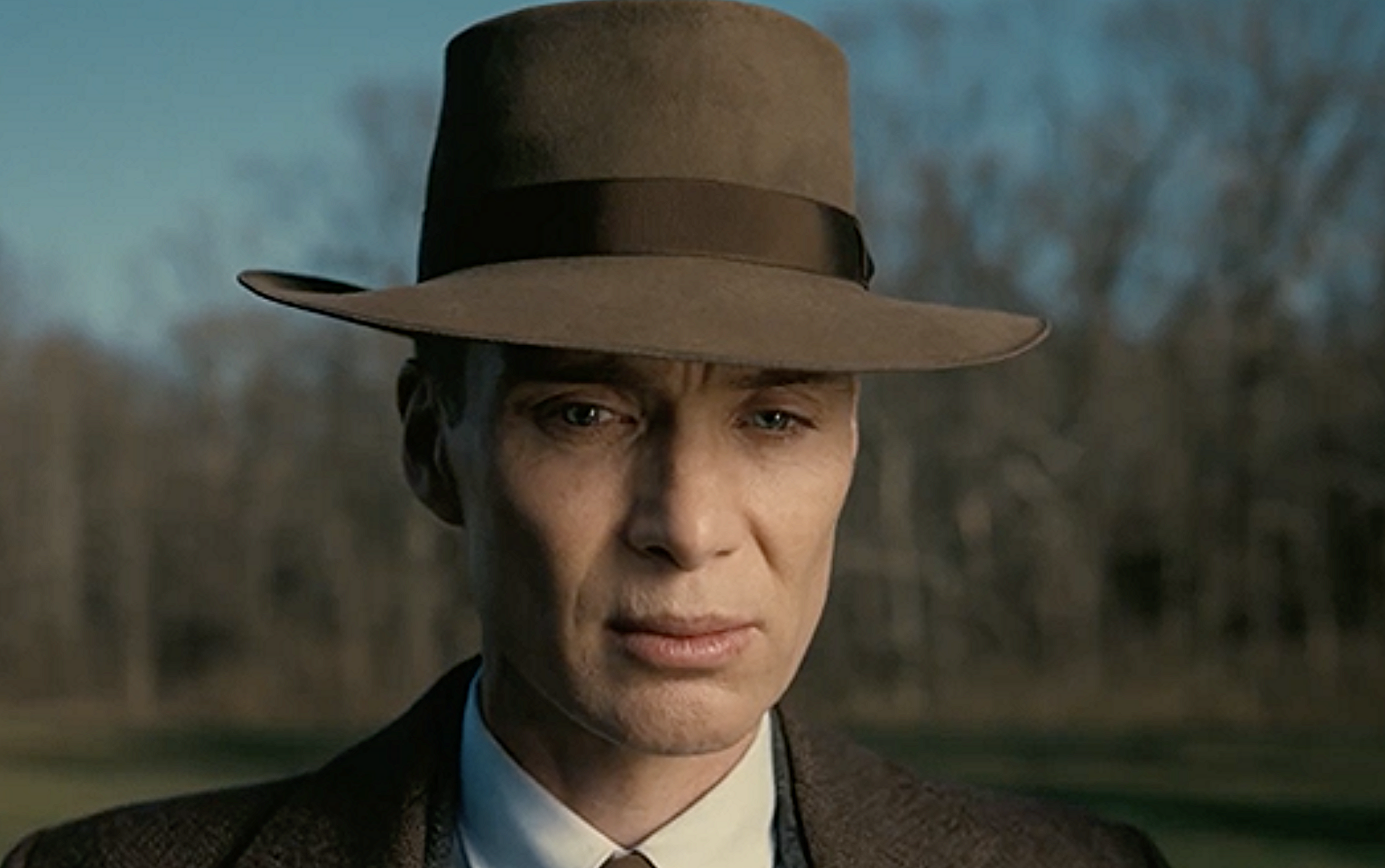
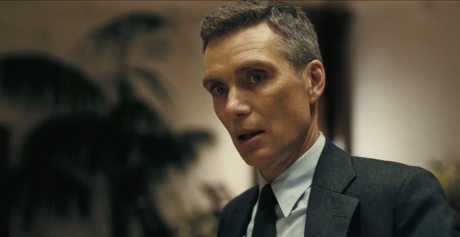
1. Oppenheimer — It’s magnificent to be a super-brainy genius and to apply your gift to the creation of something important or earth-changing, but don’t get so stuck on your particular vision of things that you wind up ignoring basic political realities and thereby self-destructing. And for God’s sake don’t behave like a crybaby when you’re in the Oval Office with the President of the United States.
Basic message: Once the genie is out of the bottle, you can’t put it back in. Take responsibility for your actions, be a man, play your cards carefully, no whining.
2. Poor Things — Bella Baxter calls ’em like she sees ’em, but there has to be more to life than just furious jumping, unless of course you disagree. Don’t take Yorgos Lanthimos‘s weird imaginings too literally. There aren’t enough films that really invest in wackazoid fantasies. Enjoy them when they happen, and please ignore the last 15 minutes.
Basic message: Weirdness can be wonderful.
3. The Holdovers — Life has always been difficult and occasionally punishing, but at least there weren’t any woke fascists or social-media guillotines back in 1970. It takes a lot of work and energy to be a haughty and dismissive scold all the time, and sooner or later you’ll have to give that shit up. Listen to your heart from time to time and maybe things will open up for you…maybe.
Basic message: Don’t be a crabby asshole.
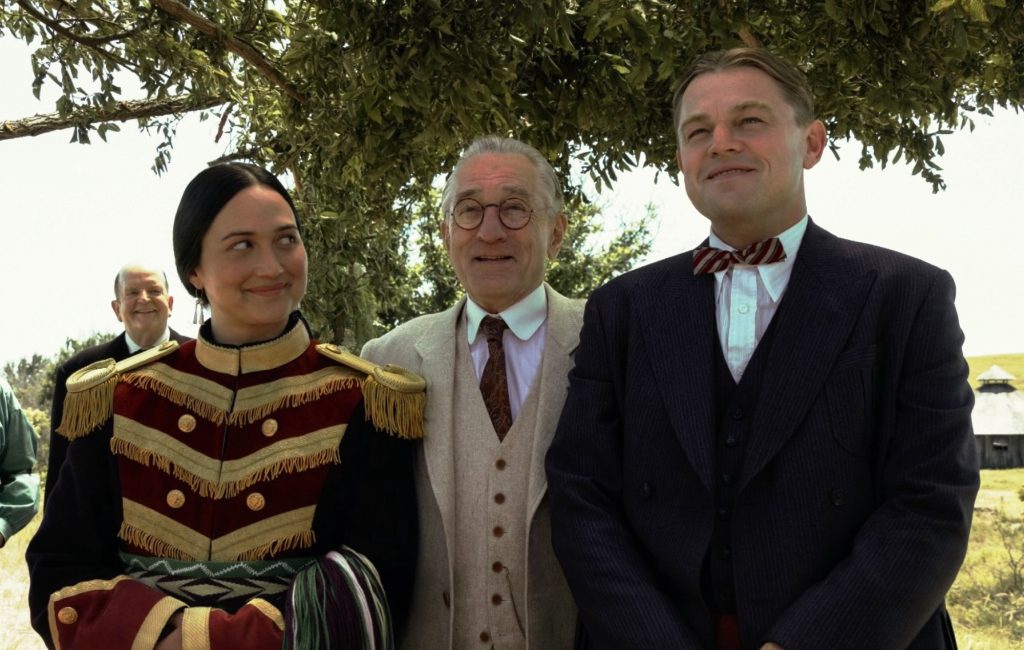
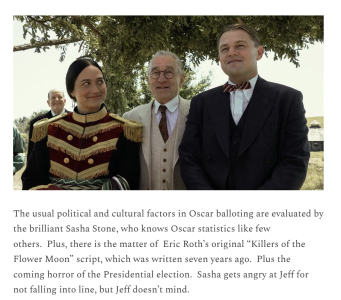
4. Killers of the Flower Moon — 100 years ago Oklahoma white men were very greedy and very foul, and we need to learn from the example of their century-old evil so we can be better people today. In line with this, it would have been very bad to tell a story of Oklahoma genocide with a white FBI agent in the lead role. To have done so would have been obviously wrong and racist. Plus it doesn’t matter if Eric Roth‘s original 153-page script was far superior to the film that Martin Scorsese ultimately made (“who didn’t do it?”). What matters is that Leonardo DiCaprio wanted to play an idiot, and he did that.
Basic message: Don’t be a greedy, homicidal Midwestern white guy.
5. Barbie — Pink is beautiful, misandrist social satire is delicious and all men are pathetic and boastful infants who can be easily manipulated if women are smart about it. Plus (a) it was glorious to wear pink to Barbie screenings last summer, and (b) hooray for Margot Robbie and Greta Gerwig making all that dough.
Basic message: Is there one?
6. Past Lives — If a Korean-born woman has been in love with a very special Korean-born man since childhood, it makes perfect sense to try and bring it all together when the guy flies all the way from Seoul to pay her a visit in New York City. And it doesn’t matter (or shouldn’t matter) if the woman speaks Korean to the boyfriend in the presence of her American husband. And a movie about this odd triangle doesn’t have to wrap things up or provide any emotional closure. It just has to speak softly.
Basic message: Don’t marry for friendship, convenience and comfort — you’ll be sorry down the road.
7. American Fiction — White upscale book readers are suckers for street cred and Black authenticity. If you’re a smart writer of color you’ll exploit the shit out of this market, and you won’t sweat the particulars. Unless you’re a man of conscience, in which case you will sweat them.
Basic message: Don’t worry about dumb white consumers.
8. Anatomy of a Fall — Brilliant female writers living in Grenoble need to watch themselves. Because if a certain hetero husband dies from a fall, the legal esablishment will automatically assume that the wife (Sandra Huller) pushed him and try to convict her of this, especially if she’s had a few same-sex affairs on the side.
Basic message: Beware of local male prosecutors with tennis-ball haircuts and cruel faces.
9. The Zone of Interest — The furtherance of evil has always seemed banal on this or that level, and the Nazis were no exception in this regard and especially in the ghastly matter of concentration camps.
Basic message: Read the writings of Hannah Arendt.
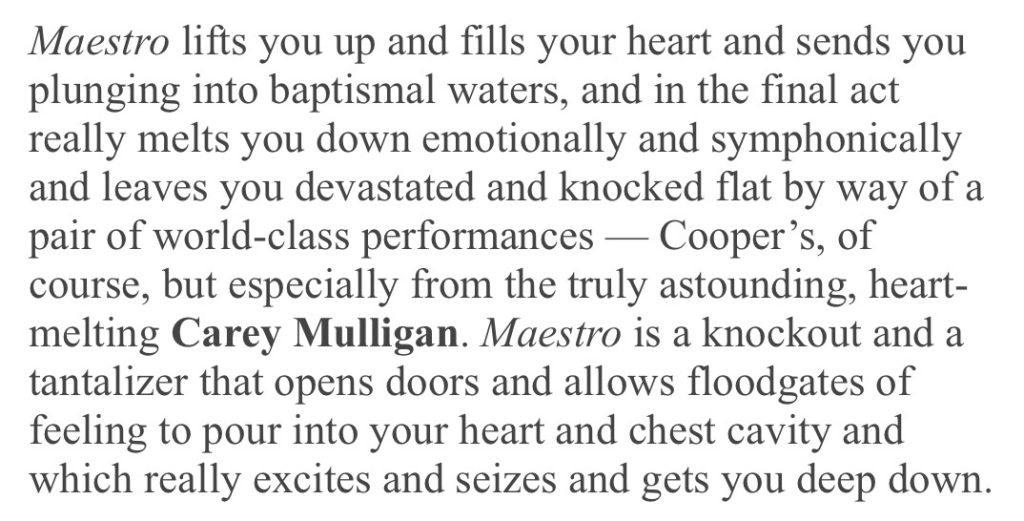
10. Maestro — Leonard Bernstein was a gay man who needed a beard marriage to prosper, and yet he cared deeply for his wife of many years, Felicia Montealegre. His intense devotion to music (conducting, composing) resulted in fame, adoration and great fulfillment all around, but what occupied his life and certainly affected his marriage were his relationships with young fellas.
Basic message: Don’t hurt your loved ones by “getting sloppy.”