Enduring Sundance Fizzle

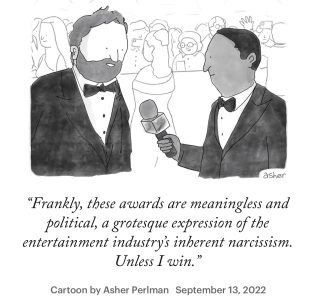
Zero enthusiasm for the the slate of the 2024 Sundance Film Festival (January 18–28). I feel nothing….nothing at all. Festival director Eugene Hernandez is doing his level best, I’m sure, but has simply arrived too late in the cycle. Sundance is a shell of its former self.

For roughly 20 to 22 years or so (mid’90s to mid teens) this fabled Park City gathering was heavenly, and certainly more than worth the time, expense and hassle of going there.

My press pass was zotzed by the Robespierres in ’18, but I attended Sundance ’19 anyway and saw films by the grace of publicist pals. For the last four years I haven’t even thought of it.

It was 43 and 1/2 years ago when Robert Redford announced the idea of a Sundance Institute of some sort. He did so during a private chat-and-discussion at Yale University’s Battell Chapel. It happened on Thursday, 5.2.80, and I was right there front and center. I taped the whole thing.

Posted on 1.4.22:

For at least four years I’ve been calling the Sundance Film Festival a wokester cul de sac…a dead end in itself, a dog in a box. Robert Redford‘s annual Park City gathering was alive and crackling between the early ’90s until 2016, pumping new blood and attitude into Hollywood and in some instances even reaching Average Joe multiplexes — 25 years of vitality.

Then the wokesters began to take over in ’17, and within a year Sundance had become a festival for woke purists. Or, as I wrote in ’18, “a socialist summer camp in the snow…largely about woke-ness and women’s agenda films — healings, buried pain, social ills, #MeToo awareness, identity politics, etc.”

I’ve said this four or five times, only to be met by a consensus view from the HE commentariat that boiled down to “aahh, pipe down… you’re just pissed off because they yanked your press pass.”

But now finally…finally!…a writer director has told The Ankler‘s Richard Rushfield that “the indie Sundance machine” has indeed woked itself into a corner, “creating films that no one wants to see…there’s a reason why you don’t have many indie breakouts because the stuff that has been deemed important is completely out of touch.”

Thank you!! Someone has finally joined me in saying how over the last four years the Robespierre contingent have all but poisoned the indie realm, which is annually celebrated in Park City. Indiewire would rather slit its collective throat that admit this, but now there are two of us…me and this writer-director guy!

Read more

“Blitz” Just Around The Corner

There’s every reason to assume that last week’s research screening of Steve McQueen‘s Blitz, an ensemble narrative about the Nazi bombing of England in the early 1940s, was encouraging to all concerned.

A viewer told World of Reel‘s Jordan Ruimy that Blitz constituted a “major achievement…both epic and intimate with some jaw-dropping [visual] filmmaking [chops].”

London filming began in November 2022; shooting also took place in Greenwich last February.

Perhaps a Cannes premiere six months hence? McQueen is a friend of that festival.

The Blitz cast includes Saoirse Ronan, Leigh Gill, Harris Dickinson, Erin Kellyman, Stephen Graham, Paul Weller, Kathy Burke, Benjamin Clementine, Hayley Squires= and Sally Messham.

Why Would Anyone Make This?

Brian Becker and Marley McDonald‘s Time Bomb Y2K is a fully archived (no present-tense interviews) recap of the bizarre concerns within media and governmenty circles that were felt throughout ’99 about the Big Turnover from the 20th to 21st Century.

“Bizarre” because nobody I knew expressed the slightest concern about any of it. (I listened to the frettings of one or two Nervous Nellies…nothing.) The kids and I flew to Europe in late December. We stayed in Paris (a little place on rue Durantin in Montmartre), Brussels and in the medieval town of Rothenberg, Germany, and then returned to Paris for a New Year’s Eve crescendo. Nobody cared, all cool, nothing happened, etc.

After The Fact

Jamie Lee Curtis‘s praising of Taylor Swift happened some time ago, but it inspired a kneejerk response today. I tapped this out at 7:30 am this morning:

She’s not a “fantastic talent.” Swift has obviously tapped into something huge over the years, despite what any fair-minded critic would be forced to call a mediocre musical repertoire (with the exception of ‘Lover” and two or three others).

Sorry, man, but her music just doesn’t have the punchy hooks or the occasional angularity or the exciting textures and all those side doodles, mad swerves and whizzing fastballs that we expect from major performers.

But you know what? The Swifties like what she’s serving just fine. Because they are uncencumbered by taste.

Swift’s songs lack soul, depth, complexity, even occasional stabs at poetry. She’s a rural singer-songwriter at heart, one who began in he country-music field (which in itself speaks volumes), and who basically sings about ex-boyfriends.

Read more

Which ’23 Best Pic Contenders Are Blatant Oscarbait?

Killers of the Flower Moon is the most aggressively baity because it’s employing a two-track strategy — (a) standard award-season attributes like important historical subject matter, solemn moral undercurrent, three-hour length and humongous budget plus (b) the woke thing (evil whitey + Native American identity + all hail Montana Blackfeet native Lily Gladstone for having played, very modestly and even unassertively, an Osage native woman…tears leaking from the corners of our eyes). The only other problem is that Killers, despite the enormous effort that went into it, isn’t top-tier Scorsese.

@thehalgorithm Oscar bait movies #oscars #movietrivia #filmtok #movietok ♬ original sound – Hal 🎥 🍿

Not A Snowball’s Chance in Hell

If I could make Paul Mescal completely disappear (not killed but gently, painlessly transformed into a vapor ghost….a wandering spirit)…if I could get rid of this guy by clapping my hands three times, I would clap my hands three times. Otherwise I mean none harm. I think none harm. I want none harm. I’m just imagining his absence.

On top of which Andrew Scott‘s head is too big for his narrow shoulders, and I don’t like the mint-green-and-white vertically striped shirt.

All Of Us Strangers is a classy, earnestly felt, slightly above-average film about…well, about reimagining Taichi Yamada‘s horror-tinged original to suit a gay agenda, and secondarily about affirming one’s identity with long-dead parents. A decent job.

After seeing it in Telluride three and a quarter months ago a new cinematic term had formulated in my head — “beard-stubble sex scenes.”

“Rushmore” At 25. As In Exactly.

Wes Anderson‘s Rushmore, by far his funniest, most dramatically grounded, perfectly composed and most emotionally poignant film, opened commercially on 12.11.98 — a quarter century to the day. It had opened at the New York Film Festival two months earlier, on 10.9.98.

I had just begun writing my Mr. Showbiz column that month, and boy, was I delighted with Rushmore when I saw it out at the Disney lot one night! I was floating when it ended.

Wes, whom I’d known since he hit town with Owen Wilson in ’94, had allowed me to read a copy of the script roughly a year earlier, when I was miserably working at People, and I was pretty happy with it. But the film version represented one of the very few times in my life that a movie turned out to be significantly better than the script. (It usually works the other way around.) When I posted HE’s 150 Greatest American Films list on 7.24.15, I ranked Rushmore as my #8, and I meant it. I still do.

Read more

“May December”Annoyed Me Less

…when I watched it a couple of nights ago on Netflix. I’m still not a fan and still find it annoying, but there’s something to be said for watching a mezzo-mezzo film when you’re well-rested and comfortable and sipping hot chocolate on a nice couch as opposed to watching it jet-lagged at the Salle Debussy when you’re on a tight schedule. I’m leaving it on my “thanks but no thanks” list but I no longer despise it. This happens every so often.

How Would A “Heaven Can Wait” Remake…

…fare with Millennials and Zoomers? Warren Beatty and Buck Henry‘s romantic fantasy is 45 years old, remember. Too fanciful or would it connect? Are middle-aged and younger people still haunted by the idea of having to die someday? Have they ever not been? When’s the last time a movie about a back-from-the-dead character (or one hopscotching in and out of the eternal) really worked?

Variety‘s Owen Gleiberman has described Heaven Can Wait as “a popular comedy — but really, it’s just a fluffy afterlife fantasy with Beatty at his most meticulously abashed.” And he’s mostly right. 93% of Heaven Can Wait is a fluffy escapist comedy. But the last 12 to 15 minutes are killer. It becomes this WHOLE OTHER THING.

The last scene in that LA Colisseum passageway, the one between Beatty and Julie Christie, is one of the most emotionally affecting, spiritually transporting romantic scenes in movie history.

The film fiddles with the idea that our essence as a person — our settled soul, our eternal centerweight — not only persists through the millenia but would somehow be recognizable to a girlfriend or lover if she happened to run into us in another body. Christie fell in love with Beatty’s Leo Farnsworth and wept when he died, and yet somehow she sensed at the very end that there was something curiously familiar about Beatty’s Tom Jarrett, the Rams quarterback.

This scene (the eye contact between Beatty and Christie is magnificent) is the reason Heaven Can Wait made as much money as it did. Produced for $6 million, it wound up earning $98 million — the equivalent of $419 million in 2022 dollars.

The reason it did so well is that final fantasy scene, and the fact that the movie sold audiences on the notion that we’re all just passing through life and passing through this or that body, but that our spiritual core lives on — that we, in a sense, will never really die. And that even after our time on earth is finished, we’ll move up to heaven and hang out with James Mason and Buck Henry and other angels in business suits.

That’s not “fluffy” — that’s about as primal as it gets. We’re all going to die some day, and it’s enormously comforting to not only imagine but temporarily believe that death is not the end, but just a way station into the next realm. Heaven Can Wait sold a gentle little fantasy that made everyone feel awfully damn good.

Don’t Let it Be Forgot

…how grim, gray, slushy and bitingly windy those Boston winters can be. And how much those stirring indoor reflections and realizations can mean in this atmospheric context.