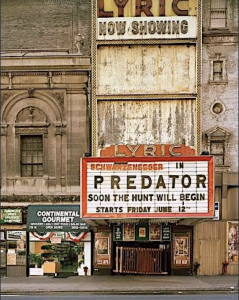
I always avoided the 42nd Street grindhouses like the plague.
In my mid teens I would grab a Westfield-to-Port Authority bus on Saturday mornings and then roam around Times Square and maybe catch an afternoon show, but I almost always restricted myself to the first-rate, reserved-seat houses — Criterion, Loews State, Rivoli, Capitol, DeMille, Warner.
Okay, except for now-and-then visits to the Paramount, Astor and Victoria, which were regular popular-price theatres.
When I look at the grindhouse marquees I think mostly of older gay guys accidentally bumping into me and copping a feel.
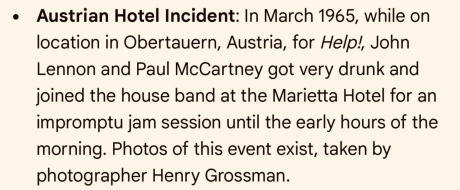
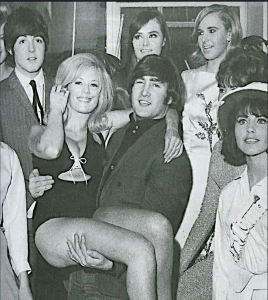
If she’s still with us, the blonde in John Lennon’s arms is probably around 80, give or take. If Mark David Chapman hadn’t come along, Lennon would be 85 today.
Notice the almost total lack of similarity between the very young Paul McCartney (born in June 1942, 22 when this shot was snapped in March ’65) and the about-to-turn-30 Paul Mescal, who has a hawk nose, a pointy chin and tufts of gray in his hair.
“The circle around the band was a portable Rome of money, sex and drugs…when we hit a city we really hit it, and everyone wanted in.
“Don’t take away our portable Rome, where we can all have our houses and our cars, our lovers and our wives, and our office girls and parties and drink and drugs.”
“If we couldn’t land groupies, we hired whores…whatever was going.
“There were photos of me crawling round on my knees coming out of whorehouses in Amsterdam with people saying ‘good morning, John.'”
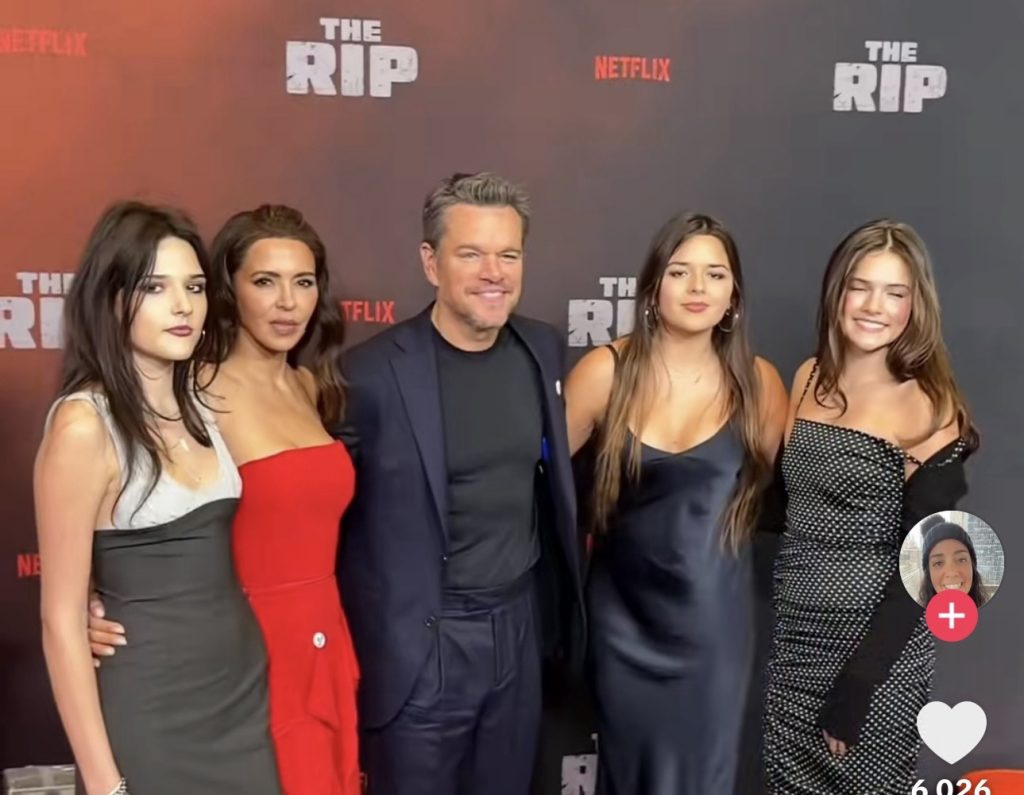
Writtenthismorning: I haven’t yet seen TheRip (Netflix, 1.16), but it’s certainly interesting that topliner and co-producer BenAffleck costarred a few years ago in a vaguely similar action thriller — J.C. Chandor’s TripleFrontier.
Basic-concept-wise, Triple Frontier is fundamentally TheRip’s older, south-of-the-border brother — struggling working-class, loaded-for-bear professionals who stumble upon a huge pile of criminal cash that’s been stashed in a home.
This in itself is quitestriking.
HE was a huge instant fan of TripleFrontier, a Netflix show which opened in March 2019. Since then I’ve re-watched it a good five or six times.
A 1.14.26 Pamela McLintockTHR story says that Marty Supreme–ola has earned more domestic coin than One Battle After Another.
It’s also on track to beat the b.o. total of Everything Everywhere All At Once, she reports.
Marty Supreme has shattered one record after another since opening over the holidays. Its latest box office milestone came Tuesday when it passed Leonardo DiCaprio’s rival Oscar contender One Battle After Another to end the day with an estimated cume of $72.27 million, according to A24.
“From director Paul Thomas Anderson and Warner Bros., One Battle After Another has earned slightly north of $71.6 million to date domestically (unlike Marty, it’s already playing in the home as its theatrical run winds down.) Internationally, One Battle is still far ahead, earning $154.5 million at the foreign box office for a domestic total of $206.1 million.
“But Marty Supreme is only now beginning to roll out in earnest overseas, where it has earned nearly $10 million to date from just a few markets, including a best-ever showing in the U.K. for an A24 pic with north of $8.4 million. Based on early returns, box office experts believe Marty Supreme could do substantial business overseas and end up north of $170 million to $180 million globally, if not higher.
“And it is now just days away from overtaking Oscar best-picture winner Everything Everywhere All At Once ($77.2 million) to rank as A24’s top-grossing film domestically of all time. Marty will also become Chalamet’s top-grossing original film this weekend at the global box office when passing up last year’s Oscar contender A Complete Unknown, which grossed $75 million in North America (the Bob Dylan biopic’s global total was $140.4 million).”
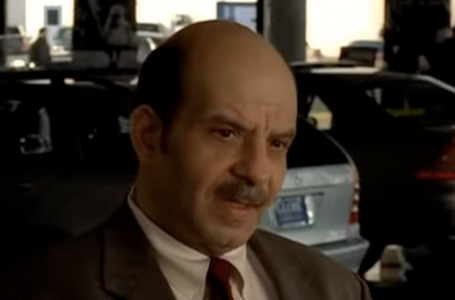
Who’s the actor who played the bald moustache Globe Motors salesman in “Everybody Hurts“, the 45th episode of The Sopranos?
The salesman who tries to interest James Gandolfini‘s Tony Soprano in a Mercedes, I mean, but who quickly jettisons this idea when Tony inquires about Annabella Sciorra‘s Gloria Trillo. The salesman gives Tony the lowdown — i.e., that Trillo, a former Globe salesperson, is not only deceased but by her own hand.
I’m asking because he’s terrific, this guy. A gravelly New Jersey voice, plain-spoken but a bit sleazy, and yet nakedly honest as far as it goes. And you can tell at the end of the scene that he knows Tony was somehow involved with Gloria.
Directed by Steve Buscemi and written by Michael Imperioli, “Hurts” aired on 10.20.02.
I haven’t yet seen Joe Carnahan, Ben Affleck and Matt Damon‘s The Rip (Netflix, 1.16), but some snarky comment-threader who’s apparently seen it…he/she wrote this morning that it’s okaybutnogreatshakes…a morally conflicted, slightly-better-than-generic programmer.
I’m tapping this out from memory as I can’t find the URL, but the guy basically said that The Rip is “intriguing at first but soon devolves into a generic Netflix thriller, somewhat in the vein of the last Artists Equity boilerplate crime flick, The Instigators.”
The problem with that dismissive remark was that the latter film, produced by Damon and Affleck’s Artists Equity and streamed by Apple, was and is a totallyfirst–ratestand–alonefeature.
The comment-threader was wrong, make no mistake, because TheInstigators, a downbeat Boston noir comedy, is noboilerplateho–hummer! On 8.18.24 I called it “a true American original —- TheFriendsofEddie Coyle meets deadpan screwball fatalism.”
The only thing that doesn’t work about The Instigators, I said, is the humdrum title. If it was my show I’d have called it I’ve Been Waiting All My Life To Fuck Up Like This — yes, a line stolen from Karel Reisz and Robert Stone‘s Who’ll Stop The Rain? (’78).
Essence of my review: “Despite the downish tone of this heist-gone-wrong ensemble chase thriller, it’s fundamentally a low-key noir comedy…sardonic sarcasm meets ‘fuck our lousy luck and Jesus, have we fucked things up or what?’ meets a kind of loserKeystoneCopsmentality.
“It’s basically about the oafish shenanigans of a squad of half-assed, not-smart-enough but not altogether disreputable guys, principally played by Damon (who produced through Artists Equity) and Casey Affleck (who co-wrote the script with Chuck Maclean). Their performances are sweet, sublime, spot-on.
“I was truly delighted by this existential crime sitcom, which is darklyhilariouswithouteverquiteannouncingthatit’sahah–hah ‘comedy‘. It’s certainly too smart and cool for the idiots out there who hate the idea of mixing humor and loser-stamped noir. It almost delivers the same kind of tonal balancing act that Pulp Fiction was about.
“And the supporting cast is aces — Hong Chau, Paul Walter Hauser, Michael Stuhlbarg, Ving Rhames, Alfred Molina, Toby Jones, Jack Harlow, etc.”
Last night and for the third or fourth time I re-watched Pier Paolo Pasolini‘s Teorema, and I swear to God it’s an even bigger wallop now. Expanded, deepened…a flotation experience.
HE hereby pledges to visit the white Teorema mansion (Via Palatino, 16, 20148 Milano) when I return to Italy seven months hence.
Pasolini and the entire cast (Terence Stamp, Silvana Mangano, Massimo Girotti, Anne Wiazemsky, Laura Betti) have passed. Only the red-haired son, played by Andrés José Cruz Soublette, is still with us.
Tuesday, 1.13, 2:15 pm: Between public GoFundMe and private Venmo, the Cannes/Venice campaign has raised $3000 after four days…certainly a good start. That’s only about 40% of the target goal ($8K), and yet the pace of accumulation feels…well, a wee bit sluggish.
True, there’s plenty of time to get there — 2026 has barely begun — but I’d ideally like to see this campaign come to a happy conclusion by, say, this time next month, or certainly by March 1st. (Wouldn’t you if you were in my position?)
I’m looking to raise $4K per festival or $8K total. Rent, air fare, train fare, low-rent meals, cappucinos, baguettes, etc.
Please remember that I’m not “begging” for dough, as a few haters have claimed. I’m simply attempting to attract donations in a different, far less draining manner than the monthly method used by other webzines and columnists. I’m just asking for a one-off gimmee of $25 or $50 and whatever feels right. HE stopped paywalling this site a couple of years ago, and so the regularly refreshed content is entirely free and wide open, and this — this! — is the only pitch I’m making.
I’ve shed buckets of spiritual blood for this site over the last 21 and 1/2 years. Buckets.
Again, $25 or $50…. whatever’s affordable. Oh, and if you’d rather keep your donation anonymous, please send it to my Venmo account — @gruver56.
Special offer to haters: No name-brand Hollywood columnist has had more darts, steak knives and horse manure flung in his/her direction over the last eight years or so. (Except for poor Sasha Stone — she’s been taking it in the neck since the summer of ’24.) I’ve been routinely shot with thousands upon thousands of sharp arrows by woke fanatics, and boy, do they lay it on! If there are such places as heaven and hell, the HE haters, trust me, will be roasting on a spit in the immediate wake of their demise. This, therefore, is their chance to free their souls. One decent donation and I, for what it’s worth, will offer a measure of charitable forgiveness in the usual…uhm, saintly, turn-the-other-cheek way. The haters may roast anyway because of other (many?) transgressions, but HE-wise their consciences will be clean.
In my Venice Film Festival review of Mona Fastvold‘s The Testament of Ann Lee, I noted that Shaker founder Ann Lee, who lived until age 48, “was flat-faced and rather ugly, and that Seyfried (who turned 40 in December) is, of course, beautiful, so the film’s realism is lacking in this regard.
“And as long as hotness is on the table, 35-year-old Stacy Martin, who plays Jane Wardley, a British born co-founder of the Shakers, is way too attractive to play a woman who’s into a no-sex, God-and-only-God lifestyle…one look at Martin and you’re thinking “what is she doing with this bunch?”
Kristi Coulter has tried to ridicule me for sharing this observation, but hot women rarely renounce the perks that are naturally and plentifully given to them. Guys too. The truth is that abundantly dishy persons never join secular oddball religious cults because…like, why? The world is at their feet so why turn inward?
John Huston got away with casting the prim and prudish Deborah Kerr as a nun in Heaven Knows, Mr, Allison (’57), but would any sensible director have cast Marilyn Monroe in a similar role? Attractiveness is as attractiveness does.
I’ve always had trouble believing the central premise of Alfred Hitchcock‘s I Confess, which was that a young guy who looks like Montgomery Clift would become a humble, soft-spoken priest in Quebec. He’s simply too pretty for that.
The fetching Jean Simmons played a version of 1920s evangelist Aimee Semple McPherson in Elmer Gantry (’60), but at the end of Act Two she began fucking Burt Lancaster. (Gantry was directed by Simmons’ husband, Richard Brooks.)
I’ve always respected Jeffrey Hunter‘s performance as the Nazarene in King of Kings (’61), but nobody accepted his being cast in the role. He was way too beautiful..those radiant blue eyes, that golden-brown hair, those perfectly pedicured toes.
Why would actor-director-producer Timothy Busfield, a 68 year-old, well-established, name-brand player, behave in a way that might blow up his career and possibly envelop him in ruin?
Busfield hasn’t been accused by a couple of young actors (twins) of blatant sexual molestation — they’ve basically said he just touched them or, in Busfield’s version, possibly “tickled”** them inappropriately — but we can all sense recklessness and some kind of absurd urge to self-destruct.
The alleged behavior happened between 2022 and ’24, during the filming of The Cleaning Lady, a TV series on which Busfield was an exec producer (i.e., one of many).
Is the prospect of gently touching a young guy’s schlong with the tips of your fingers that transporting?…so theoretically transporting that it’s worth risking your stability, employability and industry-wide reputation…hell, everything that means anything?
3:45 pm update: “Actor and director Timothy Busfield surrendered to New Mexico authorities Tuesday after a warrant was issued for his arrest in connection with child sex abuse charges. He insisted he was innocent before being taken into custody.”
** Tickling young guys sounds suspiciously similar to Penn State’s Jerry Sandusky having claimed he was just “horsing around” with young football players.





 Marty Supreme has shattered one record after another since opening over the holidays. Its latest box office milestone came Tuesday when it passed Leonardo DiCaprio’s rival Oscar contender One Battle After Another to end the day with an estimated cume of $72.27 million, according to A24.