HE shares in the widespread sorrow and empathy for the God-knows-how-many-victims of the Maui (mostly Lahaina) inferno.
Everyone is asking themselves this question: “If I only had 10 or 15 minutes before my house is fully engulfed in flames, what would I try and save, family members and pets aside?”
I would first see if someone nearby was in trouble and needed my help, including any stray dogs or cats who might be wandering around.
I would not risk my life to save a neighbor’s aquarium or wall paintings or 4K flatscreens, and certainly no furniture unless it’s an heirloom or a valued antique.
This may sound small-minded but it’s not really. I would grab my iPhone and two computers plus chargers, connecting cords, computer bags, podcast hardware, etc. Plus as much of my wardrobe as I could save (finest T-shirts, Kooples shirts, favorite jeans, three or four Italian lace-ups, favorite boots.
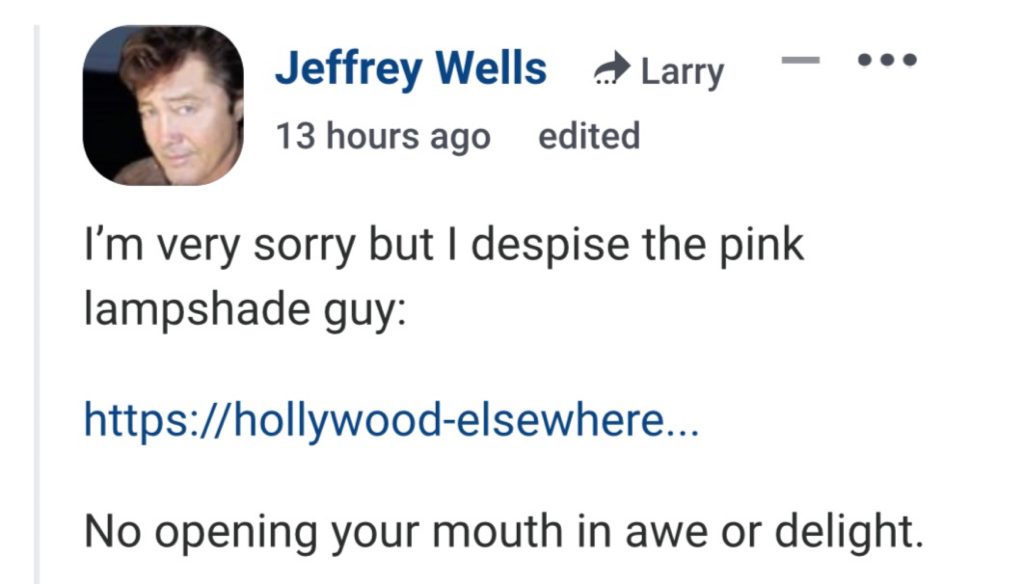
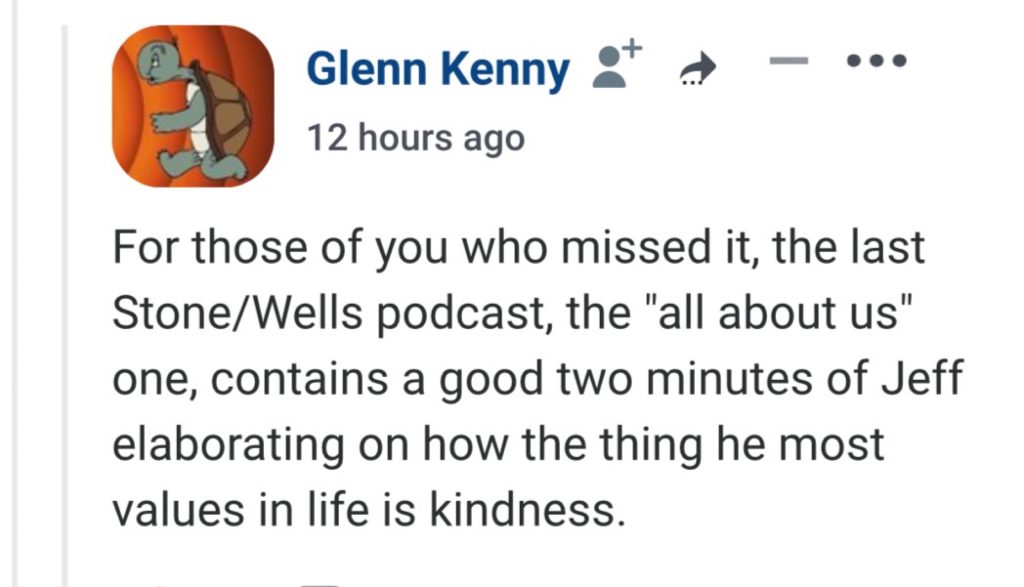
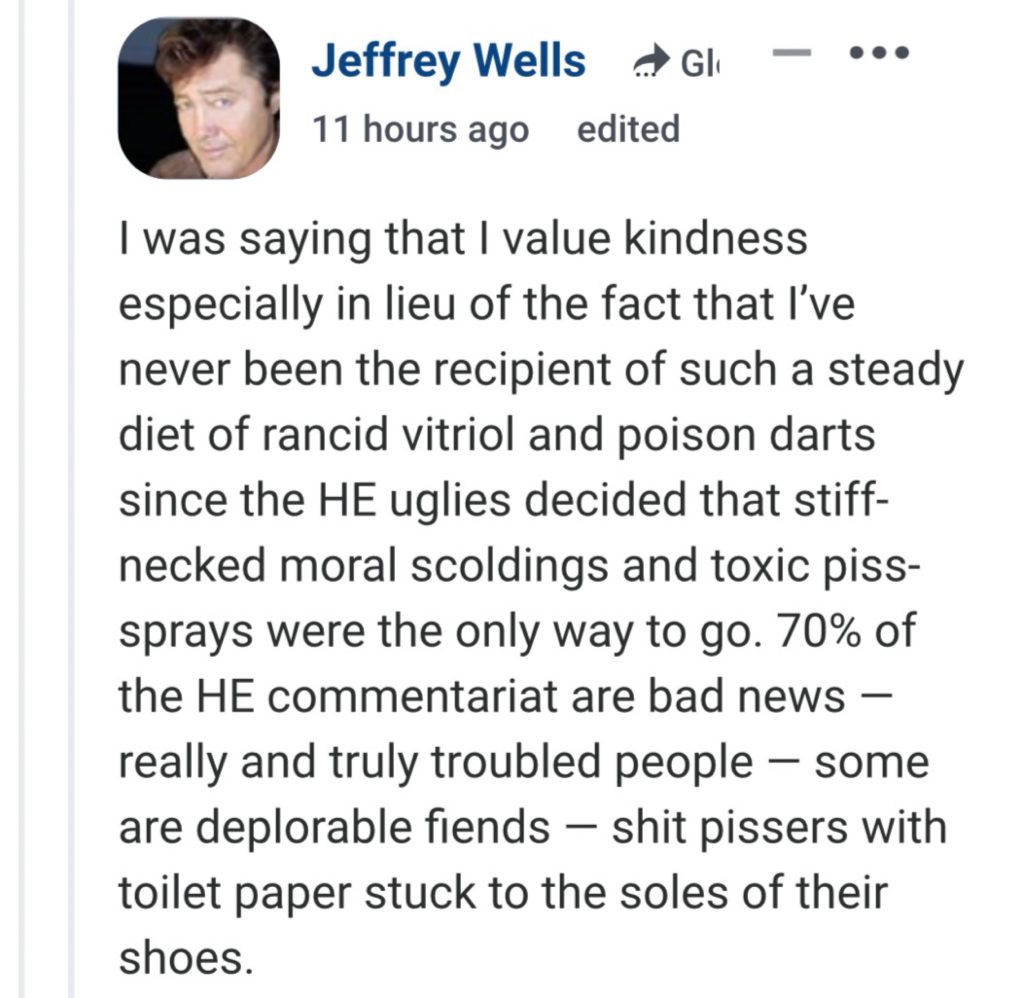
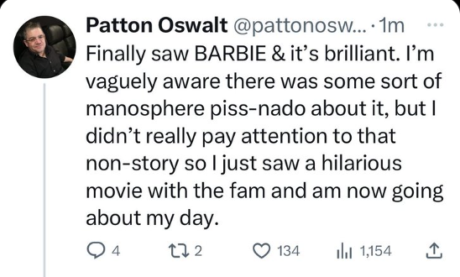
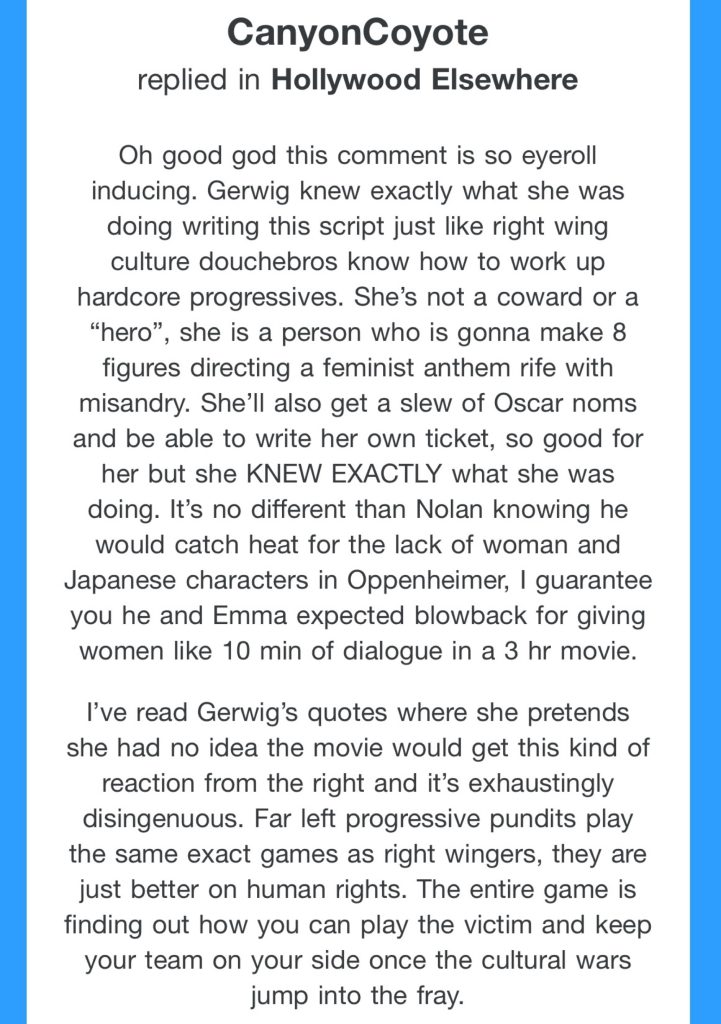
The below comment exchange appeared Sunday evening (8.13) in “MexicanObeisanceBefore Power,” otherwise known as the post in which Patton Oswalt settled the Barbie misandry dispute with one fell swoop…settled it with two drillbit words that will resonate throughout the known universe between now and the 2024 Oscar telecast — “manospherepiss–nado.”
“Sometimes there’s God, so quickly!!” — Blanche Dubois in AStreetcarNamedDesire.
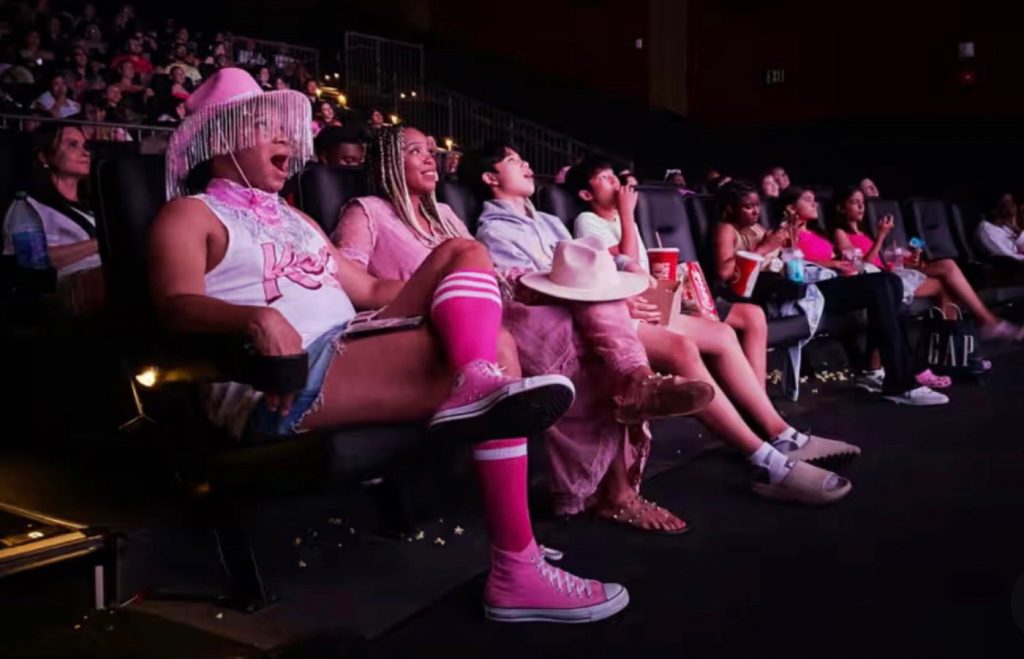
I was asked why joyful reactions to certain audience-friendly films seem to rub me the wrong way.
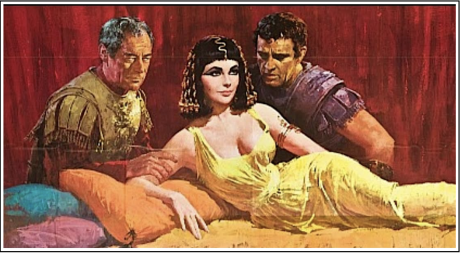
“I’m not sure I want to be rubbed by you at all, young lady” — from Joseph L. Mankiewicz’s Cleopatra (Rex Harrison to Elizabeth Taylor).
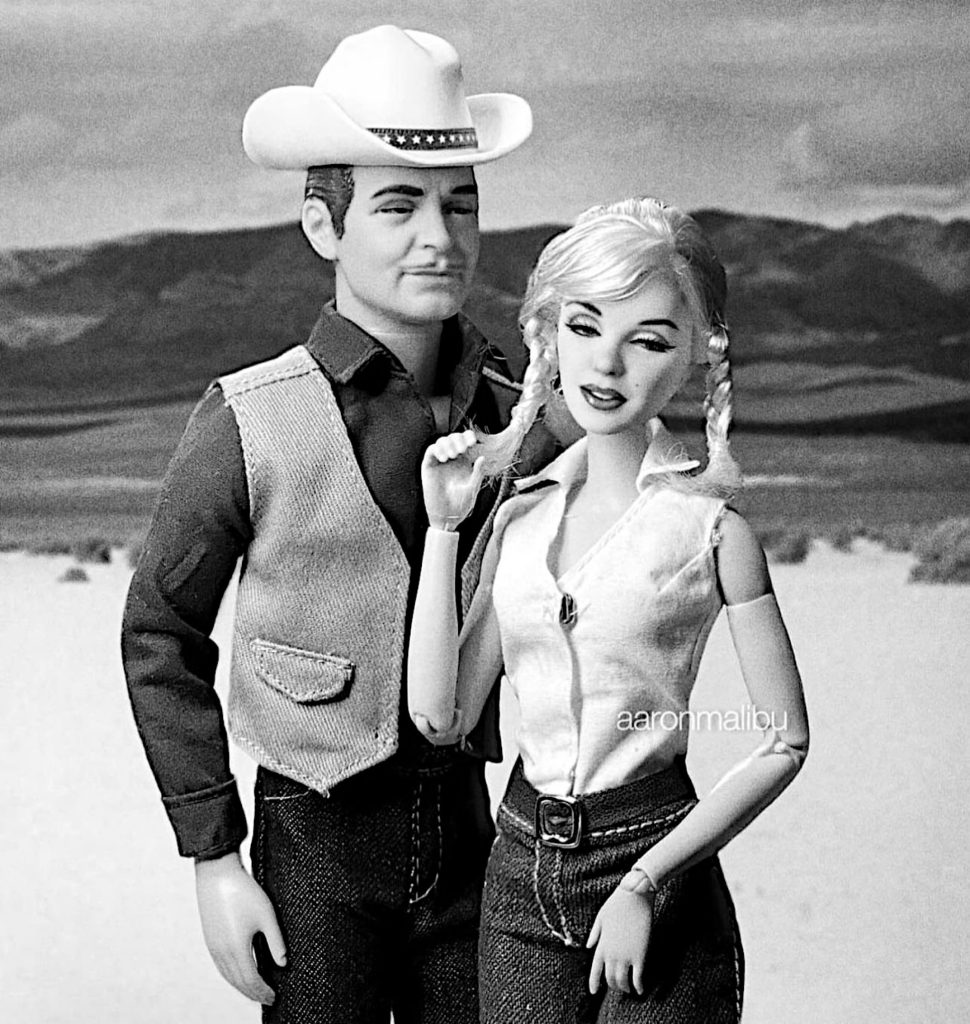
The look of endearment between the young Mexican couple as they munch on a single kernel of popcorn…that magical sparkle as their unexceptional clothing suddenly turns pink…and when they realize they’re actually sitting next to the great Margot Robbie, Ryan Gosling and America Ferrara…well! That little wink from Margot is so…what’s the word?…sisterly.
No, not literally the snarly Clint Eastwood detective of 40 or 50 years ago. No .357 Magnum action, no “do ya feel lucky, punk?”. But if you’re telling me you’re not fantasizing about a team of uniformed security guys stepping into this Nordstrom mob theft incident and tackling the bad guys and maybe busting them up a bit…if you’re telling me you’re totally cool with this shit, you’re either a wokester or a liar.
This retail theft mob happened at a Nordstrom in California today. Because of broken state laws, these crimes are considered “non-serious” and “non-violent” and nobody will go to state prison, even if caught and convicted. State laws need to be fixed and YES, many people need to… pic.twitter.com/nESaJSxj4p
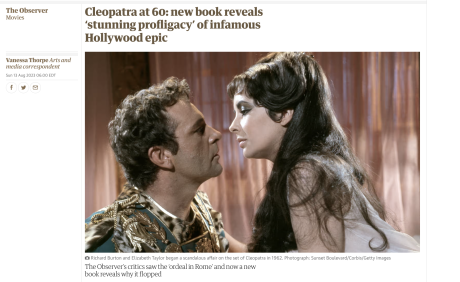
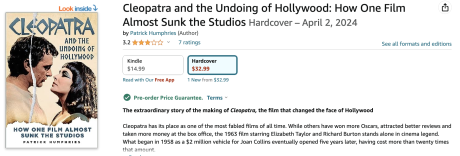
And yet the Guardian‘s Vanessa Thorpe has posted an article about it and the film itself. Thorpe’s piece is titled “Cleopatra at 60: new book reveals ‘stunning profligacy’ of infamous Hollywood epic.”
Cleopatra‘s 60th birthday was actually celebrated a couple of months ago but who’s counting? The ill-fated RoubenMamoulian version, shot in England, began filming on 9.28.60. The final version, directed and written by Joseph L. Mankiewicz, opened on 6.12.63. The final cost was around $40 million in 1963 dollars, or just shy of $400 million today.
Yes, Cleopatra eventually made its money back, slowly but surely.
Thorpe’s article covers the basics about this 251-minute epic (mainly a talkfest but persuasively acted and very handsomely produced), and lists many of the production-out-of-control anecdotes we’ve all read about for decades.
Perhaps Humphrey has uncovered fresh material or perhaps not, but the whole magillah and more is contained in Kevin Burns and Brent Zacky‘s ‘Cleopatra’: The Film That Changed Hollywood, a two-hour, first-rate doc that came out in ’01. It was a DVD supplement at first, and is now included in the Cleopatra Bluray.
Honestly? The Burns/Zacky doc is better than the film itself. It always has been.
An excellent making-of-Cleopatra book is Jack Brodksy and Nathan Weiss‘s “The Cleopatra Papers“, originally published in January ’63.
Below is the humble, unassuming, easy-to-chuckle Greta Gerwig of yore. The woman I knew and really liked back between the late aughts and mid-to-late teens. This is her Lynn Hirschberg W interview, posted on 3.21.17.
Remember what it was like six and a half years ago? It was the calm before the storm. Mao’s cultural revolution of the ’60s and ’70s hadn’t yet migrated to our shores, and being a somewhat older white industry male wasn’t necessarily a felony. The N.Y. Times (Jodi Kantor and Megan Twohey) Harvey Weinstein expose wouldn’t break until 10.5.17. Woody Allen‘s Wonder Wheel opened at the N.Y. Film Festival that same month and nobody said boo. The woke virus was a thing, of course, but still simmering in the frying pan and not yet coursing through the cultural bloodstream.
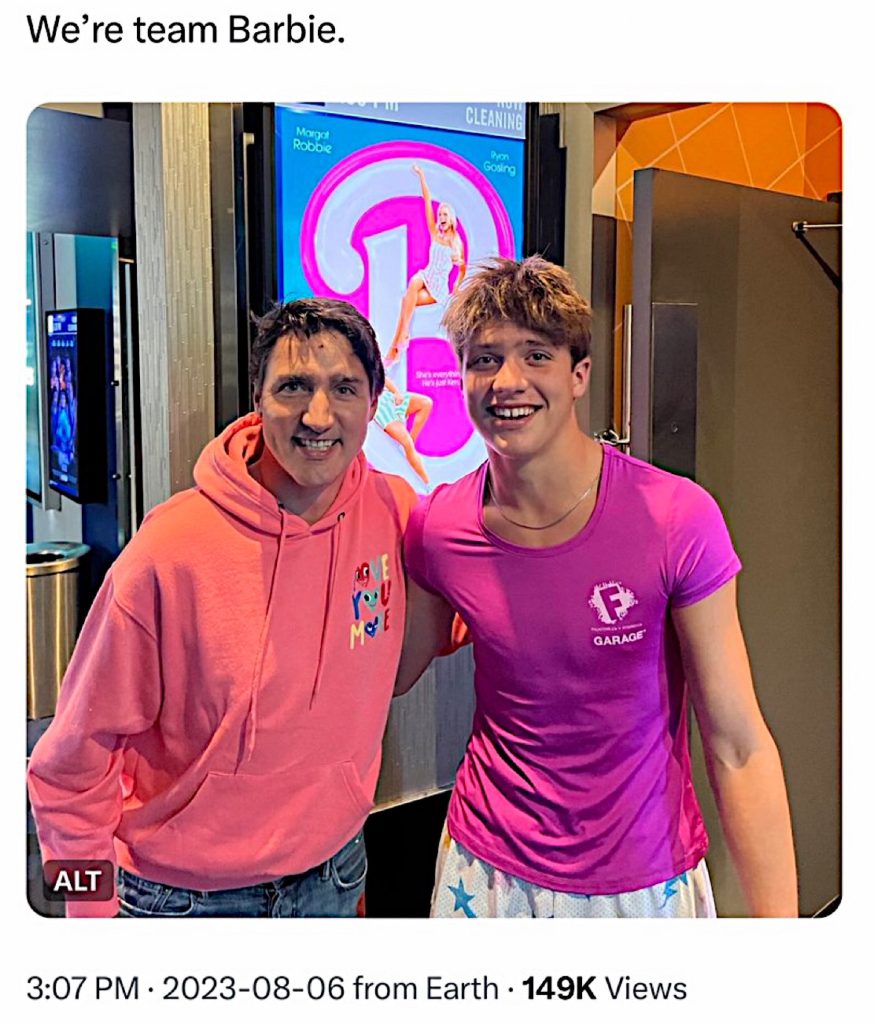
And if you decided to mutually celebrate this huge cultural event, this amusing rite of self-flagellation for straight guys, this exuberant swan dive into Hollywood-stamped misandry, would you wear peach instead of proper pink?
It’s one thing to gracefully go with the Barbie flow while simultaneously shrugging it off, but I would never pull this shit with my 15 year-old son…never. Unless he was really, like, hot to see it or something.
I based my piece almost entirely upon what what Dave Kehr had written the same day in the N.Y. Times. I had, however, been told separately about the circumstances of the removal of the 15 minutes of footage by Toback; he also passed along the same story to Kehr.
Jim told me it was Medavoy who wanted it shorter. Kehr seemed to say it was either Medavoy or perhaps some sinister alternate force within Tristar.
It just seems vaguely indecent that the superior longer cut isn’t on HD streaming. A 4K disc would be nice but not necessary — just high-def would suffice. I really hate watching it on 480p.
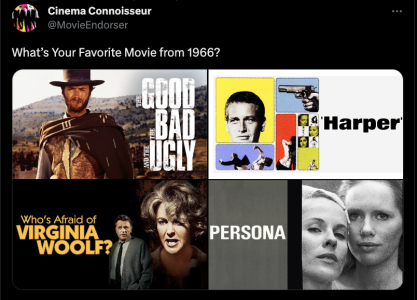
I posted a Best of ’66 summary five years ago, but it can’t hurt to go again as I’ve shuffled things around and added a few.
In order of preference or greatness or historical importance, or a combination of all three…plus the not-bads and worst.
Top 15: 1. Michelangelo Antonioni‘s Blow-Up (aka Blowup); 2. Richard Brooks‘ The Professionals; 3. Fred Zinneman‘s A Man For All Seasons; 4. Robert Wise‘s The Sand Pebbles; 5. Robert Bresson‘s Au Hasard Balthazar, 6. Roman Polanski‘s Cul-de-sac; 7. Ingmar Bergman‘s Persona, 8. Bernard Girard‘s Dead Heat on a Merry-Go-Round; 9. Woody Allen‘s What’s Up, Tiger Lily?; 10. Arthur Penn‘s The Chase; 11. Mike Nichols‘ Who’s Afraid of Virginia Woolf?; 12. John Frankenheimer‘s Grand Prix, 13. Lewis Gilbert‘s Alfie, 14. Frankenheimer’s Seconds; 15. Jack Smight‘s Harper.
16. Milos Forman‘s Loves of a Blonde; 17. Billy Wilder‘s The Fortune Cookie, 18. Norman Jewison‘s The Russians Are Coming, the Russians Are Coming, 19. ClaudeLelouch‘s AMan and a Woman, 20. Gillo Pontecorvo‘s The Battle of Algiers, 21. Richard Lester‘s A Funny Thing Happened on the Way to the Forum, 22. Pier Paolo Pasolini‘s The Gospel According to St. Matthew, 23. Karel Reisz‘s Morgan!: A Suitable Case for Treatment.; 24. Blake Edwards‘ What Did You Do in the War, Daddy?; 25. JackSmight‘s Kaleidoscope.
Fine, Decent, Tolerable, Not Bad: Funeral in Berlin; A Fine Madness; Walk, Don’t Run; How to Steal a Million; Torn Curtain; The Wild Angels; This Property Is Condemned; After the Fox; The Appaloosa; Alvarez Kelly; Georgy Girl; Not With My Wife, You Don’t; The Good, the Bad and the Ugly; The Quiller Memorandum; King of Hearts.
Worst of ’66: Hawaii, Murderers’ Row; Frankie and Johnny, The Singing Nun, Modesty Blaise, The Fat Spy, A Big Hand for the Little Lady, Boy, Did I Get a Wrong Number!, The Glass Bottom Boat, Paradise, Hawaiian Style; Nevada Smith; Assault on a Queen; Munster, Go Home!; Stagecoach (remake), The Blue Max, Three on a Couch, Batman, The Idol, The Bible: In the Beginning…, Mister Buddwing; An American Dream; Texas Across The River; Follow Me, Boys!; Is Paris Burning?; Madame X.
To hear it from The Limey‘s Terry Valentine (i.e., Peter Fonda), 1966 was the only year in which “the ’60s” were fully in flower and possessed by transformative energy and imaginings. There were countless manifestations — spiritual, creative — and firecracker-like amazements occurring within and without all over town.
April ’66 saw the famous Time magazine cover that asked “Is God dead?”, which was used by Roman Polanski during the filming of Rosemary’s Baby a year later.
Things were really and truly happening in the rock music realm. Hell, all over. Eight years after Cary Grant’s adventurous lysergic acid pathfinding and a year after Peter Fonda and John Lennon, both tripping their brains out at a small gathering somewhere in Benedict Canyon, clashed over Fonda’s “I know what it’s like to be dead” rumination, second-wave cool cats were sailing into the mystic like never before, and the almost revolutionary heterosexual activity wasn’t to be believed.
May ‘66 saw the release of Bob Dylan‘s Blonde On Blonde (and the coughing heat pipes in “Visions of Johanna”) and Brian Wilson‘s Pet Sounds, and three months later Revolver, the Beatles’ “acid album” which turned out to be their nerviest and most leap-forwardy, was released.
And the notorious Sunset Strip curfew riots (“For What It’s Worth”) began to happen in late fall of that year.
Film community-wise all kinds of mildly trippy, tingly and portentous things were popping all over in ‘66. Stanley Kubrick was neck-deep into the filming of the mystical, earthquake-level sci-fi classic 2001: A Space Odyssey. Warren Beatty and Arthur Penn were shooting the equally important Bonnie and Clyde, a zeitgeist page-turner if there ever was one.
But you’d never guess what was happening to go by the mood, tone and between-the-lines repartee during the 39th Oscar Awards, which honored the best films of 1966 but aired in April ’67, or roughly seven weeks before the release of Sgt. Pepper. Bob Hope‘s opening monologue is punishing, almost physically painful to endure. And look…there’s Ginger Rogers!