Fisher’s Ghost Winces at HE Commenter Cruelty
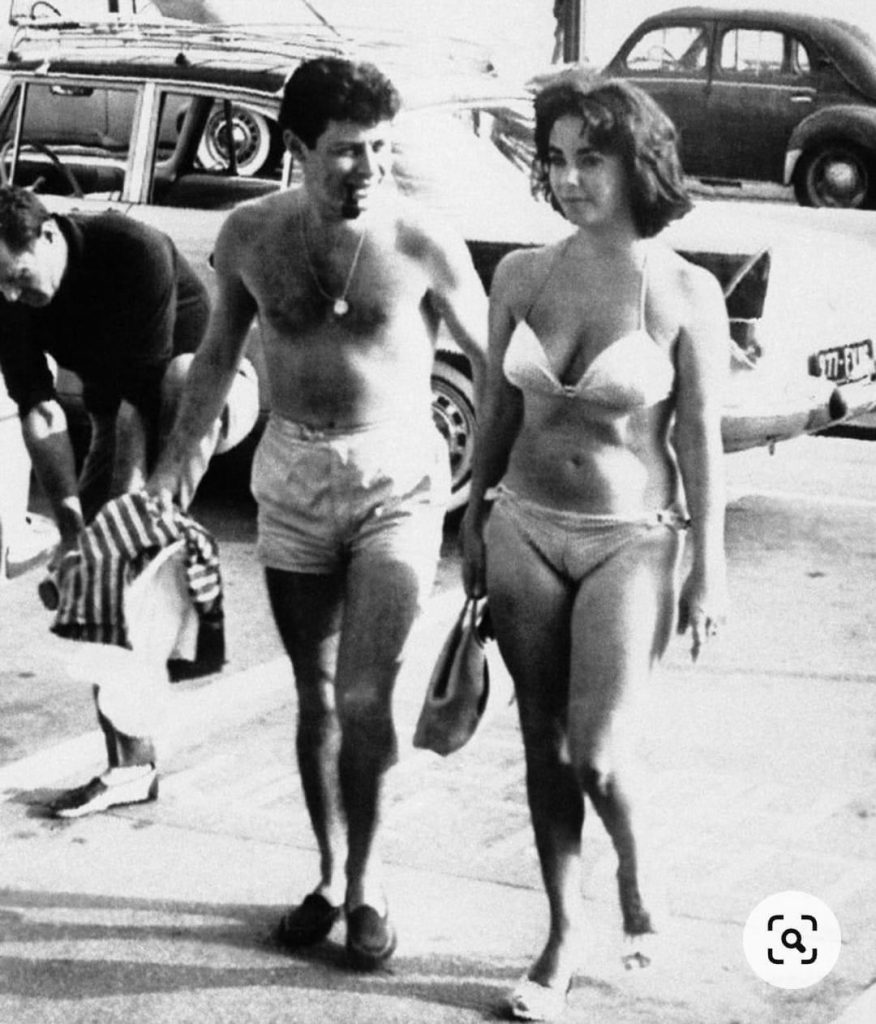
[Originally posted on 12.31.22] She likes strong, dominant men and you, ya putz…you’re too smooth and mushy to qualify. Plus she’s sexier and better looking than you. It would be one thing if you were gym-toned with big broad shoulders to match her large breasts, but you’re not. Plus she’s much more powerful than you (economically, fame-wise) and she’ll soon be punishing you for these shortcomings — trust me. Plus she’ll eventually humiliate you when a more suitable lover comes along. And you’ll never really recover from this. You’ve fucked yourself. If only you’d stayed with Debbie Reynolds…
Here comes the snark and the cruelty…
(1) “I’ve never seen a picture of Taylor in a bikini before. Recall reading somewhere that she was self-conscious about her legs. Clearly her standards were higher than mine. Eddie Fisher ‘knew’ Debbie, Liz and Connie Stevens. So despite his rep as a feckless wastrel, I don’t feel I’m in a position to badmouth him.”
(2) “Eddie was a nice Jewish boy from Philly who got to bang Liz Taylor. Seems like nothing to sneer at.”
(3) “I never understood what any women saw in him, much less Liz. Big schlong, maybe? I’m always amused, when watching Laugh-In reruns, how many Eddie Fisher jokes they did.”
(4) “If you ever get a chance to see the Bright Lights documentary you’ll get a chance to see just how bad things got for Eddie. Even though he abandoned Carrie and Todd (and obviously Debbie) Carrie continued to care for him and in one final bit of footage…well, I’ve never seen a live human being look as dead as Eddie did then. Huge payback from a disgruntled fate…or something.”
(5) “Yeah, I don’t know much about the guy, but I did read that his life pretty much unraveled after he took up with Liz.”
(6) “If Satan came to me and said I can be married to Elizabeth Taylor in her 20s but only for three years, my reply would be, ‘Where do I sign?’
(7) “Not a single reference to camel toe. I’m beginning to lose faith.”
(8) “She was a shrill drunkard who liked to fight. Best to walk away.”
(9) “None of Taylor’s husbands were much to look at. Richard Burton had nice eyes but his face looked like the surface of the moon and his physique was worse than Fisher’s.”
McBride on Wilder’s “Stalag 17”
Early in the evening of Tuesday, 10.3, I chatted with respected Hollywood historian and biographer Joseph McBride about Billy Wilder‘s Stalag 17 (’53), and more particularly about Joe’s commentary track for Kino Lorber’s upcoming 4K Bluray version (out 11.21).
I haven’t seen the 4K Stalag 17 but…well, let’s wait for it. I own an older Bluray version which I’m happy with, but I’m always hot to own the latest upgrade.
McBride’s book on Wilder (“Dancing on the Edge“) came out in September ’21. He’s also written authoritative studies on John Ford, Howard Hawks, Orson Welles, the Coen Brothers, Steven Spielberg, Ernst Lubitsch, Frank Capra, etc.
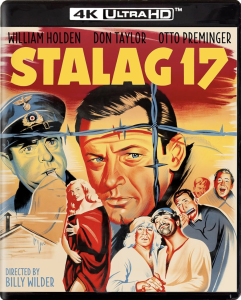
Here’s part one of our discussion (roughly 29 minutes)…
And here’s part two (around 27 minutes):
It’s very easy to talk to Joe about Hollywood histories and backstories and just kick it all around. It was generally a fine, wide-ranging discussion, not just about the genesis and the making of Stalag 17 but about William Holden, Wilder, John Ford…everyone and everything. McBride can chew this kind of fat for hours on end without breaking stride.
Please forgive the occasional intrusions of purring and meowing Katya.
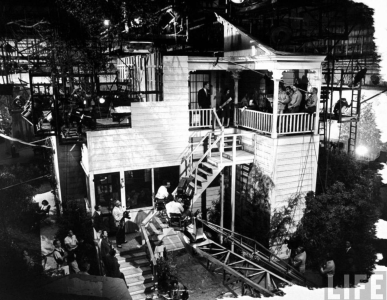
I Visited “Shadow of a Doubt” House
…sometime in the fall of ’97, or so I recall. 26 years ago, and you know what? I could feel the lingering spirits of Joseph Cotten, Theresa Wright, Hume Cronyn, MacDonald Carey and Thornton Wilder.
No daily movie columnist has visited more famous movie houses than yours truly. Okay, I don’t know that for a fact but probably. The John Robie / To Catch A Thief house in St. Jeannet. The Jack Woltz horse’s head house in Beverly Hills. Phyllis Dietrichson’s Double Indemnity house. Plus the private abodes of Robert Evans, Jack Nicholson, Warren Beatty…all the classic-era hotshots. Not to mention North by Northwest‘s cropduster junction. I could tell stories all night long.
The Victoria-styled Shadow home is at 904 McDonald Ave in Santa Rosa, only a couple of blocks from the main commercial drag (4th Street).

28 Years Later
Julia Ormond, the 58 year-old English actress who peaked between the early and mid ’90s (Young Catherine, Stalin, Legends of the Fall, First Knight, Sabrina, Smilla’s Sense of Snow), is suing Harvey Weinstein, CAA, The Walt Disney Company and Miramax over a sexual assault that allegedly happened in 1995.
Harvey has been fair legal game since numerous sexual allegations and charges were made against him in ’17. I realize that it’s unusual for accusers like Ormond to go after alleged enablers, but why did Ormond want until late ’23?
Variety‘s Elizabeth Wagmeister: “In a lawsuit filed Wednesday morning in New York Supreme Court, Ormond claims that Weinstein sexually assaulted her in 1995 after a business dinner when he lured her into giving him a massage, climbed on top of her, masturbated and forced her to give him oral sex.
“After the alleged assault, Ormond informed her agents Bryan Lourd and Kevin Huvane what had happened with Weinstein, according to the lawsuit, which states that the CAA agents cautioned her from speaking out and did not protect her. (Lourd and Huvane, who today are co-chairmen of CAA, are not named as defendants, but are frequently mentioned throughout Ormond’s suit as her representatives at the time.)
“Ormond is suing CAA for negligence and breach of fiduciary duty.”
A Testament To The Power of Beard Stubble
Am I a non-compliant suppressive person in the realm of gay cinema?
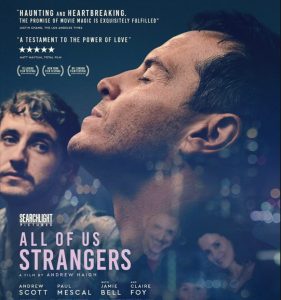
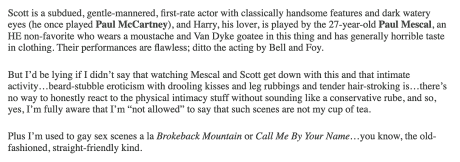
In my 9.1.23 review of Andrew Haigh‘s All Of Us Strangers, I praised it for being “a classy, meditative, top-tier capturing of an intimate gay relationship” while admitting that the beard-stubble sex footage made me squirm a bit. Which resulted in attacks, of course. For in today’s realm, if you don’t sing arias about bare-backed slurpy kissing scenes you’re a homophobe.
“Story-wise it’s kind of a gay Midnight in Paris,” I wrote, “except instead of hanging with F. Scott Fitzgerald and Ernest Hemingway the time traveller in question (a screenwriter named Adam, played by the mid-40ish Andrew Scott) spends a lot of time with his late parents, who are miraculously alive and their old glorious selves, and played by Jamie Bell and Claire Foy.
“Their get-togethers allow Adam, of course, a chance to explain to them both (well, his mom) that he’s been gay for decades but that being so inclined is no longer the socially uncertain, vaguely uncomfortable thing it was when mum and dad died in a car crash, back in the ’80s.

No-Neck Celebrities
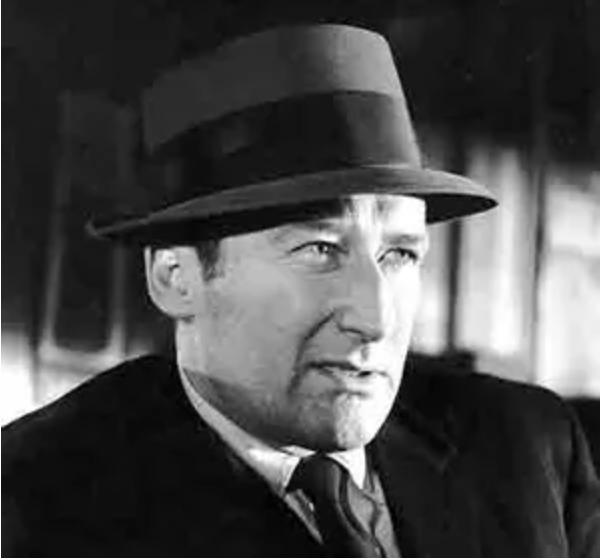
How many famous people could be described as “no neck” types? We all have necks, of course, but some celebrities don’t (or didn’t when they were alive) have the kind you would notice. I don’t literally mean no necks — I mean necks that are barely there.
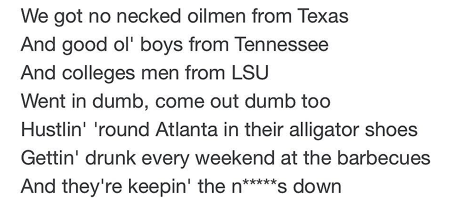
I’m thinking particularly of Mickey Spillane and Claudette Colbert, and of Randy Newman‘s “no-beck oilmen from Texas” (a lyric from his 1971 tune “Rednecks“).
I got started on this when I noticed a Facebook posting by Harlan Jacobson that described Maestro‘s prosthetics manager Kazu Hiru as an “Ears, Nose, and No Throat guy“….what does this mean? Is there a featured player in Maestro who has no visible throat to speak of?
I’m having trouble thinking of other no-neckers besides Spillane and Colbert. They have to be out there. Assistance?

When Seattle “Boys” Beat Aryan Krauts
George Clooney speaking in Boys in the Boat featurette: “These guys at the University of Washington are taking on the seniors, and then taking on the fraternity [something], and then taking on the Nazis.”
Clooney is using the usual shorthand, of course, but does he really mean that the young athletes who belonged to Germany’s 1936 Olympic rowing team were devout “seig heil” guys? Yes, Adolf Hitler saw the Berlin ’36 Olympics as a a potential proof of Aryan supremacy (Jesse Owens screwed that pooch), but how many German citizens were ardent supporters of the Nazi party that year, and how many were playing along to get along? A third or less?
How many blue-state liberals today pretend to be wokester sympathizers but are just keeping their heads down in order to stay out of trouble?
Let’s imagine, God forbid, that The Beast might win the ’24 election. He would therefore be president during the 2028 Olympics in Los Angeles. Would it then be fair or accurate to describe the U.S. Olympic team as “the MAGAS”?
Freudian Slip
[3:10 mark] “…and the party of a great man who should have been president and would’ve been one of the greatest presidents in history….Hubert Horatio Hornblower! Humphrey!”
Talks Like A Cowgirl
I love Lily Gladstone’s Montana shitkicker accent, and especially the way she pronounces the last name of her Osage Nation character (“BURRKhahrt”) and the word “murders” (“merrduhhrrrs“). Born in ’86 and raised on the Blackfeet Nation reservation in Browning, Montana, Gladstone is an authentic country gal…talks it, owns it…forget the coasts.
Late Eulogy for Robert Wilke
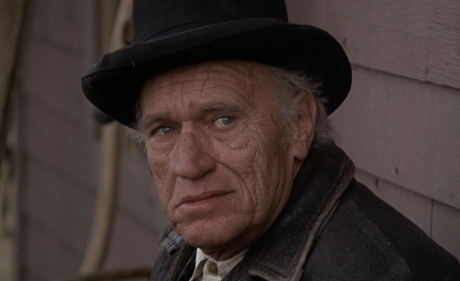
Robert Wilke almost always played foul-tempered, sandpaper-voiced bad guys. He just had one of those faces. He’s probably best known as the High Noon “gunnie” whom Grace Kelly shot in the back during the final ten minutes. He also stood out as the loudmouth whom James Coburn killed with a fast flying knife in The Magnificent Seven.
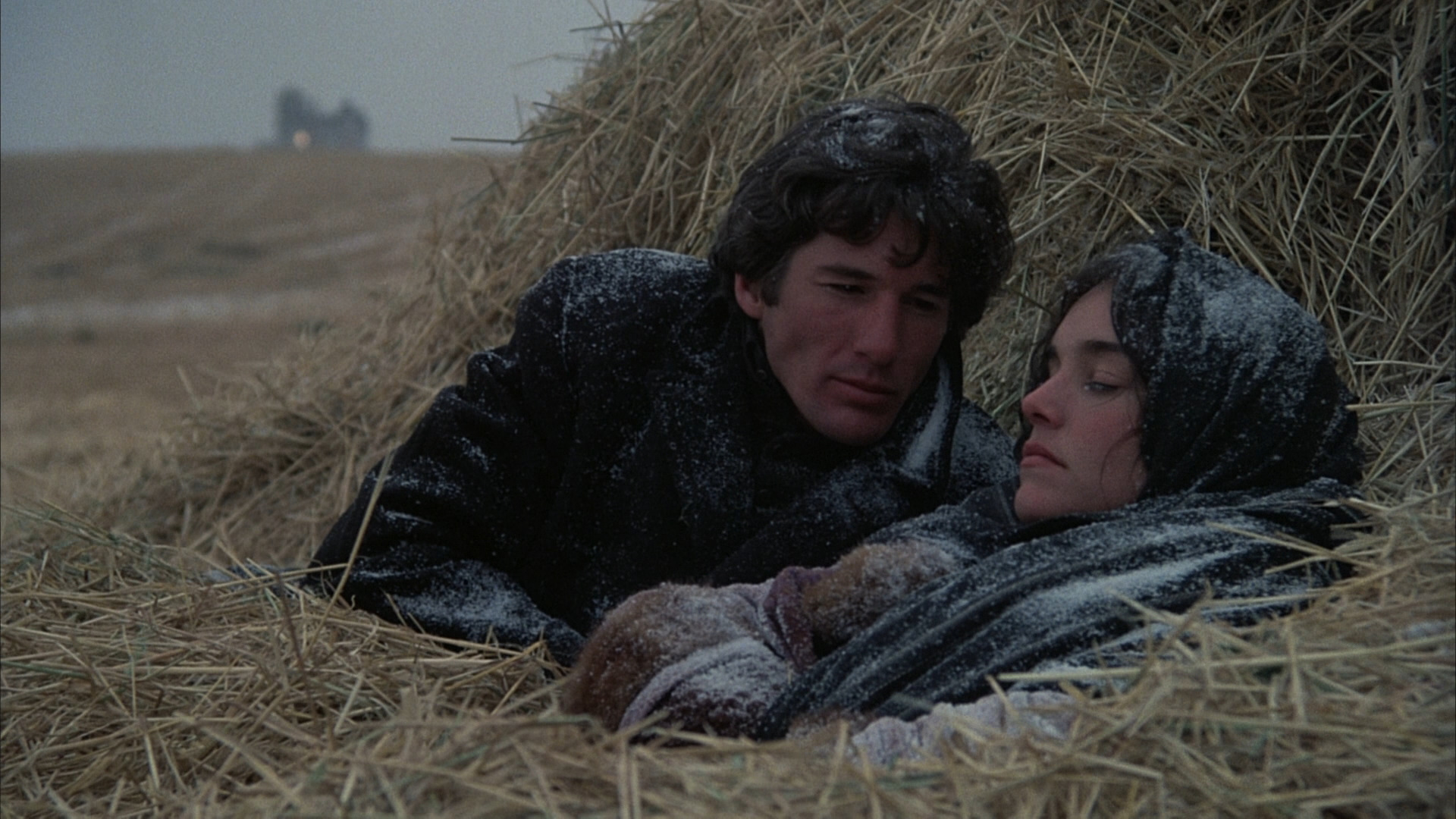
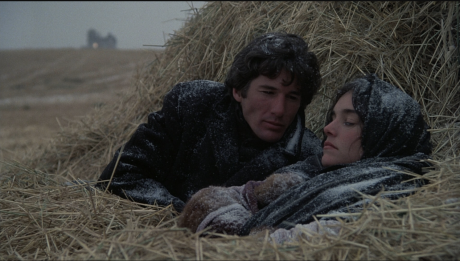
In a career that spanned almost 50 years only once was Wilke called upon to show emotional vulnerability and anguish, and that was when he portrayed the conflicted farm foreman in Terrence Malick‘s Days of Heaven (’78). Only Malick saw a bit of depth in the man…only Malick asked him to step beyond the usual conventional shithead realms.
Wilke to Richard Gere (speaking about wealthy wheat farmer Sam Shepard): “I know what you’re doin'”…beat, beat…”that boy’s like a son to me.”
Wilke was a great amateur golfer.
Incidentally: Criterion’s 2010 Bluray of Days of Heaven has looked glorious from the get-go, and you’ll never convince me that the new 4K UHD version is going to look that much better on the 65″ Sony OLED. Maybe in subtle little ways but nothing that will lift me out of my seat. All the same there’s a little part of me that wants the damn thing anyway.
Just A Reminder
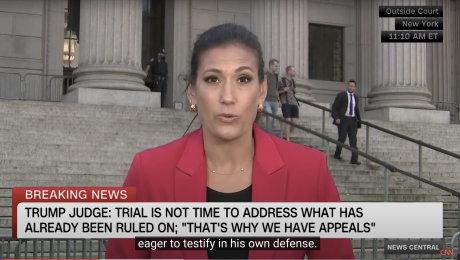
Donald Trump‘s ongoing trial over financial fraud is happening inside the New York County Supreme Court, 60 Centre Street, lower Manhattan. And yes, right behind that red-jacketed CNN reporter are the very same concrete steps that Henry Fonda, Lee J. Cobb and the other jurors walked down at the ending of 12 Angry Men.