

The L.A. Times‘ Claudia Eller and John Horn are now saying that studio execs are admitting that last summer’s slump was mostly about cruddy movies, and probably wasn’t a harbinger of a permanent downturn in theatrical revenues. The reason for this sudden candor is that Hollywood has just experienced four punchy weeks at the box-office (grosses 17% higher than what they were last year from Labor Day to last weekend) due to the popularity of The Exorcism of Emily Rose, Transporter 2, Flightplan and Tim Burton’s Corpse Bride. To which I say again — it’s the admissions, stupid. The number of people going out to movies has been steadily declining for the last few years. It’s great to have had a robust four weeks, but it now costs $10.75 to buy a ticket at the Grove…hello?
Midlife Surge
Midlife Surge
Maybe I’m slow, but my awareness levels suddenly shot up the other day about Gong Li, Gong Li, Gong Li…some eighteen years after her film debut, and just over three months shy of her 40th birthday.
This was after hearing she gives the big burn-through performance in Memoirs of a Geisha (Columbia, 12.5). The word, in fact, is that she pretty much steals it from Zhang Ziyi, the star…as far as the “whoa, mama” thing is concerned. I mean, take it with a grain…

A seemingly dated photo of Gong Li, costar of Memoirs of a Geisha
Remember she was also great in Wong Kar Wai’s 2046 as well as in that short Wong directed for the anthology film Eros called “The Hand,” which I thought was the best of the three.
And that she’s playing the third-lead role of “Isabella” in Michael Mann’s Miami Vice (Universal, 7.28) right after Crockett (Colin Farell) and Tubbs (Jamie Foxx). Going by the script I have, Isabella is a financial-strategic sharpie (i.e., “I run the numbers”) involved in the high-end drug business.
< ?php include ('/home/hollyw9/public_html/wired'); ?>
This locks it in on these shores. If Michael Mann thinks you’re cool and desirable, you’re cool and desirable.
And then comes…wait a minute, a young Hannibal Lecter movie called Behind the Mask, directed by Peter Webber (The Girl with a Pearl Earing)? That sounds like a mistake, no? This is Dino de Laurentiis going to the well for more cannibal bucks ….the fiend.
I first laid eyes on Gong Li in the late 80s when I caught her lead performance in a video of Red Sorghum, which I remember as being a good film that I wished would be over sooner.
I never saw The Story of Qiu Ju (’92), for which she was named Best Actress at the 49th Venice Film Festival, but everyone saw Farewell My Concubine (’92), for which she won an acting award from the New York Film Critics. She was 27 when that happened.

Then I kind of went to sleep on her until last year when everything started surging again.
An actor’s career karma can be very touch and go. You can be cold or warm or treading water and then wham, the bells go off and everyone wants you.
When I ran that item about Gong Li’s alleged stand-out performance work in Mem- oirs of a Gesiha, Vinod Narayanan wrote in and said…
“This was always going to happen. Not that Zhang Ziyi is a bad actress or anything, but Gong Li is something else.
“Check out the early Zhang Yimou flicks from Red Sorghum through Raise the Red Lantern up until To Live and Shanghai Triad. Or, if you can find it, the uncut version of Chen Kaige’s Temptress Moon.
“She’s a terrific actress and easy on the eyes. Very easy.”
Fail Safe
Big wipe-outs are what gifted risk-takers do on occasion. Any talented director can drop the ball, blow it…step on a land mine.
Is this something to be ashamed of? That’s probably putting it too strongly. Some- thing to duck, I suppose…as long as you don’t take it to extremes. Like tucking yourself into a fetal-ball position and refusing to get up, dust yourself off and get back on the horse.
Keep plugging, keep becoming. Sounds trite, doesn’t it?
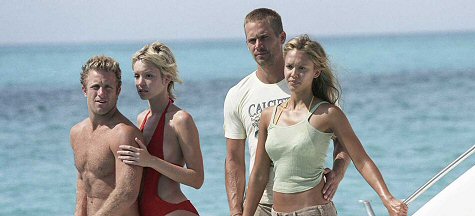
Into the Blue
There is so much failure going on right now that it’s a little bit scary. The big fall and holiday movies are getting seen and picked off, one after another, and a lot of them made by veterans who are supposed to know what they’re doing.
Of course, nobody knows anything. They might have a knack, but they never have the key. Creation is always about starting from scratch, and anyone who says they haven’t second-guessed themselves and had Garden-of-Gethsamane mom- ents is lying.
I heard from a guy today about The Producers…I’ve been hearing from others about Memoirs of a Geisha. The crack of rifle fire in the distance, muffled by trees.
Next week I’m expecting to see the re-edited (i.e., shorter) version of Cameron Crowe’s Elizabethtown, but nothing will undo the trauma I went through when I saw the Toronto Film Festival version.
It was like being with Willem Dafoe’s Sgt. Elias in an early scene from Oliver Stone’s Platoon, and watching him fall into a pit filled with razor-sharp bamboo sticks.
Poor John Stockwell. Today can only be regarded as a day of mourning with the nationwide opening of Into the Blue, a film that shows that one of the best young genre directors of the 21st Century — a guy who stood tall with crazy/beautiful and Blue Crush — can be diverted from the path.
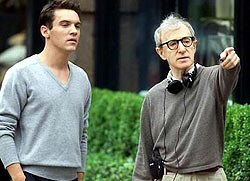
Johnathan Rhys-Myers, Woody Allen during filming of Match Point
Stockwell is in some Brazilian rain forest right now, making another hotbod-youths- in-peril movie called Turistas. Will he bounce back some day with something a bit more believable? Life is pain and choices and struggle…but I’d like to think so.
As far as I’m concerned, Steven Soderbergh’s Bubble, a very precise heart-of- proletariat-darkness drama, is reason to pop open the champagne and breathe easy for a change.
Soderbergh was falling off the horse repeatedly with Full Frontal, Solaris and the two Ocean’s movies…but he hunkered down and stayed with the process and that constant-state- of-becoming trip that all artists need to be into, and now he’s back.
How did William Friedkin manage to un-learn how to be the power-drive director he was when he made The French Connection, The Exorcist, Sorcerer, The Brinks Job and To Live and Die in L.A.?
I love the metaphor of an old dog trying out a new spin and making it work with a skeptical audience…like Woody Allen has done with his new film, Match Point. I love that Allen never quits.
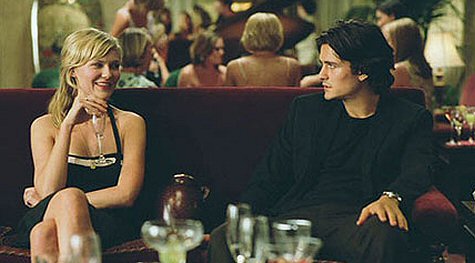
Elizabethtown
For years I didn’t know what to say to Francis Coppola when I would see him at parties because all I had in my head was, “Are you gonna make another film or what? Why are you putzing around with the wine business? You’re a lion and you’ve been sitting under a tree and licking that thorn in your paw for the last seven or eight years.”
Now, finally, he’s making a new film — Youth Without Youth, a period drama with Tim Roth, Alexandra Maria Lara and Bruno Ganz. Coppola’s script, about the travials of a fugitive in Europe before World War II, is based on a book by Roman- ian author Mircea Eliade. It’ll begin shooting in Bucharest early this month, accor- ding to Variety.
I saw a movie a while back that was directed by a smart talented guy, someone who’s probably going to be around for the next three or four decades. It’s not a “bad” film — the guy has a voice and knows from brushstrokes and has the chops to make the various elements fuse together and all — and it’s got some scenes that touch bottom and are well charged.
But I really didn’t like the main character, and I was honest with the director about my feelings, and he took it like a grown-up and didn’t say I was wrong but said others have felt differently, and that he’s certainly proud of it.
He also said that once a director starts trying to hold onto a groove and/or repeat a past success he’s doomed…and he’s right.
Mr. Lloyd
“Thanks for your piece on Norman Lloyd. As an actor myself, I found his ‘just say the words’ advice as succinct and perfect an acting class one could hope for. It really is that simple, although making it come alive is the difficult part…something Lloyd has been doing his entire career. We should all be lucky and be like him when we get to be 91.” — Edward C. Klein
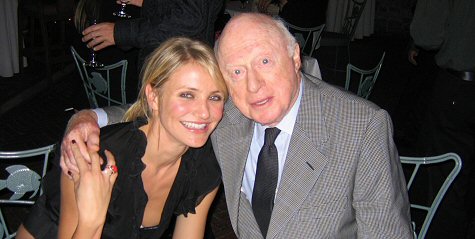
Shoes
“I interviewed almost the whole In Her Shoes team — Cameron Diaz, Toni Collette, Shirley MacLaine, Susannah Grant and Curtis Hanson — during the Toronto junket, and they all spoke with a bit of exasperation about the perceived difficulties of marketing the film.
“Every one of them was adamant about was that the press not call it a ‘chick flick.’
“Grant was particularly funny in addressing the topic: ‘No one asks Michael Bay how it feels to make a dick flick,’ she noted. MacLaine asked, ‘Who is the target audience for this movie? Families — but it’s not Disney.’ She said they’re trying to get the message across that it’s a story about a dysfunctional family overcoming their problems and learning to put the past in its place.
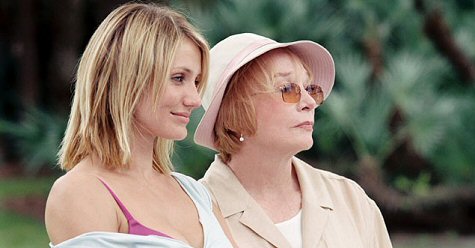
Cameron Diaz, Shirley MacLaine in In Her Shoes
“When Hanson was asked about the ‘chick flick’ label, he sighed. ‘I’ve been down that road,’ he said. ‘I didn’t want 8 Mile labeled a hip-hop movie because while that appeals to a certain segment of the audience, there’s a whole other world of potential audience that it’s a turn-off to. I wanted that movie to be broader than that.
‘But at a certain point, it’s like a wave coming in and you’re trying to stop it…but there’s also a compliment that comes with it, when you meet someone who says, ‘I hated hip-hop and I hated Eminem, and I went to see that movie and I was surprised.’ With this picture, time and again, people keep saying, `Maybe I wasn’t that interested and I thought it was a `chick flick,’ but I really connected with it.’
‘So if the story ends up being, ‘It looks like a chick-flick but’… and the ‘but’ leads to something interesting, then I accept it. I’m not going to keep beating my head against the wall.”
‘Even Diaz claimed to be embarrassed by the teaser poster that only shows her. She said her reaction when she first saw it was a baffled “What the f— is that?” — James Sanford
“Just wanted to say I’m anticipating In Her Shoes big-time thanks to your recent articles about it.
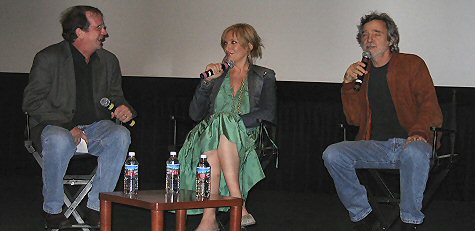
(l. to. r.) Variety screening series host Pete Hammond, In Her Shoes star Toni Collette, and director Curtis Hanson during post-screenign q & a at Hollywood’s Arclight — Monday, 9.26, 9:50 pm.
“I have always been into movies that kind of abuse you, unhealthy as that sounds. My favorite films are tearjerkers, war films that make you feel like crap, and horror movies that scare the shit out of you. All things that play on negative emotions.
“I look forward to Curtis Hanson movies. I liked L.A. Confidential a lot, and Wonder Boys further proved that he had something going on (though I didn’t really get it… it seemed like something was there…maybe I’m dumb). 8 Mile was so-so but hey, if Curtis Hanson has made a tearjerker that works, I’ll be the first in line.
“Any movie that makes you confront negative emotions in a powerful way is da bomb.” — Steve Clark
Wells to Clark: Wonder Boys was at least partially about the place you’re in when you’re ripped on really good weed. If you’ve never turned on, the movie wouldn’t work as well for you.
Clark to Wells: That might explain it.
Hey…
“Could you please stop listing Soderbergh’s Solaris in his row of ‘failures’? I get the other titles you mention (even though I sorta enjoyed most of those as well), but I consider his Solaris to be a brilliant film, and I know I’m not alone.
“It’s your opinion, of course, but are you just putting it in there because it failed commercialy? It is certainly an artistic triumph, as far as I’m concerned.” — Reint Scholvinck, who didn’t say what city or country he’s from although he seems to be from Norway or Sweden or one of those places in which people’s last names end with “vinck.”
Wells to Scholvinck: Solaris struck some people as some kind of profound or moving thing, yes. It was spooky — it had an undercurrent. It was made by and for people of some intelligence. But while it mostly took place on a space station it was not really about matters of space travel or exploration or, even in a nominal sense, anything technical or celestial. It was about loss and dark fantasy and then death.
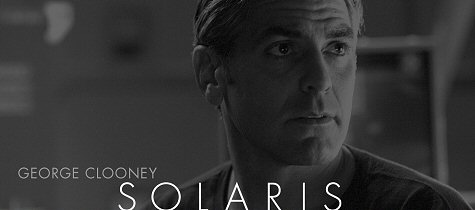
George Clooney dies at the end, willfully as I recall it, crashing into terra firma with the space station because his beautiful wife (Natascha McElhone) is really and truly dead. Why? What did this achieve in terms of resolving the story or fulfilling themes? It would have been a bit more interesting to me if Clooney’s character had stayed on earth and coped with McElhone’s ghost in his own home.
Solaris was a lot of very fancy footwork and indications of heavy-osity. But it was obvious to anyone that it was, at heart, an expensive, generally nebulous art film about a dead wife that didn’t add up to a whole lot. That’s why it didn’t make any money. People have lowball tastes, yes, but they aren’t stupid. They took a look and said to themselves, “What the fuck is this?”
I’m not into suicide, personally. If my beautiful wife is dead, she’s dead, and my being dead won’t bring me any closer to her.
Death isn’t a membrane that you pass through, and on the other side is some romantic playground in which you can frolic and make love and walk your dog. Death is death…lights out, power off, adios. At best you’re off to your next life as a baby without any memory of your past lives, or you’re an invisible cosmic emissary soaring through the universe. Whatever…no Natascha.
Ivory Tower vs. 7-11
“Every time you talk about your disconnect with the jaded ivory-tower
elites who fail to get In Her Shoes, or how deeply you’re in touch with your blue-collar Jersey roots and how the mainstream avoidance of Hustle & Flow means that your working-man peers let that movie down, I swear to you that I plotz, and I’m not even Jewish.
“I get that critics are supposed to treat their opinions as gospel, the absolute inviolable revealed truth that brooks no other interpretation. Even if a critic doesn’t necessarily believe that about his opinions, that’s the rhetorical stance from which he is expected to issue his writing, without a lot of hedging.
“But you seem to believe it…to actually believe it-believe it. I could cherry pick ten selections of your work and show them to ten people and ask, ‘Is this guy in the ivory tower or not?’ and they would all say yes, but then some writers don’t like In Her Shoes as much as you and suddenly you’re a class warrior.

“The truth of it is — and I hate to break this to you — that you are not the standard-bearer of perfectly refined taste, the dweller at the crossroads of piffle and pretension with no personal idiosyncrasies to deter you from determining which movies deserve sellout crowds. Deviance from your picks and pans does not signal the demolition of popular culture on the one hand, or the stultification of the Film Comment crowd on the other.
“As a device to get me to value your opinion a bit more, this whole last-honest-man shtick just doesn’t work. Perhaps I should append ‘for me’ to that, but I think I might have actually stumbled upon some inviolable revealed truth.” — Sean Weitner
Wells to Weitner: Before I discovered — accepted — my blue-collar, man-of-the- people thing, I was in constant torment as a writer. Now that I’ve embraced who I am, it’s still hard…but it’s nowhere near as difficult to bang out the column, so I must be on to something.
I know “good” when I see it or feel it, even if I don’t like it, and that quality-meter I have inside me comes in part from being attuned to ivory-tower pretensions and affected intellectual posturings, etc. and trying to stay clear of that.
I always imagine myself standing in a parking lot outside a 7-11, and that’s how I find the words and the attitude. I may be some kind of elitist…I mean, you can throw that at me, but anyone who tries to appreciate the best in film art is going to resent lowbrow philistine tastes in movies.
The bottom line is that I know who I am and where I come from — the towns of Westfield, New Jersey, and Wilton, Connecticut — and being in touch with that middle-class, 7-11, never-finished-college way of looking at things is my biggest strength as a writer. I mean, along with my tenacity.
There is a tendency among learned know-it-alls to recoil from heart movies. I do it all the time — I hate icky emotionalism — but in the final analysis the critical divide between cheap and/or coyly manipulative heart movies and ones that really touch bottom and address commmon issues in an adult way is craft. Craft and honest emotion is there in In Her Shoes. There’s no question about that.
There are such things as emotional pores, and you and I know that ivory-tower elites tend to maintain a state of guardedness and wariness with such films, because if they appear overly susceptible to emotional films they are dead meat as far as their peers are concerned. Elites don’t tear up in movies like regular people do, and they don’t laugh as loudly, and so on.
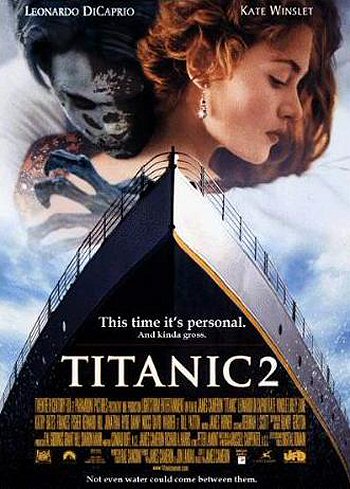
You will not find a single ivory-tower elite these days who will speak favorably of Titanic. They’ve all been told to deride it and every last one of them does…but the fact is that the final 15 minutes of that film gets people where they live, and the elites can foxtrot and sidestep all they want but that movie wouldn’t have scored those hundreds of millions if it hadn’t delivered a very strong emotional current.
Elites always pooh-pooh emotion. I know this is because I’m one of them. I know exactly where they live.
Weitner to Wells: I’m not saying you’re full of shit, and I’m certainly not doubting the quality of In Her Shoes — after Wonder Boys, I would be happy to watch anything Curtis Hanson wanted to put onscreen, because I think he really has that studio artisan knack.
“And, like you, I’ve had to defend Titanic from hecklers in the intervening years. So I know very much where you’re coming from.
“Where I’m still stuck is this idea of objectively identifiable craft-cum-worthiness, and a monolithic body of tower dwellers who reject worthy movies for being emotional. I think the matter is more, as you say, that you, and I, and everyone out there that writes about movies, has a touch of the ivory tower in them that flares up when our personal taste runs contrary to popular opinion, expressed in the box-office or elsewhere.
“Of all the professionals I read, and all of the pro-ams with whom I associate, and even the few film academics under whom I’ve studied, all of them go to movies for the emotion.
“Sure, we can find some Andrew Sarris or Jonathan Rosenbaum reviews to build a case that they’re out of touch, but your persistent appeals to some nebulous elite that’s out there and against whom you defend quality movies — or when the proles let you down by not taking a chance and exposing themselves to the paragons of craft you’ve uncovered — doesn’t prima facie make your opinion any more valuable or valid, and in some ways it detracts from it.
“When there are specific pieces of wrongheaded criticism that you want to bring up and pick apart — that’s entirely appropriate and can be terrifically illuminating. Sometimes a stated viewpoint needs challenging. But attributing opinions to some Village Voice boogeyman, as opposed to some actual writer with whom you want to tangle, doesn’t do anything to bolster your argument.”
Wells to Weitner: Point not entirely accepted, but taken.

Caan Wrath
True Patriot: Maybe because I just watched this week’s My Name is Earl (should I point out that I did this from a copy a downloaded using BitTorrent, which will kill Tivo in a few years?)…
Wells: How is downloading from BitTorrent going to kill Tivo? Explain…I’m really curious.
True Patriot: But when I got to the inevitable ‘How I Was Mistreated This Week’ section of your Wired blog (Scott Cann standing you up in Soho)….
Wells: The Scott Caan thing was triggered by seeing him in Into the Blue. I don’t run how-I-was-mistreated stories with any regularity. I don’t run them irregularly.
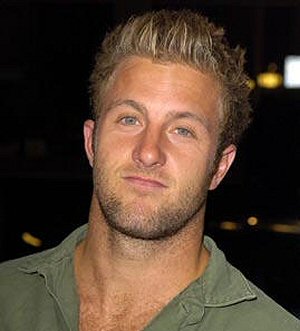
Scott Caan
True Patriot: I had to wonder if you have considered that perhaps these things happen because of karma?
Wells: Have you considered that Scott Caan, being the big swinging dick and all, may have succumbed to thoughtlessness?
True Patriot: Ever stopped to consider that one man’s “telling it like it is” is another’s rude, pretentious egotist?
Wells: Yeah, I realize that. And if you don’t like the way I tell it, you can do whatever.
True Patriot: That maybe these little shocks-to-the-system are karmic paybacks?
Wells: I didn’t want to get into this as heavily as I am now, but Scott Caan not showing for an appointment is one thing. Not leaving a note to explain or calling after-the-fact to apologize is another. All I said in the item was, this is what Scott Caan, man among men, didn’t do. What’s your problem?
True Patriot: I’m just saying….
Grabs

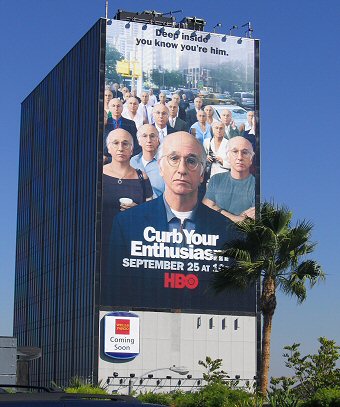
In all the coverage of
In all the coverage of Sony Pictures refusing to distribute Albert Brooks’ Looking for Comedy in the Muslim World, no one has noted the obvious, which is that the title makes it sound like a documentary. We all know Brooks to be a hip and shrewd comic, but doesn’t the movie also sound a tiny bit…what’s the word I’m searching for? Cornball? A little dopey? How sharp and live-wire does anyone expect Muslim humor to be? Isn’t Muslim culture patriarchal and redneck-y and disparaging of women, etc.? I should just shut up and wait to see it, right? Warner Independent has stepped in as the distributor.
I love this line from
I love this line from a review of Capote by Entertainment Weekly‘s Owen Gleiberman, in which he examines the final beat in the relationship between Truman Capote and condemned murderer Perry Smith: “[Philip Seymour] Hoffman
makes Capote’s dissolution a theatrical miracle of devastation. In his final scene with Perry, he’s so conflicted that he does something I’ve never seen on screen: He cries, honestly, and lies at the same time.”
I don’t want to get
I don’t want to get too excited or lose my mind or anything, but this parody trailer for Stanley Kubrick’s The Shining is clever as shit, but it also has a dark undercurrent because it perfectly nails the idiot-virus affecting movie advertising attitudes right now. It shows that you can take footage from any drama and lie through your teeth and make it look like a total fluffball movie…and this is what marketing people do all the time, because all they want to do is get people to show up on opening weekend, period. The creators are affiliated with a Manhattan media-advertising outfit called P.S.260.
For a while there, John
For a while there, John Stockwell was the director who put soul and character into movies about young people involved in personal struggles and spiritual crises. He did this with crazy/beautiful, about a smart and responsible-minded East L.A. Hispanic teenager who falls for Kirsten Dunst’s alcoholic, self-destructive rich girl from Pacific Palisades, and then with the under-rated Blue Crush, a beautifully-shot, nicely finessed North Shore surfing movie with Kate Bosworth. But now, suddenly, he’s become the go-to guy for exotic outdoor thrillers starring hot-looking 20-somethings. He’s directed Into the Blue (Sony, 9.30), a throwaway diving-for-treasure-and-finding-thrills movie with Jessica Alba, Paul Walker and Scott Caan. And he’s now down in Brazil shooting Turistas, about “a group of young backpackers whose vacation turns sour when a bus accident leaves them marooned in a remote Brazilian jungle that holds an ominous secret.” And what would that be…pygmy cannibals? The hotbod costars are Melissa George, Josh Duhamel, Olivia Wilde and Desmond Askew…terrific. What happened? Stockwell is not Brett Ratner — he’s Curtis Hanson. But perhaps all is not lost. Stockwell has written a screenplay about a high-stakes gambler for-hire called Chasing the Whale and a thing about a 12 year-old criminal mastermind called Artemis Fowl…cool. All I know is, he’s capable of much more than stuff like Into the Friggin’ Blue.
Oh, and by the way?
Oh, and by the way? I had an appointment to meet Scott Caan early last July at a hip hotel on Thompson Street in Soho, the intention being to discuss that above-average film he wrote and directed called Dallas 362…and he disappeared. He wasn’t at the hotel, there was no “sorry” message left with the concierge, and no message was left on my cell phone. That makes him a Man of Honor.
Last week’s tracking figures for
Last week’s tracking figures for In Her Shoes, before last Saturday’s sneak, weren’t that hot — 2% first choice, awareness 55%, and definite interest 23%. (The under-25 female awareness was 66%; over-25 female awareness was 68%.) But the sneak has definitely bumped things up, and today’s tracking says first-choice for Shoes is now at 9%, general awareness 66% and definite interest 32%. The second sneak this weekend will bump things up a bit more and so on until the opening on 10.7. For perspective, Flightplan had a definite interest tally of 44% and 14% first-choice the day before it opened.
Regarding Mr. Lloyd
Norman Lloyd, 90, is in only three scenes in In Her Shoes and is on-screen maybe seven or eight minutes, but his performance is one of the most poignant notes in a film that’s got more than a few of them.
It’s not one of those burn-through-the-screen performances (along the lines of, say, Beatrice Straight’s fight-with-Bill-Holden scene in Network). It’s more like a coaxer. You can sense Lloyd’s intellectual energy and zest for life despite his character’s withered state, and you can feel and admire the tenderness he shows to Maggie …tenderness mixed in with a little classroom discipline.
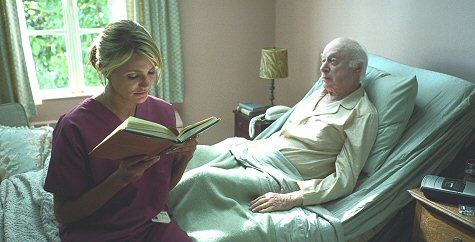
(l. to. r.) Cameron Diaz and Norman Lloyd, playing “the Professor,” considering the poetry of Elizabeth Bishop in In Her Shoes
He plays a sightless retired college professor who prods Diaz’s Maggie character, who is dyslexic and can’t read a billboard slogan without stumbling, into reading poetry to him — specifically a poem about loss and emotional guardedness by Elizabeth Bishop.
At first Maggie is reluctant, then she agrees to read to him…slowly, almost pain- fully…I have a dyslexic friend and she doesn’t read this slowly…but she gradually improves.
Then Lloyd prods her into explaining what she thinks of the poem. She tries to duck this, but Lloyd — using skills he’s picked up during a lifetime of teaching — won’t let her.
This isn’t just the heart of the scene — it’s a pivotal scene in the film. It’s the moment when Maggie turns the corner and starts taking steps to be someone a little better…because she starts believing in her ability to see through to the core of things, and in the first-time-ever notion that she has a lot more to develop and uncover within herself.
I know how cliched it sounds to say a character “turns a corner” and so on, but sometimes these moments happen in life. You just have to be able to hear the little voice in the back of your head that says, “You’ve taken a small step…you’ve just moved along.”
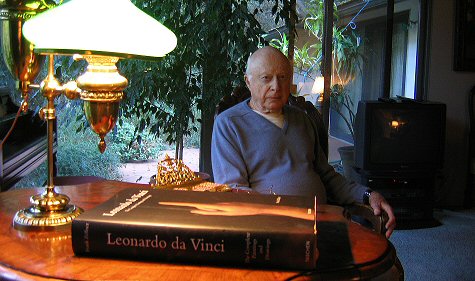
Norman Lloyd in his living room of his Brentwood home — Tuesday, 9.27, 5:45 pm.
I said Lloyd was in three scenes — he’s really in five.
There’s a brief scene near the end of the film in which Diaz and Lloyd’s grandson — a doctor — talk about him and then how Lloyd has spoken about her. Lloyd is “there,” so to speak, and like Bishop’s poem, the subtext is loss.
In the film’s final minutes Diaz reads another poem — this one by e.e. cummings — and this time with more confidence and feeling. And Lloyd is there again.
It’s funny, but I feel as if I’ve known Lloyd all my life via his performance in Alfred Hitchcock’s Saboteur, and now, in my mind (and everyone else’s, I’ll bet, once the film opens), he’s back again and on the map.
I’m not going into some Hollywood journalist suck-up routine when I say Lloyd ought to be handed a Best Supporting Actor nomination. He’s really earned it. It’s hard enough to make an impact like this with a fully-rounded part, but with only one scene to work with…well.
I called him yesterday morning and did a quick interview, and then I drove over to his place in Brentwood in the late afternoon to snap a couple of photos.
I want to be just like Norman Lloyd when I’m almost 91. He’s done everything, been everywhere and knows (or knew) everyone. And he’s healthy and spirited with the intellectual vigor of a well-educated 37 year-old.
Lloyd has been acting since the `30s and producing since the `50s. He’s been directed on-stage by Orson Welles (in “Julius Caesar” and “Shoemaker’s Holiday”) and Elia Kazan, and on film by Hitchcock twice (Spellbound was the other film), and Jean Renoir (The Southerner), Charlie Chaplin (Limelight), Peter Weir (Dead Poet’s Society) and Martin Scorsese (The Age of Innocence).
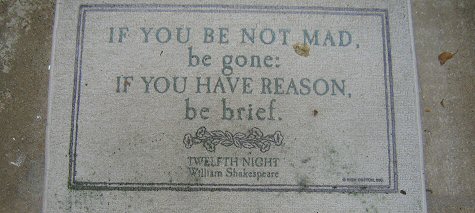
He lives on a quiet sycamore-lined street in a beautiful ranch-style home, in front of which horses go clop-clopping by in the late afternoon. He was born in New Jersey and grew up talking like one of the Dead End kids, but since the ’30s he’s spoken with a refined mid-Atlantic accent (learned at the hand of acting teacher Eva Le Gallienne). He drives a beautiful black Jaguar and has a doormat with a quote from Shakespeare’s “Twelfth Night.”
And he plays tennis well enough to have competed two months ago in the finals of the DGA tennis tournament. (His doubles partner is 45 years younger.)
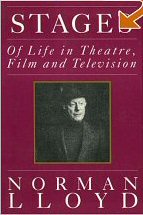
Last year Limelight Editions published Lloyd’s autobiography called “Stages: Of Life in Theatre, Film and Television.”
He was told about the In Her Shoes part by his agent, Merritt Blake, and went down to meet with Curtis Hanson and producer Carol Fenolen.
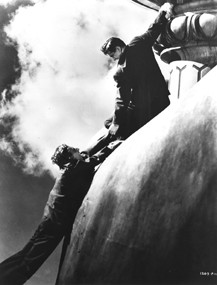
Lloyd (lower left) and Robert Cummings during finale in Alfred Hitchcock’s Saboteur
“I don’t ‘read’ for parts,” says Lloyd. “I myself have produced a great deal. I was one of Alfred Hitchcock’s producers on his TV show in the `50s, and I know that a radio actor back in the 1930s could read marvellously well on an audition because he was trained to read quickly, whereas other actors who might have been better in the long run sometimes couldn’t read as well.
“Anyway, my point is that at the end of our conversation Curtis said, `You have worked with the greatest directors in the history of this business’…which is true. And that was the extent of our meeting. I was told I had the part the next day.”
I told Lloyd I thought his performance was enhanced — intensified — by the fact that his character’s sightless eyes are always trained on the ceiling when he speaks with Diaz.
“You have uttered an amazing truth about acting,” he replied. “It is a wonderful thing when you’re acting and you eliminate one sense…sight, hearing, something. It makes it more powerful. I didn’t play the character as a sick man. To be without sight added to the voice, to the presence.”
His scenes with Diaz were shot over two or three days in a hospital in Arcadia. Like many of his generation he takes a straightforward approach to acting. His motto is “just say the words.”
There’s a beautiful drawing of Lloyd’s wife Peggy on the living room wall near his front door. The artist is Don Bachardy, and it was drawn 32 years ago…just as Lloyd’s wife had learned of the death of Pablo Picasso, whom she deeply admired and which accounts, he says, for her sad expression.
“My wife is 92,” Lloyd confides. “We’ve been married 69 years, and she tells everyone she robbed the cradle.”
What’s Lloyd been doing all these years to have lived so long and still be so alert and in such good shape?
“I eat a steak or two every week, although I don’t make a steady diet of that,” he replies. “No shellfish. I gave up smoking in 1943. I’ve played tennis all my life. For years I rode a bicycle here but with the traffic and everything I’ve given that up.
“The positive thing is that I was young in the Depression era, and the Depression people had more of a positive attitude about things. Now there’s a cynical thing in the air…I don’t see that same positiveness.”
Lloyd wrote an afterword to a 2004 Signet Classics Penguin paperback that contains four Shaw plays….’Candida,’ ‘Mrs. Warren’s Profession,’ ‘Arms and the Man’ and `Man and Superman.’ “I’m still tied in with Shaw,” he says, “although he did become bitter, like Mark Twain, about the human race.”
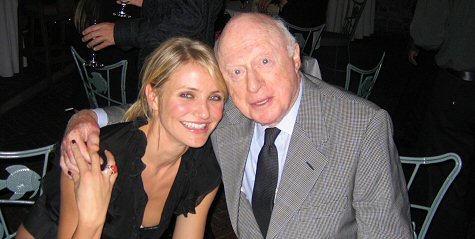
Cameron Diaz, Norman Lloyd at In Her Shoes post-premiere party at Spago of Beverly Hills — Wednesday, 9.28, 11:40 pm.
I was certain that Lloyd would be unusual and inquisitive enough to be an internet expert, but no. He is, however, a “careful” newspaper reader. As a favor I agreed to print out a copy of this column and give it to him at Wednesday night’s (9.28) In Her Shoes after-party.
Does he ever get recognized in public? “Of late not so much,” he says. “I was recognized in the `40s after Saboteur came out, and in the ’80s occasionally because of my part in St. Elsewhere (i.e., “Dr. Auschlander”), which I did every week for six years.
“But just the other day I was in a Chinese restaurant — VIP Harbor Seafood at the corner of Wilshire and Barrington — and six guys from 20th Century Fox who had just seen the film…they all came over to congratulate.”
Plays High, Sold Low
In Her Shoes may or may not be appearing to handicappers as an awards-level thing. I don’t care to argue this point, but every so often there’s a disconnect between my views and those of jaded ivory-tower elites that just staggers me.
On the other hand, if I hadn’t yet seen it and had come upon Liz Smith’s rave on the film’s website, I might have a moment of pause. Smith guarantees “you will laugh and cry in equal measure because this is simply a wonderful film…one of the best in years” — fine.
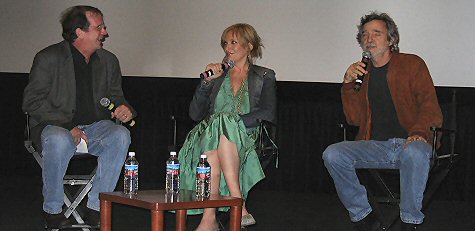
(l. to. r.) Variety screening series host Pete Hammond, In Her Shoes star Toni Collette, and director Curtis Hanson during post-screenign q & a at Hollywood’s Arclight — Monday, 9.26, 9:50 pm.
But then she raves, “When you see a movie that looks this good from the get-go, you just know you’re in for a terrific time.” I know what Smith is trying to say, but “looks” aren’t worth a damn in the eyes of Sri Vishnu, and a promise of cosmetic attractiveness usually implies a lack of inner character.
Trust me, In Her Shoes is much better than this.
I know the film has been working on an emotional level at the screenings I’ve attended, and so does 20th Century Fox or they wouldn’t be giving it another nationwide sneak this weekend…the movie sells itself.
The cynical view is that they’re doing two sneaks in a row because they can’t figure out how to get the word out otherwise, as indicated by the fact that it opens in less than two weeks and it isn’t really tracking. (Although that may change with Thurs- day’s tracking report, which will reflect last weekend’s sneak.)
I think year-end critics awards will help. I know Oscar watchers will be surprised if Toni Collette doesn’t catch on as a Best Actress contender; ditto Shirley MacLaine for Best Supporting Actress.
And if you ask me Norman Lloyd’s brief but elegant turn as a blind and bedridden hospital patient easily warrants a Best Supporting Actor nom.
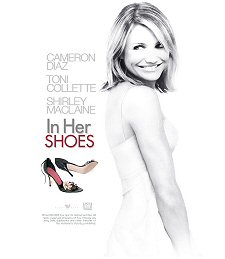
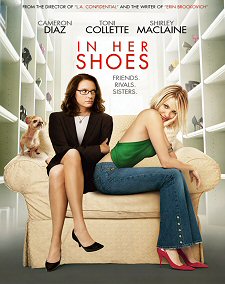
The Diaz-only “teaser” one-sheet for In Her Shoes (l.) and the far less visible Collette-Diaz version that gives both plus Shirley Maclaine a shared aboe-the-title billing
Lloyd has been acting and producing all his life (he had an ongoing role as a staff doctor on St. Elsewhere in the `80s), but his In Her Shoes turn is the charm. His gentle, sharp-witted ex-college professor — a performance that takes off and comes in for a landing in the space of a single scene — is the most memorable thing he’s done since Frank Fry in Saboteur (’42). It’s a comeback after 63 years.
For the first 40 minutes or so, Cameron Diaz doesn’t seem to be doing much more than playing her standard ditz-babe, but once she arrives in Florida and hooks up with MacLaine things start to improve. Then she meets up with Lloyd and performs her best scene in the film, and does herself proud.
But there’s no washing away the stain of The Sweetest Thing and the two Charlie’s Angels films. In my heart and mind those three were abominations…war crimes. Granted, there’s a balance factor from Diaz’s work in Vanilla Sky, Any Given Sunday and There’s Something About Mary, but any and all McG associations must be condemned in perpetuity.
The only other thing throwing me is that Fox is still using that one-sheet with just Diaz alone on their official site. Once again, big studio marketers are selling an idea they think will put arses in seats (hey, girls-who-buy-In Touch-and-Us in the supermarket…another giggly-ditzoid Cameron Diaz film!) instead of selling the movie they have.
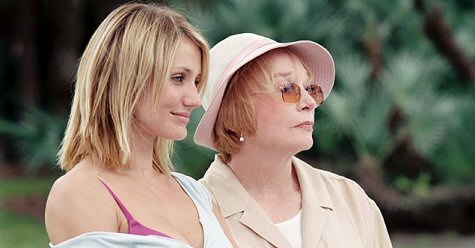
Diaz, Shirley Maclaine
I was under the impression that the Diaz one-sheet was just a teaser poster and that the real In Her Shoes one-sheet (with Collette and Diaz pictured side-by-side, and their names along with MacLaine’s sharing above-the-title space) was the keeper.
Diaz is the one they paid $15 million-plus to star in this movie, and nobody really knows Collette, etc., but I still don’t get it. This is a really good sister movie…a heart movie…and Fox seems to be trying to dissuade people who like this sort of thing (including sophisticated filmgoers) from putting this film on the top of their lists.
Then again I’m told that last weekend’s sneak was well attended, and reactions have been very good. This is primarily a woman’s film, and naturally Fox is going to pitch to the core constituency.
“You like the picture, fine…and men may like it,” a marketing guy told me this morning. “But women love it.”
In the hands of Gary David Goldberg (Must Love Dogs), Roger Kumble (The Sweetest Thing), Audrey Wells (Under the Tuscan Sun) or the evil McG, In Her Shoes would have almost certainly been a lesser thing.
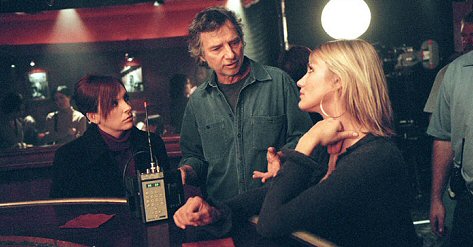
Toni Collette, Curtis Hanson and Cameron Diaz preparing to shoot a first-act, out-on-the-town scene
But Fox went with Curtis Hanson, and that decision — combined with Susannah Grant’s way-above-average chick-flick script (based on the novel by Jennifer Weiner) — has made a big difference.
Hanson has brought the same sureness of tone, knack for economical story-telling and clarity of presentation evident in 8 Mile, Wonder Boys and L.A. Confidential to this thing. It’s a film that’s been expertly finessed and perfectly music-cued and made to feel emotionally grounded.
And the point is made again — it’s the singer, not the song.
Regarding Violence
If you’ve seen David Cronenberg’s A History of Violence, you know it’s a philosophical double-dealer, and this is what makes it a complex, cut-above film. It’s not just saying violence is a kind of terrible virus — it’s also saying it has a way of turning us on.
When Jack (Ashton Holmes), the son of cafe owner Tom Stall (Viggo Mortenson), defuses a potentially violent encounter with a school bully by sarcastically acknow- ledging the other guy’s alpha male superiority, etc., you admire Jack for being a hip and clever guy.
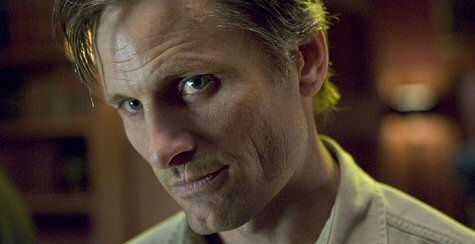
Viggo Mortenson as small-town nice guy Tom Stall in David Cronenberg’s A History of Violence
But when they meet a second time and Jack, inspired by his father’s having become a hero because he killed a couple of bad guys, wails on the bullies and leaves them bruised and groaning, several people in the theatre (at L.A.’s Grove plex) were clapping and whoo-whooing.
Is there anyone out there who thinks Cronenberg didn’t deliver this scene in just the right way so he would get this reaction?
And of course, the steam that comes hissing out of Edie Stall (Maria Bello) isn’t just about feelings of betrayal.
Edie is furious, naturally, when she realizes her husband has been lying to her for years about his past. But when she and Tom have that end-of-Act-Two fight and she goes “fuck you, Joey” and walks off and Tom grabs her by the ankle and they do that thing on the stairs (a scene that wasn’t scripted, by the way…it just “happened” when they shot it), it’s obvious that Tom’s killer moves have lit a fire in Edie’s furnace.
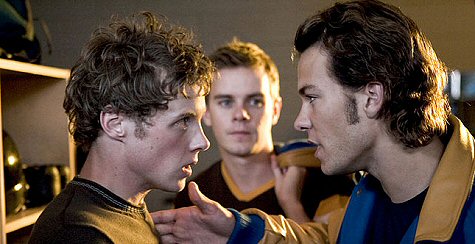
Jack Stall (Ashton Holmes) and the high-school baddies
And yet the violence that has happened has obviously stunned and hurt this family of four. In that haunting final scene, Cronenberg shows us that Jack and his younger sister are willing to forgive and forget as they offer food to Tom, but there’s not much assurance that things will henceforth be fine…Cronenberg leaves us in limbo.
That’s filmmaking, pally. Lob the ball to the audience in the final frame and let them sort it all out…nice.
One beef with this film: Peter Suschitzky’s cinemography looks like it was soaked in Bolivian coffee during lab processing. I started to wonder if the projector lamp at the Grove’s theatre #1 was dying, but the lamps in the other theatres were fine. The last film I remember being this muddy-looking was Fight Club.
Grabs

Waiting in a very long line of cars trying to get onto the Fox lot for Tuesday night’s screening of Domino — 9.27, 7:25 pm.

Wilshire and Brockton on Sunday, 9.25, 4:50 pm…following a long bike ride from Brentwood to Venice and back, which I was very glad to do because it caused me to re-realize how much nicer, cleaner and more aesthetically pleasant Santa Monica and Venice are than the shittier areas of Williamsburg, Brooklyn. Okay, so the spiritual element isn’t as vibrant here as it is in New York City, but the women are dishier and the leaves are bigger and more plentiful, and the sea smells better standing on the beach in Santa Monica than it does in Far Rockaway

Taken from the vantage point of the Beverly Hills Public Library on Santa Monica Blvd., and looking northeast — Sunday, 9/25, 6:15 pm.
Plays High, Sold Low
Plays High, Sold Low
In Her Shoes may or may not be appearing to handicappers as an awards-level thing. I don’t care to argue this point, but every so often there’s a disconnect between my views and those of jaded ivory-tower elites that just staggers me.
On the other hand, if I hadn’t yet seen it and had come upon Liz Smith’s rave on the film’s website, I might have a moment of pause. Smith guarantees “you will laugh and cry in equal measure because this is simply a wonderful film…one of the best in years” — fine.
(l. to. r.) Variety screening series host Pete Hammond, In Her Shoes star Toni Collette, and director Curtis Hanson during post-screenign q & a at Hollywood’s Arclight — Monday, 9.26, 9:50 pm.
But then she raves, “When you see a movie that looks this good from the get-go, you just know you’re in for a terrific time.” I know what Smith is trying to say, but “looks” aren’t worth a damn in the eyes of Sri Vishnu, and a promise of cosmetic attractiveness usually implies a lack of inner character.
Trust me, In Her Shoes is much better than this.
I know the film has been working on an emotional level at the screenings I’ve attended, and so does 20th Century Fox or they wouldn’t be giving it another nationwide sneak this weekend…the movie sells itself.
< ?php include ('/home/hollyw9/public_html/wired'); ?>
The cynical view is that they’re doing two sneaks in a row because they can’t figure out how to get the word out otherwise, as indicated by the fact that it opens in less than two weeks and it isn’t really tracking. (Although that may change with Thurs- day’s tracking report, which will reflect last weekend’s sneak.)
I think year-end critics awards will help. I know Oscar watchers will be surprised if Toni Collette doesn’t catch on as a Best Actress contender; ditto Shirley MacLaine for Best Supporting Actress.
And if you ask me Norman Lloyd’s brief but elegant turn as a blind and bed-ridden hospital patient easily warrants a Best Supporting Actor nom.
The Diaz-only “teaser” one-sheet for In Her Shoes (l.) and the far less visible Collette-Diaz version that gives both plus Shirley Maclaine a shared aboe-the-title billing
Lloyd has been acting and producing all his life (he had an ongoing role as a staff doctor on St. Elsewhere in the `80s), but his In Her Shoes turn is the charm. His gentle, sharp-witted ex-college professor — a performance that takes off and comes in for a landing in the space of a single scene — is the most memorable thing he’s done since Frank Fry in Saboteur. It’s a comeback after 63 years.
For the first 40 minutes or so, Cameron Diaz doesn’t seem to be doing much more than playing her standard ditz-babe, but once she arrives in Florida and hooks up with MacLaine things start to improve. Then she meets up with Lloyd and performs her best scene in the film, and does herself proud.
But no acting noms. She’s good but Collette has it all over her. And there’s no washing away the stain of The Sweetest Thing and the two Charlie’s Angels films. In my heart and mind those three were abominations…war crimes. Granted, there’s a bit of a balance factor from Diaz’s work in Any Given Sunday and There’s Something About Mary, but I’ve listened to her speak in person and I still see her as a poster girl for vapidity.
The only other thing throwing me is that Fox is still using that one-sheet with just Diaz alone on their official site. Once again, big studio marketers are selling an idea they think will put arses in seats (hey, girls-who-buy-In Touch-and-Us in the supermarket…another giggly-ditzoid Cameron Diaz film!) instead of selling the movie they have.
Diaz, Shirley Maclaine
I was under the impression that the Diaz one-sheet was just a teaser poster and that the real In Her Shoes one-sheet (with Collette and Diaz pictured side-by-side, and their names along with MacLaine’s sharing above-the-title space) was the keeper.
Diaz is the one they paid $15 million-plus to star in this movie, and nobody really knows Collette, etc., but I still don’t get it. This is a really good sister movie…a heart movie…and Fox seems to be trying to dissuade people who like this sort of thing (including sophisticated filmgoers) from putting this film on the top of their lists.
Then again I’m told that last weekend’s sneak was well attended, and reactions have been very good. This is primarily a woman’s film, and naturally Fox is going to pitch to the core constituency.
“You like the picture, fine…and men may like it,” a marketing guy told me this morning. “But women love it.”
In the hands of Gary David Goldberg (Must Love Dogs),Roger Kumble (The Sweetest Thing), Audrey Wells (Under the Tuscan Sun) or the super-demonic McG, In Her Shoes would have almost certainly been a lesser thing.
Toni Collette, Curtis Hanson and Cameron Diaz preparing to shoot a first-act, out-on-the-town scene
But Fox went with Curtis Hanson, and that decision — combined with Susannah Grant’s way-above-average chick-flick script (based on the novel by Jennifer Weiner) — has made a big difference.
Hanson has brought the same sureness of tone, knack for economical story-telling and clarity of presentation evident in 8 Mile, Wonder Boys and L.A. Confidential to this thing. It’s a film that’s been expertly finessed and perfectly music-cued and made to feel emotionally grounded.
And the point is made again — it’s the singer, not the song.
Regarding Violence
If you’ve seen David Cronenberg’s A History of Violence, you know it’s a philoso- phical double-dealer, and this is what makes it a complex, cut-above film. It’s not just saying violence is a kind of terrible virus — it’s also saying it has a way of turning us on.
When Jack (Ashton Holmes), the son of cafe owner Tom Stall (Viggo Mortenson), defuses a potentially violent encounter with a school bully by sarcastically acknow- ledging the other guy’s alpha male superiority, etc., you admire Jack for being a hip and clever guy.
Viggo Mortenson as small-town nice guy Tom Stall in David Cronenberg’s A History of Violence
But when they meet a second time and Jack, inspired by his father’s having become a hero because he killed a couple of bad guys, wails on the bullies and leaves them bruised and groaning, several people in the theatre (at L.A.’s Grove plex) were clapping and whoo-whooing.
Is there anyone out there who thinks Cronenberg didn’t deliver this scene in just the right way so he would get this reaction?
And of course, the steam that comes hissing out of Edie Stall (Maria Bello) isn’t just about feelings of betrayal.
Edie is furious, naturally, when she realizes her husband has been lying to her for years about his past. But when she and Tom have that end-of-Act-Two fight and she goes “fuck you, Joey” and walks off and Tom grabs her by the ankle and they do that thing on the stairs (a scene that wasn’t scripted, by the way…it just “happened” when they shot it), it’s obvious that Tom’s killer moves have lit a fire in Edie’s furnace.
Jack Stall (Ashton Holmes) and the high-school baddies
And yet the violence that has happened has obviously stunned and hurt this family of four. In that haunting final scene, Cronenberg shows us that Jack and his younger sister are willing to forgive and forget as they offer food to Tom, but there’s not much assurance that things will henceforth be fine…Cronenberg leaves us in limbo.
That’s filmmaking, pally. Lob the ball to the audience in the final frame and let them sort it all out…nice.
One beef with this film: Peter Suschitzky’s cinemography looks like it was soaked in Bolivian coffee during lab processing. I started to wonder if the projector lamp at the Grove’s theatre #1 was dying, but the lamps in the other theatres were fine. The last film I remember being this muddy-looking was Fight Club.
Grabs
Waiting in a very long line of cars trying to get onto the Fox lot for Tuesday night’s screening of Domino — 9.27, 7:25 pm.
Wilshire and Brockton on Sunday, 9.25, 4:50 pm…following a long bike ride from Brentwood to Venice and back, which I was very glad to do because it caused me to re-realize how much nicer, cleaner and more aesthetically pleasant Santa Monica and Venice are than the shittier areas of Williamsburg, Brooklyn. Okay, so the spiritual element isn’t as vibrant here as it is in New York City, but the women are dishier and the leaves are bigger and more plentiful, and the sea smells better standing on the beach in Santa Monica than it does in Rockaway
Taken from the vantage point of the Beverly Hills Public Library on Santa Monica Blvd., and looking northeast — Sunday,9/25, 6:15 pm.
Knockout
I liked so many films in Toronto I was looking forward to trashing two or three upon my return to Los Angeles. So to get things rolling I went to a screening last night (Thursday, 9.22) of Rodrigo Garcia’s Nine Lives (Magnolia) and…shit, another good one.
It’s nine interwoven shorts about women in relationships that aren’t really working, relationships they’d like to be rid of on one level but can’t quite extricate themsel- ves from, and what’s holding them.
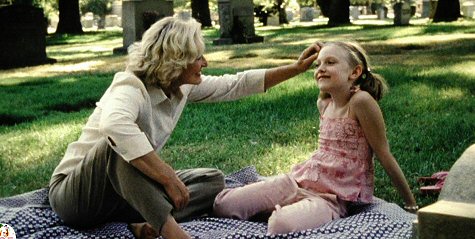
Glenn Close, Dakota Fanning in Rodrigo Garcia’s Nine Lives (Magnolia)
Each story is a part-muddle, part-riddle and a fascinating drill into some aroused places in the heart, and five out of the nine are direct hits.
I’ve now seen two dramas over the last week and a half about female turmoil and tough choices, but which operate well beyond the usual chick-flick realm….this and In Her Shoes.
Nine Lives played Sundance last January and then the L.A. Film Festival three months ago…why haven’t I heard anything? Am I alone on this one? I don’t care.
Once again we have a south-of-the-border director — Rodrigo Garcia, a colleague of the great Alejandro Gonzalez Innaritu — hitting the ball deep into left-center field and scoring a ground-rule double, if not a triple.
Nine Lives isn’t quite a homer but it’s much better than I expected. It has that same connective-tissue, life-is-short, death-is-just-around-the-corner thing that we’ve all gotten to know through Innaritu’ Amores Perros and 21 Grams.
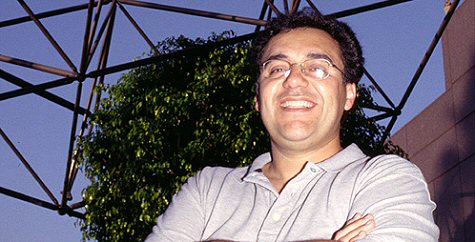
Nine Lives director-writer Rodrigo Garcia
Neither Innaritu or his screenwriting partner Guillermo Ariagga (who also wrote The Three Burials of Melquiades Estrada) have a co-writing credit, but they might as well have. Garcia is clearly coming from the same place…another Mexican heavy- cat soul man.
Garcia’s writing and the acting are exceptional all through it, and there are two pieces in particular about obsessive sexual love that knocked me on the floor.
The best of the two costars Robin Wright Penn and Jason Isaacs. Set entirely in the aisles of an L.A. supermarket, it’s a marvel of tight writing, dancing camera work, perfectly-pitched acting and emotional sizzle.
The other is a fascinating piece about a woman (Amy Brenneman) and her father attending a funeral of a woman who’s committed suicide, and the soon-enough realization that the woman is a former wife of the deceased woman’s deaf husband (William Fichtner), and that their attraction is not only still going on but may have pushed the wife into suicide, and that their feelings are so urgent that Brenneman and Fichtner can’t help finding a private room and closing the door.
I don’t know which of the two is more of a jaw-dropper, but together they’re worth the admission, the popcorn and having to watch the ads before the trailers.
There are at least three other strong entries. About a financially struggling, clearly frustrated 40ish couple (Stephen Dillane, Holly Hunter) visiting a couple (Isaacs again, Molly Parker) they believe to be on a happier, more comfortable plane. About a terrified wife (Kathy Baker) preparing for breast-removal surgery and bitching at her husband (Joe Mantegna) as she works through her feelings. And about a loving mother (Glenn Close) and her young daughter (Dakota Fanning) visiting a graveyard.
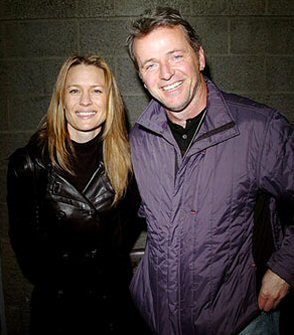
Nine Lives costars Robin Wright Penn, Aidan Quinn at last January’s Sundance Film Festival
The cast also includes Elpidia Carillo, Lisa Gay Harden, Ian McShane, Mary Kay Place, Sydney Tamiia Poitier, Aidan Quinn, Miguel Sandoval, Amanda Seyfried and Sissy Spacek.
The other four are decent, good enough, carry the ball, etc. A movie like this is like a relay race. Not every segment can bring the fans to their feet.
Nine Lives will open in Los Angeles and New York on 10.14, and will start fanning out the following week.
You want surreal? Read Laura
You want surreal? Read Laura Holson’s New York Times story about the Universal-buying-DreamWorks negotiations that have fallen apart. Because two recent DreamWorks films — The Island and Just Like Heaven — respectively flopped and underperformed, NBC Universal executives involved in negotations to purchase the live-action filmmaking side of DreamWorks (along with the company’s 60-film library) “lowered their projection of the rate of return for DreamWorks” and therfore lowered their offer from $1.5 billion to $1.4 billion. This still would have handed about $900 million to DreamWorks’ partners and investors (David Geffen, Steven Spielberg, Paul Allen and…?). But because of the $100 million downgrade, Geffen, who was repping DreamWorks in the negotiations, said “forget it” and the deal has gone south. This what living in a fantasy membrane of sloth and corruption comes to…here is a portrait of men and women who are so far off the ground and so swaddled in mink and diamonds they’ve forgotten what it means to stand on the ground, smell the air and look reality in the eye. The DreamWorks library has a solid ascertainable value. The future-tense ability of the DreamWorks production team (including director Steven Spielberg) to bring in tens of millions more in revenue from the movies they might make is a very hazy proposition. The Spielberg brand is worth plenty with average-Joe audiences, but if you ask me the rest of the team isn’t worth a whole lot. 90% of the perceived value of a company’s future output is always about smoke and mirrors and hot air. My advice is for someone to purchase the library and let the DreamWorks apparatus scatter in the winds…break the company into a thousand pieces and let the life process recoagulate somewhere else. Are the DreamWorkers supposed to be some kind of golden-goose crew? Says who? Based on what? Take the needle out of your arm.
We all want to be
We all want to be recognized for our own accomplishments, but it still seems…well, funny that the mini-bio for director-writer Rodrigo Garcia in the Nine Lives press kit doesn’t mention that his dad is novelist Gabriel Garcia Marquez(“One Hundred Years of Solitude”).