Flame-haired actress Patricia Owens (1.17.25 – 8.31.00) had been playing supporting roles in Hollywood films since ’43. And then in late ’56, her career suddenly caught fire. Five films of serious merit, one after another…bam, bam, bam, bam, bam.
And then, after the July ’58 release of The Fly, in which Owens played her most iconic role, that of Helen Delambre, wife of David Hedison‘s eccentric scientist André Delambre, the fire went out.
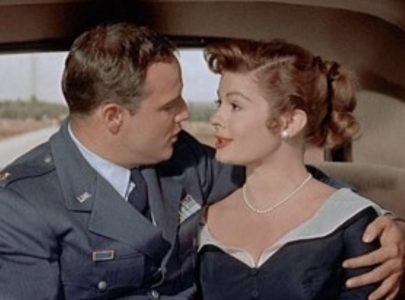
During her hot streak Owens played top-billed supporting roles in four grade-A films from major helmers — Robert Rossen‘s Island in the Sun (6.12.57), Martin Ritt‘s No Down Payment (10.30.57), Joshua Logan‘s Sayonara (12.5.57, portraying Marlon Brando‘s unsettled fiance) and John Sturges‘ The Law and Jake Wade (6.6.58)
Then came her penultimate role in Kurt Neumann‘s The Fly (7.16.58). And then something turned, and before you knew it Owens was no longer in demand. Or at least not in the eyes of the grade-A gang.
Was it because the characters she played seemed too…I don’t know, too bland and middle-class wifey-wifey? Because she was approaching her mid 30s and, by the sexist standards of old-boy Hollywood, deemed somewhat less desirable…maybe a little too PTA-ish??
Owens kept working until the late ’60s, but the party was over. She passed from cancer at age 75. She’s very, very good in Sayonara, by the way. She’s obviously a highly skilled actress, and more than holds her own in her scenes with Brando and costar Ricardo Montalban.
Some are sensing vague parallels between Ari Aster‘s Beau Is Afraid and Charlie Kaufman‘s Synecdoche, or at least the appearance of same. Okay, I’ll be blunt about it — the analogy is actually all over town, lighting up the internets, etc. So here, without further ado, is HE’s review of Kaufman’s film, filed on 5.25.08 — five and a half months before the election of Barack Obama and my subsequent move to NYC. My sister had died from cancer two months earlier; my dad would pass the following month.
Posted on 5.25.08: There’s no way around saying that Charlie Kaufman, the director-writer of Synecdoche, New York, is a gloom-head. A brilliant and, in his past screenplays, hilarious one (by the standards of dryly perverse humor), but a gloom-head all the same. Who, for now, has put aside his sense of humor. The problem with Charlie’s film, which I loved in portions, understood the point of and was intrigued and somewhat amused by in the early rounds, is the damn moroseness of it.
And the title is impossible. I would actually say commercially suicidal. I finally learned how to pronounce the damn thing — Syn-ECK-duh-kee — but if the folks who wind up distributing believe that average moviegoers are going to do anything but run in the opposite direction when this puppy opens, they’d best think again. Titles should always convey something that your average dumbass can understand — this one doesn’t. And they sure as shit can’t be tongue-twisters on top of this.
I nonetheless said to myself during the first 50 minutes or so, “This is my kind of deal.” Okay, maybe into the first hour. Smart-guy material, wise and witty, at times almost elevating, at times surreal, performances that strike the chords just so.
But it began to wear me down. I could feel my interest ebbing. This had something (okay, a lot) to do with the archness and obsessiveness of the characters caught up in various fickle head trips and never saying “uncle.” I didn’t hate what was going on — it’s an imaginative Alice in Wonderland-type thing — but I found myself wishing nonetheless that all these dithering neurotics (Caden especially) would get over themselves and…I don’t know, go rob a bank or move to rural China or something. The story tension in Synecdoche, New York is zilch.
And later with the shots of pink urine and bloody stools sitting in the toilet. I don’t care how lame this makes me sound, but I’ll put up with no more than one human waste shot in a film. Here there are three.
Kaufman doesn’t do “comedies,” per se, but he should have (and could have, if he were so inclined) made it all funnier. And a bit shorter. In the realm of, say, 110 minutes rather than the 124-minute version shown in Cannes.
This might sound like a thoughtless suggestion for a film that follows its characters for a good 30 or more years, staying with them into old age and serious decreptitude. I only know that for all the rich ideas and fully worked-out totality of it, for me it started to drag big-time.
Kaufman said at the post-screening press conference that he began writing it in response to feelings of oncoming decay and death. That’s what 49 year-old gloom-heads do, I guess. They’re most likely looking at another 35 to 40 years of life, if not more, but they feel threatened about the depletion of the organism and the curtain coming down.
The shorthand buzz before Friday’s screening was “quality material, tough sit.” I was intrigued and semi-into what it was doing, but I didn’t and couldn’t submit like Kaufman wanted me to. That said, it’s certainly worth a tumble. Only two hours and four minutes of your time, and a promise of at least some satisfaction.
I was especially wowed by a sermon scene that happens sometime in the last third. It’s just some young bearded clerical letting go with the gospel according to Kaufman (we live in a gloomy, fearful universe), but the way it was written and performed made me feel alive and re-engaged.
After the press conference I asked Kaufman and producer Anthony Bregman if I could be sent a copy of this speech to give HE readers a taste of what’s really good and special about the film. Kaufman passed me along to Bregman, who said, “Do you have a card?” No, I’m cardless, I said, but you can easily send me the dialogue through the website. I knew then and there I’d never hear from him. If anyone has a copy of the script, please get in touch.
I was far from delighted with Paul Mescal‘s performance in Aftersun. My thought was “I’m stuck with this guy?” But now we’re really stuck with him.
It was announced yesterday that Mescal (whose cheery voice isn’t deep enough) is “in talks to play Lucius Verus (son of Connie Neilsen‘s Lucilla, grandson of Marcus Aurelius) in Ridley Scott‘s Gladiator sequel. Mescal is also replacing Blake Jenner in Richard Linklater‘s Merrily We Roll Along film…Jesus.
Friendo: Did you rewatch Aftersun after seeing it in Cannes [last May]?
HE: No.
Friendo: I’m not sure how a Critics Week sidebar flick made it this far into awards season. That’s never happened before. You would presume that Cannes competition and the Quinzaine passed on it before it ended up n Critics Week.
Extreme weather always causes random deaths, and so far at least 12 Californians (including a five-year-old boy) have breathed their last under the current California onslaught. I’m very sorry for any and all suffering, but at the same time I’d be evading if I didn’t admit to a certain dark fascination with catatstrophes, natural and otherwise. Something about major disruptions in the natural ebb and flow of things…something about this grips my throat. Okay, I’ll just say it: I wish I could be Montecito right now so I could stand near the Ellen Degeneres rapids and go “wow.”
Montecito is under mandatory evacuation. We are on higher ground so they asked us to shelter in place. Please stay safe everyone. pic.twitter.com/7dv5wfNSzG
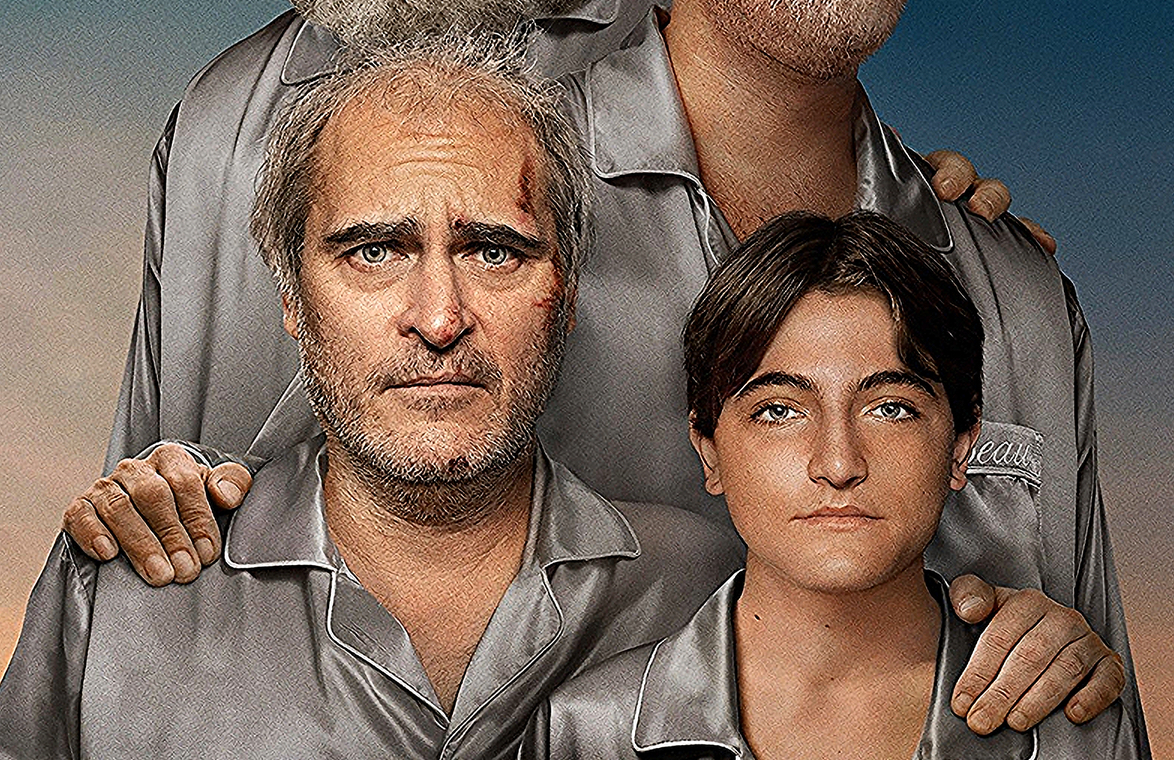
After arguing with Ari Aster about the length of his latest film (three or four hours? Two and a half?), A24 has decided to release the anxious, mondo bizarro, wimpy-sounding Beau Is Afraid on 4.21.23. I’m sorry but this WTF pre-Cannes release date tells us damn near everything.
It tells us first and foremost that Beau Is Afraid is a problem film. Obviously. No distributor releases an epic-lengthed, major-league auteur film in late-April unless they’re totally confused and off-balance and scared shitless about what it is or how to sell it.
If A24 had any balls they would open Beau Is An Old, Terrified, Mommy-Traumatized Candy-Ass on the Cote d’Azur, but no — they’re too chickenshit! Afraid of what the international critical community (especially the Brits) might say!
Aster wanted to release a four-hour version, remember. Imagine watching a four-fucking-hour version of this trailer. You know Beau is going to be a slog….you know it.
It would be one thing if this surreal, memory-injected old man’s psychological horror film was 110 or 120 minutes, but you know that at 179 minutes Hollywood Elsewhere is going to be flailing around on the floor and howling and hyperventilating and possibly shrieking. David Ehrlich will probably call Beau is Afraid a perverse masterpiece but he’ll bend over for almost anything nervy or provocative. Amy Ryan will probably receive the NYFC’s Best Supporting Actress trophy.
It’s either Ari Aster‘s Synecdoche (a tip of the hat to World of Reel‘s Jordan Ruimy for coming up with this brilliant analogy) or an angry, terrified old man’s Wizard of Oz saga, complete with a wicked-ass witch (his own mom, played by Amy Ryan). Every character in this film (except for the kid version of Joaquin) is some kind of smooth ghoulish predator.
Beau Is Afraid (formerly Disappointment Blvd.) is probably going to have its big debut at South by Southwest, a festival that is committed before-the-fact to giving a warm, giddy embrace to any oddball film that premieres there. I’m not kidding about that alternate title: Beau Is An Old, Terrified, Mommy-Traumatized Candy-Ass. HE to A24: Seriously, give this some thought.
Initial texted comments: “So Phoenix is wearing balding, old-fart, liver-spots makeup throughout the whole thing? What happened to Beau being some kind of dynamic entrepeneur or whatever? Now we know why A24 was unhappy with the length.”
At one point Aster described Beau is Afraid on the IMDB page as “a sickly, domestic melodrama in the vein of Douglas Sirk.” That settles it — Glenn Kenny and Richard Brody are going to do cartwheels in the lobby. These two are Maynard G. Krebs in reverse. When Maynard heard the “w” word, he went “work!” When Kenny and Brody hear the name of Hollywood’s most celebrated German-born director of lavish ’50s soap operas, they go “Sirk!” except they mean it lovingly.
…is way too influenced by the mood and spirit of RRR, which is basically schlock that’s been virtue-signalled into the awards conversations. Ehrlich is nonetheless a first-rate montage artist.
I’m not fully understanding what’s causing all the “chaos” on the shoot of Francis Coppola‘s Megalopolis, at least as described by The Hollywood Reporter‘s Kim Masters, Scott Feinberg and Aaron Couch.
Apparently the trouble has to do with the visual effects either costing too much or not being good enough to satisfy Coppola, or a perhaps a combination of the two.
The piece says that Coppola, whose lack of experience with effects-heavy shooting suggests he could have used the counsel of someone like James Cameron, “fired almost his entire visual effects team Dec. 9” — a month ago — “with the rest of that department soon following.”
Mark Russell (In the Heights, The Wolf of Wall Street) was the film’s top visual effects production supervisor. Production designer Beth Mickle and supervising art director David Scott have also flown the coop, the story says. A source says the $120-million budgeted film “now has no art department.”
The futuristic Megalopolis “has descended into chaos,” the story claims, citing “multiple sources.” Roughly halfway through shooting in Atlanta and with filming expected to finish in March, Megalopolis has already been tagged as a mess, giving off “severe Apocalypse Now vibes.
A production source has told the THR trio that “it’s unclear whether the production can go forward as planned.”
Coppola’s reps haven’t said anything to anyone, but his movies have always been fraught with financial anxiety and general uncertainty.
World of Reel‘s Jordan Ruimy has posted a significant insider quote: “Coppola’s movie is definitely in trouble. He’s shaking down people to get extra cash. grips are pissed. Dude is taking money from his own budget and is siphoning cash from things like costume, make-up, and production design accordingly.”
I’ll tell you this much. Joe and Jane Popcorn aren’t going to be very enthusiastic about paying to see Megalopolis when it hits theatres, which, knowing Coppola, probaby won’t happen until sometime in ’24. The film just sounds too labrynthian, too complex, and certainly not primitive enough for the Millennial and Zoomer ADD crowd.
One one hand he describes it as a substandard 4K release that’s not worth the price, and says that the 40th anniversary Bluray version (released in 2014) is a better deal overall. On the other hand he’s calling the 4K version something new on hi-def market — 2K UHD.
Harris: “I’ve been giving the 4K Death Wish situation some thought, and the answer is simple — it represents a new format.
“It’s a 4k UHD release derived from a 2k master. [It therefore doesn’t] in any way take advantage of an actual 4K resolution, but rather simply [goes] for the HDR/DV ‘pop’ that will be seen on OLED panels.” In HE terminology, Harris is referring to a “4K bump.”
Kino is distributing the 4K version, but the actual work has been performed by Paramount.
“The question is that since [the 4K Death Wish] doesn’t actually carry true 4K resolution, what to call it? I’d go with ‘2K UHD’.
“How to market 2K UHD releases? First, try and explain [what they are] to consumers. How to price them? A few dollars above Bluray.
“The 2K UHD variant already exists, but has not been recognized as such.
Continuing: “I’ve now compared the Bluray variant with the 4K, and they’re quite different.
“While they both seem derived from the same master, which appears to be an older image harvest from an interpostive and not the original camera negative, the Bluray disc has a more natural grain structure.
“The 4K UHD disc has highly reduced grain, and a very awkward digital grain pattern that seems to clump, and at times appears to have mold embedded in the film element.
“The 4K [version] has very little relationship to film, while the 2014 Bluray has a more natural appearance.
“I’d be equally happy with a Bluray derived from the same newer master, but those who purchase 4k should be on notice before they place an order, that they are not receiving true 4K, and merely the HDR pop.”
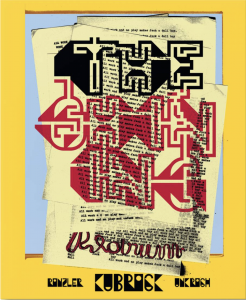
“You must read this book. And then watch The Shining again the second you put the book down. And I don’t care if you’ve seen it 50 times, you will never see it the same way again. It’s going to change everything.” — Alleged excerpt from Steven Spielberg‘s forward to Taschen’s limited-edition tribute book about Stanley Kubrick‘s landmark horror film.
An intriguing prospect, I’ll admit, but given how much I know about The Shining and considering my having seen it at least 20 times and contemplated it sixteen or seventeen ways from Sunday over the last 40 years, I’m not sure I’d buy this book if it cost $150. I might lay my money down if it was sale-priced at $15.00 or thereabouts, but $1500 dollars?
HE is hereby offering to tap out a paywalled 1500-word piece about the innards ands gizzards of The Shining, and the cost will only be…uhm, $100. Okay, $75. I don’t know what I’ll say but I can probably cook something up.
If the 31-year-old fashion model Emily Ratajkowski has been around in ’54 and had decided to extend some of that breathtaking largesse to a morally ambivalent, seen-better-days Hoboken longshoreman named Terry Malloy…that I could understand. If HE was banging out a daily column for the Hoboken Gazette, I could report this happy news without so much as a hiccup or raised eyebrow.
The Daily Mail‘s Justin Enriquez is reporting that comedian Eric Andre, 39, has recently become one of the recipients of Emily Ratajkowski‘s experimental largesse. Andre is to be congratulated for what any realistic person would call a truly extraordinary quirk in the cosmic scheme of things. Ratajkowski is just sampling, of course, so this isn’t analogous to, say, Shirley Jones marrying Marty Ingels in 1977.