And I mean this from the bottom of my heart…thank you, thank you, thank you.

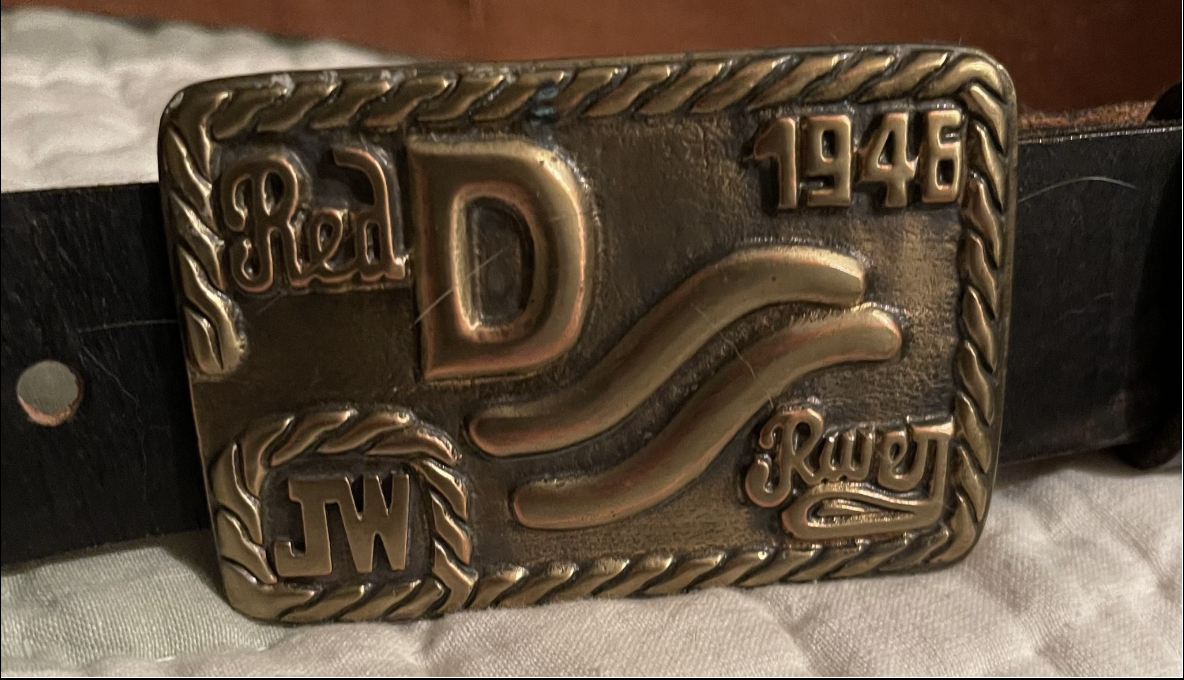
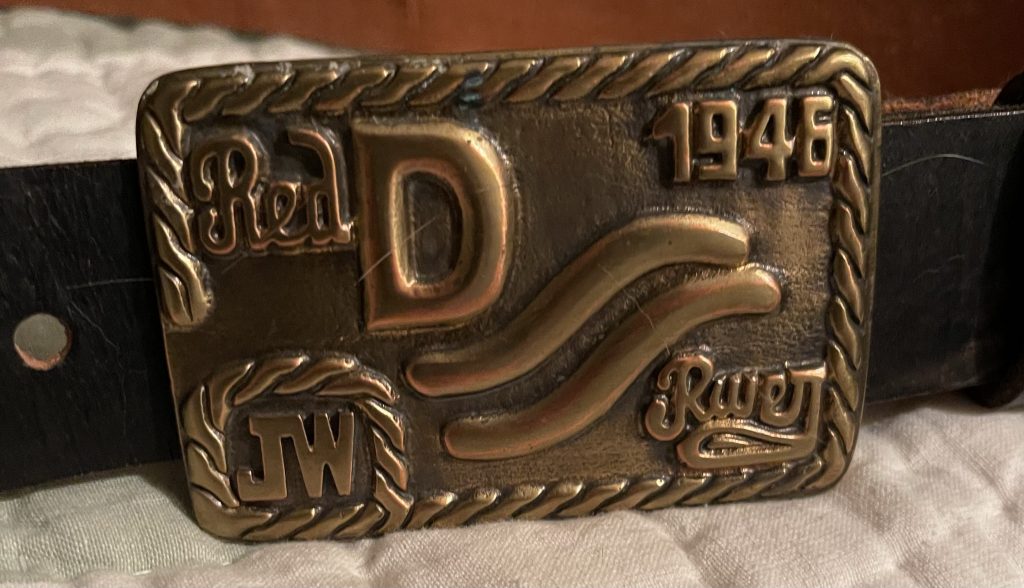
There’s something hugely joyful about reuniting with my mail-order John Wayne Red River brass belt buckle. The fact that I’m happy to once again have it in my possession means, of course, that I’m just as much of a racist swine as Wayne was during his lifespan, and has nothing to do with my loving the 1948 Howard Hawks western (which, as the buckle points out, was actually shot in ‘46).
If there’s one thing that today’s director-writers don’t seem to want to do and generally avoid doing for the most part, it’s letting the audience put two and two together. (The seventh screenwriting rule according to Billy Wilder or more precisely Ernst Lubitsch). Most filmmakers don’t like the idea of Joe and Jane figuring stuff out — they’d rather just spell it out in so many words.

I’m driving back to Connecticut this afternoon, having spent almost a full week at Jett and Cait’s home in West Orange, hanging with the dogs and trying to keep warm. A balmy 45 degrees now…unseasonably mild temps for the next few days.
I have a few posts in mind (more on A Man Called Otto, a riff on the origins of Weimar era anti-Semitism, Billy Wilder’s screenwriting wisdom) but not until I’m back in Wilton, I guess.
Meanwhile I’m suffering from a slightly acidic stomach and popping Pepto Bismol chewables every hour or so. I don’t like this — my health has been perfect my whole life.

Friendo to HE: “I lasted through 80 minutes of Everything Everywhere All At Once.”
HE to friendo: “Funny.”
Friendo to HE: “That was all I could handle. Couldn’t take any more.”
HE to friendo: “It took me about three hours to get through it. I needed to take breaks.”
Friendo to HE: “My 80 minutes included breaks as well.”
HE to friendo: “Step outside, breathe some air, eat an apple.”
Friendo to HE: “How any sane person thinks this thing can win [the] Best Picture Oscar…no way that can happen.”
Penned by a LAFCA member, here’s a response to the 12.27 L.A Times editorial about the advisability of going gender-neutral with Oscar acting noms:
Since 1929, the Academy Award of Merit (aka Oscar) has been awarded to artists by artists. Less than a decade after the 19th amendment granted women the right to vote, the Academy of Motion Picture Arts and Sciences created the categories of Best Actor and Best Actress, not as artifacts of a patriarchal, oppressive past but harbingers of a more progressive future in which the inseparability of sex and performance was acknowledged — and celebrated at parity.
This model has held for nearly a century because it is understood that actors bring more than simply talent to their craft — they bring the intractible experience of life as either male or female.
It is no surprise that recent calls to abolish these categories, including gender-neutral moves by the Spirit Awards, the Gotham Awards and the Los Angeles Film Critics Association, originate outside the profession and community of actors most impacted by them. These are efforts to change longstanding practice not at the behest of performers or for the betterment of the art, but to serve a broader, relatively recent agenda that presumes to achieve “equality” through the erasure of any recognized distinctions between the sexes. We reject these efforts as regressive and misogynist and call on the Academy and other organizations to do likewise.
It is especially disconcerting that this pressure campaign comes during a year with no fewer than three major awards contenders — The Woman King, Women Talking and She Said — singularly centered on the unique experiences of women. That all three films were also written and directed by women is a laudable step in the right direction — but could they have been just as easily written and directed by men? Absolutely. Could their predominantly female casts have been replaced by men? Categorically not. This is the distinction that advocates of genderless categories ignore.
Cate Blanchett and Michelle Yeoh are already heavy awards season Best Actress favorites for their respective performances in Tàr and Everything Everywhere All at Once. But their achievements are more than great acting — the characters depicted are wives and mothers, women struggling to meet unequal expectations in a male-dominated world. These are parts defined by their explorations of womanhood, elevated by great actresses with the irreplaceable experience of being women.
The same may be said on the other side of the equation — Colin Farrell and Bill Nighy‘s respective performances in The Banshees of Inisherin and Living are likewise rooted in their irreplaceable experiences as men. Living, adapted from Akira Kurosawa’s 1952 film Ikiru, is a noteworthy case in point. Though separated by seventy years and two continents, Bill Nighy and Takashi Shimura face precisely the same realities — experiences which transcend culture while being bound by sex.
Actors and actresses all understand that their career paths diverge based on sex and that this constitutes an opportunity, not a handicap. We should not expect or want Frances McDormand to play Macbeth any more than we should want Denzel Washington to play Lady Macbeth as the resulting performances would ring false, lacking the emotional resonance with which cinema connects the lived experiences of performers and audiences.
In his analysis of the Babylon catastrophe, Deadline‘s Anthony D’Alessandro writes that Paramount, the financing studio, thought that Damien Chazelle‘s 1920s Hollywood-in-transition epic would basically be The Wolf of Wall Street meets Once Upon a Time in Hollywood.
I’m sorry but whoever told that to D’Alessandro is either lacking in perception or, you know, a bullshitter.
Any Paramount exec who’d read Chazelle’s script (I read a 2019 draft) knew from the get-go that it was basically a vulgar Fellini Satyricon meets a 1920s Wolf of Wall Street, but minus the Scorsese-DiCaprio humor, charm, irony and the Tarantino wit and charisma…basically a general atmosphere of toilet-bowl downswirl. It was obvious on the page that none of it was funny like, for example, Scorsese and DiCaprio’s big quaalude scene.
It was obviously going to be a big-canvas Hollywood Guernica…a tour of orgiastic behavior (the emphasis was less on filmmaking and much more on drinking, cocaine-snorting and other degenerate indulgences) and stylistically intensified by whatever directorial panache Chazelle could muster. It’s a story about two major self-absorbed characters (Margot Robbie‘s Nellie LaRoy and Brad Pitt‘s Jack Conrad) suffering through the silent-to-sound transition period, and a neutral observer character (Diego Calva‘s Manny Torres) who doesn’t fare all that well either.
Variety‘s Rebecca Rubin is reporting that Avatar: The Way of Water now has $955.1 million in global revenue — $293 million domestic, $661 million foreign.
James Cameron’s film will almost certainly earn $1 billion by year’s end. It seems unlikely, however, to reach the $2 billion mark, which it needs to do, Cameron has said, to be considered a serious success.
From HE’s limited perspective (i.e., insect antennae readings), Avatar 2’s repeat viewing factor doesn’t seem to be happening with that old 2009 fervor. I felt rocked and energized by my first IMAX viewing, but also a bit exhausted and drained even. Impressed by the eyeball-popping tech, of course, but not particularly moved in any kind of primal emotional sense.
I’d like to see it again (or so I’m telling myself) but the idea of another 192-minute power-punch workout seems a bit daunting. It runs about 40 or 45 minutes too long. The consensus on this is pretty locked in.

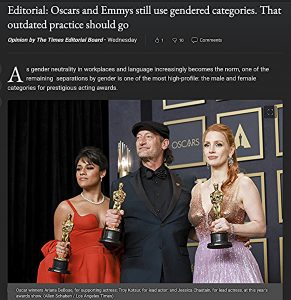
The Oscars have been withering on the vine for the last six or seven years due to woke politics and are pretty much all but toast, but in the view of the Los Angeles Times editorial board and an editorial they posted on 12.27, they’re not toasty enough.
“Let’s really stick a fork in this sad, dying annual celebration of movies,” a 12.27 LAT editorial essentially says. “Let’s urge AMPAS and the TV academy to kill gender-based acting Oscars in order to satisfy the political goals of the trans community and their progressive allies.”
Everyone understands that the lore of the Academy Awards telecast is all but finished. The viewing audience been shrinking over the last several years, especially among Millennial and Zoomers and double especially since the disastrous, pandemic-sieged Soderbergh Oscars of April 2021.
My heart is broken over this. I used to feel joyful during Oscar shows; now there’s almost nothing. James Stewart, Grace Kelly, Billy Wilder, Cary Grant, Ernest Borgnine, Bette Davis, Katharine Hepburn, William Wyler and William Holden are weeping in heaven and taking turns pounding the refrigerator door.
But in order to finalize the death process, the show needs one more kitchen knife shoved between the ribs, and the gender neutral acting initiative might just be the dagger point that does the job.
On 8.23.22 the Spirit Award honchos decided to abandon gender categories for acting awards, more or less following the lead of the Gotham Award guys. Two months later (on 10.12.22) a woke cabal within the Los Angeles Film Critics Association adopted the same policy, despite nearly half of LAFCA being opposed to gender neutral.
And now this L.A. Times editorial has gotten into the act.
I said this last August and I’ll say it again: “If the Academy decides to go gender-neutral with the Oscar acting awards, the eclipse will be total and absolute, and I mean beyond the level of anything dreamt of by Michelangelo Antonioni.
“In a populist cultural sense as well as aesthetically, the Oscars will have announced to the Joe and Jane Popcorn public that after six or seven years of fiddling around with secular woke passions and priorities, the Oscars are truly no longer about engaging even a semblance of a mass audience, or certainly in any way that seems to matter.
“Yes, Virginia, the Oscars are about wokesterism, secular industry politics and (this is key) elbowing older, insufficiently progressive white guys aside…about a tiny cabal of progressive fanatics who are determined to de-popularize not just the Oscars but movies themselves.
If AMPAS manages to eliminate gender-based acting awards, Average Joes and Janes will simply walk away and stay away…the more impassioned among them (i.e., the Oscar torch-bearers and sentimentalists) will raise their fists and voices and say “stop this insanity, stop this bullshit…outside the woke realm men are men and women are women, and they generate different moods and expressions and ways of living and processing the ups and downs of living…stop this bullshit and come down to earth.”
All hail the death of the great American art form called movies…right? All hail the political instruction that has overtaken a significant portion of mainstream movies and the casting process altogether. The Oscars were launched in the late ’20s and are now, 95 years later, on the verge of completely erasing themselves from mass public consciousness. All hail presentism!
And why? Several reasons and factors are behind this, but in today’s context it boils down to this: the non-binary trans community wants to strengthen its political influence and power. And to accomplish this goal, one of the most populist, mass-outreach, Joe and Jane Popcorn aspects of the Oscar telecast — gender-based acting categories, which have been with us for nearly a century and in fact for hundreds of years beforehand — has to be dissolved.
What the overwhelming majority of movie lovers might prefer is not important. The aims of a small activist minority is what counts.
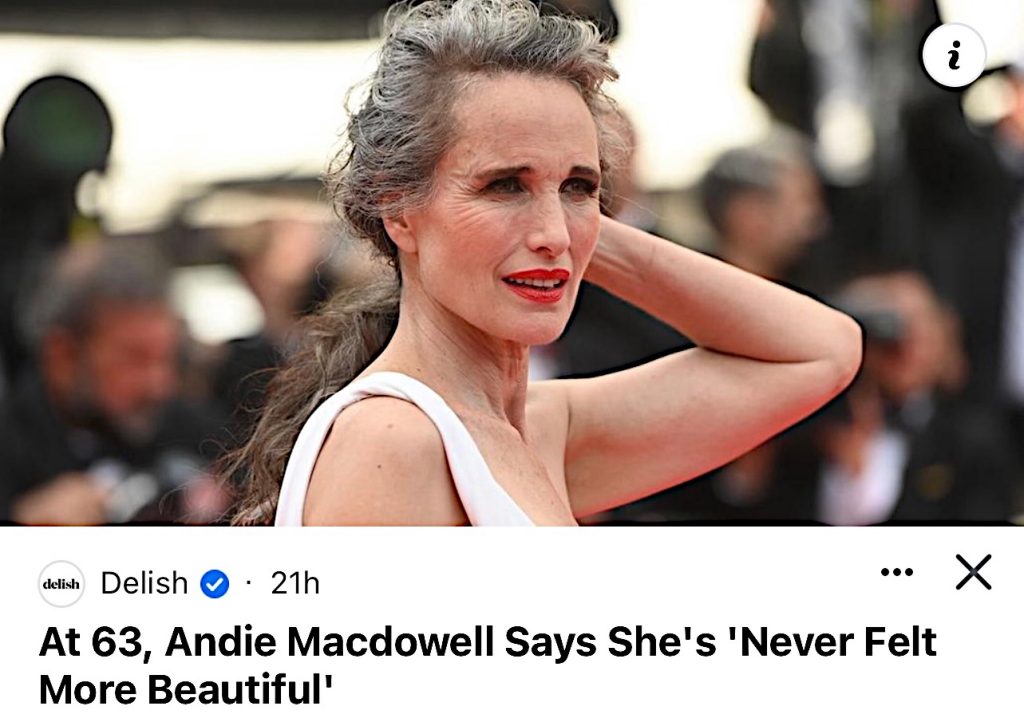
But I, a crusty male melancholic given to fuck-all gloomitude, can’t go there. I was moderately dishy back in my hey-hey days (early 20s to mid 40s) but no longer. Even with the Prague enhancements, older, creasier and slightly saggier is a biological fact these days and no amount of age-positivity can change that. I’m in reasonably good shape for the mileage but let’s not kid ourselves.