So When Do We Get The Verdict Already?

I was informed today that on 5.29 I wrote the wrong opinion about the Depp-Heard defamation trial. “They both lied, they’re both guilty,” I said. “It was just a bad marriage that turned ugly, to a significant extent due to Johnny’s drinking and drugging.”

I wrote that as one who had a vodka-and-lemonade problem in the early to mid ’90s and to a lesser extent in the early aughts due to nightly wine-sipping, I know for a fact that unless you’re Peter Pan or Mickey Mouse or Tom Hanks in Big the proverbial demon can emerge when alcohol is influencing your system and that harsh marital arguments…well, they’re rarely good for anyone’s mental health but you always want to argue sober. I know that much.

“No”, I was told this morning. “It’s NOT true that both are guilty. She is lying and he is not. Your judgment is colored by your experience as an alcoholic. This is not that. You are coming from a place of bias and ignorance,” etc.

I’ve watched many Depp-Heard trial excerpts, and I think I understand what the basic dynamic is. If there’s one thing I know it’s that in any failed relationship there’s never just one bad guy.

Anyway, here’s part of what Sasha Stone wrote a couple of days ago — the piece is titled “Johnny Depp Has Won In The Court of Public Opinion“:

“There is nothing fun about domestic violence. There is nothing fun about sexual, emotional, or physical abuse. The #MeToo movement, like the George Floyd uprisings in the early summer of 2020, put power in the hands of victims of sexual abuse to finally be heard. It was no doubt a direct response to the election of Donald Trump in 2016, because the first stories of sexual harassment and abuse started back then. I participated in a N.Y. Times article that preceded the #MeToo movement in the wake of the Harvey Weinstein saga.

“However, in both the Me Too movement and the Social Justice revolution of 2020, there came a time when the reckoning was weaponized. The #MeToo movement became a tool of power for victims, mostly women, to accuse anyone of anything and be believed, no matter what. In fact, to not believe them was and is considered a moral crime. The idea that we must “believe all women” created an environment where due process and presumption of innocence vanished. In their place, instant guilt and punishment rendered, just by the accusation itself.

“The first time I noticed something had gone very wrong with the #MeToo movement was the forced resignation of then Senator Al Franken. I still have never gotten over it and it’s one of the reasons I am no longer a Democrat (I am a non-affiliated voter at the moment). Chuck Schumer, Nancy Pelosi, Kamala Harris, Elizabeth Warren and Bernie Sanders all joined in to push him out with no due process. I knew the accusations against him were lies and distortions. But it didn’t matter. He was now guilty in the court of public opinion.

“I have put myself in the crosshairs of defending men who have been, I think, wrongly accused. Since the Franken accusations, I have regarded accusations against men at a time of weaponized power critically. I never simply believe women. Or anyone. But when I am asked to ‘believe’ something that comes way too close to organized religion, no thanks. I will listen and assess. But I will speak up if I find the hive mind on Twitter has it wrong or is enacting unfair punishment.

“Anyone who knows me knows this about me. I hate bullies. I hate seeing people bullied. It is my one trigger. I will always defend people whom I believe are being attacked unfairly. Whether it’s Ansel Elgort or Joe Biden or Nate Parker or my own friends — no matter what I receive in exchange for doing that, keeping my head down and saying nothing isn’t my thing.

“The Amber Heard/Johnny Depp trial is Me Too’s own reckoning, or rather, those institutions and hive minds that punish people who are falsely accused. The agonizing think pieces that have bloomed in the wake of the trial — I can’t even bear to google them — are worse for the #MeToo movement than even a verdict that sides with Depp. Because the whole world [has seen that] Heard was lying. That means that the activists are demanding allegiance to a concept that supports and defends liars. That means any time a woman accuses someone and everyone goes along with it, without due process, everyone’s credibility is out the window.

“How can anyone ask the public to side with someone who so obviously is not telling the truth? How do I know she is not telling the truth? Because Johnny Depp’s lawyers have proven their case. It’s as simple as that. Camille Vasquez’s cross examination of Amber Heard the second time she took the stand was devastating to Heard. She never should have taken the stand that second time. The only reason she did it is because she always has to try to destroy Depp. He testified a second time and explained what this trial had done for him, so she had to take the stand a second time. But for her, she had to meet with Vasquez who was not holding back in her confrontation of Heard’s side of the story.
Read more

Too Much Love

There’s no discussing the late Romy Schneider (1938-1982) without acknowledging how beautiful she was. She was ravishing. But you’re also missing a great deal if you can’t see past that. She was a riveting actress who always seemed connected to something primal and fearless and yet wide open to whatever.

It was a huge shock when Schneider died at only 43. A year earlier her son David, 14, was accidentally killed while climbing a steel-spike fence. (Remember Gregory Peck‘s horrified memory of his brother dying in a similar way in Spellbound?) Romy understandably succumbed to drink after that. She reportedly passed from a heart attack.

While in Cannes I saw Lucie CariesRomy, Femme Libre.

I chose not to review because I felt that the doc was bending over backwards to praise Scheider six ways from Sunday, any way it could. A feminist take that was committed to protecting her and having her back, but also, it seemed, to a form of worship. It was and is my feeling that Schneider deserved a somewhat franker look at who she was and wanted to be, warts and all — a film as honest about her life as she was honest with herself and her admirers while performing.

Over and over the film basically said that everything Schnieder said and did was somehow glorious or even radiant. I found myself pulling back. Rather than rain on the doc and out of my respect for Ms. Schneider, I decided to say nothing. But an hour ago I was asked for a reaction by a publicist, and my feelings just poured out.

I’ll Take Fascist Pinocchio Over Hanks-Zemeckis Version

Two Pinocchio films are opening later this year — one in September, another in December.

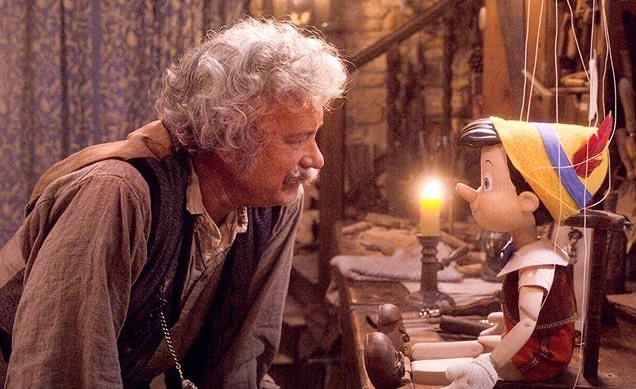
First out of the gate is a Disney+, family-friendly musical fantasy version from director Robert Zemeckis and starring Tom Hanks as Gepetto, and representing a blend of live action and CG.

Three months later Netflix Animation will release a second musical fantasy that sounds like an artier, more angular version — all stop-motion, set in fascist Italy and directed by Guillermo del Toro and Mark Gustafson.

I’m not presuming that the latter version will be less rote and more adult-friendly, but it certainly sounds like it might be that.

Best Films In Which Very Little “Happens”

Except for the wounding, bandaging and eventual healing of a pigeon, next to nothing happens of any serious consequence in Kelly Reichart’s Showing Up, which I reviewed a few days ago in Cannes. And yet despite the absence of a compelling story, it’s reasonably engaging…okay, mildly diverting.

But is it also about significant invisible things…undercurrents that signify what’s actually going on in not just the characters’ lives but perhaps even our own? That’s the key question, and honestly? I can’t say that I felt much of this.

What are the most highly regarded films in which relatively little transpires plot-wise but which signal that something is going on, and in some cases more than a little something?

Certainly the five Antonioni classics of the ‘60s (L’Avventura, L’eclisse, La Notte, Red Desert, BlowUp). Sofia Coppola’s Somewhere. Chris Petit’s Radio On. I’m already running dry. Which others?

Posted in July 2021: Most of us are attuned only to life’s tangibles — food, shelter, warmth, money, clothing, pets, guns, cars, shoes, homes, furniture, trees, hills, mountains, oceans, swimming pools, sailboats. Things we can see, touch, smell, eat, wear and dive into.

But others, fortunately, are also mindful and in some cases stirred or motivated by invisible things — thoughts, feelings, spirits, ghosts, dreams, intuitions, morality, melancholy, premonitions, memories.

Any filmmaker can focus on the tangibles. Most of them do, in fact. Movies that are strictly about tangibles are “mulch” movies, a term that I defined earlier this month. Mulch is the source of our shared Hollywood ennui…the muck at the bottom of the dried-up lake…the disease that keeps on infecting…the gas that fills the room.

Except for a smattering of elite, award-season stand-alones (or festival movies) and select forthcoming streamers like HBO’s Scenes From A Marriage (Bergman remake), Hollywood makes almost nothing but mulch these days. The streaming + re-emerging feature realm is flooded with mulch…empty, inane, meaningless, spirit-less, jizz-whiz “content” crapola that nobody wants to see or cares about, but they’re made anyway because the zone-outs and knuckle-draggers need stuff to watch.

But only serious directors are able to convey or dramatize the presence of invisible things. The finest films are actually concerned with a mixture of tangible things, which is natural and inevitable in any corner of life, but are driven by the invisibles.

And the best of the best almost never articulate in so many words what the invisible currents or particles are about. They hint at them or nudge audiences into considering or meditating upon their presence, but they never say “these are the things that really matter.” The great films always say “you figure it out…you put it together.”

The more a film is focused upon or at least mindful of the invisibles, the richer and more accomplished it is. And the more moving, of course.

“Broken, Narcissistic, Weirdo Sociopaths”

The Depp-Heard defamation trial is over, and now we’re all waiting for the jury’s verdict. They both lied, they’re both guilty…it was just a bad marriage that turned ugly, to a significant extent due to Johnny’s drinking and drugging. But after the Washington Post editorial he wanted his day in court to say to Hollywood and the world, “I was addicted and kinda bad at times, okay, but she was even worse.” When it began I wasn’t expecting that so many people would slam Heard as the senior destructive element. She’s really been hit pretty hard, reputation and career-wise. That bed turd will always be there. No one will ever forget it.

@leiasanz0 #johnnydepp #amberheard #amberturd #joerogan #joeroganpodcast ♬ original sound – Leia Sanz609

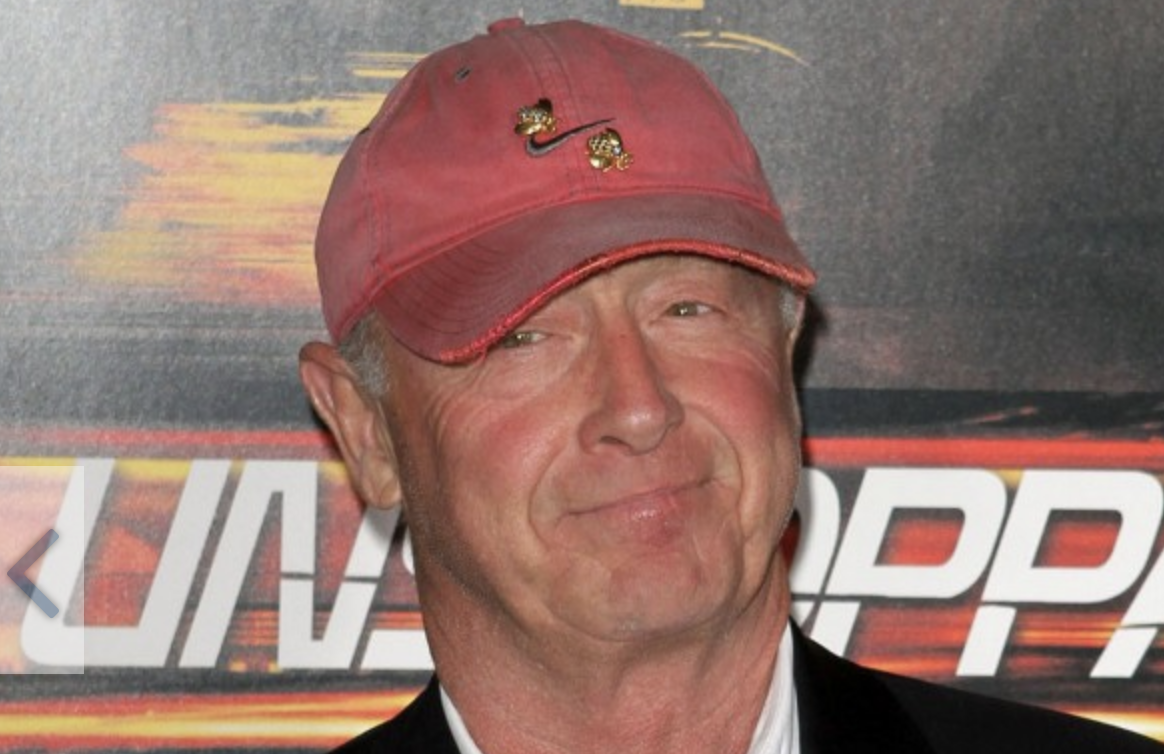
Authentic Tony Scott Story

On 5.20 former Paramount and Disney production chief David Kirkpatrick posted a fascinating Facebook essay about working with fabled director Tony Scott (1944-2012) on Top Gun (’86).

“Original Top Gun helmer Tony Scott was to have directed Top Gun: Maverick. Tony had a signed contract with Paramount and was developing the screenplay. But ten years ago this August, Tony jumped off a San Pedro bridge to his death. I am not certain of the whys behind the suicide**, only that it is always a sad event when someone checks out early. It’s especially sad when it is someone as sunny, bull-headed, and easy-to-laugh as Tony. He silently battled cancer for 40 years but kept it quiet. There was no sign of it in the coroner’s report or any other underlying health issues. His brother, Ridley, called his suicide ‘inexplicable.’

“I first met Tony on the screen. He was a lad of 15 years. He starred in his older brother’s first experimental film. It was shot with a Bolex in Hartelpool England. The movie was called Boy & Bicycle — 45 minutes of Ridley Scott doing fancy camera moves while Tony rode around. It was not as powerful as Truffaut’s first film which also tackled the subject matter of bicycles, but it showed the daring and power of the film language that Ridley would later command in movies from Alien to Blade Runner to Gladiator.

“Tony had a sweet demeanor in that short movie. While he was 8 years older than I, I always treated him like a younger brother. What does that mean? I was kind but firm with him because he could be prone toward mischief and disobedience even while smiling and hugging you.

“In the flesh, I first met Tony in an interview with Ned Tanen, the head of the studio, at Ned’s house in [Santa Monica] on Channel Road. The meeting was to determine if Tony should direct Top Gun. During the high-tension meeting, Tony fell asleep. In mid-sentence. While explaining his vision in Ned’s favorite chair.

“35 Hollywood directors had turned down Top Gun. The producers, Don Simpson and Jerry Bruckheimer, were anxious to keep the project alive. But NO ONE wanted to get near it. Don and Jerry had a monster hit with Flashdance. BUT when first viewed, Flashdance was a hot mess. After the preview, the theatre was empty. The audience had walked out. It was that bad. Flashdance went through 35 arduous previews until it morphed into an audience-pleasing juggernaut success. Paramount was infamous for previewing until the movie was the best it could be.

“After the meeting with Scott, Tanen turned to me and said ‘well, what do you want to do?’

“Then came the most important prompt of my life. I learned so much through that prompt. Ned said, ‘Listen, I hate this fuckin’ project. I hate these fuckin’ looney-tune producers. Everyone in town hates the script. But I believe in you. If you want to make a fuckin’ movie with this Brit who falls asleep in the middle of a job interview, then be my fucking guest. You make the decision, right or wrong. And when this fucking movie comes out, you’re going to wear it, for better or worse. You get it? Do you understand me?’

“I took up the gauntlet. To be fair, Scott was jet-lagged. He had gotten off a plane from London and was rushed to Ned’s house for the meeting. I felt bad for my younger brother.

“That night, I booked a projection room on the Paramount lot, ordered some take-out, and watched Tony’s last movie, The Hunger, about lesbian vampires. It was beautiful to look at, and it was godawful. Commercial storytelling demands that a director put the energy of the narrative in the right place. It was a bunch of pretty images and nothing more.

“In The Hunger, Tony was so focused on closeups of high heels and red-painted mouths and endless fluttering curtains, I never had a clue where I was in the story. He never established the geography of the narrative. There were no masters. No exits and entrances of people into rooms. Where the heck were we?

“After a sleepless night, I asked to have breakfast with Tony and his manager, Bill Unger. I explained to Tony that we would hire him to direct Top Gun under two conditions: 1) adhere to the budget of $13.5 million and 2) in every scene, shoot a master up front as protection. ‘We have to know where we are, Tony. You are a brilliant shooter but we have to know where we are. If we are shooting a bar scene, we need to see the bar to establish the scene. That goes for every scene, whether it be an air hanger or a classroom. ‘I promise, mate,’ he said as he smiled and hugged me.

“I went back to Tanen and told him we had found our man. I explained why we were hiring him, what the simple strategy of obtaining master shots in each scene. I told Ned that I had gone over the financials and believed with some certainty, with Tom Cruise’s star power, we could reach at least break-even if the picture did $50 million in U.S. box office. With that box office, we should do at least 3 million units in home video.”

Tanen: ‘Listen to you,’ he laughed. ‘You’ll have my job in 3 years.’

“’I appreciate the responsibility and for your belief in me,’ I said. ‘No one has ever believed in me like that.’

“’Get outta here,’ he said but he was choked up. Three years later, I took over his job. He was tired of it. Ned helped me believe in myself. I never worked so effing hard to make Tony work as the director in all my life.

Read more

Take This To The Bank

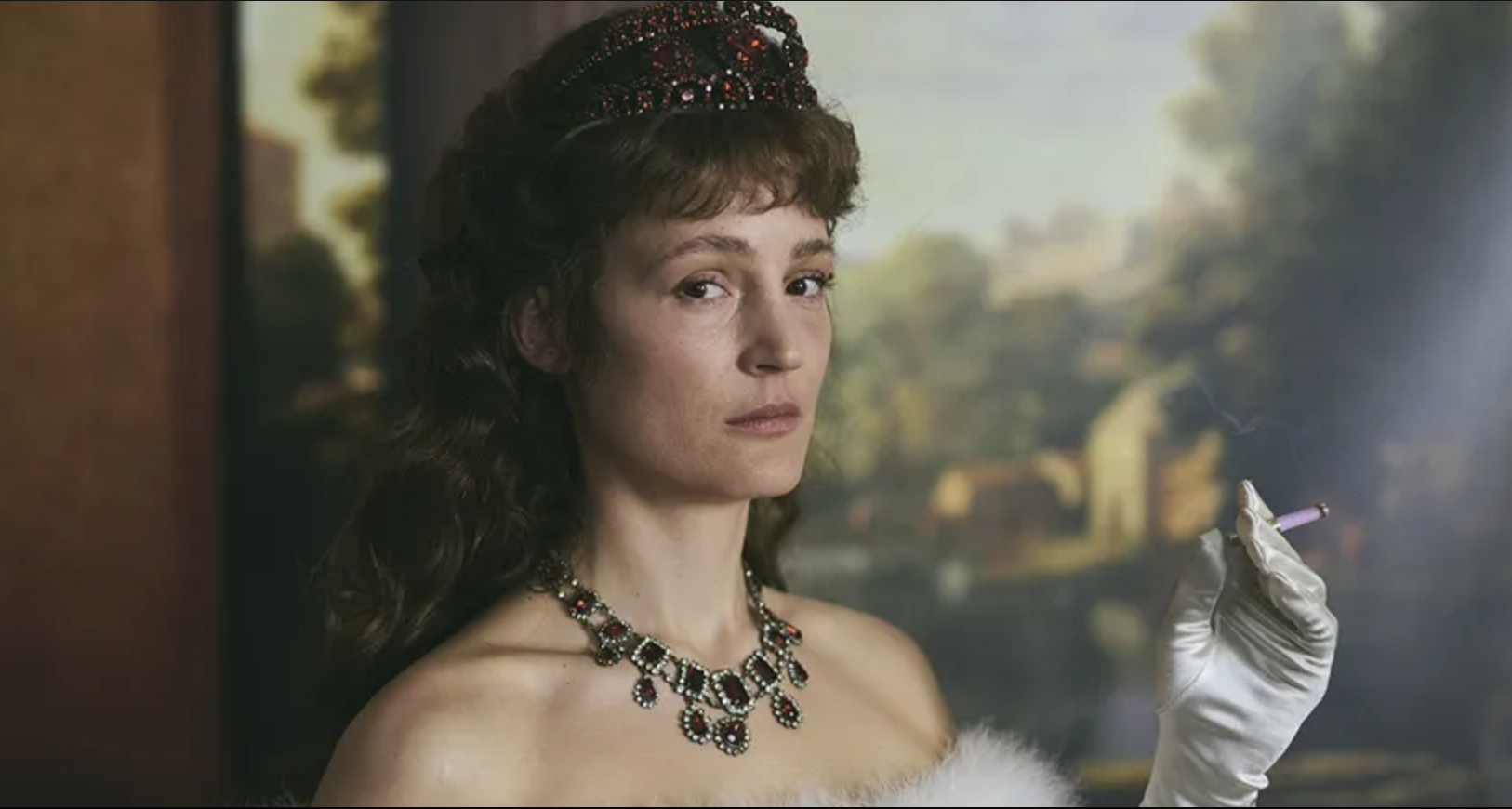
In a 5.28 Cannes Film Festival sum-up piece by Anne Thompson, the headline announces that Vicky Krieps, star of Marie Kreutzer‘s underwhelming Corsage (which I reviewed on 5.20)…the headline announces that Krieps “won big.”

Thompson: “Austria could submit Kreutzer’s irreverent costume drama Corsage [for Oscar consideration]…many thought Corsage should have been programmed in the Competition…[it stars] versatile Berlin actress Vicky Krieps as Austria-Hungary’s rebellious Empress Elisabeth (‘Sissi’)…Krieps shared the Un Certain Regard Best Actress award. With the right handling from IFC Films, the revisionist 19th-century royal slice-of-life could compete for Best Actress and Best Costume Design, as well as International Feature Film.”

HE reality check: Krieps did not “win big” at Cannes. Her Corsage performance resonated to some extent, but there’s no way in hell that Krieps’ moody, sullen turn will be even considered as a Best Actress contender. Corsage may make headway in the other two categories.

Posted from Cannes on 5.20.22: I regret reporting that Marie Kreutzer‘s Corsage, which screened at 11 am this morning, didn’t sit well. I found it flat, boring, listless. The Austrian empress Elizabeth (Vicky Krieps) is bored with her royal life, and the director spares no effort in persuading the audience to feel the same way.

Krieps plays up the indifference, irreverence and existential ennui. Somewhere during Act Two a royal physician recommends heroin as a remedy for her spiritual troubles, and of course she develops a habit. I was immediately thinking what a pleasure it would be to snort horse along with her, or at least during the screening.

Corsage is unfortunately akin to Pablo Larrain‘s Spencer and Sofia Coppola’s Marie Antoinette — stories of women of title and privilege who feel alienated and unhappy and at a general loss.

I’m sorry but this movie suffocates the soul.

In actuality Empress Elizabeth was assassinated in 1898, at age 51. For some reason Kreutzer has chosen to end the life of Krieps’ Elizabeth at a younger point in her life, and due to a different misfortune.

This is one of the most deflating and depressing films I’ve ever seen.

Never Laughed at Siri Joke Before

Siri’s inability to understand or verbalize the LMAO acronym (laughing my ass off) leads to “luhmayo” after the punch line. Jokes have to be delivered just so or they don’t work. Yes, I’m aware that this is eight months old.