Never Liked Bowlers

I’ve gone bowling maybe 10 times in my entire life, 15 at the outside. Not that I mind throwing a few. I enjoy failing at bowling as much as the next guy. I never scratch but I rarely throw strikes, and after a while this pisses me off. There are always one or two pins left after my second throw. What am I doing wrong?

I realize, of course, that bowling is more of a laid-back pastime than a “sport.” Hang out, get buzzed on Budwiesers, make fun of someone’s technique or frequent gutter balls, flirt with the women in the next lane. But those relatively shitty scores that I always end up with are bothersome. This is one of the many, many reasons why I’ve never liked Kingpin (’96).

The basic thing is that I’ve never felt especially at ease with the people who frequent bowling alleys. They’ve alway struck me as low-rent animals who don’t read much or appreciate fine cinema — vaguely schlubby proletariats, Lebowski-cult stoners, beer-heads, horrible dressers, fatties, guys in dad jeans, loud families. Not my kind of people.

I began feeling vaguely alienated from bowling relatively early in life. I remember going bowling with my cub-scout troupe when I was nine or ten. There was this kid named Howard Schoffler whose mother had orchestrated the excursion. We quickly learned that she had been teaching Howard how to bowl for some time, and that he’d become pretty good at it. So right away I was seething about what a set-up this was. Howard’s mother wanted us to “have fun” and we did, but the visit to the bowling alley was mainly about everyone taking note of Howard’s bowling skills.

I was also irritated by Howard having mastered the hook or spin-ball technique — he would throw the ball down the right side of the lane with a leftward spin on the ball, and them five or six feet before impact the spin would kick in and the ball would crash into the center of the pins for a perfect strike. My reaction wasn’t a hearty “wow…good throw, Howard!” My reaction was a silent “fuck you, showoff.”

Ever since that day I’ve been generally against the idea of hooking the ball. Because I don’t ever want to be like Howard Schoffler. I use the arrows as guides, and I throw straight and true and hard. I love it when one of my “fastballs” slides down the lane without rolling, or halfway at least.

Not A Sequel to Arthur Penn’s “Mickey One”

Oscar-winning director Bong Joon-ho (Parasite) and RPatz (also know as RBatz) are teaming for a futuristic sci-fi film based on Edward Ashton’s upcoming novel Mickey7.

From Justin Kroll‘s Deadline report, filed this morning “In Ashton’s book Mickey7 is an Expendable, a disposable employee on a human expedition sent to colonize the ice world of Hoth Niflheim. Whenever there’s a mission that’s too dangerous — even suicidal — the crew turns to Mickey. After one iteration of Mickey dies, a new body is regenerated with most of his memories intact. After six deaths, Mickey7 understands the terms of his deal…and why it was the only colonial position unfilled when he took it.”

If it was within my power to produce a dream project for Bong Joon-ho to direct, I would choose a Parasite prequel titled Maid In The Rain.

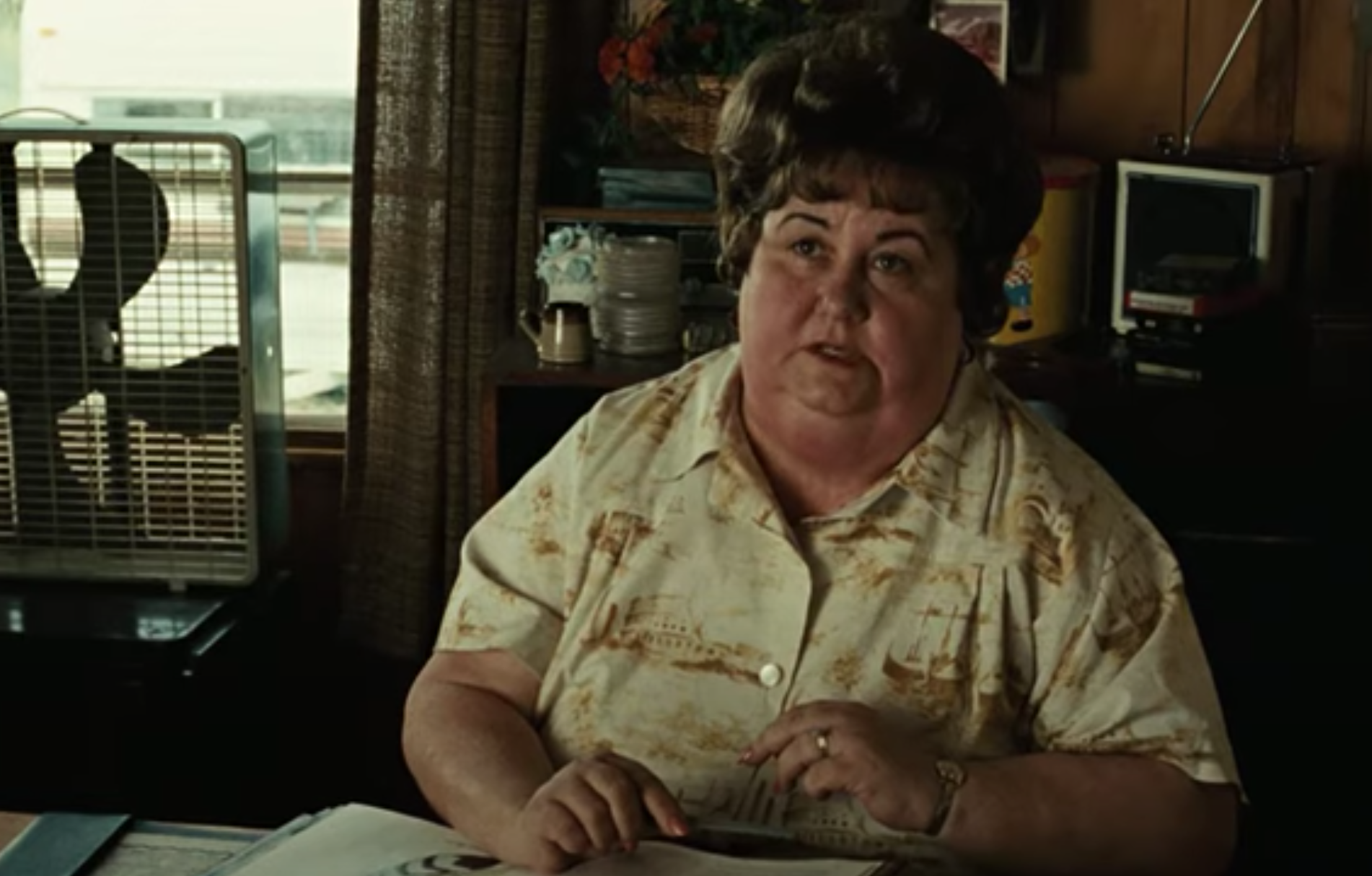
I’m envisioning the full story of Lee Jung-eun‘s Moon-gwang, the once-employed housekeeper for the wealthy Park family who managed to somehow persuade the Kim family to let her into the Park home during a rainstorm while the Kims are drunk.

Maid in the Rain would explore all the whys and wherefores of this curious incident while exploring various alternate scenarios that might explain one if the greatest mysteries of 21st Century cinema.

“Sex Is Between The Legs”

“…and gender is between the ears.” — Addison Rose Vincent (they/them), the non-binary person in slacks and high heels and a short beard who was on Dr. Phil earlier today. Addison’s partner Ethan (he/they), an LGBTQ+ advocate was also on the show. Earlier today Addison and Ethan batted the tennis ball back and forth with Matt Walsh (he/him), author and host of the Daily Wire’s “The Matt Walsh Show,” who insisted (as others have over thousands of years) that gender is rooted firmly in biology.

Read more

Act of Cinematic Dismissal

In late December 1974 I caught my first screening of The Godfather, Part II. It was fairly cold that day in Connecticut, and I clearly recall that the theatre, located somewhere north of downtown Stamford, was closed when my sister and I first arrived around 1 pm, and that the manager arrived a few minutes later and hurriedly opened the place up, and that the theatre was damn chilly inside. We kept our overcoats on.

My second viewing was back in Los Angeles the following month. I attended a mid-evening weekday show with a friendly acquaintance (i.e., not quite a friend) named Mitch. The showing might have been at the National Theatre in Westwood, and if not there then at a small theatre on Wilshire Blvd. near 14th Street in Santa Monica.

I was enthralled with Francis Coppola‘s film, of course, but Mitch was muttering about how cold and frosty Al Pacino‘s performance was. (He preferred the younger, more open-hearted Michael Corleone in The Godfather.)

And then Mitch did the unthinkable. He fell asleep! During The Godfather, Part II! He went out roughly a half-hour before the ending, and was snoring to boot. I got up and sat four or five rows closer to the screen so I wouldn’t hear his bear noises. I was furious with the guy. He had nodded off as an expression of critical disapproval by way of boredom, or so I believed, and I found that intolerable.

And so the film ended, and Nina Rota‘s music filled the theatre during the closing credits. And then the lights came up and I got up and walked by the still-dozing Mitch. The natural joshing “guy” thing would have been to nudge him awake and say “congratulations, asshole — you missed the last half hour” or something along those lines. But I was too consumed with disdain so I walked to the rear of the theatre and just stood there, thinking “fuck that guy, what a douche.”

I wasn’t going to leave on my own (we had driven to the theatre together), but I damn sure wasn’t going to wake him up. Mitch had to understand what a crime it was to fall asleep on a film that was obviously first-rate, and that would go on to win the Best Picture Oscar of 1974.

The theatre had been roughly one-third filled, and of course eventually the lights were turned all the way up and whole place was emptied out and only slumbering Mitch was left. Eventually the ushers started moving through the aisles and cleaning the place up. I stood my ground and watched as an older usher slowly roused Mitch with a couple of shoulder taps. He got up, sleepy-eyed and foggy-headed and a bit stumble-footed, and made his way up the aisle. He was seething.

“The fuck you leave me there for?”, Mitch said. “Why didn’t you wake me up?” I should have said “Sorry, man, but you needed to be lightly punished for falling asleep during a great film.” Instead I lied and said, “I don’t know, you looked so comfortable…I didn’t have the heart to wake you.”

Mitch had been a comme ci comme ca pally but was nothing close to a good friend. I never saw another film with him — I can tell you that much.

Eyes Like What They Like

Last night I rumble-hogged over to the Grove and caught Guillermo del Toro‘s black-and-white version of Nightmare Alley (subtitled “Vision in Darkness and Light”). I generally felt that the whole thing looked too dark and muddy. Not each and every shot, mind, but a good portion of it. Especially the travelling circus section, which accounts for the first…what, 35 or 40 minutes?

I’m sorry but my eyes want what they want, and they wanted more light, more contrast and less shadow and murk.

Plus I had an even worse time with Bradley Cooper‘s Stanton Carlisle character. I didn’t care for his slimey company the first time around (I saw it in Manhattan in late December), but “monochrome Stan” was somehow even worse. I was sitting there going “I don’t like you and your fucking moustache and your fucking cigarette habit” — the actual subject of Nightmare Alley is unfiltered cigarette addiction — “and I really wouldn’t mind it if someone killed you with a pick-axe. In fact I’d prefer it. I don’t like hanging out with scumbags.”

Yes, the ending in which Stanton has a good hearty laugh about how he’s screwed his life up and is doomed to misery…this is still the best scene in the whole film.

Two comments from yesterday were spot-on, as it turned out

Michael Gebert: “These straight conversions of a movie shot for color rarely work well. It’s worth looking at Warner Archive’s disc of Doctor X, which was shot in both two-strip Technicolor and black-and-white, but it’s not a conversion– the black and white version is plainly lit differently, to work in black and white with proper highlights and shadows. while the color is shot to deliver the novelty of color. (There were even two cinematographers — Ray Rennahan, who shot Becky Sharp, the first three-strip Technicolor feature, as well as Duel in the Sun, The Court Jester and others, did the color version.)”

Brenkilco: “You’re not going to get anything like the chiaroscuro of a ’40s noir, specifically lit for monochrome and photographed on black-and-white filmstock, by draining the color out of a digital movie originally shot in color.”

Good “Work” Approved

We all understand that discussing women’s facial work is totally verboten these days, as the Renee Zellweger vs. Owen Gleiberman facial work kerfuffle of June 2016 made clear. While HE is willing to play along, it has long been my position that expert, quality-level work should be respected. (I can say this as a recipient of certain Prague-based procedures myself.) Consider this before-and-after of Marilyn Monroe. Obviously an excellent adjustment — one that requires appropriate praise for plastic surgeon Michael Gurdin, who obviously knew what he was doing.

Whedon Vulture Exposure

Last night I read Lila Shapiro’s “Joss Whedon Exposed.” It had been described as an urgent must-read. It’s certainly long and well-written in a semi-dramatic sort of way, and seemingly thorough as far as these types of articles (i.e., saga of a reputed shitheel) tend to go.

Over the last two or three years (longer?) there’s been an emerging consensus among co-workers that Whedon, once regarded as a feminist-minded creative producer & show-runner who understood and celebrated women, has behaved in a cruel, callous, dishonorable way (including sexually), and that he’s now, to quote the “Vulture” subhead, “an outcast accused of misogyny.”

Shapiro’s piece, based in large part on an interview with Whedon that happened last spring, reiterates and expands upon these claims. The basic thrust is “Whedon, a bad man, has become a toxic figure whom many if not most producers and distributors and streamers don’t want to work with any more, but his full, harmful toxicity hasn’t been fully understood, not really, and so Whedon must continue to be lashed & shamed for these failings.”

It led me to conclude that as powerful Hollywood types go, Whedon may have behaved as badly as Kirk Douglas’s Jonathan Shields character did in The Bad and the Beautiful. (Or worse.) He may have been as cruel and exploitive as Harry Cohn, Louis B. Mayer, Daryl F. Zanuck, Jack L. Warner, David O. Selznick and other producer kingpins may have been in their day. (Or something like that.) Hollywood has long rewarded or at least not interfered with powerful abusive types for many decades, and sometimes the karma snaps back and the chickens come home to roost . And…?

“Kitbag” Is No More — Now Called “Napoleon”

The Apple TV+ marketing guys have apparently pressured Ridley Scott into changing the title of his Napoleon Bonaparte biopic. Formerly called Kitbag — one of the coolest-sounding titles ever for a sweeping canvas historical biopic — it’s now called Just Plain Old Fucking Napoleon. I’m kidding — it’s called Napoleon. This is according to producer Kevin Walsh, who told Deadline all about it. (Hat tip to World of Reel‘s Jordan Ruimy, who posted his own report several minutes ago.)

Yvette Mimieux, Adieu

Yvette Mimieux has left the earth. Due respect for an actress who broke through in the early ’60s (The Time Machine, The Light in the Piazza, Toys in the Attic) and who went for broke and gave it hell when she starred in Jackson County Jail (’76), a somewhat schlocky but tough Roger Corman film that mostly holds up by present standards. (I happened to re-watch it only two weeks ago.) Hugs and condolences for friends, fans, colleagues, family.

Read more

Hauser vs. Dargis-Scott Eccentricity

Last night Paul Walter Hauser (Richard Jewell, Cobra Kai) posted an angry Twitter rant about Manohla Dargis and A.O. Scott‘s 2021 award picks, which were posted last weekend (“And the 2022 Oscar Nominees Should Be…“).

At one juncture Hauser called Scott and Dargis’s preferences “psychotic”, but what he really meant was that he found their selections overly precious and wokesterish, or too far off the planet earth for his tastes.

Scott-Dargis are renowned for their politically attuned taste buds and cock-eyed eccentricity. They reside on a distant planet, and it’s fair to say that in a certain light they’re hated. Remember “DSU,” the derogatary term (Dargis-Scott Universe) that someone invented for them a few years back? Remember their “25 Greatest Actors of the 21st Century” piece (posted on 11.25.20)? 85% informed by virtue-signalling, wokeitude, etc.

I mentioned the Dargis-Scott picks yesterday and had a Hauser-like reaction (“Differing Degrees of Apartness“). I said that “even within their bizarre arena of N.Y. Times woke-itude, Scott and Dargis may be even more eccentric than Armond White, and that’s saying something.” On 1.17 Showbiz 411‘s Roger Friedman posted a similar response, noting that their picks were “ridiculously elitist.”

What is clearly needed in the N.Y. Times‘ film coverage is a third critic, a counterweight type who isn’t so fickle and high falutin’, and isn’t always box-checking for the participation of women and BIPOCs. A critic who just likes a movie or doesn’t like a movie for reasons of cinematic merit alone, and who isn’t so fucking fancy-pants about it. A film-world equivalent of a Bret Stephens or a Ross Douhat. Someone who could pen an occasional movie column called “Down to Earth.” Perhaps an anonymous critic who could file under the name “Clem Kadiddlehopper.” You know what I mean. An anti-wokester, cut-the-bullshit type like myself.

Not that the Times-sters would even glance in my direction, were such an idea to be given the slightest consideration. I am my own man, but I am also, in a manner of speaking, a dead man. Which is the source of my freedom. Because I don’t give a damn about anything. Well, I do when it comes to my granddaughter, Sutton, but what has she got to to do right now with truth and clarity in the realm of motion pictures? Basically I regard the woke Stalinists as nothing short of deranged, and I know that we’re all living through dark times.