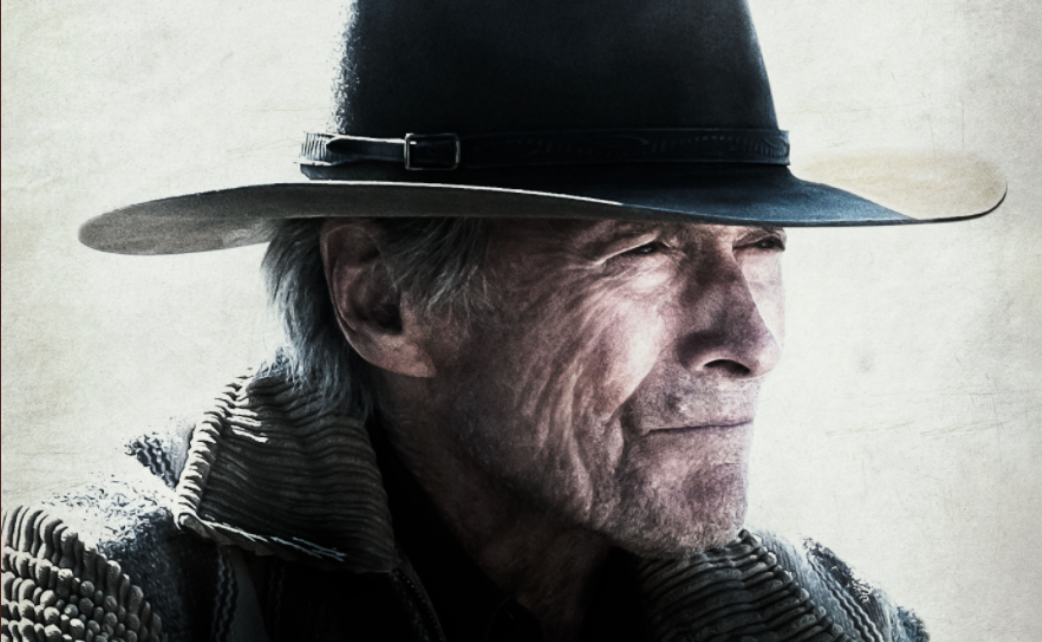
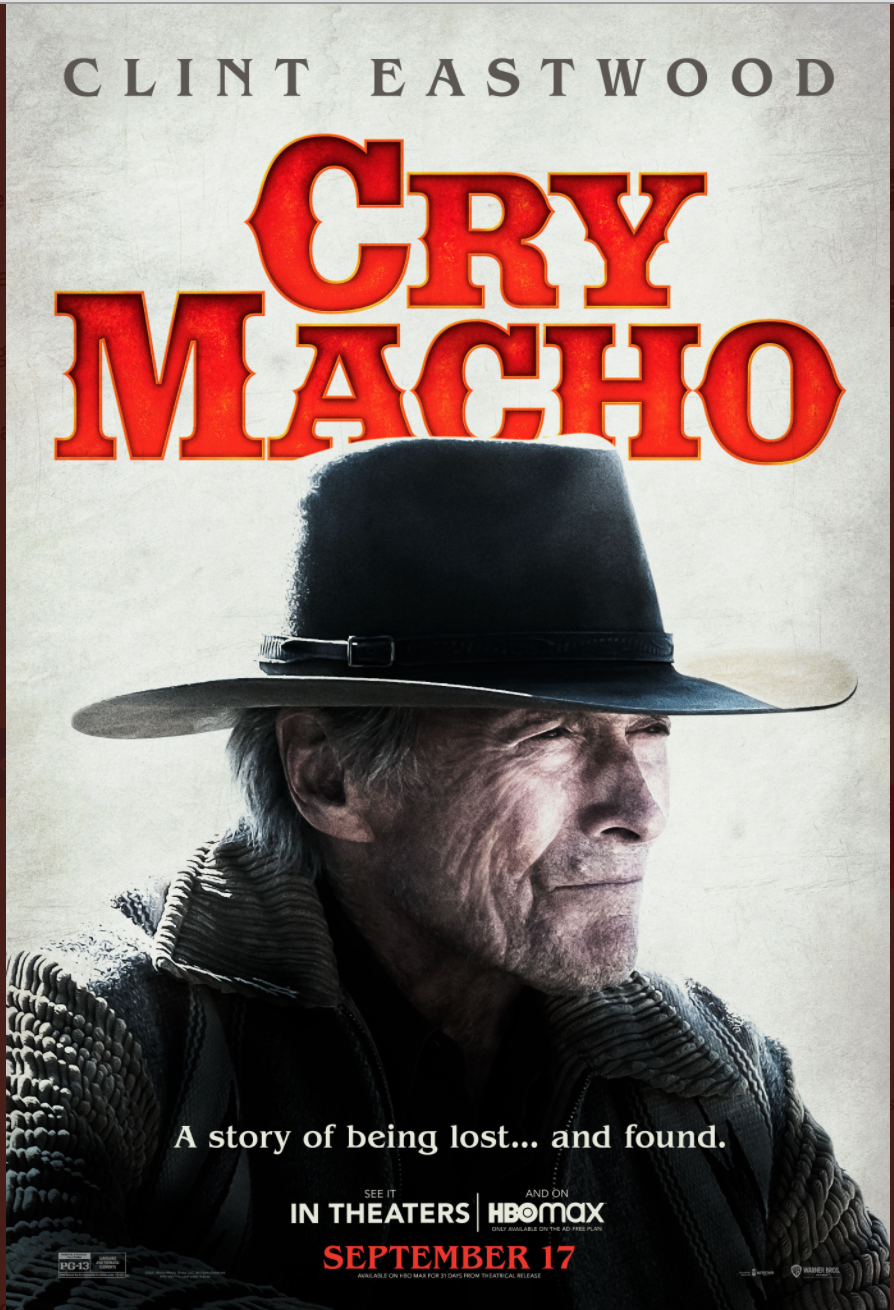
From Owen Gleiberman’s Cry Macho review: “Even though he doesn’t rule physically anymore, the 91 year-old Clint Eastwood we see in Cry Macho is just as rooted in the domineering presence of his mystique as he ever was. He’s just quieter about it.
“The movie turns into a romance: When they’re at that ranch, the woman who runs the adjoining cantina cooks for them, and she and Clint strike up a flirtation so sly it kind of sneaks its way into the movie. The actress Natalia Traven has a face that seems to have lived, just like Clint’s, and it’s sweet to see them pair off. But it’s not more than sweet.”
HE to Gleiberman: A subtle, pleasing flirtation between Clint and Natalia…fine. She’s 40 years younger but that’s cool. Some years ago Terrence Stamp (now 83) was asked about love and relationships, and he said “I’ve fallen off that horse.” That probably goes double for a 91 year-old.
Early this afternoon a Variety piece shared a downbeat assessment of the still-unfolding Toronto Film Festival. Written by Matt Donnelly and Angelique Jackson, it was titled “Toronto Film Festival Soldiers on Through COVID-19, but Where Are the Movie Stars?” HE’s question is more to the point — where the hell was Reinaldo Marcus Green and Will Smith‘s King Richard, the biggest hot-button film of the ’21 Oscar season so far and the likeliest winner of the Best Picture Oscar?
King Richard premiered in Telluride on 9.2, but Toronto honchos couldn’t persuade Warner Bros. to show it there also? In the old days Toronto would screen each and every Best Picture contender that was making the rounds, bar none. But for whatever reason (possibly Covid concerns) Warner Bros. decided against it.
Jordan Ruimy: “2021 was TIFF’s worst edition by far. I can’t believe they couldn’t even nab King Richard — that would have easily won the People’s Choice award. The only logical explanation for King Richard not going is that WB just wanted to skip Toronto. And where were C’mon Cmon, The Lost Daughter, The Hand of God and Cyrano? And you’re absolutely right, by the way, about the inexplicably over-praised Spencer and Belfast.”
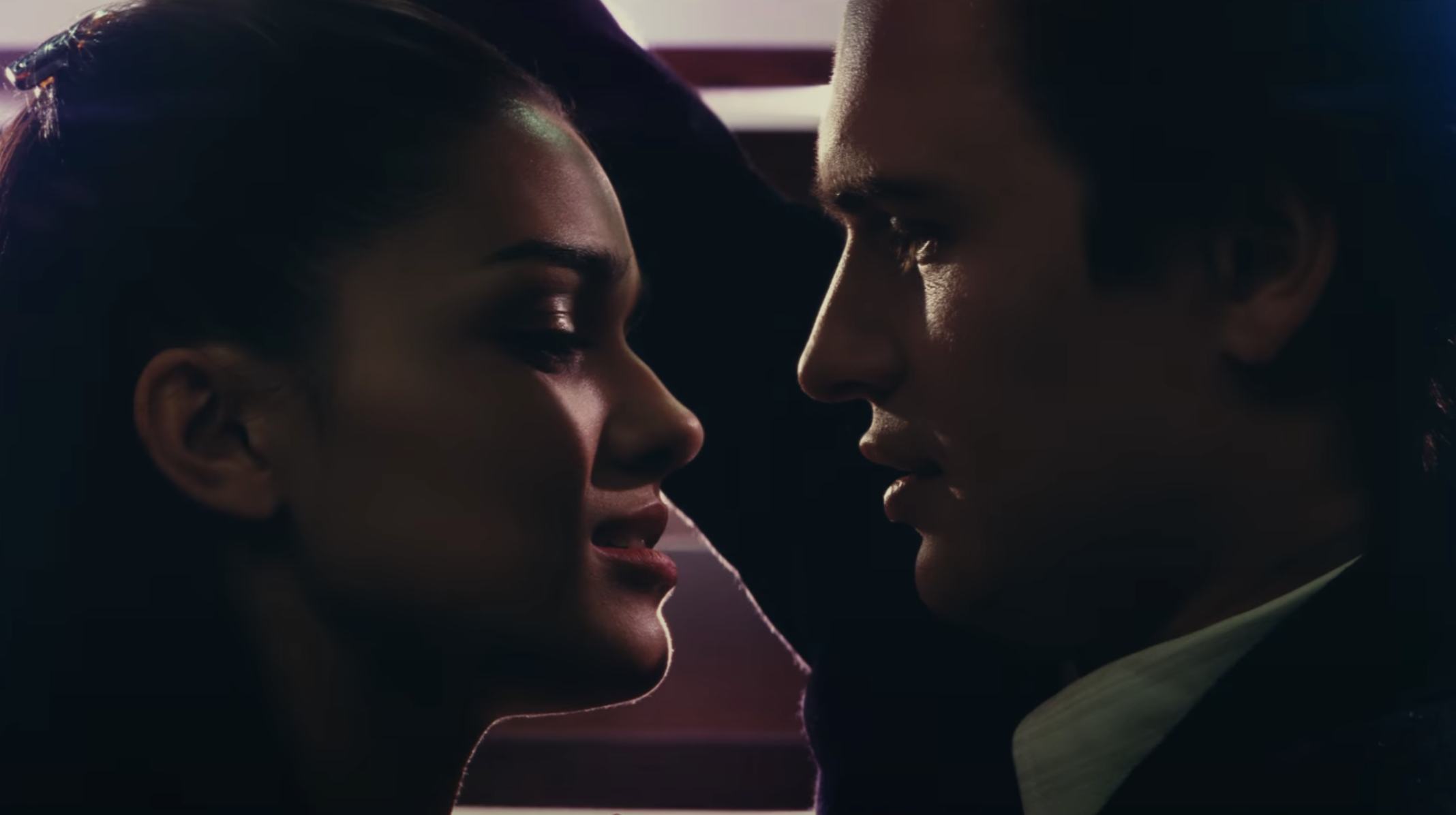
Having watched episode 2 of Impeachment: American Crime Story, I feel compelled to repeat my basic view…hell, everyone’s view: It’s simply not believable that President Bill Clinton — prime of his life, a notorious hound, pick of the litter since he was Arkansas governor — would select Beanie Feldstein, by any measure a meek and seriously chubby chipmunk, as his occasional lover.
She’s clearly below his station, nowhere close to his sexual equal, a fat little fawn in the woods.
Friendo: “OMG…episode 2…Monica was curvaceous or zaftig but she was not that fat. They’re making it seem as if Bill was this creepy predator who couldn’t get the pretty girl.”
HE: “Nobody’s saying anything, of course. Critics know they’re not allowed to comment on matters of body shape. They know they can’t go there because they might get fired if they do, and so the WALL OF SILENCE.
“If we see Bill having an affair with a young, sexy, good-looking woman, we see a kind of match. Young Monica may have been conniving and neurotic, but she had options and agency. But when we see Bill coming on to a chubby little chipmunk, we think ‘what’s kind of a creep is he? He’s a good-looking guy with the power of the Presidency behind him and could probably have almost any woman he chooses, and he’s interested in Beanie Feldstein?'”
Friendo: “The show says she fell for him but makes it out like he manipulated her. Revenge is a dish best served cold, right? Producer Monica is saving her own legacy now and getting back at the married guy. It is really painful to feel used.”
HE: “Bill was a fool and an idiot in reality, but the Impeachment producers are trying to portray him as a slimier, more overbearing version of a sexual manipulator than he actually was. The predator as kindly ogre. Lewinsky wants to rewrite history.
“But I was thinking that only a delusional psychopath declares her love for a OBVIOUSLY unavailable married man, particularly one who expects to nurture a political future after his Presidency ends. Lewinsky actually thought that this guy who, unless I’m misremembering, wasn’t even fucking her…she thought this might lead to something? In Bill’s mind, he wasn’t having real sex with her. He WAS, of course. but he told himself otherwise. I actually think that oral sex is more profound.”
Friendo: “I believe that he was in love with her and she with him but it was that passionate kind of mad love…when you’re that young you really do believe you are in control. There is zero chance he’s the kind of guy who goes for the Beanie Feldstein wallflower type. He went for Monica because she was vivacious and stood out and openly flirted with him. Beanie is playing it all wide eyed and innocent…bullshit. Lewinsky knew what she was doing. Either pretend sophisticated or actually sophisticated.”
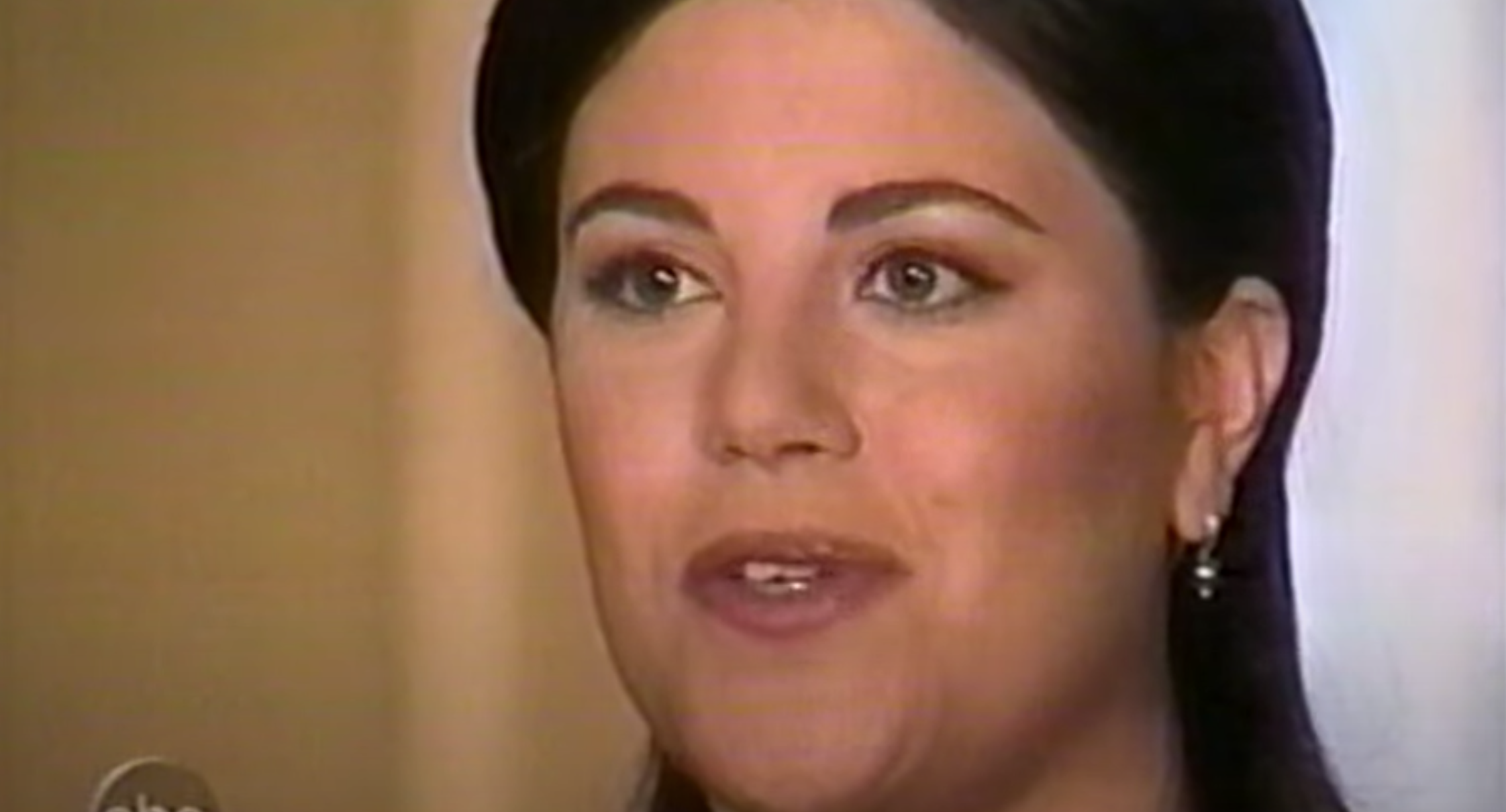
Friendo: “She was chubbier when she did the Barbara Walters interview in early ’19 than now — now she’s in great shape. It’s so wild because she never says the term ‘married man.’ It’s kind of amazing how different she is here.”
HE: “Different in what way?”
Friendo: “Well, it disproves how she is portrayed in the show. In the post #MeToo era Monica rewrote herself as the less confident victim. But you’ll see [in the Walters interview] she did not see herself that way at all when she was younger. It’s right there in that video and yet no one would ever bother to look or ask. Because we dwell in a fake reality now. We don’t talk about real things, only idealized things.”
A trailer is only a trailer, but it appears as if Steven Spielberg‘s West Side Story is going to be “more” than Robert Wise‘s 1961 Oscar-winning version — more vivid, more ethnically authentic, more alive, more fully felt, angrier, cooler, artier, more intense, more multi-shaded, less “Hollywood”-ized.
If the original Leonard Bernstein-Stephen Sondheim-Arthur Laurents stage musical hadn’t opened at the Winter Garden in ’57, if Wise’s film hadn’t won all those Oscars four years later, if there hadn’t been so many revivals and re-interpretations over the years…if Spielberg’s film was a brand spanking new period musical, all pink and damp and fresh out of the nursery, it would be a huge wham-bammer. The Gold Derby whores would be calling it the presumptive Best Picture winner. But it’s not that.
West Side Story is an old chestnut that reflects a world that no longer exists…a capturing of urban racial tensions among poor Irish and Italians vs. poor Puerto Ricans during the mid-Eisenhower era, in a once-grubby part of Manhattan…it’s the umpteenth version of a musical that’s nearly 65 years old, and there’s just no getting around that.
The only shot I don’t like is the overhead view of the Jets and Sharks approaching each other with intense shadows merging in front of them — that’s Spielberg and Janusz Kaminski pushing the boundaries.
I’m thinking of a climactic scene from Roland Joffe‘s Fat Man and Little Boy when J. Robert Oppenheimer (Dwight Schultz), wearing tinted eye goggles, is witnessing the first nuclear explosion outside Los Alamos (or wherever it happened) from inside a sand-bag bunker, and kind of convulsing at the sight of it, the wind velocity causing his mouth to contort, exposing his teeth. At first he seems to be thinking “my God, what have we done?” Then you realize he’s excited by this stunning sight. Triumphant, in fact. High-fiving a colleague. Not “I am become death, destroyer of worlds” but “Yo, we did it!!!”
Give Joffe credit — this is a powerful cinematic moment.
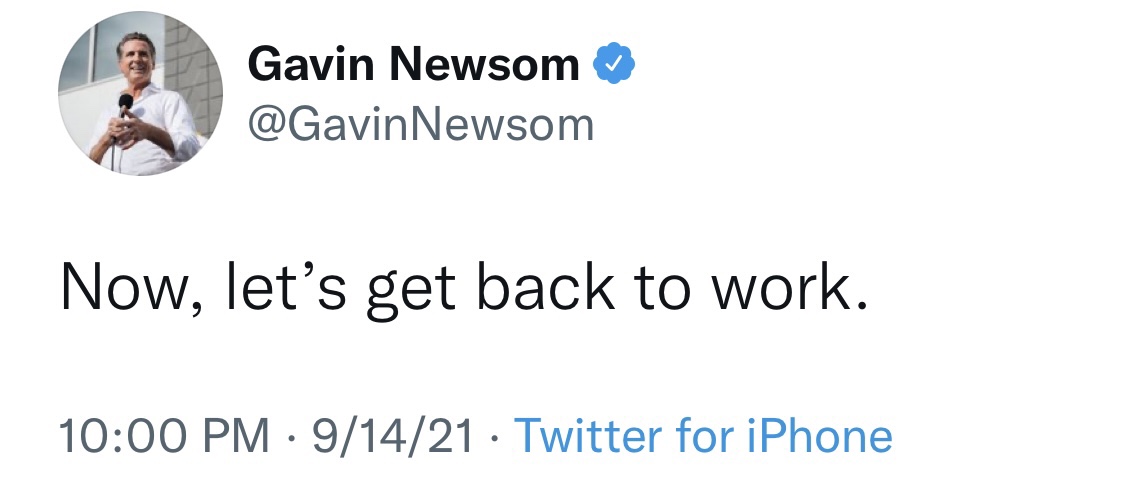
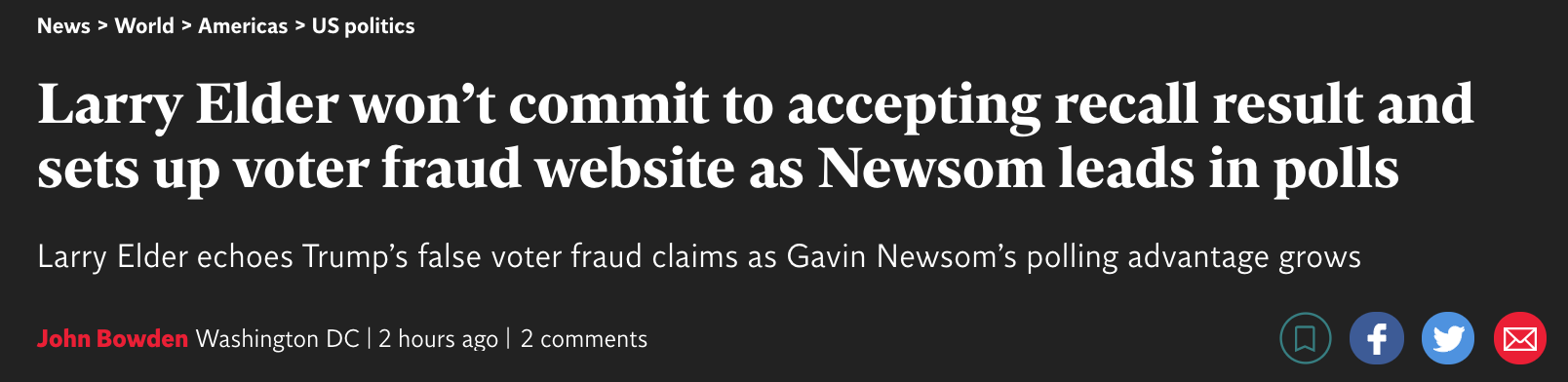
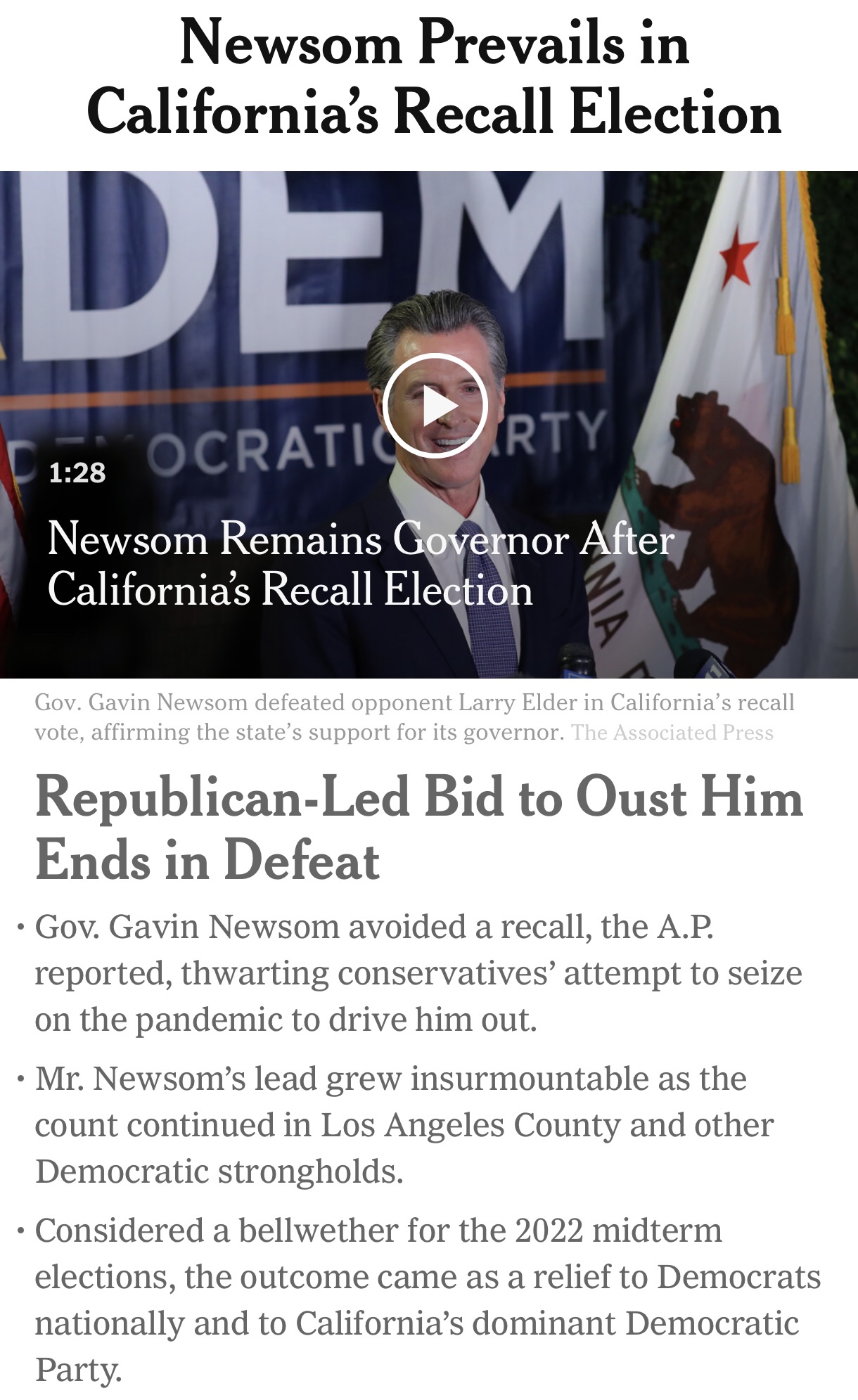
Larry Elder has underperformed in the California recall election, thank God, and Governor Gavin Newsom will remain in office. No matter what the final tallies report, the crazies will assert that this was a totally rigged election but that Elder will get to the bottom of it. “Statistical analyses used to detect fraud in elections held in third-world nations (such as Russia, Venezuela and Iran) have detected fraud in California resulting in Governor Gavin Newsom being reinstated as Governor,” blah blah. California’s Secretary of State, Shirley Ann Weber, has told Newsweek that Elder’s claims are “baseless.” HEtoElder: Don’t let ’em get you down, fight on, never say die.
What could Chris Nolan bring to the saga of J. Robert Oppenheimer, the atom-bomb creator whose life and career came to symbolize moral dilemmas facing the scientist in the nuclear age.
Nolan will probably deliver two or three ribcage-shattering recreations of nuclear explosions, but there have been two or three tellings of the Oppenheimer story and…I don’t know what to think or feel.
I’m seeing a political persecution angle, of course — echoes of anti-Semitism, obvious parallels to today’s woke terror intimidation.
My favorite of all the re-tellings is The Trials of Robert Oppenheimer, the 2009 David Strathairn-starring docudrama, directed by David Grubin for PBS and The American Experience.
Dwight Schultz portrayed Oppie in Roland Joffe‘s Fat Man and Little Boy (’89), but that film was primarily focused on Paul Newman‘s performance as Colonel Leslie Groves, the Project Manhattan taskmaster.
Whatever Nolan may have planned, I’m not sensing a project of landmark importance.
Out of respect for the legacy of TheSopranos, and for the upcoming, keenly anticipated The Many Saints of Newark (Warner Bros., 10.1) and especially due to David Chase‘s feelings of despair and resentment about the day-and-date opening (theatrical plus HBO Max), I’m planning to see Many Saints with a paying crowd on the evening of Thursday, 9.30.
Chase: “I don’t think, frankly that I would’ve taken the job if I knew it was going to be a day-and-date release. I think it’s awful. I’m still angry about it.”
Same deal applies to Clint Eastwood‘s Cry Macho, which will hit selected screens on Thursday, 9.16.
HE reply: You were in the front row. Drudge and I were sitting with the late Marvin Antonowsky around the middle of the orchestra. The screening happened on or about 11.21.97, and it was raining when I arrived.
Remember when it used to rain in Los Angeles? Two or three times a year, mostly between December and March.
Gregg Brilliant was the Paramount publicist with whom I spoke on the way out. (I think.). I was very emotionally affected by Gloria Stuart’s death-dream finale. As was Drudge. The current was palpable. The physical and technical achievements aside, I knew in my heart of hearts that 93% of Titanic was only good (or pretty good), but that the last 15 or 20 minutes were heartbreaking, and that the finale was levitational.
A day or two later Drudge wrote that he’d just seen Titanic, and had “left the show in total tears.”
Because of the heavy rain and dark clouds during my drive between People headquarters to the Paramount lot, I had naturally turned my lights and windshield wipers. Upon parking I killed the wipers but forgot to turn the lights off. So when I returned to the car three and a half hours later, the battery was drained. Hello, AAA!
Nobody will ever feel the Titanic vibe the way a lot of us did back then. It was ruined, in a sense, by the worldwide mob loving it so much. The more popular it became with K-Mart Nation, in fact, the less affection I was able to feel for it. Or express my feelings for with any freedom.
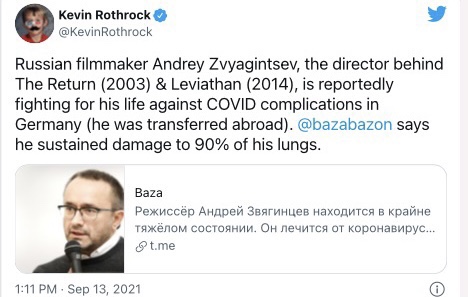
This morning I wrote Russian producer Alexander Rodnyansky to convey my shock and concern over the reportedly severe Covid illness of director Andrej Zvyagnitsev, 57, the legendary, hugely admired director of The Return (’03), Elena (’11), Leviathan (’14) and Loveless (’17)
Zvyagnitsev’s infection, which began two months ago, recently became so serious that he was flown to Germany for intensive care. A recent report states that his lungs are 90% infected, or conditions to that effect.
Three immediate and obvious questions: (1) Was Zvyagintsev not vaccinated (the Russian vaccine is called Sputnik)?; (2) And if so, why is he so godawful sick? The vast majority of vaccinated people never get this close to death; (3) What is it that’s so derelict or unreliable about Russian hospitals that Zvyagintsev had to be flown to Germany?
Zvyagintsev has been planning his first English-language film, What Happens, which will be shot in the U.S. Produced by Rodnyansky and written by Oleg Negin, What Happens “is the director’s contemplation on the nature of human relationships, the state of modern man and the fragility of human life.’
Here’s hoping Zvyaginstev will get through this…please.
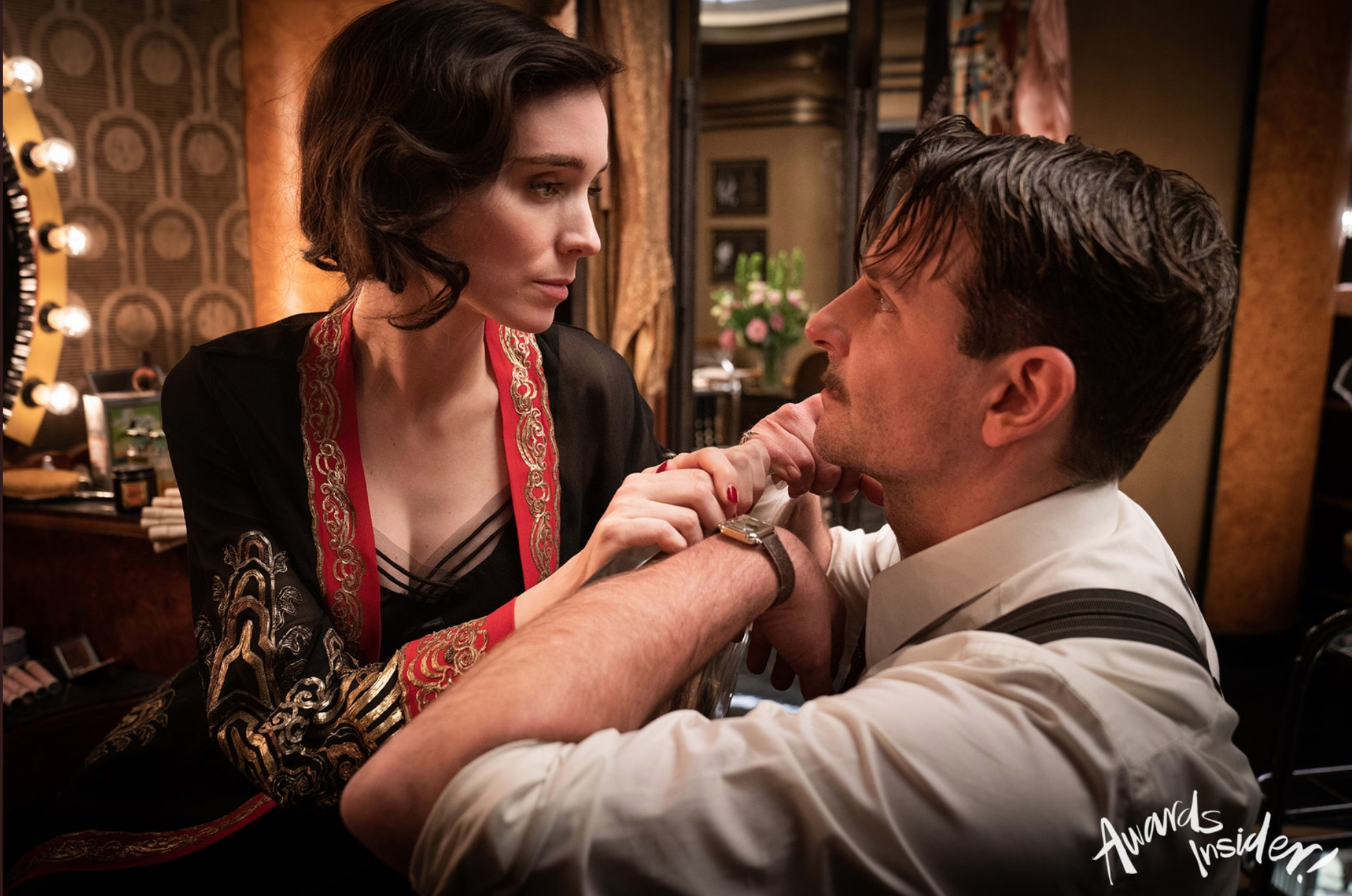
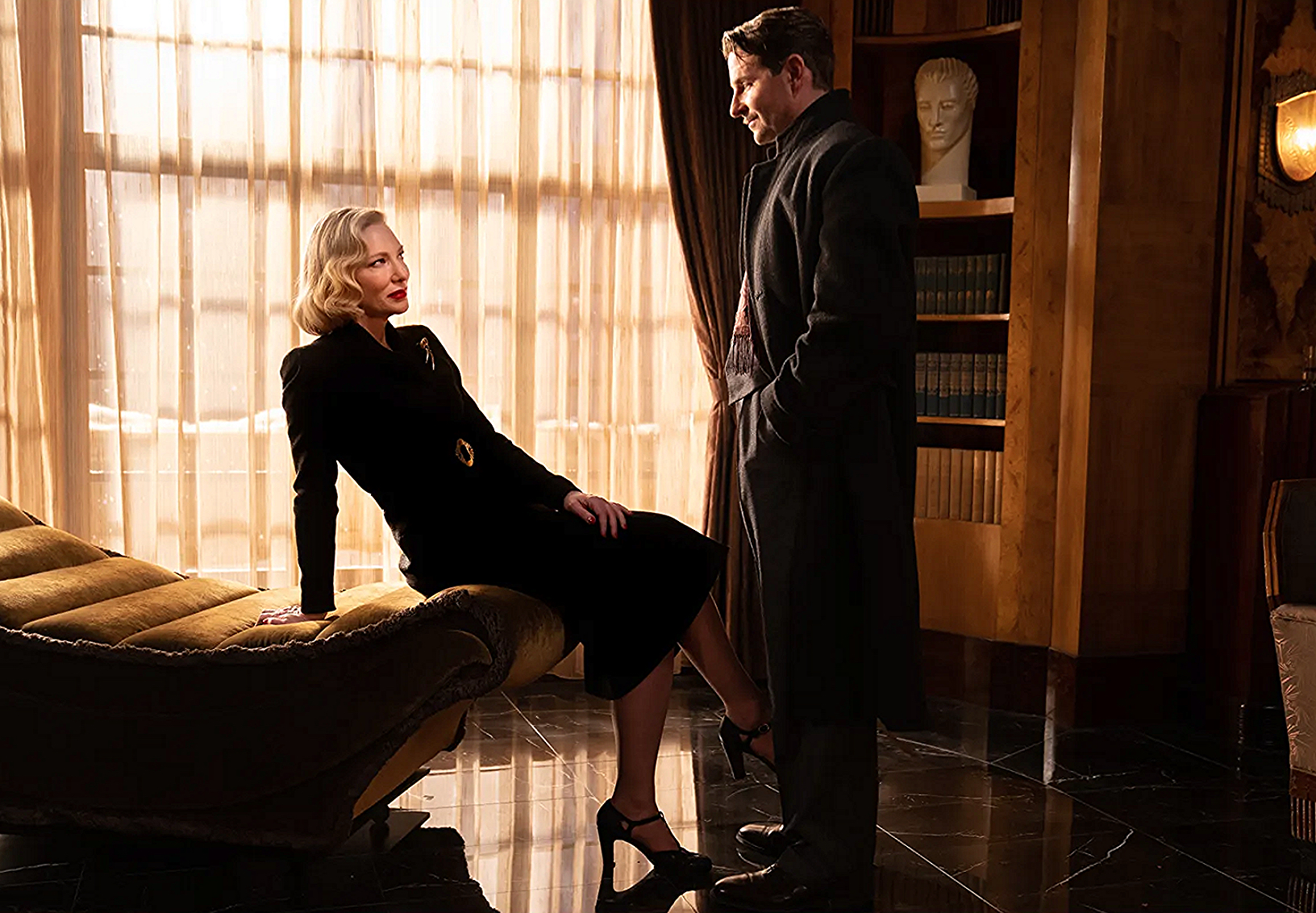
Guillermo del Toro‘s Nightmare Alley (Searchlight, 12.17) intends to resuscitate 1940s noir melodrama with all the pulpy trimmings — a rural old-style carnival, fake mind-readings, geeks biting off chicken heads, a slimey snake-in-the-grass lead (Bradley Cooper) and secondary characters with names that scream out yokel origins — Clem Hoately, Pete and Zeena Krumbein, Ezra Grindle, Bruno, Hayseed McGillicutty. (Okay, I made the last one up but the other five are real.)
The script, co-penned by GDT and Kim Morgan, is based on William Lindsay Gresham‘s 1946 novel, which was immediately adapted into the renowned 1947 noir starring Tyrone Power.
We all understand that Guillermo and Kim’s basic idea was to remake the Power film, which was directed by Edmund Goulding, but to massage it in their own way by leaning on the novel. And yet each and every time a famous film is remade, the filmmakers always say that they were guided by the original book. They never, ever say that the initial film adaptation was the inspiration.
Born in 1914, Power was in his handsome-young-man prime (32 or 33) when he played Stanton “Stan” Carlisle in the Goulding film, and I think it’s fair to say that his youthful aura mitigated or modified Carlisle’s sleazy maneuverings. Cooper was 45 or so when he played the same character in the Del Toro version. (Silver Linings Playbook was eight years ago.) It’s a different thing when a guy who’s close to pushing 50 plays a doomed, duplicitous character; age often makes an actor look a bit weary, creased and compromised.
The 1947 original ran 111 minutes; Guillermo’s version run two hours, 19 minutes. The newbie opens on 12.17.21 — three months hence.
For those who know the ’47 original, here’s how the casting lines up:
Stanton “Stan” Carlisle (Bradley Cooper now, Tyrone Power then); Molly Carlisle/Cahill (Rooney Mara now, Coleen Gray then); Zeena Krumbein (Toni Collette now, Joan Blondell then); Dr. Lilith Ritter (Cate Blanchett now; Helen Walker then); Bruno (Ron Pearlman now, Mike Mazurki then); Ezra Grindle (Richard Jenkins now, Taylor Holmes then).
I didn’t know Norm MacDonald was grappling with cancer, and why would I have? I’m just saying this hit me like a ton of bricks. MacDonald didn’t just make me laugh; I also loved his basic attitude, which was more or less “there are many things to laugh at or make fun of, but there are some real slimeballs and monsters out there, and so it’s kind of funny to occasionally say ‘hey, this guy’s a real slimeball and that one’s a real monster!”
I also loved that the wokester Stalinists hated Mcdonald. I can’t recall if he was condemned for sharing sexist or insensitive attitudes (which I don’t relate to or agree with) or being blunt-spoken about something else, but I know that the sensitives hated him as much as they allegedly hate me and Bill Maher and a few others, and that they did what they could to tarnish his rep by talking shit and whatnot.
I loved MacDonald’s impudence.
Ahh, the SNL glory days of ’93 to ’98! Michael Jackson, Bill Clinton, O.J. Simpson, etc. “Well, it’s finally official: murder is legal in the state of California.”