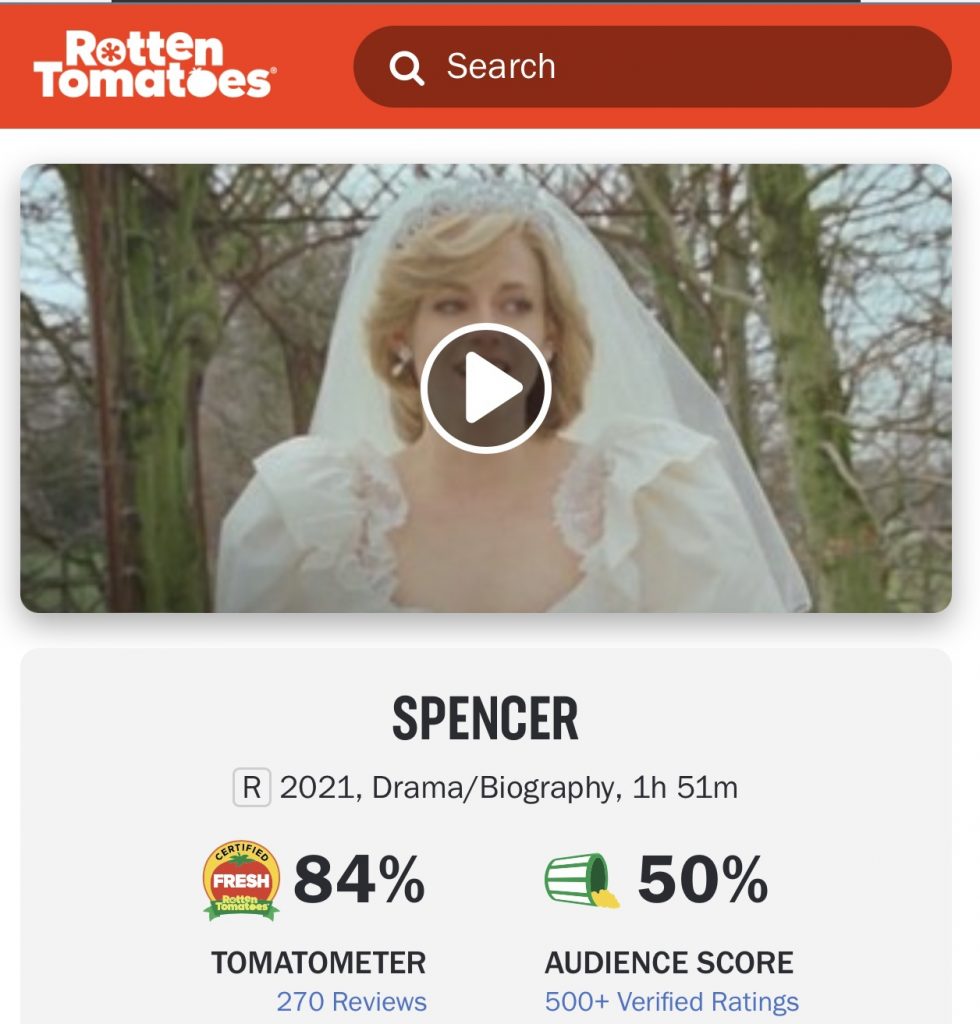
HE has never been a fan of Pablo Larrain and Kristen Stewart’s Spencer. On 11.8 I reported that Joe and Jane Popcorn had given it a shitty 51% RT rating; now it’s down to 50%. Again — does this hurt Stewart’s Best Actress campaign? You tell me.

The material is nothing special but for me, the Get Back Beatles playing Chuck Berry‘s “Rock and Roll Music” is easily the most rousing performance. It happens during episode #1 of Peter Jackson‘s 468-minute documentary, which premieres today on Disney+.
“The moments of inspiration and interest are marooned amid acres of desultory chit-chat (‘aimless rambling’, as Lennon rightly puts it) and repetition. There is a point, about five hours in, when the prospect of hearing another ramshackle version of ‘Don’t Let Me Down’ becomes an active threat to the viewer’s sanity.
“That is doubtless what recording an album is like, but for an onlooker it is — to use the language of 1969 — a real drag. Much opprobrium has been cast at Yoko Ono for her constant presence at Beatles’ recording sessions, but, after this, you marvel at her fortitude for sitting through them.” — The Guardian‘s Alex Petridis, posted on 11.25.
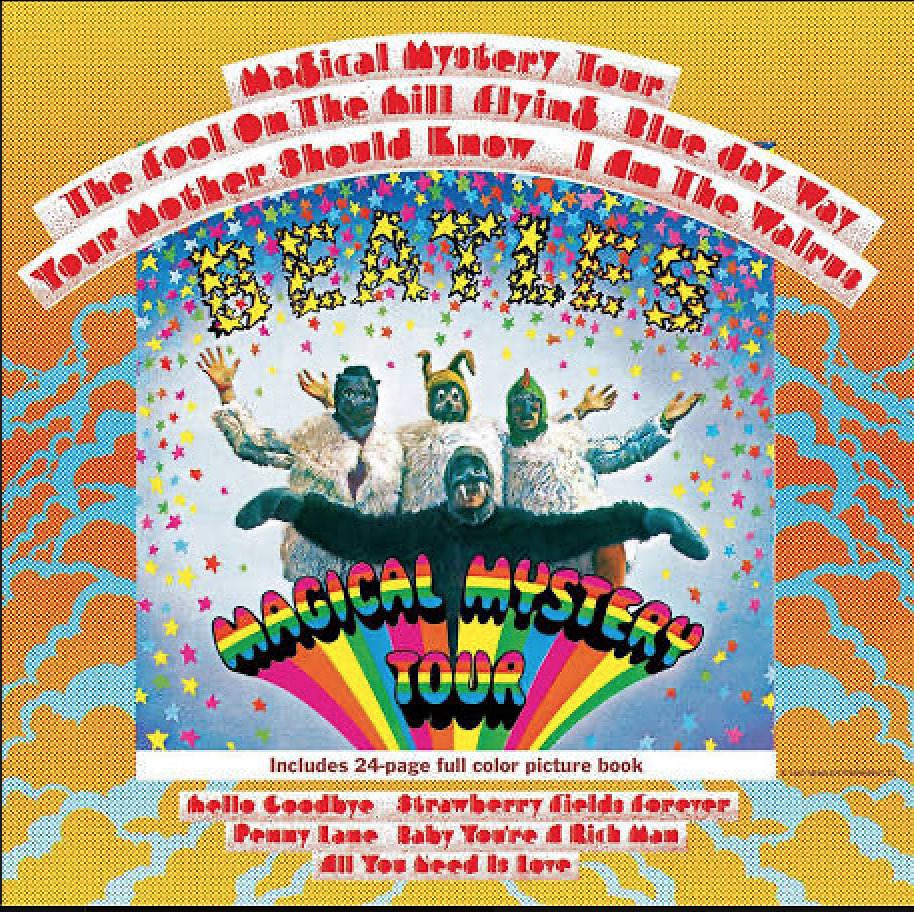
As I wrote this morning, just glancing at this album art gives me the willies. What villain designed it**? Peter effing Max, that’s who.
This fall of ‘67 album was conceived and recorded under the influence of spiritual psychedelic enlightenment and Maharishi meditation.
What was happening within was Godly and cosmic (or do I mean cosmic and Godly?), but what emerged were lightweight McCartney anthems like “The Fool on the Hill”, “Hello Goodbye” and “Your Mother Should Know” plus “Blue Jay Way,” another of Harrison’s draggy, downish scold songs. I’ve avoided this album like the plague for many decades, although “Baby You’re a Rich Man” and Lennon’s “I Am The Walrus” (“Everybody’s fucked up”) are keepers.
Friendo: “MMT is the worst Beatle album? It has ‘Strawberry Fields’, ‘Penny Lane’, ‘Baby, You’re a Rich Man’…the whole second side is great.”
HE to Friendo: “’Penny Lane’ and ‘Strawberry Fields’ were hatched in early ‘67 — pre-“Pepper” singles. The creative fires were crackling hot at that time. Not so much in the late summer and fall of ’67.”
This falls under the heading of “vulgar performative egoism” — our private lives, marriages and pregnancy announcements transformed into a major live-stadium crowd event + a worldwide celebration of fame and performative happiness as a social media statement, endlessly shared and liked.
SURPRISE: A man was left stunned after the Orlando Magic basketball team helped his wife tell him the news that she is pregnant during their game’s “Kiss Cam” interlude on Wednesday. pic.twitter.com/aTmiCXInkf
— CBS News (@CBSNews) November 25, 2021
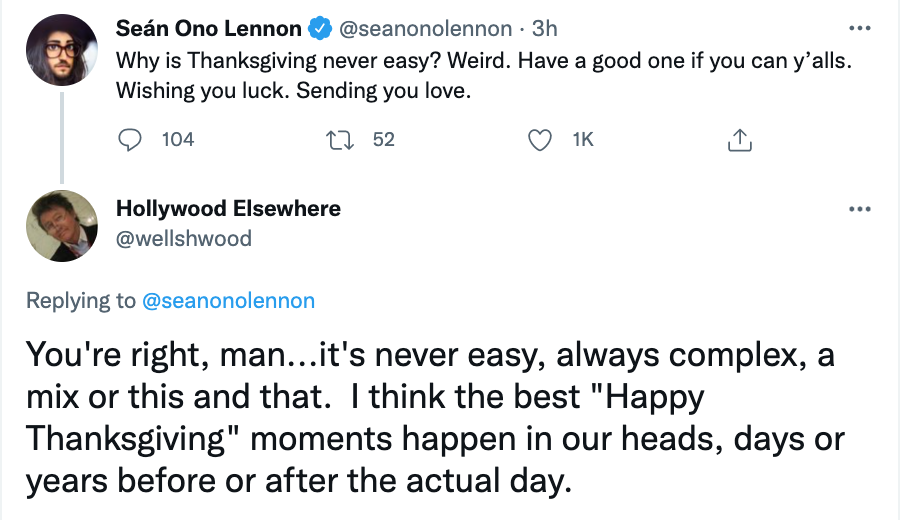
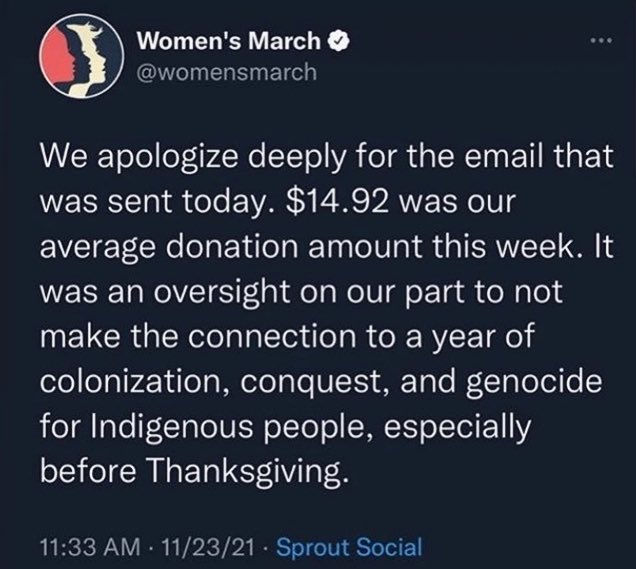
The wokester fanatic view is that Thanksgiving signifies the beginning of the original Anglo abomination against Native Americans — genocide, cruelty, displacement, cultural arrogance. In the words of Maid‘s Mary Smith Metzler, Thanksgiving is “complicated.”
History.com: “The [50 year] alliance between the Pilgrims and the {Massachusetts] Wampanoag tribe, remains one of the few examples of harmony between European colonists and Native Americans.“
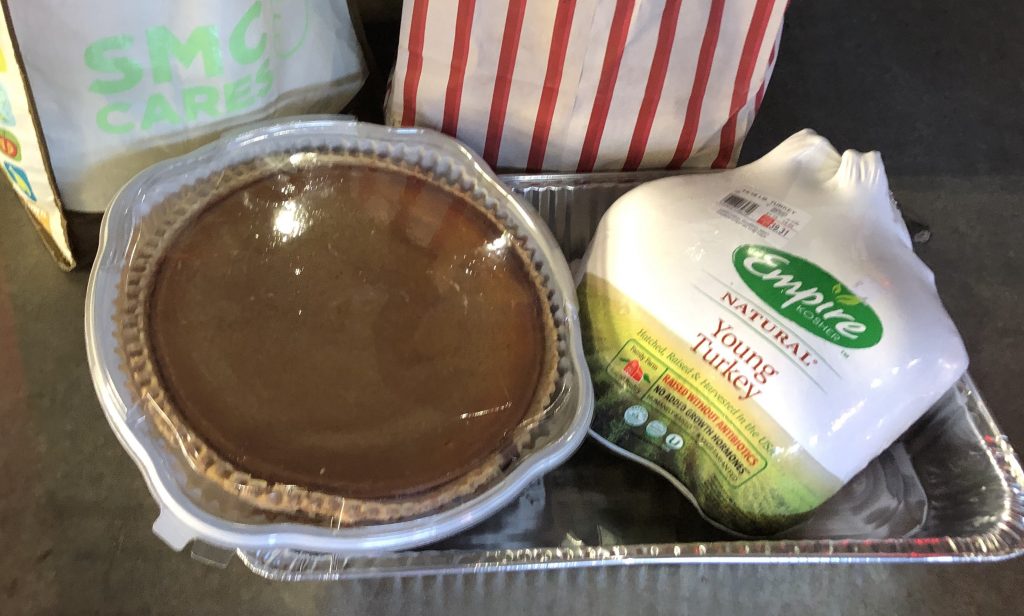
This is “family day”, even if you have problems with most many of your brood. I’ve just eaten a dish of warm and spicy pumpkin pie and whipped cream…perfect. I can do very well without the other staples, thank you. The idea of eating yams, sweet potatoes, cranberries and creamed onions, no offense, is repellent.
Happy Thanksgiving to one and all. Except for the woke Millennial Twitter dogs, some of whom should (and possibly will) eternally roast on a spit in hell.
Deadline‘s Todd McCarthy, 2.1.21: “Jockey is the kind of story Sam Peckinpah might have been partial to in his quieter, Junior Bonner mode. [It’s] a little gem about an aging rider whose days on the racing circuit are nearing an end just as a youngster shows up who claims to be his son.
“The kind of timeless tale that could take place anywhere but is bolstered by its racetrack milieu and a very fine cast, this is a sparely written and beautifully performed piece that under normal circumstances would make the festival rounds prior to a specialty launch but these days will no doubt go straight to [streaming].
seated for house of gucci ✌🏼 see you all on the other side pic.twitter.com/Vn7bANQWBe
— M 🌙 (@m_bee4) November 24, 2021
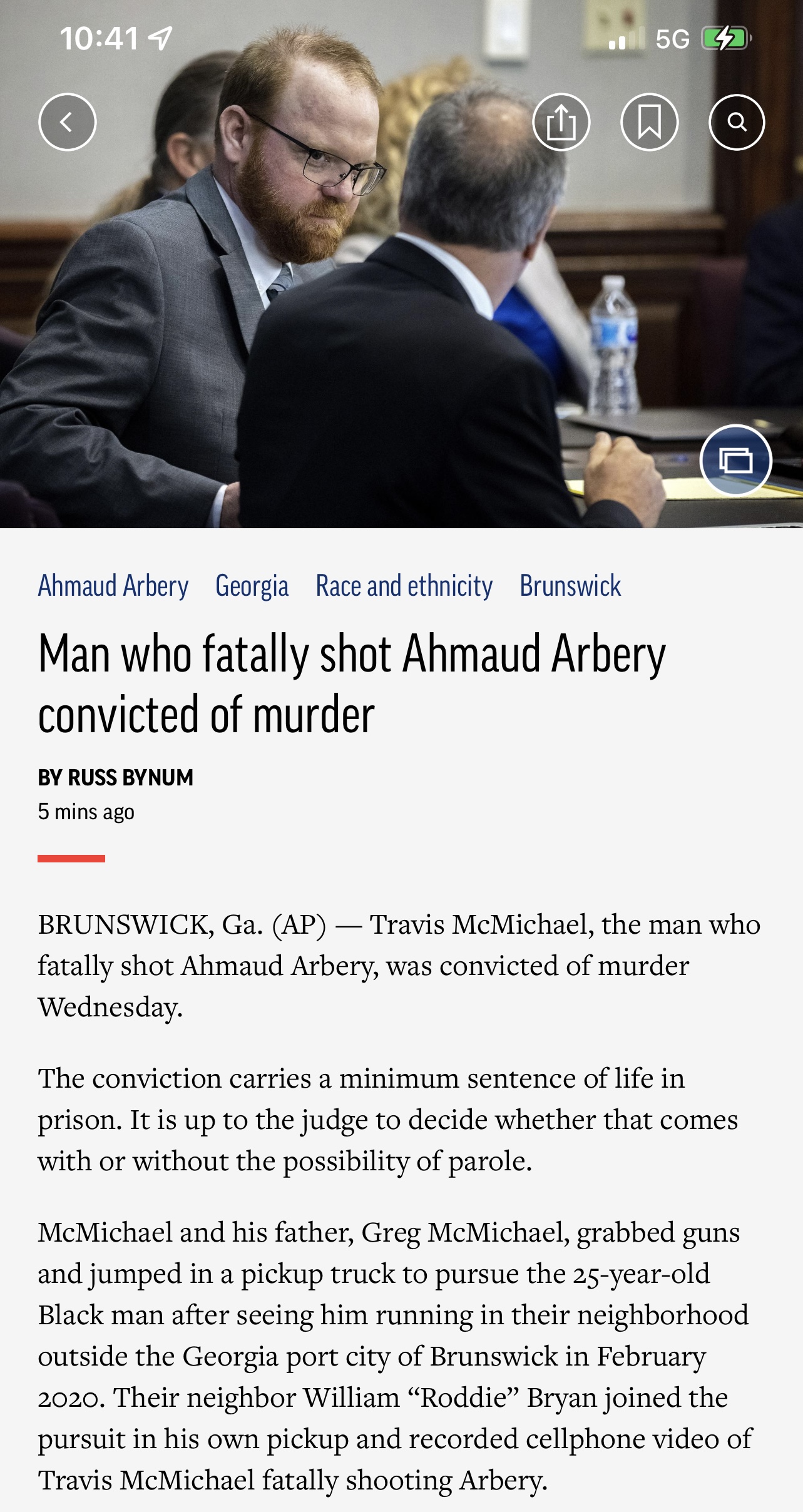
All three defendants in the Ahmaud Arbery trial have been found guilty of murder. You’re going to jail, crackers…serious time…actions have consequences.


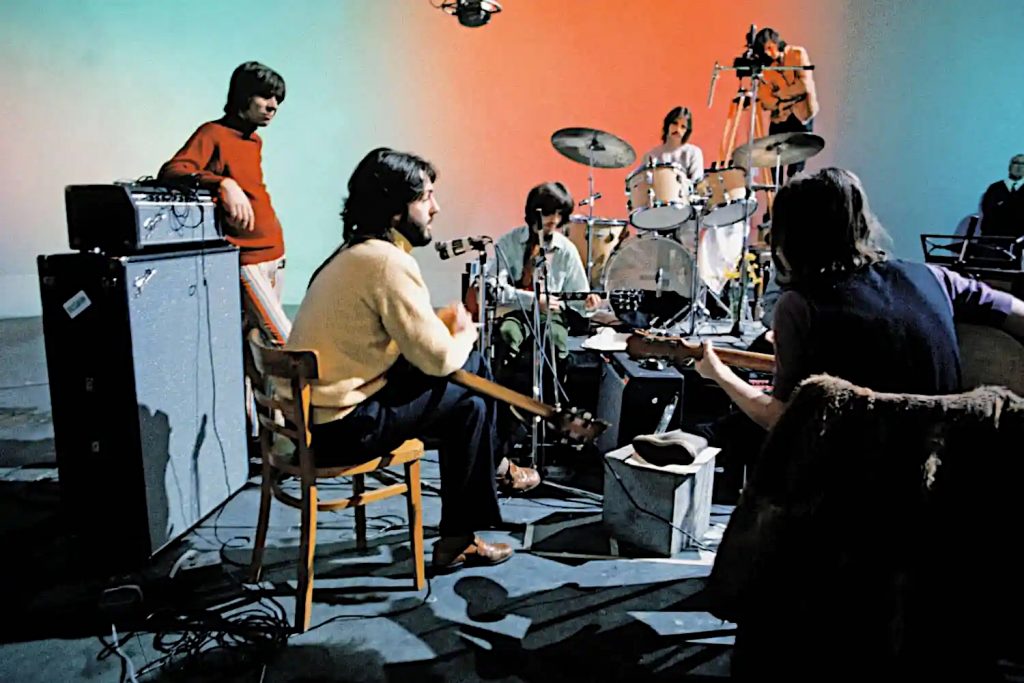
…after staying with Peter Jackson’s 468–minute Beatles doc over a two-day period:
Somewhere during the third or fourth hour I began to feel a little bit Beatle–ed out. But I’d suspected that would happen so it wasn’t a big surprise and I knew I’d eventually…well, feel proud about having watched the whole thing. Which I am.
It’s basically fly-on-the-wall stuff. Quite interesting. A casual, shaggy, very cool hang. But after a while it loses a little something. Zero narrative tension, of course, but that’s built into the concept. It almost bores at times but not quite. Because I’ve never really seen or felt the Beatles this “unguarded”, this “just being themselves”, or smoking this much. I’ve never felt this much access to their inner vibe or sanctum, if you will.
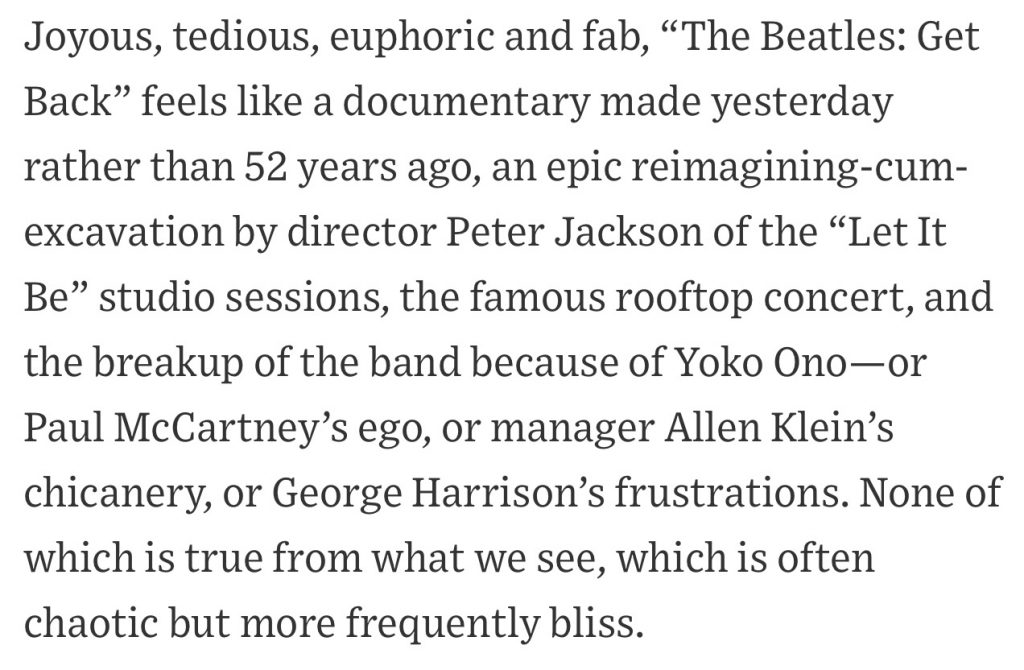
From John Anderson’s Wall Street Journal review:
Tapped out in stages through the day…
Anderson is correct in calling Get Back many things (including occasionally tedious) rolled into one. 60 hours of footage boiled down to 468 minutes (nearly eight hours) — a chopped English salad of this and that song or conversation or mood jag, pieces of fun and improv and shaggy affectionate humor and experimentation, and so much smoking you’ll feel cancer seeping into your lungs. (There’s actually a warning about the smoking at the beginning of each episode.)
It’s never not interesting, and you gradually begin to pick up on things implied and unsaid.
Episode #1 covers the first seven days, and ends on 1.10.69. Most of it consists of casual, enjoyable playing of new and old tunes. The best musical performance by far is of an old standard — Chuck Berry’s “Rock & Roll Music”.
A fair amount of “Abbey Road” numbers are played in rough form.
The 16mm image quality is very good considering. The cropped HD scanning (16 x 9 aspect ratio) has a high-grade clarity. No noticeable grain to speak of.
It’s fascinating when cameras are focused on a verbal discussion while Paul McCartney’s first stabs at “Let It Be” are heard in the background.
Nobody except Linda Eastman (who drops by a couple of times) says a word to Yoko “black hole” Ono, and who could blame them?
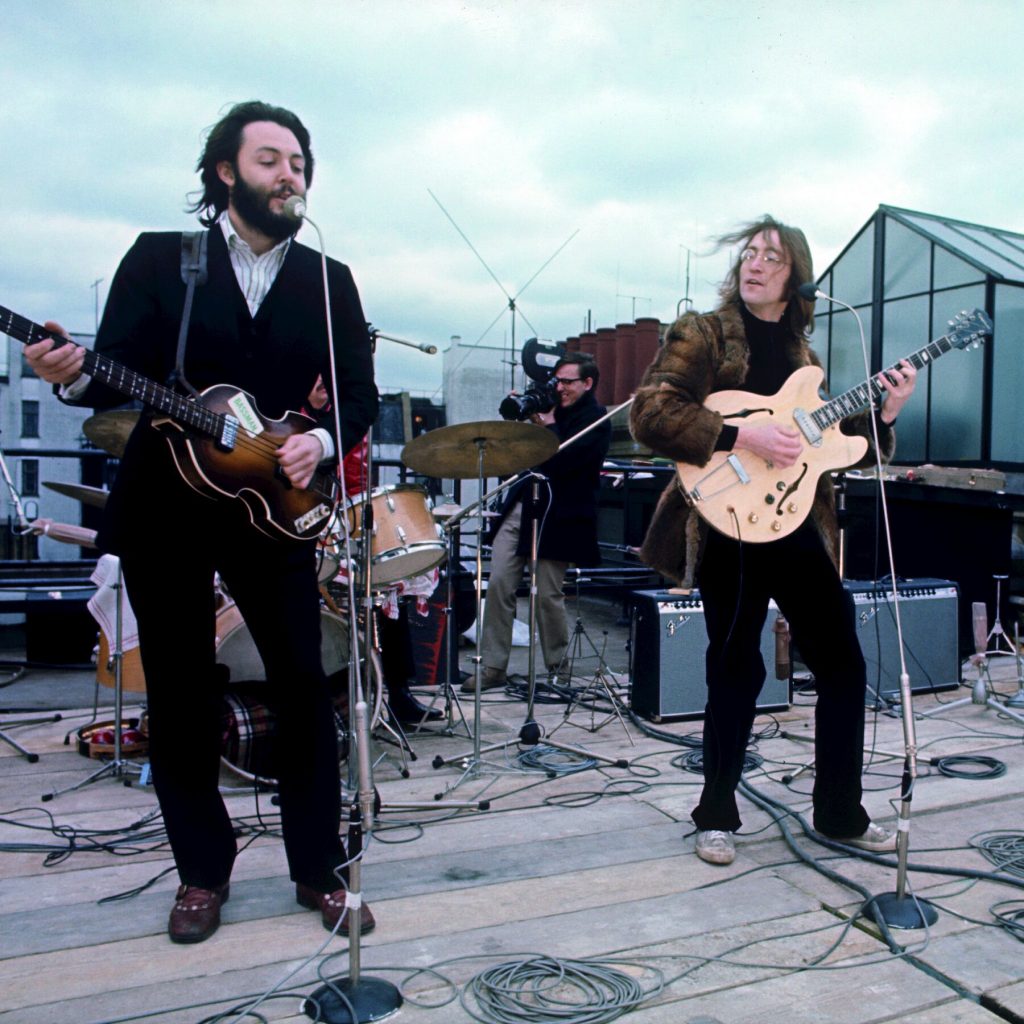
George Harrison’s frustration with McCartney’s ego & dominant band-leading (which was conveyed in Michael Lindsay-Hogg’s original half-century-old doc) is not especially readable here. George’s temporary departure was reportedly preceded by a big lunch-hour blowup between himself and the reportedly heroin-sedated John, but this happens off–camera.
There’s a fascinating discussion between Paul and others about how John and Yoko ‘s obsessive relationship prevented John and Paul from seeing each other and thereby composing together, and how Yoko’s constant presence led to a blocking of the old collaborative hormones.
There’s a SERIOUSLY MESMERIZING passage near the beginning of episode #2 in which John and Paul retire to the lunch room to privately discuss George having “quit” the band, but Hogg and his team have covertly planted a mike in a flower pot and so we hear every line, every word. And Jackson prints out the dialogue as it happens.
Once the Harrison-quitting episode is resolved, what little narrative tension the doc had is out the window.
12:30 pm update: Most of episode #2 (which runs 173 minutes) happens inside the newly created basement recording studio at Apple headquarters on Saville Row. This is where they record the “Get Back” album — not the worst Beatles album (that would be “Magical Mystery Tour”) but the second worst.
Seriously: Episode #2 is less interesting, a bit flabbier than episode #1. Do I need to watch the whole thing? Can I just jump to episode #3?
This will sound petty, of course, but somewhere in the middle of episode #2 (i.e., Saville Row recording studio) and for a couple of days, George Harrison begins wearing a pair of black high-tops with thick white laces. And they really look awful — about as far away from HE’s Italian suede lace–up aesthetic as you can get. Absurd as it may sound, those high-tops brought me down.
2:20 pm update: Episode #2 (173 mins.) has finally ended. Episode #3 (138 mins.) has begun. It’s been a long and winding road since I began watching this bear yesterday afternoon. With all due respect, I’m starting to feel a little John, Paul, George and Ringo–ed out.
3:45 pm update: The Saville Row roof concert is good. A little short (what is it, seven or eight songs?) but a crescendo of sorts. Observed by maybe 100 or so onlookers on nearby rooftops and whatnot. The delighted fans down below can’t see a thing. Two young policemen knock on the Apple door with noise complaints from older people, and insisting that the volume levels are too loud. Mal Evans takes them up on the roof. Their mindsets are so banal. ‘Twas ever thus.
I liked Jackson’s decision to use a horizontal split-screen presentation during the concert…three screens, two screens, occasional singles.
David Poland has called The Beatles: Get Back “the greatest art process documentary I have ever experienced.” I think it’s the greatest art process film since Curtis Hanson’s 8 Mile.
Altogether a historic achievement. I’m not sure how truly great or (if you’re reading Poland) Shoah-level it might be, but it’s one marathon-sized music epic that you probably need to submit to.
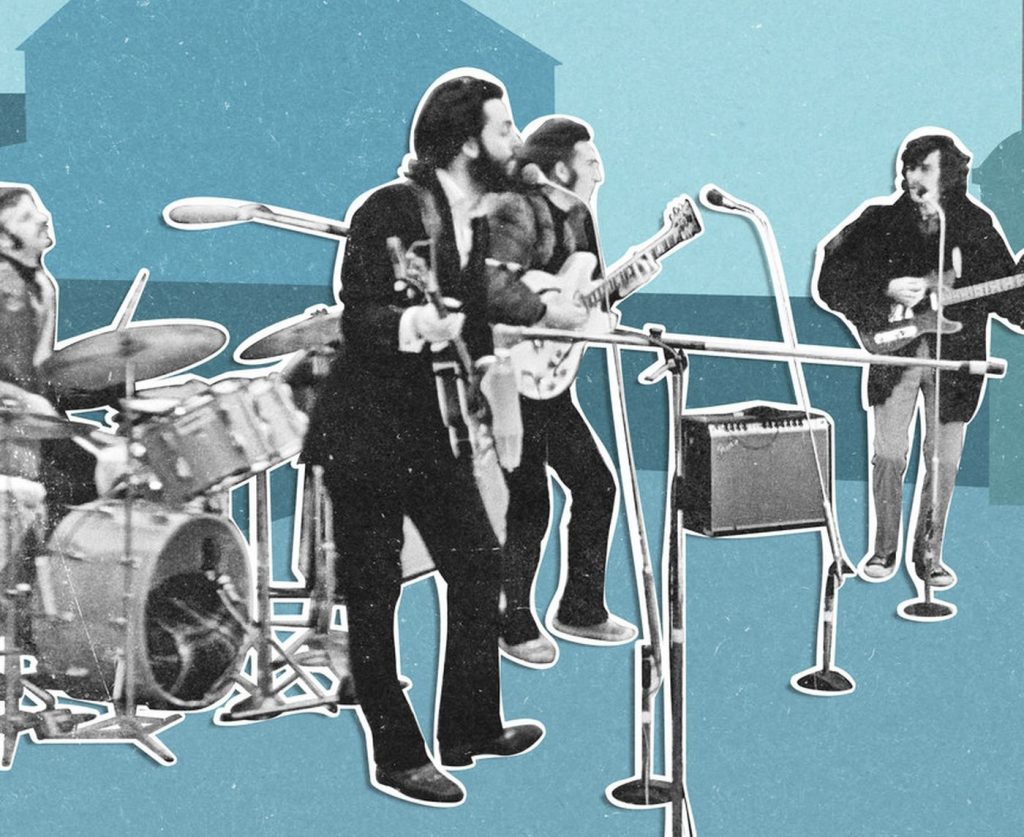
Peter Jackson says his greatest fear making The Beatles doc #GetBack was finding out one or more of them were “primadonnas or assholes.”
They were not. “They are good guys… It sounds so simplistic. But I’m so happy that the four Beatles turned out to be good guys. Nice guys.” pic.twitter.com/MgixYe46ds
— Kevin Polowy (@djkevlar) November 24, 2021
Tatiana and I caught a 7 pm showing of House of Gucci at the AMC Grove 14. The house was maybe three-quarters full, and there was a fair amount of chuckling and guffawing at Lady Gaga’s glaring, snorting, histrionic performance; Jared Leto also attracted a few hoots. A few people clapped when it ended. I’m sensing business.


When I read the words “young turkey,” something went cold inside. They grabbed a teenager — a turkey who was just starting to feel his or her oats — and chopped his or her head off. And here’s the frozen carcass, ready for basting and slow cooking.