

Four Daggers
Blunt critiques hurt when you’re young, and they tend to stay with you for years or even decades. By the same token kind or admiring or supportive remarks directed at a ten-year-old or a kid in his mid teens or even a twentysomething probably stick to the ribs also. Then again I didn’t get too many of those. I mainly recall four moments in my teens (actually three — the first happened when I was 10 or 11) when somebody said something cruel or dismissive, and how they really stung.
Stab #1: I was Halloweening in my neighborhood, and was actually too old for it (10 or 11, like I said) but I had a sweet tooth. I had grown a lot recently — 5’9″ or thereabouts. Awkward spurt. And I had some kind of grotesque mask on. And the father at one of the homes answered the door and said, “I bet that’s Jeff Wells behind that mask…I can tell because of the big feet. Jeez, look at those shovels.” So I was a freak of some kind. That was the moment in my life when I resolved to wear only slender Italian shoes. Because they don’t make your feet look any bigger than they are. (And mine aren’t that large — I’m a size 12 and 1/2.)
Stab #2: I was 14 or 15 and hanging with a bunch of junior high school guys in a friend’s home, and at one point or another I smiled a little awkwardly and a guy sitting nearby cast a glance and jokingly said “handsome.” As in “not handsome.” As in homely or doofusy. I remember the feeling in my chest when he said that, and how it took me years to recover from an idea that I was second- or third-tier in the looks department. I gradually got past that, but not until my mid 20s.
Stab #3: I was sitting at a metal dining table in a backyard patio with good friend Jack (it was his father’s home, a big brick mansion on a hilltop) and Bill. And then Jack’s dentist father came out and sat down with us. The discussion turned to high school and grades and colleges and whatnot (we were juniors), and Jack’s dad was the blunt type…”you don’t have to like it but I’m telling you how it is” or “if you don’t wake up and get your shit together you’re gonna be in trouble.” Then the subject turned to character, and Jack’s dad dismissed us all with one fell swoop. He looked at Jack and said “you’re a washout”, and then pointed at me — “And you’re a washout” — and then said the same thing to Bill. And that no-holds-barred verdict stayed with me for a good decade or so. I already had the son-of-an-alcoholic, low-self-esteem thing going on, and so the washout label fit right in.
Stab #4: I was in the earnestly shabby office of a fledgling weekly newspaper, and I had submitted a clumsily written piece about John Lennon (I forget the angle) and the quality of various articles were being assessed, and somebody mentioned the Lennon piece and one of the editors — glasses, frizzy-haired, flinty manner — said what he thought without knowing that the author was sitting right next to him. “Oh, it’s terrible,” he said. “It’s all over the place…it’s just crap.” Talk about the sensation of a knife right through your lungs. It hurt so much I stopped thinking about writing. Anything to avoid that awful feeling again. But the memory of that stabbing prompted me to try harder when I started writing about movies in the mid ’70s, and I eventually got the hang of it by ’80 or so. At least to the point that I could write decently.
That which does not kill you [usually] makes you stronger.
Beautiful Day
Every now and then the sun is out, the sky is bright blue and the warmish air smells fresh and relatively clean. (By Los Angeles standards.) And the whole outdoor realm just feels…perfect. And I’m one of those many millions who, when such a day is upon us, too often doesn’t stop and smell the roses. But I did today.
For about 15 seconds. Okay, ten. Right before I entered the West Hollywood Library for the first time in over 14 months, and it was wonderful…wonderful to offer my card, talk quietly to the clerks, plug in at a work table and just settle in. Library writing tends to focus me a bit more; too many distractions at home (food, cats, TV, vacuum cleaner, bathroom mirror).
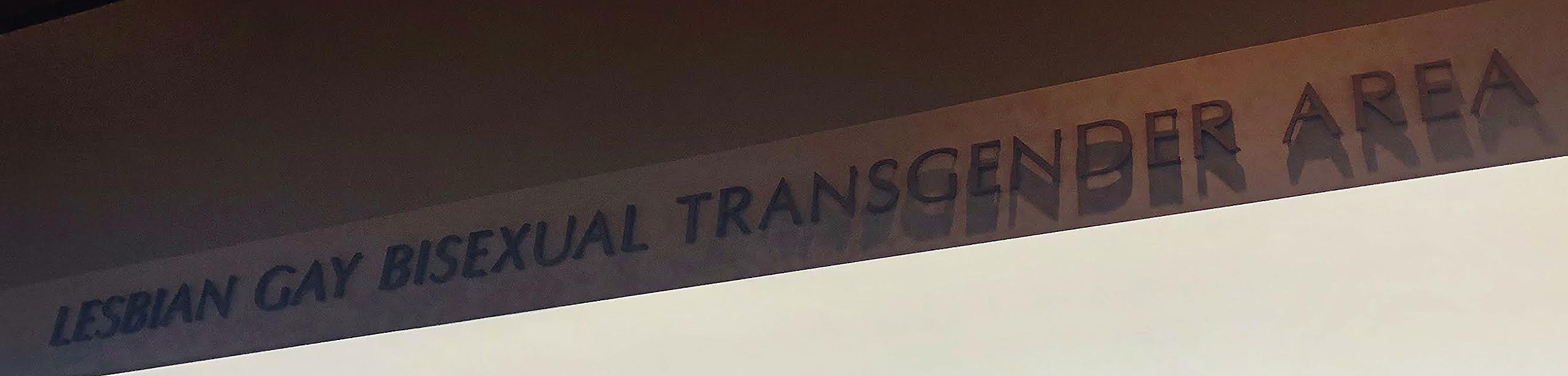
I chose a table away from the main desk, back in the rear section. It took me 15 or 20 minutes to notice I was in an area that was specially reserved for LGBT visitors. (“Lesbian Gay Bisexual Transgender Area.”) I suddenly felt like an interloper. A youngish, dark-haired woman was sitting at the other end of the table; had she noticed that I don’t look particularly gay and that I might want to think about sitting elsewhere, just to be on the polite side? She probably didn’t care.
I was also kinda wondering what the reaction might be if the WeHo library had decided that another section of the library was to be officially designated or set aside as an area where straights and cisgenders were encouraged to congregate.

View from north-facing window of WeHo Library — Wednesday, 5.5.21, 2:15 pm.
Suggestion for BFI Streaming Service
The British Film Institute’s BFI Player Classics streaming service is launching in this country on Friday, 5.14.21. The service offers a collection of roughly 200 classic British films “picked by BFI experts.”
HE to BFI experts: A few days ago Terry Southern biographer Lee Hill wrote on HE that the never-seen Dr. Strangelove pie-fight sequence exists on film and is currently being stored in British Film Institute archives. “The BFI doesn’t publicize this fact,” Hill wrote, “but [the pie-fight footage] has been screened by a few researchers.”
Please offer access to the this footage as part of BFI Player Classics package, and I will sign up immediately. I imagine quite a few others would also become subscribers.
HE Seeking Woke Therapist
A May 5th entry on Freddie deBeor’s Substack contains a letter from a faithful reader, a divorced 48 year-old mother of two who lives in St. Paul, Minnesota. The substance of the letter (verified as much as possible by deBeor) is a complaint about some online video therapy with a female therapist whose treatment was colored (or, if you will, perverted) by her adherence to critical race theory.
Excerpt from patient’s letter: “[The therapist] seemed really professional and friendly…I felt like I vibed with [her] right away. She asked me right away about sexual issues, and [that] made me feel welcomed. When I was an adolescent I was repeatedly raped by [a family member] and a friend of his. I’m not here to give you my sob story but it ruined me for years. I’ve had one bad relationship after another since and when I think back to my marriage I see so much of those moments in my husband. Anyway there’s a lot I feel like I needed to talk about, [and] I felt really encouraged and excited.
“My first annoyance (and I admit it’s only that) was with the land acknowledgments, where [the therapist] begins every session by proclaiming that we are on land stolen from the local Native population. This can’t take more than a minute each time so my rational brain tells me it’s nothing. But I can’t help thinking, ‘It’s just you and me, I know America is stolen land, I told you I know America is stolen land, and anyway we’re in cyberspace, and by the way you’re charging me by the hour.’ But it’s not really costing me anything so I kept my mouth shut.
“As our session[s] evolved, over and over again she asked me to put my trauma in perspective with those of theoretical ‘Black indigenous’ women. I was in the middle of talking about what drove me to finally seek help for trauma caused by my repeated sexual assaults when she asked if I had ‘a particular orientation’ towards my therapy. I told her I didn’t know what she means. She said something like ‘do you want to discuss your orientation towards expressing this in this setting?’ I was still confused and again asked what she meant. She told me that many women, particularly Black and indigenous women, would never have the resources to be able to discuss this with a licensed therapist, and they are more likely to be the victims of sexual assault, and how did I feel about that?
“I was really taken aback by this and struggled to respond. She rushed to say ‘this is normal…this is part of the process.’ I told her that I understood that I was, in a sense, privileged to have access to her. This seemed to please her and she began talking about her special duty to Black and indigenous patients. Before I knew it the session was over, and of course a few hours later my credit card was charged.
“That was, I think, four sessions ago. We have since returned to this theme again and again. It almost seems like a trigger for her: I use the word ‘trauma’ and she feels moved to remind me that my trauma is not as real or meaningful or important as other women’s. It felt like I wasn’t the real patient in the room, so to speak. Eventually I lost my temper and said something like ‘there are white women who can’t afford therapy also.’ I know it wasn’t constructive but I am struggling to pay for these sessions and while I know this isn’t factually true it felt like we had spent more time on the Black and indigenous women than on me.
“After I said that the whole mood changed and I knew it was over between us. She acted shocked and eventually said that I ‘wasn’t grasping the situation’. I babbled a bit for the rest of the session and it was over. Since then the last couple sessions have been terribly awkward and I hate it, but I have not had it in me yet to tell her I want to quit. But I’ve checked out.
“I understand the plight of Black and indigenous women, as much as a middle-age white woman can, and I care. I want everyone to have access to therapy, and for the record I support universal healthcare. But when I have a therapy session I want it to be about me. It has taken me a lifetime to be able to say that, and having a medical professional treat me like I’m less important than other imaginary women hurt [me], especially when I am struggling to pay her. She talks about women lacking resources but she is the one taking my resources.
“I’m writing to you because I know you take this stuff seriously. All of this makes me feel like a racist old woman, selfish and left behind…”
HE to Freddie de Boer, the 48 year-old woman in question and any online video woke therapists who strongly believe in integrating critical race theory with their patients’ treatable conditions and histories: Speaking as a 48 year-old Hollywood columnist, I would dearly love to initiate sessions with a therapist like the one described above. I would be delighted to receive this kind of treatment. I am almost salivating at the prospect. If anyone can help me find such a therapist in the Los Angeles area (i.e., someone I might be able to physically visit post-pandemic), please reach out. Thank you.
Enjoy While It Lasts
So we get to have two years of a sense of steady calm and sanity + FDR-like socially progressive policies, and then the rural idiots who are mostly refusing the vaccine will give the Republicans a House majority (largely ushered in by Jim Crow 2.0 voting laws) in the ‘22 election and WE’LL BE RIGHT BACK IN A TRUMP-POISONED HELL HOLE starting in early ‘23….terrific! And mostly because of Republicans exploiting already-widespread fears of Marxist Critical Race Theory curriculums, which I personally despise for the woke insanity they’ve bred and will breed in years to come.
Still Unshot
Despite nearly year-old casting announcements and various trade story acknowledgments, James Gray’s Armageddon Time, an ‘80s drama set in Queens that touches upon the Trump family, has yet to begin filming, I’m told. So scratch it, I suppose, from that recent HE list of noteworthy ‘21 releases (“Nobody Knows Anything”).
There Was A Time…
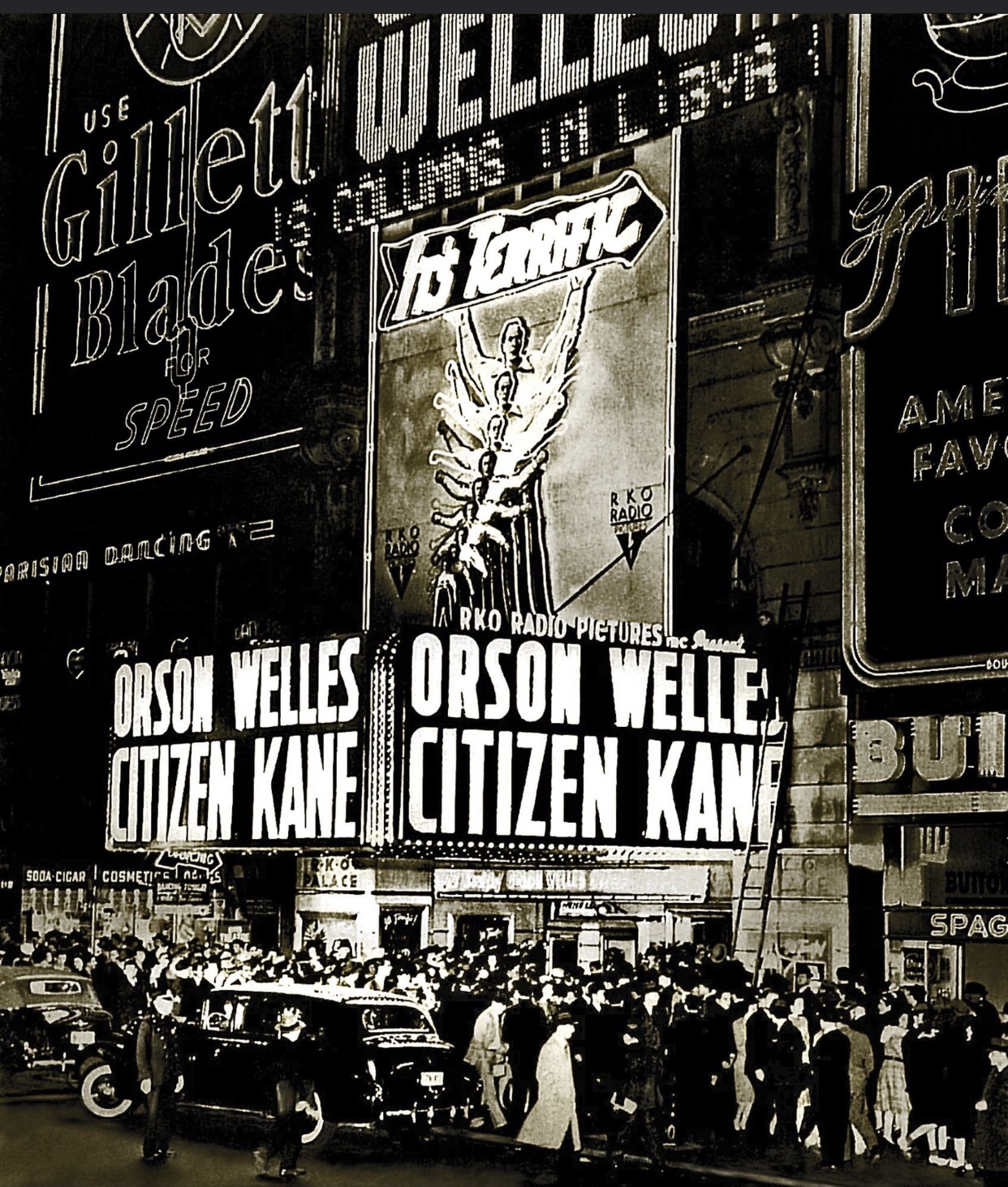
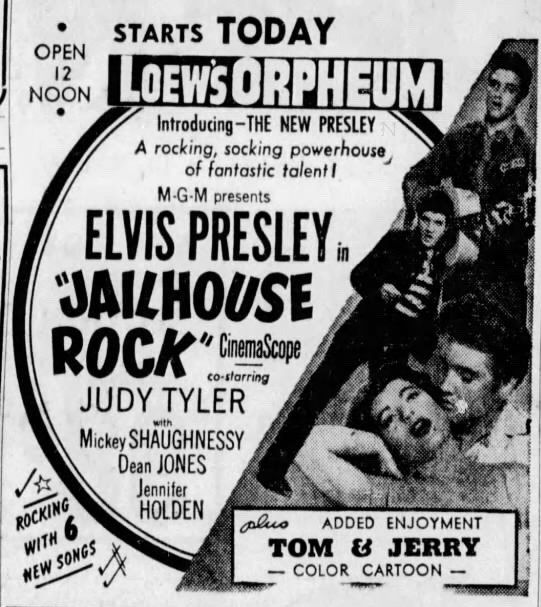
…when “what are you, a wise guy?” was a phrase of serious confrontation and admonition. As in “what are you, a smart ass?” Or “you wanna start somethin’, asshole?” But that was a while back. Decades.
There’s a moment in 1948’s Key Largo when Harry Lewis‘s “Toots” Bass conveys that he’s angry at Thomas Gomez‘s “Curly” Hoff when he eyeballs him and mutters “wise guy.” There’s a moment in On The Waterfront when one of the big apes who work for Johnny Friendly, Tony Galento‘s “Truck” or Tami Mauriello‘s “Tillio”, delivers the old “what are you, a wise guy?” to Pat Henning‘s “Kayo” Dugan. When I interviewed Charles Durning in the early ’80s he casually mentioned the “glint of madness” in the eyes of wise guys he knew when he was young. And in 10th or 11th grade I was called a “wise guy” by a seriously angry gym teacher who was around my father’s age.
The lore of Nick Pileggi aside, the term is extinct now. It belonged to the gangsters of the ’30s and ’40s, and the tribal street bulls of the ’50s and ’60s.
I Wouldn’t Mention This…
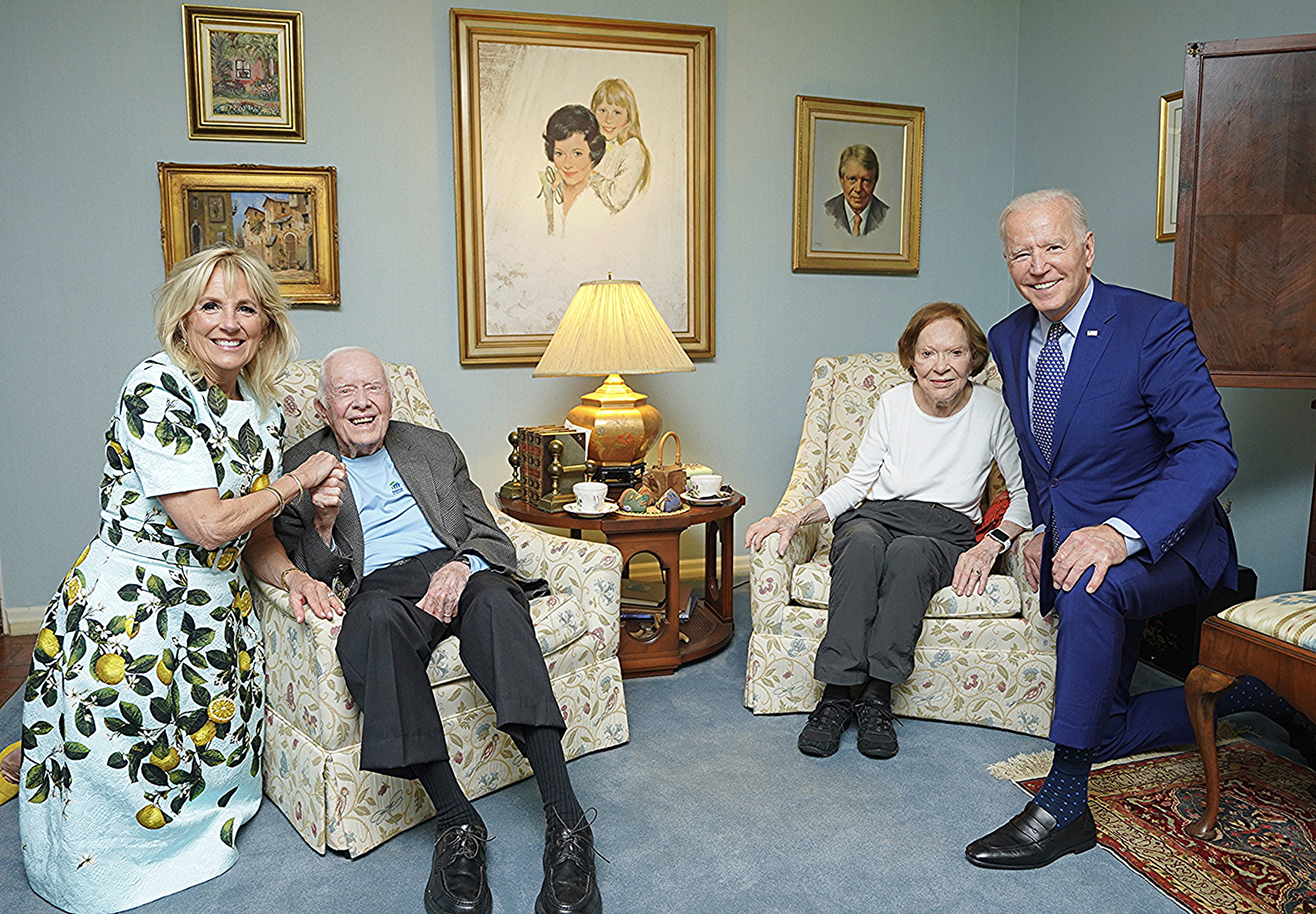
…and I don’t have to as the photo speaks for itself. The fact is that next to Jimmy and Rosalynn Carter, Joe and Jill Biden seem at least 10 if not 15 years younger than their calendar years. The other thing is that people shrink when they get into their late ’80s and ’90s. Thinner, bent over, more frail, less color in their cheeks. It’s just normal biology when you get to that stage.
Big Deal
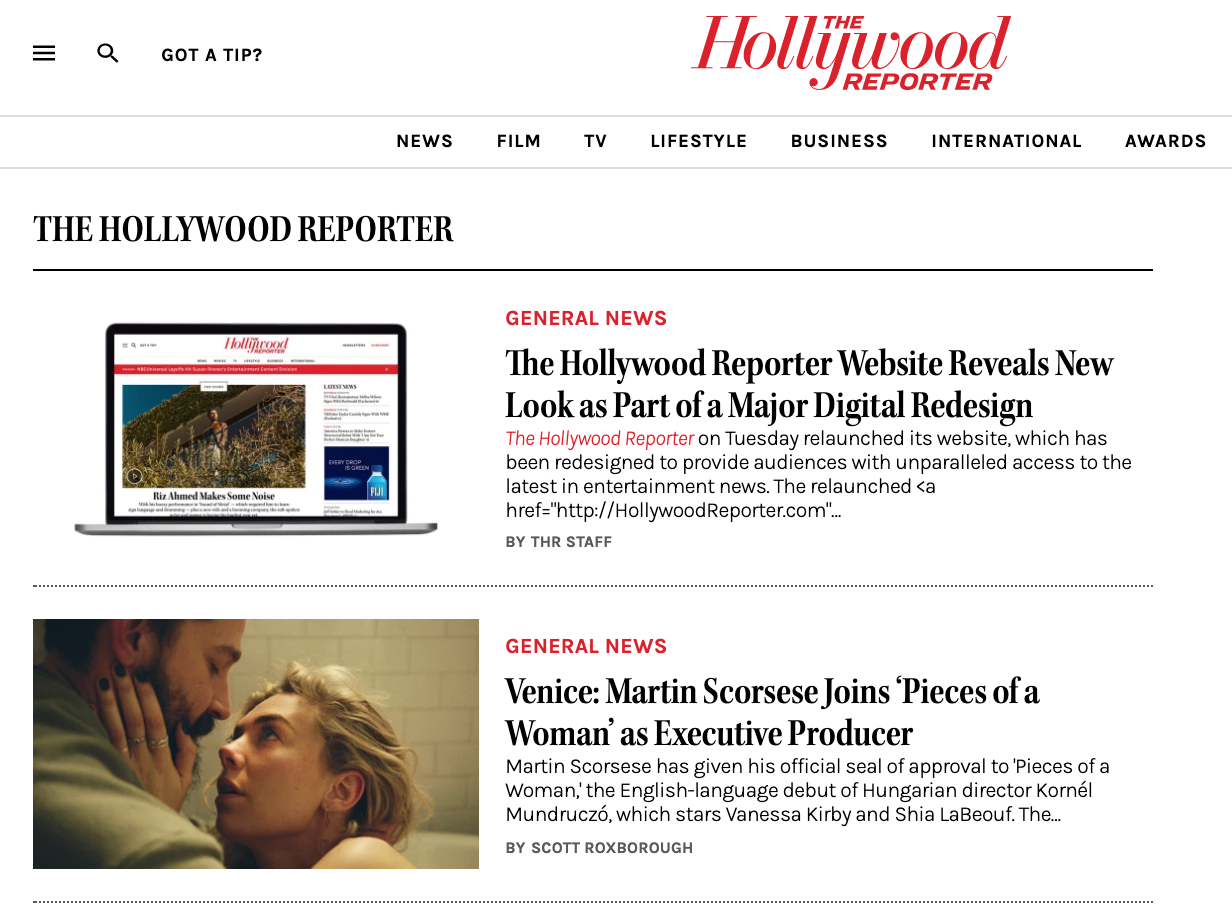
The Hollywood Reporter has undergone a redesign. Translation: Penske Media Corporation honchos have decided, based upon advice from web designers, that changing the headline font and adding acres of passive white space will make the THR experience more absorbing and attractive for the average industry reader.
HE to Jenkins: “Ask Spike”
From a 5.4 interview between Underground Railroad director-writer Barry Jenkins and Indiewire‘s Zack Sharf on the Best Picture presentation error at the conclusion of the 2.26.17 Oscar telecast, in which Jenkins’ Moonlight was announced as the winner rather than the briefly awarded La-La Land:
Sharf: “Perhaps Jenkins’ biggest issue with the gaffe all these years later is that it perpetuated a false narrative that Moonlight only won Best Picture because the Academy wanted to honor a Black film.”
Jenkins: “‘In a slightly sinister way, the fuck-up confirms or affirms some people’s unsavory thoughts about why the film was awarded Best Picture. If you did the blind taste test of films and wrote down all the accolades this film achieved that year, whether it be the ratings, the reviews, all of these things, [then Moonlight wins]. If we were at the NFL Combine, and I tell you, ‘This player has these measures and was drafted number one,’ you wouldn’t doubt it at all.
“And yet, when you get into ‘Oh, it’s because it was the Black film’…it’s like no, motherfucker. We ran a [4.2 second 40-yard dash], and we ran it barefoot because we didn’t have the benefits of all that private school Academy training.'”
Four years ago Spike Lee said the opposite — that Moonlight won not because “it was the Black film”, but because of an organizational need to refute #OscarsSoWhite:
Spike Lee to Variety, 6.21.17, starting at :37: “I will put my money on this. The reason why what happened at the Oscars this year [i.e., during the 2.26.17 Oscar telecast, when Moonlight was belatedly announced as the Best Picture Oscar] was because of the year before [with] #OscarsSoWhite. I mean, that was a bad look for the Academy, and they had to switch up with more inclusion, more diversity.”