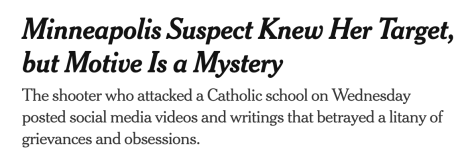
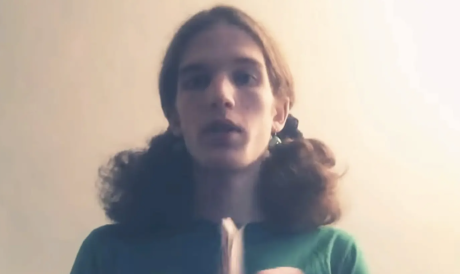
They also didn’t use the term “trans” or “transgender.”
No one’s making any assumptions or pointing fingers or implying any linkage, of course, but the Times story seemingly sought to downplay the Robin/Robert thing as much as they could within the bounds of journalistic propriety.
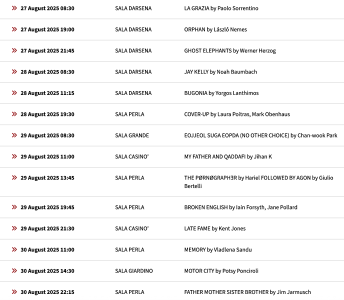
There are boilerplate audience-unfriendly films, and then there is LaszloNemes’Orphan, arguably the most audience-unfriendly film of all time or certainly of the 21st Century…a bitter, taste-of-ashes, morally appalling, end-of-decency film that will make your hair follicles stand at attention.
And yet — here’s the rub — Orphan is an Olympian achievement —- a paralyzing tale about hard-knocks survival —- a devastating, coming-of-age arthouse saga — an undeniably staggering drama of a very high order.
Nemes (SonofSaul) is a masterful, pulverizing filmmaker
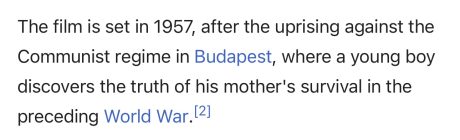
Set in 1957 Budapest in the wake of the Hungarian revolt against Soviet domination, it’s an utterly first-rate, grimmer-than-grim tale about a young lad gripped by nihilistic rage and, goaded by an oppressively evil situation concerning his terrified, traumatized mother and an evil, grotesquely fat butcher, a growing inclination for self-destruction.
And yet it ends on a note of mixed (make that extremely mixed) note of roundabout hope, if you want to call it that.
HE reply to friendo who asked for my reaction five minutes after it ended, just after 9 pm: “Excellent but horrifying, but at least the boy didn’t self-destruct at the end. He grows up by deciding to survive. Ghastly story. Excruciating.”
Tapping this out at 12:30 am and looking at 6 am wake-up, I’m not going to spill any more beans.
Teona Strugar Mitevska’s Mother, which I saw just after La Grazia, is an impressionistic, occasionally hallucinatory origin story about a 38-year-old Mother Teresa (Noomi Rapace) tending to Calcutta’s dirt-poor. She did so, the film says, not just with standard-issue compassion but also a strict and demanding edge.
Pic delivers intimations of a platonic lesbian vibe between Teresa and a hot Sister Agnieszka (Sylvia Hoeks). It also goes with a metal-rock score. Rapace has described the tone of the film as “punk rock”
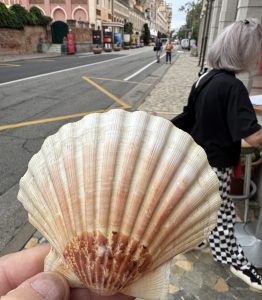
I honestly don’t feel like reviewing it now, partly because it’s an “almost”. Plus I’ve been up since 3 am and need a break before catching a 7 pm screening of Laszlo Nemes‘ Orphan. I need to walk outside and smell the Adriatic.
But Mother is a respectable, better-than-decent portrayal of an iconic figure. It certainly doesn’t portray her in rapt devotional terms. This is basically young Mother Teresa as an unsettled personality and a tough taskmaster.
I somehow never picked up on the fact that Calcutta is now spelled Kolkata.
Variety copy: Pic follows Teresa, Mother Superior of the convent of the Sisters of Loreto, as she anxiously awaits permission to leave her monastery and create a new religious order. The drama, shot in English, focuses on seven pivotal days in the life of the future saint when she faced a dilemma that challenged both her ambitions and faith.
“Mitevska, who previously explored Mother Teresa’s life in her unreleased documentary Teresa and I, draws from extensive research including interviews with the last living sisters who witnessed the saint’s character.
“The director positions her protagonist not as a traditional saint, but as ‘almost a CEO of a multinational company, relentless and ambitious.'”
“The filmmaker acknowledges the controversial aspects of her subject, particularly Teresa’s stance on abortion, while choosing to examine the woman before she became a globally recognized saint.
“The screenplay, penned by Goce Smilevski, Mitevska, and Elma Tataragić, presents what the director calls ‘a female story’ that avoids traditional martyrdom narratives.”
The common perception is that that Paolo Sorrentino makes lulling eye-bath films that intrigue on a certain level but don’t quite add up to much more than that. But he’s a respected cinema stylist and this, take it or leave, is his signature…immaculate visual compositions, a strictly applied tone of dry irony, understated performances that nonetheless invite curiosity and, if you’re so inclined, a certain scrutiny.
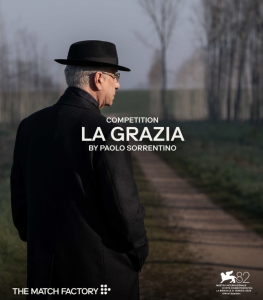
La Grazia, which screened this morning at 8:30am inside the over-refrigerated Sala Darsena, is a stately, decidedly opaque portrait of an aging, white-haired Italian president named Mariano De Santis (longtime Sorrentino collaborator Toni Servillo), his daughter Dorotea (Anna Ferzetti), a crusty, combustible old friene (also white-haired) named Coco Valori (Milvia Marigliano) and…oh, God, I’m just dingle-dangling here. As with almost all of Sorrentino’e films I felt a mix of appreciation for hie 2.39:1 compositions as well as distanced and vaguely frustrated. Within ten minutes I knew it would be a tough haul and it was.
I could feel the press audience politely enduring it, sorta kinda working through it (is this a meditation on aging, death, white-haired wigs, obsession, cigarettes?) but waiting for something engaging to happen and getting little satisfaction, at least according to HE standards.
The only concise description I can settle on is “ironically bloodless”. As in mummified, underwhelming, lyrical, stillborn, subdued emotionalism, lemme outta here. But this is what tends to happen when Sorrentino and Servillo pool forces.
And the Sala Darsena climate was really too cold…you’d have to call it assaultive. I buttoned up my black Kooples shirt and hoped for the best, but I was freezing the whole time. The morning’s only genuine pleasure came when La Grazia (i.e., Grace) finally ended and I escaped from the ice-truck atmosphere by walking into the warm Italian sun….”thank you, God…aaaahhh!”
Veteran festival friendo who was at the same screening: “Ahaha yeah they love to crank up the AC in that cinema! Everyone I know brings a jacket to stay warm. It’s nice when you first enter if it’s really hot outside! But since it’s pretty normal warm now it was freezing inside there today.”
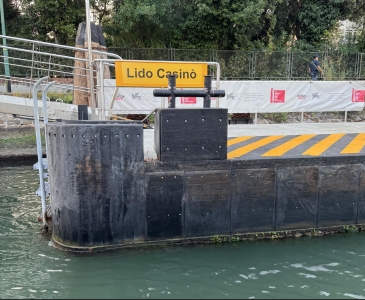
Up at 6 am, out the Calle de la Vida door at 6:30, caught Line 20 (San Zacarria pier B) at 6:45, arrived at Lido Casino pier around 7…okay, maybe 7:05 am.
I’ve greatly respected the Venice Film Festival from afar for so long, but now I have a semblance of an idea of it…what all the devotion and exuberance have been about all along, even if I’ve barely experienced it thus far.
I’ve been coming to Venice as a low-key, X-factor traveller for a quarter-century, but being greeted and assured and credentialed by festival staffers yesterday was like being welcomed into a private, super-flush, extra-exclusive club for movie coolios…cultured hepcats only…a grand, pine-tree-shaded island for mature, well-considered cinema pleasure.
When we left headquarters last night around 8:45 pm, having worked in the royal, pre-war, high-ceilinged, uncrowded sanctum of the press lounge for three-plus hours, the vibe was so comforting and genteel…”consider yourself at home…consider yourself one of the family” and all that. I felt so honored and sheltered, so fully massaged and at peace.
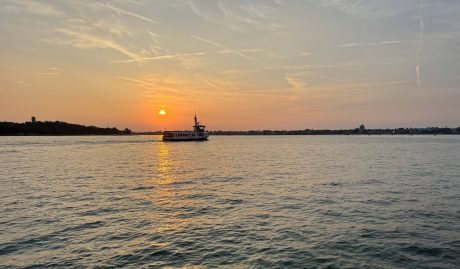
We stepped onto the Line 20 (or was it MC?) vaporetto from that smallish embarcation pier on the L-shaped canal that feeds into the lagoon, and then the engine rumbled and a minute later I was standing under the night sky and inhaling that wonderful air as I stared at the golden, glowing horizon of one of the earth’s greatest cities, and then we were back at the San Zacarria dock so quickly, it seemed.
And here I am, dead awake at 3:45 am, having awakened at 3am after crashing at 10:30 pm.
I’ve been saying this for years, but there’s no city in the world that is as pin-drop quiet as Venice.
Maybe I can lull myself into an extra hour of sleep before rising at 6 am.
My failure to book a press ticket for Luca Guadagnino’s latest film (Amazon, 10.10) is on me, of course…my tardiness and clumsiness. Plus it’s a tough ticket on its own terms. (The first viewings happen on Thursday, 8.28.)
Maybe I can slip into a screening on a wait-list, down-on-my-knees, last-ditch basis. I don’t know the rules but maybe.
I’ve reserved tickets for pretty much everything else of value between now and 9.4. Reservations for Friday, 9.5 and Saturday, 9.6 haven’t been made available yet.
The bottom line is that being here has made me feel so turned on and electrified and plugged into the here-and-now. Venice is soooo much better than Cannes. I feel blessed and honored to be here.
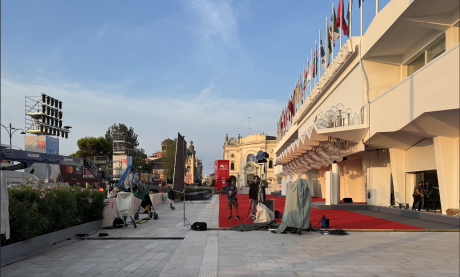
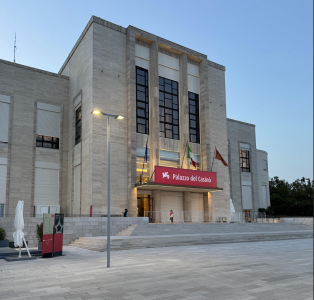
I’ve been reading Venice Film Festival coverage for decades, and not once have I seen snaps or video of the physical layout of the Venice Lido Grand Casino area, or of the magnificent press lounge. It’s a sprawling, beautiful, bucks-up, well-tended village unto itself, flanking the Adriatic and shaded by hundreds of mature pine trees. Newbies instantly feel very well taken care of. I do, I mean.
But it was hellish getting here early this afternoon. Every vaporetto gate attendant told us something different, and they all passed along dicey or erroneous info. Total confusion.
I realize, of course, that it’s simply in the character or nature of “laughing Mediterranean” fellows (a Harold Pinter line from Betrayal) to adopt a casual attitude that isn’t too detail-oriented or overly hung up on the clock. Public transportation is so well-ordered and easy to follow in Oslo, Copenhagen, Berlin, Paris, Barcelona. But not here.
We took what we thought was a Line 20 vaporetto and quickly realized it wasn’t heading for the Lido. We got off at Redentore, and then took another to Zattere and got off. Then we got on a vaporetto that had a Mostra Cinema (MC) sign on it, and it took us back to San Zaccaria (briefly) and then it dropped us at the ‘wrong’ Lido stop — a 15- or 20-minute walk from the casino. We tried to take a bus south but couldn’t figure the bus system, so we finally hailed an Uber but there were no drivers. We finally got a regular cab to take us to festival headquarters, which was seven blocks away.
Oh, and the cab fee was 13 euros, or roughly half of what the Uber guy would’ve charged us.
Festival veteran: “All very strange. All the Line 20 boats are going to the Lido Casino today. Maybe you just got off too early? It makes two other stops at small islands before it goes to the Lido Casino…”
HE to Festival Veteran: “No ACTV employee seems to know what a Line 20 is. They ‘say’ they know, and then they give you a bum steer. It’s NOT strange — it’s totally par for the course.”
Festival Veteran: “Line 20 is pretty common during the festival. Dock B. It ALWAYS departs and arrives at Dock B, San Zaccaria. You have to look for it there in the inside left corner of that dock.”
HE to Festival Veteran: “Did you read the part that says ‘at Zattere we got on a vaporetto that had a Mostra Cinema (MC) sign on it, and it took us back to San Zaccaria (briefly) and then it dropped us at the wrong Lido stop — a 15 or 20-minute walk from the casino’? It’s the truth — it’s what happened.”
Festival Veteran: “I think you got on the wrong boat this time because there are ads for the MC line everywhere for the festival on every single boat now. But these are just ads. You really need to check the boat numbers. It will have a little sign on the boat say ’20’ or ‘MC’ in a colored circle.”
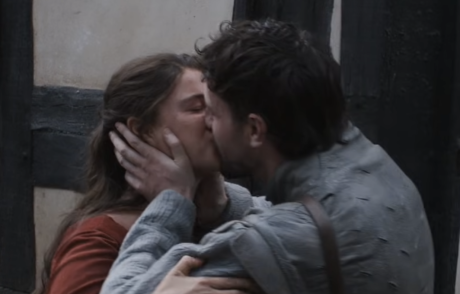
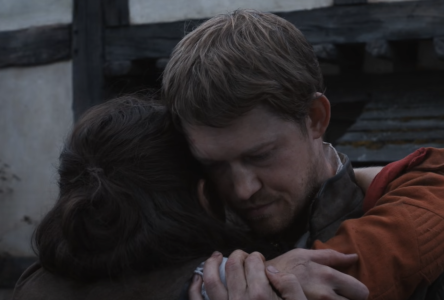
Chloe Zhao‘s Hamnet (Searchlight, 11.27) may or may not be “misery porn”, as one research screening tipster has claimed, but at least (a) it’s been beautifully, hauntingly shot by dp Lukasz Zal (Ida, Cold War, The Zone of Interest), (b) it’s thrilling to see an original Globe theatre performance recreated so faithfully, and (c) you can tell straight away that Jessie Buckley‘s performance as the suffering Agnes Shakespeare (a.k.a., Anne Hathaway) will snag a Best Actress nomination — obviously, no question.
The word is that Paul Mescal‘s William Shakespeare is a supporting performance, and that the famed Elizabethan playwright is depicted as a shitty husband — weak, self-absorbed. But the story apparently shows Agnes embracing and possibly having an extra-marital affair with Joe Alwyn‘s Bartholomew, for whatever that may be worth.
A month ago I said that if — I say “if” — Bradley Cooper‘s Is This Thing On? is a docudrama origin story, 55 year-old Will Arnett is 20 years too old to play stand-up comic John Bishop, who broke into the biz in 2000 at age 34. I don’t see how this is even a little bit disputable
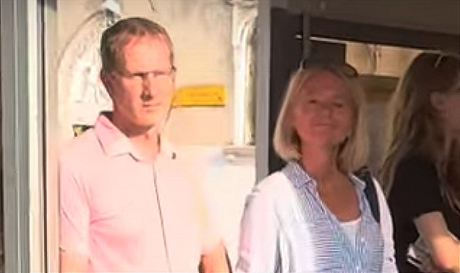
This woman’s alpha-vibe smile expresses so much about how Venice visitors feel about being here. I went up to this 40ish blonde on the vaporetto and confessed (her husband standing right there and listening in) that I had shot video of her and that I was moved by her look of serenity. She said “thanks” and offered no protest about being captured, so to speak. I’m presuming that the HE community will take offense all the same and attempt to browbeat me for another video violation, and maybe even slap the woman around for going along with it.