Yesterday I tried listening to portions of Taylor Swift‘s “The Life of a Showgirl“, and I’m very sorry but the music and her voice in particular just went “thud” all over again. I listened and nothing happened.
“Knockout Vapid”, posted on 10.13.23:
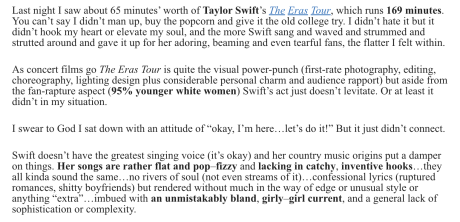

Yesterday I tried listening to portions of Taylor Swift‘s “The Life of a Showgirl“, and I’m very sorry but the music and her voice in particular just went “thud” all over again. I listened and nothing happened.
“Knockout Vapid”, posted on 10.13.23:
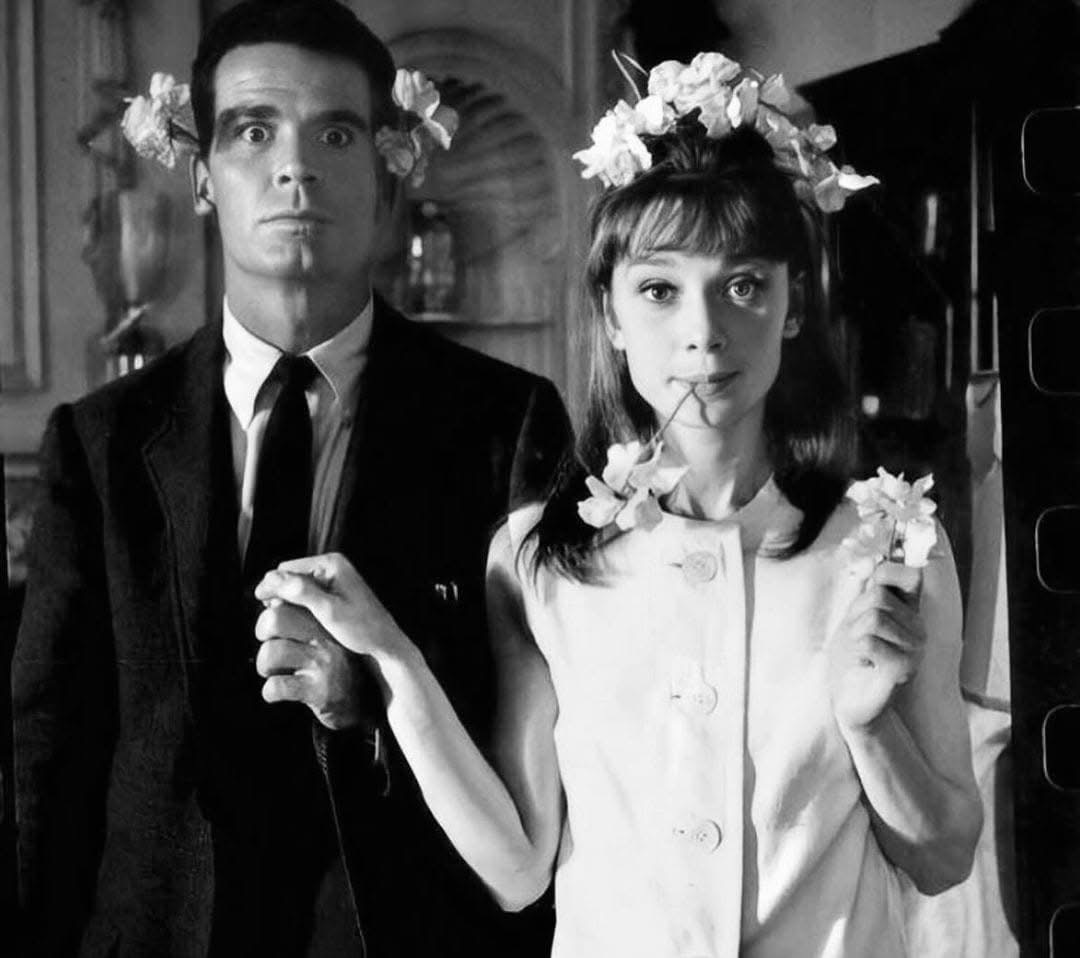
William Wyler‘s The Children’s Hour (’61) is a thoroughly suffocating drama and, for my money, a stone drag to sit through. Eeeeeekk!…lesbians! The alarmed expressions in the trailer alone are borderline comical.
It began life as a 1934 Hellman play about the hounding of two schoolteachers over rumors of a suspected gay relationship.
In 1936 Wyler sheepishly adapted a watered-down screen version of Hellman’s play (Hellman herself wrote the screenplay), having scrubbed it of lesbian allusions and re-titled it as These Three.
Even Wyler’s 1961 version, which finally allowed allusions to a lesbian relationship between the schoolteachers (Audrey Hepburn, Shirley MacLaine), unfolds in overly timid terms. Hellman “adapted” it, although screenplay credit went to John Michael Hayes.
James Garner and Joel MacCrea played the same role in the ’61 and ’34 versions, an alarmed doctor named Joe Cardin who basically wants to mate with Audrey Hepburn and Merle Oberon, respectively.
Yes, Virginia — even in 1961 the notion of a possibly gay relationship between two women was quite an alarming thing, strange as this may sound today. Wyler’s Kennedy-era film was derided as being overly skittish and chicken-hearted.
This was the same year, mind, as Basil Dearden‘s much braver Victim, a low-budget British drama about a blackmailer making life miserable for a seemingly straight-and-married barrister (Dirk Bogarde) over allegations of a male homosexual relationship from the barrister’s past.
Victim‘s Wiki page says it was filmed in only 10 days.
As far as I can recall there are only two films with a strong, recognizable musical theme or theme song…Elia Kazan‘s East of Eden (’55) and Robert Altman‘s The Long Goodbye (’73)…these two may be the only films in which the musical theme is sung or hummed by characters within the film itself.
Which means, obviously, that the theme was composed and performed before principal photography on these films began.
In Eden, Julie Harris hums Leonard Rosenman‘s main theme (which begins at the :40 mark in the below video), and in The Long Goodbye, a lounge singer croaks or croons John Williams and Johnny Mercer‘s “Long Goodbye” tune in the Hollywood bar in which Marlowe retrieves his messages.
There are probably other films that have operated this way, theme-song-wise — I just can’t remember them.
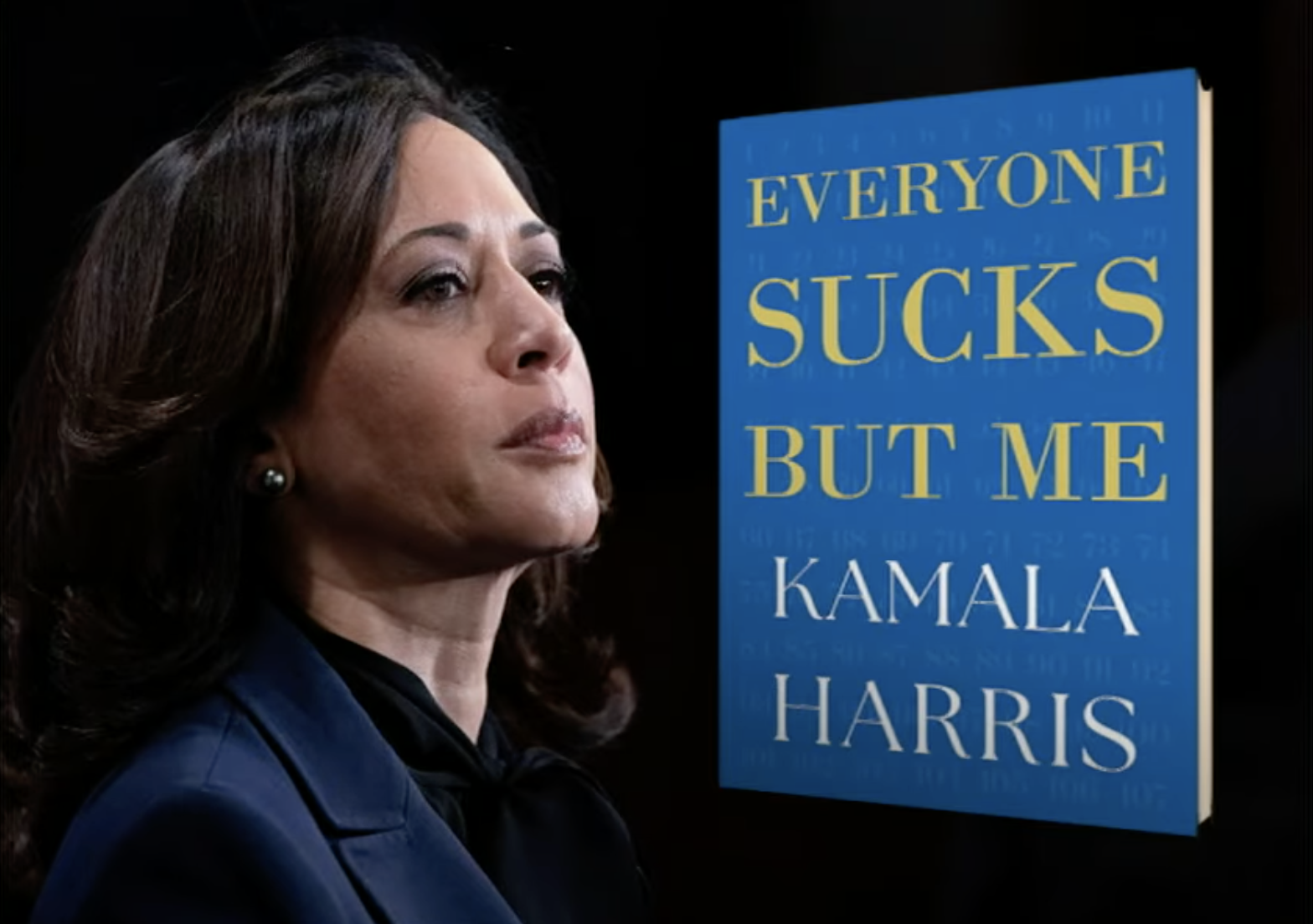
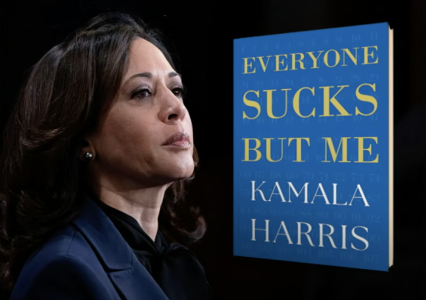
From last night’s Bill Maher/”New Rules” segment: “‘107 Days’ is a victim’s title because…get it?…Kamala only had 107 days to win.
“Yeah, and a billion and a half dollars. And a built-in army of about 75 million people who’d vote for any human-adjacent life form that wasn’t Trump. But in ‘107 Days,’ nothing is ever Kamala’s fault.”
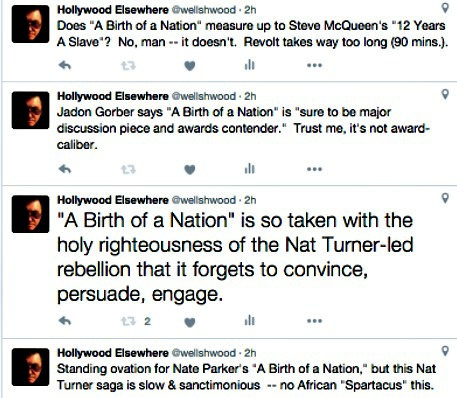
My Sundance pan of Nate Parker‘s The Birth of a Nation was posted nine and three-quarter years ago — 1.25.16.
Within an hour or so many confidantes wrote me or pulled me aside and said “why are you opening yourself up to charges or racism? Nate Parker is an industry hero and you post this? Do you have a death wish? Don’t you want advertising income from Fox Searchlight?”
I basically said that Parker’s film is decent here and there and definitely impassioned, etc., but it’s finally a mediocre effort that strives to “sell” and “act” misery rather than simply being or exuding it. It’s basically an ambitious Starz movie.
1.25.16: One of the biggest self-congratulatory circle jerks and politically correct wank-offs in the history of the Sundance Film Festival happened late this afternoon when Nate Parker‘s heartfelt but sentimental and oppressively sanctimonious The Birth of a Nation ended and the entire audience rose to its feet and began cheering wildly, even ecstatically.
This is a sentimental, briefly stirring, Braveheart-like attempt to deify a brave African-American hero — Nat Turner, the leader of a Virginia slave rebellion in August 1831. But a black Braveheart or Spartacus this is not. Nor is it, by my sights, an award-quality thing.
The Birth of a Nation delivers a myth that many out there will want to see and cheer, but don’t kid yourself about how good and satisfying this film is. It’s mostly a mediocre exercise in deification and sanctimony. I loved the rebellion as much as the next guy but it takes way too long to arrive — 90 minutes.
Parker, the director, writer and star, sank seven years of his life into this film, and invested as much heart, love and spiritual light into the narrative as he could. But the bottom line is that he’s more into making sure that the audience reveres the halo around Turner’s head and less into crafting a movie that really grabs and gets you, or at least pulls you in with the harsh realism, riveting performances and narrative, atmospheric discipline that made Steve McQueen‘s 12 Years A Slave an undisputed masterpiece.
As noted, Parker doesn’t seem to even respect the fact that he needs to deliver the historic rebellion (i.e., horribly oppressed African-Americans hatcheting white slave-owners to our considerable satisfaction) within a reasonable time frame, which would be 45 minutes to an hour, tops. Kirk Douglas and his fellows broke out of Peter Ustinov‘s gladiator training school around the 45-minute mark.
I realize that the Turner-led slave rebellion was suppressed within two days, but in Parker’s movie it’s over before you know it. I’ve been waiting 90 minutes for the rancid whiteys to get their comeuppance, and Turner’s small army is surrounded and defeated within 15 minutes? That’s not satisfying, dude. No way would Douglas and Stanley Kubrick have kept their gladiators in Capua for 90 minutes and then had Laurence Olivier‘s Crassus defeat them within a quarter of an hour.
You can call me a whitey for referencing Spartacus but The Birth of a Nation has been cut from the same basic cloth.
In HE’s version Turner doesn’t wear a halo and is given qualities that make him less of a saint and more of a tough, flesh-and-blood, hard-knocks guy. The land owner injustices and atrocities simmer for about an hour, and then the rebellion kicks in with Turner and his army getting their bloody revenge and doing their best to fight the law and the white militias for the second hour, and then the capture, execution and wrap-up for the last 10 or 15 minutes. And no religious ceremonies, no angels, no choir music and no apparitions….just stark realism.
If you ask me the Sundance hipster smooch brigade went to The Birth of a Nation determined to celebrate it as much as possible. The idea, trust me, was to demonstrate to the world and particularly to the slow-to-get-it crowd in Los Angeles how much hipper, cooler and sensitive they are regarding the 21st Century African-American experience and particularly how much wiser they are than the unfortunate Academy attitudes that resulted in OscarsSoWhite.
Posted by yours truly:
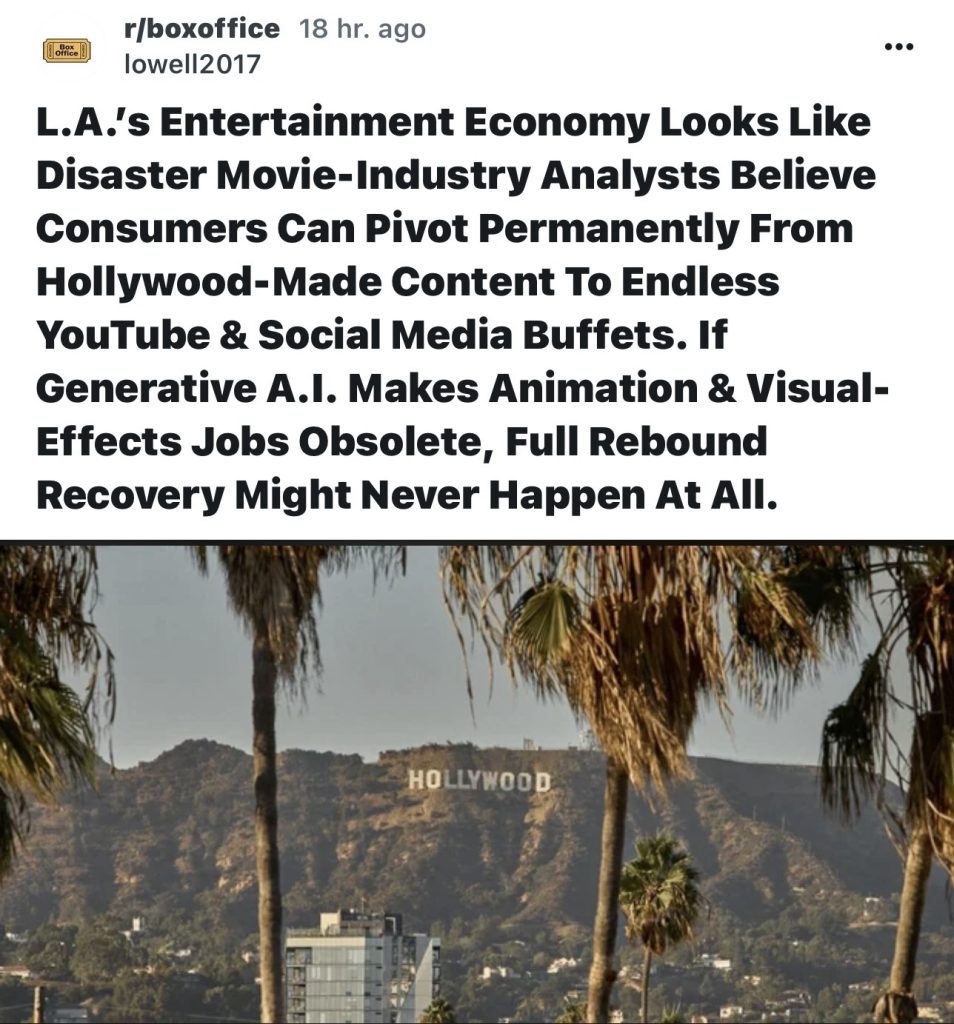
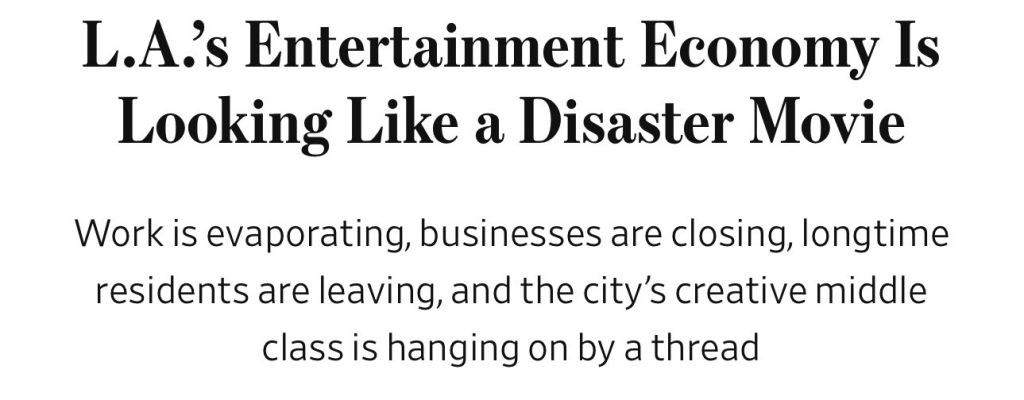
…and derive a half-decent living from it while getting to know and laugh and trade insights with all kinds of top-tier creatives, hangers-on, wise guys, dazzling intellects, flamboyant fellows, gifted pretenders, crusty seen-it-alls, ruthless studio suits, seducers, flunkies, critics, screenwriters, Fast Eddie opportunists, soul-less sharpies, gimlet-eyed poker players, gladhanders, cool cats…at least I was able to bask in all this while savoring the glamour and the history while drinking from the trough. 40-plus years of this!
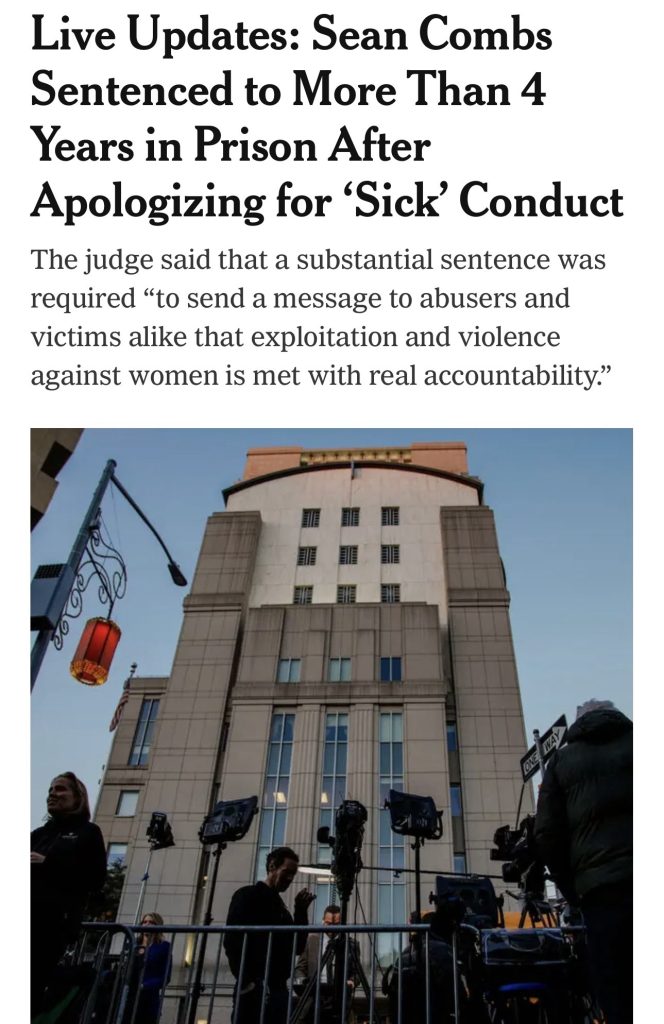
For years Sean Combs repeatedly told himself (a) “my schlong wants what it wants and that’s the bottom line” and (b) “they can’t touch me for this shit…of course I can skate…that’s what being loaded is all about”. And now the chickens have come home.
Here’s HE’s latest rundown of the 2025 films that really deliver the goods vs. the ones that shouldn’t in all fairness be regarded as even semi-heavyweight, because they’re not.
Let’s start…no, let’s finish with Gold Derby’s latest Best Picture rankings vs. HE’s cut-the-crap assessments.

The sturdy, real-deal films that certainly (or in two cases reportedly) deserve top rankings, in part because they deliver (or are said to deliver) serious emotion:
1. Joachim Trier‘s Sentimental Value (generates honest current, nails it, gets nothing wrong)
2. Paul Thomas Anderson‘s One Battle After Another (except it’s against the vibe shift and isn’t exactly stirring the pots of the red-state bumblefucks)
3. Chloe Zhao‘s Hamnet (except it was overpraised in Telluride, and I know at least one critic who’s sorta kinda frowning)
4. Bradley Cooper‘s Is This Thing On? (won’t see it for another week or so, but I have a gut feeling…)
5. Zach Cregger‘s Weapons
6. Kaouther Ben Hania‘s The Voice of Hind Rajib
7. Craig Brewer‘s Song Sung Blue (gut feeling)
8. Hasan Hadi‘s The President’s Cake (brilliant, transporting)
9. Kent Jones‘ Late Fame
10. Kathryn Bigelow‘s A House of Dynamite
11. Noah Baumbach‘s Jay Kelly.
12. (Special Feature Documentary Stand-Out) David Kittredge‘s Boorman and the Devil.
Complete Unknowns (haven’t seen ’em, totally clueless):
1. Mary Bronstein‘s If I Had Legs I’d Kick You
2. Benny Safdie‘s Marty Supreme
3. Scott Cooper‘s Deliver Me From Nowhere
HE’s Takedown List (i.e., get outta town, don’t even ask to come back until mid ’26):
1. Sinners (ballgame’s over, nominations but no wins, overpraised by TikTokers…sorry, Coogler!)
2. Wicked: For Good (forget it, get outta here)
3. It Was Just An Accident (way overpraised in Cannes)
4. Avatar: Fire and Ash (not a chance)
5. Frankenstein (forget it)
6, No Other Choice (Park Chan Wook‘s best days are behind him)
7. The Secret Agent (way overpraised in Cannes)
Every so often I’ll find myself shaking my head and sometimes even shuddering at the terrible, awful finality of bullets and disease. Some people have given up the spirit long before the final chapter, but others are generators of such verve and beauty and brilliance that the word “tragic” isn’t enough when finality intervenes. When I think of the crackling, incandescent spirit of John Lennon, and how all of that was obliterated in a matter of minutes on the evening of 12.8.80…words fail.
James Dean died in a head-on car crash exactly 70 years ago — 9.30.55. Broken neck, crushed chest, damn near instantly. Hollywood Elsewhere has twice visited the California death site (the intersection of route 46 and route 41, near Cholame). The first time was in early ’98, right around the Monica Lewinsky scandal. I took this photo, obviously with a mildly shitty camera:
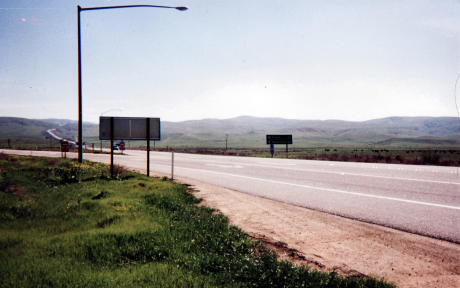
Posted 20 and 1/2 years ago — 2.17.05: I’ve visited the Dean death site a couple of times, standing right next to the spot where Dean’s spirit left his body. I’ve taken it all in and felt vague stirrings of what I’ve told myself is probably some kind of historical after-vibe.
Every time I re-watch a Dean flick I’m still seriously impressed by those amazingly delicate chops of his, and how he managed to deliver that aching vulnerable thing with just the right amount of finesse.
But does Dean mean all that much to GenXers and GenYers? How many under-35s have seen and really enjoyed East of Eden or Rebel Without a Cause? These are great works (nobody cares much about Giant, a slow-moving, relatively dull film), but does the Dean legend/mystique pack that much of a punch these days?
Warner Home Video will release a brand-new Dean DVD package on 5.31.05 — remastered, double-disc, extra-heavy presentations of East of Eden, Rebel Without a Cause and Giant, plus a new documentary, James Dean: Forever Young, with previously unseen footage of Dean’s TV work. The doc will debut at the ’05 Cannes Film Festival, along with screenings of the three features, which have all been digitally restored.
Plus they’re organizing “Dean Fest,” a big three-day media festival happening in Dean’s home towns of Fairmont and Marion, Indiana (he was born in Marion, raised during his teen years in Fairmont by his aunt and uncle) from June 3rd to 5th.
I don’t know how worshipping at the altar of Dean’s memory is supposed to amount to three meaningful days for anyone of any age, but I guess the Warner folks will try and make that dog hunt.
Why am I writing about this now? Because Warner Home Video threw a press event yesterday morning at the Grove to announce the Dean bandwagon, and I had nothing else to do. All right, I was vaguely interested.
They got Pete Hammond to be the master of ceremonies. A parade of corporate suits took turns at the mike, blah-blahing about Dean’s rebel spirit and lasting influence. Some pals and colleagues of Dean’s from the old days shared some recollections. Martin Sheen (who played Dean in a TV movie about 25 years ago) showed up also, paying tribute to Dean’s profound effect upon actors, etc.
There was no trace of Dean’s old pal Dennis Hopper, though. There should have been.
I was told the whole presentation would last a little more than an hour. I stayed for the first 90 minutes, at which point the screen presentations had completed and Hammond had introduced and interviewed six or seven of Dean’s former friends, co-workers and/or associates.
If Dean had lived he’d be 74 today — Clint Eastwood’s age. But I don’t think it was in the cards for Dean to reach a ripe old age.
Photographer Phil Stern, easily the morning’s most caustic and honest speaker, said Dean was reckless about driving and was probably nursing some kind of urge to self-destruct.
Stern recalled that one day in early ’55 he was driving west on Sunset Blvd. near the corner of Crescent Heights Blvd., and that he nearly slammed into Dean after the latter ran a red light.
“Dean was very prescient because he structured his career in such a way that he passed away, which I believe was inevitable, in a way that precluded the possibility of people seeing him as a pot-bellied bald man,” Stern remarked.
There was something odd about friends and contemporaries of a guy known as the most influential troubled teenager in movie history…the proverbial `50s youth with a turned-up hood…there was something disorienting about Dean’s contemporaries looking so old and crochety and bent over.
Corey Allen, 70, the actor who played Buzz in Rebel Without a Cause (i.e., the one Dean had a knife fight with, and who went over the cliff in the car) was white haired and bearded and carrying a cane and apparently suffering from Parkinson’s, or something like that. He seemed okay attitude-wise.
You came out of this corporate presentation knowing two things: time sure as shit marches on, and getting old is a sonuvabitch.
As long as I’m breathing I’ll always love Leonard Rosenman’s scores for both East of Eden (especially the overture and main title pieces) and Rebel Without a Cause.
But there was something seriously odious about all these bottom-line corporate suit types paying tribute to Dean’s earning potential as a brand name, but not necessarily (or at least, not believably) paying tribute to who he actually was.
There’s a line in Woody Allen’s Hannah and Her Sisters in which Max von Sydow’s grumpy artist character says that if Jesus Christ were to come back to earth and see what is going on today in his name, “he would never stop throwing up.”
I was wondering what Dean would have thought of Tuesday morning’s presentation. I like to think he would have been amused in some way, shape or form. I was also imagining his ghost sitting in the seats yesterday and throwing ectoplasmic spitballs.
The Ankler‘s Richard Rushfield (10.1.): “This morning Jane Fonda — legendary actress, producer, activist and Oscar-winner — announced the re-launch of The Committee for the First Amendment, a group once led by her father, Henry Fonda, among other A-list Golden Age stars, including Humphrey Bogart and Lauren Bacall.”
“The Committee’s reformation was announced with the release of a statement signed by over 550 artists” — Bill Maher included! — “and members of the Hollywood community.”
The reformed Committee is, of course, a pushback against Donald Trump‘s autocratic bully-boy regime, and especially, one presumes, his recent quashing (through surrogates) of his late-night talk-show critics, Stephen Colbert and (for a few days) Jimmy Kimmel. Who’s next?
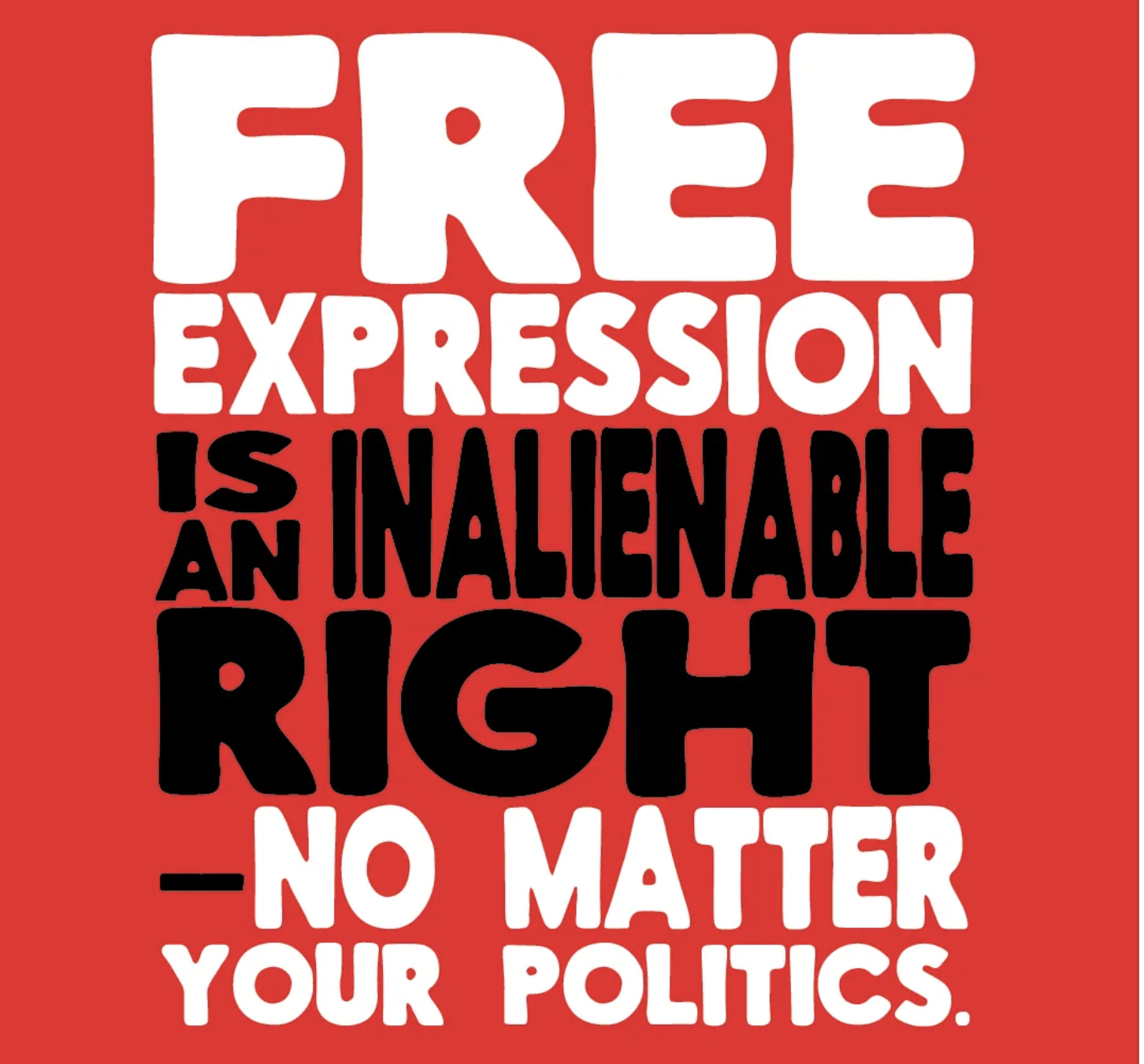
The Committee’s banner ad reads as follows:
And yet Fonda’s committee did a little quashing of its own last year when THR‘s Rebecca Keegan posted that Sasha Stone hit piece — an article that seemed to pretty much torpedo Stone’s award-season ad income, although she’s since bounced back to some extent.
Here’s what Stone posted this morning in response to Rushfield’s piece:
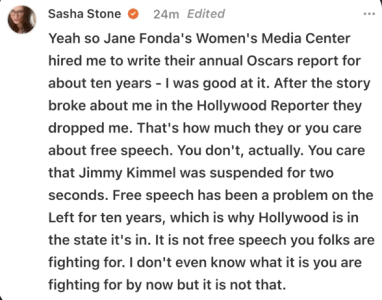
It probaby wasn’t Fonda herself who said “get rid of Sasha Stone!” But it might have been Robin Morgan, co-founder of the Women’s Media Center.
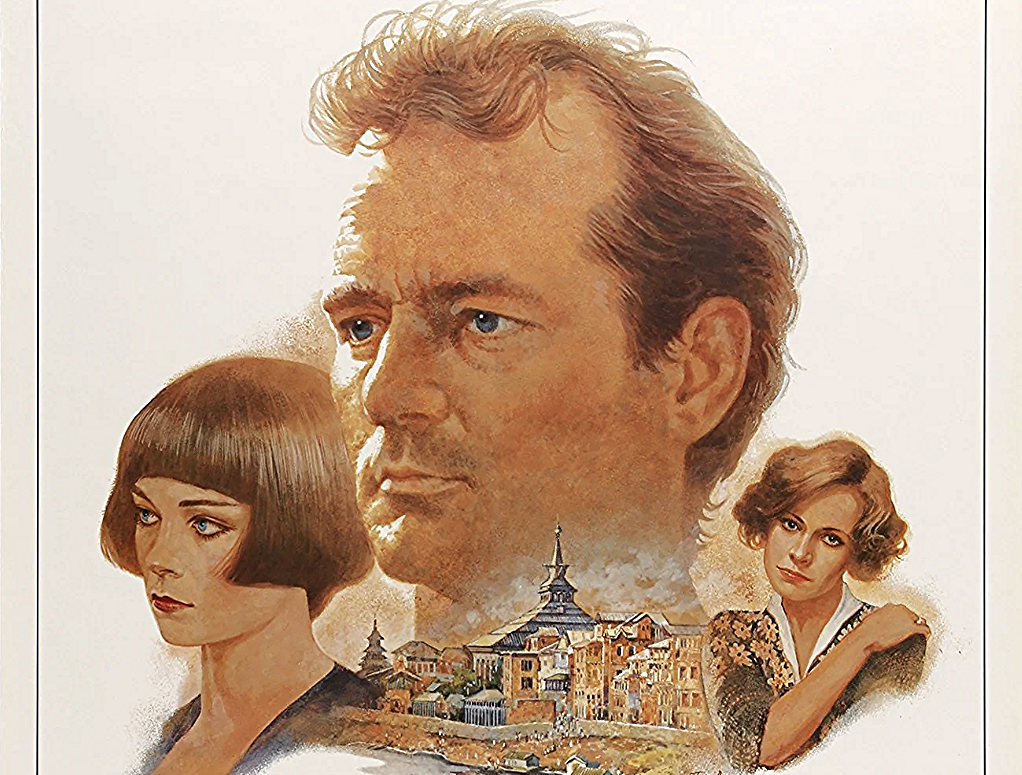
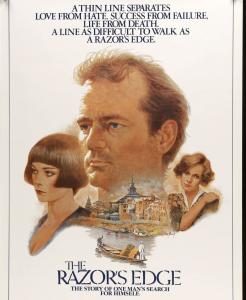
Who remembers The Razor’s Edge, that strange, wackazoid, out-of-mind adaptation of Somerset Maugham’s 1944 novel?
41 years have passed since my first and only viewing. Directed and co-written by John Byrum, this Columbia release is probably the worst Bill Murray movie ever made, and was certainly the most ill-conceived.
From Janet Maslin’s 10.19.84 review: “As he prepares to tell his fiancee that he wants to postpone their wedding and is not yet ready to settle down, Bill Murray’s Larry Darrell says ‘let’s talk.’ Murray then adds ‘seal talk’ as he’s playing the scene in a swimming pool. And then he begins to arf.
“If The Razor’s Edge is Mr. Murray’s first ‘serious’ movie, he can hardly be accused of bringing an excess of seriousness to its central role.
“Nor does he exactly play Larry Darrell, the Chicagoan ‘dreamer of a beautiful dream’ who journeys to Paris and the Far East in search of enlightenment, for the laughs that are his trademark. Certainly Mr. Murray brings his familiar off-handed, wise-guy manner to the tale, as well as a complete indifference to the post-World War I time frame; his performance is both jokey and anachronistic, and the Parisian setting is little more than an excuse for him to show up in a beret.
“These touches might seem more jarring in a consistent and convincing version of Maugham’s novel. As it is, this Razor’s Edge is itself so disjointed that Mr. Murray, for all his wisecracking inappropriateness, is all that holds it together.”