

Due Respect, But “A Star Is Born” Must Be Stopped

21 out of 30 Gold Derby spitballers have Bradley Cooper‘s A Star Is Born in their top position, and I think it’s time to bring out the big guns and the big buckets and say “hold on, wait a minute…don’t do this.” It’s time to beg all of those Academy members who care about the historical importance of the Oscars to pull back on the reins and go “whoa, nelly!” and ask themselves if they really want to give the Best Picture Oscar to a remake of a remake of a remake of a remake. Because that’s what they’re apparently on the verge of doing.

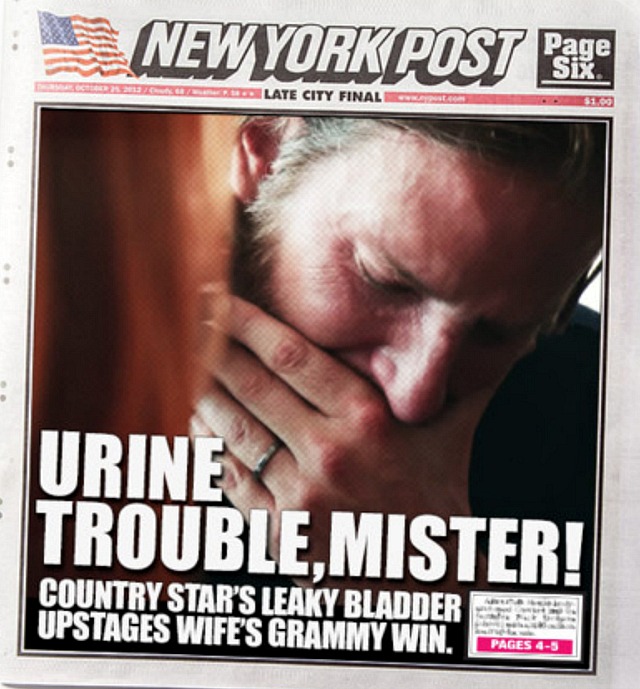
Now is the time for Academy and guild members to stop and take a hard look at things. The first half of Cooper’s film is very good, of course, and Cooper and Lady Gaga are better than pretty good, and even with the somewhat weaker second half (and you know ASIB has this problem, that it doesn’t deliver great cards and that the Bradley URINE TROUBLE, MISTER! downswirl scenes aren’t really believable, not in today’s reach-out realm)…yes, it’s still a better-than-decent film…and yes, Hollywood Elsewhere has been saying all along that it’s the best of the four versions of this age-old Hollywood saga (five if you count What Price Hollywood?).

But ask yourselves, “Is this who we are? Are we really going to give a Best Picture Oscar to the fifth version of a showbiz saga that dates back 85 years?”

Alternate lament: “Are we really going to give a Best Picture Oscar to a generally admirable, well-made film because it’s made $200 million? Wouldn’t that make us the People’s Choice Awards if we do that?”

Best Picture Oscar winners ought to be about the times from which they sprang — about whatever cares or currents or passions were stirring in the soup when they were written, made or released. Some kind of zeitgeist connection, some kind of “this is what life seemed to be like when we made this” element.

This representational belief system was shattered into pieces when Chicago won the Best Picture Oscar. Again with The Artist and The King’s Speech. Remember how terrible it felt the morning after these films won? Do you want to feel that feeling again?

I’m sorry but A Star Is Born must become a respected also-ran. If for no other reason than to rebuff that way-too-early, excessively smug prediction by Variety‘s Kris Tapley. Give the Best Picture Oscar to the obviously deserving Roma, to the socially transformative blockbuster Black Panther, to the perfectly finessed and emotionally affecting Green Book, to the witty and pointed The Favourite, to Can You Ever Forgive Me?…to anything but A Star Is Born.

Please, please, please think this over.

The Gold Derby gang knows nothing. They’re finger-to-the-wind cowards who are putting A Star is Born in their top position because it feels like an easy default — because they know no one anywhere will raise an eyebrow. The Gold Derby gang is all about going along with the current and avoiding taking a strong stand about anything.

Roma, Black Panther, Green Book, The FavouriteRoma, Black Panther, Green Book, The FavouriteRoma, Black Panther, Green Book, The Favourite. Choose one of these four and you’ll feel better about yourselves in the morning. Don’t tumble for A Star Is Born…please.
Foot Fix Was In

A 12.26 N.Y. Times story by Steve Eder doesn’t offer irrefutable proof that a Queens podiatrist got a 22 year-old Donald Trump got out of military service by writing a bogus letter to the draft board about Trump suffering from bone spurs, but it strongly suggests this.

The story is titled “Did a Queens Podiatrist Help Donald Trump Avoid Vietnam?

“A possible explanation involves a foot doctor in Queens who rented his office from Mr. Trump’s father, Fred C. Trump, and a suggestion that the diagnosis was granted as a courtesy to the elder Mr. Trump.

“The podiatrist, Dr. Larry Braunstein, died in 2007. But his daughters say their father often told the story of coming to the aid of a young Mr. Trump during the Vietnam War as a favor to his father.

“’I know it was a favor,’ said one daughter, Dr. Elysa Braunstein, 56, who along with her sister, Sharon Kessel, 53, shared the family’s account for the first time publicly when contacted by The New York Times.

“Elysa Braunstein said the implication from her father was that Mr. Trump did not have a disqualifying foot ailment. ‘But did he examine him? I don’t know,’ she said.

Basic Vietnam-era realities for men of conscription age: Anybody who was able to weasel out of Vietnam service by any strategy, did so. Nobody thought twice about it. Volunteers like Oliver Stone aside, that war was mostly fought by blue-collar guys who didn’t have a scam or a strategy that would allow them to wiggle out. No late teen or 20something male with any kind of educated background wanted to fight in Vietnam. It was an evil war or at the very least a criminally misguided one. The full might of a superpower attempting to crush an agrarian nation — a peasant society just trying to rid itself of colonialists and imperialists — was appalling to anyone with a brain.

Young Donald Trump was just the fortunate son of a rich guy who got out through what sounds like fraudulent means, but everybody was trying to do the same thing.

Daughter of Ruth Bader Ginsburg for Dummies

Mimi Leder‘s On The Basis of Sex opened yesterday. My initial review appeared six and a half weeks ago, on 11.9. Here we go again:

I had one strong thought in my head after seeing On The Basis of Sex, a well-meaning but mediocre saga about the formative years of legendary Supreme Court Justice Ruth Bader Ginsburg (Felicity Jones).

That thought was that Betsy West and Julie Cohen‘s RBG, the hit documentary about Ginsburg’s life and career, is a much better movie — smarter, more engrossing for sticking to the facts, no callow tricks or formulaic finessings. And yet it gets you emotionally.

On The Basis of Sex is a Ruth Bader Ginsburg primer for none-too-brights — a frequently unsubtle, Hollywood-style treatment that clumsily tries to milk or manipulate every emotional occurence or, failing that, charm the audience at every turn.  

At every juncture the story seems to have been dumbed down to appeal to (what’s a tactful way of putting this?) viewers whose lips move at they read supermarket tabloids.

Clunky, on-the-nose dialogue.  Rote direction.  Cardboard characterizations. Over-acted, hamfisted performances, particularly by the sexist male villains.  (Sam Waterston!) Trite plotting, predictable strategies and, in one climactic instance, the use of cliched dramatic invention that made me twitch and groan in my seat.

Read more

Elliott’s First Serious Score

I strongly suspect that the Best Supporting Actor Oscar race is between Green Book‘s Mahershala Ali and Can You Ever Forgive Me‘s Richard E. Grant, and that Sam Elliott‘s stand-out performance in A Star Is Born…well, he’ll be nominated but that’s all.

Like all Oscar contenders Elliott has of course been getting a lot of media attention with career-highlight articles and whatnot. But his Wiki page pays almost no attention to his first half-decent theatrical feature — Daniel Petrie‘s Lifeguard, a 1976 character-driven story about aging and values — and in which Elliott gave his first semi-sturdy performance.

I saw Lifeguard when it first came out. It was obviously a low-budget beach movie (pre-Baywatch) that was partly green-lighted because of the bikinis, and was saddled with an occasionally clumsy, in-and-out script. But it also had a grounded, this-is-real, emotionally upfront quality, and was about the terror of hitting 30 with no clear idea of what to do with your life.

Elliott played Rick Carlson, a 30-year-old Los Angeles lifeguard (Elliott turned 32 in August ’76) who gets laid a lot. Rick begins to question his life when he reunites with Anne Archer‘s Cathy, an old girlfriend who’s now divorced with a young son. Sensing his beachside ennui, she urges Rick to to take a job as a Porsche salesman, which is being offered to him by another high-school classmate (Stephen Young).

Concurrently Rick is feeling a certain something or other for Wendy (Kathleen Quinlan, 21 at the time), a lonely teenager with a crush on him. Will Rick quit lifeguarding for a Porsche dealership gig? Will he hook up with Archer or relapse with the obviously-too-young Quinlan?

Variety review: “Lifeguard is an unsatisfying film, of uncertain focus on a 30-ish guy who doesn’t yet seem to know what he wants.” HE response: Wrong — it’s fairly satisfying. As for the main character not knowing which way to turn…yes, exactly!

Director David Frankel, writing six years ago in a N.Y. Times essay about Lifeguard:

“I remember Lifeguard all these years later, and that counts for something, doesn’t it? Isn’t that what art is, really? A work that makes you see the world differently, that answers questions you didn’t know you had, that perfectly captures a time and a place, that inspires you?

Read more