Hammond’s

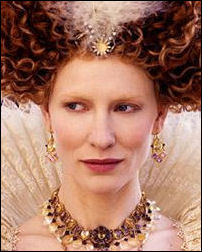
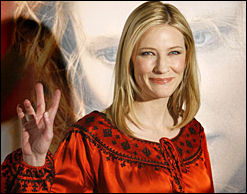
Pete Hammond‘s latest Envelope column is one of his horse-race commentaries — what’s starting to take shape, what cards the players are holding, etc. The photo of Cate Blanchett (sitting to the right of the article) raises a question, though — one that’s bothering me more and more every week that it’s sidestepped or ignored.

When are handicappers going to stand up and declare Blanchett’s (or her handers’) attempt to land a Best Actress nomination for Elizabeth: The Golden Age a lost cause because the movie is an absolute joke in the eyes of anyone with a smidgen of taste? (Even Oscar-watchers with bad taste or no backbone have come to accept this.) And that Blanchett’s only shot is a Best Supporting Actress nom for her genius-level Bob Dylan performance in Todd HaynesI’m Not There?

Iraq Films down for the count

“It doesn’t matter how many Oscar winners are in front of or behind the camera — audiences are proving to be conscientious objectors when it comes to this fall’s surge of antiwar and anti-Bush films.” Good God, another article saying the same thing? Fines should be levied upon journalists and editors who run trend stories two or three weeks after everyone else has gone, “Okay, I’ve had enough, what else can you show me?”

The offender in this instance is Washington Times reporter Christian Toto, whose article about this topic went up today.

Aft least it has a stab at dry humor. Dan Vancini, movies editor with Amazon.com, tells Toto that Robert Redford‘s Lions for Lambs could fare well thanks to its starry cast. “They have a word-of-mouth following,” he says, refering to costar Tom Cruise.” Box Office Mojo‘s Brandon Gray says Lambs “will be an interesting test. Is it simply them sitting in rooms giving speeches? That’s what it looks like.”

Foreign Film Contenders

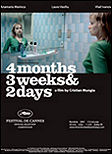
Cristian Mungiu‘s 4 Months, 3 Weeks & 2 Days has to be the front-runner for the Best Foreign Language Film Oscar. No other contender is generating this much buzz or has won Cannes’ Palme d’Or prize or is blowing people away quite as much. But I guess I should wait until it screens for the Academy’s foreign branch on Friday, November 2nd. You never know with the Academy fuddy-duds.

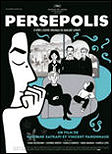
Screenings have begun already of the 63 entries and continue through 1.12.08. I don’t know anything about the hot titles except that (a) Mungiu’s film is the stuff of instant legend; (b) Persepolis, France’s entry, is looking at an uphill battle because it’s’ animated and set largely in Iran; and (c) Juan Antonio Bayona‘s The Orphanage not only deserves to be a total lock but probably will be unless the fuddy-duds go, “Oh, this isn’t solemn or meaningful enough because it’s just a haunted house movie.”

The titles that seem to have good buzz at this stage (emphasis on “seem” and including the already-mentioned titles) are the following:

12 (Russia, director: Nikita Mikhalkov), The Year My Parents Went on Vacation (Brazil, director: Cao Hamburger); The Art of Crying (Denmark, director: Peter Schonau); Persepolis (France, directors: Marjane Satrapi, Vincent Paronnaud); The Edge of Heaven (Germany, director: Fatih Akin); (Mongol, director: Sergei Bodrov).

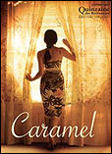
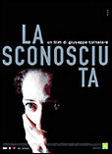
Plus: Mongol (Kazakhstan, director: Sergei Bodrov); Caramel (Lebanon, director: Nadine Labaki); Silent Light (Mexico, director: Carlos Reygadas); Gone with the Woman (Norway, director: Petter Naess); Katyn (Poland, director: Andrzej Wajda); 4 Months, 3 Weeks and 2 Days (Romania, director: Cristian Mungiu); The Orphanage (Spain, director: J.A. Bayona) and The Unknown Woman (Italy, director: Giuseppe Tornatore).

If I were king I would scratch Israel’s Beaufort (director: Joseph Cedar). There doesn’t appear to be any question that Beaufort‘s producers lobbied the Academy’s foreign film committee on the 50% foreign-language issue that wound up disqualifying The Band’s Visit. Punish the Beaufort team for playing dirty, discourage this kind of thing, etc.

If I’m missing anything (i.e., apparent standouts I haven’t heard about), please inform.

Too many films, nobody’s going

Too many indie dramas are flooding the well. Cultured moviegoer consciousness is being diluted and depleted by too many choices. Nothing’s happening, nobody’s catching any waves and “we’re all suffering,” says Focus Features chief James Schamus to L.A. Times reporter Rachel Abramowitz. “At least someone should be succeeding. It’s as bad a fall [season] as I’ve ever seen.”

I agree — there’s just too much out there, and that winds up hurting the whole field. But Abramowitz skirts the issue of quality and/or attractiveness in discussing the higher-profile underperformers.

And she doesn’t venture within a country mile of the other big factor, which is that urban blue audiences that go to occasional indie films are just like rural red-staters in the sense that 95% of them can’t get beyond subject matter. That’s all the vast majority wants to know or talk about. Not how brilliantly written, well acted, passionate, true-to-life and thematically potent the film is (or isn’t), but “what’s the story about?” And, of course, “who’s in it?”

“Why haven’t more people shown up to see A Mighty Heart?,” Abramowitz asks. Could it be because the leave-us-aloners and the too-sooners didn’t want to see a brilliant Michael Winterbottom film — so powerfully composed and finely edited it felt like something directed by Michael Mann — about a good-guy journalist who gets his head cut off by Islamic bad guys?

Why didn’t more people see In the Valley of Elah? Uh, let’s see…because the leave-us-aloners and the too-sooners smelled Iraqi sand in the margins of this deeply touching, beautifully acted (by each and every actor, and not just Tommy Lee Jones, Charlize Theron and Susan Sarandon) father-son story mixed with a whodunit? Because you can lead a horse to water but you can’t make him drink?

Why, she asks, hasn’t there been more interest in Lars and the Real Girl? Uhm…because there aren’t enough people out there who want to hang with a blue-collar simpleton (jowly, moustache, work boots, flannel shirts) who falls in love with a life-size plastic love doll? Because, you know…the average person finds this idea ludicrous, particularly when the film shows dozens and dozens of people (including hospital administrators) pretending out of sympathy and compassion for this borderline retard that the doll is real also?

(I finally saw Lars last night, and while I was genuinely moved by Ryan Gosling‘s lead performance, especially his tearful farewell scene by the lake, the film is obviously too caught up in its own conceit to expect any kind of wide popularity. America is not Park City, and it’s not mid January.)
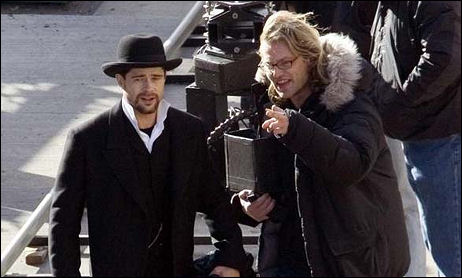

Brad Pitt, Andrew Dominik

“Films like Richard Gere‘s The Hunting Party, Kenneth Branagh‘s Sleuth or the Mark Ruffalo-Joaquin Phoenix film Reservation Road haven’t made even $1 million,” Abramowitz says.

And we all know why, don’t we? One, the Gere film isn’t very good and nobody wants to know from Serbia-Bosnia-Herzogovina…leave us alone!…bad vibes like Iraq!. Two, Sleuth is too much of an arch, old-world parlor drama with a bizarre third-act twist that goes off the rails. And three, Reservation Road, which wasn’t very well reviewed, too often feels like a coarse and unrefined acting-exercise film

Abramowitz notes that “a crew of classy star vehicles from studios — essentially art films with bigger budgets — has [also] been flailing at the box office. Despite George Clooney‘s tub-thumping, Michael Clayton has earned only $21 million.” And that’s because people sensed corporate complexity and a lack of emotional undertow and figured, “Looks like a smart, well-made film but you know what? Netflix.”

Cate Blanchett‘s Elizabeth: The Golden Age has only earned $11 million because — is everyone sitting down? — it’s an outrageously awful, self-mocking costume drama.

Why has Andrew Dominik and Brad Pitt‘s The Assassination of Jesse James by the Coward Robert Ford earned only $2 million? Uhmm…because people don’t want to know from exquisitely made western art films that feel like a Terrence Malick time-machine transportation? Because they’re like, uhm…lazy and sometimes moronic in their judgments and determinations?

Abramowitz notes that ThinkFilm will “wade into the choppy waters” this coming weekend with director Sidney Lumet‘s Before the Devil Knows You’re Dead, which features Philip Seymour Hoffman, Ethan Hawke and Marisa Tomei.

I slipped into a preview screening of this film last night. It was showing to a group of KCET subscribers — an older, fair-minded group that likes adult prestige films — and you just could feel the lack of excitement in the room as they walked out. You could cut it with a knife. They’d just seen one of the year’s absolute best and most of them were thinking “hmmm, downer….not very uplifting!”

Postscript: Apologies for the typos and clumsy sentences in this piece after I first posted in the late morning. I had to run out to do an interview with Kite Runner star Khalid Abdalla before doing a fine edit. Everything’s fixed now, but I die a little bit each time I post a typo and awkwardly phrased sentence and don’t do anything to fix it for an hour or two.

Michael Mann and “Frankie Machine”

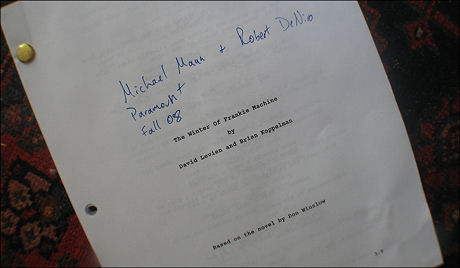
Last week I heard that Michael Mann was pretty well focused on directing Robert De Niro in Frankie Machine, a script by David Levien and Brian Koppelman that’s based on Don Winslow‘s “The Winter of Frankie Machine,” about an aging hit man who’s hounded out of retirement as the target of a hit himself.

Mann has had a hard time getting his projects set up since the financial failure of Miami Vice — two films that would have starred Leonardo Di Caprio (including an adaptation of For Whom The Bell Tolls) couldn’t get funded. I know he’s working on and may eventually direct a John Logan script called Empire for Columbia Pictures, with Will Smith starring. But Frankie Machine, which Martin Scorsese bailed out of directing last August, seemed…I don’t know, like a good and natural thing for Mann to direct. After reading it, I mean. Guns, intrigue, tough guys, good story.

So I called Mann’s office to ask if what I’d been told was true. “Inaccurate information” is what his assistant said he said. An hour or so later semi-retired PMK/HBH publicist Pat Kingsley called to reiterate that Mann hasn’t a clue what he’s doing next — maybe Empire, maybe he’ll concentrate on writing a script about Russian operative Alexander Litvinenko…who knew? I was fairly sure I was being lied to, but it didn’t seem important enough to make a big stink over. I let it go.

Tonight Variety‘s Michael Fleming reported that Mann has cut a deal at Paramount Pictures to develop Frankie Machine as a star vehicle for De Niro, with Alex Tse set to do a “major overhaul” of the concept under Mann’s supervision and De Niro and Jane Rosenthal, co-chiefs of Tribeca Films, producing.

“Redacted” in Norwalk

Brian DePalma‘s Redacted won’t have its limited opening until 11.16, and yet it’s been playing twice daily — at 1:05 and 3 pm, no evening screenings — at the Silver Cinema in Norwalk, Connecticut, for the last few days. Obviously for a reason. Thanks to HE reader Mark Rochefort for providing the tip.

The Third Hitchcock Project

Now I’m told there’s a third Alfred Hitchcock project called Psycho/Analysis, based on a script by Psycho screenwriter Joseph Stefano. Like the Ryan Murphy/Anthony Hopkins Hitchcock project I mentioned this morning, it’s about the making of Psycho — but only as far as the screenplay was concerned.

I’ve flipped through about 20 or 25 pages, and it’s basically Stefano’s first-hand recollection of how Hitchcock came to hire him, how their conversations went as they got into the screenplay, how they came to know each other, etc. It’s not exactly a “movie” — it’s very “industry” but it’s mainly talk. And yet plain-spoken, well-written — a believable slice of adult Hollywood life. I’d pay to see it on stage in a New York minute, or maybe on HBO.

Psycho/Analysis was found in a sealed envelope following Stefano’s death on 8.25.06. It’s being produced by The Edge, the new independent studio formed and run by Jonathan Krane, Beau Rogers (Gods and Monsters) and Echo Bridge, the production company. They were reportedly trying to raise financing for it in Cannes this year.

“American Gangster” thievery

Those American Gangster pirating stories (in New York‘s “Vulture” column and on Digg) are true. I’ve just visited the biggest pirate site and there it is, waiting to be downloaded. The “Vulture” item said the quality sucks — good. I hope they arrest the guy whose screener was used for the master. I don’t know how many illegal Sicko downloads happened last summer or how much it hurt the box-office (or if it had any serious impact at all), but I wonder how many Gangster steals will happen starting today.

“Eyes Wide Shut” unrated DVD

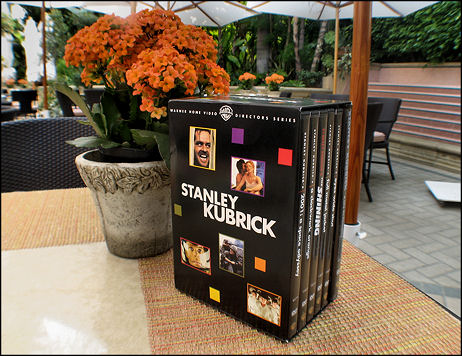
Despite the de riguer practice of releasing unrated versions of films on DVD, six years ago Warner Home Video decided to release only the digitally covered-up version of Stanley Kubrick‘s Eyes Wide Shut (i.e., the one with the hooded CG figures standing in front of sex acts in the orgy scene) because, it was said, they wanted to respect Kubrick’s vision. In fact, Kubrick’s original vision didn’t include the cover-ups (which were inserted after his death in early ’99), so the WHV people who said this were totally full of it.

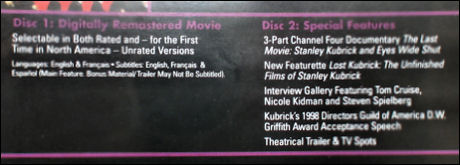
In any event, the just-released Eyes Wide Shut Special Edition DVD (which includes two discs) signals a major turnaround because it contains the unrated, uncensored, European version of the film. Whomever was insisting on releasing only the covered-up version has either seen the light, died or been fired.

That said, there’s a mistake on the packaging. The disk, it says on the back, is supposed to contain both versions of the film (unrated and rated), but pop in the disc and you see right away that only the European version is included. Totally fine with me — it should have been this version all along — but someone who works in the WHV packaging division screwed up. But please don’t fire them. .

Hillary and Elizabeth

“A nation is in peril. Bitterly divided at home, it vacillates between two warring dynasties. Threatened by dark forces abroad, it worries that a decisive moment is coming when one great empire will rise and another will fall. And a female leader is struggling to maintain her femininity while proving she can rule as well as any man.

“Watching Elizabeth: The Golden Age, I couldn’t help thinking of Hillary Clinton, quite possibly the next president of the United States, a woman who often seems to live behind her own plate of glass.

“I [also] wondered the same thing I always wonder when I watch candidates for the presidency putting themselves through the drudgery and the emotional starvation of a long, grueling campaign: is it really worth it?

“The film, and the Clintons, are reminders of all that gets bargained away in public life. At the end of Elizabeth the queen has defeated the Spanish Armada and governs over a golden age of prosperity on England’s shores. Blanchett appears as a living statue in white body paint. Behind her pane of glass, a queen is victorious, ferocious — and utterly alone.” — from Jonathan Darman‘s 10.24 Newsweek piece, “What Elizabeth teaches about Hillary Clinton’s challenge

Duelling Hitchcocks

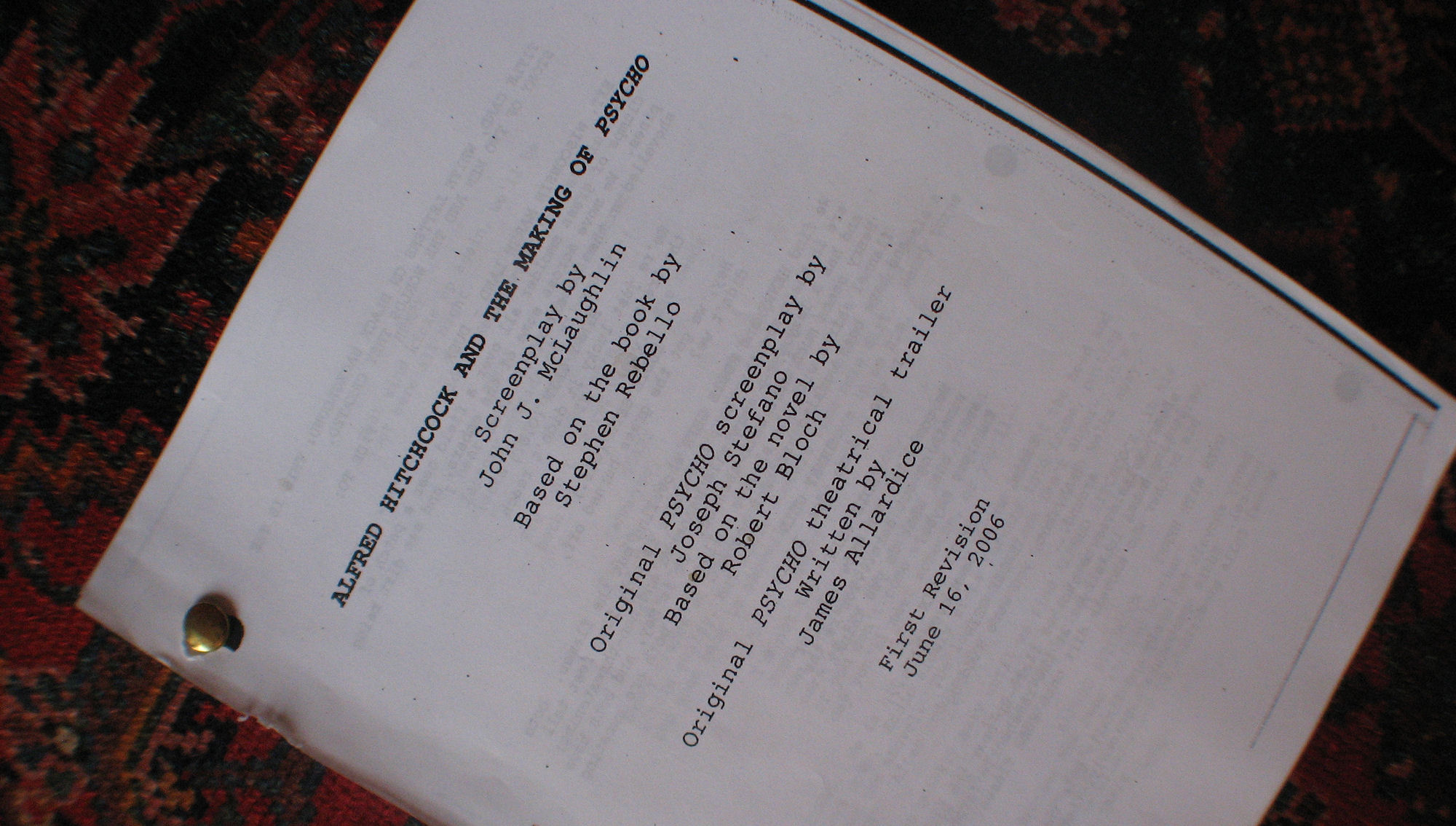
Between the two Duelling Hitchcock films, HE’s money is on the Ryan Murphy/Anthony Hopkins version rather than Number 13, the comedy-thriller about young Alfred (Dan Fogler) finding his style as a British-based filmmaker in the 1920s. I’ve read an early draft of the Murphy-Hopkins script, written by John J. McLaughlin and largely about the making of Psycho.


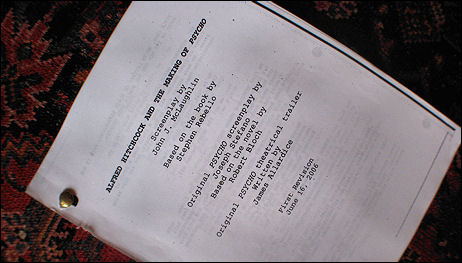
16-month old draft of John McLaughlin’s ““Alfred Hitchcock and the Making of Psycho,” which Ryan Murphy will direct with Anthony Hopkins as Hitchcock.

The script also weaves in — a bit awkwardly, truth be told — a parallel story about the history of Ed Gein, the Wisconsin mass murderer who was the model for Robert Bloch‘s “Norman Bates” character. I could be reacting too conservatively here. Using the Gein story alongside the Hitchcock saga certainly lifts it out of the usual making-of-a-masterpiece mode a la RKO 281.

The late ’50s period trappings of Ryan-Hopkins film will be easy enough to recapture — the suits, cars, old phones, etc. I just hope that Murphy, a former journalist like myself, will really give it hell as far as putting the audience into the mood and emotions and sub-currents of America in 1959 and ’60. The ground-level enticement in the watching of any period film is that you might have a chance to really go someplace else for a couple of hours. To actually dive into and become part of a past life. Bennett Miller‘s Capote felt like a real time-machine piece; ditto Andrew Dominik‘s The Assassination of Jesse James by the Coward Robert Ford.

“Sweeney Todd” reactions

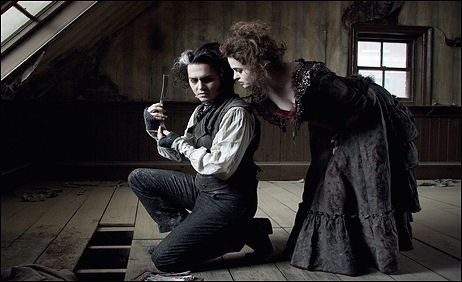
There was a research screening last night of Tim Burton‘s Sweeney Todd (Dreamamount, 12.21), and it played, for most viewers, as a very satisfying musical horror film. Not a gothic London period tragedy but a classic horror flick in the vein of Phantom of the Opera, says one observer. Oh, and it occasionally morphs into an out-and-out blood bath.


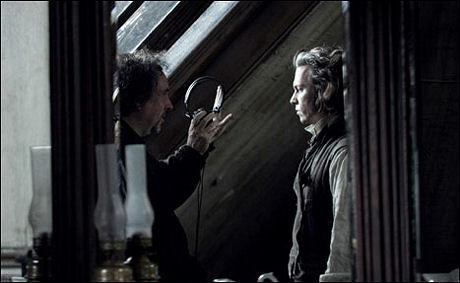
Tim Burton (l.) directs Johnny Depp (r.) during shooting of Sweeney Todd.

So says one guy who attended last night’s research screening of Burton’s film on the Universal lot. During the focus-group discussion “there was some doubt [expressed] that it would appeal to horror fans, even though it clearly is a horror movie, the songs notwithstanding,” writes Cinefantastique.com’s Steve Biodrowski.

“There seemed to be a misapprehension that ‘horror’ equated with Saw, and that fans of that franchise and others of its ilk would [therefore] not enjoy the Burton film,” Biodrowski observes.

“Personally, I think nothing could be further from the truth. The blood explodes in only a few scenes of Sweeney, but when it rains, it pours in unbelievably graphic gouts of gushing red. I can’t remember when or if I ever saw this much red splashed across the screen in a mainstream studio movie.

“More important, the Sweeney character” — portrayed by Johnny Depp — “fits the classic movie monster mold” a la The Phantom of the Opera, Biodrowksi contends. “He does horrible things, but the audience identifies with and even roots for him to dispatch his victims, who more often than not deserve what they get.”

Biodrowski’s piece seems fairly comprehensive, emphasis on the “seems.” The film apparently runs about 110 minutes sans end credits, according to another source. “Very brutal, very bloody,” this other guy says. The Envelope‘s Tom O’Neil will be pleased to hear that “Depp and company don’t skip on the singing” and that the “vocals are great.” The film has “five more weeks of sound mixing” to go, he says.

Everyone apparently loved it at the screening “except for a handful of people, one of whom complained that the film provides “no closure” (an assertion dispute by another who says “it may or may not show you exactly what happens to everybody, but it gives you enough information to figure it out satisfactorily”).

The “no closure” guy also sneered about Depp’s performance, saying that he had seen the actor in similar roles too often before; he called Sweeney “Edward Scissorhands possessed by Jack Sparrow.” This remark was obviously intended as criticism, although “the marketing people actually liked it,” reports one poster, “saying they would like to put the comment in their promotional campaign.”

Read more