From A Hole In The Ground

Yesterday’s Restrepo-meets-Rachel Maddow post got two whole responses…yes! Moviebob noted that Big Hollywood people “are pissing and moaning about this one for the same yet totally opposite reason — they’re mad that it’s just-the-facts approach is ‘hiding the truth about the war being just,’ and here on HE I’m reading that it’s ‘hiding the truth about the war being a lost cause.’ And then AH wrote that Restrepo “shows that to the soldiers on the ground, reasons don’t matter.”

Yeah, sure — reason and context don’t matter. Just do the job, get your three squares and sleep in a warm cot. The American mantra at home and abroad!

Restrepo‘s Afghanistan grunts don’t seem to know or care if U.S. forces are winning, losing or in a stalemate. No thoughts whatsoever about the world beyond their perimeter. And so in the spirit of honest on-the-ground reporting Sebastian Junger and Tim Hetherington did more than submit to this mindset during filming. They also edited Restrepo in such a way as to persuade audiences to embrace this no-bigger-picture, keep-your-head-down attitude while watching.

To some Restrepo is the summit of straight-dope, you-are-there, no-agendas-or-interpretation documentary filmmaking. To guys like me it’s about the avoidance syndrome that filmmakers have learned is the only way to go if you’re dealing with the Middle East conflict — don’t contextualize or interpret or ask “what does it all mean or amount to?” because average Americans will ignore you if you do.

The lesson is simple: Just keep your Middle East war doc plain and non-judgmental and Hurt Locker-ish and you’ll get a lot of critics on your side, and some people might actually watch your film when it plays on HBO or PBS or wherever. But go the Michael Moore-Oliver Stone route and you’re severely limiting your audience.

What’s so bad about just telling it like it is, right? The Afghan grunts are just into taking the fight one day at a time, cleaning their weapons, making nice with the locals as best they can, watching each other’s backs in firefights, wailing with grief when one of their own gets killed, talking about girlfriends back home…eating chow, catching zees, smoking cigarettes and watching Captain Kangaroo “so don’t tell me I’ve nothin’ to do.”

War is so much more digestible or at least tolerable if you keep your head down and avoid dealing with unnecessary complications and save your brain for the immediate stuff in front of you that you have to deal with.

Which, come to think of it, is the way a lot of regular Middle Americans handle life in the U.S. of A….no? Keep it simple and local, dumb it down, don’t read or inquire too much and get yourself in a tizzy, watch Fox News, stick to the basics, wash the dishes, pick up a bucket of KFC for dinner, change the oil, take the kids to school, walk the dog, feed the cats, join a health club, pay the bills, mow the lawn and go to the pet store and buy a couple of white rats to feed to your pet python.

People who live and think this way domestically are the salt of the earth — the folks who live their lives and pay their taxes and attend concerts in the park and go to ice-skating rinks and have pool parties in the backyard. If you want to sound like a misanthrope you could also call them the American walking dead — the go-along shopping mall zombies who make the American heartland such a wonderfully boring and submissive place to live in. (This is the central observational backdrop of Green Day’s American Idiot, of course.) But let’s not go there.

So its a mirror-image thing. Restrepo is essentially about an Afghanistan War/U.S. troops version of the basic American head-down, know-nothing attitude, and vice versa. Surviving, getting along, tending to the basics and so on is the way most people deal with life — I get that — but there’s no way this go-along attitude, either on domestic or foreign soil, is what anyone might call “interesting.” And capturing it is not my idea of stirring filmmaking. It’s more like an exercise in submission or sedation, even.


Apatow's Fault?

In the possibly correct view of N.Y. Post critic Kyle Smith, Adam Sandler‘s Grown-Ups — which currenty has an 8% Rotten Tomatoes rating — was more or less sired by the lackluster commercial response to Judd Apatow‘s Funny People, in which Sandler played a realistic but somewhat dislikable comic. He didn’t like the vibe so he turned around and went full-whore commercial.

“Sandler (whose much sharper early comedies were unjustly maligned by critics) can be an interesting writer and actor,” Smith writes, “but whenever he gets spooked by the reception of grown-up work like last year’s Funny People, he becomes Hollywood’s real-life Billy Madison — skulking off to the least challenging path. In response, I was aching for a real-life Click, so I could fast-forward through the nullity and get on with my life.”

No Hesitation

Nothing says “instant buy” to me like first-rate Blurays of classic black-and-white films. Warner Home Video’s forthcoming Blurays of John Huston‘s The Maltese Falcon and The Treasure of the Sierra Madre (due on 10.5 but secretly so far — Amazon and other sites haven’t posted the news) will presumably be up to the standards of their 2008 Casablanca Bluray, which, if true, will make me drool with anticipation.

Blinders and Sandbags

Consider the between-the-lines implications in Rachel Maddow‘s recent interview with Restrepo co-directors Tim Hetherington and Sebastian Junger. Does she not seem to be agreeing with what I said on 6.20, which is that the film “lies through omission about what’s really going on in Afghanistan in the broader, bigger-picture sense”? The doc’s refusal to supply context about a platoon’s experience in Afghanistan’s war-torn Korangal Valley makes it almost value-less, I feel.

Sex With Dogs

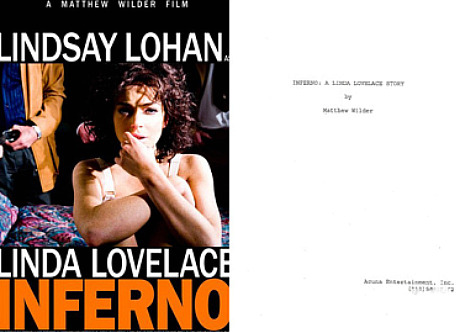
Jezebel deputy editor Dodai Stewart has posted descriptions of and excerpts from the script for Matthew Wilder‘s Inferno: A Linda Lovelace Story, which may go before cameras with Lindsay Lohan in the title role.

More than a few sites have described Wilder’s script, which may have a certain integrity on the page but also sounds like a sleazy exercise. It somehow feels less dicey to link to Jezebel‘s story about it.

The script is “full of sex and dirty language,” Stewart says, and with “downright harrowing” depictions of ugly humiliations that Lovelace suffers at the hands of husband/manager Chuck Traynor (as well as her own mom).

I don’t know about this. It feels icky and wrong. Lohan is an adult, of course, but a wobbly one of late. And it almost seems as if she, like the wounded Lovelace before her, has been somehow “played” into agreeing to perform this part. Lohan seems so wrecked and weakened in her own right — why would she want to add Lovelace’s anguish to her own?

“You’ll find child abuse, three orgasms, two beatings, intense humiliation and a bloody car crash — all in the first 32 pages alone,” Stewart writes.

“The first disturbing scene (on page 10) involves a young Linda being smacked in the face by her mother, who also burns her daughter’s hand with a Bic lighter. But the real terrifying stuff happens between Linda and Traynor, who humiliates her during a sexual encounter, making her say, ‘I’m stupid’ and ‘I’m a fat fatass’ as he fingers her and brings her to orgasm.

“Just a few pages later, Chuck, wearing big Frye boots, kicks Linda until she is bruised all over, and then, to comfort her, kisses her bruises — then pushes hard down on the bruises as foreplay.

“From there, things just get worse: Chuck coerces Linda into turning tricks; her first encounter is in a seedy motel with five middle-aged businessmen. One fondles her breast while singing a tune from Mary Poppins. Later in the script, she gets a strange boob job, cooks naked and gets a violent spanking from Chuck. She cries — sobs — while making the legendary film Deep Throat, and has a foursome with Sammy Davis Jr. at Hugh Hefner‘s Playboy Mansion, where there’s also a crowd that urges her to have sex with a German Shepherd.

“Linda and the dog, Fritz, do not actually engage in intercourse,” Stewart reports. “Linda gets on all fours and waves her butt in the air and the pooch gets freaked out.

“The story is detailed, vivid and lurid, and some of the lines Lindsay Lohan will recite are a definite departure from her Disney career.

“But the truth is, the script is actually incredibly well-written. If handled properly, it could be a sex/drugs/violence retro classic in the vein of Boogie Nights. The material is there.

“Does Lindsay Lohan have the talent to play a confused, controlled, emotionally and physically abused woman trying to claw her way to a normal life? Probably. Will she surprise everyone by turning in the performance of a lifetime? Maybe. Will she show up to the set? Unsure.”

Dead and Loving It

Today marks the one-year anniversary of Michael Jackson’s death. An epitaph came to mind on the evening of 6.25.09 (i.e., the day that everyone in New York saw an all-media screening of Michael Mann‘s Public Enemies) that I didn’t post out of sensitivity to the fans. It was the same line that Gore Vidal spoke after the more-or-less-suicidal death of Truman Capote: “A wise career move.”

Again

Hitfix’s Greg Ellwood reported today that during a Los Angeles Inception interview Leonard DiCaprio said (a) he’s definitely “hard at work” on a J. Edgar Hoover biopic with director Clint Eastwood, but that (b) he won’t wear a dress, in line with rumors that Hoover was a gay cross-dresser.

“Will I wear a dress? Not as of yet,” DiCaprio said in answer to a question on the subject. “No, we haven’t done the fitting for those. So, I don’t think so.”

On 4.3.10 I wrote that that I’d read “most of Lance Black‘s J. Edgar Hoover script, and I haven’t come upon a scene calling for DiCaprio to wear lace stockings and pumps and a cocktail dress, so we’re safe on that score.”

Lack of Discernment

At first I thought the Twi-hard thing was just another dumb-squealy-girl phenomenon, but then I saw Catherine Hardwicke‘s original 2008 film and went, “Okay, I get it…there’s something happening here with the film, which is pretty good, but also with Kristen Stewart and Robert Pattinson and the whole I-love-you-so-much-we-can’t-have-sex thing — a very clever packaging of conservative values.

The abstinence thing wasn’t about Mormonism or conservatism per se, but about how the current between a couple can feel much more powerful and transporting before sex — not just to hesitant younger women but anyone of any age. As Carly Simon noted many years ago, anticipation is almost more erotic than the act itself.

“I think it’s fair to call Twilight the most effective covert-conservative-values movie to be released since Four Months, Three Weeks and Two Days,” I wrote on 11.23.08. “Because it makes sexual abstinence seem like a fairly hot, pure-of-spirit state of being. And I say this as something of a lifelong libertine.”

But then Summit and Hardwicke parted ways, of course, and along came Chris Weitz‘s Twilight: New Moon a year later, and quality-wise the whole thing went into the crapper.

On 11.20.09 I wrote that “New Moon will obviously make financial history this weekend but it’s a total zombie franchise now — it walks and morphs and vacuums up revenue and makes teenage girls swoon, but it’s made of dead gray tissue and huge, stupid-looking, dinosaur-size cartoon wolves. It’s been smothered by Rob Friedman and Chris Weitz and all the other Summit bottom-liners who didn’t understand what they had. They’re be rolling in dough Monday morning, but they’ve totally killed the goose.”

Did the Twi-harders care about the franchise being degraded by hacks? Apparently not. Apparently they couldn’t tell the difference between Weitz’s film and Hardwicke’s.

And then it started to dawn on some observers that Pattinson isn’t that terrific an actor (especially after his work in New Moon, which he was stiff and lifeless in, and Remember Me ) and that the Twilight franchise was starting to droop along with him. Were Twi-harders in any way dissuaded? Did they think any less of him? Of course not.

Alien Harvest Taste?

Australian film journalist Sam Cleveland sent me a link to a few pages of what may be Jon Spaights‘ script for Ridley Scott‘s upcoming Alien prequel movie, otherwise known as Alien Harvest. I’ve no way of verifying if this is Spaights’ script, but it sure reads like a solid, grounded pro-level thing.

On 6.14 Coming Attractions Patrick Sauriol wrote that “sometime in early January 2010 the Alien Harvest PDF file was uploaded to the Scribd file-sharing website. (Except it isn’t there now.) The 122-page script is credited to Jon Spaights, the screenwriter hired to write the untitled Alien prequel that Ridley Scott was developing at Fox.”

On 4.26 Rope of Silicon‘s Brad Brevet quoted Scott’s explanation of what the 3-D Alien Harvest (which may, according to reports, be a two-parter) will basically be:

“It’s set in 2085, about 30 years before Sigourney [Weaver’s character Ellen Ripley],” Scott said. “It’s fundamentally about going out to find out ‘Who the hell was that Space Jockey?’ The guy who was sitting in the chair in the alien vehicle — there was a giant fellow sitting in a seat on what looked to be either a piece of technology or an astronomer’s chair. Remember that?

“And our man [Tom Skerritt as Captain Dallas] climbs up and says “There’s been an explosion in his chest from the inside out — what was that?” I’m basically explaining who that Space Jockey — we call him the Space Jockey — I’m explaining who the space jockeys were.

“[The] main character [in the prequel] will be a woman, yeah.” [The woman in the script excerpt is called Debbie.] “We’re thinking it could go down that route, yeah. When I started the original Alien, Ripley wasn’t a woman, it was a guy. During casting, we thought, ‘Why don’t we make it a woman?

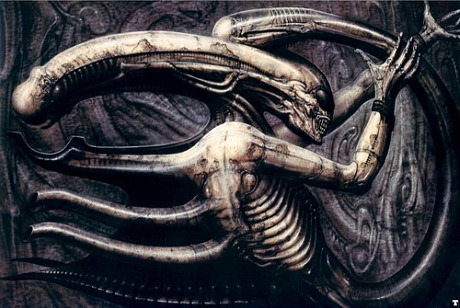
“Scott adds he will need to design ‘or redesign’ the appearance of the alien creatures saying, ‘I don’t want to repeat it. The alien in a sense, as a shape, is worn out.” He also says he will again consult with original Alien designer H.R. Giger.

“Scott was also quoted…saying he’s looking to make two new Alien prequel films referring to them as ‘prequel one and two,’ but right now the focus is on the first film only.

Sauriol’s 6.14 descriptions of Alien Harvest is more thorough and more particular than Brevet’s.

Knight Duds Out?

Proportionately-speaking, Thursday’s box-office figures were almost the exactly the same as Wednesday’s. Toy Story 3, in its seventh day of commercial release, did more than triple the business of Knight and Day, which was in its second day of release — $13,056,000 vs. $3,477,879. (Wednesday’s figures had TS3 pulling down $13.458,000 vs. K & D‘s $3,810,649.)

I don’t know what to expect from the James Mangold-Tom Cruise-Cameron Diaz action cartoon on Friday, but a weekend figure of less than $15 million looks like a possibility. Or will it do a bit more?

Fandango has sent out a release saying that advance ticket sales for Adam Sandler‘s Grown-Ups (which opens today) are over twice as large as those for Knight and Day — 12% vs. 5%. The Twilight Saga: Eclipse is the biggest, of course, with 51% with Toy Story 3 capturing 23% of advance sales.

Knight and Day cost about $125 million to produce and God knows how much to market — $50 or $60 million? I don’t want to jump the gun and call it a flop, or say that this is further evidence that the Cruise brand is a shadow of its former self, but if it was your $185 million that had been invested, how would you feel about K & D earning a guesstimate of less than $25 million after five days?

I for one believe that however people may feel about Cruise personally, they know he’s almost always shown good taste in choosing his projects ( The Last Samurai, Lions for Lambs and Knight and Day excepted), and that they respect the results of his “hard-case guy with a bent personality” approach. I’m guessing that the trailers persuaded them that Knight and Day was some kind of loose-shoe, high-style throwaway, and they decided to let it go. Nothing more than that.

Laughter Is Lava

The mark of a truly funny joke or a bit or situation in a comedy isn’t “I laughed so hard I was in pain.” The mark of a really great world-class joke is when it comes back to you five or ten minutes later and it makes you laugh (or at least chuckle) all over again. Or it comes back to you on the way home, or a month or a year later. Or it makes you laugh ten years later.

I don’t “laugh” at the “nobody’s perfect” line at the end of Some Like It Hot, but every time I watch that film (roughly once a year) I always guffaw a little bit, or smile extra broadly.

Anyone who laughs so hard that their eyes water up and appear to be choking as they experience rib pain is experiencing a cathartic emotional geyser — an explosive release of a repressed feeling, memory or hang-up. There’s also regular-ass no-big-deal laughter (i.e., laughing at some joke on Cheers or some smart crack from Bill Maher) and all the other levels and gradations. But laughter is always about some recognition of truth — “Hah! I’ve been there myself and you can say that again!”

Stupid people think that people laugh when something is “funny” — thoughtful people know that all laughter is a form of recognition therapy. Whatever it is that the joke has released is some kind of buried guilt or anguish or regret or vision-recognition. This is why psychologists tell people that laughter is such a physically and emotionally healthy thing. Laughter is essentially about feelings breaking out of jail.

It follows that the darker the feelings and more intense the repression, the greater the geyser . There really isn’t that much difference between screaming with laughter like a raging banshee and a can of unopened baked beans exploding after being put on top of a campfire. Whatever it is that the joke has unleashed has been seriously bottled up for a long time, and so it triggers a kind of mad eruption. Which suggests that the laughing-in-pain person hasn’t dealt with whatever the issue may be, which indicates that he/she is probably lacking in terms of maturity and/or character.

Short version: if you laugh too loudly — if you scream and double over and slap your thighs and act like a howling monkey after having drunk a pint of bourbon — you may be a bit of a repressed putz. Not absolutely but probably. It means that you’re living or have lived under very tough rules (self-imposed or imposed by a tough spouse or parent) and you’re probably not all that thoughtful about your hang-ups and constipations.

My father had a drinking problem that he finally dealt with in the mid ’70s by joining AA. He wasn’t an emotionally expressive guy, to say the least, but one of my most vivid childhood memories of him is when he convulsed and howled at Lee Marvin‘s drunken antics in Cat Ballou. I mean, he really lost it when Marvin dropped a pint bottle of whiskey and saw it break upon a rock. I remember turning in my seat and glancing at him and going, “Jesus…what was that about?”

Even shorter version: If you laugh too loud you’ve got problems. You’re not dealing with your shit, or you’re a commoner of some kind, or you’re some kind of cultural or political conservative.

The people who go really wild at parties after they’ve had a few drinks — the ones who put lampshades on their heads (figuratively speaking) and who dance on table-tops and sing drunkenly at karaoke bars — are often (i.e., not each and every time but frequently) the more straight-laced types during business hours. Do you think Mahatma Gandhi ever howled like a drunken monkey having an epileptic fit while watching a Charlie Chaplin comedy in New Delhi or Bombay?

I know that if I notice someone who’s laughing too uproariously, I’ll make a mental note to keep my distance from him/her. And the people who in a very few minutes are going to angrily react to this article — not “disagree” but get pissy and insulting and trying to put me down any way they can — are probably cut from the same cloth.