Return of Mavis Gary

HE reader Jesse Crall caught Rupert SandersSnow White and the Huntsman (Universal, 6.1) last Saturday, and has sent along some impressions. Pic currently has a Rotten Tomatoes rating of 83%. It opens tomorrow in the UK and Friday in the States.

“Shot largely in desaturated gray palettes, Snow White and the Huntsman makes impressive use of gothic imagery best exemplified by a stone castle rising high above a raging sea. The set design, spare in detail, conjures up an atmosphere both medieval and otherworldly.

“It begins as a supposed prisoner of war named Ravenna, played with biting ferocity by Charlize Theron, marries a benevolent king and promptly murders and usurps him. She imprisons his daughter, the fair Snow White (Kristen Stewart), and begins a reign of terror so poisonous the entire kingdom withers and blackens.

“Theron storms about with caustic nastiness; she screams and browbeats but her performance isn’t campy. It’s as if Young Adult‘s Mavis Gary turned her attention away from Patrick Wilson and toward despotism. With raccoon make-up and intricate hair-braiding, she looks stunning at her best; at one point, she descends bare-backed into a massive vat of milk and emerges with the appearance of being cast in white chocolate.

“But her obsession with preserving her youth and beauty drives the plot. A witch or sorts, given the power of immortality by her mother, Theron’s Ravenna stands to lose her powers should a fairer figure come of age. When Snow White does so, Ravenna sends her lackey brother to bring her to him, prompting an escape, a chase, a mission, planned revenge and the usual usual usual.

“Once Snow White escapes, the story turns to the titular characters, the latter played by Chris Hemsworth. Hemsworth brings a rakish edge to his character’s depressive self-destructive tendencies, and he and Stewart make a fine pair in their storyline. While she’s received criticism for colorless turns in the Twilight series, Stewart does an excellent job with Snow White, giving her ethereal character a steely quality that makes her a worthy heroine for the film.

“Overall, Snow White and the Huntsman deals in an interesting mix of rugged action and feminine burdens. Theron’s anti-aging paranoia gets played with utter seriousness, but it reads similarly to her scenes of excessive primping in Young Adult. Stewart holds the center of the film’s second and third acts, and the script admirably holds the focus on her as an individual. The film’s universe needs her to ascend to the throne but Snow White never needs a king to do so.
       
“Visually the film thrives when its tone trends toward enchantment. One scene, shown briefly in trailers, features Stewart wandering into a meadow filled with mythical creatures like mossy turtles and a pair of coltish fairies set against luminous greenery. It brings to mind Pan’s Labyrinth in its strange splendor, a considerable feat indeed. 1st time Sanders holds complete control over his bizarre universe, which moves from dark age castles to enchanted forests to gruesome skirmishes large and small with impressive handling.

“The 2.35:1 aspect ratio absorbs the dramatic landscapes effectively, far more so than The Avengers, which felt cramped in 1.85:1. Snow White maneuvers the widescreen views and more intimate stagings with equal effectiveness, allowing for the more taciturn scenes of quiet menace to help amplify the brutal action.

“A trope of the film involves moments of repose getting broken up by bursts of severe carnage. Like The Hunger Games, it engages best through intimate moments between its actors, whether they be Theron and her own insecurity or Stewart finding security through Hemsworth. But once the film shifts its tenuous balance toward the volatile realm of CGI havoc, it loses itself. The ending isn’t difficult to predict and it follows two hours of myth-building that feels under-explained. Theron’s actual powers and how they specifically relate to Snow White aren’t clear until the end; I don’t get the impression that the filmmakers intended to be so cryptic.
       
“Unlike recent blockbusters like The Hunger Games and The Avengers, Snow White contains an entire story within its singular time frame. It concludes, if shakily, with an almost admirable finality as opposed to working as a set-up for a larger narrative framework.

Snow White also marks Stewart’s first truly involving turn as a leading actress. Stewart never performs like she’s working for tips, staying within the dour nature of the film’s tone. Eschewing lazy verbal laments, the film instead relies on Stewart’s melancholy body language to remind the audience that she’s lost her mother and father to tragic circumstances before getting her childhood robbed by Theron. After years locked away in a castle, her sudden brush with pastoral beauty and a wondrous white stag forces her face open.

“Like Jennifer Lawrence in The Hunger Games, Stewart opts for reality over charm and affects viewers more deeply in the process.
       
“Instead of a starting point for a slew of sequels, Snow White and the Huntsman showcases its talented veterans like costume designer Coleen Atwood, Theron, and composer James Newton Howard while previewing the budding skills of Stewart, Hemsworth and Sanders. It’s a flawed but intriguing film that succumbs to convention only in the broad structure of its plot. Within its individual scenes and performances, it engages more deeply than any blockbuster yet this year.”

Cannes Bump

Boil down Steven Zeitchik‘s 5.28 L.A. Times piece about the impact that the 2012 Cannes Film Festival may have on the Oscar race, and you’re left with one solid: Michael Haneke‘s Amour will be a major contender for Best Foreign Language Film. (Unless the foreign language committee finds it too dispiriting.)

I would like to think that Leos Carax‘s Holy Motors would also figure strongly in that competition. (Unless the rank-and-file dismiss it as too hallucinatory.) That’s what everyone always says when a unmistakably fine film is about to open in the U.S. — i.e., how will the older slowpokes respond?

Yes, Garrett Hedlund has stepped up and out of the box with his Dean Moriarty/Neal Casady turn in Walter SallesOn The Road — it’s a bracing, live-wire performance — but it’s destined for Spirit Awards attention, at most. I haven’t seen Mud (many thanks, WeAreFilmNation) so I obviously can’t get into Matthew McConaughey‘s admired performance in the titular role. What about Marion Cotillard‘s exacting but subtle work in Rust and Bone?

Woman Up

HE reader Jenny Frankfurt submitted this Cannes-related guest piece yesterday — one that may not endear her to women who’ve complained about the lack of a female-directed film at this just-concluded gathering. She’s basically saying that discrimination is a problem, but that it serves a kind of Darwinian purpose. Frankfurt is with the LA-based High Street Management, a division of Bohemia Entertainment. [Note: I trimmed the original down a bit.]

“There has been some discussion that none of the 18 films chosen for the 2012 Cannes Film Festival were directed by a woman,” Frankfurt begins. “The suggestion was that festival organizers might have deliberately shunned such films. Perhaps, but perhaps there weren’t any female-directed films that were good enough for Cannes.

“Granted, it’s harder to make it as a female director than a male. Studios are less willing to take risks and for anyone, male or female, independent financing is difficult to find. Some have made it through and the road has been long for their films to be recognized by commercial audiences or even to get anything but very limited distribution. Kathryn Bigelow, Nicole Holofcener, Lisa Cholodenko and Debra Granik have made it through, but many more female filmmakers throughout the world are making films that are not getting seen. Why?

“I just have to throw out the idea that perhaps, in this male dominated business of
filmmaking, men make better films. It is still a ‘male sport’ and women are catching up. I know many females who have graduated from film school and haven’t produced anything of great note. It might be worth considering that there is something called ‘positive discrimination.’

“The head of Women in Film and Television has said that the gap between male and female filmmakers is a ‘cultural thing’, and that it will take time for women to catch
up with men for many reasons. One is that women make more short films as calling cards, because ostensibly they are not given the money for a feature or cannot raise it. Can an independent producer not raise money on the back of a talented female director? I hardly think so. I have represented female directors and they have worked. I have represented male directors and they have not.

“Women directed 7% of last year’s 250 top grossing films. The year before that is
was less and the year before that it was less. So as slow as it may be, as in every
industry, it is building. Women started off at the back of the bus and are working
their way forward. It takes time for every minority to catch up.

“It is mostly ardent feminists who call out what they describe as discrimination
of women at Cannes, and while they are not wrong in that there were no female
directed films, I challenge them to find one that should have been there but wasn’t and really should have been there. There is never any point in laying blame; one always has to look within when something is seemingly amiss. One cannot always blame those in charge for having tunnel vision; the creatives have to produce material that is of quality, and because there are more male filmmakers, more men get recognized.

“It must be known as well that this is a worldwide issue. All films this year that won
awards were not from the U.S. so it is not a Hollywood issue but as mentioned, a
cultural one. And yes, it is a problem.

“Hollywood and the rest of the international filmmaking community need to be open to women, but I don’t believe they are closed. I am in it every day and the door is open, it’s just that the talent has to be strong enough to walk through it.”

In Like Flynn

I’m pleased to report that Petr Slavik of Bontonfilm.cz has graciously accepted my rsvp for a screening of Ridley Scott‘s Prometheus on Friday, June 1st. So at least I’ll be up to speed on that score. The film opens in Prague on June 7th, or one day before the U.S. release. It opens tomorrow in Paris, Belgium and French-speaking Switzerland.

Method

I love that Quentin Tarantino wore a cowboy hat while directing Django Unchained, or at least when this shot was taken. Creative submission to the material. Did he also wear a gun belt, chaps, a Good, Bad and the Ugly poncho, spurs and cowboy boots? Or would it have been cooler to wear Stanley Kubrick‘s dark blue suit, white shirt and black lace-ups and thereby create his own particular authority?


Unloosed Damsels

HE reader Sean Whiteman wrote this morning with a piece about Whit Stillman‘s Damels in Distress, which he says “has lingered in a very beautiful way for me, and I thought I’d see if I could articulate how it was able to do that.

“Stillman’s return to film has been kicking around for a while now without making more than a dainty impression on audiences, but the film has shown remarkable staying power in my head. I felt smitten by a strange vitality that I hadn’t expected to find. And I’m still mulling over a number of surprisingly resonant approaches the film brings to the fight against the type of life-fatigue that my generation often wallows in.

“I wouldn’t call myself an ardent fan of Stillman’s first three films — Metropolitan, Barcelona and Last Days of Disco. To me they felt like carefully composed pieces of conversational pomp and mannered circumstance. I’d have to find myself in a very rare mood to re-watch any one of them again. That’s not a dismissal — each felt genuinely peculiar to me and, even though I haven’t had the urge to revisit them since, the element of peculiarity was enough to earn my respect. One must respect the presence of the peculiar, especially when so many contemporary films fail to even strive for the distinction.

“It was with this respect for Stillman’s work, if not true admiration, that I caught Damsels In Distress with. The surprise, for me, is that Stillman shows a wild imagination I didn’t think he possessed. He still writes characters who speak with an oddly subtle and stylized rigidity, but he seems to have finally allowed this stilted volley of quips to indulge in an absurdity that lends a poignant goofiness to the subject matter. In a story that centers much of the narrative thrust on the subject of depression, it is a thrilling decision to instill a levity to the proceedings.

“He seems to be suggesting that yes, sure, depression is a busted bag of fucks to carry around with you, but it really, truly, doesn’t have to be the end of the world.

“‘There’s something very funny about people who think they’re in extremities with their lives,’ Stillman told the AV Club. ‘And part of the problem, I think, of this sort of teetering danger toward suicidal thoughts in that age group, is an overdramatization of their situation, a sort of hopelessness, very present — focused, so the salutary affects of the passage of time aren’t being taken into consideration. And also in this overdramatization, the total lack of humorous perspective. So the tiny bit of therapeutic stuff we can do to change that dynamic.

“I mean, I’ve heard some of these stories of people who were put into some horribly humiliating situation and then did or might have attempted to do themselves harm, because of thinking how horrible this was, and that everybody was laughing at them or criticizing them. And actually, you know, not. And you have to think if they’d just waited two months, nothing would have happened.’

“I currently reside in one of those coveted youth demographics, which is composed of a people who were raised to believe in the internet’s ability to offer us a vast array of experience. While generations above my own had to travel on wheels in order to find and gather experience, my generation doesn’t feel the obligation to leave our rooms. Like, ever.

“I’m not ragging on the internet and bemoaning those who were able to live without its support, I’m just pointing out an unfortunate side effect of being the internet’s guinea pigs. There is a general malaise that comes with having access to everything and sharing a button-click connectivity with everyone around you. When we write our histories daily on Facebook, and agonize over mis-wrote comments, mis-liked pictures and mis-spent twitter handles I can see, and have seen, peers fall into the same type of ego-trap that Stillman warned of in the AV Club interview. He warns of not considering the context for their minor sufferings.

“The narrative thrust of Damsels in Distress, through its bizarre lens of casual character complexity, re-affirms our general ability to adapt and move past the unfortunate. If we so choose, that is. This is a valuable takeaway.

“As frivolous as it appears when Greta Gerwig‘s character suggests the healing powers of smelling a certain bar of soap, it doesn’t feel frivolous when I catch myself sniffing my Irish Spring as part of my morning routine. Stillman goes through extraordinary lengths to paint in absurdly broad strokes with the picture. For instance, he stages a group of suicidal youths to take part in a dance rehearsal together. The scene warrants a minor chuckle, but the shit behind the chuckle is where the value truly lies. After all, almost anyone can attest that a little dance, a little movement of body in a time of stagnation, can help fend off demons.

“The airy tone of the film seduced me into lowering my guard and, as soon as I had, I realized that gesture was necessary for me to allow Stillman’s softball thesis to land with unsuspecting force. Damsels In Distress doesn’t stick all of its jokes, but boredom never struck and it was far more peculiar than I expected. A starving cinephile gets a meal. I will likely have seconds this time out.”

The Pad

I’m staying in a comfortable and moderately spacious one-bedroom apartment at Liliova 14, Prague 1. The building dates back to the 11th Century. (Really.) Nice tall ceilings with chandeliers, comfy queen bed, great refrigerator, microwave, excellent wifi, nice little early ’90s TV with cable (CNN, etc.), excellent bathroom with nice jacuzzi-sized tub, reasonably comfortable armchairs to sit and write in, etc. And not too costly.

Read more

Apes at Dawn

I made the mistake of renting a place smack dab in the one section of Prague frequented by 20something beer-chugging loudmouth rowdies. These two clips were taken this morning between 5:30 and 5:50 am. Would it occur to these asswipes to slightly tone it down at this hour out of consideration for those who might be sleeping? Naahh. I was fairly unruly during my drinking days in my 20s and yes, I did the occasional all-nighter, but I usually crashed by 2 or 3 am.

Read more

To The Wonder

On 2.23.11, or roughly 16 months ago, everyone ran the first official photo (a pastoral shot of Ben Affleck and Rachel McAdams) from Terrence Malick‘s Oklahoma-shot drama that was once referred to as The Burial and is now called To The Wonder. After the basics my caption read as follows: “Pic wrapped in late ’10, and is expected in theatres sometime in 2013. Okay, I’m kidding but anyone who expects to see this puppy before fall 2012 is probably dreaming.”

Yesterday The Hollywood Reporter‘s Eric J. Lyman reported that Venice Film Festival director Alberto Barbera is calling it “likely” that this nearly-two-year-old Malick film will turn up in Venice three months hence along with Paul Thomas Anderson‘s The Master and Brian De Palma‘s Passion. I was joking about the Malick opening in 2013, but is there any locked-down assurance that To The Wonder will open before 12.31.12? Just asking.

Choice Recap #1

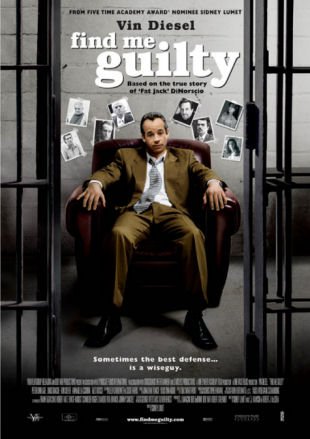
The next three days of Hollywood Elsewhere (Tuesday, 5.29 through Thursday, 6.1) will not offer anything original from yours truly. 11:30 am Update: I’ll actually stay on the stick until 4 or 5 pm today but after that I’ll be taking this time off, so to keep the ball in the air I’ll be posting a few reader submissions plus a few stand-out pieces from years past. Like this January 2006 review of Sidney Lumet’s Find Me Guilty.


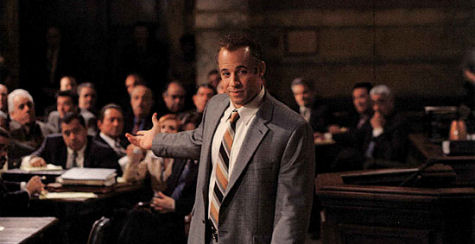
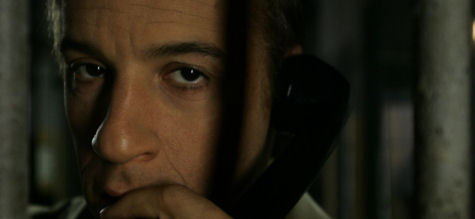
Vin Diesel as Jackie DiNorscio in Sidney Lumet’s Find Me Guilty (Freestyle, 3.17.06)

Find Me Guilty isn’t just about the rebirth of Lumet’s career (at age 82!) and that of his star, Vin Diesel. It’s also a kind of Damon Runyon-esque joyride — an ethnic-Italian, New York-attitude sociopath movie for those who wink at the bad guys and chuckle when they manage to maneuver their way around the law.

“Maybe I’m jaded or I’ve just been Godfather-ed and Soprano-ed into submission, but I bought into most of it and felt pretty much delighted with the care that went into the making of it, and the final ambiguity of it. I was also a bit troubled by it. And yet fascinated.

Find Me Guilty is about a wise guy who refuses to rat out his wise-guy friends, even when most of them shun him and treat him like a leper because of his court behavior, but who nonetheless holds to his own moral ethical course. I’m not going to spill the ending but this is not a movie that ends with the clanking of prison-cell doors a la Goodfellas.

“It’s a marvel of old-fashioned (i.e., ’80s-style) craftsmanship — Lumet’s superb direction, T.J. Mancini and Robert McCrea‘s finely structured screenplay and skillfully pared-down dialogue, and Diesel’s inescapably charming, sincerely felt performance that puts him back on the road map. (Really — all those mixed memories of XXX and The Pacifier are out the window.)

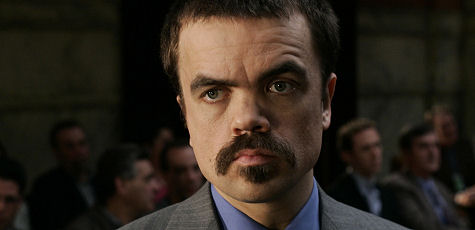
“Plus there’s Peter Dinklage and Annabella Sciorra‘s superb acting. I genuinely feel that Dinklage, playing a shrewd mob defense attorney with a gift for persuasive oratory, is the first serious contender for Best Supporting Actor for the ’07 Oscar Awards (or at least the ’07 Indie Spirits). And Sciorra almost does here what Robin Wright Penn did last year in Nine Lives, and that’s really saying something.

“But there’s some mucky-muck going on. Shot in late ’04, Find Me Guilty has had distribution troubles (it was shopped around and nobody bit) and is being sold the wrong way — the trailer tries to tell you it’s a jaunty mob-guy comedy, a kind of farce, and the music toward the end of the film tries to convey this also, and this feels like a sell-out to the moron trade.

“Is everyone listening? Ignore the advertising. Please. The advertising is crap.

“The film not without its amusements and gag lines from time to time, but Find Me Guilty is a fairly serious, rooted-in-reality court procedural about wise-guy morality, or the urban mythology about same.

“It’s clearly Lumet’s best film since Q & A (1990), and before that Prince of the City (1981). It’s a tight, no-nonsense court drama that’s not about legal maneuvers or discovering evidence or doing right by the system and justice being served, but mob family values.

“In a stuffed-manicotti way, Find Me Guilty is as much of a values-based entertainment as The Passion of the Christ, My Big Fat Greek Wedding, The Thing About My Folks and Madea’s Family Reunion. I’m serious.

“There’s more time spent in a courtoom in this thing than in Lumet’s The Verdict, and for good reason: Find Me Guilty is about the longest-lasting federal criminal prosecution in history. From March ’87 to August ’88, 20 members of the New Jersey-based Lucchese crime family, each represented by his own lawyer, were brought to trial in Newark, New Jersey, on some 76 charges (dope smuggling, gambling, squeezing small businesses…the usual mob stuff).

“The feds felt they had an air-tight case, but when the verdict came down…well, let’s not say. But I’ll tell you right now that some people are going to have a problem with this film because of the ending, and especially the tone of it.


Peter Dinklage

“The Hollywood Reporter‘s Kirk Honeycutt has already voiced this reservation in his review from last month’s Berlin Film Festival. The community values espoused (or at least given a fair examination) by this film are, from a strictly law-abiding perspective, totally goombah and wholly corrupt. And yet what’s being said here is not without a certain resonance, a certain sincerity of feeling.

‘”These values can be summed up by the words ‘don’t rat,’ ‘don’t roll’ and ‘family is everything.’ I’m no goombah but I sympathize with these sentiments, so I guess that’s part of the territory.

“I’m talking about the values of a group of bad guys (i.e., men who live outside the law and occasionally enforce their ethical standards by whacking each other) who ostensibly care for and someitmes ‘take care of’ each other, and about one particular bad guy — Diesel’s Jackie DiNorscio — who stood up for certain things over the course of this trial …loyalty, friendship, togetherness…even if the reality of Italian crime ethics, going by everything I’ve heard, is that everyone rats out everyone else sooner or later and a lot of these guys are just full-out sociopaths, or are viewed this way by the majority. And yet Guilty isn’t an invented story.

“This, for me, makes it absolutely fascinating because Lumet, Mancini, McCrea and Diesel are making a moral statement that they obviously have some kind of respect for, and in a serious way. Diesel does his courtroom buffoon routine for entertainment value at regular intervals, but otherwise Find Me Guilty is a fairly sober piece that asks you to grapple with who and what DiNorscio is, and what he’s really saying.


Sidney Lumet, Vin Diesel

“The story points and much of the dialogue in Find Me Guilty are taken from court records and based on hard facts, so there’s obviously a kind of embedded truth in what we’re seeing, but let’s face it — if you were to show this film to Tony Soprano’s crew they would eat it up like baked ziti.

“But show this film to a group of straight-arrow law officials from outside of the New Jersey-New York corridor who haven’t seen other ethnically-correct mob movies, and some of them will undoubtedly say, ‘What the hell is this? Has Hollywood gone totally corrupt?’ And yet the events depicted happened.

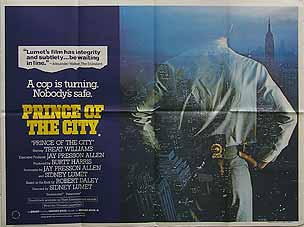
“What’s really striking is that Find Me Guilty is pretty much the precise moral opposite of Lumet’s Prince of the City (1981), which is about the emotional agony that a corrupt cop puts himself through when he decides to tell the absolute truth and rat out his equally corrupt cop friends, and ends up despised and lonely and broken.

“Has there ever been a major-league filmmaker besides Lumet who has made two films about the same culture — the New York-area criminal underworld — with both (a) based on a completely true story about courts and prosecutors and defendants, (b) both grappling with almost the exact same moral-ethical issue, and yet (c) coming to almost the exact opposite conclusions about ratting out your friends?

“There are no almost double features these days except at L.A.s Beverly Cinema and New York’s Cinema Village, but Find Me Guilty needs to be paired next year on a double bill with Prince of the City. And when that happens I’m going.

“The more I think about this film, which at times feels like a close cousin of William Friedkin’s The Brinks Job, at other times like an earnestly intended moral fable, at at still other times like Prince of the City‘s sociopathic, wise-assed younger brother with a fuck-you-John-Law attitude….the more morally curious and unto-its-own-realm it seems.

“I think this is why the distribution community passed — they don’t know what to make of it, and are a little afraid of how the average moviegoer (i.e., those over-30s who will be persuaded to give an old-fashioned Lumet film a shot in the first place) might react.


A dish of cheese ravioli

“The hard truth is that Find Me Guilty will most likely tank on its first weekend, but it shouldn’t. It’s a quality thing all the way, it isn’t the least bit boring and is easily among the best of the year so far (alongside Why We Fight, Fateless, Totsi, The Three Burials of Melquiades Estrada and Neil Young: Heart of Gold).

“There’s no denying that from a craft perspective Find Me Guilty is simply one of the Lumet’s best ever. Mancini and McCrea’s dialogue is sharp, honed, and perfectly seasoned. And his slightly fake-looking rug aside, Diesel is amazing. At times he seems to be just joshing around and more into charming the audience (along with the on-screen jury) that rendering a character, but it gradually seeps in that he’s really playing Jackie DiNorscio and capturing what made him tick and who he really was.

“And the supporting actors…fuhgedaboutit. Dinklage (that very cool short guy from The Station Agent) delivers a pitch-perfect performance — an utterly believable incarnation of a fully-rounded hardball lawyer. Sciorra has only one scene with Diesel, in a tiny prison holding room, but the husband-and-wife vibe is dead-on with the old resentments and sexual current getting stronger and stronger — it’s a near-classic scene.

“Also excellent are Ron Silver as the presiding judge, Alex Rocco as the viper-like head of the crime family being prosecuted, and Linus Roache as the steely-eyed, go-for-broke prosecutor.

“There are fifteen or twenty other actors who are just as good — this film has been perfectly cast in the legendary Lumet-New York street guy tradition by Ellen Chenoweth and Susie Farris. Cheers also for the cinematography by Ron Fortunato, which is beautifully framed and lighted in the manner of The Verdict at times.

Find Me Guilty is not as good or as interesting as Lumet’s two greatest New York dramas — Dog Day Afternoon and Serpico — because it feels a little too smug at times, a little too invested in trying to charm the audience with a yea-team finale (using swing music and that Louis Prima tune at the end really undercuts it…a Big Mistake), but it’s certainly in the same moral ballpark, delivers the same high-quality acting and has the same kind of precise and disciplined filmmaking chops that made Prince of the City a great New York drama.

“I went in to last night’s screening expecting to see a movie with at least a few problems (given what I’ve heard about the distribution siutation), and I came out almost totally delighted.

“Part of the satisfaction of this film is seeing that Lumet still has it together like he did 20 or 30 years ago. He’s been on the ‘over’ list for the last ten years or so, but no longer.

“I don’t think it’s a stretch to call Find Me Guilty one of the best films ever made by an 80-something director, which, in this light, puts it alongside John Huston‘s Prizzi’s Honor and Robert Bresson‘s L’Argent. And that’s good company.”

Voice Is Wrong

Listen to Benjamin Walker‘s Abraham Lincoln voice in this recently-released trailer for Timur Bekmambetov‘s Abraham Lincoln, Vampire Hunter (20th Century Fox, 6.22). He almost sounds JFK-like, but Lincolnesque? Not if you buy the old story about the 16th President’s son, Robert Todd Lincoln (1843-1926), having heard Raymond Massey perform on stage and being “struck by the close similarity of Massey’s speaking voice to that of his father.”

Sexual Heat of War

Toward the end of the Cannes Film Festival I begged an HBO publicist for a screener of Phillip Kaufman‘s Hemingway and Gellhorn (HBO, debuting tonight). “We’re all out,” she answered. I’ll see it within a couple of days, but N.Y. Times critic Mike Hale calls it “a disheartening misfire: a big, bland historical melodrama built on platitudes about honor and the writing life that crams in actual figures and incidents but does little to illuminate them, or to make us care about the romance at its center.

“As the famous novelist and sportsman whose best work was already behind him and the rising-star war correspondent, Clive Owen and Nicole Kidman repeatedly run through the same small set of ideas — animal attraction (lots of semipublic rutting), professional jealousy, inconstancy and disappointment — against a colorful series of backdrops. The wars change, but the clichés stay the same. A generally arch quality [seems] analogous to Mr. Kaufman’s stylized, seriocomic treatment of the Apollo astronauts in The Right Stuff