This somewhat tense but frank conversation between Hillary Clinton and three Black Lives Matter activists happened a week ago, but it only just popped yesterday. This is one of the very few Hillary video clips that I’ve found appealing. She’s naturally brittle and she’ll never be a charmer, but Hillary at least shows steel here. She doesn’t kowtow. “You’re not going to change every heart,” she said to the guy. “You’re not. But at the end of the day, we could do a whole lot to change some hearts and change some systems and create more opportunities for people who deserve to have them, to live up to their own God-given potential.”
Month: August 2015
Sole Survivor
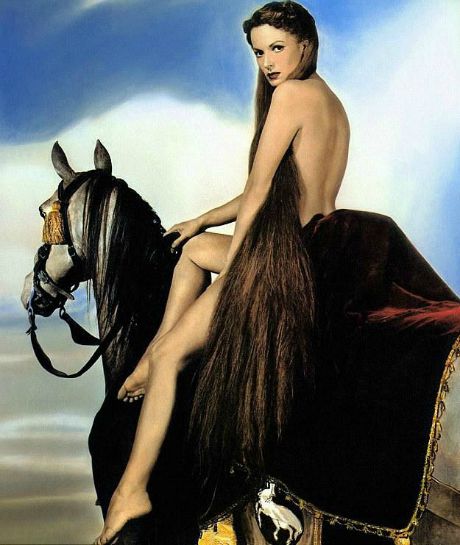
The International Alliance of Stalinists Against Body Shaming have made it illegal or at the very least politically unwise to say anything even faintly critical about anyone’s anatomy. But as this publicity shot from Lady Godiva of Coventry suggests, it’s…let’s change that to it was generally unwise for actors of either gender in glamour shots to allow the soles of their feet to be photographed. Look at any coffee-table book of old-school Hollywood glamour photography and you’ll notice that feet were rarely captured from any angle, and that soles — especially when they were somewhat crinkled or lumpy — were certainly a must to avoid. Not every aspect of the body is drop-dead glorious. I’m sorry but this was my first thought when I saw this photo of Twitter this morning. Maureen O’Hara, born in 1920, is still with us. Kirk Douglas, born in December 1916, has her beat by three and a half years.
Scent of an Emerging Front-Runner?
Sasha Stone‘s theory about actors or actresses winning two acting Oscars is that the second performance has to be stronger or more affecting than the first. A better written role, more forcefully delivered — so knock-down and reach-in that it can’t be denied. Jodie Foster‘s performance as a working-class rape victim in The Accused was riveting stuff, but Clarice Starling in The Silence of the Lambs was in another league altogether — a sympathetic, vulnerable woman in a tough job, dealing with a highly traumatic case — and so she won again. Sally Field‘s two Oscars (Norma Rae, Places in the Heart) came from playing women grappling under difficult economic conditions, but her performance in Places arguably had a bit more bone-weary heartache and solemnity.
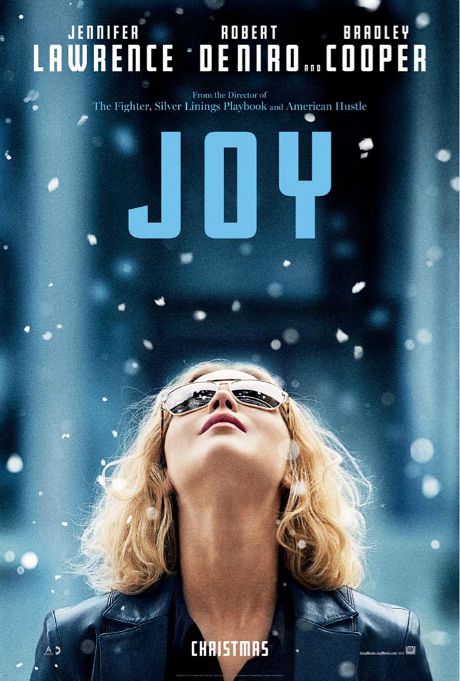
You could argue the same thing about Jane Fonda‘s military-wife role in Coming Home vs. her guarded prostitute performance in Klute. Was Tom Hanks‘ simply-phrased Forrest Gump guy more award-worthy than his AIDS-afflicted attorney in Philadelphia? Perhaps not but Gump was more zeitgeisty and groundswelly — a lot of impressionable people fell in love with that film. No one believes that Katharine Hepburn‘s Oscar-winning performance for her tough grandma in On Golden Pond was better than her blazing Lion in Winter performance — I think it was mostly an end-of-career gesture, a gold-watch Oscar.
Qualified Toronto Aura
If a movie is going to Telluride it’s presumed to have a certain award-season schwing, and if not that at least a sense of strong character — a certain accomplished, sift-through quality that will be fodder for intense, late-night conversations with Larry Gross at the Sheridan bar. And if a film bypasses Telluride for Toronto it means…well, first and foremost that’s not necessarily a “problem.” A Toronto opening is fine. But to some of us it hints or indicates that the producers and/or distributors are perhaps a tad more interested in hoopla and fanfare and perhaps a bit less interested in being closely examined and burrowed into, and in that pre-Toronto conversation possibly affecting the Toronto reception.
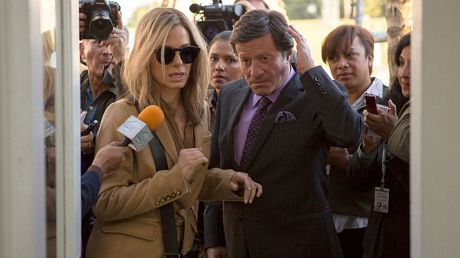
Sandra Bullock as ‘Calamity’ Jane Bodine, a political consultant hired by an unpopular Bolivian president (Joaquim de Almeida’s Pedro Gallo) to help him win an election.
There’s nothing “wrong” with Toronto or anyone deciding to open there first. A Toronto debut can be the start of something very big. Silver Linings Playbook bypassed Telluride and look what happened there. Toronto can mean anything. You can find God in Toronto just as readily as you might find Him/Her in the Colorado mountains. I don’t know anything. I’m just typing away.
But in my mind there’s a certain modified droop effect, a certain “oh, really?” quality when a film bypasses Telluride. It means the producers are a tad more interested in the roar of the crowd than in the more particular, pond-ripple enthusiasms of an elite but impassioned fraternity.
I therefore suspect that it probably “means something” that two Sony Pictures Classics films — Marc Abraham‘s I Saw The Light, the Hank Williams biopic costarring Tom Hiddleston and Elizabeth Olsen, and James Vanderbilt‘s Truth, the truth-based politics and journalism drama with Cate Blanchett and Robert Redford — were announced this morning as Toronto Film Festival selections. Our Brand Is Crisis, a dryly comedic, upmarket Warner Bros. release from director David Gordon Green and producers George Clooney and Grant Heslov and starring Sandra Bullock, Scoot McNairy and Billy Bob Thornton, was also announced as a Toronto debut, and that probably means…let’s not go there. I know nothing.
What’s The Motive Here?
So this Owen Wilson dialogue-refrain trailer is a kind of backhanded tribute to the star of No Escape, a butterscotch-dad-protects-family-from-Asian-chaos exploitation flick? Pic finally opens on 8.26 after six months of trailers. Observation #1: All movie stars play the same character (i.e., themselves) and therefore say similar things and behave in similar ways in film after film. That’s why they’re stars…people like their dependability. Observation #2: Wilson can play leading men but he’s not a natural at it — he is best when playing clever, witty, conspiratorial best friends who like to riff about all kinds of things but mostly relationships with women. Observation #3: I don’t like films about average American families having to deal with scary predatory people in a foreign country. The underlying message is ‘you don’t want to venture outside the safety of your American shopping-mall lifestyle…you’re just asking for trouble if you go overseas and particularly to unstable Asian or third-world countries…stay home, go to the mall, enjoy a backyard barbecue or watch a movie from the safety of your basement den.'”
My Foolish Heart
This is an appealing start-up teaser for Todd Haynes‘ Carol (Weinstein Co., 11.27), but can I say something? Margaret Whiting’s version of “My Foolish Heart” obviously indicates that Carol is a period piece (which it is) but it also suggests that Carol‘s romantic current is a dated, musty thing, and it’s definitely not. Carol is an emotionally alive and immediate experience that lets you remember how it feels to fall for someone, and how you can succumb to less-than-rational impulses when you’re under that spell. The song I was thinking of after I saw it in Cannes was Rodgers & Hammerstein’s “Hello, Young Lovers.” The lyric I had in mind was “I know how it feels to have wings on your heels.”

Spaghettini 405 Agony
Two days ago I left my primary debit card (I proudly don’t have a credit card) at a combination restaurant and jazz club in Seal Beach called Spaghettini’s. I called yesterday and they said right away, “Yup, we have it.” I could ask them to send it overnight via FedEx but I don’t want to wait so screw it — I’m driving down to pick it up now. Down that awful stretch of road called the 405. It’ll take me just under three hours to get down and back. Google Maps says it’ll take me 59 minutes to get down there. I hate doing this but it’s better to get it over with.

Zach Galifianakis Driving The Truck
If this happened in a Hangover movie I would reject it as way too stupid to be funny. “Nobody drives down a highway with the truck bed raised,” I would write. “Nobody is that stupid.” But because this clip is real (only a day old) and because it happened in Saudi Arabia, I think it’s hilarious. I’m presuming that the Saudi driver was (a) oblivious to the bed being elevated and (b) was talking to his 16 year-old Saudi girlfriend when the collision happened. Trust me — I was completely capable of doing something like this when I was in my late teens. I was that spacey and distracted. A YouTube guy wrote, “I don’t know who’s dumber — the guy driving the big truck or the guy right behind him in a white pickup truck.”
Blackjack
Twelve years ago I wrote a little Reel.com piece about the death of a black cocker spaniel puppy in my neighborhood. It happened when I was three years old, and it’s like it happened two days ago. A moving truck had backed up and flattened the little guy, and all that was left was a black dog-shaped pancake with the arms and legs and ears all spread out, and most gruesomely with the puppy’s red tongue sticking out from what used to be his head and snout. All the kids in the neighborhood were standing around and looking at this grotesque sight and going “jeez…jeez!” while the puppy’s owner, a little girl I was friendly with named Sue Ellen, was bawling inside her nearby home. The puppy’s name was Blackjack.
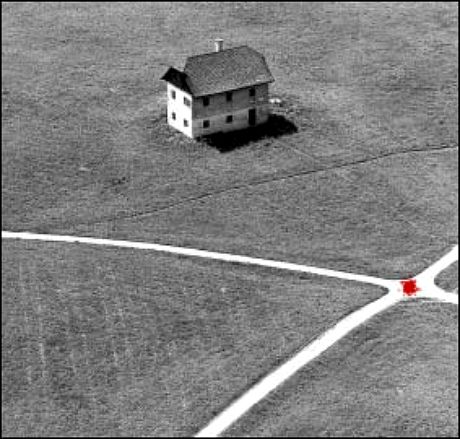
When I described this event in ’03 I wrote, “I can still see that little black pancake on the pavement with the tongue sticking out.” And then one of those online object d’art creations happened. Somebody I didn’t know created a piece of photographic art to accompany the piece. A perfect black-and-white shot of a suburban New Jersey neighborhood with a splotch of red at the bottom of the frame. It finally turned up.
Kindly Gentleman Slaps Down Fiendish Killer
After last Friday’s SLS hotel phone-interview blowoff episode with Peter Bogdanovich, I felt curiously compelled to rent Bogdanovich’s Targets (’68), which I haven’t seen in decades. Directed and co-written by Bogdanovich, produced by Roger Corman and with uncredited screenplay assistance from Samuel Fuller, Targets was a way-above-average first film. It’s a modest psychological thriller about the clash of old-school values (refinement, gentility and sophistication as represented by Boris Karloff‘s Byron Orlok) and the mid ’60s values of alienation, rage and random brutality as represented by a young Charles Whitman-like killer (Tom O’Kelly). The portions about the mayhem caused by Kelly’s Bobby Thompson are nothing much, but I loved the kindly, respectful vibes between Orlok and director Sammy Michaels (who was played by Bogdanovich) and the film’s gentle attitude toward Karloff. Targets was basically Bogdanovich saying to the film community of the late ’60s, “Here is this wonderful old gentleman, a gray-haired fellow of polish and cultural refinement who carries the wisdom of the ages, and all you can do is put him in cheesy low-budget horror films.”
Fake Baby Crows Attacking
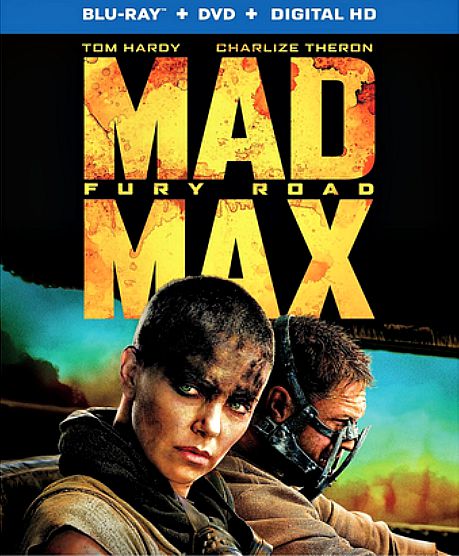
Notice how the jacket cover of the Mad Max: Fury Road Bluray (due on 9.1) indicates that Charlize Theron‘s performance dominates Tom Hardy‘s. As I said yesterday, I’m completely down with a Charlize-for-Best-Actress scenario — she’s earned it but she needs to campaign. The three deleted scenes are reminders (as if we needed reminding) of the extraordinary craft levels (particularly the cinematography) in this George Miller film, which I’ve seen three times in a theatre. I’m not persuaded that I need to own the Bluray. If I’m not mistaken an HD version is purchasable on Amazon right now.
Don’t “Fry” Me
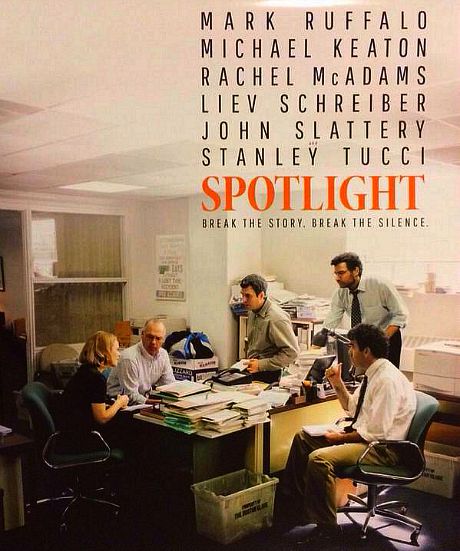
The truth is that I was able to understand maybe 25% of of Rachel McAdams‘ dialogue in season #2 of True Detective. I listened to her with earphones, with the sound turned up and down…every which way and her vocal-fry delivery was all but impenetrable. McAdams’ Ani Bezzerides spoke in an anguished, existentially weary tone of voice that was breathy and half-raspy — a speaking voice that I’ve been calling “True Detective fry.” I’m guessing that she’ll speak much more clearly for her reporter role in Spotlight — journalists have to be clear and concise — but I’m afraid that she might have fallen in love with being all but misunderstood. Here’s hoping I’m wrong and the issue is quickly forgotten.