Actors Can Have All The “Work” Done That They Want, But They Have to Keep It Subtle

Surgical touch-ups have become as common as visits to tanning salons. This or that actor having had a little “work” done is certainly nothing to write home about. But a year and a half ago Renee Zellweger‘s appearance sparked unusual interest. The before-and-after photos indicated that the “work” had violated the general rule, which is to make sure the changes are difficult to spot or at least not glaringly noticable.

Three days ago a piece by Variety‘s Owen Gleiberman noted that in a trailer for the forthcoming Bridget Jones’ Baby (Universal/Miramax, 9.16.16), Zellweger’s features seemed markedly different compared to how she looked in Bridget Jones Diary (’01). I agree — Zellweger looks good today but somehow upgraded. She could be the slightly tonier twin sister of the woman she played in Jerry Maguire.

“Watching the trailer, I didn’t stare at the actress and think: She doesn’t look like Renée Zellweger,” Gleiberman wrote. “I thought: She doesn’t look like Bridget Jones! Oddly, that made it matter more. Celebrities have the right to look however they want, but the characters they play become part of us. I suddenly felt like something had been taken away.”

Soon after Gleiberman’s piece was accused of being sexist by Rose McGowan, Christina Applegate and other online voices. I’m still trying to figure out what the beef is. The McGowan-Applegate rule seems to be that (a) if someone has had work done, you can’t mention it, and (b) if you do you’re a sexist asshole. But Owen’s point wasn’t that Zellweger had gone under the knife, but that she’d apparently tried to change herself. She was a somewhat idiosyncratic-looking person in the ’90s and early aughts, but then she went to a surgeon and said “I want to look less idiosyncratic, and more like a fashion model.”

My view is that Owen was saying that the work wasn’t subtle enough. I think that’s a reasonable thing to observe. You can have all the work done that you want, but you can’t allow it to become a topic of conversation.

Imagine if Harrison Ford decided to recreate himself along the lines of what Michael Cimino had done in the ’90s. Playing Indiana Jones again would be difficult under this circumstance. If Gleiberman had taken note of Ford’s appearance and asked “hold on, what’s happened to good old Indiana?”, would McGowan-Applegate be screaming about how unfair Owen was being? I somehow doubt it.

Read more

BFG DOA

“The weekend’s biggest disaster was Disney’s The BFG, Steven Spielberg’s $140 million adaptation of Roald Dahl’s children’s classic. The story of a friendly giant (Mark Rylance) who befriends an orphan (Ruby Barnhill), got solid reviews, but was overshadowed by Finding Dory. It collapsed at the box office, eking out $19.6 million over the weekend and should earn a paltry $23.6 million over the four day holiday for a fourth-place finish. It will rank as one of the biggest flops of the summer and of Spielberg’s career, raising questions about his drawing power after a decade spent making historical dramas such as Lincoln that are geared at older crowds.” — from 7.3 Variety report by Brent Lang.

Night of the Living Longshoremen


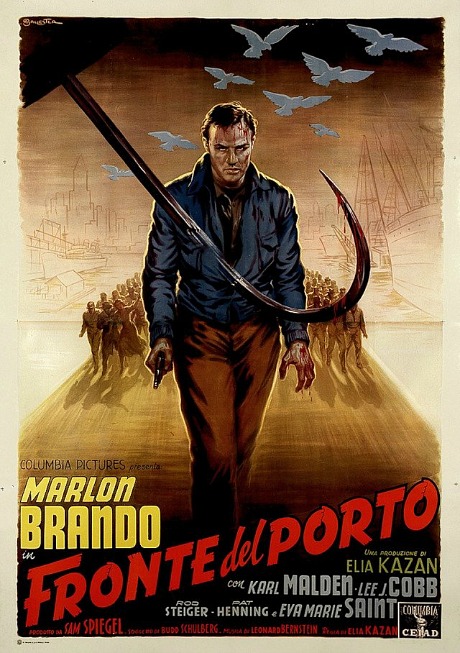
At first glance this looks like an Italian zombie movie. Something involving rage, stalking, death, fear, a bloodthirsty mob. The only thing that doesn’t belong is the handgun. Zombies don’t use or carry them as a rule.

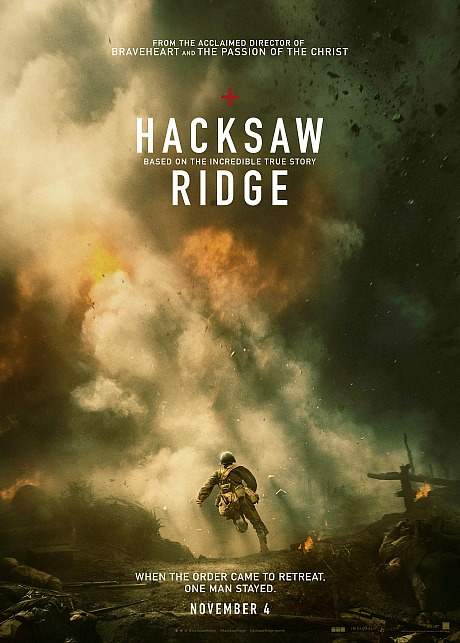
Exceptional values in the smoke and clouds. It obviously suggests feeling and commitment on the part of the director.

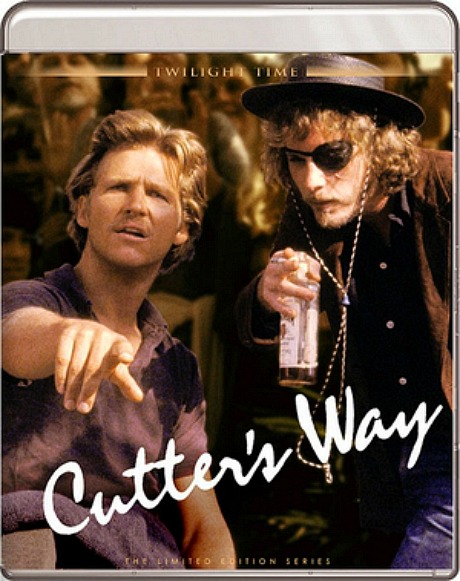
I haven’t watched Cutters’ Way since ’81. I’ve been flirting with re-viewing it. I remember two things — one, that John Heard’s performance was intense and pissy but a little relentless with the rage, and two, that the story didn’t amount to much — a lot of plotting and yelling that led to a pit of futility.

“Why Should We Be Afraid?”

“In The Hit, Stephen Frears eschewed car chases, gunfights and sex, [and] blurred the traditional roles of captive and captor, [and] poeticized a story that germinates in baseness, and focused on a hero who finally lets down the audience. In manipulating the tenets of the gangster film, the western, the road movie and even film noir, Frears questioned their validity. And although The Hit is full of incident, it dwells on the internal life rather than the external. This lifts The Hit into a metaphysical realm where bullets have no reach.” — from a Graham Fuller essay, “The Hit: Road to Nowhere,” which is included in the Criterion DVD package.

Compensation Factor

I’ve read a lot about Michael Cimino over the years. I’ve heard many stories about him. Last August I read Anne Thompson‘s piece, “Six Reasons Why Michael Cimino Will Never Work in Hollywood Again,” which was fairly tough on the guy. I’ve read Stephen Bach‘s “Final Cut” twice. Everybody said he could be pugnacious and even rude at times. Not always but now and then. But to the best of my recollection nobody and I mean nobody ever mentioned a very basic fact, which is that Cimino was a little guy — only 5’5″.

Not every short guy is contentious or pushy or intractable, but omitting the fact that a guy was modestly proportioned is a curious thing. 5’5″ is Randy Newman short. Two or three inches taller than Mickey Rooney, okay, but one inch shorter than Alan Ladd, and I’ve read that Ladd always felt a little fucked up about his height. It seems to me that anyone assessing the character of a short guy would have to at least mention that he’s short. (And therefore may have felt motivated to compensate by being a bit tougher.) But no one mentioned this about Cimino. Because no one wants to me called a size-ist.

Read more

Irish Lament For A Friend

Respected critic and screenwriter F.X. Feeney was the gentlest, kindest and most ardent journalist ally the late Michael Cimino ever had. Feeney was the principle voice of the revisionist reappraisal of Heaven’s Gate, for one thing — a reappraisal that led to Criterion remastering the original three hour and 39 minute cut on Bluray. Feeney so cared about Cimino’s vision that in 1987 he flew to Paris on his own dime to catch the 146-minute director’s cut of The Sicilian. (A 115-minute version played in the U.S.). Feeney and Cimino were also personal pals.

When news of Cimino’s death hit yesterday afternoon, I asked F.X. if he wanted to post some kind of tribute or appraisal. He sent the following late last night:


Michael Cimino, Chris Lambert during filming of The Sicilian.

Michael Cimino [1939 – 2016]

Imagine my astonishment, bracketing his name with these dates. The world has lost a great artist, and I’ve lost a great friend.

First, let’s define “a great artist.” Michael Cimino made films like nobody else. He never imitated. His first loyalty was never to any movie tradition, but to the life and lives of whatever human beings were under his scrutiny. Time and again, he had the courage –indeed the steely backbone and gambler’s bravery — to take his time with any given scene or sequence, confident that audiences are interested in human beings, first and last.

What movie compares on any level with The Deer Hunter? Its first hour is taken up with a wedding and a hunt. The Vietnam War is a lightning parenthesis. That prison scene is a shock from which no audience recovers – and the film’s epic power is in its silences, particularly as embodied by the three men who return from war, each bearing within themselves an experience that they can’t communicate, not to their beloved townsfolk, not even to one another. Each is individually scarred.

The hymn “God Bless America” has never been rendered in such delicate, fragile yet indelible affirmation as it is in The Deer Hunter’s final moments.

Read more