The Post Saved By PGA Nomination

What are the big takeaways from this morning’s Producers Guild of America nominations? Apart from the obvious, I mean, or the fact that 11 films — The Big Sick, Call Me By Your Name, Dunkirk, Get Out, I, Tonya, Lady Bird, Molly’s Game, The Post, The Shape of Water, Three Billboards outside Ebbing, Missouri and Wonder Woman — were nominated for the PGA’s Best Picture trophy, which they call the Darryl F. Zanuck Award.

Takeaway #1: After being blanked by SAG and the WGA, Steven Spielberg‘s The Post has been saved from the guillotine. If it hadn’t been nominated for a Zanuck award, people everywhere would be saying “well, that’s it…The Post is dead meat.” But it was nominated, thank fortune, and so everyone’s now saying “it’s not dead!” Given that it’s the best Spielberg film since Saving Private Ryan, the SAG and WGA blowoffs seemed odd, to say the least. But now it’s back in the game, at least to some extent.

Takeaway #2: Anyone who looks you in the eye and tells you that Molly’s Game isn’t a punishing thing to sit through is a flat-out liar. There’s not enough oxygen, Jessica Chastain‘s brittle performance is a chore, and Aaron Sorkin‘s machine-gun dialogue talks you to death. So why was it nominated? I know some people who respect it but nobody loves it.

Takeaway #3: Why was Wonder Woman nominated? Because it made a lot of money and because the PGA wanted to …what, acknowledge two woman directors instead of one as gesture of support in this, the year of #MeToo pushback?

The PGA’s Documentary award nominees are Chasing Coral, City of Ghosts, Cries from Syria, Earth: One Amazing Day, Jane, Joshua: Teenager vs. Superpower and The Newspaperman: The Life and Times of Ben Bradlee.
Noyce Saga in Three Chapters

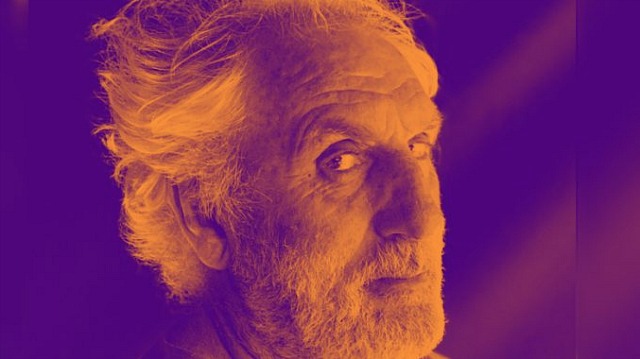
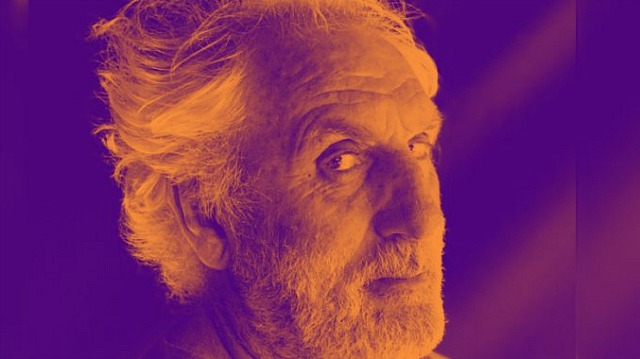
HE’s own Nick Clement (aka “Action Man”) has posted a three-part, non-exhaustive q & a interview with director Phillip Noyce. It covers the span of Noyce’s 40-year career — Backroads, Newsfront, Dead Calm, Patriot Games, Clear and Present Danger, Sliver, The Saint, The Bone Collector, Rabbit-Proof Fence, The Quiet American, Catch a Fire, Salt, The Giver and the brilliant, still unreleased Above Suspicion.

Click on part 1, part 2 and part 3.

Noyce on his mindset as he began making Rabbit Proof Fence: “The biggest challenge was that I had to take all of the ‘Hollywood’ out of my system. I was making a film that literally would stand no chance of being financed on any sort of studio level, and in a way, that made all of us who were involved more and more determined to get it made. It was a story we needed to tell, not something we were doing for the paycheck.

“We ended up raising $6 million to get the film made, and one of the proudest things about the entire experience is that it’s the most profitable film I’ve ever been involved with in terms of how much it cost to make and how much it took in from sales. Not forgetting the hearts and minds that were changed all around the world.”

Toss It

There are pack rats (i.e., people who never throw anything out and who gradually choke to death on the clutter) and those who throw a lot of stuff out but hang on to a few remnants. I’m one of the latter. The past will consume you if you let it.

Mark Pellington‘s Nostalgia (Bleecker Street, 2.16) was acquired during last year’s Sundance Film Festival, but it’s debuting at this year’s Palm Springs Festival. Pic “follows several people as they mutually come to a pivotal moment in their lives where they must rid of old family belongings,” etc.

The trailer indicates that Nostalgia has no story. It appears to be an acting-class format that allows several characters (played by Ellen Burstyn, Jon Hamm, Catherine Keener, John Ortiz, Bruce Dern, Amber Tamblyn, James LeGros) to share about the sentimental value of bric a brac they don’t want to part with.

Confession: I’ve never seen Andrei Tarkovsky‘s Nostalghia (’83).

Unmissable

Since last May I’ve posted two European-created trailers for Andrey Zvyagintsev‘s short-listed Loveless (Sony Pictures Classics, 2.16), but this is the cleanest and most concise. A long procession of missing children dramas have been domestically released (Gone Baby Gone, Changeling, Bunny Lake is Missing, Without A Trace, Ransom), but American producers have never had the balls to make one with Zvyagintsev’s approach — a drama that focuses on efforts to find a disappeared boy, yes, but is mostly about why the boy might have escaped in the first place. A movie that weeps over his absence, but at the same time considers the all of it, and even half-sympathizes.

Not Interested

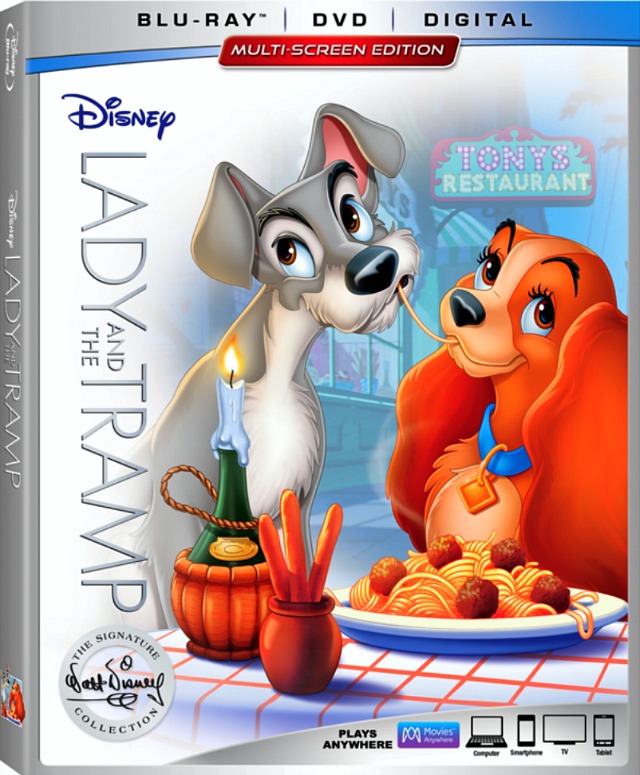
I’ve always been intrigued by Walt Disney‘s Lady and the Tramp (’55) because it’s the only animated feature to be shot and projected at 2.55:1 — i.e., the early to mid ’50s Fox Scope aspect ratio that was phased out in favor of 2.39:1 in ’56 or thereabouts. To the best of my knowledge all other widescreen animated features have been presented in either 2.39 or, in the case of Disney’s Sleeping Beauty, Super Technirama (2.25:1).

There’s a new extra-laden Disney Bluray coming out on 2.27, but you can order a region-free British Bluray right now for less than $20.

The newbie has a ton of extras [see below], but not the one I’d like to see — a 1.37:1 version that was created for theatres that still hadn’t installed CinemaScope screens by mid ’55.

Eight years ago Fox Home Video released a Bluray of The Robe (’53), the first Hollywood feature shot in CinemaScope. The Bluray contained an alternate 1.37:1 version that was shot concurrently out of concern that the CinemaScope version might be a huge flop. As it turned out the 1.37 version never saw the light of day.

From Lady and the Tramp Wiki page:

“Originally, Lady and the Tramp was planned to be filmed in a regular full-frame aspect ratio [i.e., 1.37:1]. However, due to the growing interest of widescreen film among moviegoers, Disney decided to animate the film in CinemaScope making Lady and the Tramp the first animated feature filmed in the process.

“[But] problems arose as the premiere date got closer and [an awareness dawned] that not all theaters had the capability to show CinemaScope at the time. Upon learning this, Walt issued two versions of the film: one in widescreen, and another in the Academy ratio. This involved gathering the layout artists to restructure key scenes when characters were on the edges of the screen.”

Read more

Wonderful Reading

Fire and Fury author Michael Wolff has penned a delicious, dessert-like Hollywood Reporter piece that summarizes his process in absorbing the whole Trump White House magillah.

Axios’ Mike Allen is reporting that Wolff, due to appear on news shows this weekend as well as Morning Joe Monday morning, “has tapes to back up quotes in his incendiary book — dozens of hours of them,” including chats with Steve Bannon and former White House deputy chief of staff Katie Walsh.

A taste: “After the abrupt Scaramucci meltdown, there was hardly any effort inside the West Wing to disguise the sense of ludicrousness and anger felt by every member of the senior staff toward Trump’s family and Trump himself. It became almost a kind of competition to demystify Trump. For Rex Tillerson, he was a moron. For Gary Cohn, he was dumb as shit. For H.R. McMaster, he was a hopeless idiot. For Steve Bannon, he had lost his mind.

“Most succinctly, no one expected him to survive Mueller. Whatever the substance of the Russia ‘collusion’, Trump, in the estimation of his senior staff, did not have the discipline to navigate a tough investigation, nor the credibility to attract the caliber of lawyers he would need to help him. (At least nine major law firms had turned down an invitation to represent the president.)

“There was more: Everybody was painfully aware of the increasing pace of his repetitions. It used to be inside of 30 minutes he’d repeat, word-for-word and expression-for-expression, the same three stories — now it was within 10 minutes. Indeed, many of his tweets were the product of his repetitions — he just couldn’t stop saying something.

Read more

Fair Assessment

Is Variety‘s Dave McNary a Get Out “woker”? Look below and consider how he structured his lede for this morning’s story about the WGA nominations. Do you detect a very slight note of favoritism in his decision to state that Jordan Peele‘s script has nabbed a Best Original Screenplay nom “along with” four others? Just a teeny-weeny bit of a “yay, team” attitude?

Imagine, for example, if McNary had written “Emily Gordon and Kumail Nanjiani’s The Big Sick has landed a Writers Guild of America nomination for top original screenplay, along with Greta Gerwig’s Lady Bird, Guillermo del Toro and Vanessa Taylor’s The Shape of Water, Jordan Peele’s Get Out and Steven Rogers for I, Tonya.”

Or, better yet, imagine a lede that reads “Steven RogersI, Tonya has landed a Writers Guild of America nomination for top original screenplay, along with Greta Gerwig’s Lady Bird, Guillermo del Toro and Vanessa Taylor’s The Shape of Water, Jordan Peele’s Get Out and Emily Gordon and Kumail Nanjiani’s The Big Sick.”

On second thought don’t imagine alternate ledes because they never would’ve happened.

If you’re going to indicate special approval for a nominee by listing it first and foremost among a group of five, you have to first consider the political climate, and it seems to me that not only McNary but Variety editors are “woke.”

Read more

A Nominee Is Missing. Make That Two.

There’s at least a modest body of opinion out there that Martin McDonagh‘s screenplay for Three Billboards Outside Ebbing, Missouri deserves the Best Original Screenplay Oscar. Alas, it wasn’t announced this morning as a Writers Guild of America nominee in that category because Three Billboards wasn’t produced under WGA jurisdiction, and is therefore ineligible. I understand the organizational motive, of course, but it’s still bullshit.

The Best Original Screenplay nominees are Greta Gerwig’s Lady Bird, Guillermo del Toro and Vanessa Taylor’s The Shape of Water, Jordan Peele’s Get Out, Steven Rogers for I, Tonya and Emily Gordon and Kumail Nanjiani’s The Big Sick.

The Best Adapted Screenplay noms went to James Ivory’s Call Me by Your Name, Scott Neustadter and Michael Weber’s The Disaster Artist, Dee Rees and Virgil WilliamsMudbound, Aaron Sorkin’s Molly’s Game, and the Logan screenplay by Scott Frank, James Mangold and Michael Green.

Liz Hannah and Josh Singer‘s original screenplay for The Post wasn’t nominated either. Add this omission to SAG members declining to nominate the Post cast for an ensemble award, and you’re left with “man, The Post can’t catch a break.”

The 70th annual WGA award ceremony will happen simultaneously in New York and Los Angeles on 2.11.

“A Figure of Sputtering and Dangerous Insecurities”

From a portion of Michael Wolff’s “Fire and Fury,” titled “Donald Trump Didn’t Want to Be President” and excerpted in the current issue of New York. The following comes from former White House deputy chief of staff Katie Walsh:

“As soon as the campaign team had stepped into the White House, Walsh saw, it had gone from managing Trump to the expectation of being managed by him. Yet the president, while proposing the most radical departure from governing and policy norms in several generations, had few specific ideas about how to turn his themes and vitriol into policy. And making suggestions to him was deeply complicated.

“Here, arguably, was the central issue of the Trump presidency, informing every aspect of Trumpian policy and leadership: He didn’t process information in any conventional sense. He didn’t read. He didn’t really even skim. Some believed that for all practical purposes he was no more than semi-­literate. He trusted his own expertise — no matter how paltry or irrelevant — more than anyone else’s. He was often confident, but he was just as often paralyzed, less a savant than a figure of sputtering and dangerous insecurities, whose instinctive response was to lash out and behave as if his gut, however confused, was in fact in some clear and forceful way telling him what to do.

“It was, said Walsh, ‘like trying to figure out what a child wants.'”

Read more

Tough Producer Shares Ballot Preferences

Yesterday afternoon I posted a director-writer’s opinions and preferences about current Oscar contenders, limiting the discussion to the top six categories (Best Picture, Director, Actor, Actress, Supporting Actor & Actress). Late yesterday I spoke to a woman producer with many TV and feature credits, and who’s been duking it out in this industry since the mid ’80s. A very sharp, very savvy lady. I’ve re-ordered the sequence of some of her quotes, pruned and condensed some of them, and in some cases run them verbatim.

Best Picture: “Call Me By Your Name is really the best picture of the year. There’s an unreasonable resistance to it among some, that it’s ‘just’ a gay love story set in the lush scenery of Northern Italy…the first Academy screening was only a quarter-full…but coming from a heterosexual woman, it’s the most honest and powerful film of the year. It’s about finding out for the first time what love can be, and how life goes on when your heart is broken. I think people should just GO SEE THE MOVIE. I haven’t met someone yet who wasn’t knocked out.


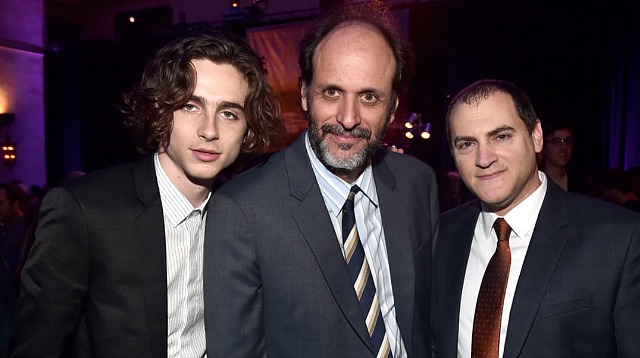
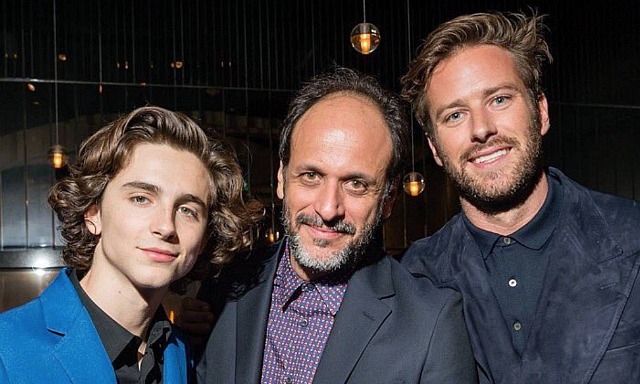
(l. to r.) Timothee Chalamet, Luca Guadagnino, Armie Hammer.

“Realistically for the Best Picture Oscar, it’s probably between The Post and Dunkirk. Dunkirk is a stunningly well made film, but it lacks that big emotional content. You begin the story with the thread of an average soldier who is just trying to survive, but not ever knowing anything about him handicaps the emotional takeaway at the end. It may win because it’s a great true story, but the heartfelt connections to the characters are impeded by their vague never revealed histories. Tom Hardy and Mark Rylance do very well with little, but could have been so much more. The Post is probably the winner. Streep and Hanks are on the top of their game. And the heroic relevance of the story is inescapable. Spielberg delivers.

“The curious enthusiasm for Get Out is mainly a box-office vote. If it wasn’t a big hit, it probably wouldn’t be as prominent in the Best Picture conversation. Mudbound feels like a smarter, better shot…a more quality-driven picture with a stronger message as well as a strong woman’s voice, although it’s not as edgy or commercial. Either way Get Out, clever and entertaining as it is, does not belong in the same category as Moonlight, Twelve Years A Slave, Hidden Figures and Fences. All of these movies make Get Out look weak. If Get Out had come out last year, it probably wouldn’t have been nominated. These previous nominees are worthy Best Picture contenders; Get Out has skated in during a weak year.”

Best Director: “Luca Guadagnino deserves to win for Call Me By Your Name. His film is so beautifully shot. The actors are terrific, the music perfect. But Chris Nolan will probably win it for the scope and scale of Dunkirk. Guillermo del Toro‘s work on The Shape of Water was wonderful, inspired. Greta Gerwig did a fantastic job on Lady Bird, and I think she deserves to get nominated for telling a small story so incredibly well. Steven Spielberg will get nominated for The Post. Deserves it, quintessential pro. Mudbound‘s Dee Rees is the most deserving underdog this year.”

Read more

Shape Shifter

I haven’t discussed Guillermo del Toro‘s The Shape of Water since it opened three and a half weeks ago. I posted my review exactly four months ago during the Telluride Film Festival. A day later I posted a back-and-forth discussion with a film critic friend, called “Shape of Water Pushback.”

Now that everyone’s seen it, I’m re-posting my initial response and asking for comments:

I wouldn’t describe myself as head-over-heels in love with Guillermo del Toro‘s The Shape of Water (Fox Searchlight, 12.8), but I certainly approve as far as it goes.

A sweet Guillermo fable through and through, I agree 100% that it’s definitely his best film since Pan’s Labyrinth — one of his smaller-scale creations that aims above and beyond the fanboy realm. Shape is a sci-fi period thing, a trans-species love story, a swoony romantic fantasy and an E.T.-like tale about a merging of disparate hearts and souls.

It also accommodates a darkly paranoid story about the forces of absolute badness looking to dissect and destroy an exotic life form. It’s a little stiff and overbearing at times, but generally mature and tender-hearted and ten times better than Okja, which used a similar storyline.

This is an adult fantasy piece full of heartache and swoony feelings, lusciously and exactingly composed, painted with early ’60s period detail and production design to die for. A movie completely dominated and in fact saturated with its Guillermo-ness.

I saw Shape late last night. The screening began at 11:20 pm and ended two hours later, and I was 100% alert and wide-eyed start to finish. This is what good movies do — they wake you up and keep you in a state of anticipation until the closing credits. Oh, and the headline I went with three days ago after the first Venice showing — Douglas Sirk’s Creature From The Love Lagoon — still stands.

Set in 1962 Baltimore, The Shape of Water is about a current that quickly develops between Elisa (Sally Hawkins), a mute and lonely but sensually attuned dreamer who works as a cleaning woman inside a government-run scientific laboratory, and a gentle, large-eyed aqua-creature with God-like healing powers (Doug Jones) who’s recently been captured in South America and brought to the lab for study and eventual dissection.

Read more

Got To Hide Yourself Away

I began explaining my lack of interest in the Palm Springs Int’l Film Festival two years ago. I respectfully blew it off again this year, and will most likely do the same again next year. Who cares? It’s just a big glossy event that mainly attracts red-carpet media types. No culture, no intrigue, too many limos, not for me.

“I’ve been attending the Palm Springs Film Festival for the last few years,” I wrote on 1.3.16, “and at the end of every one I’ve asked myself ‘was that really worth it?’ I used to think of the PSFF as a warm-up for Sundance. Now it’s basically a big-media paparazzi pigfuck that every significant Oscar contender is obliged to attend, and all you can do as a columnist is…well, not much. Write observations, attend the events, listen to try-out acceptance speeches, snap a few photos.

“You drive all the way out there and stay in some old-style place for two or three nights for $400 or $450 bucks and for what? It’s a tax write-off and not entirely unpleasant (Variety‘s Sunday brunch party is always agreeable), but I decided to ignore it this year. Too much grief for too little yield.

A 2015 HE headline said it all: “Puttin’ On Ritz in Chilly Corporate Bunker Once Known as Palm Springs.”

Read more