“You Gotta Be Hard, Eddie”

Yesterday on Facebook director Rod Lurie posted the following: “Some time ago a director friend of mine, a true giant in my industry, died. Before he passed away, he made a deathbed request of me. He made me promise not to work with a specific actor, so filled of rage was he at the hell this particular thespian put him through. In that moment, which was very sad and heartfelt, I agreed.

“That actor has now been brought to me as a perfect choice for one of my films, and he may well be. [But] I think I have to keep my promise, right?”
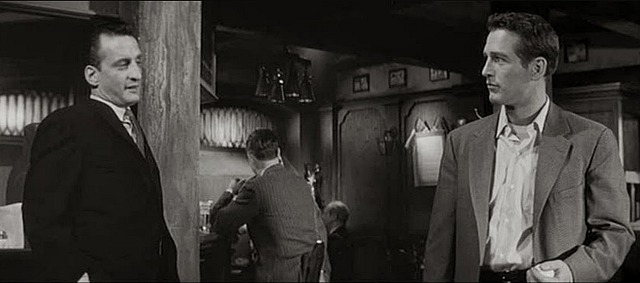

George C. Scott as the cynical Bert, Paul Newman as the gifted Eddie Felson in Robert Rossen’s The Hustler.

I replied as follows: “Absolutely not — do what’s best for your film at all times, to your last dying breath. If the director you made your promise to was still with us, I would say ‘of course, keep your word.’ But he’s with the angels now, and you’re here and trying to make the best film possible. That’s all that matters. You kept your word to the departed director before he died, right? You did the right thing then. Now move on and make the best film that you can, and if you feel that casting the Devil himself will help you achieve that goal, then do that.”

I was also thinking that the dying director had a strange attitude about this allegedly awful actor and especially about “water under the bridge” in general. Who on his deathbed is thinking about trying to arrange that some actor, who must have had some value and some understanding of what it takes to socially survive in this industry, never works with a friend or vice versa? What kind of dying person cares about stuff like this?

Paul Schrader joined the thread and said something along the lines of “fools make promises but artists make art,” and that’s all that Lurie should care about — the movie, not the promise.

Some guy said that Lurie has to keep his word or he’ll have a hard time looking in the bathroom mirror for the rest of his life. To which I replied, “What are you, the local priest? To be a good director you must either be a natural sonuvabitch or learn to be one. That’s what John Ford allegedly said at one time to Nunnally Johnson.”

Read more

What I Live For

Last night I dreamt about discovering a mindblowingly great film about a Syrian or Iranian immigrant family trying to survive in Manhattan or Brooklyn or somewhere back east. It was basic and elemental but world-class. It lasted two and a half hours, but it got better and better as it went on. It was like an Asghar Farhadi film, a simple tale that becomes more and more complex as more and more details are revealed. I was imagining it in amazingly specific terms during the dream but they fell away the instant I woke up.

It was one of those films that you think you’ve got figured out, and then it takes a turn in the road that you didn’t expect, and then it takes another and then sinks in deeper and deeper, and after a while you’re going “whoa, whoa…wait a minute.”

I knew along with the 30 or 40 other critics who had seen it for the first time (the film strangely hadn’t premiered at Telluride or Toronto and was just emerging at the end of award season, sometime in November or December) that this wasn’t just a major discovery but an all-time masterpiece, and I was feeling that heartbeat, those feelings of profound oh-my-God excitement that I didn’t feel during ’17. The rushes I was feeling after seeing Dunkirk, Lady Bird and especially Call Me By Your Name were strong, but not as intense as what I was feeling last night.

I was so excited about this film that I was telling myself within the dream that I needed to wake up and write down the details before forgetting them — it was that good.

Montmartre Laverie

In a 2.7 Hollywood Reporter interview with Ben Svetkey, Willem Dafoe mentioned the peace of mind he gets from hand-washing his undies or visiting nearby laundromats when he’s staying in “strange” cities. “I did that in France recently,” he says. “I was shooting a movie there, and it was a beautiful experience. For some reason, people are really nice to me in laundromats and I have these great encounters. Talk about fun and sexy.”

Mon experience exactement. Well, not sexy but fun in a mild, calming sort of way.

15 years ago I was staying in a place on rue Durantin in Montmartre. Early one evening I lugged my pillowcase of dirties over to the Laverie Automatique (2 rue Burq, just north of rue d’Abesses) and tried to figure out the centrally computerized system they have there. One wall-mounted device accepts tokens for all the washing machines and dryers. A young Australian woman noticed my distress and showed me the ropes. We would up chatting for a while.

Why am I remembering that otherwise uneventful evening with such clarity? Because it was pleasurable and almost joyous on a certain level. Oh, and unlike Dafoe, I love folding after removing the socks and T-shirts from the dryer.

Witnesses

From a director/screenwriter friend: “I’ve seen The 15:17 To Paris. It’s basically the sort of made-for-cable movie that National Geographic airs with Keifer Sutherland doing the narration. Paul Greengrass probably could have found the meat alongside these potatoes. It’s hard to critique the non-actors playing themselves, as they’re bona fide heroes. United 93 used the actual FAA guy (Ben Sliney) and that was amazing. That same verisimilitude doesn’t happen here.”

Manhattan Get-Around Guy: “Sacre blows!”

Variety‘s Owen Gleiberman: “It’s all startlingly matter-of-fact. For a few minutes, the film rivets our attention. Yet I can’t say that it’s transporting, or highly moving, or — given the casting — revelatory. The film keeps telling us that what took place aboard that train was the fulfillment of something, but neither the event nor the three people re-enacting it seem entirely real. They seem like pieces of reality trapped in a movie.

“It doesn’t take long to grow accustomed to Stone, Skarlatos, and Sadler’s casual semi-non-acting, because they’re appealing dudes, quick and smart and easy on the eyes. The oddity of the movie — and this is baked into the way Eastwood conceived it, sticking to the facts and not over-hyping anything — is that this vision of real-life heroism is so much less charged than the Hollywood version might be that it often feels as if a dramatic spark plug is missing. I’ve long argued for authenticity in movies (especially when they’re based on true stories), but The 15:17 to Paris presents a kind of walking-selfie imitation of authenticity. The movie creates its own version of the uncanny valley.”

Five Hotshots

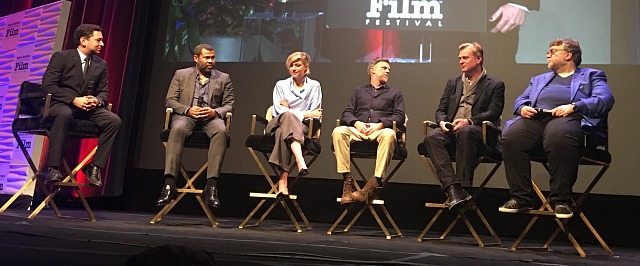
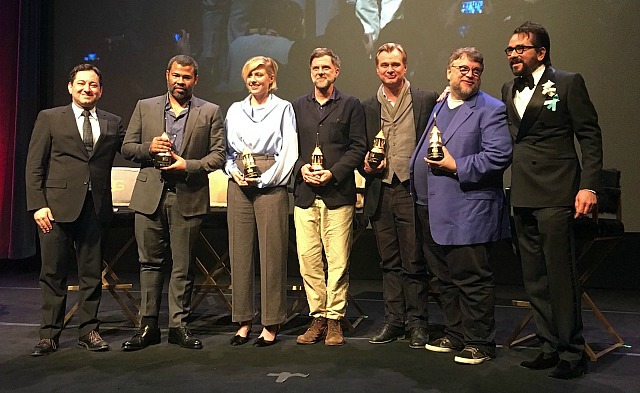
Last night’s Outstanding Directors of the Year tribute at Santa Barbara’s Arlington theatre went just fine. 90 minutes, over and out. Moderator Scott Feinberg asked interesting, intelligent, well-phrased questions of Christopher Nolan (Dunkirk), Greta Gerwig (Lady Bird), Guillermo del Toro (The Shape of Water), Jordan Peele (Get Out) and Paul Thomas Anderson (Phantom Thread). There were a couple of technical snafus — a Dunkirk clip ran without sound, and a clip that Feinberg introduced was ignored. But overall it was a fine, tight show. At evening’s end SBIFF director Roger Durling sang praises and presented the trophies.


(l. to r.) Feinberg, Peele, Gerwig, Anderson, Nolan, Del Toro, Durling.

Der Bingle Did It First

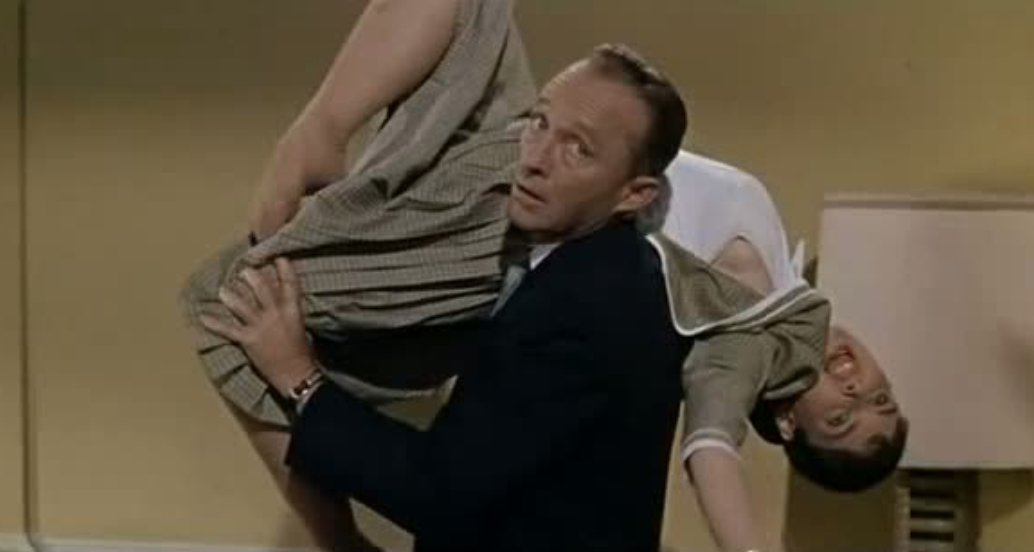
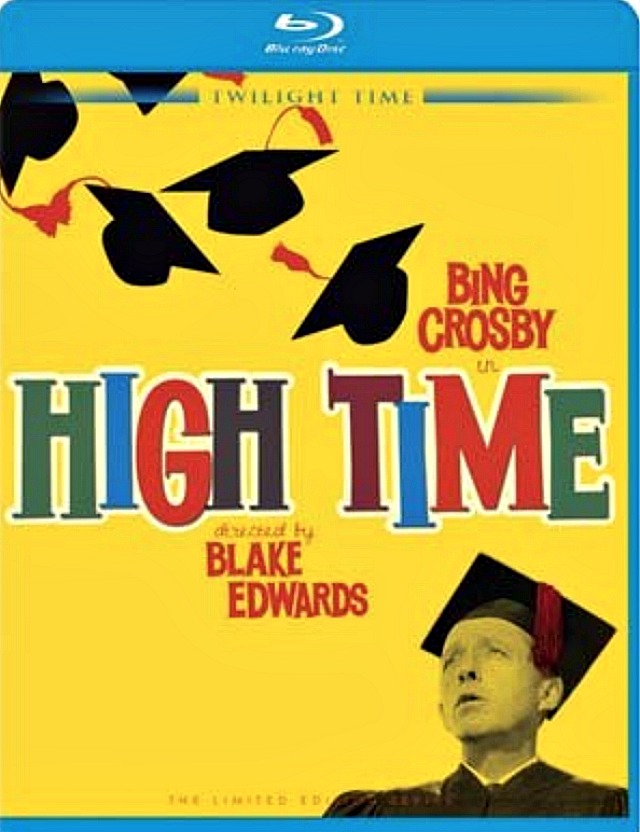
Life Of The Party (Warner Bros., 5.11) is the latest comedy from Melissa McCarthy and husband/co-screenwriter Ben Falcone. The trailer is selling another coarse McCarthy vehicle, this one about a klutzy divorced woman who returns to college to get her degree, much to the chagrin of her daughter (Molly Gordon). Everyone’s been referencing Rodney Dangerfield‘s Back To School (’86), about a wealthy but amiably crude fellow who does the same thing, much to the chagrin of his son (Keith Gordon). But the first film to run with this story (I think) was High Time (’60), in which Bing Crosby played a successful resturateur (i.e., hamburgers) and widower who goes back to college at age 51.

Read more

Tough Game

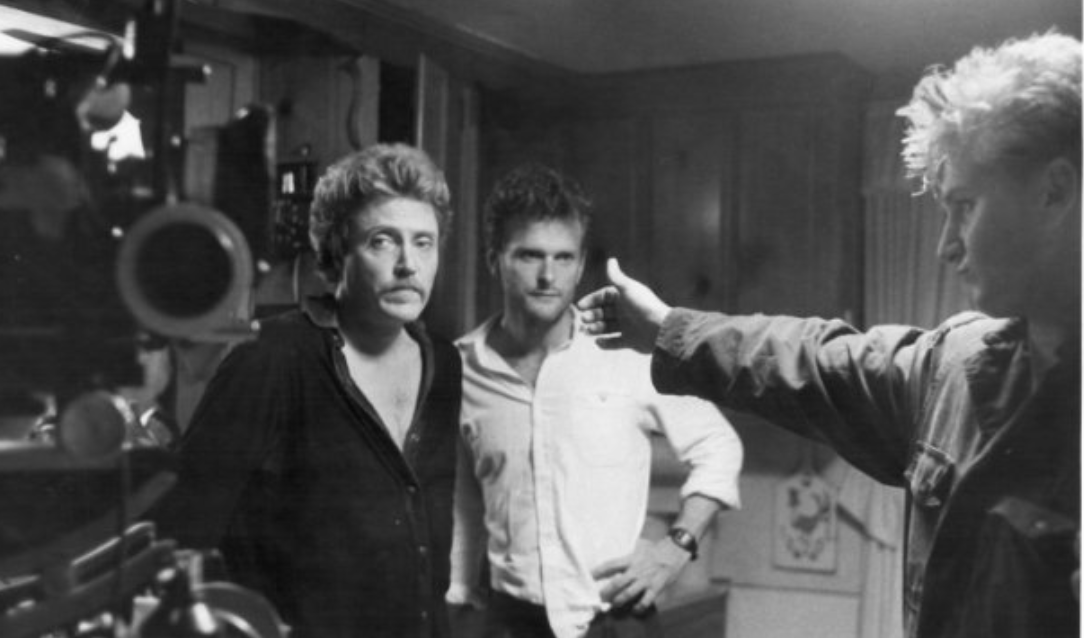
In his 30s, director James Foley was in a pretty good groove. I’m talking about an eight-year period in the ’80s and early ’90s. The R-rated Reckless (’84) was nothing to get overly excited about, but then came At Close Range (’86), which I’ve long regarded as Foley’s near-masterpiece.

Next was Who’s That Girl (’87), a mostly misbegotten screwball comedy with Madonna, followed by an edgy, hard-boiled noir called After Dark, My Sweet (’90), which I don’t even remember. But then Foley rebounded big-time with the flinty, hard-boiled, universally admired Glengarry Glen Ross (’92).

Foley directed six decent but mezzo-mezzo dramas between ’95 and ’07 — Two Bits (’95), The Chamber (’96), Fear (’96), The Corruptor (’99), Confidence (’03) and Perfect Stranger (’07). And then he more or less shifted over to a journeyman TV realm. Foley directed 12 episodes of House of Cards between ’13 and ’15, and two episodes of Billions in ’16.

And then — aahck! aahck! — Foley returned to features last year by directing 50 Shades Darker, which no one paid the slightest attention to, and then he doubled down on this dubious association with the about-to-open 50 Shades Freed.

I re-watched At Close Range last year and really re-admired it, and everyone swears by Glengarry Glen Ross. We all have to pay the rent, the butcher and the plumber, but it seems a shame that the guy who finessed these two films and made them into semi-classics is currently reduced to the 50 Shades realm.

Read more

“Funniest Star Wars Movie Yet”?

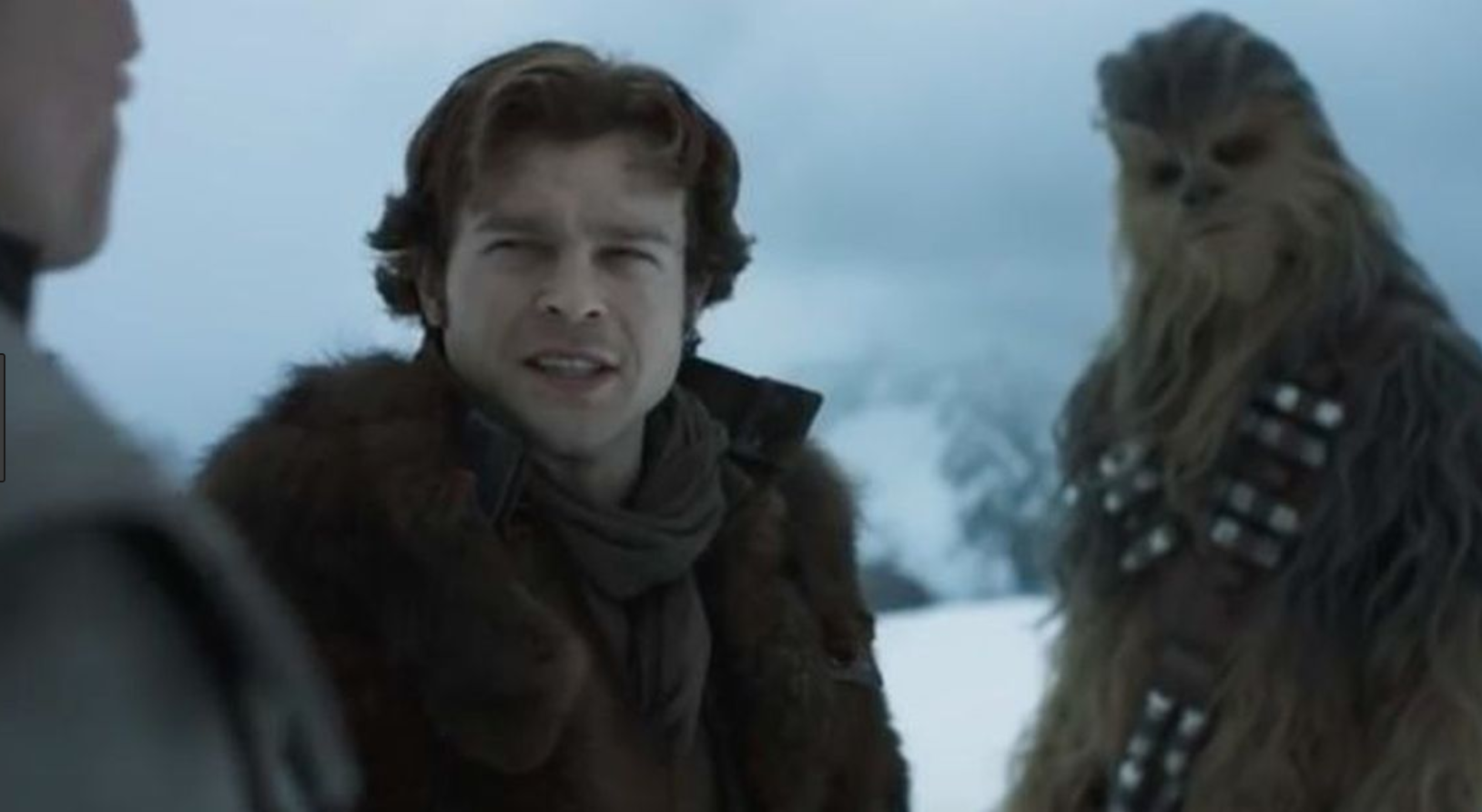
So Ron Howard‘s Solo: A Star Wars Story is going to be a kind of goofy adventure romp…right? Clearly, Anthony Breznican‘s EW cover story is conveying this and then some. Solo won’t just be witty or bantery or sporadically amusing but “the funniest Star Wars movie yet.”

Have previous Star Wars films been “funny”? They’ve all been occasionally nudgy or quippy to some extent, and were never 100% dramatic (even The Empire Strikes Back had moments of humor). You could argue that The Last Jedi has been the most digressively humorous of all the installments, but it still couldn’t be called comedic.

Then again a humorous approach was what original directors Phil Lord and Chris Miller, fired by producer Kathy Kennedy on 6.20.17 and replaced by Ron Howard, had in mind all along…right?

Last summer’s stories about the whacking of Lord and Miller seemed to agree that while Lucasfilm, Kennedy and Solo screenwriter Lawrence Kasdan believed the duo would be supplying a certain comedic flavor, Lord and Miller more or less believed they were hired to make an adventure comedy.

A 6.22.17 Breznican-authored EW story reported that “ever since filming began back in February ’17, Lord and Miller, who are known primarily for wry, self-referential comedies like The LEGO Movie, 21 Jump Street and the pilot episodes for Brooklyn Nine-Nine and Last Man on Earth, began steering the Han Solo movie more into the genre of laughs than space fantasy.”

The presumption was that Howard would be modifying Lord and Miller’s comedic approach, at least to some extent. But now EW‘s cover is all but calling Solo a laugh riot.

Read more

If They Say So

Call me a wimp or a candy-ass but I’ve just deleted two posts about Jean-Pierre Jeunet‘s lament about a short sitting-down-dance sequence in Guillermo del Toro‘s The Shape of Water mirroring a similar sequence in Jeunet’s Delicatessen (’91). Too many people I trust and respect told me they thought it was dirty pool to bring it up. I didn’t “bring it up”, of course — Jeunet did in a French newspaper. I simply re-posted because Jeunet seemed (emphasis on the “s” word) to have a valid or at least an arguable point. When too many friends are frowning at you, a little red light goes on and you give things a re-think. So I let it go.

Big Parade

A 2.6 Washington Post story says President Trump wants to stage a big, aggressive, Kim Jong-il– or Mussolini-like military parade down Pennsylvania Avenue. Trump was inspired by witnessing France’s military parade on Bastille Day, but the primary association is with authoritarian regimes looking to strut and sabre-rattle. A just-posted Slate piece says that “impromptu displays of military might are a sign of deep national weakness and insecurity.”

Read more

Kill The Colon

In what realm does a three-word title — Mission: Impossible — Fallout (Paramount, 7.27) — require a colon and a dash? For years I’ve been profoundly irritated by that absurd colon between Mission and Impossible. It was decided upon as a kind of macho symbol — a decisive mark or manly brand, two studly bullet holes — by TV series creator Bruce Geller.

Normally the noun would follow the adjective (i.e., impossible mission) but Geller switched them around. The colon was pointless, of course, but semi-tolerable, I suppose, as a stand-alone title of the CBS TV series (’66 to ’73). But when you add a franchise title (Fallout, Ghost Protocol, Rogue Nation) the marketers were obliged to add a dash, and it’s just not right.

At the very least all Mission: Impossible films, like the 007 series, are swoony travelogues. The following locations were used during filming of Mission: Impossible — Fallout: (1) Lysefjorden, Forsand, Norway, (2) Paris, France, (3) Brentwood, Essex, England, (4) Queenstown, New Zealand and (5) Blackfriars Bridge, London, England.