Tom Wolfe, Whom I’ve Adored All My Life

The great Tom Wolfe passed…Jesus, two days ago and I’m only just getting around to this. The festival demands. And I still haven’t time to really sink into the sprawling legend of it all. Wolfe was one of the sharpest and most dashing literary figures of the 20th Century, and the very personification of ’60s and ’70s New Journalism. His spry, crafty, cranked-up prose, and the often astonishing wit and energy that he poured into his profiles and reportage…if you stepped back and considered his impact it just took your breath away.

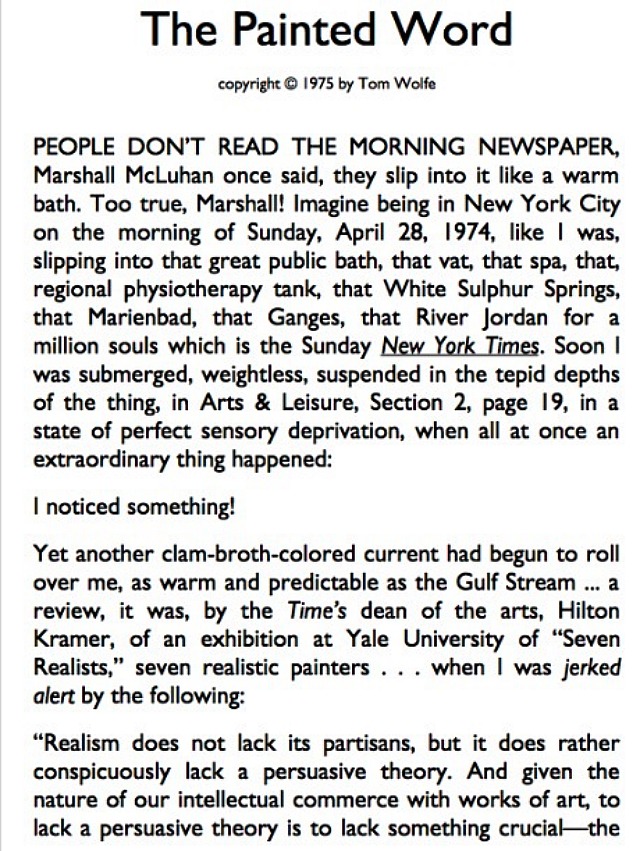
Wolfe’s was quite the tale, going all the way back to his New York Herald Tribune pieces that began in ’62 or thereabouts. A stream of titles pouring out of my head right now: “Tiny Mummies”, “The Painted Word”, “The Truest Sport:” Jousting With Sam and Charlie”, “The Me Decade and the Third Great Awakening”, “The Electric Kool-Aid Acid Test”, “Radical Chic & Mau-Mauing the Flak Catchers”, “The Kandy-Kolored Tangerine-Flake Streamline Baby”, “The Right Stuff”, “The Bonfire of the Vanities”, etc.

Here are three pages of HE material on Wolfe that I’ve generated over the last decade (page #1, page #2, page #3).

In lieu of whatever word spurt I might come up with down the road, Dwight Garner’s N.Y. Times appreciation (dated 5.15) is pretty good.

For those who’ve never read Wolfe or who only know him as the author of a celebrated book that resulted in the worst film Brian DePalma ever made, please start with these:

(a) Wolfe’s 1965 Junior Johnson Esquire story (“The Last American Hero Is Junior Johnson. Yes!”), which resulted in Lamont Johnson‘s < em>The Last American Hero (’73).

(b) “The Truest Sport: Jousting With Sam and Charlie” (October 1975), contained in “Mauve Gloves and Madmen, Clutter and Vine.”
Read more

Good As This Sort of Thing Gets

You can’t trust a trailer, but Chris McQuarrie‘s Mission: Impossible — Fallout (Paramount, 7.27) suddenly looks great because of this newbie. This may be the best-edited, put-the-hook-in trailer for an M:I film that I’ve ever seen, and we’re going back over 20 years now. This is exactly how you cut these things together — propulsive forward-motion action, a dab or two of character, plot complexity, a little dash of humor.

And I love Tom Cruise‘s increasingly weathered, faintly puffy face — a guy who used to be pretty but is losing that glow as time marches on, and this diminishment gives him all kinds of soul and gravitas.

Cruise, Rebecca Ferguson, Simon Pegg, Ving Rhames, Michelle Monaghan, Alec Baldwin, Sean Harris, Henry Cavill and Wes Bentley.

Beware of Late ’60s “Curtain” Hair

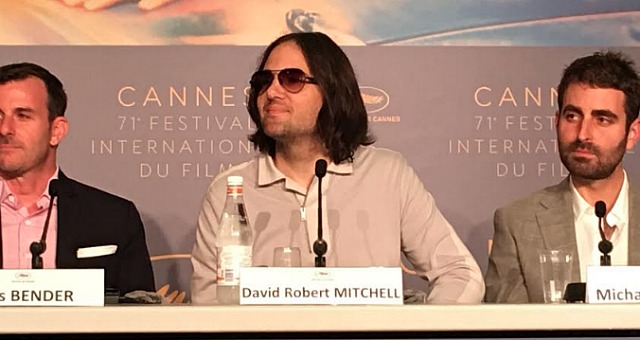
Earlier today I said “uh-oh” when I caught sight of David Robert Mitchell during a photo call before this morning’s Cannes Film Festival press conference for Under the Silver Lake. It was the middle-part hippie hair (i.e., Prince Valiant without the bangs) that gave me pause.

Any 2018 movie director wearing the same hairstyle that John Lennon had during the recording of “The White Album” or which Donald Sutherland wore during the filming of Paul Mazursky‘s Alex in Wonderland (’70) is basically saying “I’m off on my own trajectory…I’m following my muse, going with my process…I am who I am, and this is where I’m at, pretentious as this might seem.”

To me this indicates an attitude of undisciplined indulgence, which is what Under The Silver Lake is more or less about.

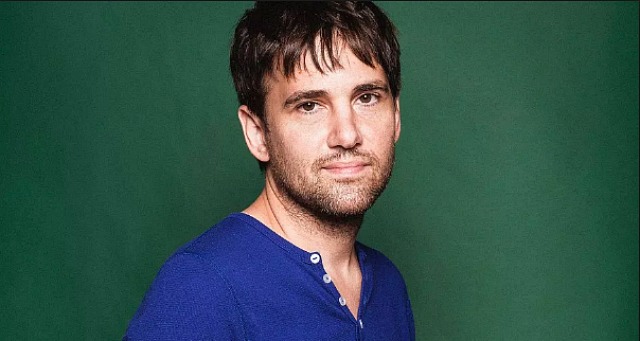
Mitchell’s hair during the making and promotion of It Follows (’14) was much more reasonable-looking — the hair style of an unpretentious, down-to-business guy who’s just looking to get the job done.


Under The Silver Lake director David Robert Mitchell during this morning’s press conference.

Michell during promotion of It Follows.

Keeping Tabs

Earlier today a friend passed along buzz about Nadine Labaki’s Capernaum, which will screen in Cannes tomorrow and Friday, allegedly being a hot Palme d’Or contender.

A 5.16 Screen Daily story by Melanie Goodfellow mentions that Sony Pictures Classics “has acquired North American and Latin American rights and is also planning an awards-qualifying release in December.”

Shot in Lebanon and “inspired by Labaki’s own research into child neglect,” drama focuses on a 12-year-old boy “with a miserable life who decides to sue his parents for bringing him into the world,” the story reports. Capernaum‘s Wiki page says it runs 120 minutes.

Mitchell’s Wandering Fartscape

I’m sorry but David Robert Mitchell‘s Under The Silver Lake (A24, 6.22), which I saw early this morning, is mostly a floundering, incoherent mess. Yeah, I know — Mitchell wanted it to feel this way, right? Ironically, I mean. Confusion and mental haziness were part of the impressionistic thrust.

It’s pretty much a textbook example of what happens when a gifted, financially successful director without much on his mind at the time…this is what happens when such a fellow comes to believe that he’s a version of Federico Fellini in the wake of La Dolce Vita or 8 1/2 and thereby obtains the funds to make whatever the hell he wants, and so he decides to create…uhm, well let’s try our hand at an impressionistic fantasia dreamtrip about L.A. hipster weirdness and…you know, dreamy fantasy women with nice breasts and impressionistic effluvia and whatever-the-fuck-else.

Two hours and 15 minutes of infuriating slacker nothingness…everyone’s vaguely confused, nobody really knows anything, all kinds of clues and hints about seemingly impenetrable conspiracies involving general L.A. space-case culture, bodies of dead dogs, cults, riddles and obsessions of the super-rich.

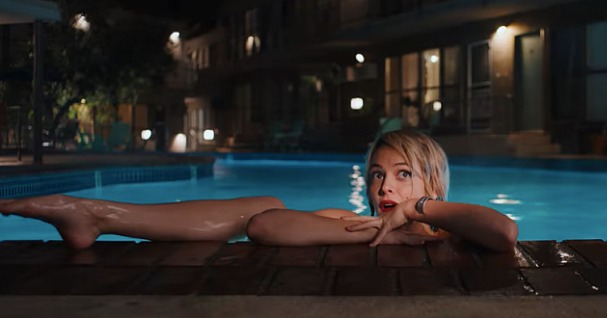
It’s basically about Andrew Garfield absolutely refusing to deal with paying his overdue rent, and neighbor Riley Keough, whom he tries to find throughout the film after she disappears early on, doing a late-career Marilyn Monroe with maybe a touch of Gloria Grahame in In A Lonely Place.

Under The Silver Lake is Mulholland Drive meets Fellini Satyricon meets Inherent Vice meets The Big Lebowski, except Lebowski, bleary-eyed stoner comedy that it was, was far more logical and witty and tied together, and with an actual through-line you could more or less follow.

I felt the same kind of where-the-fuck-is-this-movie-going?, wandering-fartscape confusion that I got from Paul Thomas Anderson‘s adaptation of Thomas Pynchon‘s novel of the late ’60s.

During the press conference Mitchell described Silver Lake as a “fever dream.” He said he wrote it fairly quickly, and that it began with his talking about his wife about “what’s really going on in those swanky-looking houses up in the L.A. hills?”

Read more