Time To Hustle Up Some “Quiet Place” Awards Buzz

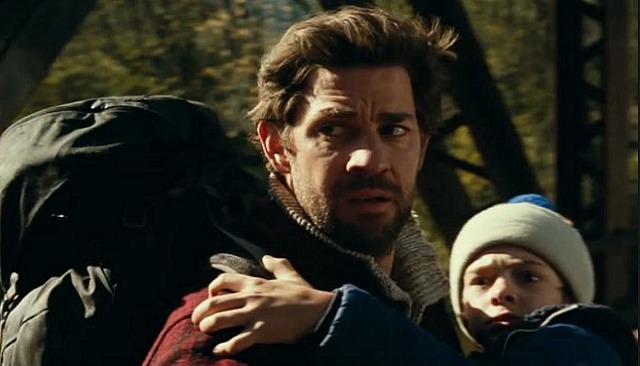
The folks at IDPR aren’t letting grass grow under their feet as far as John Krasinki‘s A Quiet Place is concerned. A day or two ago an assortment of journos and columnists received a special Quiet Place package from the high-powered publicity firm. It contained a DVD of Krasinski’s film along with a letter that reads, according to THR‘s Scott Feinberg, “As we enter the second half of the year and you begin to work on your awards coverage, we wanted to remind you…”

In the same way that Universal got the jump by inviting journos 13 months ago to an FYC “garden party” on behalf of Jordan Peele‘s Get Out, IDPR is looking to ignite Best Picture talk for Krasinski’s high-end horror flick. And why not? It’s only July, and A Quiet Place is almost a sure thing. The little man in my chest (a close relation of HE’s fabled insect antennae) is 80% convinced of this.
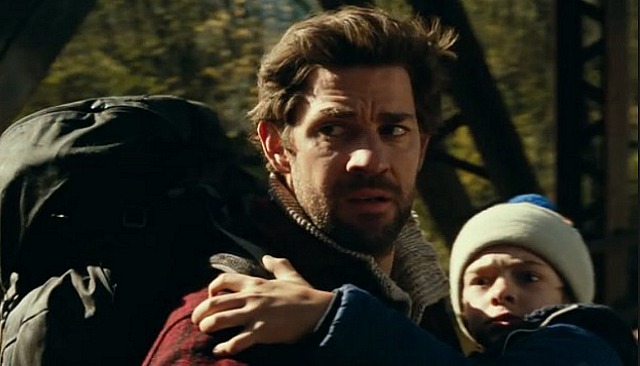
In the old days (i.e., three or four years ago) Academy voters wouldn’t have considered a well-made “elevated” horror film as a possible Best Picture contender. But things have changed. The New Academy Kidz (i.e., the younger, proportionately female, multicultural types who were invited to join AMPAS to counter #OscarsSoWhite) are totally down with nominating genre films, and so Get Out, a racial-minded Stepford Wives, became a Best Picture nominee. Hell, the Best Picture Oscar was won by The Creature From The Love Lagoon. So A Quiet Place shouldn’t have any trouble.

Don’t forget that Quiet made $187 million domestic and nearly $330 million worldwide.

For what it’s worth, I called A Quiet Place “an exceptional, top–tier horror–thriller…it has some logic problems but the oppressive silence element is brilliant and in fact riveting. Best monster-stalker flick in years.”

I added that having a baby in such a situation is a suicide move, of course. “In a world of alien domination and global decimation, what is the ONE THING ABOVE ALL that a heterosexual couple DOESN’T want to do?,” I asked. “In a world in which the slightest sound will trigger instant savage death, what is the ONE THING that a heterosexual couple must NEVER, EVER DO, no matter what? That’s right — they don’t want to get pregnant. Because there’s no keeping babies quiet, and so the aliens will immediately pounce and kill the infant within hours of its birth along with mom, dad and everyone else.”
Read more

Pro-Hitchcock Pushback

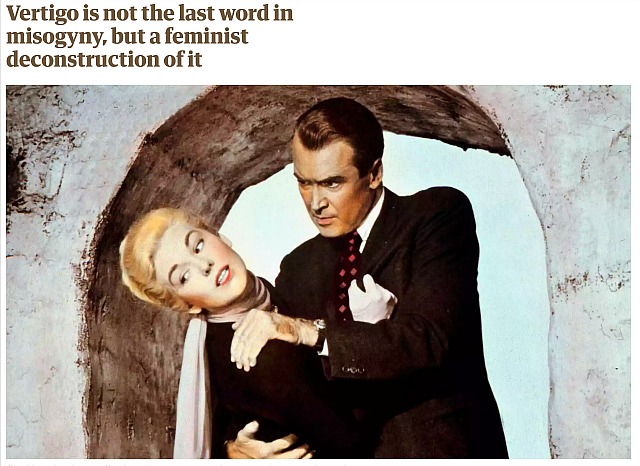
In a 6.28 Guardian article, Anne Billson seemed to be responding to David Thomson’s 6.21 London Review of Books essay about Alfred Hitchcock‘s Vertigo (“Vertigo After Weinstein“), which was somewhat disapproving.

Billson doesn’t name Thomson, but he’s the only major critic who has recently questioned whether Hitchcock’s 1958 masterpiece is an acceptable fit in the #MeToo era. Thomson basically said that given Hitchcock’s creepy attitudes toward women on-screen (and his behavior toward Tippi Hedren in the early ’60s) he doubts Vertigo will be #1 again when Sight & Sound critics vote in 2022.

The crux of Billson’s argument is that Hitchcock created many strong and perceptive female characters, and that many of his male characters are weak and vacillating. “For a so-called misogynist, his films feature a lot of intrepid heroines,” Billson writes. “Even when the women are nominally just love interests, they are unusually plucky and quick-witted.” An accurate observation.

The subhead of Billson’s piece: “While some critics see the film, released 60 years ago, as proof of Hitchcock’s sexist creepiness, a closer look reveals that strong women and weak men were often at the heart of his work.”

“If, in some quarters, Hitchcock and his films are still considered the last word in misogynistic creepiness, Vertigo is exhibit No 1,” Billson states. “‘Look how strong and stable the male characters are,’ says one critic (I’m paraphrasing but not by much), while describing the female characters as simultaneously ‘unhinged, duplicitous and submissive puppets‘ — which would be quite a feat if it were true.”

I haven’t found that “puppets” quote in Thomson’s piece, but maybe I skimmed too quickly.

In fact, a good portion of her article recounts charges of perversity and misogyny that have been thrown at Hitchcock. She seems to be saying “not so fast” but the general impression I got was that she sees Hitchcock and his creations as complex and conflicted.

Let Grief Be A Falling Leaf

Hunter Lurie, 27 year-old son of director Rod Lurie, passed early yesterday morning in Michigan. The cause was cardiac arrest. Rod announced the sad news this morning on Facebook. As a former journalistic colleague of Rod’s as well as a longtime friend (we go back at least 27 or 28 years) and a father of two sons who were born right before Hunter, this hits hard. I mainly knew Hunter from his Twitter feed. He was a serious movie Catholic; he knew his stuff backwards and forwards. “Almost everybody who knew Hunter will tell you he made them feel smart,” Rod has written. “He made them feel good about themselves…made them feel respected and dignified…always made you feel better after you spent time with him than before.” Hugs and condolences to Rod and his ex, Gretchen.

Read more

I Wasn’t Dying To See It But…

I’m wondering why Fernando Leon de Aranoa‘s Loving Pablo, the Javier Bardem-Penelope Cruz film, never opened stateside. Not even as a streaming title….nothing. Yes, it got lousy reviews — 33% Rotten Tomatoes, 44% Metacritic. And yes, many of us feel Pablo-ed out (Narcos, Medellin, Escobar: Paradise Lost). It’s playing in various European territories as we speak. Update: Loving Pablo is allegedly available on demand through Universal Pictures Home Entertainment (uphe.com). Except UPHE’s partners are not the widely known Amazon, Netflix, Vudu or ITunes. Instead you need to watch it via the following:

Read more

All Cliffhangers, All The Time

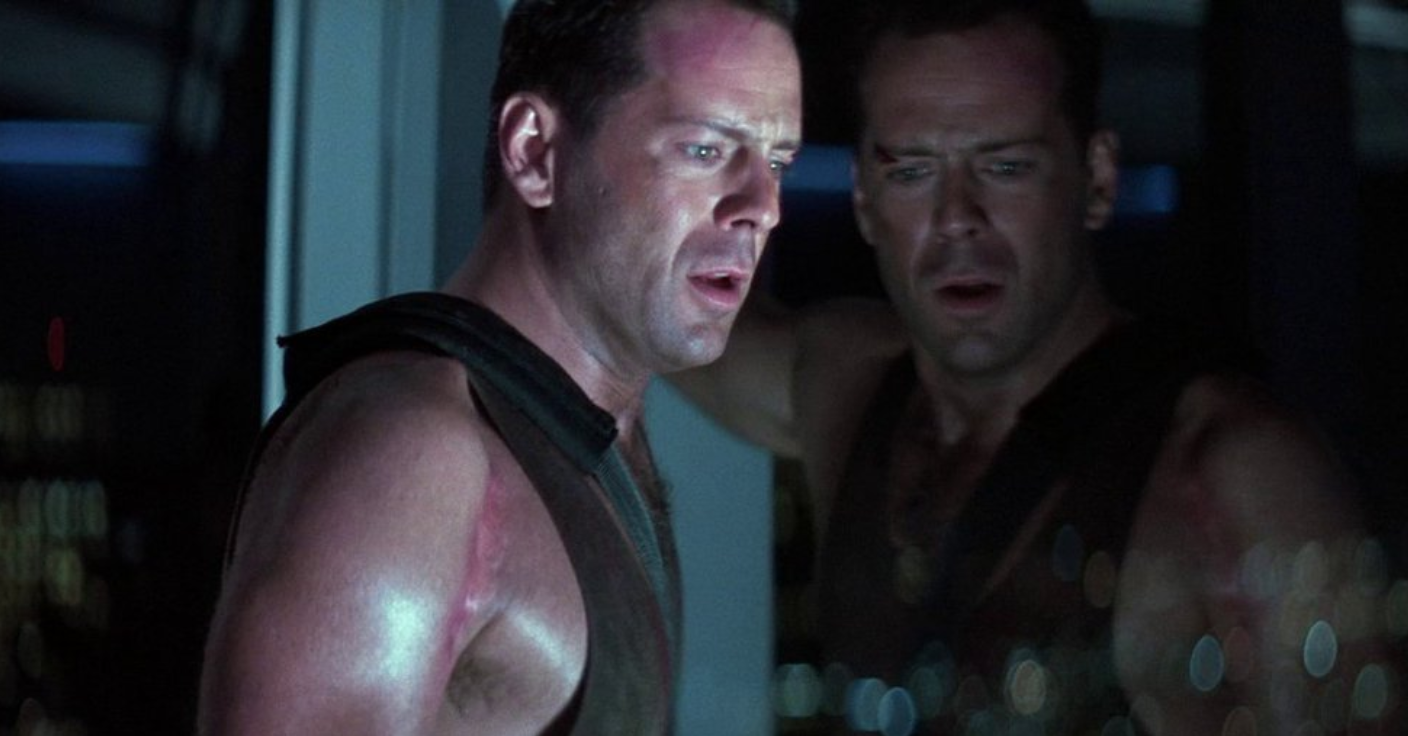
I trusted the action in John McTiernan‘s Die Hard (’88). I didn’t “believe” it, but it was disciplined and well-choreographed for the most part, and it mostly avoided the outrageous. Now it’s all outrage, all absurdity, all Coyote vs. Roadrunner. Cliffhanger moments in 21st Century action thrillers are always solved with a half-second to spare. The hero grabs the rope, shoots the guard dog, ducks out of danger or figures out the bomb-defusal code at the very last instant. Every damn time. Thrillers have been using this last-second-solve device for decades, of course, but nowadays it’s almost all on this level. 59 years ago the dangling Eva Marie Saint losing her footing at the very instant Cary Grant grabs her wrist (at the 57-second mark) was cool, but if 90% of the damn movie is about a woman losing her footing, the audience will eventually get irritated and then more irritated and then mad.

Read more

Dreamscape Levitation

Jeremiah Zagar‘s We, The Animals (The Orchard, 8.10) is an imaginative, altogether excellent film about an unusual ’80s boyhood in upstate New York. Indiewire‘s Eric Kohn called it “this year’s Moonlight.” The analogy is not Moonlight, I feel, but magical realism, Beasts of the Southern Wild, flying above the trees, animated drawings, Malick-like impressionism a la The Tree of Life, family conflict, dreamscapes. The gay factor is incidental, almost negligible. It’s the levitation, the book of drawings, the careful editing, the apartness, the challenges faced by a ‘different’ artistic kid…the Malick of it all. Pic is based on Justin Torres’ 2011 autobiographical novel.

Deductive Reasoning

Quinnipiac poll, 7.2: By a 63% to 31% margin American voters agree with the 1973 Roe v. Wade decision on abortion — men 61% to 32%, women 65% to 30%. Republicans disagree with Roe v. Wade 58% to 36%, but “every other listed party, gender, education, age and racial group agrees.”

Guess what’s going to happen to Roe v. Wade when Trump’s unannounced, arch-conservative Supreme Court nominee is confirmed and sworn in?

On one hand a strong majority of American voters (65% to 24%) would like to see the U.S. Supreme Court be a check on President Trump. Even a slight majority of Republicans (48% to 37%) are in favor of this. And yet 46% say the Senate should consider Trump’s nominee before the elections — a move that will all but eliminate any chance of the Supremes checking Trump and will probably wind up killing Roe v. Wade. 48% of American voters believe that the U.S. Senate shouldn’t vote on Trump’s nominee until after the November elections.

Repeating: Two-thirds of American voters support Roe v. Wade while 48% want the Supreme Court to act as a check on Trump, but nearly half (46%) believe that the Senate should confirm Trump’s right-wing nominee before November, which will nullify the Court’s ability to check his policies and set the stage for an overturning of Roe v. Wade. Brilliant!

“Boswell of the Night”

Last February the legendary columnist and author Cynthia Heimel died — here’s my obit. Six days ago Stephen Saban, Heimel’s nocturnal partner-in-crime and droll columnist for the Soho Weekly News and Details in the late ’70s and ’80s, died from pancreatic cancer. I don’t know what my deficiency is, but I only heard today.

Saban and Heimel were major Manhattan scenesters in that overlapping Jimmy Carter and Ronald Reagan era. They visited every hot Manhattan club, knew everyone, partied’ till the end. I knew and liked Stephen as far as it went; we were always trading notes in Manhattan screening rooms. He moved to Los Angeles sometime in the mid to late ’90s, but he wasn’t at all communicative when I reached out three or four years ago. I tried again after Heimel died…zip. Saban and Heimel were joined at the hip back in the day, but late in life they more or less dropped each other by mutual consent. People can be odd that way.


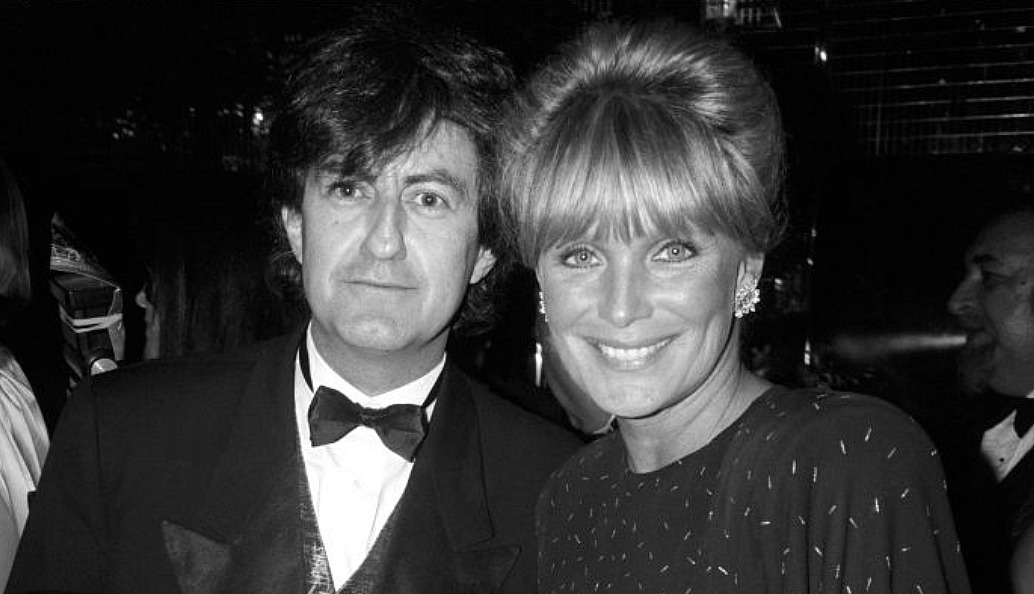
Details columnist Stephen Saban, Linda Evans in 1985.

Here’s a Saban tribute piece by Michael Musto, excerpted from his 1986 book “Downtown“:

Stephen Saban, one of the founder/editors of Details and its nightlife columnist as well as a former club doorman, was actually the first to give the downtown scene credibility. (Some say he created the scene so he could write about it.) In 1985, as Details, the monthly New Testament of downtown, grew from a free mailout to a newsstand magazine that reaches over 40,000 readers (grossing in the neighborhood of a million dollars that year), Saban started to reap the rewards of his dedication to 14th Street and below. He became recognized as ‘the Boswell of the night‘ by New York magazine and ‘the Noel Coward of the ‘80s’ by Newsweek. Publicists started returning his calls, though he didn’t always return theirs, and people started recognizing the ‘nobodies’ he insisted on writing about as nobodies worth knowing.

“Saban goes out every night of the week, only rarely awarding himself a night off, which means going to only one or two parties instead of the usual three to five. He’s one of the few predictable facets of New York nightlife — you know that at every major event, no matter what else happens, you’ll find him there, skulking around and observing with a crisp understatement. Saban doesn’t need to make a spectacle of himself; the spectacle is all around him, and his job is to report it, drawing the line only when he feels the information might interfere with his readers’ future fun. Sometimes Saban seems like Marcello Mastroianni in 8 1/2: besieged by swooning and pleading people cooing his name as he calmly tries to figure his next creative move.

Read more

“Little Women” Recap.

Greta Gerwig‘s decision to direct a period-piece adaptation of Louisa May Alcott‘s Little Women strikes me as less than fully exciting, mainly because it seems as if too many others have gone down this path.

There was a recent TV adaptation of Little Women — a poorly-reviewed miniseries that debuted last month on PBS, having begun on the BBC last December. A faithful historical costumer, set in Massachusetts and New York between 1868 and 1871.

There’s also a forthcoming present-day indie version with Lea Thompson, opening in late September.

Add to these the Gillian Armstrong, Mervyn LeRoy and George Cukor versions (released in ’94, ’49 and ’33 respectively) and you have a total of five Little Women adaptations.

Gerwig’s version, reportedly to he produced by Sony/Columbia and costarring Emma Stone, Meryl Streep, Saoirse Ronan, Florence Pugh and Timothee Chalamet, will be the third recent effort and the sixth overall.

I’d be lying if I said the Gerwig project didn’t deflate me to some extent. A recent draft of her script, dated May 2018, is pure Alcott and pure period.

On one hand I’m presuming that the Lady Bird helmer, at the peak of her powers right now, will do well with the material. Her Little Women will naturally get much more attention and will easily dominate the other three in terms of likely critical respect, theatrical bookings, promotional backing, etc.

Early yesterday I had been given bad info that her version would be contemporary and set in Sacramento a la Lady Bird — another ensemble, a less singular story, broader scope. I liked that concept but it was quickly debunked.

A producer friend said this morning, “Why is Greta making a third version of Little Women on top of the other two?” A couple of HE commenters said the same thing.