Ryan O’Neal’s Five Untouchable Years

I prefer to sidestep the biological reality of Ryan O’Neal being 78, and to think of him as the guy he was in the early to mid ’70s, when things were as good as they would ever get for him.

I had two minor run-ins with O’Neal in the ’80s. The first was after an evening screening of the re-issued Rear Window** at West L.A.’s Picwood theatre (corner of Pico and Westwood) in late ’83. As the crowd spilled onto Pico O’Neal and his date (probably Farrah Fawcett) were walking right behind me, and I heard O’Neal say “that was sooo good!” Being a huge Alfred Hitchcock fan, this sparked a feeling of kinship.

Four years later I was a Cannon publicity guy and charged with writing the press kit for Norman Mailer‘s Tough Guys Don’t Dance, which didn’t turn out so well. I for one liked Mailer’s perverse sense of humor.

I did an hour-long phoner with O’Neal, and my opening remark was that he was becoming a really interesting actor now that he was in his mid 40s with creased features. He was too good looking when younger, I meant, and so his being 46 added character and gravitas. O’Neal was skeptical of my assessment but went along — what the hell.

In fact O’Neal’s career had been declining for a good five or six years at that point. He knew it, I knew it — we were doing a press-kit-interview dance because there was nothing else to say or do.

O’Neal’s last hit film had been Howard Zeiff and Gail Parent‘s The Main Event (’79), which critics panned but was popular with audiences. He had starred in four mezzo-mezzos before that — Peter Bogdanovich‘s Nickelodeon (’76), Richard Attenbrough‘s A Bridge Too Far (’77), Walter Hill‘s The Driver (’78) and John Korty‘s Oliver’s Story.

Consider this HE anecdote about some 41-year-old graffiti on an Oliver’s Story poster.

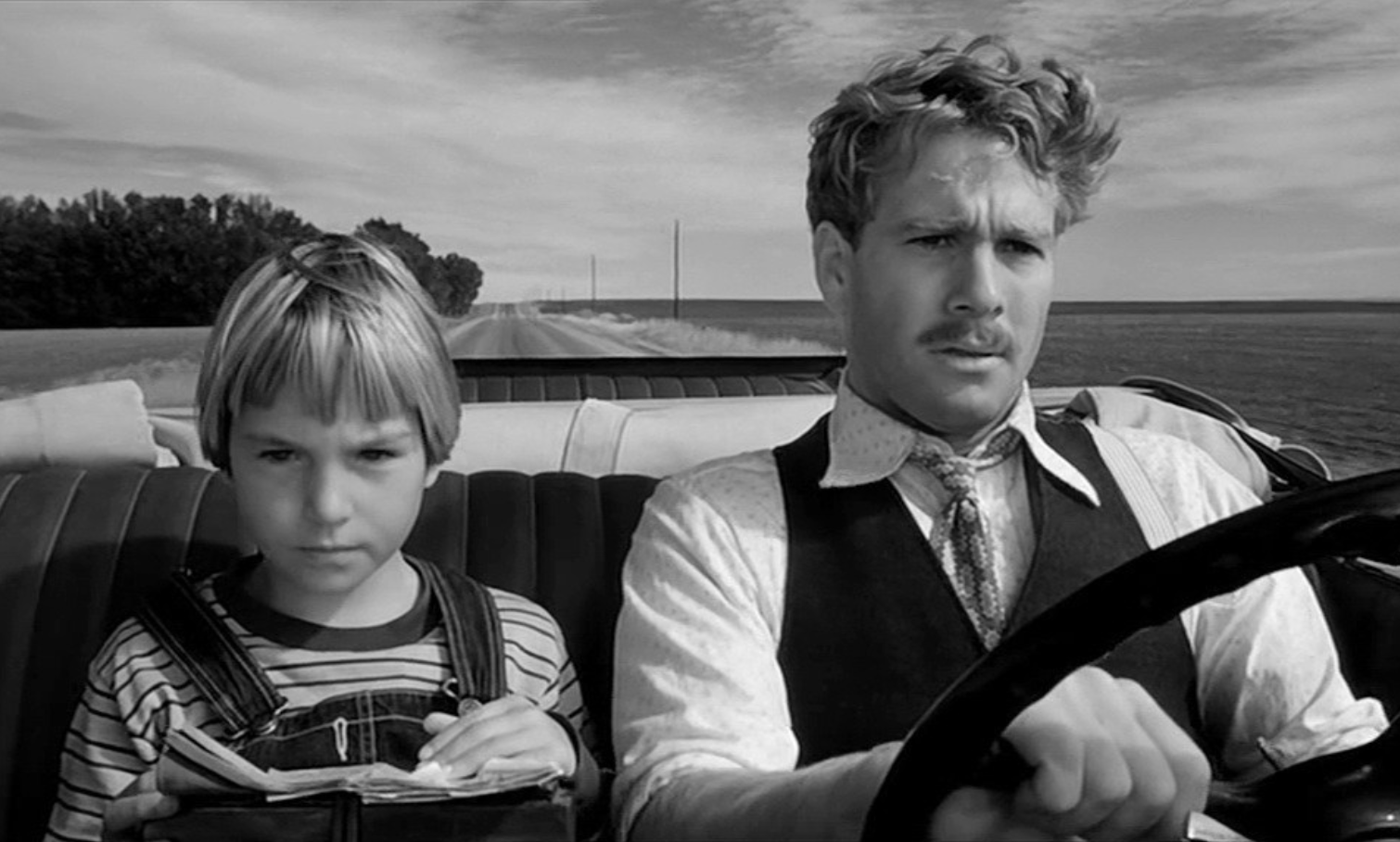
O’Neal’s career peak lasted for five years (’70 to ’75) and was fortified by a mere four films — Arthur Hiller‘s Love Story (’70), Bogdanovich’s What’s Up Doc? (’72) and Paper Moon (’73), and Stanley Kubrick‘s Barry Lyndon (’75). (The Wild Rovers and The Thief Who Came to Dinner, which O’Neal also made in the early ’70s, were regarded as mostly negligible and therefore didn’t count.)

O’Neal has said for decades that his career never really recovered from Barry Lyndon — Kubrick had changed the film entirely in editing, and had made him look like a clueless and opportunistic Shallow Hal of the 18th Century. Plus the film had lost money.

Read more

The “Not Really” Factor

Journo pally to HE: How come you didn’t post this? Bill Maher is saying exactly what I’ve been saying for months.
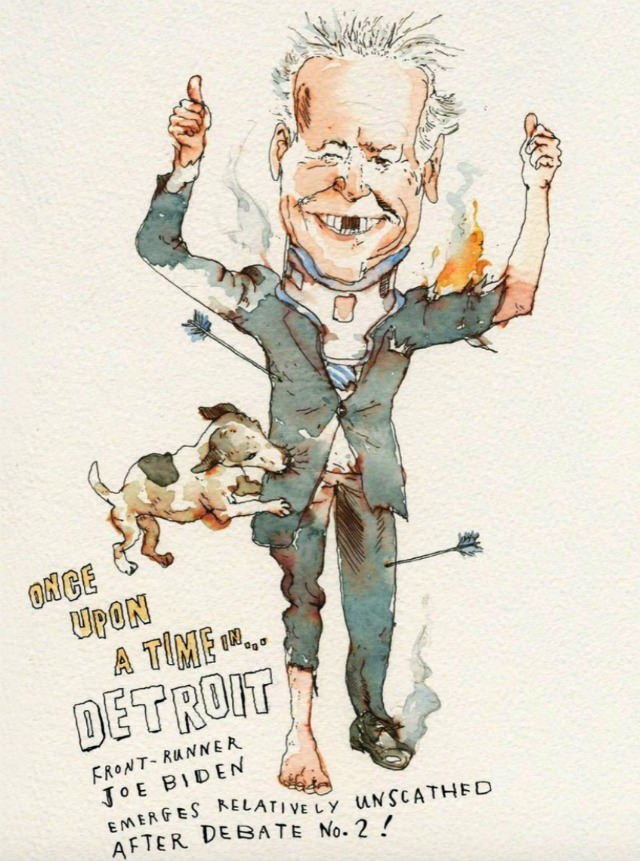
HE to journo pally: Yes, you’re right. Sadly, lamentably, you’re both right. At 3:47 Maher says, “Do I want Biden to be president? Not really, but Biden is the only Democrat who beats Trump in Ohio. He’s like non-dairy creamer. Nobody loves it, but in a jam it gets the job done.” I find the “not really” part of that statement incredibly depressing.
Journo pally to HE: My fear is that [Elizabeth] Warren might win the nomination. If that happens all bets are off. We’re fucked.
HE to journo pally: I agree — very scared of Warren winning the nomination. As much as I admire and love her, the prospect terrifies me. Mayor Pete, Mayor Pete, Mayor Pete.
Journo pally to HE: He’s great but not for 2020. A Biden-Buttigieg ticket would be ideal. Pete could basically be the de facto president like Cheney was. But women would probably freak if Biden picks him for vp.
HE to journo pally: They’d freak because picking Pete would mean, in their heads, an outright rejection of the feminine factor on a national political stage.
Journo pally to HE: Right. Already there’s this bizarre anti-Pete thing going around Twitter because “waaahhh, no woman got that kind of attention.”
HE to journo pally: My personal favorites (in this order): Tulsi, Marianne, Kamala, Elizabeth. I don’t much care for Gillibrand (although she’s okay) and forget Klobuchar.
Journo pally to HE: The only one I even remotely like is Klobuchar along with Warren. I have a new appreciation for Tulsi for going after Kamala, whom I can’t stand. But she’s cray cray.
HE to journo pally: Disagree completely.

Believe It

Read more

Trump Hate Fumes Sired El Paso Massacre

“In general, I support the Christchurch shooter and his manifesto. This attack is a response to the Hispanic invasion of Texas. They are the instigators, not me. I am simply defending my country from cultural and ethnic replacement brought on by an invasion.

“Hispanics will take control of the local and state government of my beloved Texas, changing policy to better suit their needs. The heavy Hispanic population in Texas will make us a Democrat stronghold,” [leading to the United States] “rotting from the inside out.” — from racist manifesto by Patrick Crusius, the 21-year-old El Paso shooter who allegedly killed at least 20 people earlier today.

1:30 am update: What was the motive behind tonight’s mass shooting at Ned Peppers bar in Dayton, Ohio, which has resulted in nine dead? (Ten including the shooter.). The Dayton Daily News has reported that “a person who was denied entry to the bar opened fire.”

Read more

“Nightingale” Drop-Out Moment

Jennifer Kent‘s The Nightingale opened yesterday. It has a 79% Rotten Tomatoes rating, but that number should be in the 90s. It’s a difficult sit but a very worthy and highly respectable film. The only problem is that it drops the ball around 15 or 20 minutes before the ending. Reactions?

Posted on 6.16.19: The controversial highlight of the just-concluded Sydney Film Festival was the adverse reaction to Jennifer Kent‘s The Nightingale (IFC Films, 8.2) during a 6.9 screening at the Ritz Cinema.

Except I saw The Nightingale three or four days ago and didn’t think it was quite as horrific as Sydney festivalgoers did. Rough stuff, yes, but delivered with a kind of stylistic restraint.

Set in 1825 Tasmania, the film is a rough-round-the-edges revenge drama in which Clare (Aisling Franciosi), a young Irish convict, is determined to pursue a cruel British officer (Sam Claflin) and three underlings after they rape her and then murder her husband and baby. Clare hires Billy (Baykali Ganambarr), an Aboriginal tracker, to guide her through the island’s jungle-like wilderness on the trail of the killers.

The audience complaints were about two scenes in which Clare is savagely raped, the second time in gang fashion. Her infant child is also killed in the latter scene.

Give all this negative build-up, I was surprised by how much I admired and respected The Nightingale, the awful cruelty and brutality notwithstanding. Kent is a very scrupulous and well-focused director, and she’s simply incapable of delivering over-the-top violence for its own sake. Start to finish The Nightingale feels well-honed and exacting. It depicts terrible things, but it’s not a wallow. It conveys a sense of justice and appropriate balance.

But there’s also a point in The Nightingale in which which everything changes and it all kind of falls apart — the story tension vanishes. It happens somewhere around the 75% or 80% mark when Clare loses her nerve in her quest for revenge. From that point on it doesn’t work. Because the film has delivered what William Goldman used to call a “drop-out” moment -— i.e., when something happens that just makes you collapse inside, that makes you surrender interest and faith in the ride that you’re on. You might stay in your seat and watch the film to the end, but you’ve essentially “left” the theatre. The movie had you and then lost you, and it’s not your fault.

Read more

Pennebaker Legend

Stop watching the LipTV interview between D.A. Pennebaker and Ondi Timoner at the 5:08 mark. Because that’s when it shifts into footage from Pennebaker’s Don’t Look Back (’67), except some rocket scientist forgot to adjust the aspect ratio so it looks all horizontally taffy-pulled. Brilliant!

Pennebaker began filming docs in 1953, and he kept working right until the end. (Or close to it.) Everyone mentions Don’t Look Back (’67), Monterey Pop (’68), Town Bloody Hall (’79) and The War Room (’93) as Pennebaker’s career highlights, but I would argue that Primary (’60), a Pennebaker-edited doc about the 1960 Wisconsin primary election between John F. Kennedy and Hubert Humphrey, was the biggest groundbreaker of all.

Wiki excerpt: “Produced by Robert Drew, shot by Richard Leacock and Albert Maysles and edited by D. A. Pennebaker, the film was a breakthrough in documentary film style. Most importantly, through the use of mobile cameras and lighter sound equipment, the filmmakers were able to follow the candidates as they wound their way through cheering crowds, cram with them into crowded hotel rooms, and to hover around their faces as they awaited polling results. This resulted in a greater intimacy than was possible with the older, more classical techniques of documentary filmmaking; and it established what has since become the standard style of video reporting.”

What’s With The Copper Brown Suit?

Posted on 8.2 by Daily Beast‘s Barbie Latza Nadeau: “At times, it wasn’t clear if Kevin Spacey was talking about the chiseled nude bronze alongside him, the poem he was reading, or [about] himself.

“’The more you’re wounded the greater you are,’ he read with intent. ‘And the more empty you are.’

“The 60-year-old Spacey was wearing a tobacco-colored suit on a painfully humid day in front of the Greek bronze ‘Boxer at Rest’ statue at the Palazzo Massimo alle Terme — the National Roman Museum — in central Rome, where the air conditioning was broken.

“He was reading Italian poet Gabriele Tinti‘s poem ‘The Boxer’, about a tired and broken fighter who has been punched and beaten, and is left bleeding by the ringside.”

Driven

Producer friend: “Adam Driver joined the Marines after 9/11 and served three years before breaking his sternum in a dirt bike accident and being discharged.

”He got into Julliard after being rejected on his first try, and graduated after four years. He was 26 before he even started to make a living at acting, mostly in small NYC theatres for many years. So at age 34, he’s been acting professionally for only 8 years.

“And he’s worked for Jarmusch, Soderbergh, Scorsese, Eastwood, the Coens, Spielberg, Baumbach, Gilliam and Spike Lee. He’s also been nominated for an Oscar, a Tony and three Emmys. And you think he works too much?”

HE to producer friend: “No, but he’s in everything.”

Producer friend: “Good for him. He’s committed. What’s wrong with that? It’s not like he picks bad projects. And Jarmusch and Spike and Leos Carax all approached him.

“Watch an interview with him. When asked by Colbert if he was livin’ the dream, he said ‘oh no! I’m just trying to hang on. And understand what’s happening.’

“He also talks about going to ComicCon for the first time. When his hosts asked what he wanted to do in the morning he said ‘Oh, I don’t know. Get some coffee nearby. Then have a run.’ And they said ‘No! you can’t do that. You’ll get mobbed.’ It was the first time he realized that he’d lost his privacy. And he was horrified.

“He’ll get nominated for Marriage Story. And he’s five beats away from winning an Oscar. Mark my words.”

Vudu’s 4K “Chinatown”

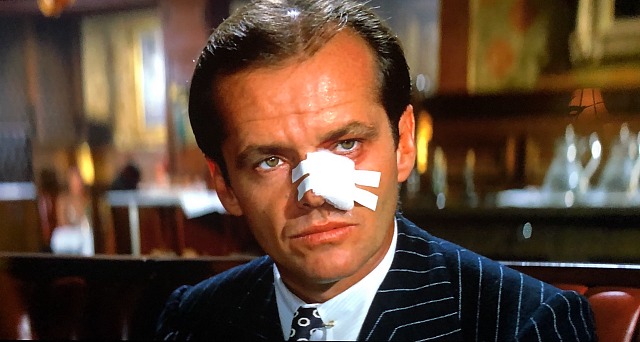
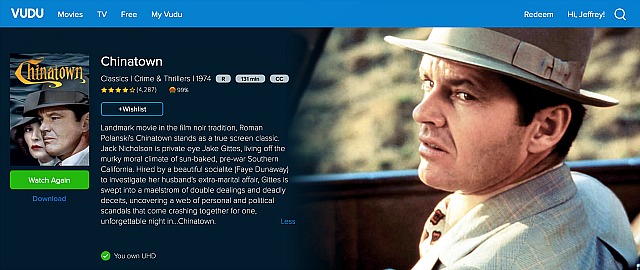
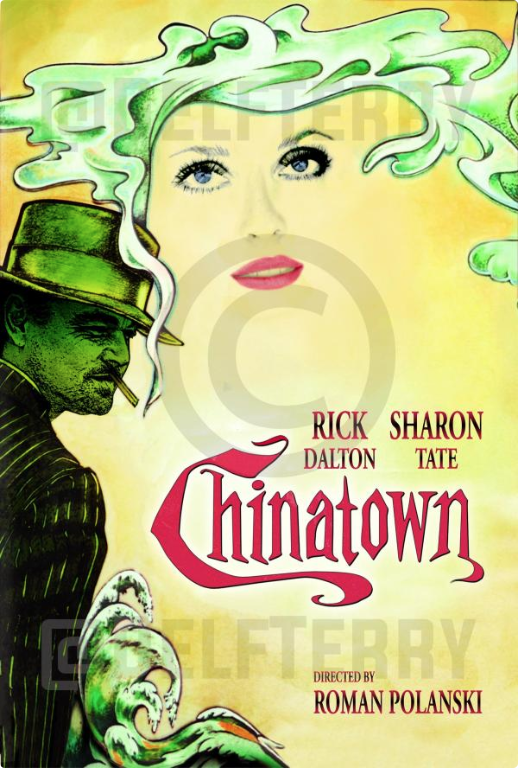
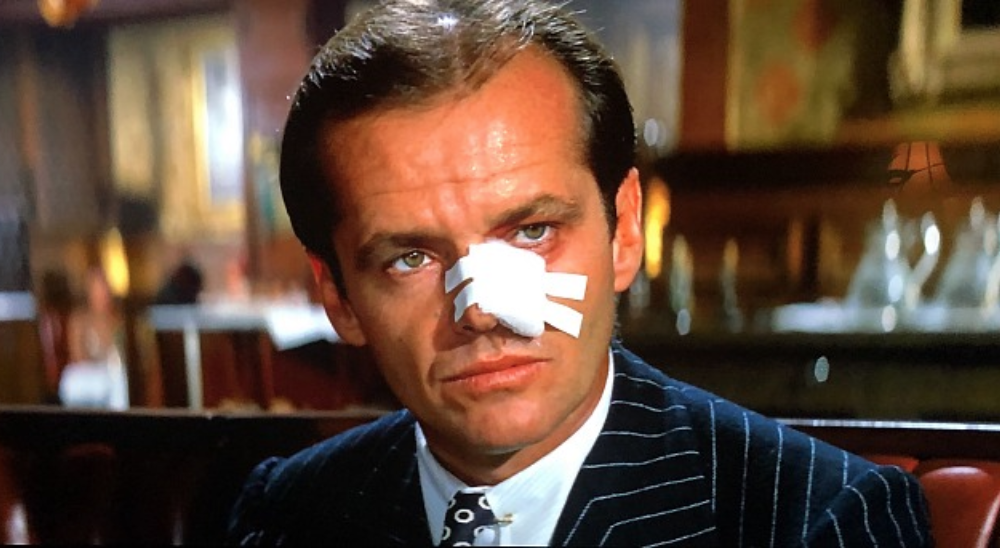
Last night I watched a 4K UHD version of Chinatown on Vudu. I could tell right away it’s not a fresh re-harvesting from the best celluloid elements. Jack Nicholson’s hair looks too inky at times. And the bandage on his nose looks too white, too bleachy.

But it’s quite beautiful for the most part. It certainly looks better than the most recent Chinatown Bluray. The sharpness, the textures, the stronger colors. But then I’m a plebe about this stuff.

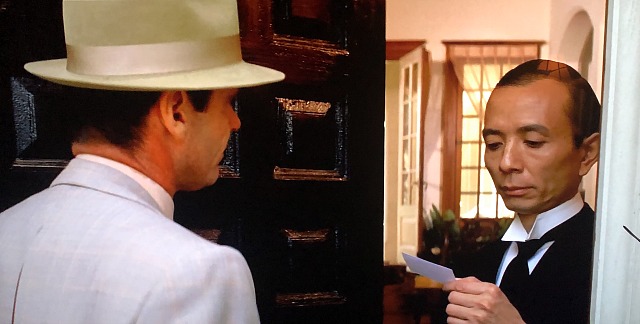
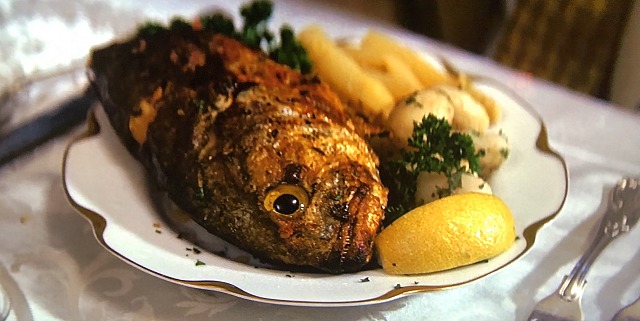
HE to restoration guy: “I’m presuming you’re not impressed. Because it’s probably just a tweaking of the last harvest. But maybe I’m wrong. Know anything about it?” I then sent him the below attached photos for samples.

Restoration guy to HE: “This is pretty bad. It’s all about data throughout. And this doesn’t seem to have it. I watched a 4K DCP Chinatown last Tuesday. It’s gorgeous. The studio did a terrific job, especially with color, which is warm. And it looked nothing like these images.”

HE to restoration guy: “Wait…you watched a 4K Chinatown DCP? It was shown to ticket buyers? Why did they create this? They must be intending to issue a 4K Bluray in 2024, to celebrate the 50th anniversary. Just like Sony’s intention to wait until 2022 to issue a 4K Lawrence of Arabia Bluray, even though Grover Crisp’s 8K scan was harvested…what, back in ‘15 or thereabouts?”

HE to restoration guy: “I’m nonetheless telling you that as much as you may disapprove of Vudu’s 4K version of Chinatown, it really does feel like an improvement over the 1080p Bluray. It delivers a bump effect…’wow, this looks better in some respects.’ True, the images look waxy and Jack’s dark hair looks inky. It looks superficially enhanced, yes, but it’s a nice cheap high.”

Read more

This Conversation

“You can’t scold people into voting, Many people who have not voted, as you just described, have ‘voted,’ however dysfunctionally, as an act of rebellion. Because they do not believe they are being offered an alternative to what is happening now. They feel that the system is deeply rigged. And that is why we have to create through a much more truthful conversation about how corrupt it is…[we have to create] a sense among people that there is a reason to try one more time, that is a reason to vote, Because this time can be different.” — Marianne Williamson on last night’s Real Time With Bill Maher.

Adam Driver Locomotive

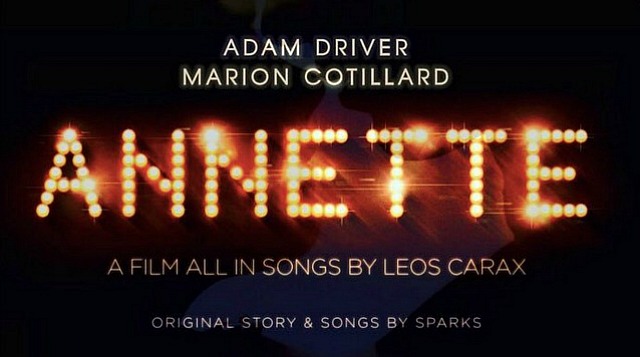
Let no one doubt that Leos Carax (whose birth name is Alex Christophe Dupont) is a mad genius. His latest film Annette, a musical of some sort, is filming in Antwerp, Belgium and Los Angeles.

Logline: “A stand-up comedian (Adam Driver) and his opera singer wife (Marion Cotillard) have a two-year-old daughter with a surprising gift.” Rooney Mara was cast as the opera singer but dropped out. Michelle Williams replaced Mara but “also dropped out after the project got stuck in development.” And then Cotillard stepped in.

Screenplay by the musical Mael brothers (Ron and Russell), otherwise known as Sparks, a musical duo launched 47 years ago. Amazon will distribute in the U.S.