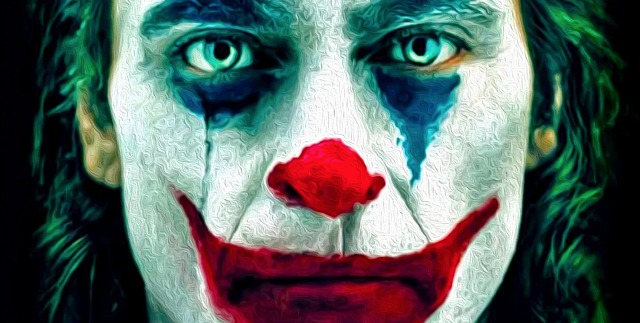
I don’t know how or why Warner Bros. got behind a film as nutso radical as Todd Phillips, Scott Silver and Joaquin Phoenix‘s Joker (10.4), but this is not corporate product. Make no mistake about the fact that this 122-minute film is propelled by misery, loneliness, alienation, despair, ennui, delusion and general social malevolence and madness. And it doesn’t back off from that.
I’m telling you right now that at least a portion of the Joe and Jane Popcorn crowd might have a problem with Joker. Because it’s not serving up the usual DC Comics oatmeal. At all. And to its credit. It’s an unsettling, challenging thing to sit through, but in a good way. This was my judgment, at least, and that of some guys I was speaking to at the after-party.
But I heard some other reactions on the way out of last night’s Chinese screening. “Some are going to like it, and some are not going to like it,” a woman journalist said. Another guy said negative reactions are going to dominate. (Which I doubt.) It was my post-screening judgment, if you wanna know, that many people didn’t even know what they’d just seen. Or didn’t care to know. Some were just saying “it’s fine…it’s going to make a lot of money,” blah blah. Well, yeah, but Joker is about a lot more than just that…c’mon.
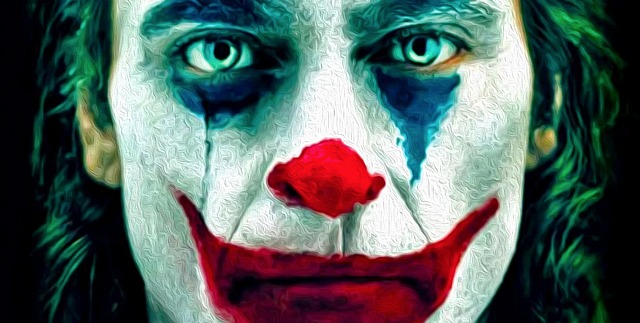
Joker is entirely about the sad, imaginary and not-so-imaginary saga of Arthur Fleck (Phoenix), a mentally ill guy who’s been abused and kicked around, who lives in a ratty urban hell hole circa 1981, who works as a street clown, who imagines that he has a nice girlfriend (Zazie Beetz) who lives in the building but on some level not really, who goes from bad to worse and then much worse, from meds to no meds, and who finally cracks, and then really cracks by killing some people and then (in his head but to some extent actually) ignites anarchy and revolution.
This is a startling serving of truly inflammatory nihilist cinema. It’s way out there. Brand-wise, Joker represents the launch of DC Black, a series of DC-based standalone films. Uh-huh, whatever. “A film for our times!” a journalist pally said last night.
How crazy-good is Phoenix? As good as this sort of thing gets. An obvious Best Actor nomination, and perhaps even a win. Maybe.
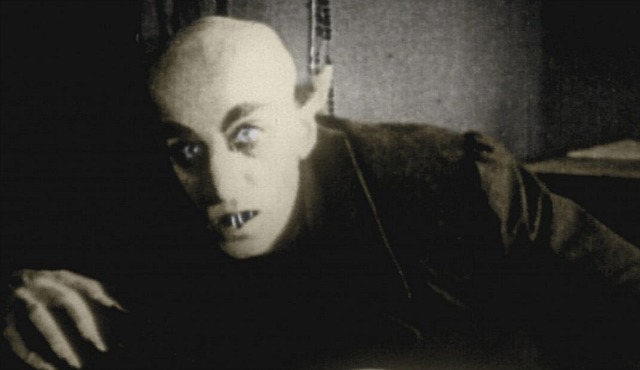
Honestly? I think Phoenix is half playing Arthur and half just wigging out on his own wavelength. I think he’s portraying Arthur in the same way that Max Schreck “played” the vampire Count Orlok in F.W. Murnau‘s Nosferatu. Or more precisely the way Willem Dafoe portrayed Schreck portraying Orlok in Shadow of the Vampire.
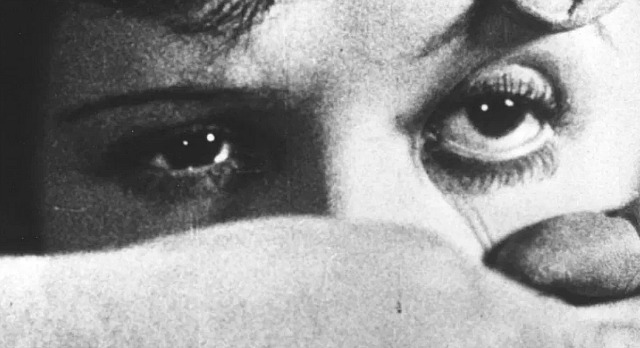
Last night I called Joker a deranged art film in the tradition of Un Chien Andalou or L’Age d’Or — like some perverse creation from a latter-day Bunuel-Dali, except with stronger doses of hate and rage and all-around dystopian chaos. The world minus any semblance of civility or love or order…it’s about despising and hating the odious one-percenters…the rank and odious social order of the snooty swells. Fuck ’em!
Joker is a literal manifestation of insanity. Which is to say it delivers a searing portrait of a loose-screw type without judging or pulling back into some conventional corner in Act Three. Joker commits to Arthur — he’s the only guy you have to relate to, and I have to admit that when Arthur snaps on the subway after being taunted and beaten I wasn’t feeling all that horrified. On a certain level I was feeling a Death Wish-like surge of excitement and approval. But Joker doesn’t end there. Once the downward spiral begins, there’s no stopping it.
I don’t know where Arthur Fleck’s deranged fantasies begin or end, but this is a film about the demon seed…a film not just about crazy Arthur but about mass rage, mass madness. At the end of the day it’s not so much about Arthur going mad but the whole city, the whole world on a rampage. A good portion of which, I realize and accept, is happening inside Arthur’s grieving and miserable head. But not completely.
Please understand that Arthur’s revolution isn’t all imaginary, and that after a while it’s as real as anything else. Damn the odious social order! Everyone in authority is hateful and vile and deserving of death and destruction or a beat-down…at some point Arthur’s fantasy aspect goes out the window along with his meds. Pure anarchy.
Read more