Clarence Who?

I know all the great 1930s directors pretty well, or at least I thought I did. But I drew a blank this morning when I came upon a mention of Gwenda Young‘s “Clarence Brown: Hollywood’s Forgotten Master” (University Press of Kentucky, 10.17.18).

I certainly know Brown’s landmark ’30s and ’40s films (Anna Christie, A Free Soul, Ah, Wilderness, Anna Karenina, Wife vs. Secretary, Idiot’s Delight, The Rains Came, Edison, the Man, The Human Comedy, National Velvet, The Yearling) but for some reason his name has never popped through.

Brown was one of those directors who flourished in their day but whose visual style was exceedingly average or “house”, certainly by current standards. I kind of have Brown in lumped in with Mervyn LeRoy, another director who was highly regarded and worked on prestige projects in the ’30s, ’40s, ’50s and early ’60s, but who gets no respect from anyone today.

One problem is that the name “Clarence Brown” doesn’t have the right sound. Victor Fleming, Michael Curtiz, Howard Hawks and even John Ford sounded like guys who played golf in the best country clubs. Clarence Brown sounds like the name of a wheat farmer or an auto mechanic or grocery store owner. In this sense Brown is a kindred spirit of Chad Stahelski, director of the three John Wick movies. Stahelski is the last name of an electrician, a surfer, a pool-maintenance guy, a hot-dog chef at Pinks, a garbage man (excuse me, a sanitation engineer) or a guy whose grandfather worked in the same New Orleans factory as Stanley Kowalski.

Like They Never Existed

I’ve riffed before about collective forgetting of movie stars. Even those who were huge during their time…phffft. Four and a half years ago I lamented how Montgomery Clift, once regarded alongside Marlon Brando and James Dean as one of the most respected and influential ’50s movie stars, has all but disappeared in the minds of younger GenXers and Millennials. Don’t even talk about Generation Z.

Recently Cesar A. Hidalgo, director of the Collective Learning group at the MIT Media Lab and a principal developer of Pantheon, a software program that quantifies, analyzes and measures global culture, stated that almost every ostensibly famous person vaporizes after 30 years, and that some start to fade after only five years. It’s a brutal process.

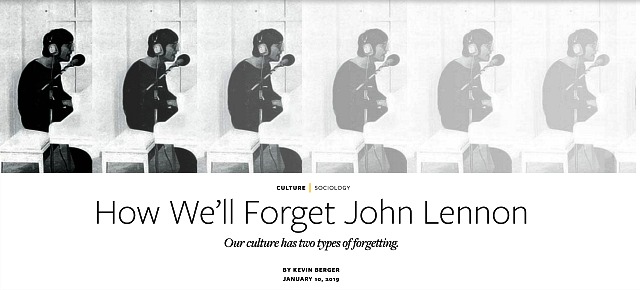
The opening paragraph of a 1.10.19 Nautilus article titled “How We’ll Forget John Lennon“: “A few years ago a student walked into Hidalgo’s office at MIT. He was listening to music and asked the student if she recognized the song. She wasn’t sure. ‘Is it Coldplay?’ she asked. It was ‘Imagine’ by John Lennon.”

For 16 years Lennon was iconic, and then, 38 years and 38 days ago, he was murdered. Right now he might as well be cigarette smoke as far as many most under-35s are concerned.

Name some hot-tamale movie actors who were happening 10 or 20 years ago but are now all but forgotten. I hate to be cruel about it, but Josh Hartnett is on that list. Hartnett on fleeting superstardom: “I know what it’s like to be in that whole world. I was up there for a couple of years, and it was uncomfortable. I think trying to stay at the top is a shortcut to unhappiness.”

Are You Kidding Me?

If this trailer means anything at all, Steven Soderbergh‘s High Flying Bird (Netflix, 2.8) is going to be aces. Basketball with an emphasis on managing, strategizing, opportunity knocks…right? I’ll be in the audience for the first Slamdance screening. André Holland, Melvin Gregg, Zazie Beetz, Sonja Sohn, Zachary Quinto, Kyle MacLachlan, Bill Duke. The script by Tarell Alvin McCraney, the Oscar-winning co-writer (i.e., “story by”) of Moonlight.

Soderbergh (aka “Peter Andrews”) shot it last March on an iPhone7, as he did with grimly greenish Unsane. This time the visuals are much more appealing.

Read more

Best Precedent, Best Evidence

“The most a president generally has to fear from congressional hearings is embarrassment; there is always an aide to take the fall. Impeachment puts his own job on the line, and demands every hour of his day. The rarest commodity in any White House is time, that of the president and his top advisers. When it’s spent watching live hearings or meeting with lawyers, the administration’s agenda suffers.

“This is the irony of congressional leaders counseling patience, urging members to simply wait Trump out and use the levers of legislative power instead of moving ahead with impeachment. There may be no more effective way to run out the clock on an administration than to tie it up with impeachment hearings.” — from “Impeach Donald Trump,” an Atlantic essay (March ’19 issue) by Yoni Abbelbaum.

Not to mention a killer campaign narrative for the 2020 Democratic nominee.

O’Neill, Musto & Me

Make of this what you will. Harmless. I blanked on Best Actor for some reason, and then it kicked out. I should have had a list in front of me. What is that awful tinny echo sound?

Not Happening

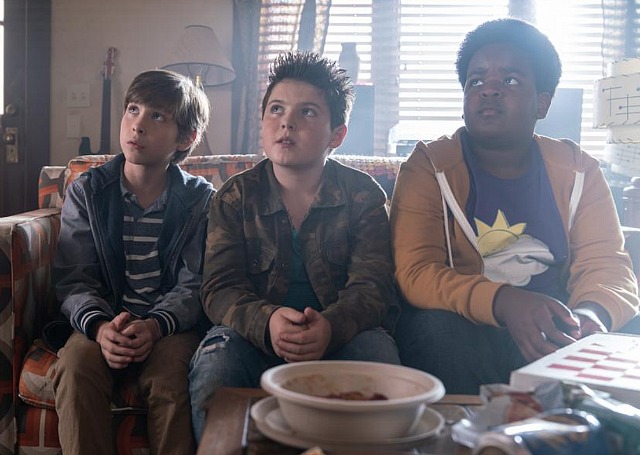
Remember that totally moronic, p.c.-inflamed, tinted-blackface controversy that erupted for a day or two last August? The one involving Good Boys (Universal, 8.16), and which ignited after TMZ posted photos of a stand-in for 11-year-old Keith Williams wearing makeup to darken his skin color? Which resulted in producer Seth Rogen apologizing, etc.? And which Indiewire‘s Zack Sharf tried to further inflame by getting at least one cinematographer to say that the practice of applying blackface for lighting purposes was “unorthodox”?

Well, Good Boys is going to debut at South by Southwest 2019, and here’s an early still. One glance at this fucking shot of the three leads (Williams, Jacob Tremblay, Brady Noon) and I’m telling myself “no way….no way am I sitting through this.” I hate films about kids.

Reitman’s “Ghostbuster” Recreation

Why is Jason Reitman, the upscale, zeitgeist-assessing, Telluride- and Sundance-attuned director of The Front Runner, Up In The Air, Tully, Young Adult, Thank You For Smoking and Juno…why has Reitman decided to abandon his Renaissance Man, X-factor, thoughtful-cool-cat profile by directing a Ghostbusters movie, of all things?

[Click through to full story on HE-plus]

Good Advertising

Running With Beto, a doc about Beto O’Rourke‘s unsuccessful but profile-enhancing race against Ted Cruz for a U.S. Senate seat, will debut at the 2019 South by Southwest festival (3.8 — 3.17). Director David Modigliani (Crawford) had exclusive close-up access with O’Rourke from start to finish. Obviously the doc, which will almost certainly be programmed at other festivals before going to streaming, will serve as a reputation burnisher for O’Rourke’s 2020 presidential campaign. (The El Paso-based politician will probably launch his candidacy within the next two or three months.) I’m not saying O’Rourke will definitely attend the SXSW screening, but it’ll look pretty weird if he doesn’t.

Why “Roma” is A Slam Dunker

Green Book and Bohemian Rhapsody are no longer just Best Picture contenders with soiled reputations and checkered histories. They are now, in the view of Vulture‘s Nate Jones, “Oscar villains.” Villains, mind you. Which means…what, up to no good, bad karma, twirly moustache movies who tie fair young maidens to the train tracks, and sure to be foiled by the hero?

What exactly is a movie villain as defined by the last eight or nine years? It’s a film that “usually debuts at one of the fall festivals, where it earns rave reviews from the mostly white commentariat,” Jones explains. “It gets good buzz throughout the fall, and debuts to largely positive reception, but also some side-eyes on social media over its racial or sexual politics.

“These rumblings are often crystallized in a widely shared piece of criticism, after which viewers are forced to divide themselves into three camps: those who take pride in dunking on the film, those who defend it from the legions of haters, and those in the middle who consider it, at best, a problematic fave.

“Awards prognosticators write stories about how this negative buzz is not having an impact on voters, a point seemingly proven when the movie performs well at the Golden Globes. The Globes success in turn ramps up the backlash, but the film seems to be skating toward Oscar success until — sometimes at the last possible moment — it loses Best Picture to a less-controversial competitor.”

That “less controversial competitor,” trust me, is Roma. Alfonso Cuaron‘s memory film has no marks against it, and serves as a stirring metaphor for Trump pushback against the wall and general yokel-hinterland racism. Plus the Golden Globe and Critics Choice wins have already supplied a strong headwind.

Poor Mark Robson

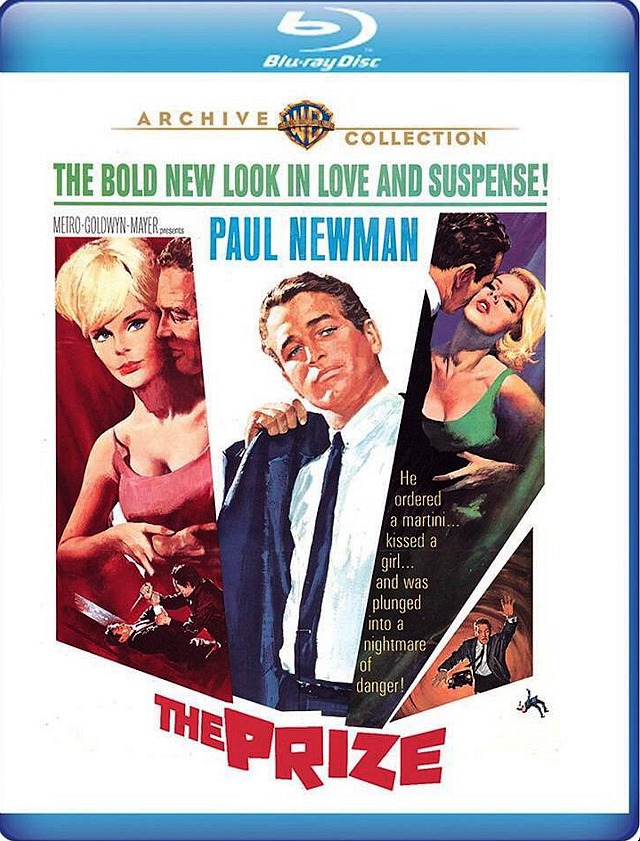
What sane person in the year 2019 would want to watch The Prize, a piece of slick, cheesy, pseudo-swanky escapism with a James Bond-ian flourish?

Paul Newman starred as an alcoholic Nobel Prize winner in Stockholm, sipping a string of martinis as he puts the moves on Elke Sommer, and as they both get caught up in a Foreign Correspondent-type kidnapping caper. Empty, synthetic crap from start to finish.

And what about director Mark Robson? Talk about a tragic fall from grace.

A fledgling director-editor who was mentored in the 1940s by Val Lewton and Robert Wise, Robson hit his stride in 1949 when he directed the rough and gritty Champion and Home of the Brave, for producer Stanley Kramer.

Robson probably peaked with his direction of The Bridges of Toko-Ri (’54), a highly respected Korean War film with William Holden, as well as The Harder They Fall, a Budd Schulberg prize-fighter drama with Humphrey Bogart.

Robson then fell into a kind of soap-opera groove with Peyton Place (’57), The Inn of the Sixth Happiness (’58) and From The Terrace (’60). Then came the mildly approvable, moderately mediocre Lisa and Nine Hours To Rama (’63).

Later that year Robson fell off a cliff with The Prize. Then came the no-great-shakes Von Ryan’s Express (’65), a WWII actioner with Frank Sinatra.

In ’67 Robson was back in the soap opera ditch with Valley of the Dolls…good God. After that he made nothing but shit, shit, shit — Daddy’s Gone A-Hunting (’69), Happy Birthday, Wanda June (’71), Limbo (’72), Earthquake (’74). The poor guy died of a heart attack in ’78 at age 64.

Hoe do you go from Champion and The Bridges at Toko-Ri to Valley of the the Dolls and Daddy’s Gone A-Hunting…that’s what I want to know.