Old EW Gang

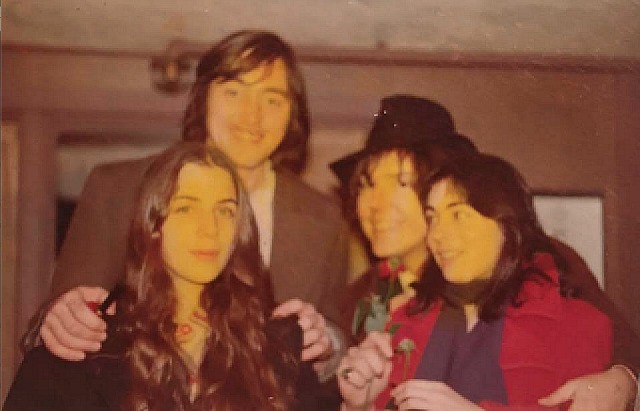
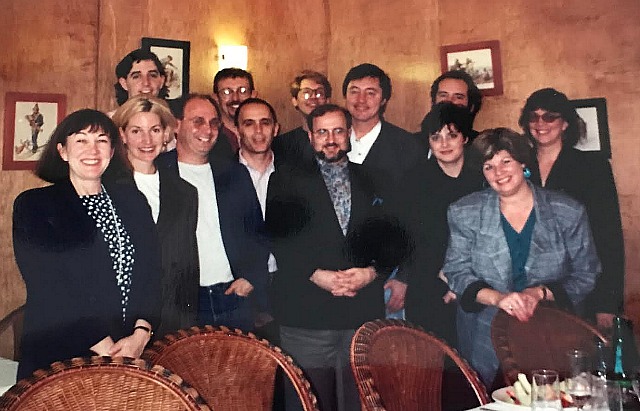
Staffers and freelancers at a gathering for Los Angeles bureau of Entertainment Weekly, taken sometime in ’92 or ’93. Sent this morning by Indiewire‘s Anne Thompson. Name of restaurant unknown. I’m working on the photo caption as we speak.


(l. to r.) EW staffer Carole Willcocks, mystery blonde (possibly Strawberry Saroyan), Dan Snierson, music editor Rob Seidenberg, Gregg Kilday (back row, glasses, goatee), Richard Natale, Mike Syzmanski, bureau chief Cable Neuhaus, myself, Michael Walker (obscured), Judy Brennan, Pat Broeske, Anne Thompson.

“Very Hard To Work Miracles”

Another Stanley Kubrick doc? Revealing what never-before-seen-or-heard content? What could be uncovered that isn’t the realm of common knowledge?

Any way you slice it the online Tribeca Film Festival will present Gregory Monro‘s Kubrick on Kubrick, a 73-minute dissection of many interviews given by Kubrick over a 30-year period.

Boilerplate: “Stanley Kubrick’s mark on the legacy of cinema can never be measured. He was a giant in his field, his great works resembling pristine pieces of art, studied by students and masters alike, all searching for answers their maker was notoriously reticent to give. While he’s among the most scrutinized filmmakers that ever lived, the chance to hear Kubrick’s own words was a rarity…until now.

“No stranger to investigating legends of the screen, Monro’s exuberant and lyrical cinematic essay is vital. Taking viewers on a journey beyond Jupiter, Kubrick by Kubrick celebrates the essence of what film means to those who make it, and those who watch.”

Son of Old Crowd

Posted on 6.29.15: The other day a friend mentioned a pending high-school reunion. Okay, fine, I wanted to say, but if you were fundamentally unhappy and occasionally miserable in high school (as many of us were, and as I definitely was), you’ll need to stash that history in your locker and keep it there until the reunion is over.

Reunions tend to remind a lot of us what a regimented environment and cultural concentration camp high school was. Most of us only realize this after we’ve found our footing as adults. I was lost but now I’m free, or certainly a lot freer.

My high-school years didn’t feel “miserable” in an unmistakable, lemme-outta-here sense; the unhappiness I lived with seeped into my system in a hundred subtle ways. I was so down it looked like up to me. All of it. I didn’t expect any semblance of “happiness,” but I was hoping all the time that life might eventually become less grueling.

I wasn’t anti-social but I didn’t party and run around all that much until my senior year, and once that phase kicked in I became a madman. The truth is that on a certain level I was a kind of functioning alcoholic (no serious behavioral problems but a few serpents under the surface) from my late teens until I quit the hard stuff in the mid ’90s. The real healing didn’t begin until I went sober in March 2012, or so I tell myself.

Before I socially flowered I watched a shitload of TV and listened to a lot of music and basically lived in my head. I was a secret genius who could potentially be persuaded to join the crowd, but no one ever asked. I know that my father’s alcoholism felt and smelled like mustard gas in our home, especially during dinner hour, and that my self-esteem was in the basement. I mostly felt apart, diminished and unworthy when it came to women. In school I didn’t do sports or join clubs or do anything extra-curricular except for detention.

My life didn’t really kick into gear until my mid 20s when the journalism started, and even that was agony until I became a half-decent writer and had learned the ropes and had gotten to know people, etc. Things didn’t actually kick into a good place (confidence, comfort, fair reward) until the online column era started, in late ’98.

Back to reunions: Everyone has a look of excitement and anticipation in their eye after they’ve graduated high school and are about to start college. The great adventure! When I attended my 25th celebration most of my ex-classmates had either surrendered that gleam or put it into a bureau drawer somewhere. To me they looked sedate, staid, settled. All except for a small fraternity, which I estimated to be maybe 5% of the crowd. X-factor types with a semblance of life in their veins. Looking for action, adventure, the next discovery.

Sinclair Lewis said the following to his high-school class at a reunion in the ’20s: “When we were young most of you didn’t give a shit about me, and now that we’re older I don’t give a shit about you.”

That’s obviously an ungracious thing to say in any social circumstance, and especially to ex-classmates. I would never go there, but I have to admit that I understand the urge.

Liar’s Daily Spin

The networks are allowing Trump to spin and bullshit his way through this crisis on a daily basis**, and in so doing influence the stupid and the gullible in this country, which unfortunately represents a significant percentage of voters. They’re basically giving him free campaign commercials each and every day, and allowing him the opportunity to spread his “fake news” crap whenever he gets into a dispute with an aggressive questioner.

Meanwhile Uncle Joe Biden does interviews and records an occasional policy video from his home studio. Dynamically speaking he’s basically faded from view.

** In the words of Philadelphia Inquirer columnist Will Bunch, “night after night [we’re getting] self-serving bluster and blame deflection, a dose of dangerous medical hucksterism, and more yelling at journalists, especially if the journalist is a woman or black or, heaven forbid, both.”

MAD’s Genius Caricaturist

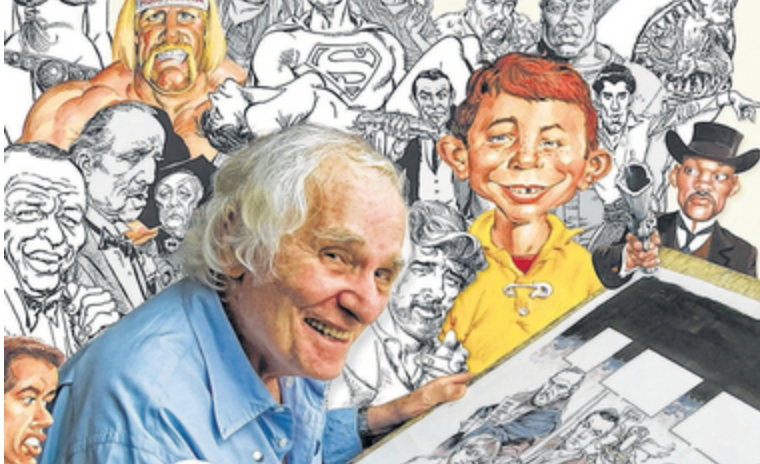
The legendary Brooklyn-born caricaturist Mort Drucker has passed at age 91. Lower all flags to half mast. A seminal 20th Century figure is no more.

If you grew up on MAD magazine (or came to admire if after the heyday of the ’50s, 60s and ’70s) you certainly worshipped Drucker, who was arguably the greatest illustrator in MAD‘s history (he worked for the publication for 55 years) as well as one of the most distinctive pen-and-ink maestros of the mid to late 20th Century.

Either you understood how good Drucker was or you didn’t. There’s no amount of copy that could change anyone’s perception of the man.

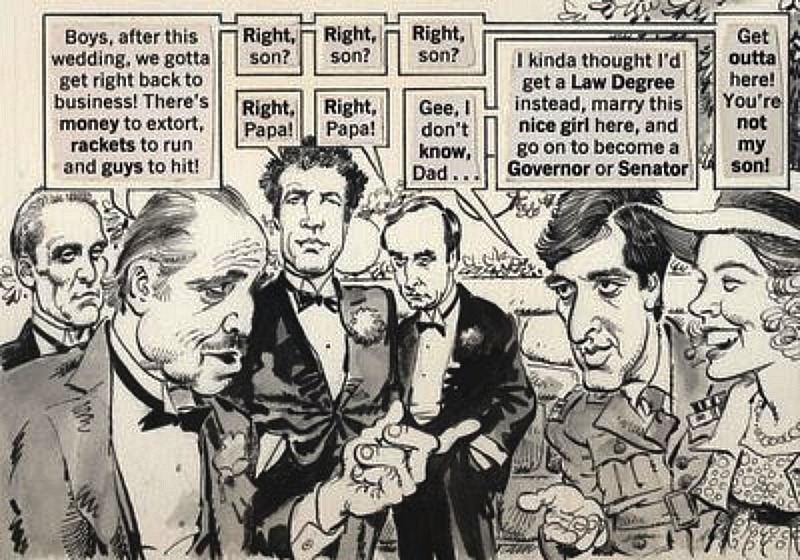
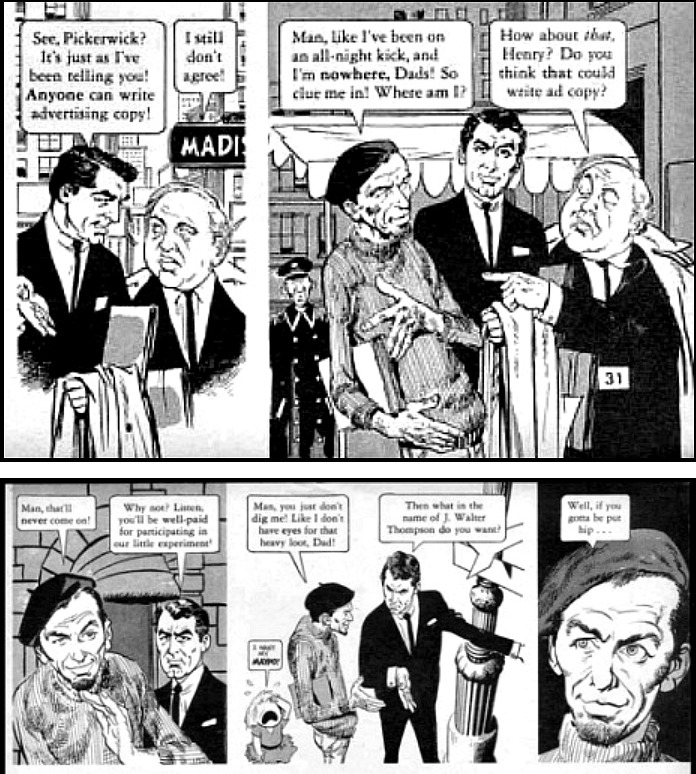
Speaking of copy, the admiration I’ve always had for Drucker’s MAD material never extended to the dialogue boxes. For the satirical copy was never that hip. More often than not the tone of the written material was actually kind of harumphy, lamenting, conservative. Which was noteworthy for the ’60s and ’70s when upheaval was the rule. Boiled down, the copy always said “look how this or that movie or TV show is somehow degrading or diminishing the social fabric…look how good moral values are waning or evaporating.”

Drucker’s explanation of his approach: “I’ve always considered a caricature to be the complete person, not just a likeness. Hands, in particular, have always been a prime focus for me as they can be as expressive of character as the exaggerations and distortions a caricaturist searches for. I try to capture the essence of the person, not just facial features.

“I’ve discovered through years of working at capturing a humorous likeness that it’s not about the features themselves as much as the space between the features. We all have two eyes, a nose, a mouth, hair, and jaw lines, but yet we all look different. What makes that so is the space between them.”

Wiki excerpt: “When MAD magazine’s parody of The Empire Strikes Back was published in 1980, drawn by Drucker, the magazine received a cease and desist letter from George Lucas‘ lawyers demanding that the issue be pulled from sale, and that MAD destroy the printing plates, surrender the original art, and turn over all profits from the issue.

“Unbeknownst to them, Lucas had just sent MAD an effusive letter praising the parody, and declaring, ‘Special Oscars should be awarded to Drucker and DeBartolo, the George Bernard Shaw and Leonardo da Vinci of comic satire.”

“Publisher Gaines mailed a copy of the letter to Lucas’ lawyers with a handwritten message across the top: ‘That’s funny, George liked it!’ There was no further communication on the matter.”

Read more

Farewell to Attaboy Pats?

Yesterday afternoon NIAID honcho Anthony Fauci suggested that handshakes should be permanently retired. I’ve shaken tens if not hundreds of thousands of strange hands since I was 12 years old, but I could adapt to the new reality. Elbow bumps, Japanese bowing…I could roll with that.

But I would be very sad about giving up left-shoulder attaboy pats, which I’ve been doing for decades. Along with brief right forearm clasps, which I sometimes do when I really like or admire a person I’m shaking hands with. Or standard between-the-shoulder-blade bro pats, which are used when saying farewell at parties.

Fauci is basically saying “forget all casual touching or patting of any kind…forget that aspect for the rest of your time on the planet. For the remainder of your lives, every person you come into contact with is a potential disease-giver or unintentional murderer.”

Fauci said he hopes to see a “light at the end of the tunnel” by the end of April, or three weeks hence. HE doubts that scenario — June or July are more likely.

“When you gradually come back, you don’t jump into it with both feet,” he warned. “You say, what are the things you could still do and still approach normal? One of them is absolute compulsive hand-washing. The other is you don’t ever shake anybody’s hands,” Fauci told The Wall Street Journal‘s Kate Linebaugh and Ryan Knutson.

I don’t think we should ever shake hands ever again, to be honest with you,” he stated. “Not only would it be good to prevent coronavirus disease, [but] it probably would decrease instances of influenza dramatically in this country.”

Pick Your Oscar Poison

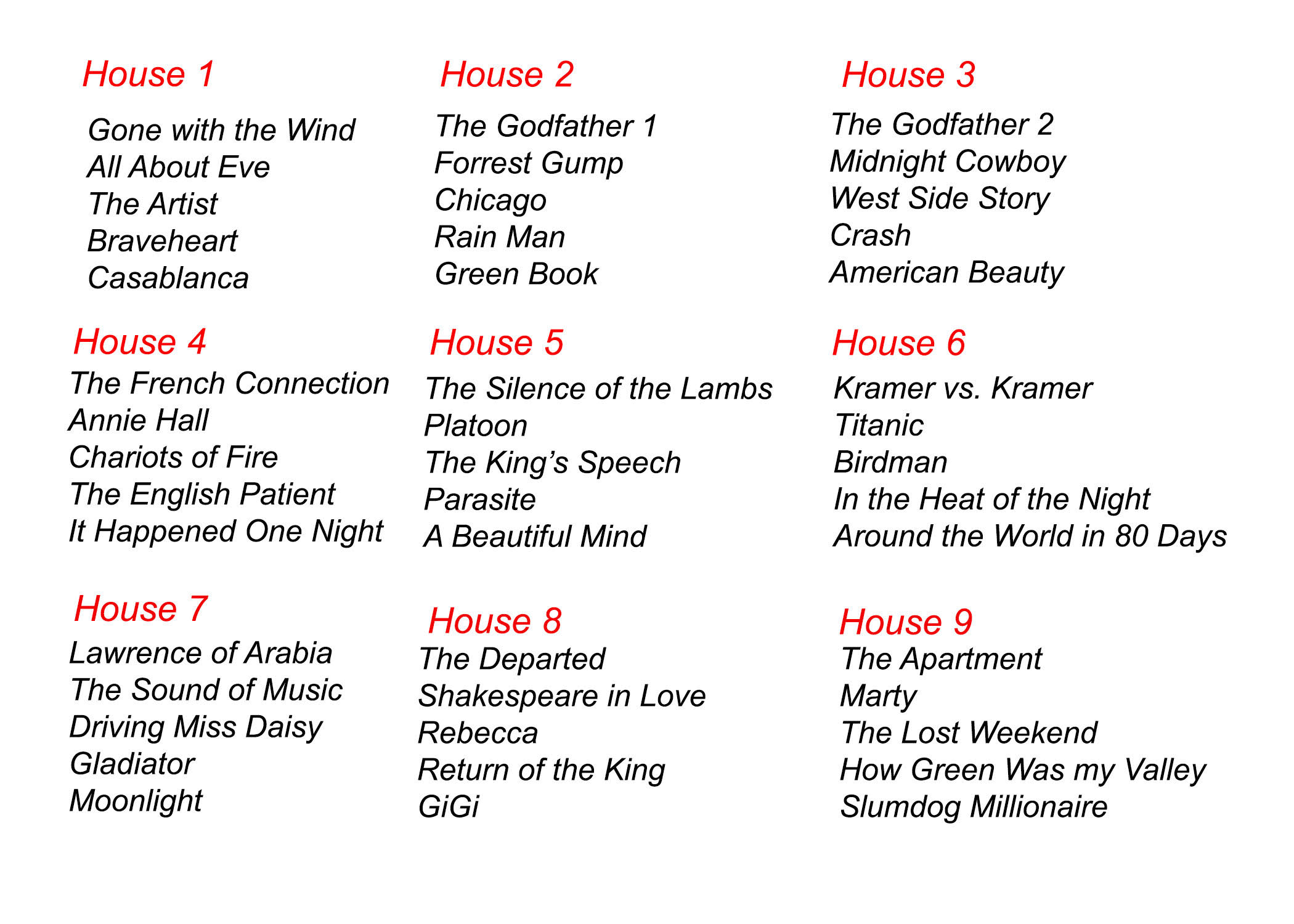
I don’t know who started this “which Best Picture Oscar winners would you like to be imprisoned with for the rest of the pandemic?” torture game (was it Sasha Stone?) but almost all nine groups have at least one stinker or killjoy. On top of which there’s no better way to learn how to despise good films than to watch them under these ghastly circumstances (forced confinement, lethargy, isolation, slow-boiling rage).  The ixnays are as follows:

House 1:  Re-watching The Artist is out of the question for the rest of my life as well as the lives of my two sons.

House 2: No way will I watch Forrest Gump again.  Ditto Chicago.

House 3:  15 years since I’ve seen Crash…I dunno.  I could watch Midnight Cowboy and The Godfather, Part II over and over.

House 4:  The killers are Chariots of Fire and, to a lesser extent, The English Patient.

House 5:  I’ve watched Parasite twice, thanks.  I can’t sit through that rainstorm sequence again.  The one in which they let the former maid into the home while they’re drunk and off-balance.

House 6Around The World in 80 Days, obviously.

House 7Driving Miss Daisy is a no-go.

House 8:  It might be interesting to watch Gigi again, but Return of the King is out.

House 9:  The top four are great, but Slumdog Millionaire is refused because of that awful game-show host — it makes my skin crawl just to think of that guy.

No-Laugh Funny

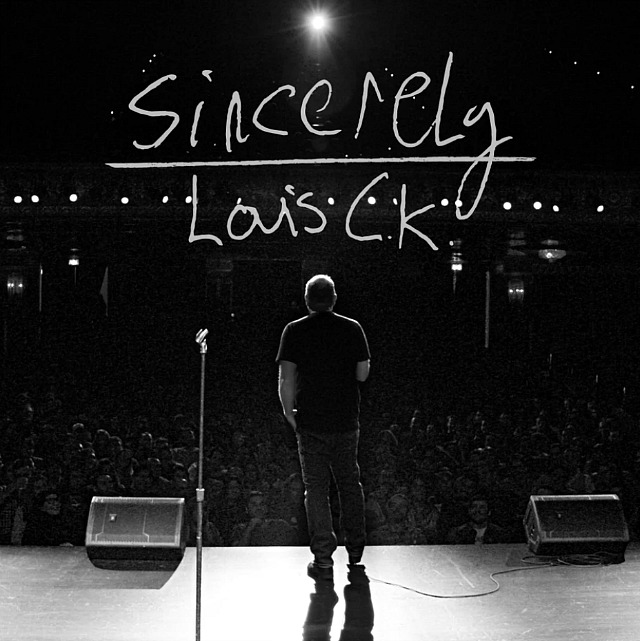
I watched Sincerely Louis CK last weekend. I was simultaneously okay with it and mildly disappointed. Because it’s mainly about the 53 year-old comedian saying “fuck it…I might as well be even more politically incorrect than ever…why not?” Mildly amusing here and there, but never really funny.

I’d prefer if he ignored the jerking-off scandal and being cancelled and focused more on common challenges, specific episodes, odd tangents and eternal questions. What about the writing, making and non-distribution of I Love You, Daddy?

Friend: “I agree, not as funny as Chappelle. But I’m glad Louis is still defying the mob-think hounds.” HE: “Yeah, I’m glad for that modest fact.”

Last Tango in Greece

The Trip to Greece (IFC Films, 5.22 VOD) is the fourth Steve Coogan-Rob Brydon foodie tour flick.

The first, 2010’s The Trip, remains my favorite, in part because the concept was novel then (naturally) and because I love their Michael Caine impressions. I was fairly okay with The Trip to Italy (’14) but it didn’t measure up impression-wise. I somehow missed The Trip to Spain (’16)…sorry.

The Trip to Greece, which has been airing on Sky One for over a month now, is the final entry. Coogan’s Trevor Howard doesn’t quite nail it. I’ve never had a great longing to visit Greece. Why haven’t these guys gone to Vietnam? Talk about foodie heaven.

Read more

“A Gesture Toward Life”

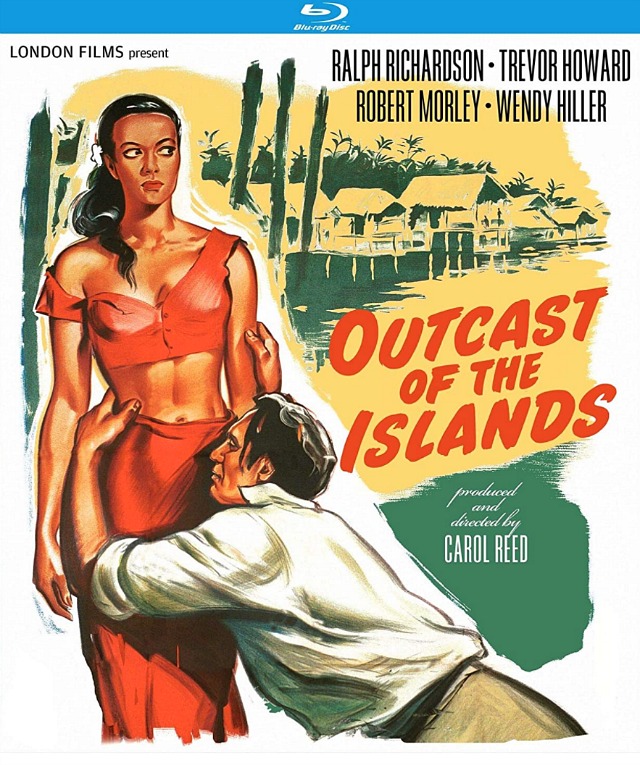
For years I moaned about not being able to buy a DVD of Carol Reed‘s Outcast of the Islands (1951). Then came a DVD version that didn’t look so hot. Now we have a “a refreshingly new” Kino Lorber Bluray (4.28) that has “depth, superior detail” and a “more layered contrast,” according to DVD Beaver.

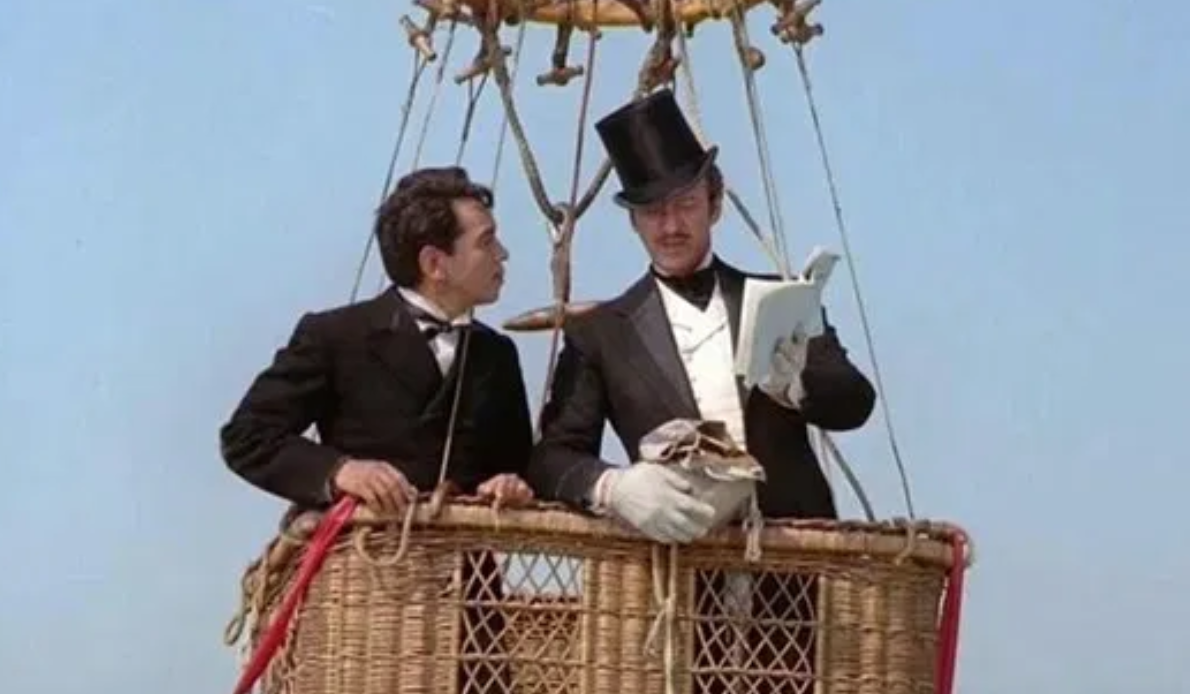
I saw Outcast on broadcast TV so many years ago that I can’t remember much, but I have a recollection of something exceptional. If nothing else a serving of atmospheric exotica, it’s about a ne’er do well (Trevor Howard‘s Peter Willems) who doesn’t redeem himself and in fact ends up in a worse place at the end than at the beginning.

The sequence that stands out, memory-fragment-wise, is one in which Robert Morley‘s character (i.e., Elmer Almayer) has been forcibly wrapped into a kind of cocoon-like hammock, and is swinging back and forth with Howard taunting him with a stick or spear of some kind, promising that “I’ll get you next time.”

The story mostly takes place in Indonesia. I don’t remember the particulars. I’ve never read the Conrad book, but I gather it’s a bit grim. Wendy Hiller costars with Morley and Ralph Richardson,. The striking black-and-white cinematography is by Ted Scaife and John Wilcox.

Pauline Kael called Outcast of the Islands “a marvellous film that relatively few people have seen. It’s probably the only movie that has ever attempted to deal in a complex way with the subject of the civilized man’s ambivalence about the savage. It also contains some of the most remarkable sequences ever filmed by Reed; it’s an uneven movie, but with splendid moments throughout.

“Howard is superb as Willems, who makes himself an outcast first through contemptible irresponsibility and through betrayal of those who trust him, and finally and hopelessly when, against his will, he is attracted to the silent, primitive girl, the terrifying Aissa (played by Kerima). Willems is wrong in almost everything he does, but he represents a gesture toward life; his enemy, Almayer (Robert Morley), is so horribly, pathetically stuffy that his family unit (with Wendy Hiller as his wife and Annabel Morley as his child) is absurdly, painfully funny.

“With Ralph Richardson, whose role is possibly ill-conceived, and George Coulouris, Wilfrid Hyde-White and Frederick Valk. The screenplay is by William Fairchild.”

Cannes in July?

If and when the 2020 Cannes Film Festival happens sometime in July…you tell me. I’m presuming it’ll be under-attended by U.S. journalists, and perhaps across the board. I’m honestly not sure if I can fit it into the schedule at this point, or if I want to.

From Indiewire‘s Eric Kohn: “Reached for comment at his vacation home, festival director Thierry Fremaux was both defiant and practical. ‘If Cannes is canceled, Cannes is canceled,’ he said. ‘We’re all facing a strong situation and we’ll fight until the last minute. If it’s not possible to have Cannes in 2020,[then let’s] rendezvous in 2021. I already can tell you that it will be something to be there all together again. The Mediterranean Sea is waiting for us.'”