Minimal Value

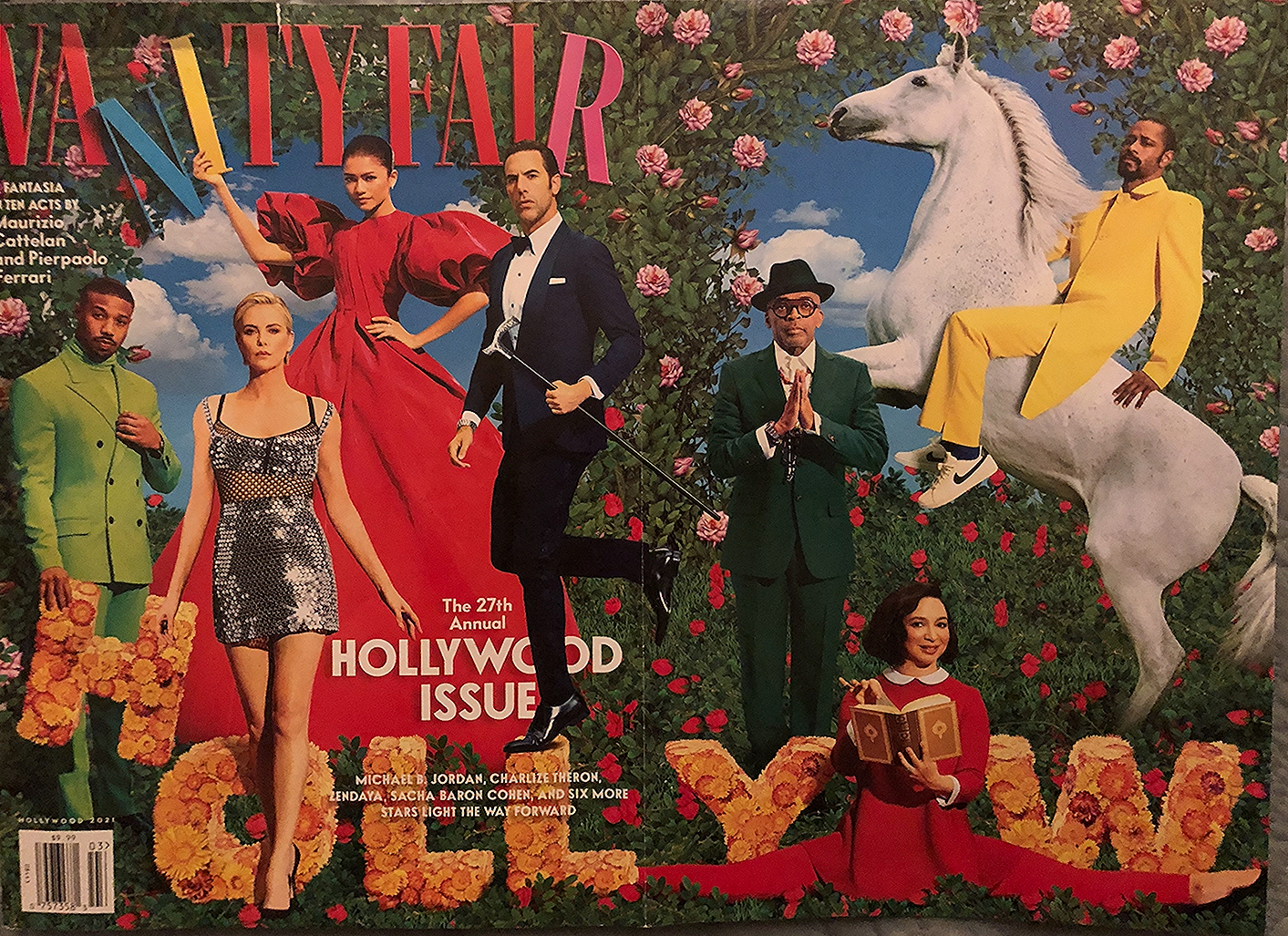
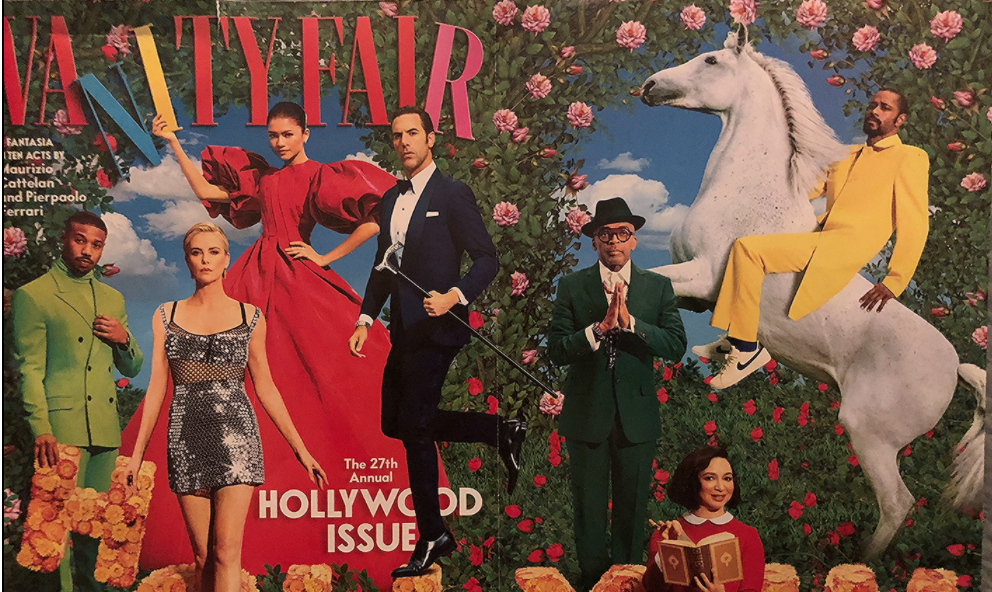
I used to derive serious pleasure from the annual Vanity Fair Hollywood issue, as I did from the generally knowledgable and delicious grade-A writing during the Graydon Carter era.

Carter left VF in 2017, Radhika Jones has been running the shop since, and nobody likes the magazine as much. You know what I mean. VF has “changed with the times.” It looks and feels like a lightweight hand-out — serving those who allow it to keep afloat. That special storied vibe from those Hollywood issues of the ’90s, aughts and early teens — a feeling that you were absorbing some kind of thought-through reconnaissance of where Hollywood culture was at that year and with one or two carefully sourced recollections of its own past — is totally out the window.

The only thing I like about the cover is the inclusion of Judas and the Black Messiah‘s Lakeith Stanfield.

The Obliging Alfred Newman

Posted on 7.9.15: It hit me last night that the main-title themes for Henry King‘s The Bravados (’58) and John Ford‘s The Man Who Shot Liberty Valance (’62) are nearly identical. Listen to the Bravados music (which is credited on the Wiki page to Alfred Newman, Hugo Friedhofer and Lionel Newman) and now Cyril J. Mockridge‘s Liberty Valance theme — pretty close to plagiarism, I’d say.

But the Liberty Valance Wiki page credits the score to both Mockridge and Alfred Newman, and Mockridge’s Wiki page describes him as “a staff composer for 20th Century-Fox for years, frequently working with Alfred Newman and Alfred’s brother Lionel.” I’m assuming that Mockridge asked Alfred if he could rip off his Bravados main-title theme as a favor, and the esteemed composer said sure, what the hell.

Read more

He Totally Torches A Car…

…and then opens the rear door and slips inside in order to threaten some middle-aged suit — “Give me a name!” I don’t think so.

Michael B. Jordan as John Kelly, Tom Clancy‘s second most famous character after Jack Ryan…whatever. Plus Jamie Bell, Jodie TurnerSmith, Guy Pearce, Brett Gelman and Colman Domingo (Ma Rainey’s Black Bottom).

I’ll probably tune in because I respect director Stefano Sollima, the pilot of Sicario: Day of the Soldado and ZeroZeroZero, and because Taylor Sheridan is one of the screenwriters. But it’s probably bullshit.

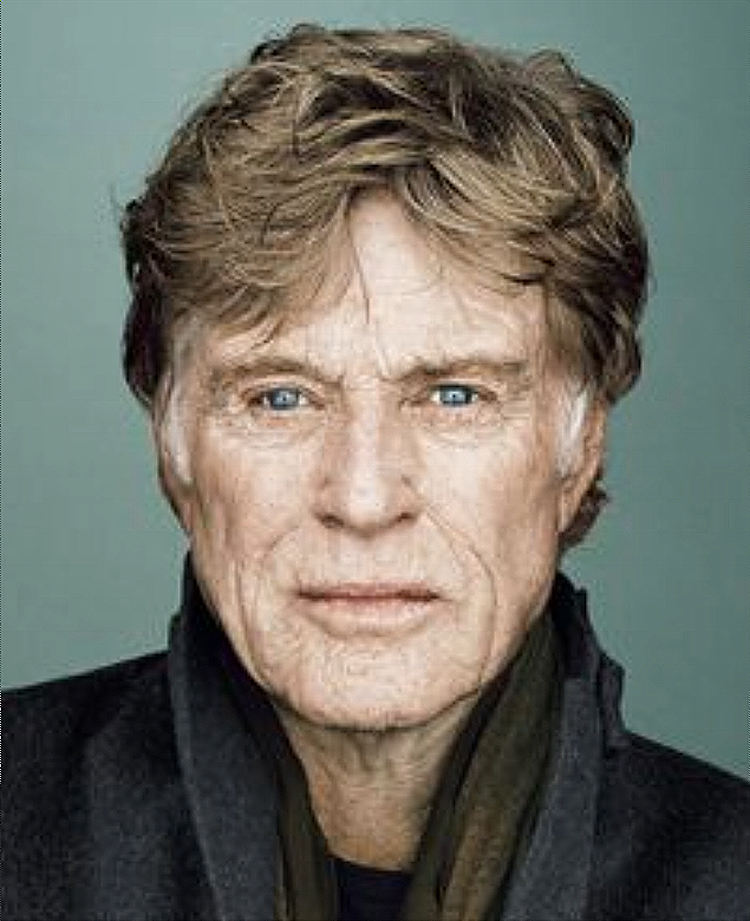
Robert Redford, James Cagney & No One Else

It was during a discussion this morning about David Caruso that it hit me. For a minute or two in ’93, when the carrot-haired Caruso was riding high with NYPD Blue and after his bravura performance as Mike the Chicago detective in Mad Dog and Glory…for a while there it looked like Caruso might pole-vault onto the next level and become a superstar. Maybe. It seemed possible.

But of course it wasn’t. Because freckly, ginger-haired guys can’t be superstars. They can be admired or even worshipped for their acting chops (i.e., Phillip Seymour Hoffman) or respected or “popular” as far as it goes, but they can’t be “the alpha guy“…that charismatic, rock-solid, center-of-the-universe force field whom other guys want to be and women want to go out with…to be a real movie star you need to exude a certain extra-cosmic, triple-dimensional quality.

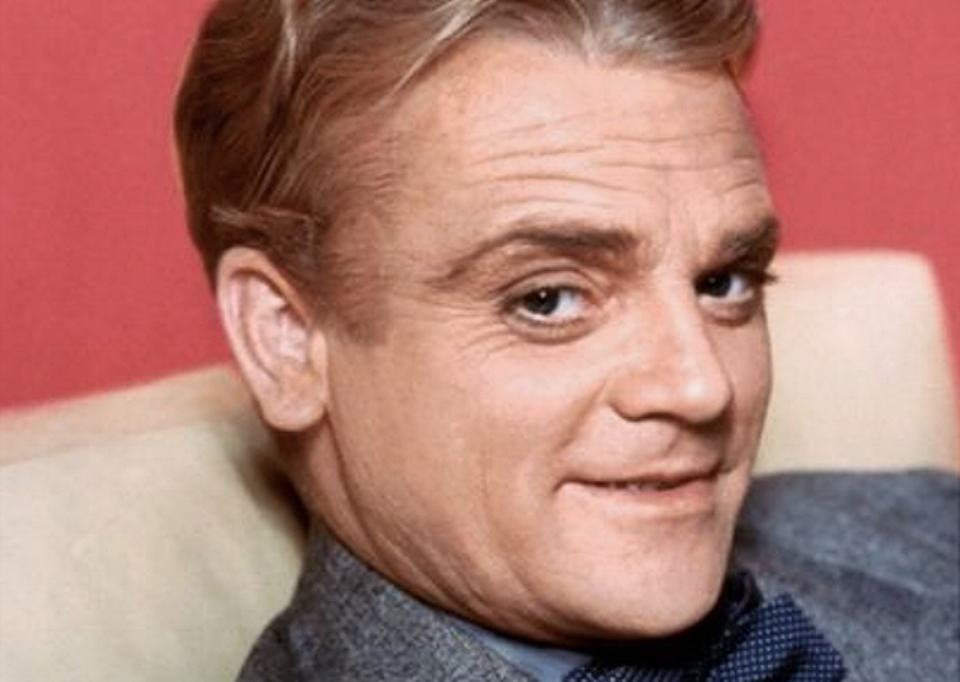
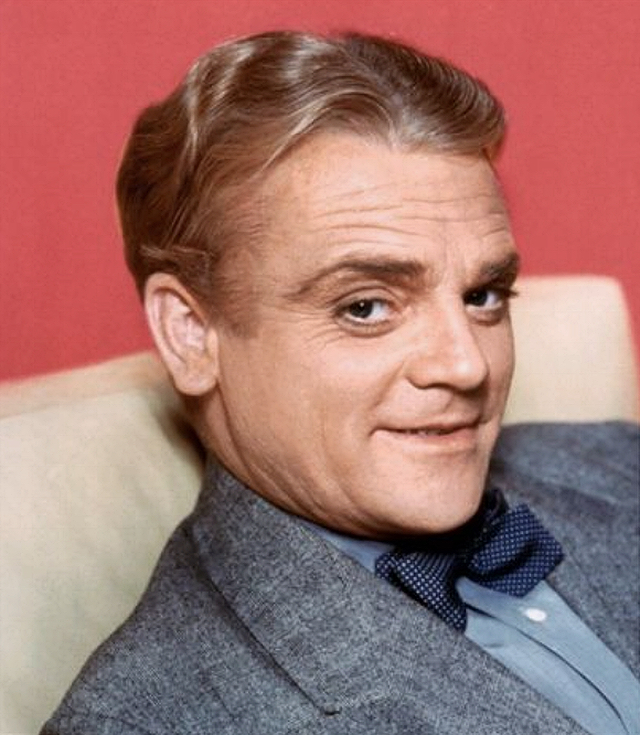
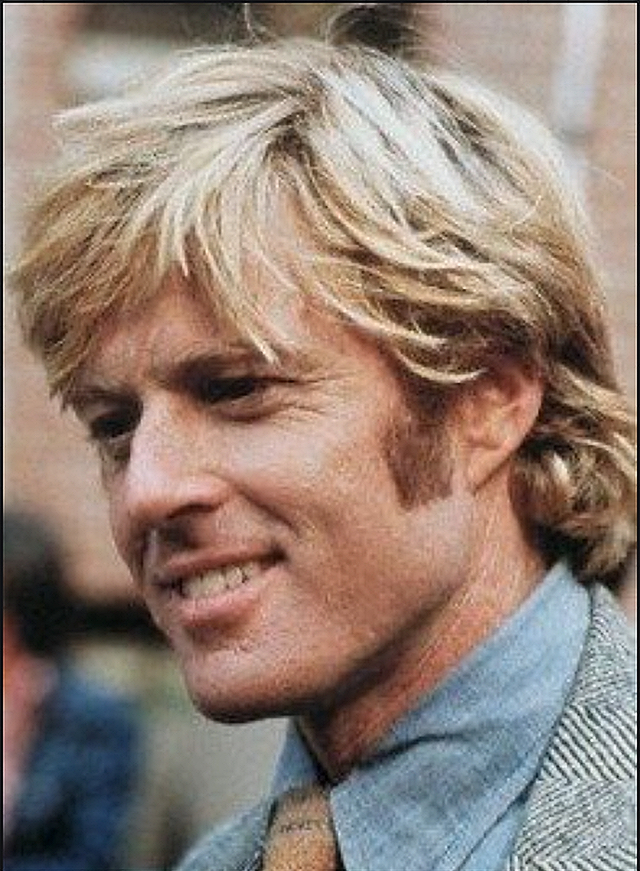
And the fact is that only two copper-haired actors in the entire history of Hollywood have become serious superstars — James Cagney and Robert Redford.

Except Cagney doesn’t really count because he ascended and enjoyed his big-star heyday in the mostly monochrome ’30s and ’40s, and so no one was obliged to contemplate his hair color or freckly complexion.

And Redford doesn’t really count because, as we all know, he became a blonde sometime in the early to mid ’60s and stayed that way until his downshift period began sometime in the late ’80s or early ’90s.

And why do you think he became a blonde? Ask yourself that. Okay, I’ll tell you why. He became a blonde because he wanted to be big, and he knew (or his agent or some good friend persuaded him) that it wouldn’t happen unless he did something about his hair. I recall talking to an old friend of Redford’s on the phone once, a guy he used to hang out with in Van Nuys, and this guy told me that Redford’s high-school nickname at the time was “Red.” But eventually he let the blonde thing go. I know that he walked around as a natural copperhead when he was hosting the Sundance Film Festival in the ’90s.

Ginger or copper-haired actresses have never had the slightest problem in Hollywood, of course. And a select few (as with anything else) have become major stars — Cate Blanchett, Amy Adams, Emma Stone, Jessica Chastain, Nicole Kidman, Julianne Moore, Bryce Dallas Howard, Isla Fisher, Lindsay Lohan, Christina Hendricks plus yesteryear’s Katharine Hepburn, Deborah Kerr, Myrna Loy, Tina Louise, Greer Garson, Rita Hayworth, Lucille Ball, Maureen O’Hara, Carol Burnett, Susan Hayward.

But ginger-haired guys have almost never made it to the penthouse level. Because there’s something about them that Americans just can’t quite settle in with or bow down to…not really. Michael Fassbender, Lucas Hedges, Paul Bettany, Jesse Plemons, Caruso, Ed Sheeran, Damian Lewis, Rupert Grint, Alan Tudyk, Brendan Gleeson, Danny Bonaduce, Eric Stoltz, Carrot Top Thompson, David Lewis, Domhnall Gleeson, Rupert Grint, Simon Pegg, Toby Stephens, the great Philip Seymour Hoffman, Chuck Norris, Jason Flemyng, Seth Green, David Wenham…none of them ever made it into the elite winner’s circle, not really. Because people glommed onto that red hair and went “okay, fine, good actor but nope.”

Yes, Leslie Howard was a fairly serious star in his 1930s heyday, but he wasn’t way up there. He wasn’t Clark Gable big.

Latest Curtis Mind Dance

Ennui, distrust, uncertainty, paralysis…oh, what an insecure, anxiety-fraught world. Everyone living in their heads these days, everyone staring at screens and sharing thoughts or whatever non sequitur comes to mind…flitting from tweet to tweet…watching closely, talking shit and nobody really content (much less happy) about anything. Not really.

What else is new?

As a huge fan of Adam Curtis‘s The Century of the Self and especially The Power of Nightmares, and a bit less of of a fan of Bitter Lake, All Watched Over by Machines of Loving Grace and Hyper-Normalization, I’m finding Curtis’s latest, I Can’t Get You Out Of My Head, somewhere between ambiguously and intermittently fascinating but basically all over the fucking map.

The epic six-part series popped about three weeks ago, and was well reviewed by British critics. It’s all on YouTube right now.

It is HE’s belief that a multi-part doc needs a clean, easily graspable idea that can you hang onto as you watch the various chapters. The Century of the Self (’02) explained how those in power have used the ideas of Sigmund Freud and Edward Bernays “to try and control the dangerous crowd in an age of mass democracy.” The Power of Nightmares (’05) basically said that the anti-western Islamic terrorists and the Bush-era neocon hardliners were almost identical in their purist fervor, and are pretty much cut from the same philosophical cloth.

To say that I Can’t Get You Out of My Head lacks a central idea or theme, or even a sense of building towards one, is putting it mildly. Curtis’s observations as he moves along are brilliant, of course, but when he started talking about Jiang Qing, Lin Piao and the Gang of Four vs. Mao Zedong in episode #3 (“Money Changes Everything“) I began to lose patience.

Here’s a rough splotch job based on Curtis own thoughts in recent interviews: “Everyone lives in their heads these days, and most modern novels are about the internal monologue. Why have we gone from a sense of confidence about self to being unconfident about self? Anxiety, uncertainty, fears about the future. To explain how we got here, the journey that led to it…you have to explain what went on in people’s heads as well as what happened in society as whole. A history of feelings.”

I don’t even think Curtis, mesmerizing as his riffs tend to be, has a good grip on what he’s trying to say. I think he’s just throwing impressions and associations at a wall and hoping some of it sticks.

Official Can’t Get You Out Of My Head summary: “The story of how we got to the strange days we are now experiencing. And why both those in power — and we — find it so difficult to move on and whether modern culture, despite its radicalism, is really just part of the new system of power”. What does that even mean?

Read more

Seyfried Moment

Proclaimed and repeated many times, but once more can’t hurt: Amanda Seyfried creates a layered and humanesque Marion Davies in David Fincher‘s Mank. Best performance and role of her life, and she’s been at this racket, remember, for the better part of 20 years. (Or since she was 15.) Seyfried has never had a role this substantial or interesting. This is it for her…right here, right now.

That awful feeling I was getting from Lily James in Ben Wheatley‘s regrettable Rebecca — that she’s not authentic, that she’s pretending poorly to be a naif in the mid ’30s world, that she clearly doesn’t belong in this realm and is more or less playing dress-up — is something I never got from Seyfried. No one did. She seems to really understand Davies, who was unfairly caricatured in Kane. The girlfriend of the great William Randolph Hearst feels like a droll, decent, compassionate human being. She gets herself, and Seyfried gets her.

So what’s happened to the long-expected Seyfried blitzkrieg? To the supposed inevitability, at least, of a Best Supporting Actress nom? As recently as 2.24 Variety‘s Clayton Davis predicted that Seyfried would be one of the five (along with The Father‘s Olivia Colman. The Mauritanian‘s Jodie Foster and Hillbilly Elegy‘s Glenn Close). Each and every critic has conveyed approval and Seyfried has been nominated by this and that critics group and peripheral org. But that big-wave, “here she comes!” feeling hasn’t quite manifested like I thought it would. Well, it has but without the right oomph.

From THR‘s Scott Feinberg: “Cher Comes Out for Mamma Mia Co-Star Amanda Seyfried’s Mank Campaign (Exclusive)

All I can say to Academy members right now is “due respect but will you guys please do the right thing?”

Read more

Those Damn Geniuses

What’s the fundamental message of David Fincher‘s Mank, that smart, silky backstroke through the lore of 1930s and early ’40s Hollywood? And what is the main lesson to be gained about the boozy adventures of the wise and witty Herman J. Mankiewicz as he blurp-blurped his way through the political tangle represented by RKO, Orson Welles, William Randolph Hearst, Marion Davies, Upton Sinclair and Louis B. Mayer?

The lesson (provided by screenwriters Jack Fincher and Eric Roth) is that you can’t have genius without a certain amount of eccentricity and even (God help us) a touch of perversity.

Most of us would probably have it otherwise, but it comes with the territory. We all just want to get the job done, get paid and go home. Geniuses, alas, have other ideas and tendencies. For every ounce of divine inspiration, they often bring two or three ounces (and sometimes even a pound) of exasperation

It is Mank‘s task to gently remind us that geniuses are also, after a fashion, “fun” people to hang with. Fun as in “amusing in a fickle or irksome sort of way.” Not to mention stimulating, surprising, frustrating, given to mid-afternoon naps, mind-opening, amusing. Hollywood professions pay well, but what’s the point of doing anything in life if you can’t look back on your professional trials and tribulations and say “well, at least there were peaks as well as valleys!”?

I’ve just checked and Mank is still a “fun” movie — a mix of smarthouse Hollywood wit and dreamhouse-ing…the handsomest silver swagger flick to come down the pike in 2020…a Hollywood head-trip movie for the ages, And it’s aimed almost solely at seasoned, well-educated film sophistos. Which is a good thing, right? Considering that most films these days are aimed at folks who don’t get it or would rather not?

Brilliant and specific and always meditative, Mank is mostly about the ways of genius mixed with the rigorous discipline of writing, the slow ways of alcohol poisoning and the complexities of studio politics.

It hopscotches all around in a non-linear way, which of course is a tribute to the Citizen Kane scheme. I adored the use of clackety-clack scene descriptions dropping into the frame. And I loved re-hearing the line “it’s not the heat, it’s the humanity.” (Which apparently wasn’t written by Mankiewicz but Alan Jay Lerner for Brigadoon.)

The nutritional value of the dialogue alone should not be under-celebrated. For the film put me into a kind of subdued swoon mode — a certain form of smarthouse rapture that leaves you quietly stirred and pacified. That’s a fairly rare thing.

What’s the Mank arc? Basically that even for a self-destructive boozer like Mankiewicz, life took a turn for the better when Orson Welles came calling. And that despite the political intrigues and whatnot, things worked out very nicely for an all-too-brief period. And at the end of the path came a Best Original Screenplay Oscar.

Boozy behavior and pot belly aside aside, Mankiewicz is depicted in each and every scene as a humanist and a good fellow — a man who sides with the weak and unlucky, with the less fortunate and downtrodden. He’s good company.

Oldman is wonderful. That thin, raspy little voice tossing off one witticism after another. He simply won me over. I just fell for the verbal derring-do.

Read more

Critics Choice

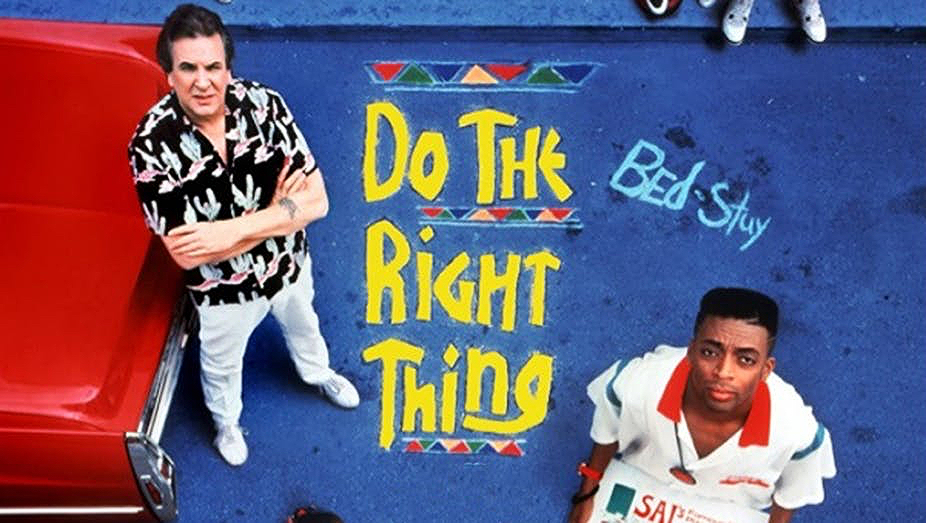
I am one of the many columnist-critics who regard Spike Lee‘s Do The Right Thing as one of the finest films of the ’80s. I have it ranked sixth on my current ’80s roster. I decided that the instant that Mookie threw that garbage can through Sal’s Bed-Stuy pizza parlor window. It therefore comes as no surprise to me or anyone else that World of Reel‘s Jordan Ruimy announced yesterday that Do The Right Thing was the #1 choice among over 200 critics.

If this or that critic insists that Lee’s film is the best of the Reagan decade, fine. Ditto others choosing Platoon or Local Hero or The King of Comedy or Prince of the City or Raging Bull. Or HE going with Risky Business. Whatever. But when you hear that Do The Right Thing topped “almost half the lists,” as Ruimy puts it, one can at least wonder why. Most of us agree that people (and especially critics) tend to judge films according to whatever cultural winds may be blowing at a given moment, and right now Spike’s 1989 film seems to fit right in.

Ruimy: “Lee’s film no doubt benefited from an abundance of relevance over the past year in a socially and politically tumultuous America dominated by racial issues.”

HE ’80s faves: Risky Business, The Hidden, Drugstore Cowboy, Raging Bull, Local Hero, Do The Right Thing, Crimes and Misdemeanors, Prince of the City, Blue Velvet, Platoon.

#11 through #16: Full Metal Jacket, Scarface, Thief, Lost in America, Die Hard and Aliens.

Skanky, Pre-Corporate Manhattan of ’60s, ’70s and ’80s

An assortment of clips from New York-centric films of the ’60s, ’70s and ’80s might suggest a portrait of grime, grit and squalor — a city that used to scare the shit out of tourists who dared to venture out of the Times Square area. But Jonathan Hertzberg‘s “Dirty Old New York” is not that. It’s mainly a portrait of old analog Manhattan — dicey-looking black dudes with big Afros, gas guzzlers, gaffiti-covered subway cars, dial pay phones, trash on those John Lindsay-Abe Beame streets, vinyl turntables, tube television sets, a co-residing Dustin Hoffman and Mia Farrow, 3/4″ video tapes, VCRs, etc. A nice time-trip thing, but I wouldn’t call it “dirty.” [Originally posted on 3.27.14.]

Never Managed To See It

I have a certain affection for films shot in Ultra Panavision 70 and Camera 65, processes from the ’50s and ’60s that yielded aspect ratios of 2.76:1. (They were technically identical or damn near.) Actually, there were 11 such films in all, but I only have a fondness for three — Ben-Hur (Camera 65), Mutiny on the Bounty (UP70) and The Fall of the Roman Empire (ditto).

I never got around to seeing Raintree County, which also was shot in Camera 65.

Bounty and Empire were shot by the great Robert Surtees, and the framings and lighting are quite elegant. Empire was shot by Robert Krasker (Odd Man Out, Brief Encounter, The Third Man).

I have no affection at all for Quentin Tarantino‘s The Hateful Eight, which squandered the UP70 potential by mostly shooting inside the darkly lighted Minnie’s Haberdashery.

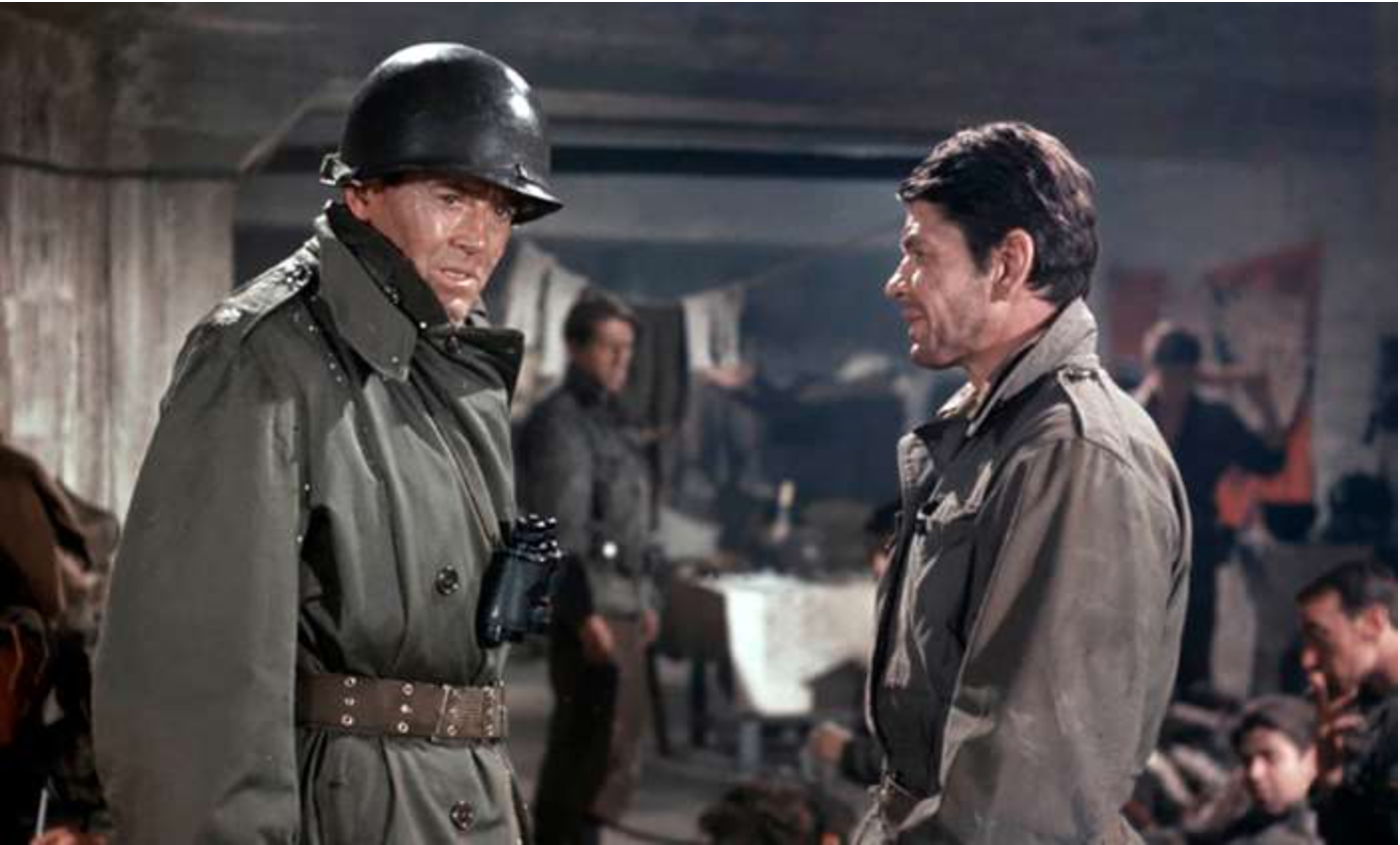
I’ve never seen Ken Annakin‘s The Battle of the Bulge (UP70, released on 12.16.65), and after watching this Smilebox trailer it’s possible I may never set the time aside.

The dialogue conveys stodginess, or what I would call an overdose of “officer-talk”. You can tell the whole thing smells. Any mid-’50s-and-after movie costarring Dana Andrews is something to be feared. German soldiers speaking German-accented English was outlawed after The Longest Day, but Annakin went there anyway. The Wikipedia page features a long list of historical inaccuracies. Dwight D. Eisenhower came out of retirement to denounce the film for gross inaccuracies. It was shot in Spain with little or no snow on the ground, and too many scenes feature the wrong kind of typography (I’ve been to the the Ardennes forest) and not enough pine trees.