An Apology

…for saying yesterday that I “like” For Your Eyes Only (‘81), the 12th James Bond film. At 53, Roger Moore (whom I interviewed at Pinewood during filming) sauntered through with aplomb, but costar Carole Bouquet was…what’s the polite way of saying this?…overly poised. And the film, which I’m re-watching this evening, is a lightweight, mostly-played-for-chuckles B movie — silly action scenes, rote scoring, flat cinematography, too many zoom-lens shots, wooden villains, thin or plodding dialogue. Not A-level, not sexy…casual, throw-away stuff. Like a late ‘60s Jean Paul Belmondo film.

Okay, the cliff-climbing scene at the end isn’t bad. especially when the rope-tethered Moore falls and has to use his climbing-boot shoelaces to get out of a tough spot. And costar Topol holds his own. And that closing phone chat between Margaret and Denis Thatcher and a parrot…yup.

“Orange” Significantly Upgraded

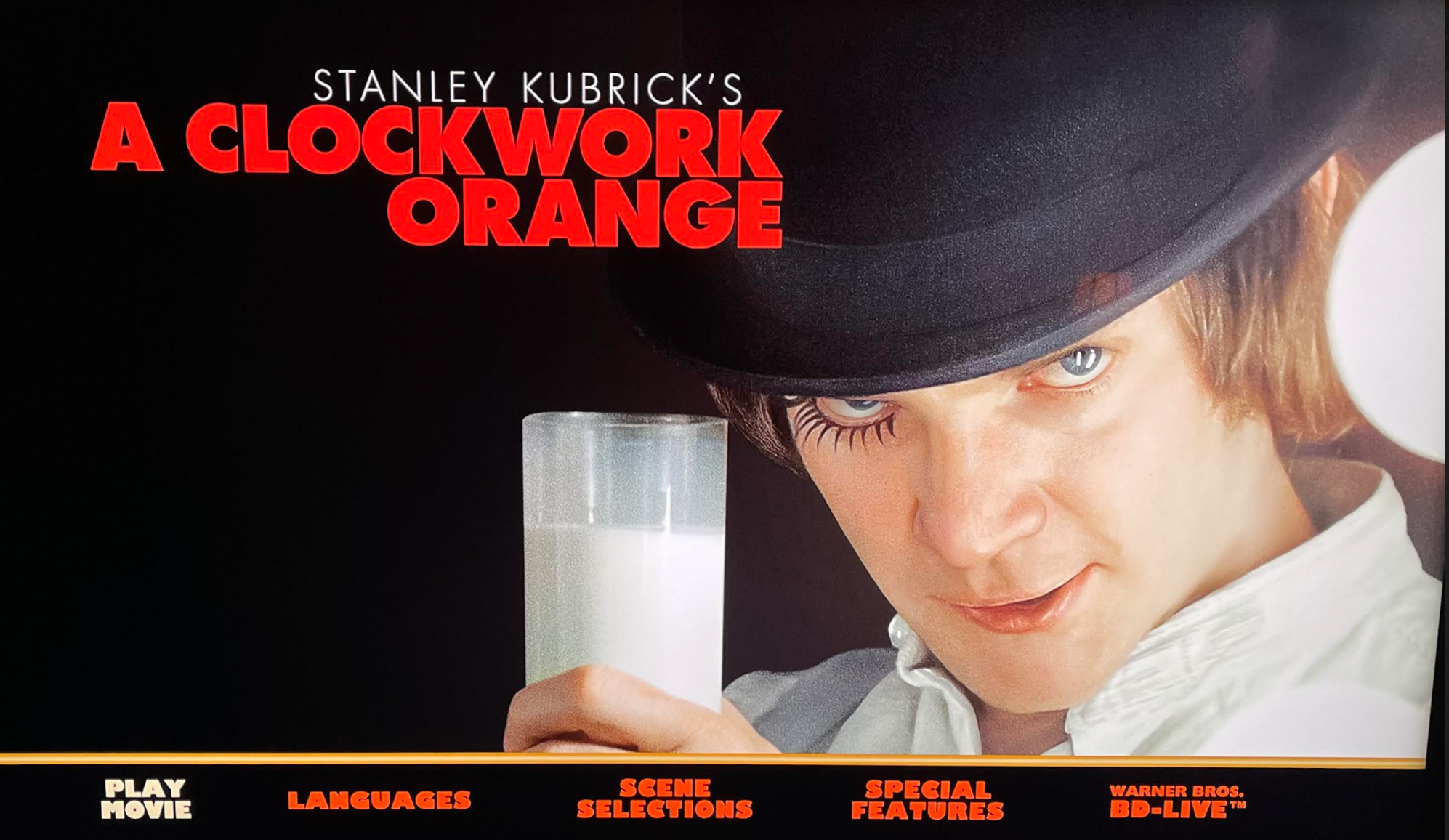
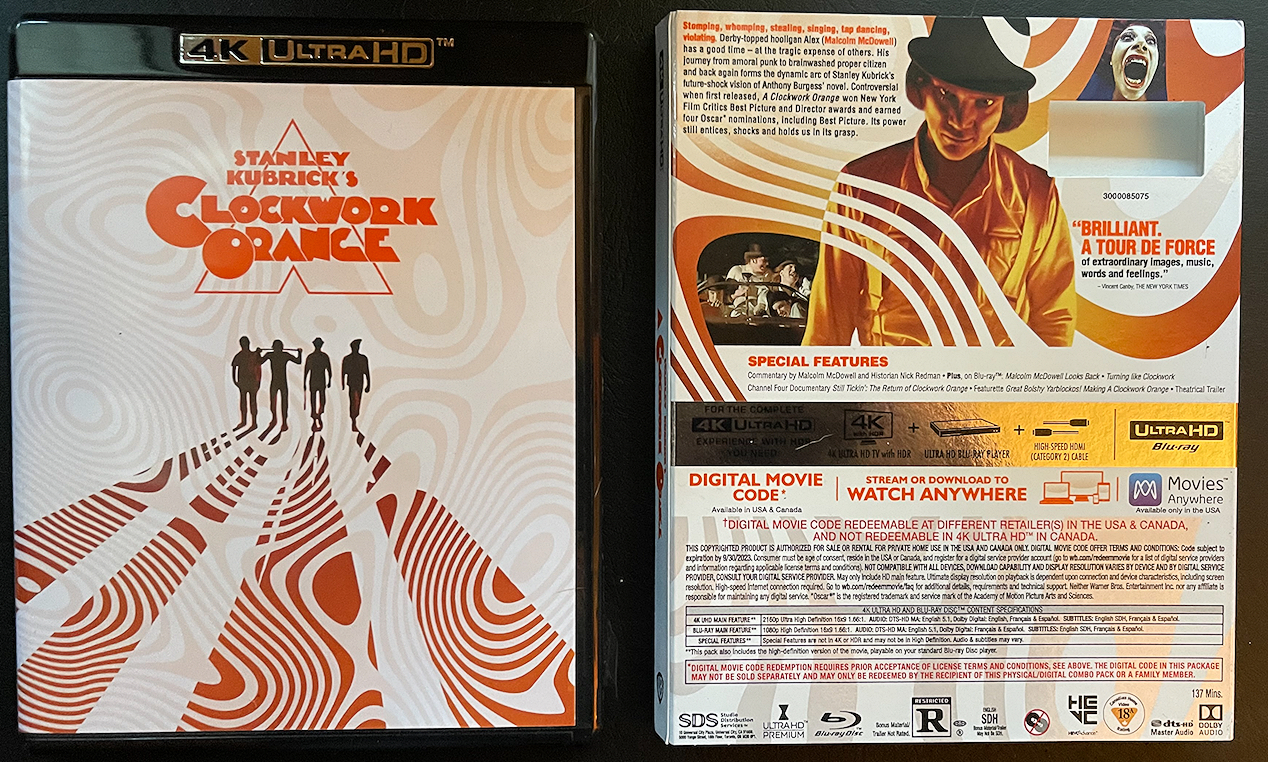
The new 4K Clockwork Orange Bluray arrived yesterday, a package with two discs (4K + 1080p version) and an assortment of previously made doc extras.

It looks much, much better than the 2011 Bluray — richer, bigger, more detail, very celluloid-y. I was 94% pleased with the quality.

Tatiana watched it for the first time in her life. Within six or seven minutes she wanted to quit because of the rapes, beatings and generally cruel atmosphere. “You need to hang on a bit,” I said. “It doesn’t stay on this level. It’s a masterful film. Give it a chance.”

The reason I wasn’t 100% satisfied is an odd perception of softness in the middle of the frame here and there. Not in every shot but in many of them, and especially during the first act. Not “out of focus”, mind, but the focus seems a tiny bit soft in the center.

No, I’m not imagining this. I’m certain that here and there the center-frame sharpness isn’t quite what it could or should be.

I noticed this slight softness in the morning scene when Alex’s mom tries to get him out of bed, and when Mr. Deltoid pays a visit. Ditto during the cat lady scene. Not a major distraction but a very SLIGHT one. I wanted razor sharpness at the center of the frame, and this new disc holds back a bit. I felt a tiny bit burned.

I know that back in ’71, 35mm film and 16mm film could only render desired sharpness to a certain point. A Clockwork Orange was not, I realize, intended to look like 70mm. But I’m certain something is slightly off.

I think the Warner Bros. video guys made a judgment call — “do we maximize sharpness so that 1080p/4K viewers like Jeffrey Wells will be extra-delighted? Or do we present the film as it actually appeared in ‘71?” They went with the latter.

The package contains three or four mini-docs about the film. The best by far is Gary Leva‘s “Turning Like Clockwork.”

Sorry For My Inattention

I’ve only seen Old Yeller (’57) once, I think, but it’s commonly regarded as one of the most emotionally affecting family-friendly flicks ever released. What I really mean is that it delivered a highly traumatic climax (tearful kid forced to shoot beloved dog because of rabies). Millions of youths were devastated, and Bill Murray was one of them — he recalled crying over the shooting scene in Stripes. And I’m sure that the late Tommy Kirk, the teenaged star of that classic Disney film, was proud when he watched Murray’s schpiel.

Old Yeller was certainly the highpoint of Kirk‘s career. He was 15 during filming. A fairly major Disney star between the mid ’50s and early ’60s, Kirk’s career began to wind down around his 20th or 21st birthday and certainly by his mid 20s. Emotional instability was a factor, due to some extent to being gay and closeted and full of loneliness and uncertainty about how to be himself and yet maintain his career and especially keep things status quo with his Disney employers. His career also suffered over a pot bust in ’64.

I had never paid attention to Kirk’s saga before yesterday, which is when his death was announced. I’m very sorry for what the poor guy went through. His fate was sealed when the mother of a 15 year-old kid Kirk wad been seeing in ’63 outed him to Disney management. Walt Disney himself personally lowered the boom, according to one account. If I had been in Disney’s shoes at the time, I would have taken Kirk aside and…I don’t know what I would have done. I’d like to think I would have found an affectionate and supportive way of telling Kirk to keep his lifestyle under wraps, but maybe Kirk’s teenaged persona was starting to wane anyway at that point.

Kirk quote from Wiki excerpt: “I consider my teenaged years as being desperately unhappy. I knew I was gay, but I had no outlet for my feelings. It was very hard to meet people and, at that time, there was no place to go to socialize. It wasn’t until the early ’60s that I began to hear of places where gays congregated. The lifestyle was not recognized and I was very, very lonely. When I was about 17 or 18 years old (in ’58 or ’59), I finally admitted to myself that I wasn’t going to change. I didn’t know what the consequences would be, but I had the definite feeling that it was going to wreck my Disney career and maybe my whole acting career. It was all going to come to an end.

“Even more than MGM, Disney was the most conservative studio in town. The studio executives were beginning to suspect my homosexuality, [and] certain people were growing less and less friendly. Walt let me go, but asked me to return for The Monkey’s Uncle bbecause the Jones films had been moneymakers for the studio.”

I’m very sorry for that trauma. Many child actors have found it difficult to shift into adult roles, but Kirk had a double burden going on. The poor guy was pretty much out of the acting game or at least his way down by ’66 or thereabouts. He subsequently got along and lived a life of a once-famous child star for 50-plus years. He was “found” dead in his Las Vegas residence. He was 79.

Late to “Gucci” Table

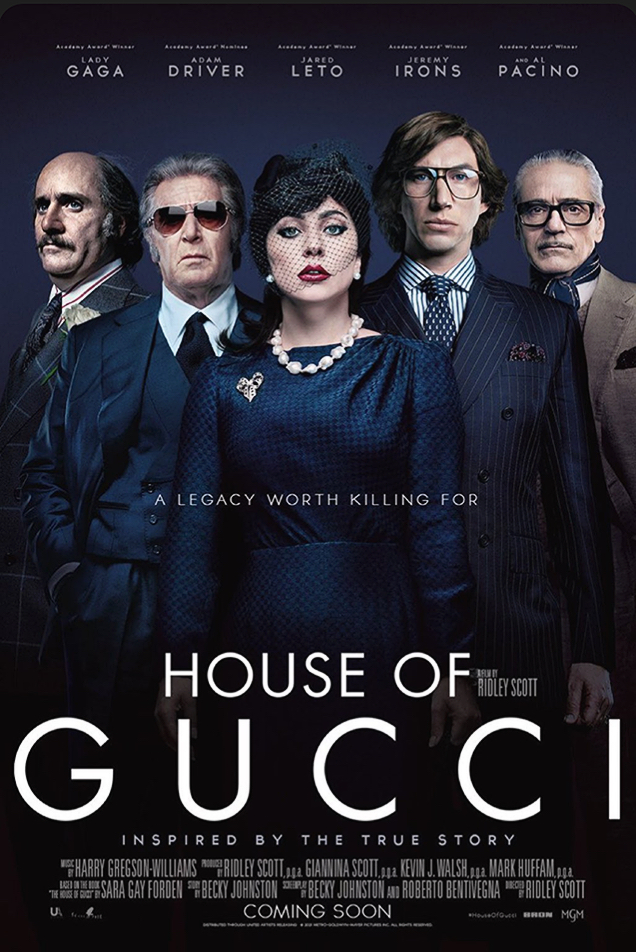
I agree with what everyone said yesterday. The poster art emphatically says “this is not a big classy fall movie from the formidable Ridley Scott, but another mid-range streamer.” Or, you know, a TNT movie from the early aughts. Or jacket art for a mid ’80s VHS tape. Or the new American Hustle.

Norma Desmond: “It’s The Oscars That Got Small”

From Anne Thompson‘s “We Need the Academy Awards to Save the Movies That Only Get Made Because Oscars Exist,” posted on 9.30:

“The Oscars need to stay classy and aspirational, but they increasingly alienate vast swatches of moviegoers who see them as simply representing woke limousine liberals. The board of governors often have blind spots when it comes to marketing themselves, and the Oscars. As they cater to ABC’s demands for a popular show with younger appeal, the board also makes dumbfounding rule changes — like not announcing all the craft categories, or Best Popular Film, requiring voters to be active — that generate so much blowback that they wind up reversing themselves.

“Some Hollywood insiders think the Oscars should be more democratized. ‘The Oscars are only vital for the industry future if they can engage their widest possible audience in celebrating the cinema, finding ways to make it relevant to many, fun, inspiring and important to culture,’ says one independent producer, adding that the awards ‘risk further alienating the public by continuing to feel self-congratulatory, insular, and elitist.”

Paul Schrader to Thompson: “It’s the big spotlight. We saw last year what happens when you put a dimmer on the big spotlight. It probably would have been better just to have a virtual announcement last year. It made the awards feel small, which is death to the concept of the Academy Awards. We have to reassert its place as the big show.”

The Soderbergh Oscars all but murdered the notion of the Oscars being “big” in any sense of that term. In one fell swoop they became the woke death-pill Oscars…Oscars trapped in an elite rhetorical closet…a combination of a “we need to share our stories at length” and “lemme outta here so I can snort some heroin in the bathroom” …the Oscar telecast from a train station that injected an unprecedented surge of despair.

Nobody wants to watch another Oscar telecast like that again…ever.

Sorkin’s Tricky Response to Rudin Situation

Friendo: “Did you read Aaron Sorkin‘s remarks about Scott Rudin in a 9.30 Vanity Fair interview? ‘Scott got what he deserves,’ he said. One could get the impression that the Being The Ricardos director-writer is establishing distance perimeters in order to shore up his Oscar campaign. Aaron is Oscar-ready.”

HE: “But right after that Sorkin said, ‘Right now Scott is lying flat on the mat, and I don’t know how it’s helpful for me to stand on his torso and kind of jump up and down.’ So he’s saying one thing and then saying another. Industry rule #1 is that you stand by your friendships and partnerships. If you’ve worked with someone and you’ve done well by each other, you don’t kick them when they’re down or have been credibly accused of something ugly. You can run and hide (that’s human nature) but throwing an ex-partner under the bus by condemning or distancing…well, it’s tricky. Sorkin is not saying “Scott who?” but he is saying “Scott was.” Does this make him seem principled or a bit hungry?

Vanity Fair‘s Rebecca Ford: “You’ve worked with Rudin throughout your career, on The Social Network, Steve Jobs, Moneyball, The Newsroom, and this play. Do you have a relationship with him anymore? What is it like to sort of see this unfold with someone who was your collaborator?”

Sorkin: “In the last, I think, 12 years, I’ve worked with Scott a lot — three feature films, an HBO series, and a Broadway play. And it was painful to read that Hollywood Reporter story, particularly because it’s pretty likely that some of those assistants who were being abused were working on something I wrote while they were being abused. So I took it personally. Whether it’s a movie set, or a rehearsal room for a play, or backstage for a play, or a television series, morale is important to me. And I take a lot of pride in creating a place where people are really happy to come to work, where they feel a sense of ownership, a sense of authorship, a sense of family. And we have that at Mockingbird. We’ve always had that in Mockingbird. So this came as a big shock.

“I’ll tell you that in a number of the follow-up stories that I read, you’ll see people quoted saying, ‘Everybody knew, everybody knew.’ And that’s ludicrous. Everybody did not know. I certainly didn’t know, and I don’t know anybody who knew. First of all, I have my own experience with Scott, and it’s a higher class of bullying, but I get it. The stories that I had heard over the last 12 years were the kinds of things that—they could have been scenes from The Devil Wears Prada.  There was no violence. There’s nothing physical at all in the stories that I heard. Had I known, there’s no chance I would’ve tolerated it, there’s no chance Bart Sher would’ve tolerated it, that Jeff Daniels would’ve tolerated it. So we didn’t know. And once we did, we did something about it.

Ford: “When you say you had your own experiences with a higher class of bullying, what do you mean?”

Sorkin: “Listen, I think Scott got what he deserves. He’s lying flat on the mat right now, and I don’t know how it’s helpful for me to stand on his torso and kind of jump up and down.”

Misheard Rock Lyrics (cont’d)

Actual lyric: “If you’ll be my bodyguard / I can be your long lost pal / I can call you Betty / And Betty, when you call me, you can call me Al.”

HE version: “If you’ll be my bodyguard / I can be your long lost pal / I can call you Teddy / And Teddy weddy weddy, you can call me Al.”

Once you mishear something, you can’t hear it correctly. First impressions tend to be vivid and gut-level. I first heard Graceland 35 years ago (August ’86), but hearing errors stick to your brain matter. I knew from the get-go that the Paul Simon song in question didn’t include “Teddy weddy weddy,” but it doesn’t fucking matter.

Coppola at the Sherry Netherland

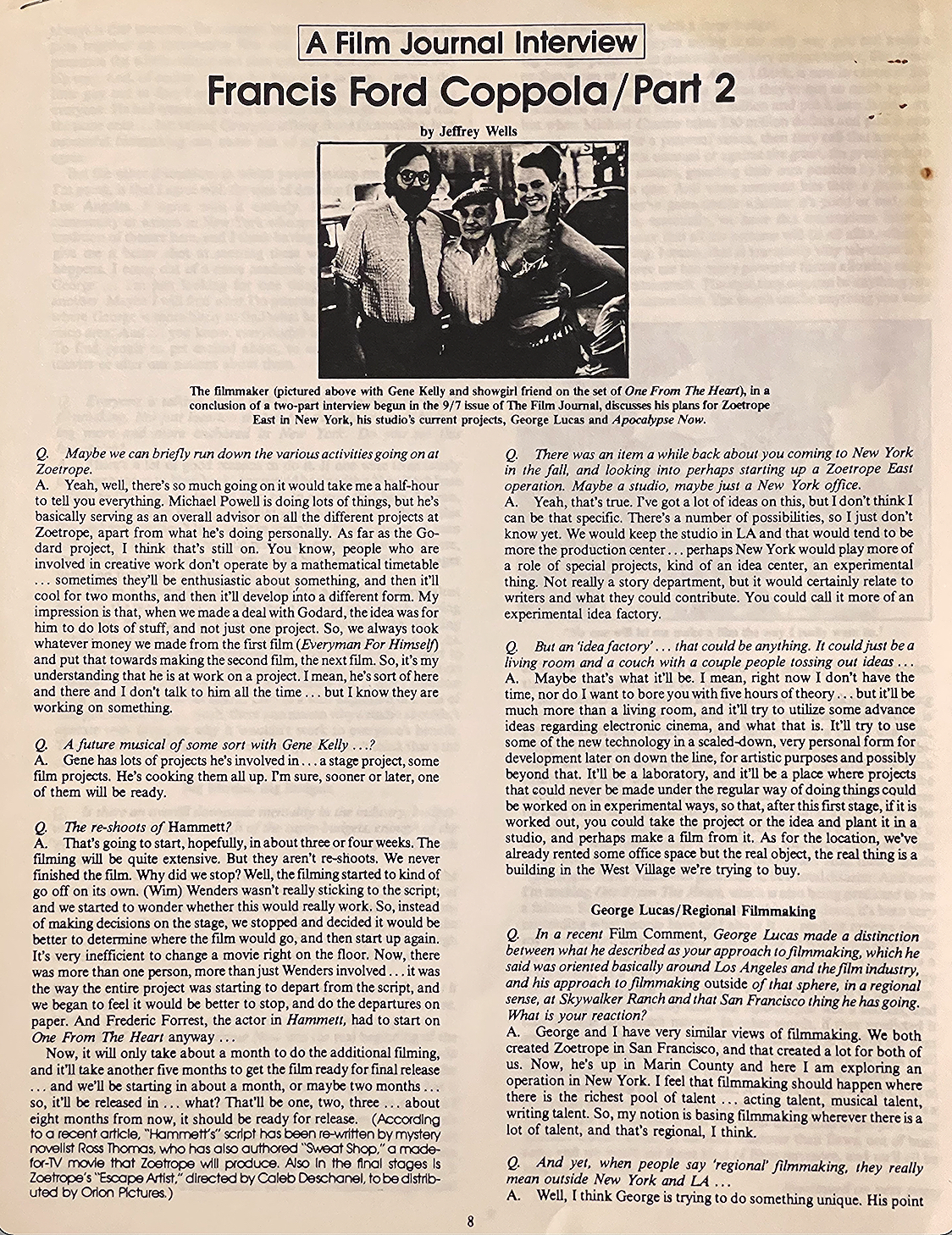
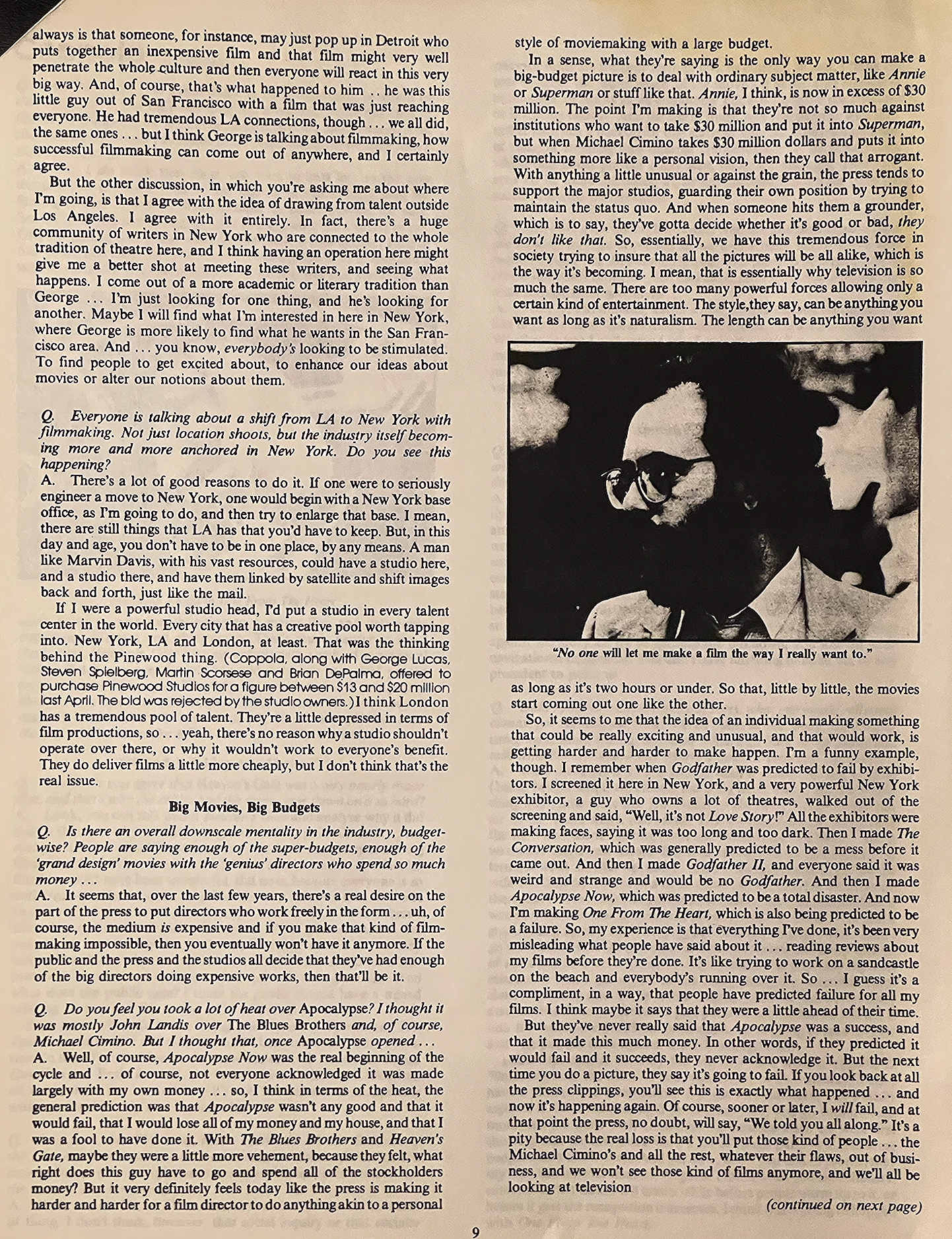
It was sometime in the mid-fall of ’81 (call it 40 years ago), and I’d been working as managing editor of The Film Journal for a bit more than a year. I was working late (well after dinner, close to 9 pm) and decided to try my luck with Francis Coppola, who was staying at the Sherry Netherland. I should have gone through his publicist, Renee Furst, but she would’ve told me to wait until One From The Heart‘s release in February. So I just went for it. I cold-called him, he picked up, I somehow put him at ease and we talked for almost two hours. I recorded our chat and ran the transcript as a two-parter.

Secret ingredient: I dropped a quaalude (Lemmon 714) just before I called, and you know what quaaludes do — they loosen your inhibitions and make you feel confident and unflustered and loosey-goosey. So I wasn’t afraid to say anything, and I was feeling kind of empowered and eloquent and plugged in, and it all worked out. I never did another quaalude interview — this was a one-off.

Read more

Millennials, Zoomers Into “The Sopranos”?

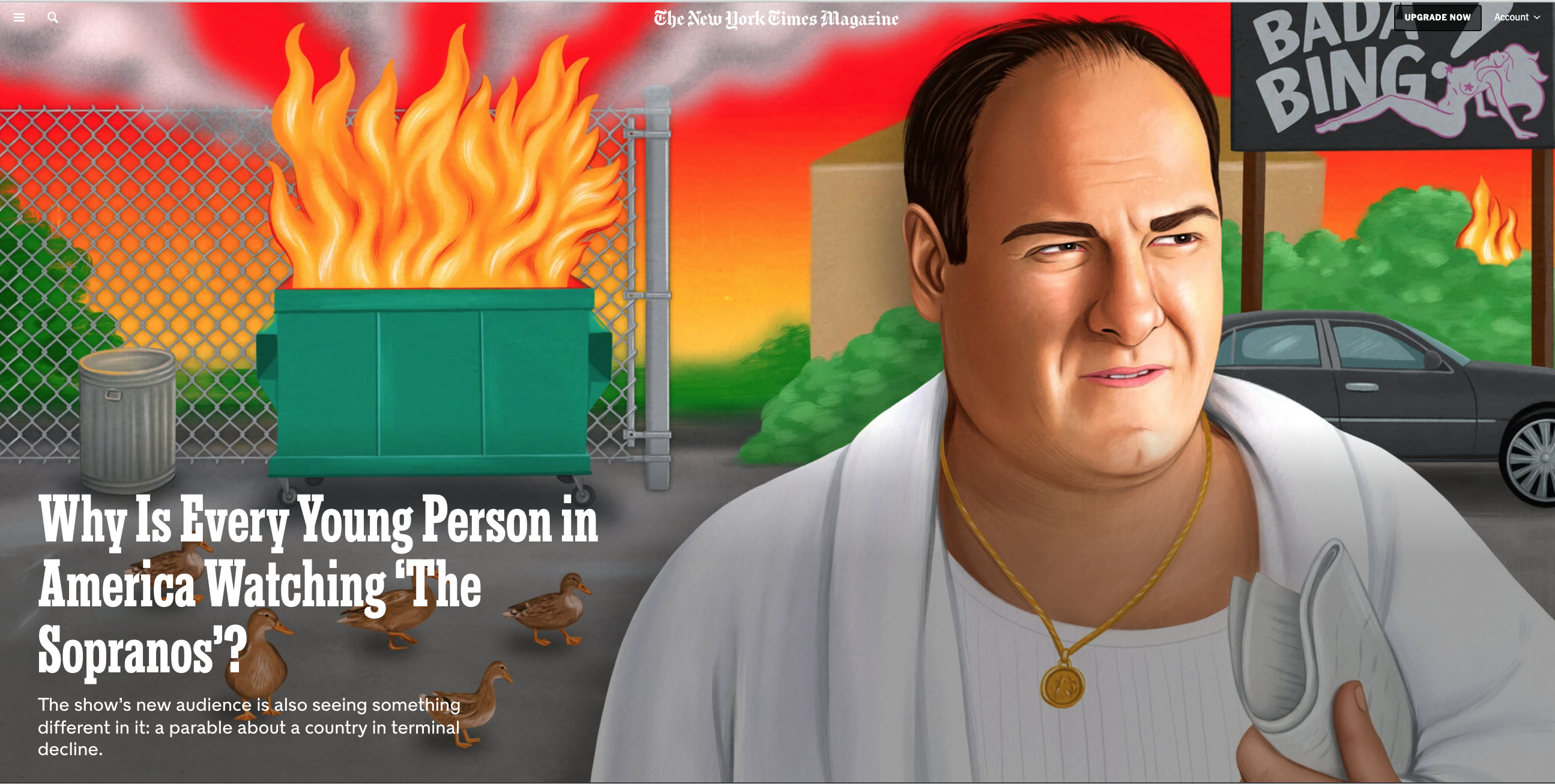
“This new structural reading of The Sopranos was encapsulated neatly by Felix Biederman, a co-host of the leftist podcast ‘Chapo Trap House.’ Recording another podcast in November 2020 — after the presidential election was held but before it was called for Biden, a moment when nothing in this country seemed to be working — Biederman argued that the show is, at its heart, about the bathetic nature of decline.

“’Decline not as a romantic, singular, aesthetically breathtaking act of destruction,’ he said, but as a humiliating, slow-motion slide down a hill into a puddle of filth. ‘You don’t flee a burning Rome with your beautiful beloved in your arms, barely escaping a murderous horde of barbarians; you sit down for 18 hours a day, enjoy fewer things than you used to, and take on the worst qualities of your parents while you watch your kids take on the worst qualities of you.’” — from a N.Y. Times Magazine essay, written by Willy Staley and posted this morning (9.29.21) at 5 am.

Succession

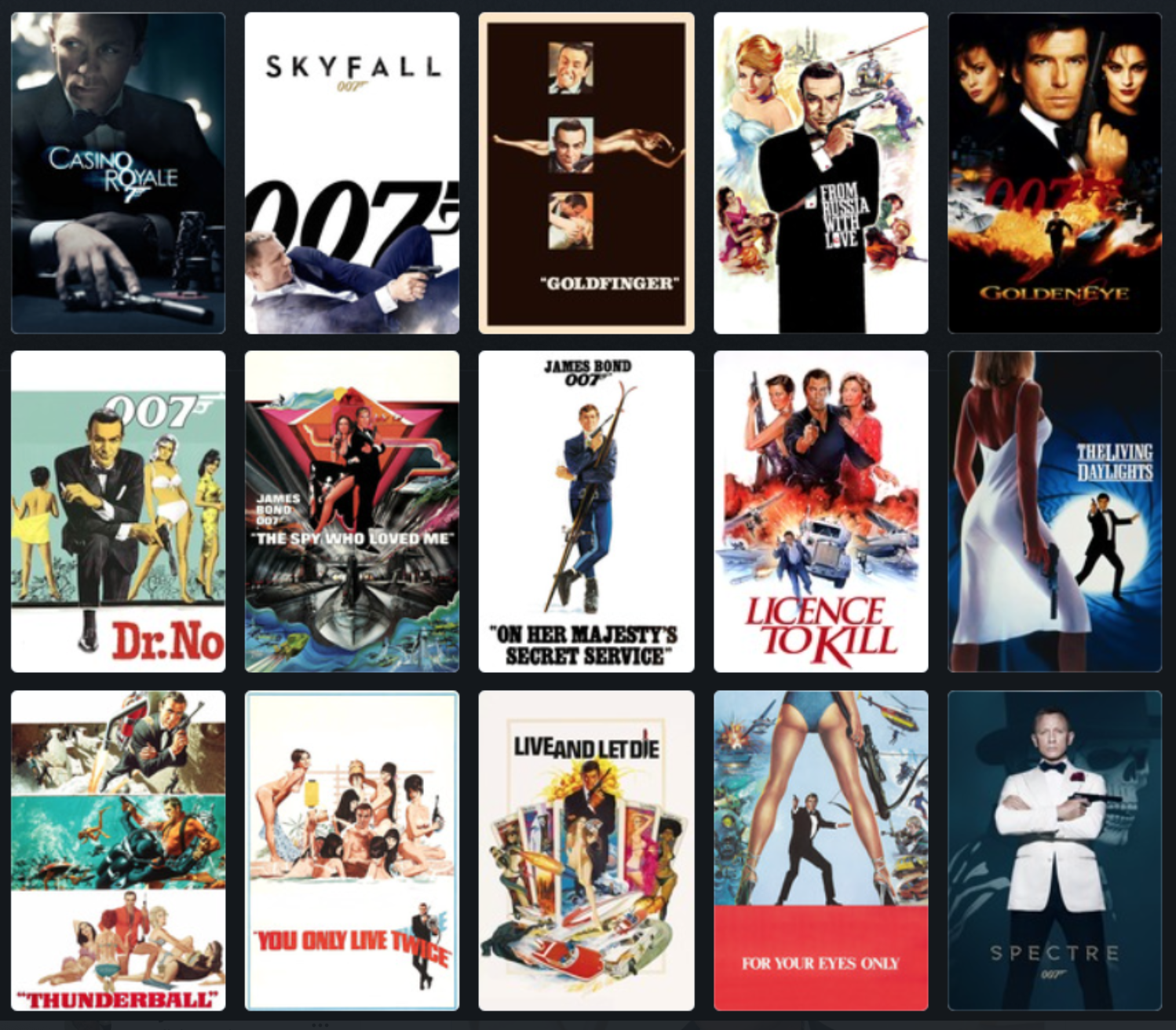
Her presence seems at once to gesture in the direction of recurrent arguments about Bond casting — does the character have to be male? must he always be white? — and to wave them away. A Nomi franchise could be interesting, but I won’t hold my breath.” — from A.O. Scott‘s N.Y. Times review of No Time To Die.

Nothing To Mull Over

“Which four would you choose?”, some Twitter guy asked. Easy: From Russia With Love, Dr. No, Goldfinger and Casino Royale. I also like For Your Eyes Only for attempting to return to the stripped-down, lean-and-mean Bond aesthetic. I also like the way Sheena Easton sings the title tune…”For your eyes only….only for yaaawwwoohh.”